The right cushions completely change how a room feels and functions. I’ve seen homeowners struggle with sagging window seats, uncomfortable sofas, and outdoor spaces that look tired after one season.
Picking the right cushion involves more than scrolling through a catalog and choosing something that matches your walls. You need to think about where it’s going, who’s using it, and what kind of abuse it’ll take over the years. The 15 ideas ahead cover all of it.
Custom-Fitted Bay Window Cushions for Perfect Tailored Seating
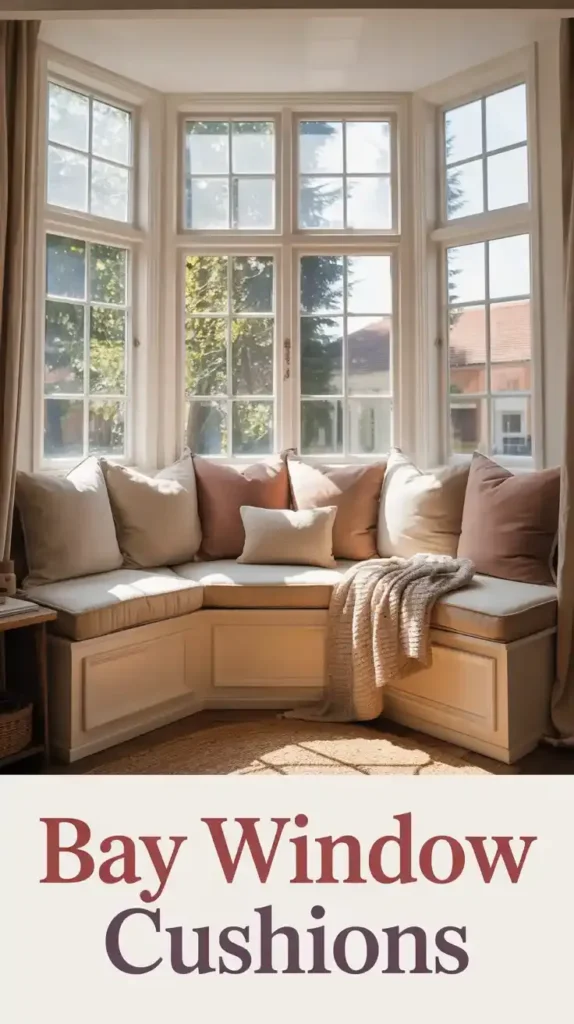
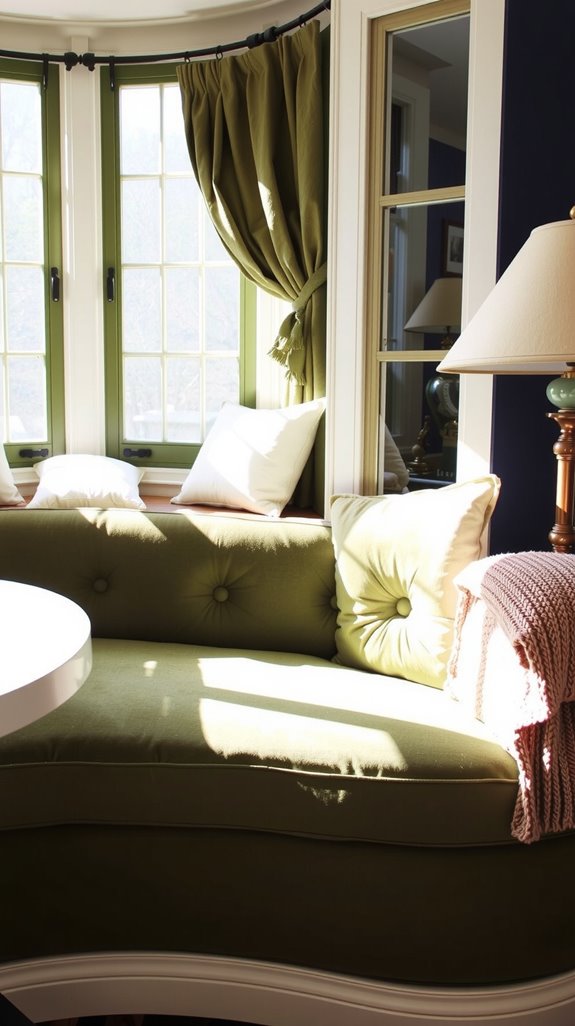
Bay windows are notoriously tricky because no two are exactly the same size. Off-the-shelf cushions never quite work since they either hang over the edges or leave annoying gaps that collect crumbs and pet hair.
Getting cushions made to your exact measurements means the foam sits flush against every corner, giving you actual support instead of that perched-on-the-edge feeling. Plus, when something fits perfectly, it just looks intentional rather than like you gave up and bought whatever was closest at the store.
Bold Striped and Tartan Patterns for Festive Character

Tartan gets a bad reputation for looking too country-cottage or Christmas-obsessed, but it works beautifully when you treat it like the accent it should be. I like pairing one or two tartan cushions with solid velvet or mohair pieces so the pattern pops without screaming at you from across the room.
The key is restraint, which I know sounds boring, but throwing tartan on everything makes your space look like a hunting lodge exploded. Use it sparingly against neutral furniture, and suddenly you’ve got character without chaos.
Mix-and-Match Textures and Fabrics for Added Depth
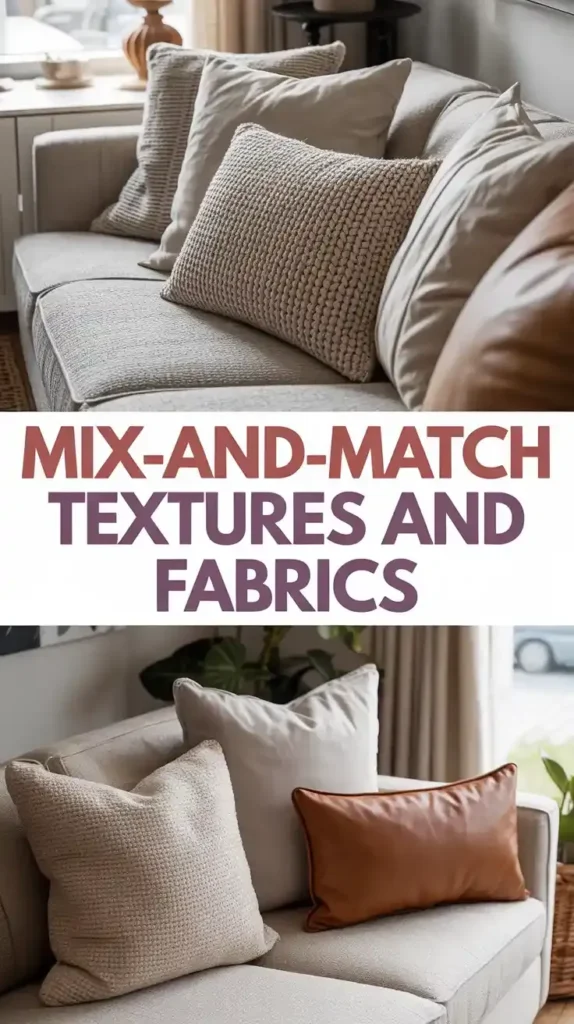
This is where people get nervous, but mixing textures is honestly one of the easiest ways to make your cushions look intentional. Smooth velvet next to a chunky cable-knit throw pillow creates contrast that your eye naturally enjoys without you having to think about why.
The trick is keeping your colors in the same family so the different fabrics don’t compete for attention. When everything’s fighting to be noticed, nothing wins.
Weatherproof Outdoor Cushions for Sunlit Window Seats
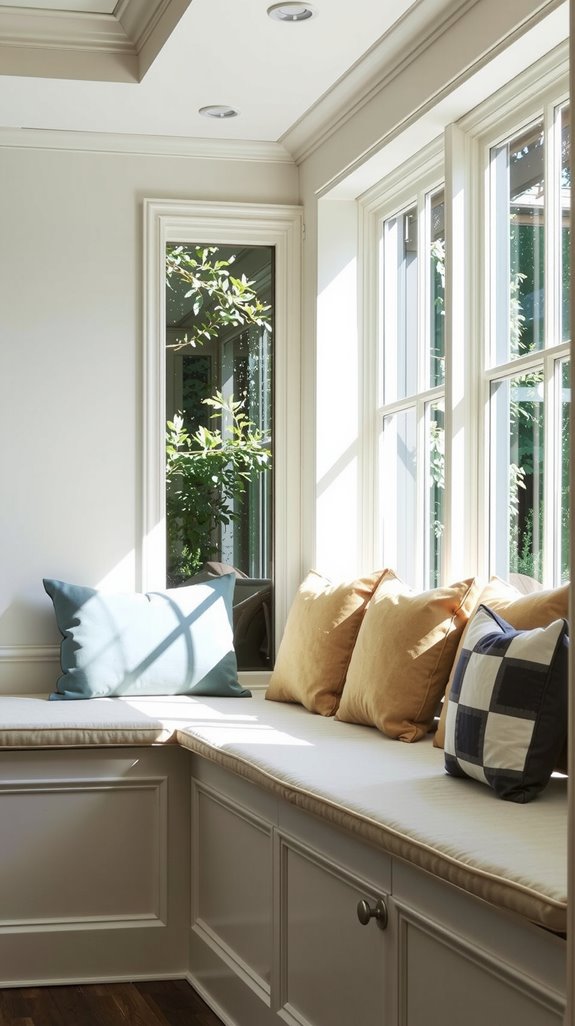
Window seats that get blasted with afternoon sun need tougher fabrics than you’d think. Regular cotton fades to sad, washed-out versions of itself within months, and any moisture from condensation or an open window turns cheap foam into a mildew factory.
Sunbrella and similar solution-dyed fabrics retain their color because the pigment is dispersed throughout the fiber rather than sitting on the surface like paint. Pair that with foam that drains and dries quickly, and you’ve got a window seat you can actually use year-round instead of just admiring.
Layered Neutral Tones With Embellished Details
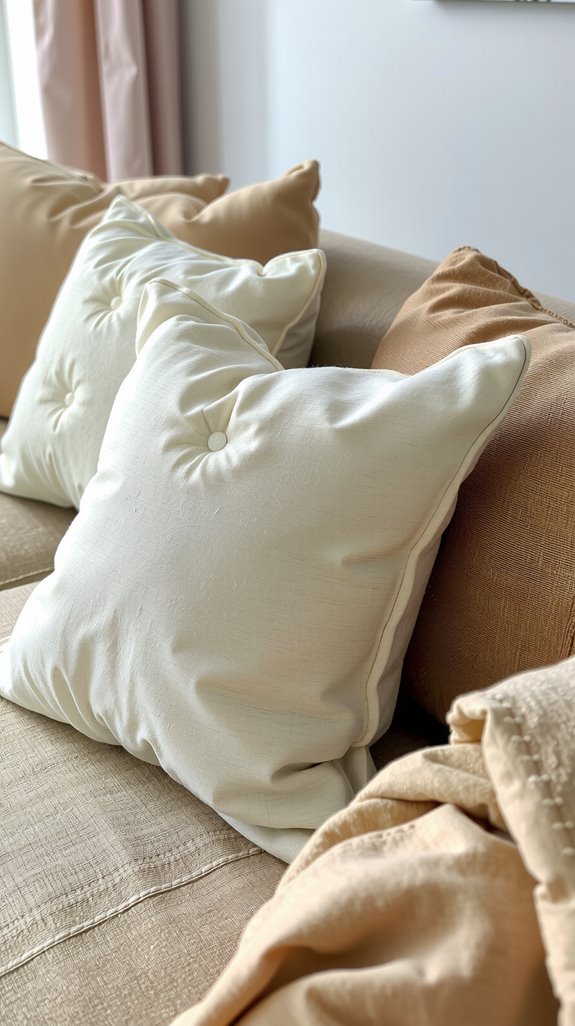
Neutrals don’t have to mean boring, though I’ll admit the all-beige look can feel a bit like a dentist’s waiting room if you’re not careful. Mixing creams with taupes and adding in different textures like linen, velvet, and that nubby bouclé fabric keeps things interesting without color overload.
Small details like embroidered edges or a few well-placed tassels add personality without breaking the calm vibe. It’s sophisticated without trying too hard, which is the whole point of neutrals anyway.
High-Density Foam Cushions for Long-Lasting Support
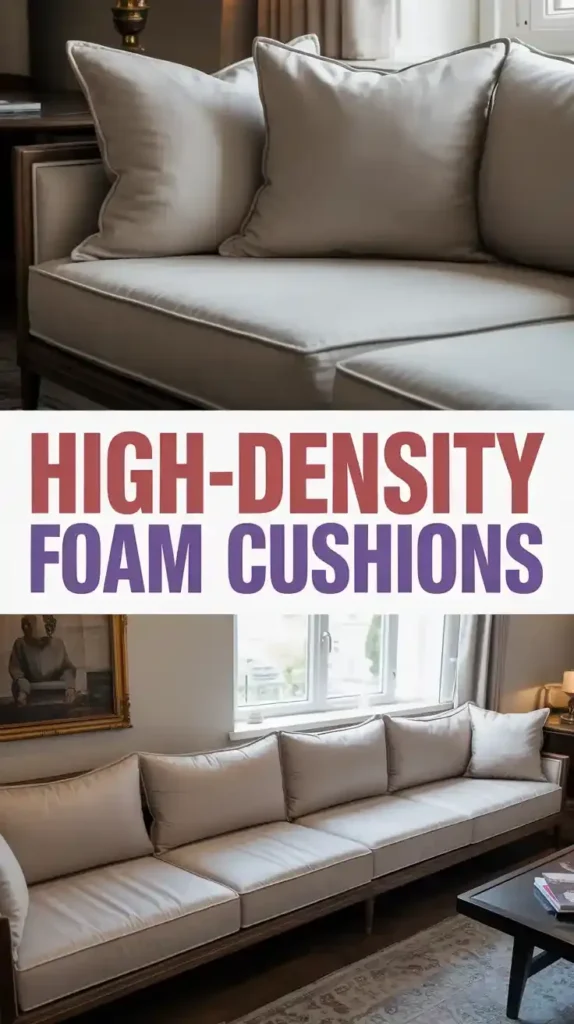
Foam quality matters more than most people realize until they’ve been sitting on garbage foam for six months. High-density foam costs more upfront, but it keeps its shape for decades instead of developing that sad, butt-shaped dent that screams “we’re too cheap to replace this.”
It also supports your back properly by distributing your weight evenly instead of letting you sink into a shapeless blob. Cheaper foam feels fine at first, but give it a year, and you’ll understand why I’m so insistent about this.
Trapezoid-Shaped Cushions for Angular Built-In Benches
Corner benches and angled seating areas are architectural nightmares for standard rectangular cushions. Trapezoid cushions solve this by tapering to fit those weird angles, whether it’s a bay window nook or an RV dinette.
You’ll need precise measurements (front width, back width, depth, and thickness), so grab a tape measure and double-check everything before ordering. Outdoor versions need weather-resistant covers, while indoor ones can go plush, but either way, high-density foam keeps them from going flat.
Removable Covers for Easy Cleaning and Maintenance
Zipper covers are non-negotiable if you have kids, pets, or anyone who eats on your furniture (so, everyone). Being able to toss covers in the wash means you’re not panicking over every spilled coffee or muddy paw print, which honestly reduces household stress more than you’d expect.
They also let you swap out colors seasonally without buying entirely new cushions, which your budget will appreciate. It’s one of those practical features that seems boring until the first time you need it.
Color-Coordinated Cushions to Complement Existing Decor
Matching cushions to your room doesn’t mean everything has to be identical, which would look more staged than stylish. I usually suggest picking three colors that already exist in your space and using them in different proportions across your cushions.
The 60-30-10 rule (60% dominant color, 30% secondary, 10% accent) keeps things balanced without making you feel like you’re back in art class. If you want contrast instead of harmony, complementary colors like blue and orange create energy, just don’t go full sports team with it.
Headboard-Style Tufted Cushions for Elegant Window Seats
Tufted back cushions turn a basic window seat into something that looks deliberately designed rather than thrown together. The button or stitch patterns aren’t just decorative since they keep the padding from shifting around and creating lumpy spots.
Velvet and linen are my go-to fabrics here because they show off the tufting detail without looking too formal. These are custom jobs that need exact measurements, but the payoff is a built-in look that makes people assume your window seat costs way more than it did.
Floor Pillow Stacking for Flexible Seating Zones
Floor pillows are having a moment, and honestly, they solve the problem of needing extra seating without committing to permanent furniture. You can stack different sizes to create little zones for reading, meditating, or wherever people end up congregating at parties.
Square and rectangular shapes stack better than round ones and double as impromptu side tables when you need them. The whole setup can be rearranged or stored in about two minutes, which beats hauling folding chairs out of the garage.
Lumbar Cushions for Enhanced Back Support in Reading Nooks
Reading nooks sound cozy until you’re thirty minutes into a book and your lower back is screaming at you. Lumbar cushions fill that gap between your spine and the seat back, supporting your natural curve instead of letting you slump forward.
They’re especially critical if your reading spot doesn’t have great built-in support, turning an uncomfortable perch into somewhere you can actually spend hours. Good lumbar support also means you’re not constantly shifting around trying to get comfortable, which breaks your reading flow.
Entryway Bench Cushions for Practical Everyday Use
Entryway benches take more abuse than almost any other seat in your house since everyone dumps wet shoes, bags, and themselves there multiple times a day. The cushions need stain-resistant, water-repellent fabric that laughs at muddy boots and grocery bag tears.
Custom sizing ensures the cushion actually fits your bench instead of sliding around, and non-slip backing keeps it from becoming a safety hazard. Skip the delicate fabrics here and go for durability, because your entryway isn’t the place for precious materials.
Boxed Edge Cushions for Structured Classic Aesthetics
Boxed edge construction gives you those clean, tailored corners and vertical sides that scream high-end upholstery. The separate panels for top, bottom, and sides create crisp 90-degree angles instead of the rounded, softer look of knife-edge cushions.
Welting along the seams adds durability and visual definition, making these perfect for formal living rooms where you want everything to look sharp. They’re more expensive than basic cushions, but the structured look is worth it if traditional design is your thing.
UV-Resistant Fabrics for Humidity and Sun-Exposed Areas
Cushions near big windows or in humid rooms like sunrooms need fabrics built to handle punishment from UV rays and moisture. Standard fabrics fade and develop mildew in these conditions faster than you’d think, which is why UPF 50+ rated materials matter.
Polyester’s tight weave naturally resists UV damage better than cotton, and specialized coatings with metal oxides add even more protection. Spending extra on proper outdoor-grade fabric saves you from replacing faded, deteriorating cushions every couple of years, which gets expensive fast.