Your Small Bedroom Deserves Better than “Just Making Do”. I can tell you right now that square footage isn’t your real problem. Most people treat a small bedroom like a puzzle with missing pieces, cramming in furniture and hoping it all works out somehow.
The bedrooms that actually feel good to be in, the ones that don’t make you want to immediately leave and go sit on the couch, they’re designed around a few core principles that have nothing to do with how much money you spent. I’m going to walk you through the exact strategies that turn a cramped box into a space you’ll actually want to spend time in, and you won’t need to hire anyone or wait for a miracle.
Key Takeaways
- Beds with built-in storage and floating shelves use vertical space efficiently while keeping the room from feeling cluttered
- Positioning your bed against the longest wall improves traffic flow and makes the room feel more intentional
- Light colors and layered lighting sources work together to make small spaces feel larger and more open
- A single focal point prevents visual chaos and gives your eye somewhere to land when you walk in
- Floor-to-ceiling curtains and tall mirrors create the illusion of height and width in tight quarters
Choose a Bed With Built-In Storage to Maximize Every Inch
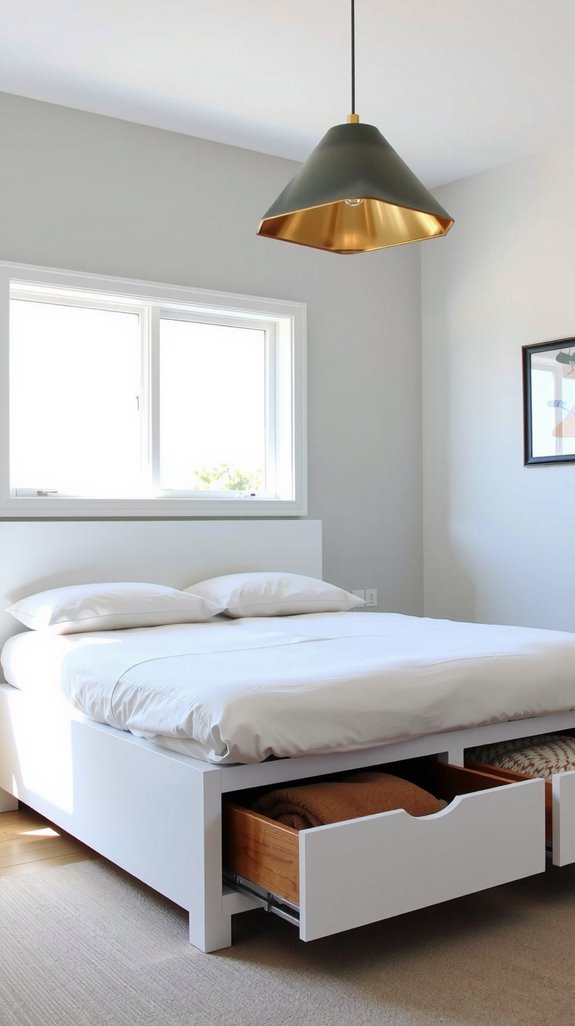
I always start with the bed when I’m helping someone redesign a small bedroom, because it’s taking up a third of your floor space anyway. Panel beds like the Vaughan Bassett Sawmill or Malouf Waterford come with wheeled drawers underneath that can swallow your off-season clothes and extra linens without eating up any additional room.
You might not even need a dresser if you pick the right storage bed, which means more floor space for actually moving around. The key is finding drawers that roll smoothly and don’t require you to move the bed every time you need your winter sweaters.
Position Your Bed Against the Longest Wall for Better Flow
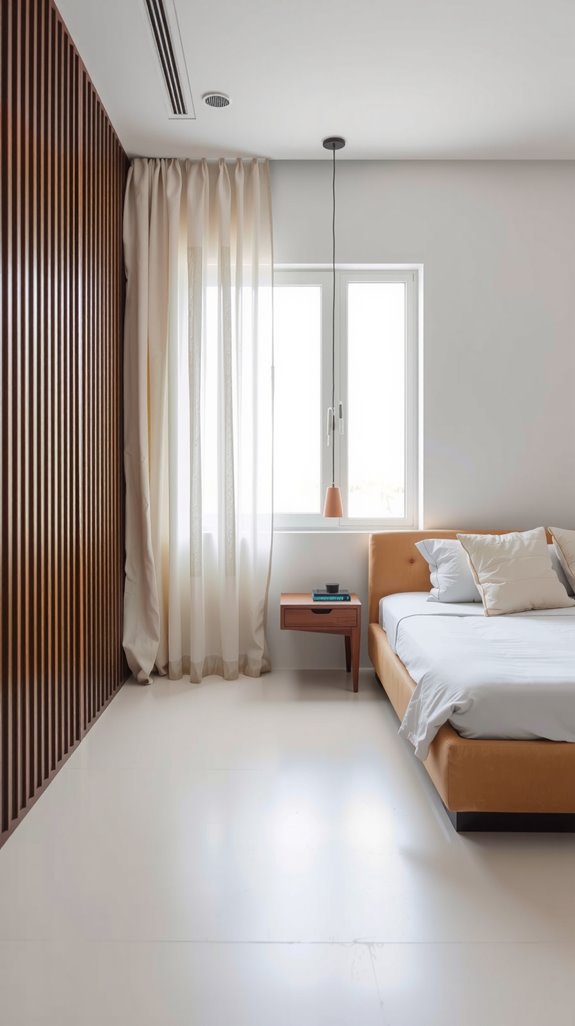
This might sound obvious, but I’ve walked into countless bedrooms where the bed is shoved against the short wall, creating this awkward obstacle course to get anywhere. Putting your bed on the longest uninterrupted wall instantly opens up both ends of the room for walking, and you’re not doing that sideways shuffle to reach your closet anymore.
It also gives you a natural focal point when you center the headboard, which makes the whole layout feel like you planned it instead of just giving up. The circulation improvement alone makes this worth doing, even if you have to rearrange everything else in the room.
Swap Bulky Nightstands for Floating Shelves or Wall-Mounted Options
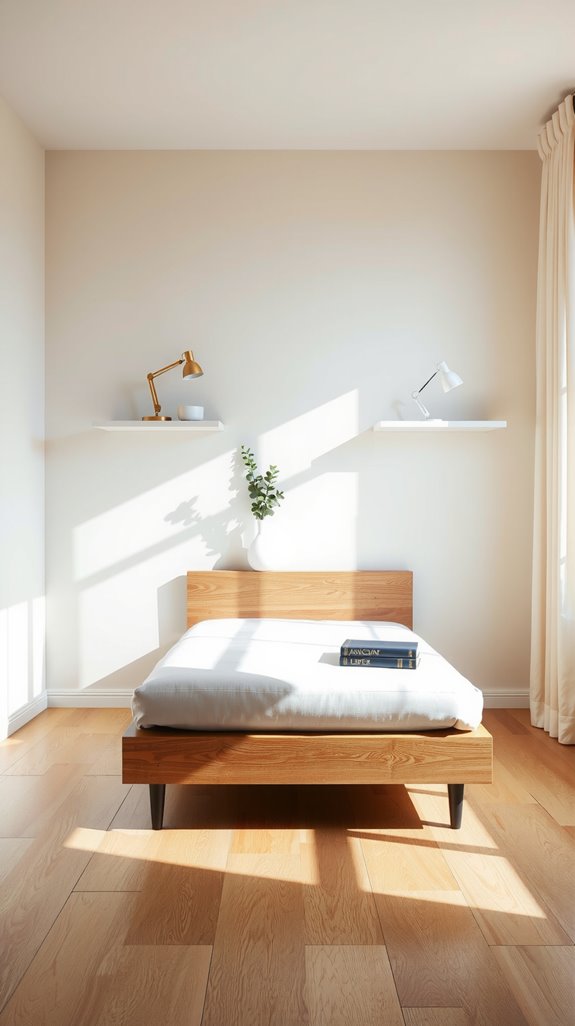
Traditional nightstands take up 18 to 24 inches per side, creating tight spaces where you’re constantly banging your shin on the corner. Floating shelves give you the same bedside surface without any of that floor space penalty, and honestly, they look sharper too.
You can find handmade wood versions with rounded edges for around $78, or simple metal two-tier setups for $30 if you’re on a budget. Some wall-mounted options even include drawers for your glasses and phone charger, so you’re not sacrificing function for space.
Install Floor-to-Ceiling Curtains to Make Your Room Feel Taller
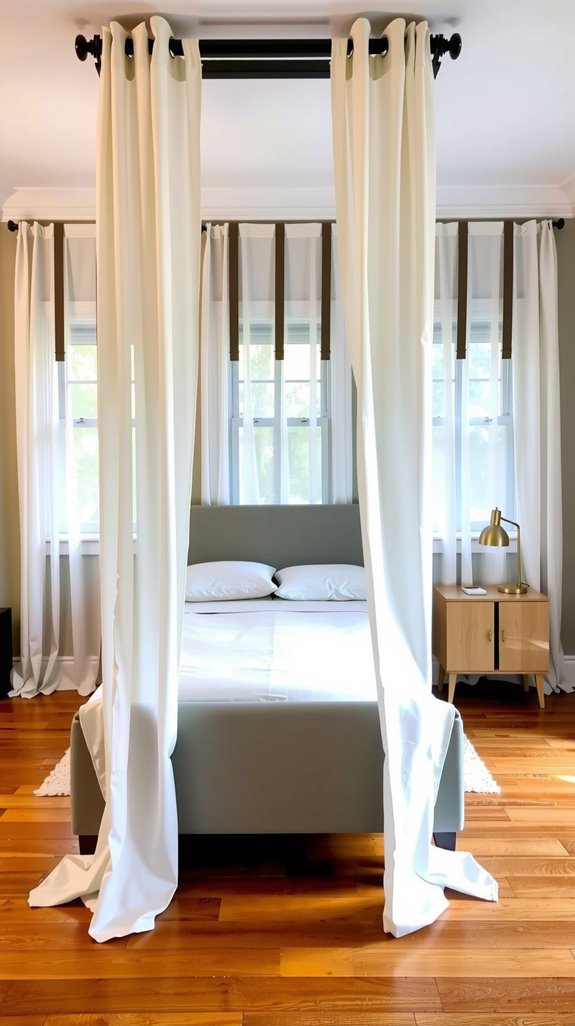
Most people hang their curtain rods right above the window frame and wonder why their bedroom feels like a cave. Mount your rods about an inch or three below the ceiling instead, and suddenly the walls look taller because your eye travels up with the curtain line.
The panels should hit about half an inch above the floor, and extend the rod six to twelve inches past the window on each side to make the window itself look wider. Stick with solid colors or subtle textures here, because busy patterns will work against the spacious feeling you’re trying to create.
Use Vertical Mirrors to Create the Illusion of More Space
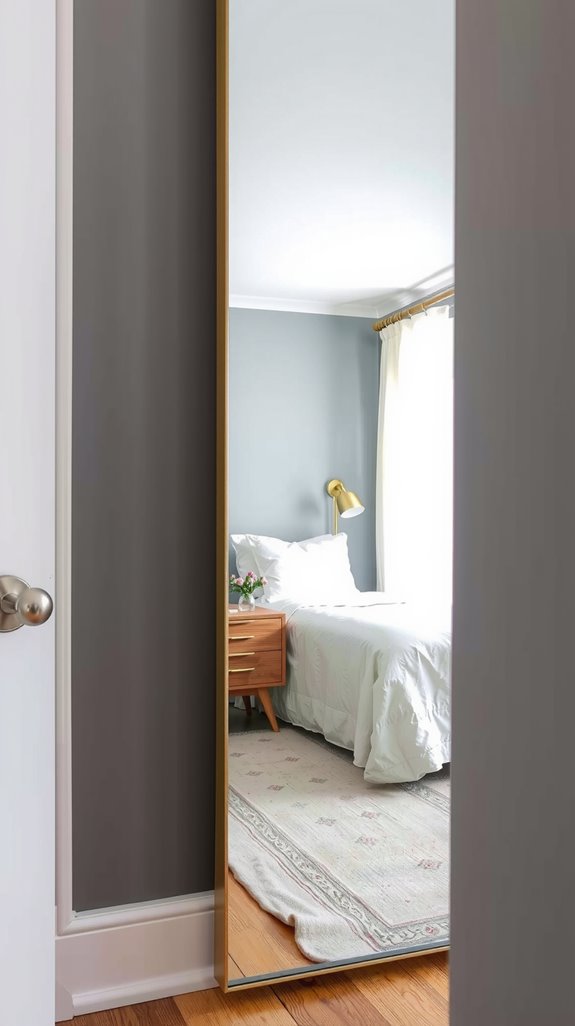
Mirrors are probably the cheapest trick in the book for making a small room feel less claustrophobic, but you have to use them right. A tall mirror on a narrow wall makes that wall feel wider, while a mirror across from your window bounces natural light around the room all day.
One floor-to-ceiling mirror pulls your eye upward and makes the ceiling feel higher without dominating the space the way a bunch of small mirrors would. The placement matters more than the size, so think about what you want the mirror to reflect before you commit to a spot.
Select Slim, Tall Dressers Instead of Wide, Low Ones
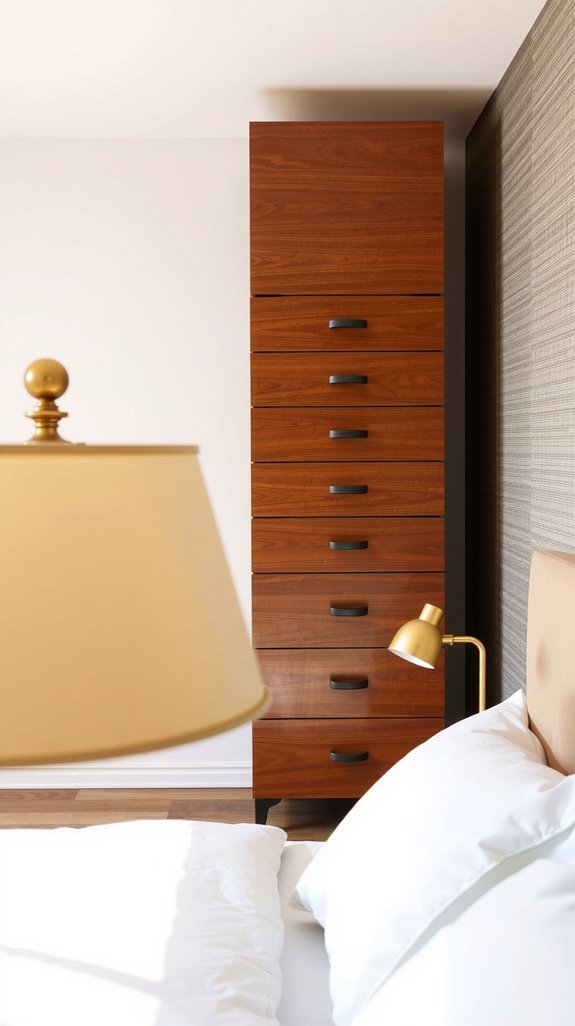
I see people squeeze wide, squat dressers into small bedrooms all the time, and then they can barely walk around them. A tall dresser with a narrow footprint gives you way more storage in way less floor space, which is exactly what you need when every square foot counts.
These fit perfectly in corners or next to closets without blocking your path, and you’re usually getting more drawers than you would with a traditional wide dresser anyway. The vertical build also draws your eye up, which plays into that whole “make the room feel taller” strategy.
Add Floating Shelves and Wall Hooks to Keep Surfaces Clear
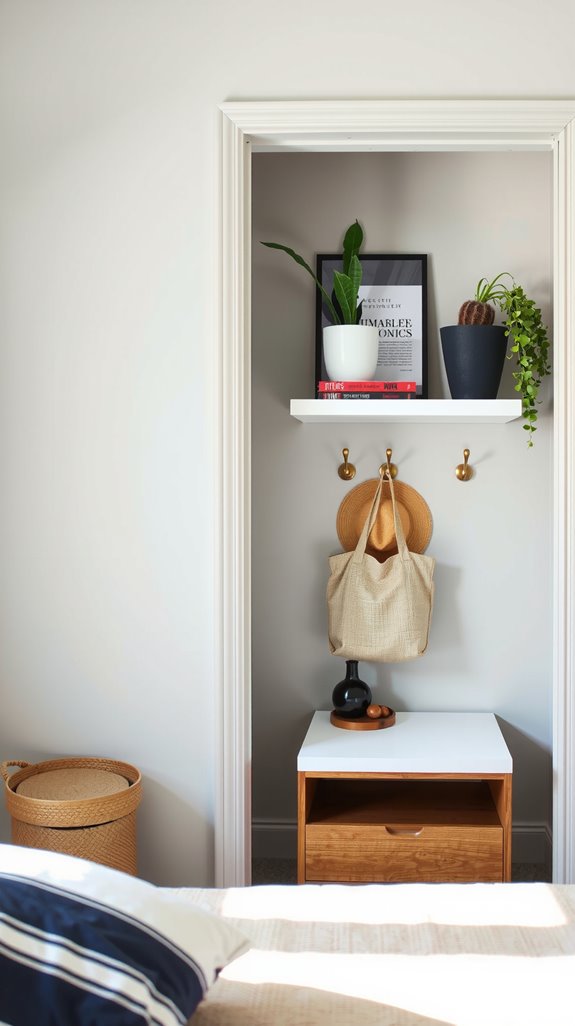
Once you start using your walls for storage, you’ll wonder why you ever piled everything on your dresser and nightstand. A slim floating shelf above your bed replaces a bulky nightstand, and wall hooks near the door handle your bags and jackets without needing a chair.
Go for shelves with concealed brackets if you want a cleaner look, and use matching baskets to corral smaller items so it doesn’t turn into a mess. The more you can get off your horizontal surfaces, the more breathing room the whole space has.
Stick to a Light, Neutral Color Palette for Visual Continuity
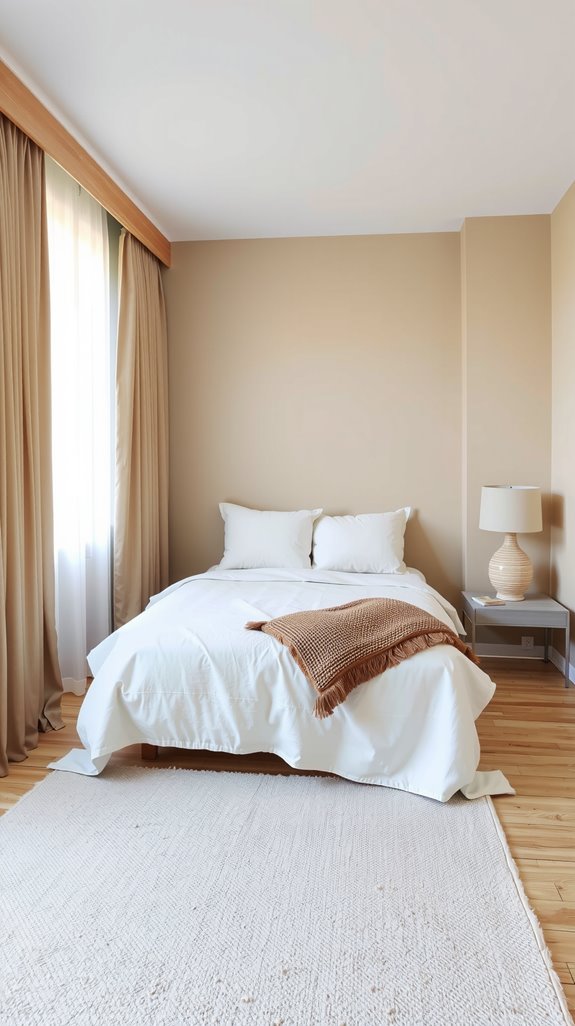
Dark colors make small rooms feel like they’re closing in on you, which is the last thing you want in an already tight bedroom. Off-whites and soft pastels bounce light around the room and create this airy feeling that darker shades just can’t match.
Try pairing light grey walls with pale wood furniture and beige bedding for a look that flows together naturally. Warm taupe or a slightly mauve-tinted beige adds just enough character without breaking up the visual space.
Layer Your Lighting With Ambient, Task, and Accent Sources
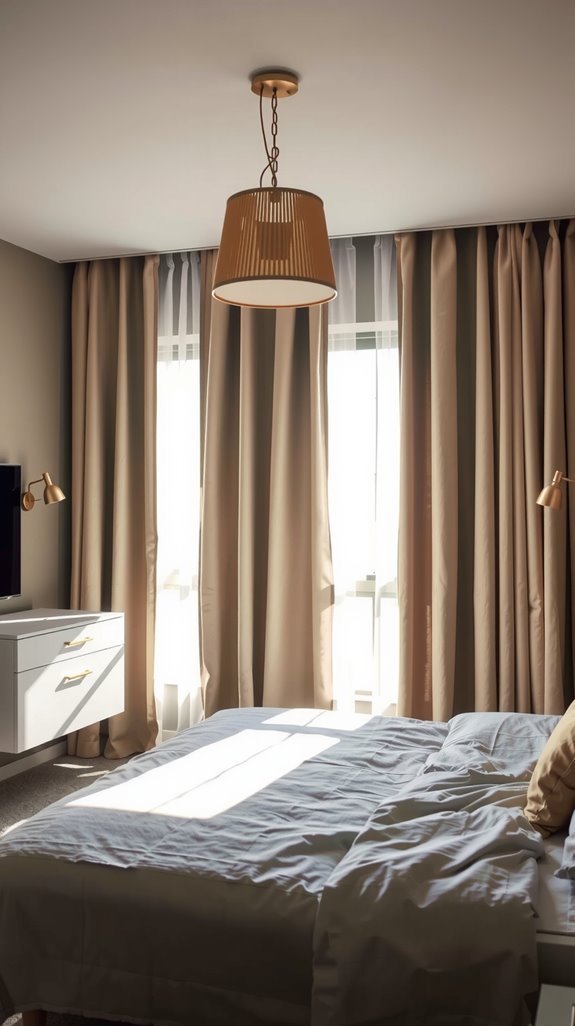
Relying on one overhead light is a rookie move that leaves you with harsh shadows and zero flexibility. Start with ambient lighting from recessed cans or a ceiling fixture that gives you about 20 lumens per square foot for general brightness.
Add bedside lamps positioned between your abdomen and eye level so you can actually read without straining. Throw in some accent lights like wall sconces to highlight art or architectural details, and suddenly your small room has depth and dimension instead of feeling flat.
Create One Statement Focal Point Instead of Scattering Decor
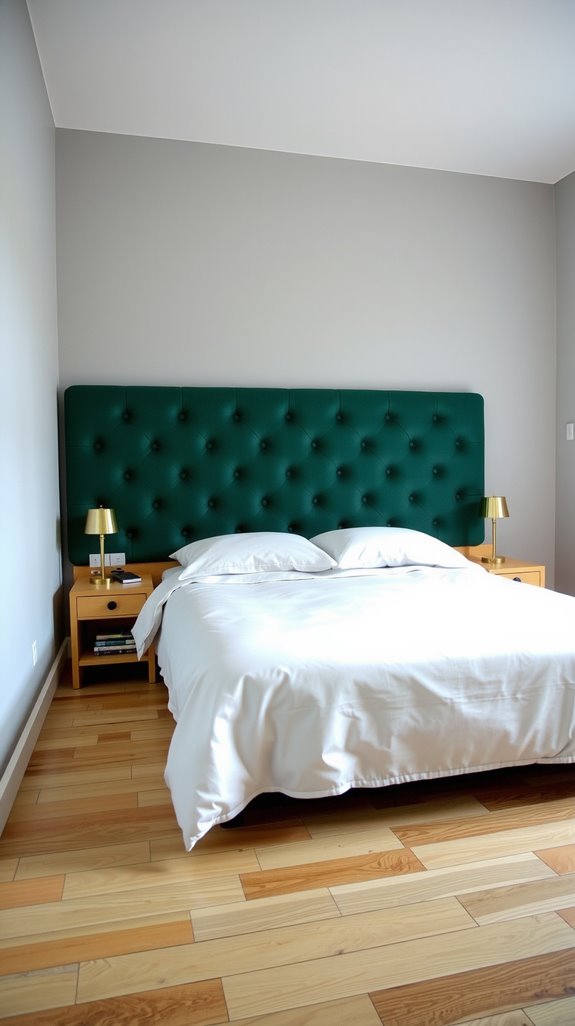
When you try to make everything in a small bedroom interesting, nothing ends up being interesting. Pick one thing that grabs attention, whether that’s a distinctive headboard, a great light fixture, or a bold piece of art, and let everything else support it.
This gives people somewhere to look when they walk in, and it prevents that cluttered, overstuffed feeling that kills small spaces. You’ll end up with a room that feels curated instead of chaotic.
Layer Quality Textiles in Just a Few Coordinated Pieces
Small bedrooms can still feel luxurious if you’re smart about layering your bedding and fabrics. Start with neutral sheets, add a textured coverlet for visual interest, and fold a duvet at the foot of the bed.
Keep your pillow count to three coordinated pieces, mixing different textures like smooth cotton with chunky knit. One patterned throw blanket draped casually adds depth without turning your bed into a textile explosion.
Use Hidden Storage Solutions to Maintain a Clean, Polished Look
The less stuff you can see lying around, the bigger your small bedroom will feel. Under-bed drawers handle seasonal clothes and extra linens, or you can go for an ottoman bed that lifts up to reveal a huge hidden compartment.
Floating shelves mounted vertically reclaim wall space, and nightstands with built-in drawers keep your bedside essentials out of sight. Even simple Command hooks on the side of your dresser work great for bags and accessories that would otherwise end up on the floor.
Mix Materials Like Wood, Metal, and Woven Fibers in Small Doses
Mixing materials in a small space requires some restraint, because too much variety makes the room feel busy and scattered. Start with one dominant material like wood flooring or a timber bed frame, then bring in metal through slim lamp bases or bed legs.
Add something woven, like a rattan lampshade or a narrow basket, for texture. Keep your wood tones limited to two shades, make sure your metal finishes complement your wood’s undertone, and use soft textiles to tie everything together.
Maximize Your Closet With Vertical Organizers and Double Rails
Your closet has way more potential than you’re probably using, especially in the vertical space most people ignore. Double hanging rails for shirts and folded pants immediately double your capacity, and shelving that goes all the way to the ceiling handles seasonal stuff you don’t need often.
Hanging pocket organizers, cascading hooks, and vertical shoe racks move everything off the floor and free up horizontal space for the things you actually use daily. A well-organized closet means less furniture in the bedroom itself.
Conclusion
You don’t need to live with a bedroom that feels cramped and frustrating. Studies show that clearing clutter can improve your sleep quality by nearly 20%, so these storage strategies are actually doing more than just making things look nice.
Even if you only implement a handful of these ideas, you’ll notice a real difference in how the space feels and functions. Start with whichever change feels most doable right now, and build from there.