Most traditional homes treat outdoor space like an afterthought, pushing it to the edges where it becomes little more than a leftover strip of lawn. Courtyard mini houses reject this completely.
Instead of sprawling outward, these designs pull the outdoors into the heart of the home, creating protected pockets of light and air that make compact living feel anything but cramped.
I’ve watched this approach transform tight urban lots and modest footprints into homes that feel calm, private, and surprisingly generous.
Whether you’re working with a narrow infill site or simply want to live lighter, the 15 designs ahead show how the right courtyard layout delivers real outdoor living without a single wasted square foot.
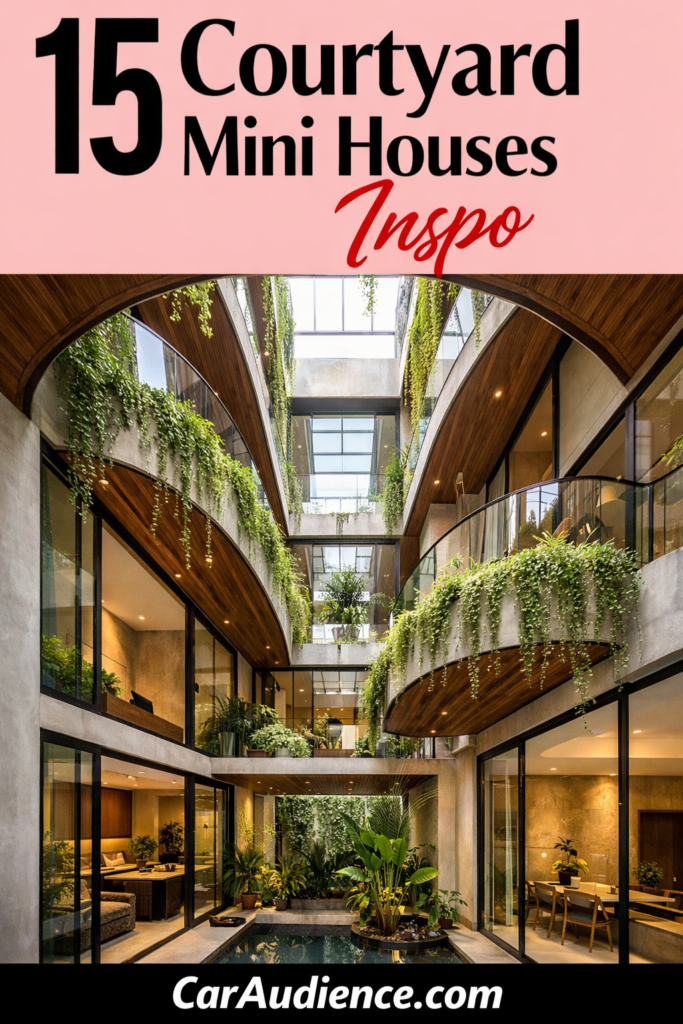
What Makes Courtyard Mini Houses Feel Calm and Private?
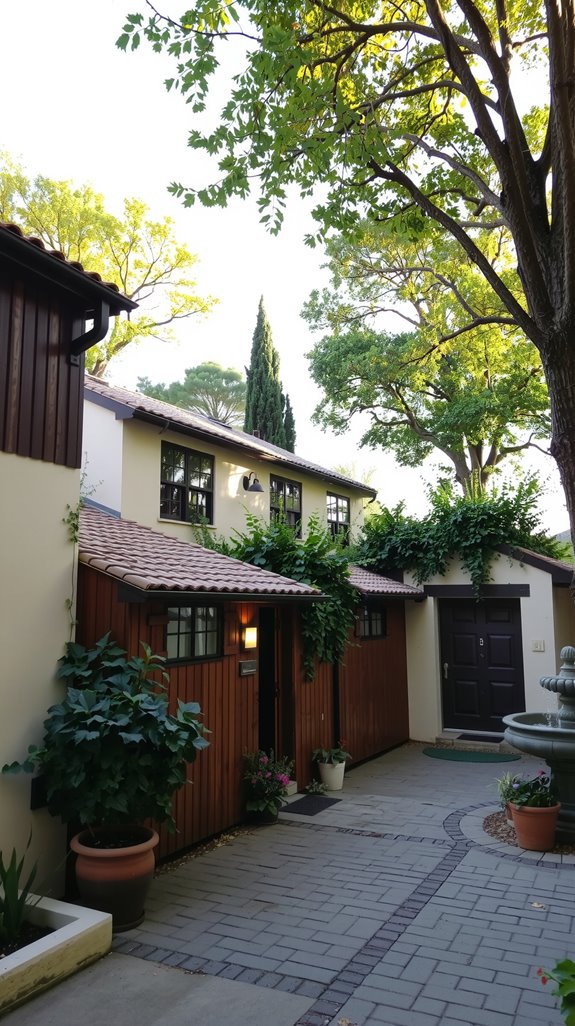
The magic happens because these homes face inward instead of out toward the street. Windows look onto your own protected courtyard rather than the neighbor’s fence or passing traffic, which shifts the entire feel of the space.
That inward focus means you can open up with floor-to-ceiling glass without worrying about privacy, and the perimeter walls naturally buffer street noise. Cross-ventilation works better, too, since you’re pulling air through the courtyard instead of relying on windows that face busy roads.
Courtyard Mini Houses for Urban Infill and Tight Sites
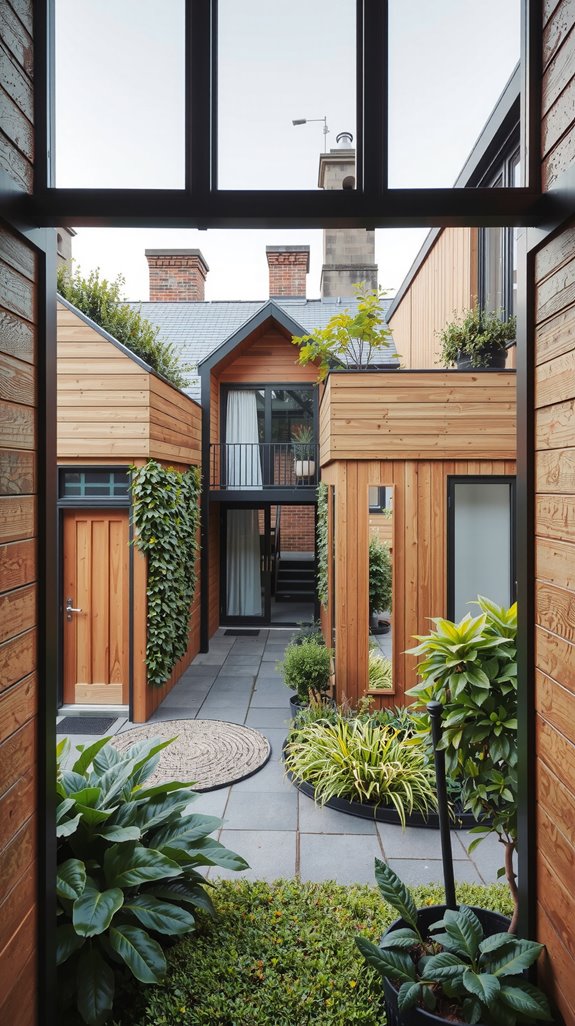
Urban planners love courtyard mini houses because they solve the density puzzle without making neighborhoods feel overcrowded. A single block can hold 17 units instead of eight traditional homes, and the scale still feels right because each home maintains its own outdoor room.
These compact builds typically sit on just 2,300 square feet of land, making them ideal for filling in those awkward leftover lots that pepper older neighborhoods. Clustering kitchens and bathrooms back-to-back also cuts plumbing costs, which matters when you’re trying to keep construction budgets reasonable.
House 1: Living in 7.3 sq m on a Traffic Island
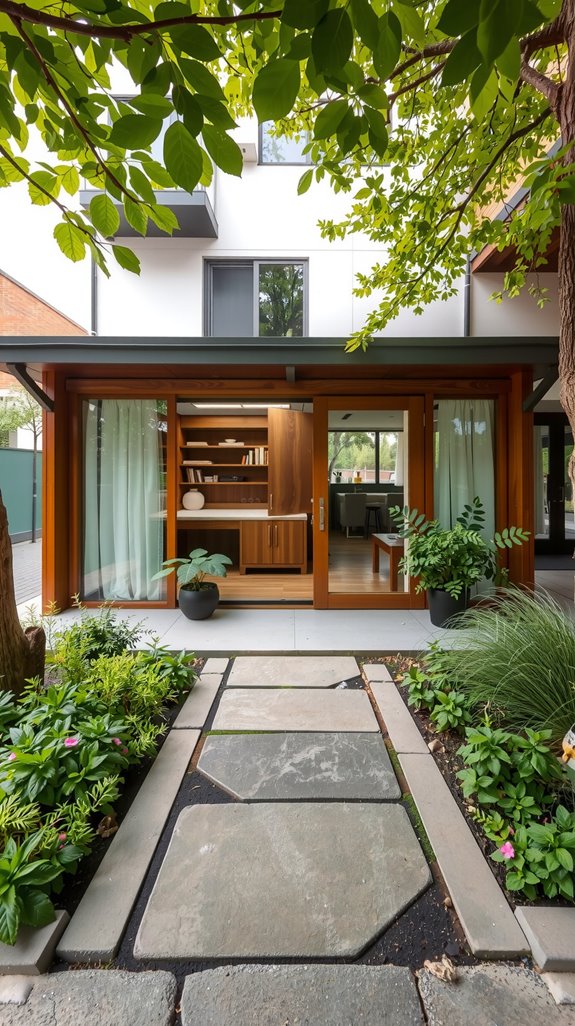
Marcus Bader’s traffic island house in Ludwigsburg, Germany, stretches the entire concept to its limit at barely 75 square feet. Thousands of cars pass daily, yet the dark corrugated iron walls and tiny interior courtyard create complete privacy.
A fountain masks the traffic drone while floor-to-ceiling glass opens the cramped interior to its minimal garden. It’s an extreme example, but it proves that even the smallest footprint can feel livable when the courtyard draws your attention inward.
House 2: Narrow Urban Courtyard House With a Mid-Plan Light Well
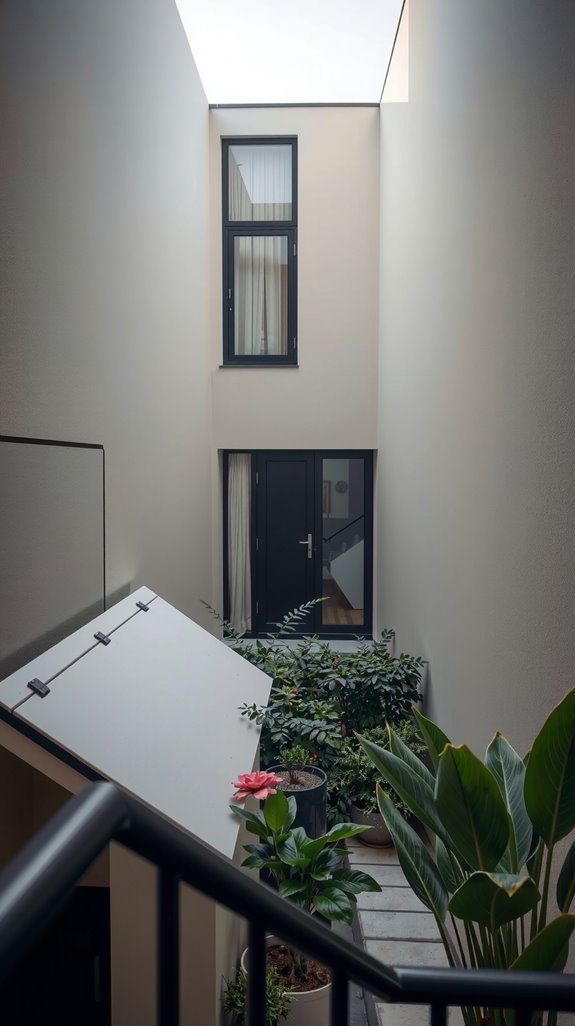
Narrow urban lots hemmed in by neighboring walls usually end up dark and cave-like. The solution is carving a two or three-story light well right through the middle of the floor plan, which brings sky and daylight down into spaces that would otherwise never see the sun.
Circulation wraps around this vertical courtyard, and rooms open onto it with glazed walls that transform what should feel tight into something luminous. Vietnam’s House 304 takes this further with curving, plant-filled balconies that spiral around the void and soften the geometry.
House 3: Corner Lot Mini Home With Side Garden Access
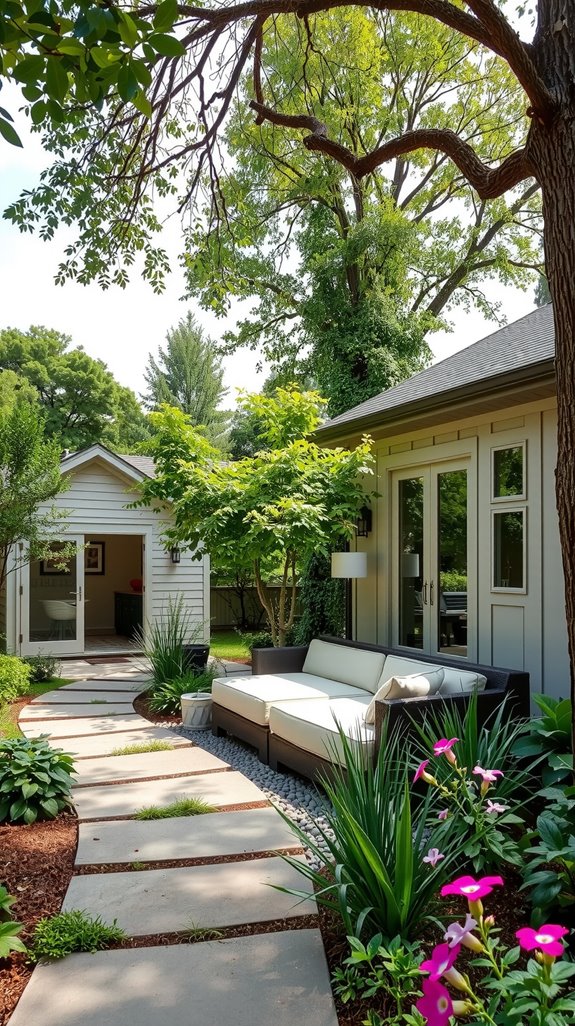
Corner lots give you something mid-block parcels can’t offer: two street faces to work with. You can push the building mass toward the busier street while turning the quieter side into a protected garden corridor that becomes your main outdoor room.
Strategic fencing and layered plantings screen this side yard from view, creating a private circulation spine that connects different parts of the home. The setup turns what looks like exposure into a genuine enclosure.
Courtyard Mini Houses for Multi-Generational Living
Nearly 60 million Americans now live in multigenerational households, up from just 7% of the population in 1971 to 18% by 2021. Standard single-family layouts were never designed for this, and jamming three generations under one roof without proper separation creates friction.
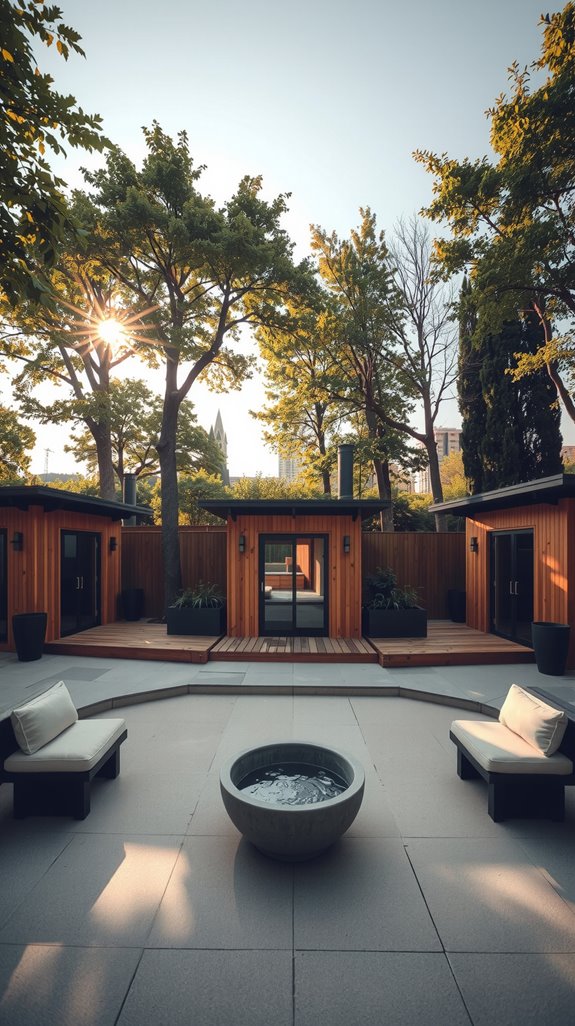
Courtyard compounds solve this by clustering semi-detached suites around a shared outdoor room, giving each generation its own entrance and acoustic buffer. Everyone gets views of greenery instead of staring at someone else’s bedroom window.
House 4: The Central Garden Room That Connects Generations
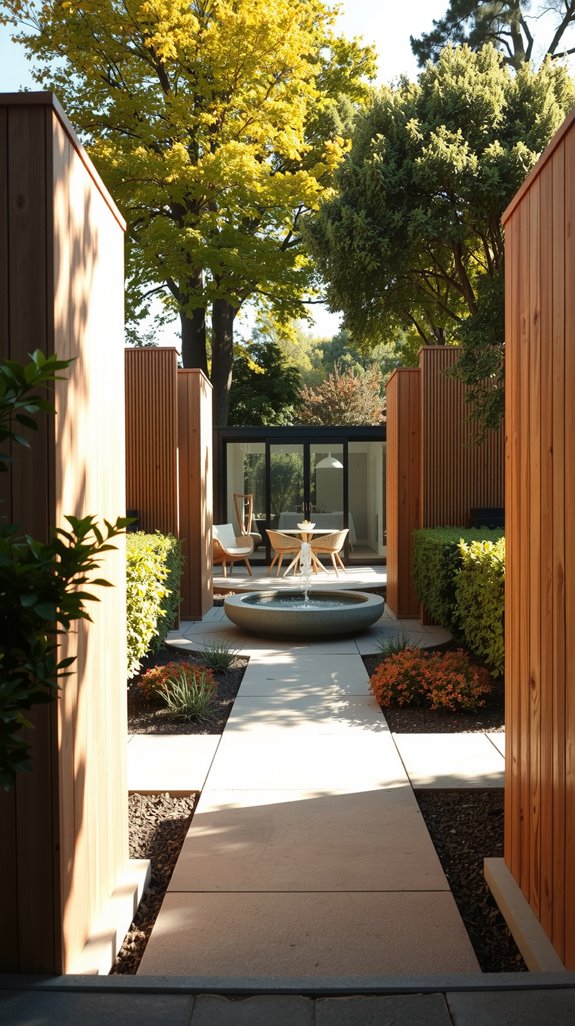
Shared hallways and common walls create collision points when multiple generations occupy one property. A central garden room gives everyone neutral territory where connection happens by choice rather than by force.
Each suite opens onto this shared courtyard independently, maintaining visibility without sacrificing acoustic separation. Sliding doors let you shift between open family time and quiet retreat, and level thresholds make the space work for both young children and aging grandparents.
House 5: A Visual Connection Courtyard for Multigenerational Privacy
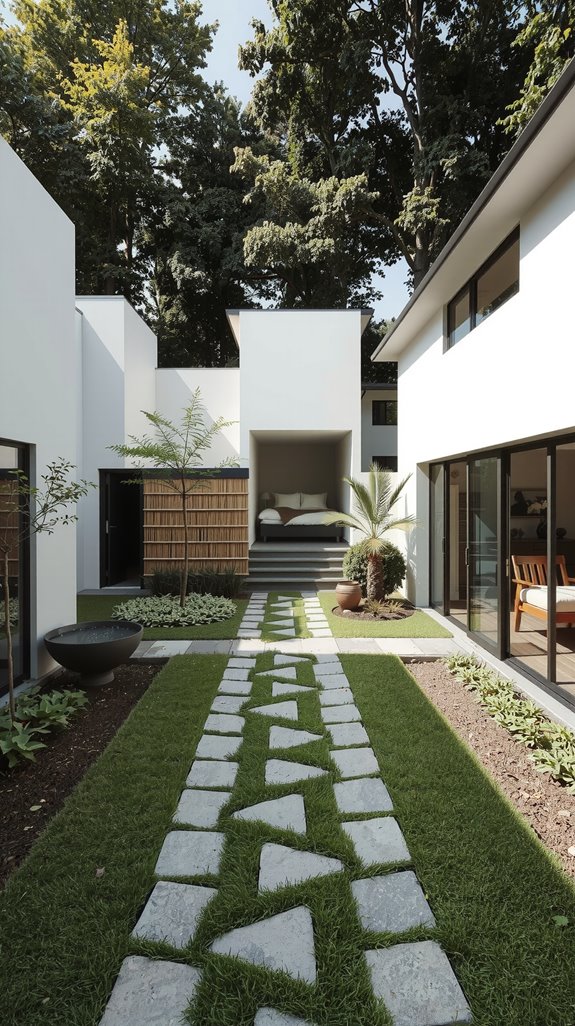
Multigenerational living requires more than just adding square footage to a floor plan. Arranging private suites around a central courtyard establishes a visual connection across balconies and voids while keeping noise at a distance.
Perforated screens and adjustable glass walls let you control sightlines between generations, so grandparents can keep an eye on young kids without living on top of each other. The layout naturally creates distinct zones, with quiet elder spaces opposite active children’s areas, all connected through neutral shared territory.
Courtyard Mini Houses for Climate and Light Performance
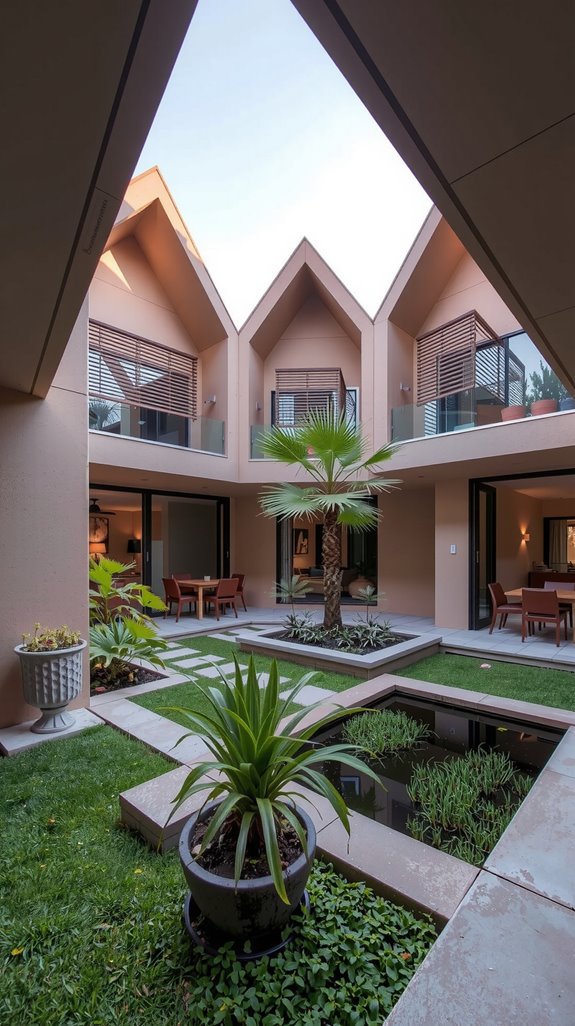
A well-designed courtyard does more than separate spaces; it becomes a passive climate tool that moves air and manages sunlight. Stack effect ventilation happens naturally when you get the proportions right, pulling cool air in low and exhausting warm air high.
Controlled solar access means winter warmth without summer overheating, and studies show properly designed courtyards can drop indoor temperatures by nearly 2°C in hot climates. You get better air exchange and deeper daylight penetration without running mechanical systems.
House 6: North-Facing Courtyard House for Controlled Solar Gain
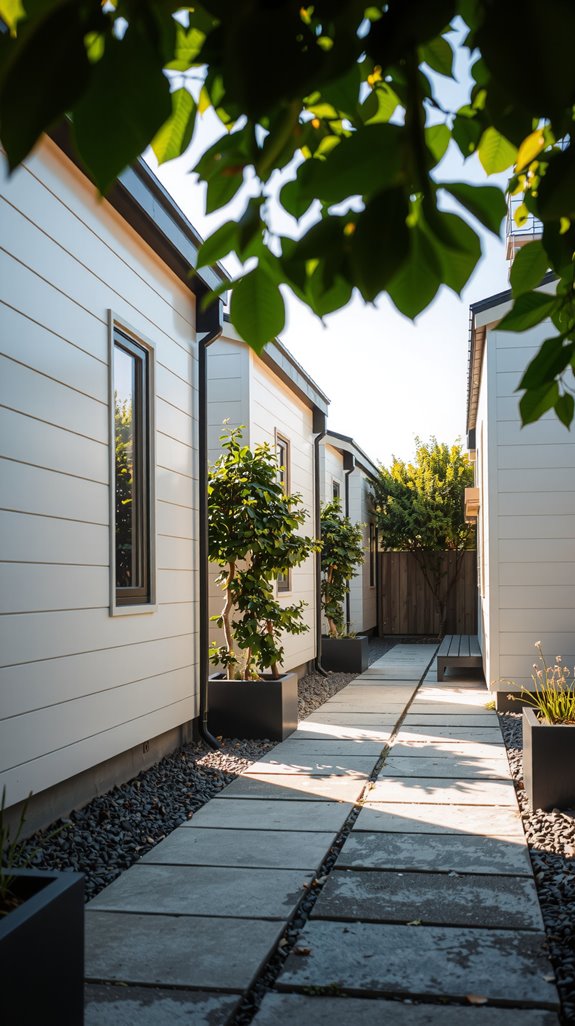
North-facing courtyards flip conventional solar thinking by prioritizing soft, diffuse light over raw heat gain. Moderate glazing faces the courtyard while south-facing walls block intense radiation before it hits your living spaces.
Overhead shading and calibrated depth-to-height ratios keep the courtyard self-shaded at midday, stabilizing temperatures without cutting off natural light. This approach works particularly well in hot climates where maximum solar gain would turn your home into an oven.
House 7: Cross-Ventilation Courtyard Design for Two-Story Homes
Stacking two levels around a central courtyard turns simple cross-ventilation into a three-dimensional airflow system. L, U, or C-shaped massing keeps rooms one room deep with operable windows on opposite sides, creating natural pressure differentials that move air vertically and horizontally.
This configuration can reduce indoor air age by more than a third while cutting cooling costs. The courtyard itself acts as an acoustic buffer, so second-floor bedrooms stay quiet even when ground-floor entertaining runs late.
House 8: Double-Height Atrium Courtyard House on a Compact Footprint
Carving a double-height atrium from the center of a compact floor plan seems counterintuitive when every square meter costs money. The vertical void floods all floors with daylight and improves stack-effect ventilation, transforming what could feel like a cramped interior into something breathable and light-filled.
You maintain a buildable area by going vertical instead of surrendering land to side yards. The result is a luminous core with private sky views that makes the whole home feel bigger.
Courtyard Mini Houses for Calm Atmosphere and Outdoor Living
High-density living usually means sacrificing the calm outdoor space that makes a house feel like home. Courtyard mini houses prove you can have both by merging indoor and outdoor areas into one continuous spatial experience.
Green space becomes visible from nearly every room, creating a sense of expansiveness even on tight lots. Private courtyards shield you from street noise while kitchens that open onto central courts keep families connected without losing privacy.
House 9: Zen Garden Courtyard With Bamboo and Water Feature
A compact Zen garden measuring just 3 by 3 meters can transform a mini house into a genuine sanctuary. Clumping bamboo screens reach about 2.4 meters high, creating privacy while staying light and airy.
A small tsukubai basin adds the sound of trickling water at 40 to 50 decibels, just enough to mask ambient noise without becoming intrusive. Raked gravel, moss, and carefully placed stones complete the contemplative atmosphere that makes stepping into the courtyard feel like leaving the city behind.
House 10: a 6 M X 6 M Entertainment Courtyard With Glass Walls
A 6 by 6 meter entertainment courtyard creates 36 square meters of social space that can comfortably hold 12 to 18 guests. Floor-to-ceiling glass walls around the courtyard dissolve the boundary between inside and out, making a 60 to 120 square meter house feel much larger during gatherings.
Sliding or folding panels give you climate control when the weather doesn’t cooperate, while perimeter benches and planters keep circulation clear. The courtyard becomes the heart of your home, equally good for morning coffee alone or evening entertaining with friends.