
I’ve visited hundreds of tiny homes over the past decade, and I keep coming back to this truth: the best ones don’t feel small at all. What sets them apart isn’t clever storage hacks or minimalist décor. It’s how they blur the line between inside and out.
You’re about to see fourteen approaches that do exactly this, turning compact footprints into something that feels surprisingly generous. Most people think downsizing means sacrificing space, but these designs prove you’re really just rethinking where your living room ends and where it begins.
Sliding and Bifold Glass Doors That Erase Indoor-Outdoor Boundaries
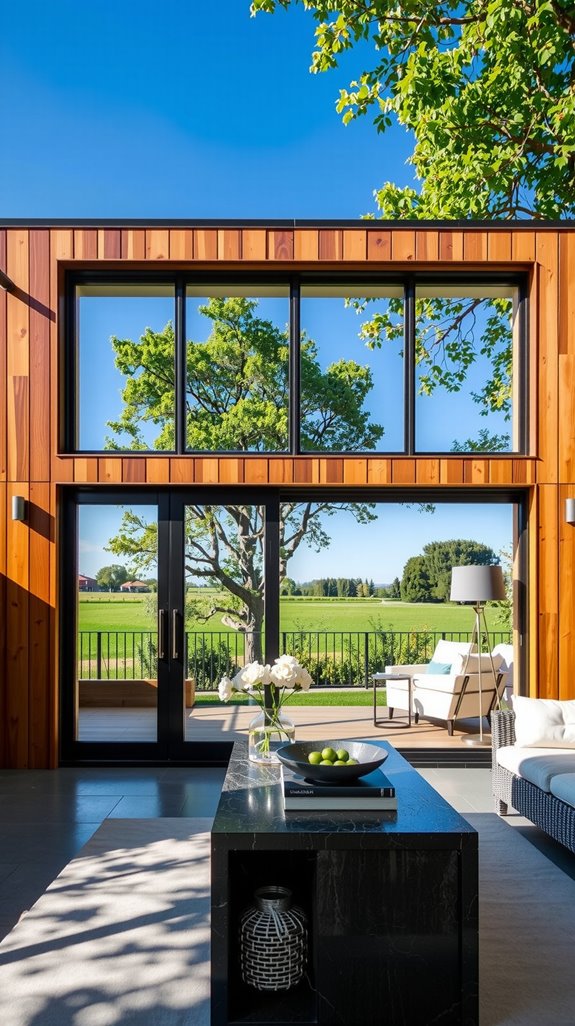
Your 240-square-foot home can’t afford to waste a single inch on door swing arcs. Sliding and bifold systems solve this by stacking panels to one side instead of eating up floor space as they open.
I’ve seen two-panel units around 60 to 72 inches handle most standard walls just fine, but the real magic happens when you jump to three or four panels spanning up to 192 inches. Suddenly your entire wall disappears, and what felt like a shoebox becomes something closer to a pavilion.
Floor-to-Ceiling Windows for Panoramic Views in Compact Footprints
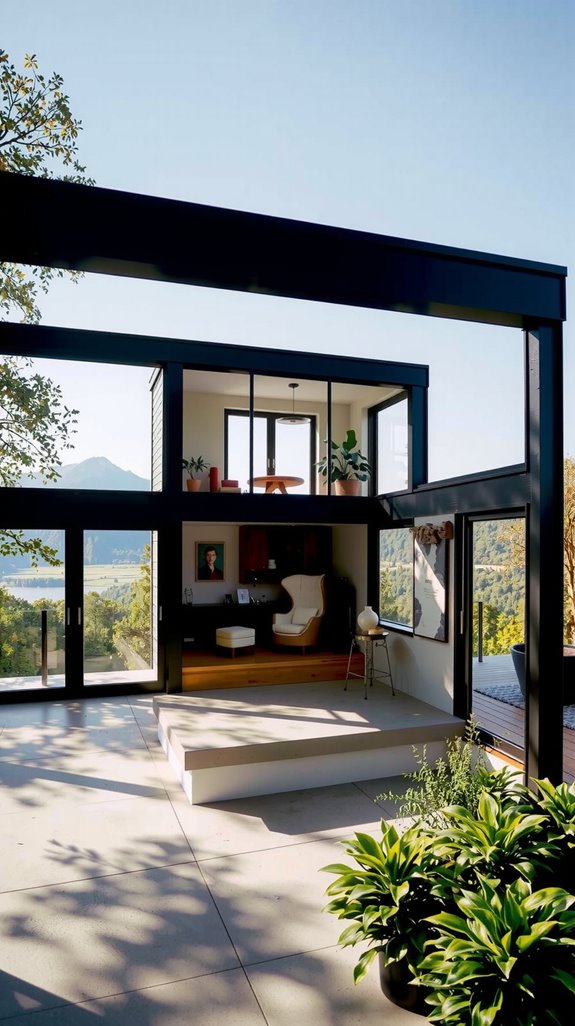
Vertical glass does something counterintuitive in small spaces. Instead of making you feel exposed, it tricks your brain into thinking the forest or meadow outside is part of your square footage. I always spec double or triple-pane low-E glass with argon fills because you need serious insulation performance when this much of your wall is glazing.
Corner windows work especially well since they pull views from two directions at once, and placing them opposite a solid wall creates a depth that makes 300 square feet read more like 500.
Continuous Flooring Materials That Make Small Interiors Feel Larger
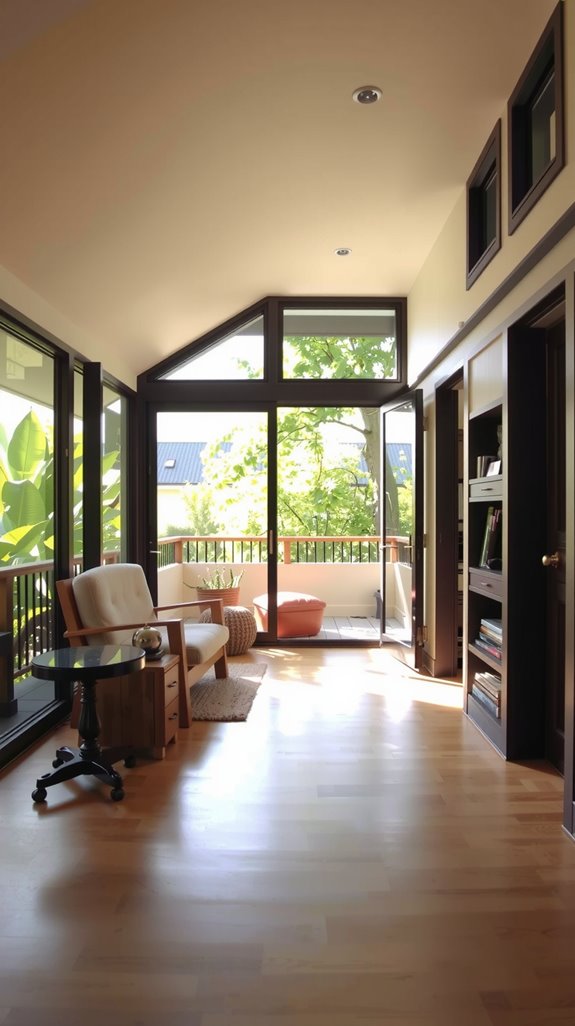
You’ve got the windows right, but now look down at your feet. Running the same flooring from your kitchen through to your sleeping loft eliminates visual breaks that chop up the space and make it feel compartmentalized.
Light oak or pale concrete in wide planks does the heavy lifting here, especially when you run them parallel to your longest wall. Skip the area rugs and threshold transitions unless you absolutely need them. Every seam you introduce is another place where your eye stops and registers “this space ends here.”
Flush Thresholds for Seamless Accessibility in Tiny Houses
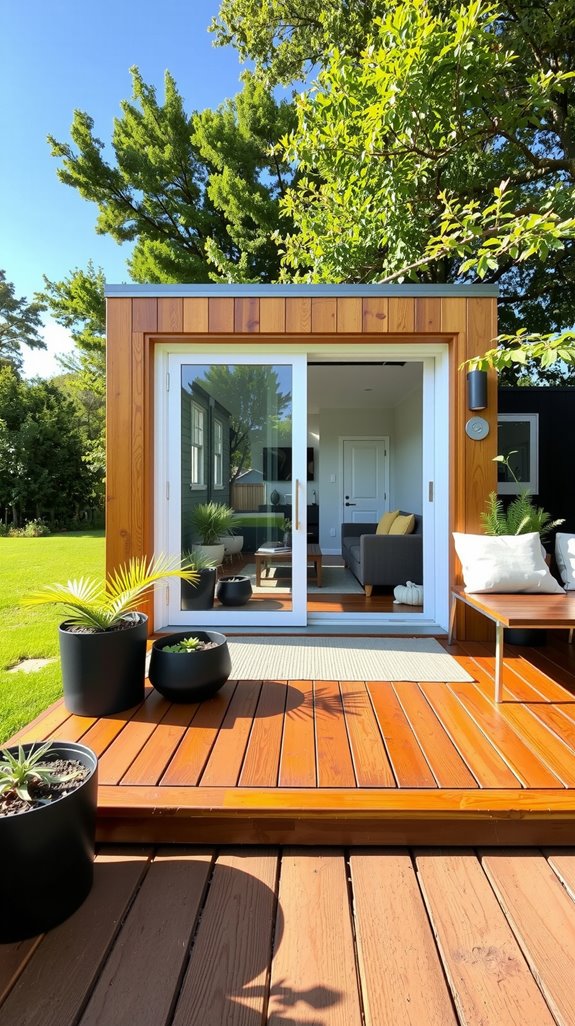
That quarter-inch lip between your door and deck might not seem like much until you’re hauling groceries in both hands or your knee starts acting up after a long hike. Flush thresholds set within 5 millimeters of your finished floor turn that daily annoyance into effortless movement.
You’ll need proper drainage channels and careful weatherproofing to pull this off without leaks, but it’s worth the extra effort during construction. Beyond the practical benefits, a level transition reinforces that visual continuity we’re after, making it harder to tell where your home stops and your deck starts.
Wraparound Decks That Double Your Functional Living Space
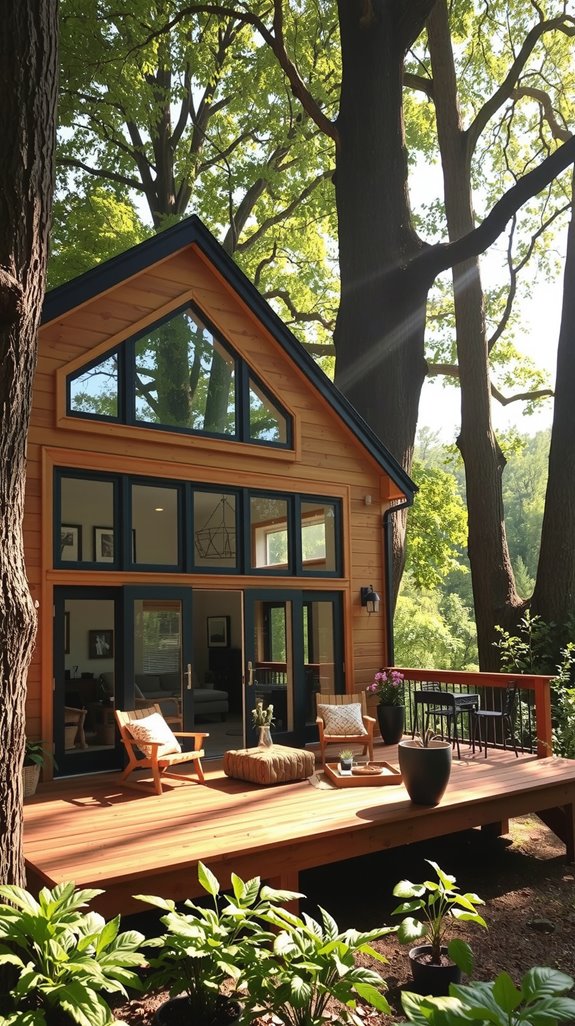
Once you’ve nailed those threshold details, the outdoor platform itself becomes your next opportunity to add a livable area without expanding your trailer footprint. Wraparound decks give you options throughout the day. Morning coffee on the east side, evening drinks facing west toward the sunset.
I’ve measured deck-to-interior ratios in successful tiny homes, and the sweet spot usually lands around 1:1 or even 1.5:1. Your 200-square-foot home paired with a 300-square-foot deck suddenly gives you 500 square feet of usable living area.
Covered Patios Built Underneath Elevated Tiny Houses
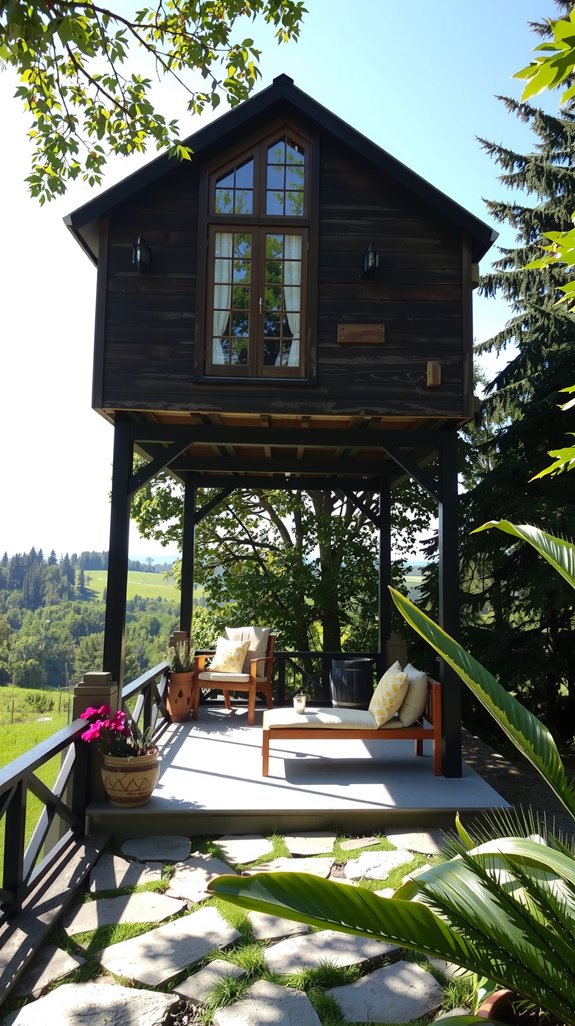
Lifting your tiny house on posts or piers creates what I call “free square footage” underneath. That shaded footprint costs almost nothing extra since you’re already building the support structure, yet it delivers protected outdoor space that works year-round.
Throw in an under-deck drainage system and some ceiling panels to hide the joists, then finish with pavers or stamped concrete that won’t rot like wood decking. I’ve seen people set up entire outdoor living rooms down there, complete with weatherproof furniture and string lights that turn the space into something genuinely magical after dark.
Multi-Level Deck Designs With Dedicated Dining and Fire Pit Zones
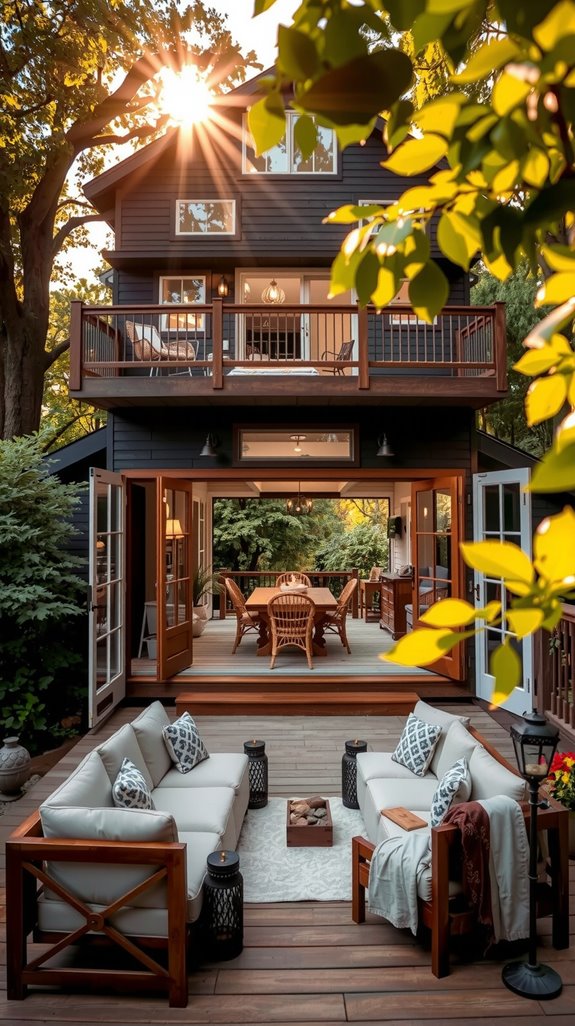
A single flat deck gets the job done, but dropping down six to eighteen inches between zones completely changes how the space functions. Keep your dining area flush with the kitchen door so you’re not navigating steps with hot plates and full glasses.
Then step down to a lower level for your fire pit, which serves the dual purpose of defining separate areas while keeping open flames a safe distance from your siding. These elevation changes create natural gathering spots that feel intentional rather than crowded, and people tend to spread out across levels instead of clustering in one corner.
Shed Roofs With Tall Glazing on One Side for Maximum Light
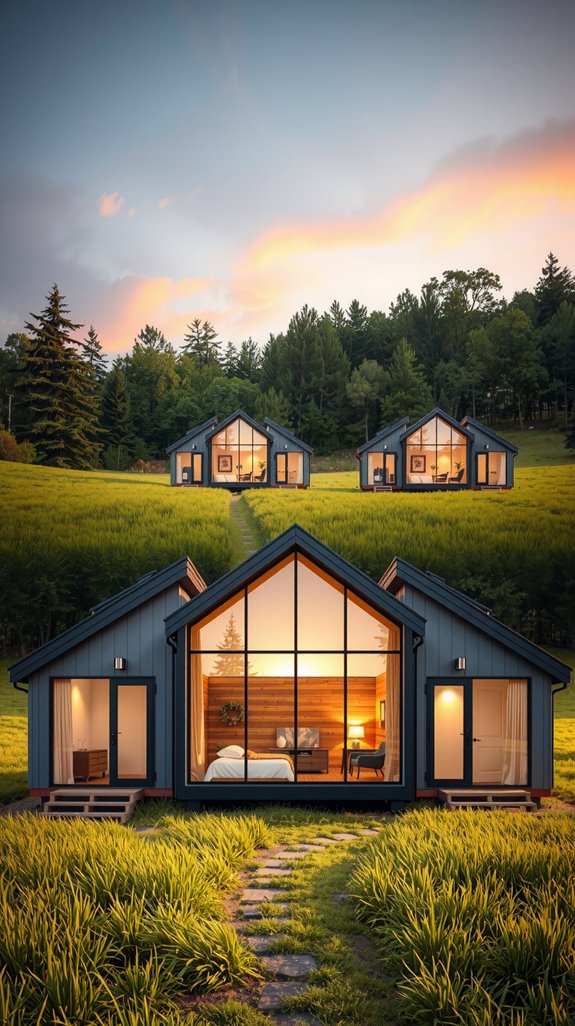
Shed roofs with full-height windows on the tall side pump natural light deep into spaces where standard windows barely make a dent. Point that glazed wall within 15 degrees of true south if you’re in a cold climate, and you’ll capture serious passive solar heat during the winter months.
I typically keep the glass between 15 and 25 percent of the floor area because any more than that and you’re fighting heat gain in summer or heat loss at night. The payoff is cutting your electric lighting needs nearly in half while getting even, pleasant illumination that doesn’t leave dark corners lurking in the back.
Strategic Siting to Frame Mountain, Forest, and Water Views
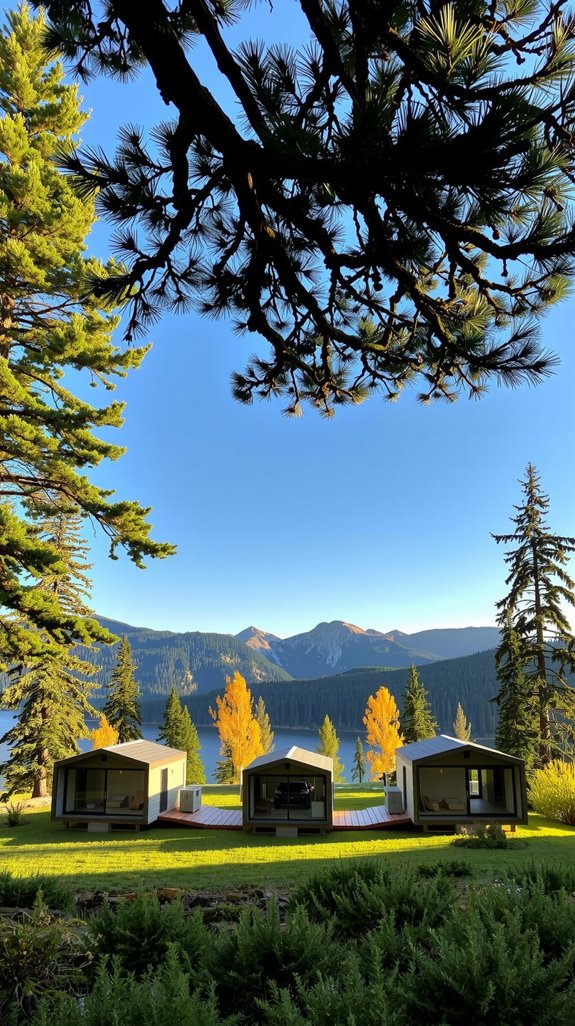
Where you drop your tiny house on the property matters more than almost any design decision you’ll make inside it. I always walk the site at different times of day before committing to a spot, watching how light moves and which views open up from various angles.
Aim your tall glazed wall toward unobstructed valleys, distant peaks, or forest clearings that give you something worth looking at.
Tuck the lower walls into hillsides when possible for wind protection and thermal mass benefits. Your deck orientation should capture multiple perspectives, and clerestory windows up high can frame distant mountains without sacrificing privacy from neighbors at ground level.
Narrow Floor Plans That Keep Every Room Near a Window
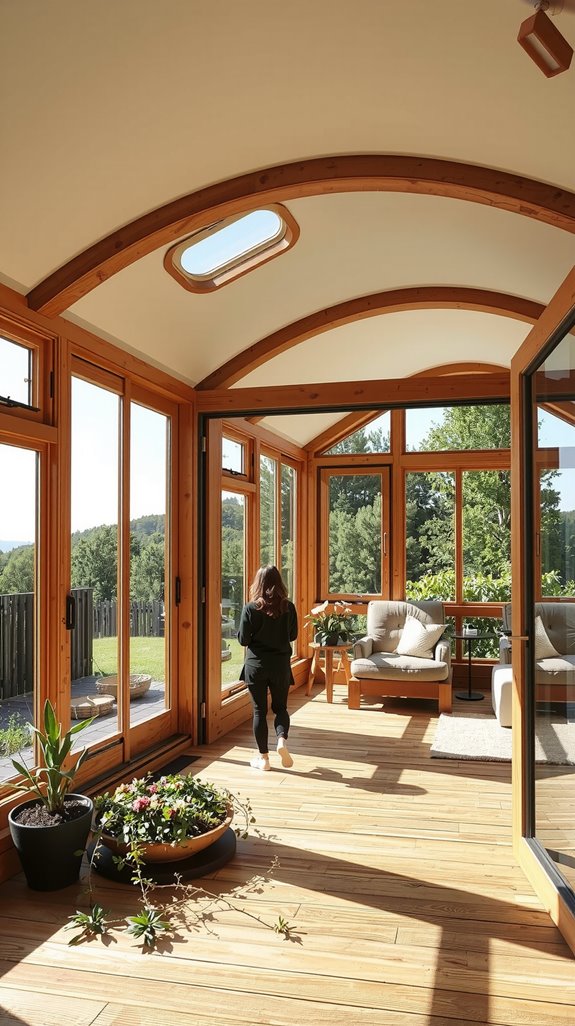
Skinny floor plans win in tiny house design because every room can touch an exterior wall when you’re only 12 to 16 feet wide. You avoid those dark interior spaces that make small homes feel like caves. Stack two stories, and you double your window access since both levels get perimeter walls full of glass.
Even in single-level layouts, keeping bathrooms and storage toward the center preserves those precious exterior walls for spaces where you actually spend time. Open concepts help here too, letting a single wall of windows illuminate your kitchen, dining, and living areas all at once.
Exterior Storage Doors That Preserve Deck Aesthetics
Smart window placement gets you halfway there, but you still need somewhere to stash propane tanks, garden tools, and outdoor gear without cluttering your deck. Custom access panels with beveled edges that sit flush with your siding blend right in when closed. I’ve built hidden compartments under deck benches and within wall cavities that you’d never notice unless you knew where to look.
The goal is to access what you need without breaking the clean lines that make your outdoor space feel cohesive. Position these hatches alongside walls or under stairs where they stay out of sight from main gathering areas.
Outdoor Kitchens With Dedicated Side-Wall Access Points
Connecting your indoor kitchen to an outdoor cooking zone sounds complicated until you think linearly. Install a wide sliding door on a side wall, then run your outdoor kitchen parallel to the house along that same wall. Your grill, sink, and prep counter are all within arm’s reach of your indoor refrigerator and pantry.
This setup keeps foot traffic flowing smoothly since you’re not blocking the main entry while shuttling food back and forth. I’ve cooked hundreds of meals in configurations like this, and the workflow beats trying to access an outdoor kitchen from a front deck where everyone congregates.
Mini-Split HVAC Placement for Outdoor Comfort and Efficiency
Getting your outdoor kitchen layout right matters, but so does keeping the temperature comfortable while you’re using it. Mini-split systems work beautifully in tiny homes if you place the outdoor condenser somewhere shaded along a side wall away from decks and patios. Nobody wants to hear that compressor humming or feel hot air blowing while they’re trying to relax outside.
Mount the indoor head on an interior wall across from your big windows and doors so it pushes air across the whole space without creating direct drafts. This cross-room circulation keeps things comfortable whether you’re inside cooking or transitioning to the deck.
Off-Grid Tiny Houses Balancing Large Openings With Energy Performance
Going off-grid used to mean tiny windows and thick walls that felt more like bunkers than homes. Modern insulation technology changed that equation completely. Super-insulated envelopes let you install those expansive windows and disappearing doors we’ve been talking about without watching your battery bank drain in real time.
High R-value walls and roofs offset the heat loss through glass, especially when you combine them with proper solar orientation and exterior shading strategies. I’ve tested builds that stay comfortable year-round with right-sized solar arrays, proving you can have both the view and the energy independence.