
Living in a campervan will completely transform how you experience mornings and evenings, but only if you’re intentional about it. You can’t just wing your daily routines when your bedroom, office, and kitchen exist in 80 square feet.
Experienced van lifers will tell you the gap between thriving on the road and merely surviving it comes down to habits, specifically, what you do in those first and last moments of each day. The twelve rituals below are the ones they swear by.

Start Your Van Life Day by Making Your Bed

Making your bed every morning isn’t about being uptight or obsessive. It’s the first decision you make each day, and getting it right creates momentum for everything else.
Fixed beds stay made overnight, so you’re just pulling things tight and smoothing wrinkles. Convertible setups take three minutes to fold away, which instantly doubles your living space and gets your brain ready for the day.
Brew Coffee and Eat Breakfast With Your Doors Open

Crack those doors open while your water heats up, even if it’s cold outside. Fresh air wakes you up faster than any amount of caffeine, and watching the sunrise from your doorway beats staring at kitchen walls.
I use a simple pour-over setup because it’s reliable, compact, and makes better coffee than those fancy camp percolators. Eating breakfast outside your van, even if it’s just oatmeal on the bumper, reminds you why you’re doing this in the first place.
Move Your Body Before Logging On to Work

Twenty minutes of movement before you touch your laptop changes everything about your workday. Your brain runs on oxygen and blood flow, not willpower, so get both circulating before you try to focus.
I do pushups, squats, and a quick jog around whatever parking lot I’m in. The work will still be there when you get back, but you’ll handle it with a clearer head and better mood.
Journal Your Daily Intentions After Morning Movement

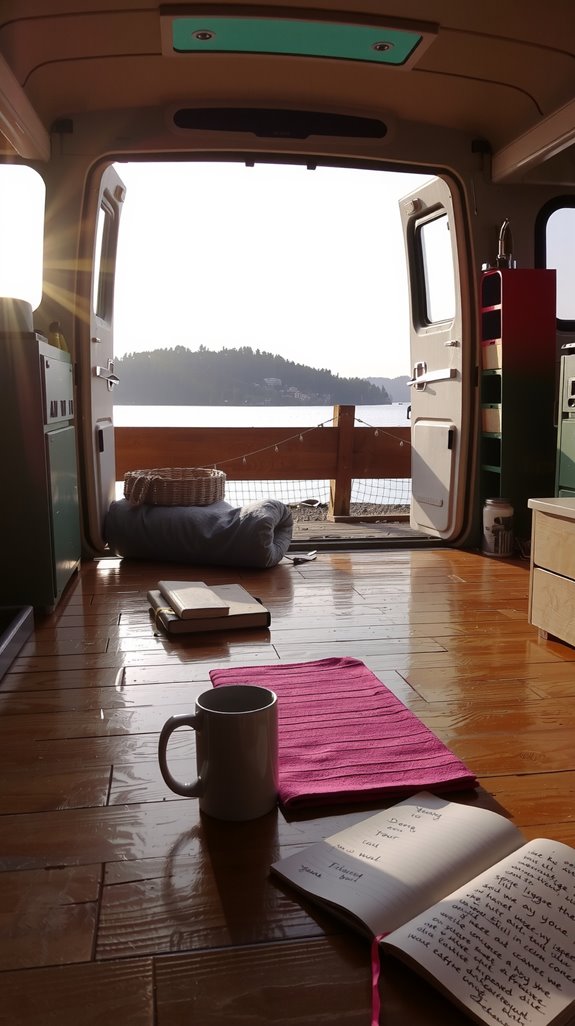
Grab a notebook right after you exercise, while your head’s still clear and before the emails start piling up. Write down the three things that actually matter today, not the twenty things fighting for your attention.
This isn’t about gratitude lists or manifesting abundance or any of that stuff. You’re just deciding what deserves your energy before the world starts making demands.
Work During Your Peak Energy Windows, Not 9-5

The 9-to-5 schedule exists because factories needed predictable shift changes, not because humans work best during those hours. Pay attention to when you actually think clearly versus when you’re just pushing pixels around.
I’m worthless after 3 p.m., so I tackle hard work between 8 and noon, then use afternoons for easy tasks like email and expense reports. You’re living in a van specifically to escape arbitrary rules, so stop following the biggest one.
Use Focus Playlists to Block Out Changing Environments
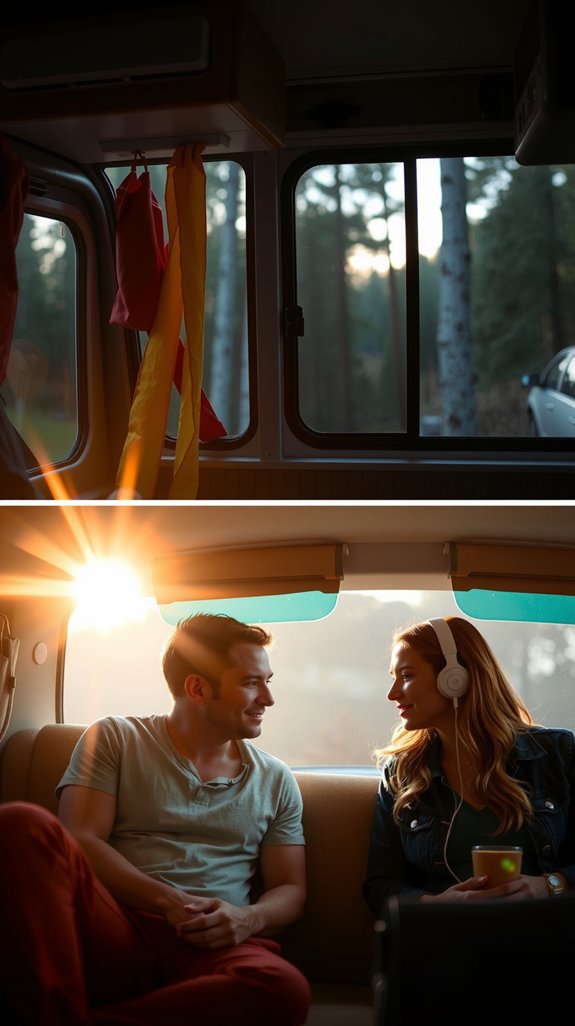
Your office location changes constantly, but your brain needs consistency to focus. Download playlists before you lose cell service, and stick with instrumental music that fades into the background.
I keep three options ready: nature sounds for mornings, lo-fi beats for deep work, and brown noise for when the campground gets loud. Lyrics pull your attention away from the task, so save the podcasts and sing-alongs for driving time.
Choose Scenic Overnight Spots the Night Before
Scrambling for parking at sunset guarantees you’ll end up somewhere mediocre or stressful. Spend ten minutes each afternoon identifying two or three spots for that night, complete with GPS coordinates and backup options.
I use a combination of apps, local intel from other van lifers, and old-fashioned Forest Service maps. The best spots get claimed early, especially during tourist season, so having alternatives prevents desperate decisions when you’re tired.
Plan Weekly Restocking Stops Into Your Travel Route
Running out of propane or fresh water in the middle of nowhere isn’t adventurous; it’s just poor planning. I mark every grocery store, gas station, and water source along my route before I leave service areas.
Resupplying every three to four days keeps the van from turning into a rolling dumpster and prevents panic buying at overpriced tourist traps. Think of it like preventive maintenance: boring but necessary.
Protect Your 7-Hour Sleep Schedule Every Night
Everything falls apart when you’re sleep-deprived, especially decision-making and patience. Pick a bedtime and stick to it, even when you’re parked somewhere exciting or the campfire’s still going.
Your body doesn’t care that you’re on an adventure; it needs consistent rest to function. I’m in bed by 10 p.m. and up by 5 a.m., which gives me quiet morning hours before other campers wake up.
Block Light Completely With Blackout Window Covers
Streetlights, headlights, and early sunrises will wreck your sleep if you let them. Reflectix cut to exact window dimensions works better than curtains because it blocks light completely and adds insulation.
I use small suction cups to hold mine in place, which takes thirty seconds to install and leaves no residue. Darkness signals your brain to produce melatonin, which you need for deep sleep cycles.
Mask Campground Noise With White Noise Apps
Blackout covers handle the light, but they won’t stop your neighbor’s generator or the trucks rumbling past at 2 a.m. I run a white noise app every night, usually set to an oscillating fan or rain sounds.
It doesn’t eliminate noise completely, but it makes sudden sounds less jarring so they don’t wake you up. Download the sounds you like while you have service, because streaming eats through your data plan fast.
Build Location Flexibility Into Your Work Calendar
Remote work policies keep expanding, which means you have more negotiating power than you think. Most managers care about output, not where you’re sitting when you produce it.
I pitch my travel schedule as “distributed work” rather than “van life,” which sounds more professional and less flaky. Document your productivity patterns, show up for video calls on time, deliver quality work, and then ask for what you need.