I expected Pretty Place to be beautiful. That part was obvious long before I ever arrived—every photo online makes sure of that. What I didn’t expect was how quiet it would feel the moment I stepped out of the car.
Not quiet in the sense of silence, exactly, but a softer kind of stillness. The kind that makes you slow your steps without realizing you’ve done it.
There was no rush to get to the edge. No urge to immediately pull out my phone. The air felt different up there—cooler, thinner, calmer.
Even with a few other people around, everything seemed hushed, like the space itself was asking us to be gentle with it. I remember thinking,
Oh. This isn’t just a viewpoint. It felt more like entering a pause.
Some places overwhelm you with scale. Pretty Place does the opposite. It opens you up slowly. You notice the light first, then the distance, then how your shoulders drop once you realize there’s nowhere you need to be for a while. That’s when it hit me: the peace here isn’t accidental. It’s part of the place.
The History That Shapes the Mood
Knowing the story behind Pretty Place changes how you experience it. This overlook wasn’t created to be a viral hiking destination or a dramatic photo stop.
It was built with intention—as a space for reflection, gratitude, and stillness.
You can feel that the moment you arrive.
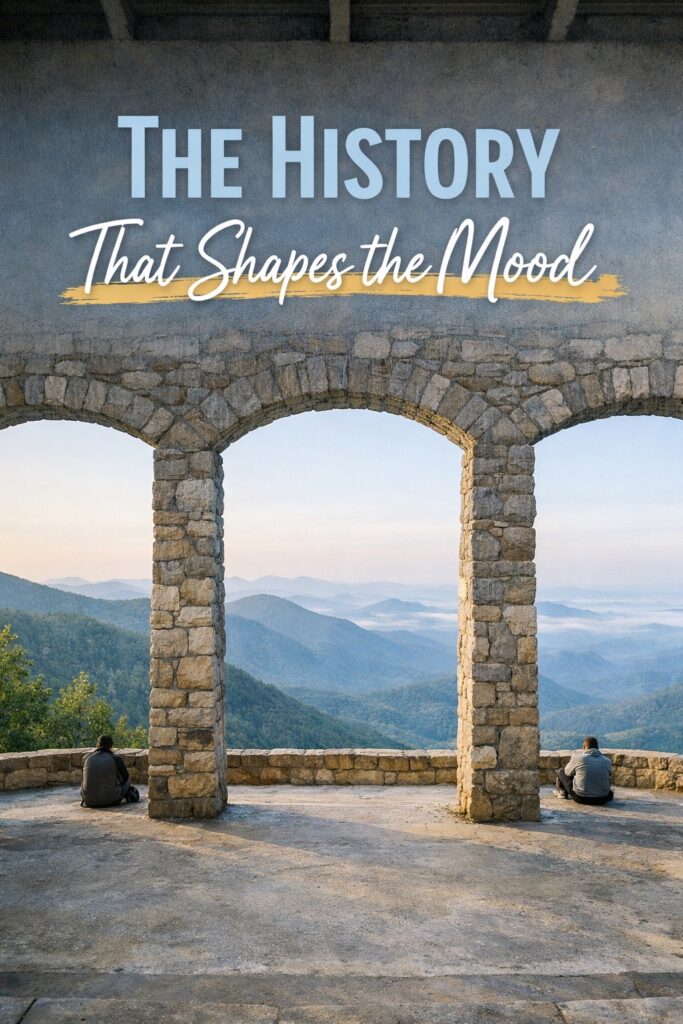
The simple stone structure, the open-air design, the way nothing blocks the view—it all feels purposeful. There’s no clutter, no distractions competing for attention.
Instead, the space gently directs your focus outward and inward at the same time. It doesn’t ask you to do anything. It just gives you room to be.
I think that’s why the atmosphere feels so different from other scenic overlooks. Many beautiful places feel busy, even when they’re quiet.
Pretty Place doesn’t.
It carries a sense of respect, like visitors instinctively understand they’re stepping into something meant for contemplation rather than consumption.
Standing there, I felt less like a tourist and more like a guest. Someone invited to witness, not perform. And in a world that constantly demands attention, that kind of intentional calm feels rare—and deeply comforting.
SEE THIS: The Quiet Rituals Hikers Do While Watching the Sunset Over a Mountain Trail!
Why the Location Feels So Removed From the World

One of the first things I noticed at Pretty Place was how far I could see. Not just distance in miles, but distance from everything else—noise, urgency, expectations.
Standing at that edge, the world below felt smaller, quieter, less demanding.
There were no buildings in sight, no roads cutting through the view, no reminders of schedules or screens.
I think there’s something deeply calming about open horizons. When your eyes aren’t constantly hitting obstacles, your mind seems to follow suit.
There’s nothing to navigate, nothing to analyze. Just layers of mountains fading into one another, soft and steady, like the landscape is breathing for you.
Even though Pretty Place isn’t far from everyday life, it feels far away. Elevated spaces often do that. They give you physical distance, which somehow turns into emotional distance too.
Problems don’t disappear, but they stop shouting. Up there, everything feels less immediate—and that perspective alone brings a sense of peace you can’t fake.
SEE THIS: Forest Hiking Trail Inspiration: The Best Trails to Explore for Scenic Walks!
The Role of Light, Fog, and Weather
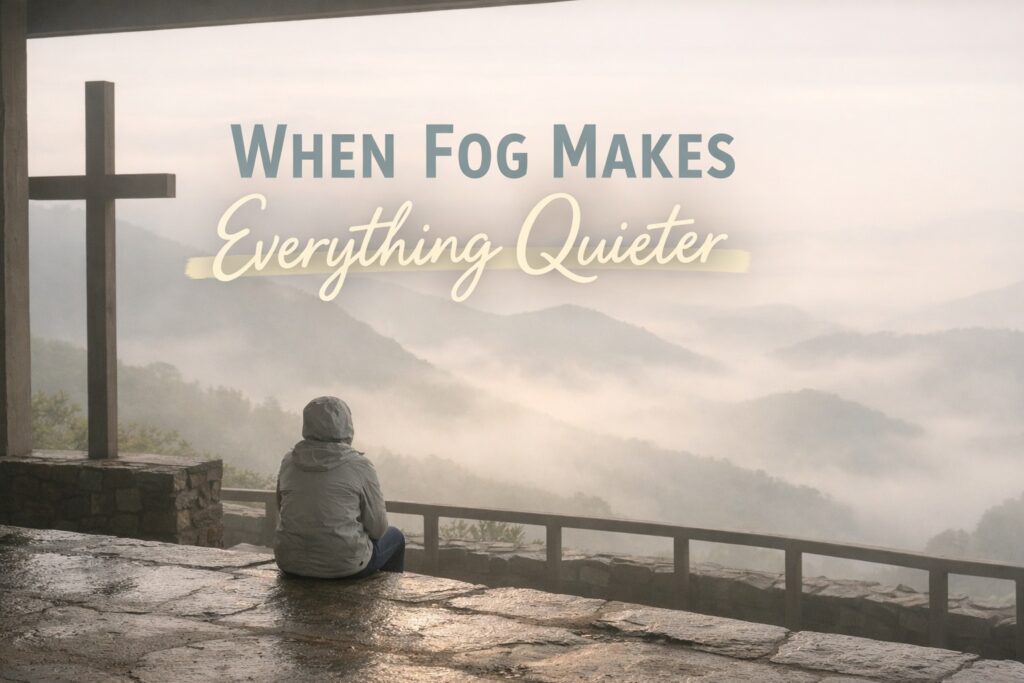
Pretty Place taught me that clarity isn’t always what makes a view powerful. On the morning I was there, fog rolled slowly across the mountains, softening the edges of everything.
The sun filtered through in muted layers instead of bright drama, and honestly—it felt perfect.
Fog has a way of quieting things. Sounds don’t travel as far. Movements feel slower. Even your thoughts seem to soften.
Instead of scanning for details, I found myself just sitting, watching the light shift and the mist move, without feeling the need to label or capture it.
Clear days are beautiful, but there’s something especially peaceful about not seeing everything at once. The changing light and weather make Pretty Place feel alive, but never overwhelming.
It reminded me that not every moment needs sharp focus. Sometimes, softness is what allows you to actually feel where you are.
SEE THIS: How To Build A Backpacking Tent (Beginner-Friendly Step-By-Step Guide)!
Why Silence Feels Louder Here
What surprised me most wasn’t how quiet Pretty Place was—it was how aware I became of sound once I stopped hearing constant noise.
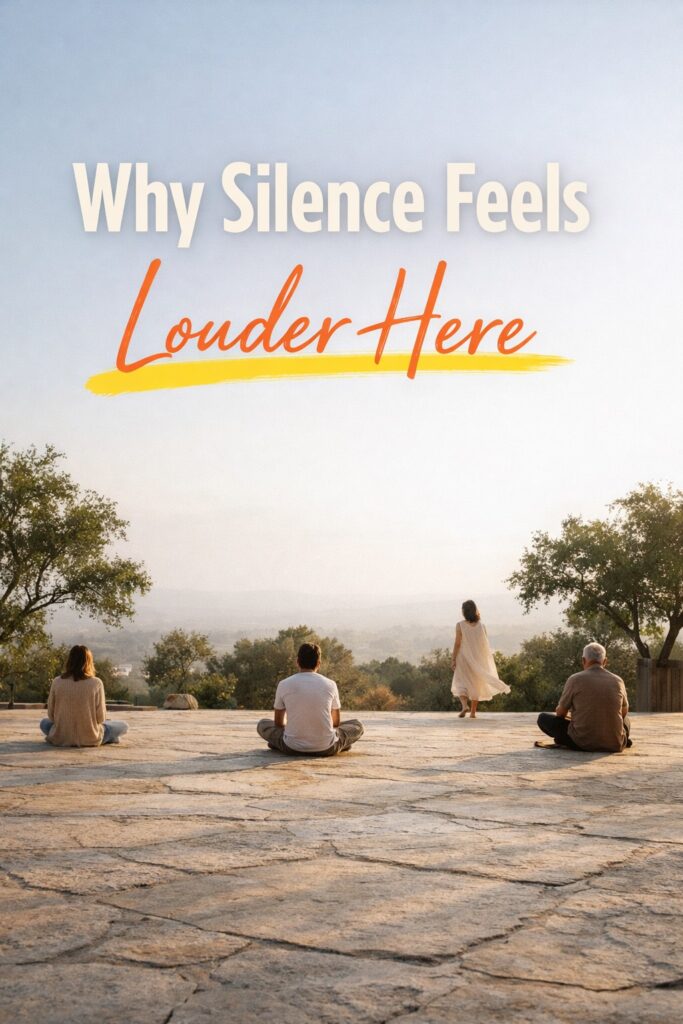
The absence of mechanical sounds was the first thing I noticed. No engines, no buzzing, no distant hum of traffic. Just wind moving through the trees, the occasional bird call, and footsteps softened by stone.
Even conversations felt different. People spoke in lower voices, as if the space itself asked for it. No signs told us to be quiet. We just… were.
That kind of shared, unspoken respect is rare, and it changes how you exist in a place. You don’t feel watched or rushed. You feel held.
In that stillness, my own thoughts slowed down. Silence here wasn’t empty—it was intentional, almost generous.
It gave me room to notice things I usually miss: my breathing, the way light shifted across the mountains, how calm can feel surprisingly loud when you finally allow it in.
The Spiritual Feel Without Being Religious
I’m not someone who seeks out religious spaces, but Pretty Place doesn’t feel like it’s asking you to believe anything.
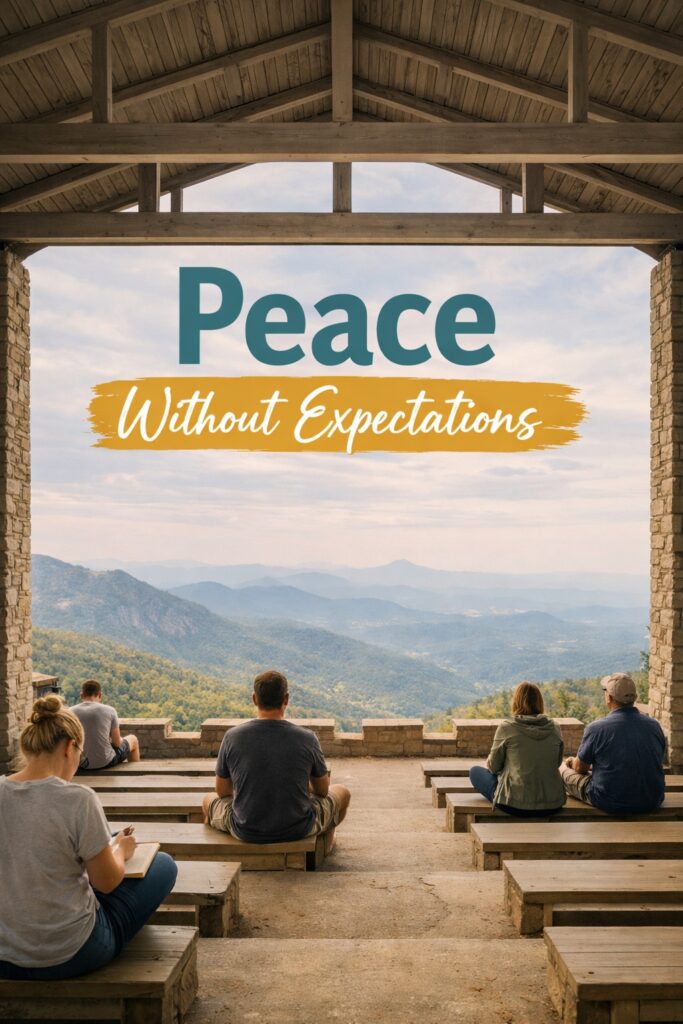
What it offers instead is permission to pause. The open structure, the stone beneath your feet, the vastness ahead—it all creates a sense of grounded openness, not instruction.
I saw people sitting quietly with their eyes closed, others journaling, some just staring out into the distance. No one looked out of place.
That’s what stood out to me most: the space welcomes reflection without expectation. You don’t have to label what you’re feeling for it to matter.
There’s something comforting about feeling small in a way that isn’t threatening. At Pretty Place, that smallness feels humbling, not diminishing.
It reminded me that peace doesn’t need to be dramatic or defined. Sometimes it’s just the feeling of being exactly where you are—nothing more required.
Why Early Mornings Change the Experience

There’s a noticeable shift at Pretty Place in the early morning hours. The air feels slower, the light feels gentler, and the entire space carries a kind of unspoken patience. Fewer people arrive with urgency. No one is rushing to get the shot. Most of us are just… waiting.
Waiting for the fog to lift. Waiting for the sun to rise. Waiting for ourselves to settle.
Early mornings invite presence instead of performance. You have time to sit without feeling watched. To notice how the temperature changes as the light grows warmer.
To experience the overlook as something personal rather than shared. It’s the difference between visiting a place and witnessing it.
By the time more people arrive, the energy subtly shifts. It’s still beautiful—but the magic of the morning lies in how nothing asks for your attention all at once. You’re allowed to ease into the experience, and that makes all the difference.
How to Experience Pretty Place Intentionally
Pretty Place rewards those who don’t rush it. I learned quickly that how you arrive matters just as much as when you arrive.
Walking slowly from the parking area. Letting your eyes adjust before stepping forward. Pausing before you even look out.
I found that sitting—really sitting—changed everything. Standing keeps you alert. Sitting invites stillness. I put my phone away at first, not as a rule, but as a gift to myself. When I did take a photo later, it felt intentional, not compulsive.
This isn’t a place to multitask. It’s a place to let the environment set the pace. To breathe deeper than usual. To allow silence to last longer than feels comfortable at first. The more space you give Pretty Place, the more it gives back.
Who This Trail Is Really For
Pretty Place isn’t for everyone—and that’s part of why it feels so special. It’s not a checklist stop or a high-adrenaline hike.
It’s for slow travelers, early risers, and people who value how a place feels more than what it offers.
If you’re someone who enjoys moments that linger long after you’ve left, this place will stay with you. If you crave restoration more than excitement, you’ll understand its appeal immediately. It’s especially meaningful for those who are a little tired—of noise, of pace, of constant input.
This trail isn’t about doing more. It’s about needing less. And for the right person, that makes it unforgettable.
Why Some Places Stay With You
Long after I left Pretty Place, I noticed how often I thought about it—not in vivid images, but in feelings. A sense of lightness.
A memory of quiet clarity. The kind of calm that doesn’t fade the moment you return to real life. Some places impress you while you’re there.
Others continue to soften your thoughts days later. Pretty Place belongs firmly in the second category.
What stays with me isn’t just the view, but the way time felt slower while I was there. The absence of pressure. The permission to just exist without documenting every moment.
It reminded me that the most meaningful experiences aren’t always loud or dramatic. Often, they’re the ones that create space instead of filling it.
Leaving With Less Noise Than You Arrived With
Pretty Place isn’t a destination you conquer or check off. It’s a place you carry with you, quietly. You don’t leave feeling entertained—you leave feeling reset. That distinction matters more than I realized.
In a world that constantly pushes for more—more content, more movement, more noise—Pretty Place offers the opposite. It shows you how powerful stillness can be.
How restorative distance and silence are when they’re intentional. And how peace doesn’t need to announce itself to be real.
I drove away with the same life waiting for me, but I felt different inside it. A little calmer. A little lighter. And grateful for places like this—places that don’t ask anything from you, except that you slow down enough to notice them.