Sharing a small living room with your partner doesn’t mean you have to give up on style or comfort. With the right furniture choices, some strategic storage, and thoughtful design, you can carve out a cozy space that actually works for both of you.
The trick is figuring out how to make every inch count and still let your personalities shine through. It’s not always easy, but it’s definitely possible.
You might be surprised at how small living rooms can be just as functional as bigger ones when you use smart layout principles. There’s a lot you can do, from picking furniture that multitasks to storage tricks that keep messes out of sight.
This guide covers practical tips for arranging furniture, getting creative with storage, choosing colors and lighting, and setting up zones for your routines as a couple. You’ll see how to balance your own needs with sharing space, so your living room feels inviting and personal—and not like you’re living on top of each other.
Key Principles for Making a Small Living Room Work for Two
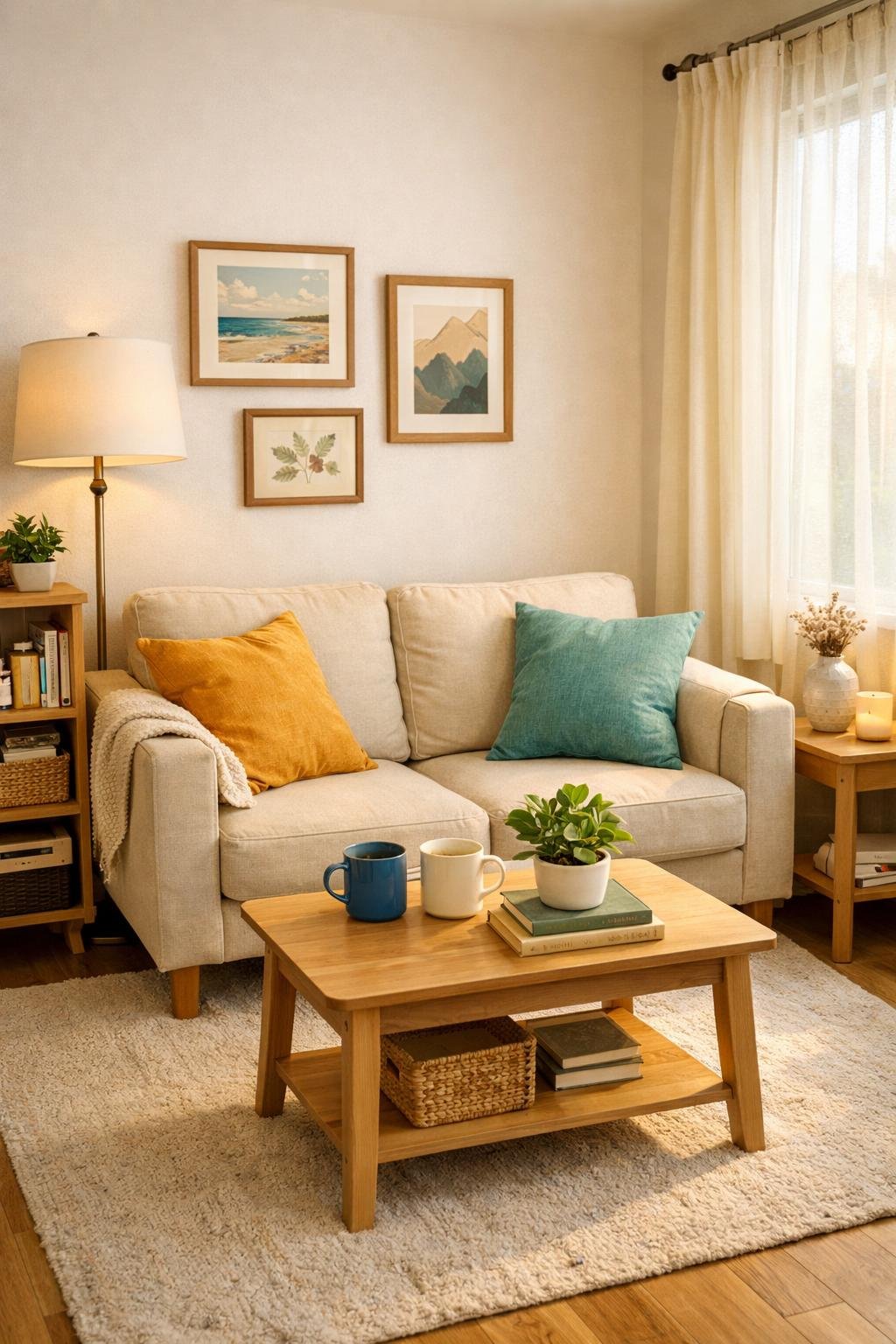
When you’re both sharing a compact space, it takes some planning to keep things comfortable. You need a room that works for both of you, but still lets you move around without feeling boxed in.
Connecting Functionality and Comfort
Your small living room should do more than just look good—it needs to work for your daily life. Go for furniture that can multitask. A storage ottoman is a classic: feet up, clutter tucked away, everyone wins.
Seating is a big deal. If one of you is a lounger and the other likes to sit upright, maybe try a compact loveseat paired with a snug armchair instead of a huge sofa. That way, you both get your favorite spot without swallowing the whole room.
Small-scale furniture keeps things feeling open and doesn’t overwhelm the space. Look for lighter colors and pieces with legs—you’d be surprised how much difference that makes. Honestly, the best furniture is the stuff that actually fits you and fits the room.
Prioritizing Open Walkways
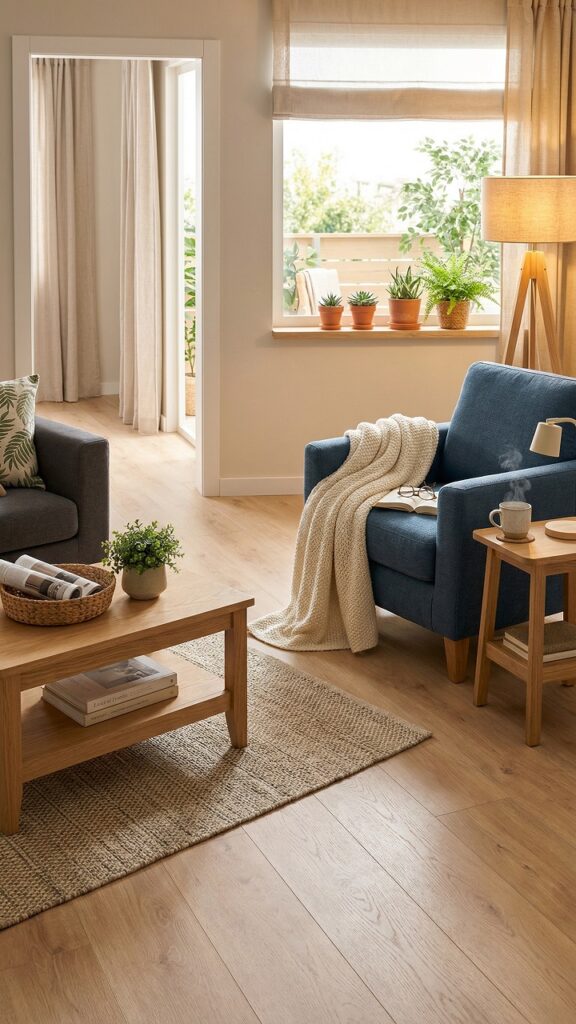
You both need clear paths so you’re not constantly bumping into each other or the furniture. Arrange your layout to direct traffic around your seating area instead of forcing one of you to squeeze through the middle when the other is sprawled out.
Try to leave at least 18 to 24 inches between pieces for walking space. Set up your sofa and chairs to create a conversation zone, but keep doorways and windows easy to reach.
Pull furniture a little away from the walls. It might sound weird, but it actually makes the room feel more inviting and less like everything is squished to the edges. Those walkways kind of act as boundaries, so you can both get around without feeling cramped.
| READ MY PILLAR: Small Living Room Decor Ideas That Actually Work for Real Women (Apartments, Moms, Busy Lives & Budgets). |
Smart Furniture Solutions for Couples
The furniture you pick can totally change how you and your partner use your living room. Go for pieces that do more than one thing, and you’ll find the space works a lot harder for you.
Choosing Multifunctional Pieces
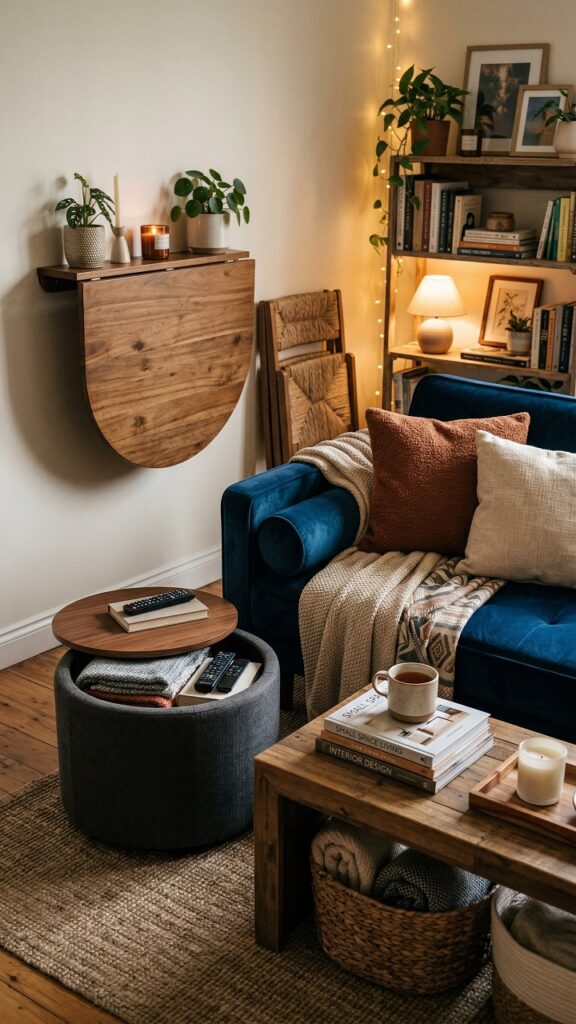
Multifunctional furniture is a lifesaver when you’re short on space. A sofa that converts into a bed is perfect for guests or just stretching out for movie night. By day, it’s your hangout spot; by night, it’s a cozy bed.
Storage ottomans? Can’t recommend them enough. They give you a place to sit or put your feet up, plus they hide all the stuff you don’t want lying around.
Foldable dining tables are clever if you like eating together but don’t want your table taking over the living room. Mount it to the wall and just fold it down when you need it. Some even have shelves or drawers for napkins and candles.
A coffee table with storage underneath keeps your remotes and books handy but out of sight. You don’t have to tidy up every five minutes just to have a neat space.
Making Use of Storage Beds
A storage bed in your bedroom can really help keep your living room free of extra clutter. These beds have drawers or lift-up platforms for underbed storage—great for off-season clothes or extra bedding.
Platform beds with side drawers let you and your partner split up storage space. No more fighting over dresser drawers, and you can skip the bulky furniture that eats up your living area.
Hydraulic lift beds take it up a notch, letting you stash away big stuff like suitcases or winter coats. It’s not always glamorous, but it’s practical.
Picking Space-Saving Sofas and Armchairs
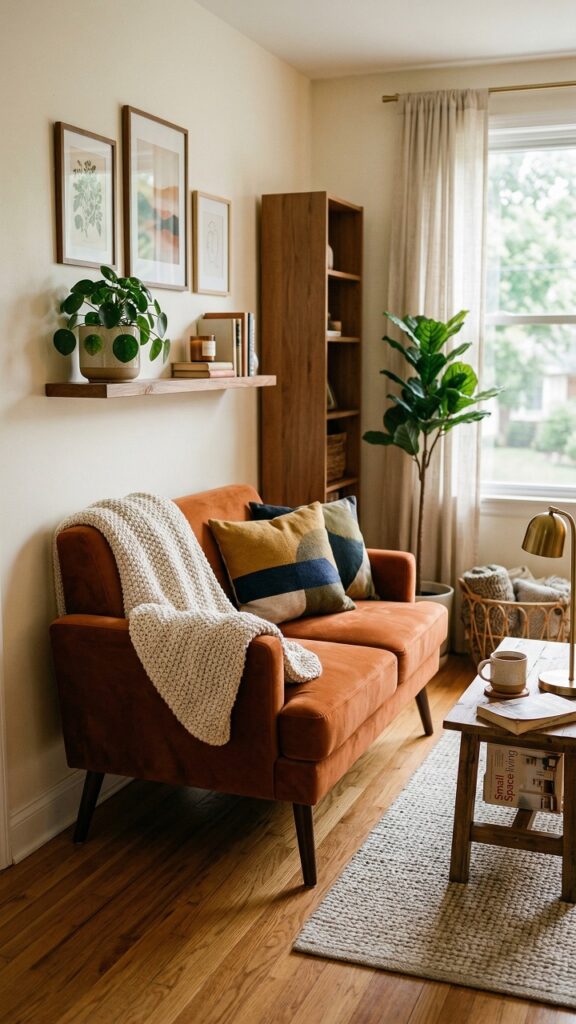
Your sofa’s probably the biggest thing in the room, so it matters. Loveseats or apartment-sized sofas fit two people comfortably without dominating the space. Models with legs help the room feel lighter and more open.
Armless sofas and chairs are a sneaky way to save a few inches. You lose the armrests, but you gain space to move around—sometimes that’s worth it.
Or try a sectional with a built-in chaise instead of a sofa and separate chair. This setup maximizes seating and fits neatly into a corner. Some even have storage under the chaise for those throw blankets you only use in winter.
Creative Storage Ideas That Maximize Every Inch
Smart storage turns a cramped living room into an organized retreat where you both can actually relax. Wall-mounted shelves and flexible furniture can make a world of difference.
Embracing Floating Shelves and Nightstands
Floating shelves are a go-to for opening up floor space. Stick them above your sofa for books, plants, or photos—you get storage and style without losing any square footage. Corners and weird nooks are fair game, too.
Floating nightstands are a smart move for tight bedrooms. They attach to the wall and float above the floor, making it easier to vacuum and making the room feel bigger.
You can find floating nightstand styles with drawers for your stuff or just a simple platform for your phone and book. Some even have USB ports or built-in lights, so you don’t have cords everywhere. It’s nice when you each get your own spot, but the furniture doesn’t take over the room.
Incorporating Vertical Storage
Going vertical is a must when you’re short on space. Stack shelves toward the ceiling—keep everyday stuff at eye level and rarely used items up top.
Behind-the-door racks are great for little things that tend to pile up. Hang wire baskets on closet doors for accessories or cleaning supplies. Vertical storage also means using tall, narrow bookcases instead of wide, squat ones.
Ladder shelves look cool and hold a surprising amount. The narrower top shelves keep them from feeling too heavy in the room. Wall hooks are another easy win—hang up bags, hats, or whatever else you’re always tripping over.
Utilizing Fold-Down Desks and Hidden Compartments
A fold-down desk turns any wall into a workspace when you need it, then disappears when you don’t. Perfect if you both work from home but don’t have room for two desks. Just fold it up when you’re done, and the space is yours again.
Double-duty furniture makes a huge difference. Ottoman benches with flip-tops store blankets or magazines and double as extra seating. Coffee tables with lift-tops hide board games and electronics underneath.
Look for sofas with storage drawers or beds with pull-out bins. These hidden compartments are perfect for stuff you don’t need every day. Even decorative baskets on shelves can help—tuck away smaller things and keep your space looking put together.
Design and Decor Tips for a Harmonious Small Space
Mirrors and shiny surfaces can make your little living room feel bigger, and the right artwork adds character without making things feel cluttered.
Adding Mirrored and Reflective Elements
Mirrored furniture is a bit of a magic trick for small spaces. It bounces light around and makes the room look and feel bigger. Try a mirrored coffee table or side table—they reflect natural and artificial light, instantly brightening things up.
If your living room does double duty, a mirrored wardrobe can hide your stuff and make the space look larger. The reflective surface almost acts like a window, adding depth.
Glass and metallic accents can help, too. Chrome lamps, glass vases, or silver frames all boost that light-bouncing effect. Place reflective pieces opposite windows to make the most of natural light. It’s a small thing, but it really works.
Strategically Placing Artwork and Accents
One or two statement pieces usually work better than a bunch of tiny decorations scattered everywhere.
A single large piece of artwork can create a focal point that draws the eye, and it won’t overwhelm your limited wall space.
Keep your neutral color palette consistent across your walls and bigger decor items.
Beiges, grays, and soft whites set a calming backdrop—honestly, it’s hard to go wrong with those. You and your partner will probably both appreciate it.
Then, add pops of color with smaller things like throw pillows or a vibrant rug. That way, nothing feels too bland or too busy.
Position artwork at eye level; it keeps the visual flow going and somehow makes the ceiling look higher.
Don’t clutter every surface with knickknacks. Grouping three small items together on a shelf or table creates intentional little moments of interest, and the rest of the room stays open and breathable.
Smart Lighting and Tricks to Enhance the Room
The right lighting can add depth and make your small living room posh and feel bigger. Plus, it sets the mood for both of you, which is kind of the whole point, right?
Layered Lighting for Mood and Function
Layered lighting totally changes how your living room feels and works throughout the day.
You’ll want three types: ambient, task, and accent lighting, all working together.
Start with an overhead fixture—maybe a chandelier or pendant light—as your main source.
Add wall-mounted adjustable lamps to save floor space and give you reading light for both of you.
Stick a floor lamp in one corner and a table lamp on an end table to create a few different light zones. It doesn’t have to be fancy—just functional.
Adjust the brightness depending on what you’re up to. Movie night? Dim the overhead, leave one lamp on. Reading together? Flip on the task lights near your seats.
Working from home? Crank up the brightness everywhere. It’s all about flexibility.
The different fixture heights draw your eye upward, making the ceiling feel higher and the room more spacious.
You can try a few lighting tricks to make small rooms look bigger by placing lights strategically.
Creating Ambiance for Two
Dimmer switches are a game changer for instant mood control. Install them on your main lights so you can go from bright and peppy to soft and romantic with just a twist.
Pick warm-toned bulbs (2700K to 3000K) for a cozy vibe that feels inviting, especially in the evenings.
Put lights at different heights to add a little warmth and intimacy. It’s subtle, but it works.
Vintage floor lamps in corners create gentle pools of light—perfect for relaxing without making the space feel crowded.
Try adding candles on your coffee table or bookshelf for a soft, flickering glow during date nights. It’s a little old-school, but honestly, it never gets old.
String lights or LED strips tucked behind furniture give off a playful glow without eating up any space. Adjust the brightness for whatever you’re doing—hosting friends, or just hanging out together.
Designing for Dual-Purpose Spaces and Lifestyle
Sharing a small living room means every square foot needs to pull its weight. Creating zones that blend together is key.
Smart dual-purpose furniture and strategic layouts let you turn one room into a few different spaces, depending on the day.
Combining Living, Dining, and Working Zones
You don’t need walls to create distinct areas in your living room. Use area rugs to set off your relaxation zone, dining spot, and work corner—it’s surprisingly effective.
A narrow console table behind the sofa can double as a room divider and a workspace. One of you can set up a laptop there, no problem.
A fold-down wall-mounted desk gives you a legit work area that disappears when you’re done. Mount it near a window for daylight during work hours; fold it up for movie nights.
Some zoning tricks worth trying:
- Put a bookshelf perpendicular to the wall to separate the dining nook from the living area
- Use a sofa bed that switches from couch to guest bed in seconds
- Drop-leaf tables expand for meals, then fold down when you need more floor space
- Floating shelves above your work zone add storage without blocking your view
Track lighting or adjustable floor lamps let you spotlight specific zones as needed. Bright task lighting for work, softer ambient light for dinner—simple, but it works.
Integrating Small Bedroom Ideas into Living Areas
Sometimes your living room has to moonlight as a bedroom. A stylish murphy bed or daybed can keep the vibe relaxed and lounge-y—nobody would even guess it doubles as a cozy guest room for overnight guests.
Ottoman storage pieces are a lifesaver, honestly. They stash extra blankets, pillows, and bedding right where you need them.
Look for ottomans with firm tops, so they can do double duty as coffee tables or extra seating. Why not let your furniture work as hard as you do?
Small bedroom ideas for couples that work in living rooms:
- Install blackout curtains on a ceiling track to section off a sleeping area
- Use a room divider screen that you can move around as needed
- Add a loft-style sleeping nook if you have high ceilings
- Keep a rolling wardrobe rack that tucks into a corner
Furniture in lighter colors opens up a multi-purpose space and just feels… fresher, you know? Mirrors placed across from windows can bounce light around and make the room seem way bigger than it is.