Designing a small living room really makes you think twice about every purchase. Every dollar counts, and every piece eats up precious space.
If you spend in the wrong place, the room can end up feeling crowded or, honestly, a little cheap.
Splurge on the things you use every day—like your sofa and main rug. Save on accents, decor, and stuff you can swap out easily.
This simple rule keeps your space comfortable, durable, and still stylish. You don’t have to waste money to make it work.
The Golden Rule: Where to Splurge vs Save First
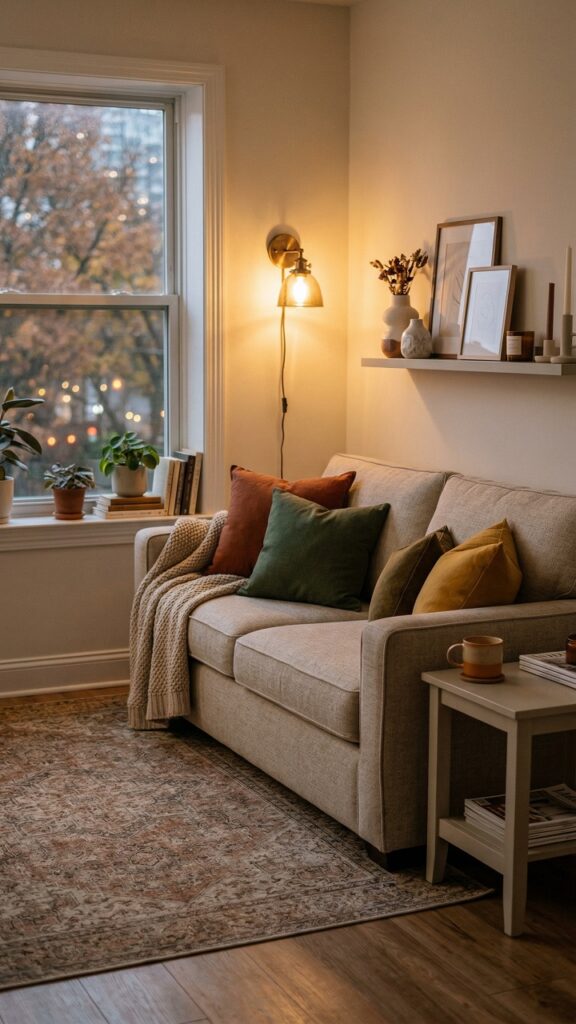
Start with the pieces you use daily. In a small living room, every item does double duty, so your save vs splurge choices matter even more.
If you’re not sure where to start, just remember:
Splurge on comfort and scale. Save on style and trends.
Focus your budget on the anchor pieces that really define the room. These are the things that change how your space looks and feels right away.
Where to splurge first:
- A well-made sofa with tough fabric and supportive cushions
- The right-size area rug that sits under your main furniture
- Quality lighting that actually brightens the whole room
Design experts always say to invest in seating because you use it every day, especially the sofa. You’ll see this advice in guides like home items to splurge vs. save, which highlight long-term comfort and durability.
Where to save:
- Throw pillows and blankets
- Small side tables
- Decorative accessories and trendy accents
You’ll probably change these items out over time anyway. They’re easy to update without blowing your budget, which helps you stay on track with your design goals.
Spend more on pieces that need to last and go easy on the stuff you might replace in a year or two.
The Importance of a High-Quality Sofa
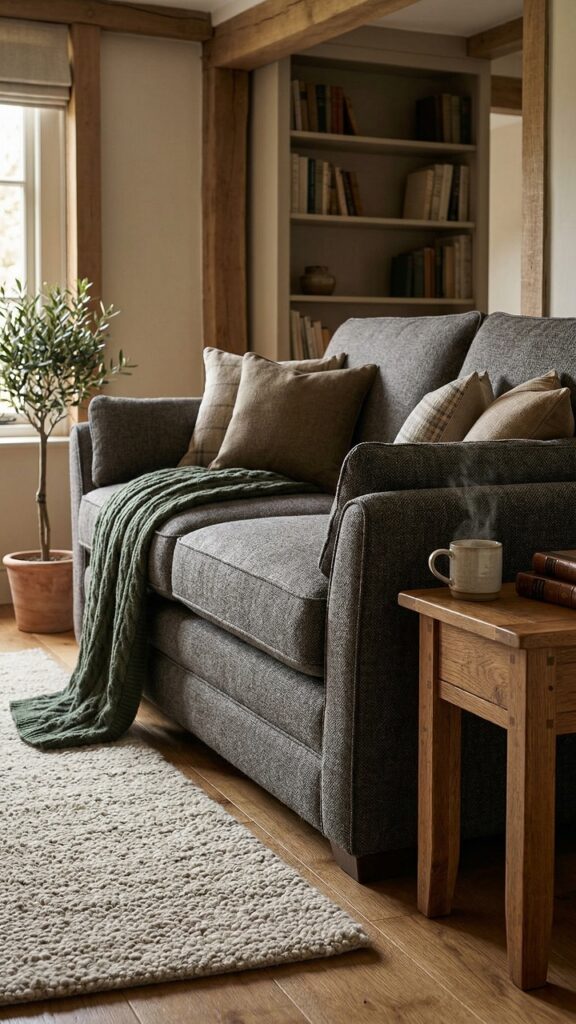
Your sofa pulls most of the weight in a small living room. You use it every day, and it’s the first thing guests notice. That alone makes it worth a real investment.
Designers agree: the sofa is the top priority, as noted in this guide on where designers would spend and save in a living room. You use it more than almost anything else in the room.
In a tight space, the sofa takes up a lot of visual space too. If it sags or looks worn, the whole room feels tired.
What to look for in a quality sofa:
- A solid wood frame (not particleboard)
- Firm, supportive cushions that actually keep their shape
- Durable, easy-clean fabric
- Good joinery like screws or dowels
A good sofa can last 8–10 years or more with regular use. Cheaper ones might flatten or wobble in just a few years.
Here’s a quick comparison:
| Feature | Budget Sofa | High-Quality Sofa |
|---|---|---|
| Frame | Lightweight wood or board | Kiln-dried hardwood |
| Cushions | Foam that softens fast | Dense foam or foam with wrap |
| Lifespan | 2–4 years | 8–10+ years |
Save on side tables and decor, sure. But when you pick a strong, comfortable sofa, you give your small living room a solid center that works hard every single day.
Choosing Durable Floors and Rugs
Floors in a small living room take a beating. You walk on them, drag chairs, drop stuff—it adds up fast.
Choose materials that can handle wear without looking trashed after a year.
If you’re updating flooring, put durability first, trends second. Hard surfaces like luxury vinyl plank and engineered wood shrug off scratches and clean up easily.
They work well in tight spaces where every mark stands out.
When it comes to rugs, this is where you might want to splurge. Many designers say rugs anchor the room and tie your furniture together, which is why experts often recommend investing in quality pieces like those discussed in where to spend and save in a living room redesign.
A well-made wool rug can last for years and handle heavy foot traffic.
What to splurge on:
- Large area rugs that actually define the space
- Wool or wool-blend materials
- Proper rug pads for grip and cushioning
Where you can save:
- Trend-based patterns
- Small accent rugs
- Entry-level flatweaves for low-traffic corners
Size matters more than you think. Designers warn against rugs that are too small—they make a room feel awkward, as noted in advice about why to splurge on area rugs.
Pick a rug that fits under your main furniture pieces. Your small living room will look more pulled together right away.
| READ THE PILLAR: Small Living Room Decor Ideas That Actually Work for Real Women. |
Smart Places to Save in a Small Living Room
You don’t need a huge budget to make a small living room feel finished and personal. Spend where it counts—comfort and scale—then save on the things that are easy to swap or update.
Decorative Accessories on a Budget
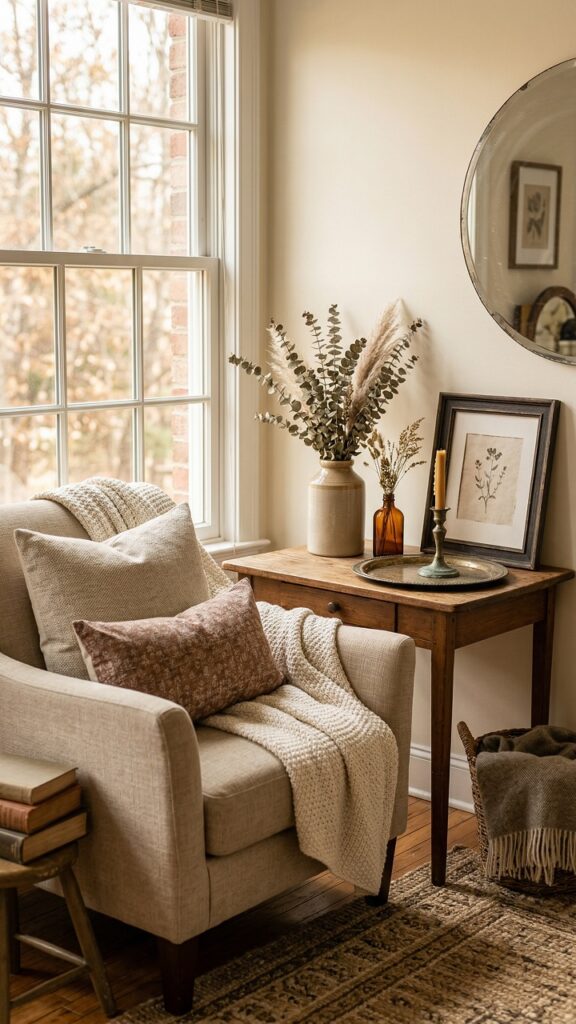
Accessories bring in color and texture, but they shouldn’t eat up your budget. You can save on decor like throw pillows, vases, and seasonal accents because, honestly, you’ll probably want to change them up anyway.
Buy neutral throw pillows, then just switch out covers when you want something fresh. Big box stores or Etsy have tons of affordable options.
Frame printable art in thrifted frames for a custom look without the price tag. Group simple vases together and fill them with branches or dried stems instead of pricey flowers.
If you want more tips on where to cut costs, check out advice from designers on where to spend and save in a living room. They usually suggest saving on small decor pieces since they’re so easy to replace.
Quick ways to save:
- Shop thrift stores for frames and trays
- Use Facebook Marketplace for secondhand decor
- Rotate seasonal accents instead of storing a ton of stuff
Saving on Accent Furniture
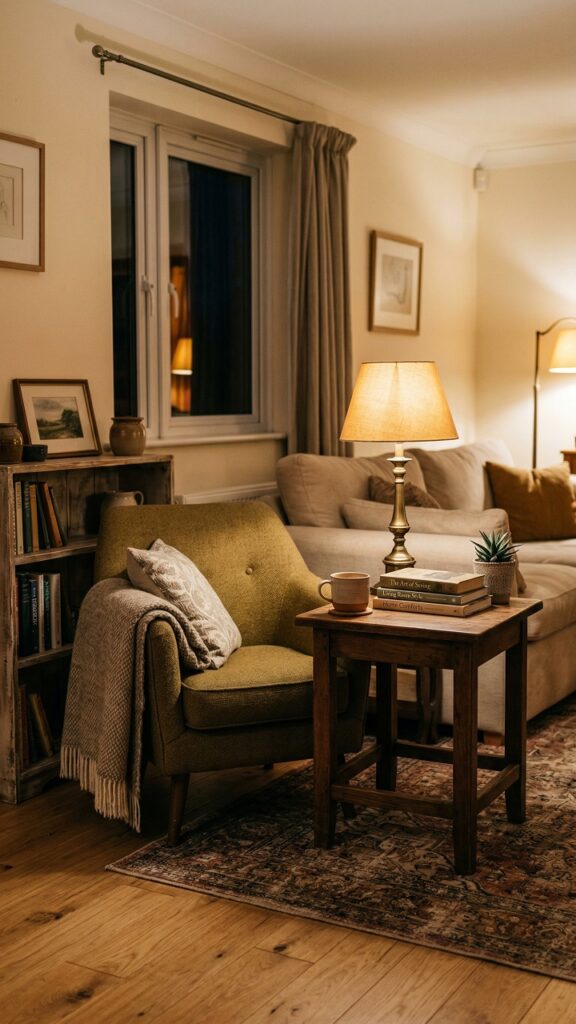
Accent furniture adds function, but you don’t need to break the bank. Save on side tables and accent chairs, especially if they’re not the main event in the room.
Side tables can be basic. A sturdy, simple table works just as well as a designer piece once you add books and a lamp.
Many designers agree you can cut costs on smaller pieces like coffee tables and similar items, as mentioned in this guide to save vs. splurge living room essentials.
Accent chairs are a great chance to shop secondhand. Check Facebook Marketplace for solid wood frames you can clean or reupholster. Etsy has some cool options too, for way less than a showroom.
When saving on accent furniture, check for:
- Stable legs and tight joints
- Durable fabric or something you can reupholster easily
- Proper scale for your small living room
Keep your big spending for the sofa. Let accent pieces stay flexible and budget-friendly.
Quality vs. Cost in Curtains and Window Treatments
Curtains can change your small living room in a flash. You can spend a little and still get style, or splurge and see a big upgrade in comfort and light control.
If you want to save, go for ready-made panels. Most experts suggest budgeting $50–$100 per window for basic options in less formal spaces, as explained in this guide on how much to spend on curtains.
They work well if your windows are standard size and you’re handy with a rod. Spend more when the room really matters. Designers recommend a splurge on living room window treatments—think blackout lining or fuller fabric—as noted here: where to splurge vs save in home design.
Better fabric hangs nicely and blocks light better, too.
Here’s a quick guide:
| Feature | Save | Splurge |
|---|---|---|
| Fabric | Polyester blends | Linen, velvet |
| Fit | Ready-made sizes | Custom sizing |
| Light Control | Sheer panels | Blackout lining |
| Install | DIY rod | Pro install for tall windows |
Scale matters in a small living room. Thicker, lined curtains can make the space feel warmer and help with screen glare.
If your budget is tight, focus on good curtain rods and getting the length right. Hang panels high and wide to make your room feel taller and wider—no need to spend a ton.
Balancing Textiles: Blankets, Throws, and Pillows
Textiles change up your small living room fast. You get comfort and style, no extra floor space needed.
The trick is knowing when to splurge and when to save.
Pick one standout piece. A textured throw or bold rug can anchor the room and create a clear focal point, as shown in these ideas for creating focal points with textile combinations.
Keep the rest simple so the space doesn’t get crowded.
Here’s a quick guide:
| Item | Splurge or Save | Why |
|---|---|---|
| Statement throw | Splurge | Adds texture and anchors seating |
| Decorative pillows | Save | Easy and low-cost to swap |
| Seasonal blankets | Save | Simple way to refresh the room |
Rotate pillows and throws by season. A plaid pillow or a wool blanket can shift the mood without a big spend, inspired by these tips on layering textiles like a pro.
In small spaces, scale really matters. Choose smaller patterns and lighter fabrics so the room feels open, as explained in this cozy textile layering guide.
Mix up textures—cotton, knit, velvet—to add depth. You’ll get warmth, comfort, and style, all without buying more furniture.
Sources for Budget-Friendly Finds and Unique Character
You really can stretch your budget and still give your small living room some real personality. Smart shopping at vintage stores and online platforms helps you score well-made pieces and one-of-a-kind decor without overspending.
Treasure Hunting at Vintage Stores
Vintage stores offer two big wins: lower prices and better craftsmanship. A lot of older wood tables, dressers, and shelves use solid wood instead of veneer, so they tend to last longer and put up with daily use in a small living room.
Walk in with a short list. It’s easy to get distracted, so focus on items like:
- Small side tables
- Narrow consoles
- Wall art
- Lamps
Definitely measure your space before you head out. Small rooms just can’t handle bulky furniture, even if the price is tempting.
Designers often say to save on wood pieces since you can usually find quality secondhand options. An article on where designers say to spend vs. save in home decor highlights vintage finds as smart budget choices.
Look for sturdy joints, smooth drawers, and stable legs. Skip anything that wobbles or smells like mildew—it’s just not worth it.
The Power of Online Marketplaces
Facebook Marketplace and Etsy make it easy to expand your search fast. Both let you browse local and national sellers from your couch, which is honestly the best part.
On Facebook Marketplace, filter by distance and price. Try searching specific terms like “solid wood coffee table” instead of just “table.”
Message sellers with clear questions about size, condition, and pickup details. You’ll often find:
- Gently used sofas
- Accent chairs
- Storage cabinets
- Area rugs
Many designers praise these platforms for budget shopping. One feature on shopping Facebook Marketplace and Etsy for home decor explains how secondhand pieces add character without raising your budget.
On Etsy, focus on handmade pillows, art prints, and small-batch decor. In a small living room, even one unique item can shift the whole look—sometimes that’s all it takes.
Spotting Statement Pieces on a Budget
You don’t have to overspend to create a focal point. It’s all about picking the right statement pieces, really.
Start with lighting. A bold floor lamp or a compact chandelier draws the eye up, which can actually make a small room feel a bit taller.
Designers always seem to push for statement lighting in living areas—there’s even this guide to what’s worth splurging on in living spaces if you’re curious.
If you can’t splurge, go hunting for:
- Large-scale art at vintage stores
- Oversized mirrors on Facebook Marketplace
- Handmade wall hangings on Etsy
Pick one main focal point. In a small room, too many bold items just end up fighting for attention.
Let that single piece shine, and keep the rest simple. Sometimes less really is more, isn’t it?