Let’s be honest: by the time you hit your 30s, the “college dorm” aesthetic is long dead, but the reality of urban square footage hasn’t caught up to your career trajectory yet.
You’re likely staring at a living room that needs to be a high-stakes Zoom background at 9:00 AM, a sanctuary for a glass of wine at 6:00 PM, and a place that doesn’t feel like a cluttered closet in between.
I’ve spent enough time in 600-square-foot rentals and “starter” condos to know that the “Neutral Small Living Room” isn’t just a Pinterest trend—it’s a survival strategy for your nervous system.
When your job is high-pressure and the city outside is loud, your home shouldn’t be another source of visual noise. But there is a very fine line between “sophisticated organic modern” and a room that just looks like a beige box.
If you’re ready to stop “making it work” and start making it look like you actually have your life together, let’s get into the specifics of how we’re styling these spaces in 2026.
From “Rental Beige” to “Organic Modern”: Mastering the Mushroom & Oat Palette
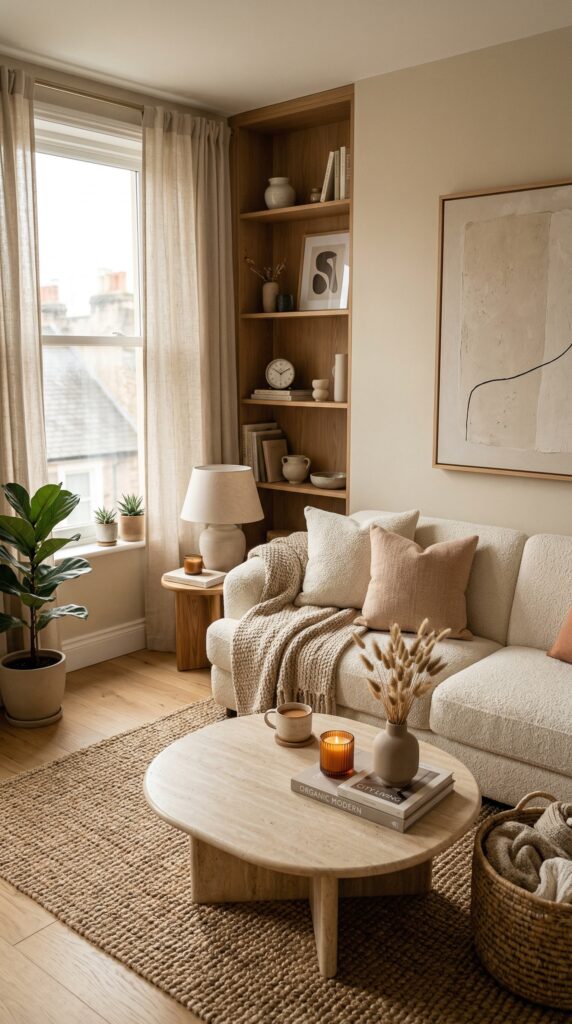
We’re moving past the flat, “builder-grade” white. To make a small space feel expensive, you need a tonal approach. I’m talking about warm neutrals—think mushroom, oatmeal, sand, and ecru. These shades have depth; they change with the sunlight, making your 600-square-foot unit feel like a curated sanctuary rather than a cramped box.
The goal is an Organic Modern vibe: clean lines but with “living” colors.
The 2026 Neutral Playbook:
-
The Foundation: Swap stark “cool gray” for greige or taupe. It’s more forgiving and feels much more “adult.”
-
The Contrast: Use bone or ivory for your trim and curtains. This creates a subtle monochromatic layering effect that tricks the eye into seeing more height.
-
The Depth: Introduce terracotta or soft clay in small doses. These earthy undertones add soul without breaking the minimalist flow.
Stop buying “white” furniture. Look for stone or linen finishes—they hide the reality of a busy work-from-home life much better.
The 80-Inch Sofa Rule: Scaling Furniture for the “Urban Starter” Condo
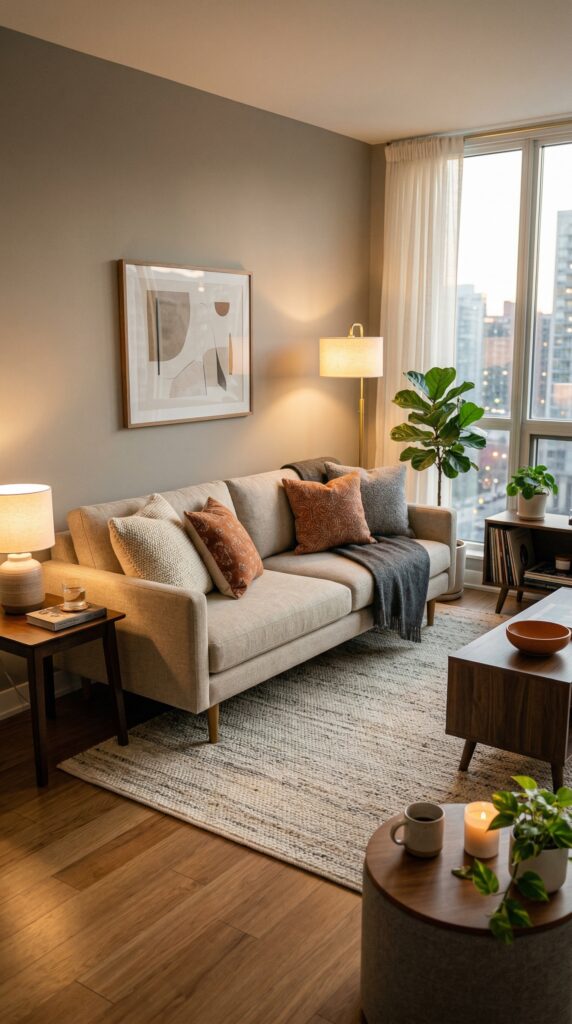
In a tight floor plan, the wrong sofa is a spatial death sentence. Stop looking at standard sectionals; they’ll choke your room. For a professional living space, the magic number is usually an 80-inch sofa.
You want a low-profile silhouette with tapered legs to keep the sightlines open. If you can see the floor underneath your furniture, the room feels larger.
Pro-Scaling Tactics:
-
The Silhouette: Opt for track arms or armless designs. Bulky, rolled arms waste 10 inches of usable seating.
-
The Multi-Tasker: Use a storage ottoman instead of a heavy coffee table. It’s extra seating for guests and hides your tech clutter.
-
Leggy Furniture: Choose pieces with exposed bases. Whether it’s your media console or accent chair, elevating the piece creates an airy feel.
Invest in a petite scale. You want “tailored,” not “tiny.” It’s about spatial efficiency without sacrificing comfort.
SEE THIS: Modern Small Living Room Ideas That Actually Work for Real Life (Clean, Calm & Not Overdone).
The “C-Suite” Corner: Crafting a Zoom-Ready Workspace in a 10×10 Room
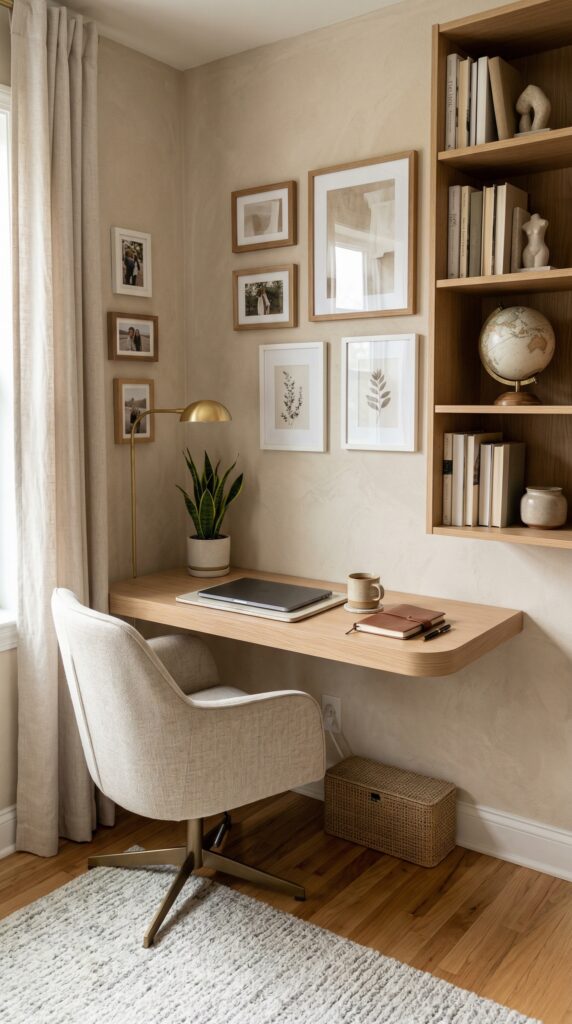
If you’re hybrid-remote, your living room is also your office. You need a workstation that doesn’t scream “cubicle.”
The trick is integration. Use a floating desk or a slim console table in a light oak or whitewashed finish. It disappears into the wall when the laptop is closed.
The Professional Backdrop:
-
The “Zoom” Wall: Position your desk so a neutral gallery wall or a tall bookcase is behind you. It looks polished, not cluttered.
-
Ergonomic Chic: Swap the plastic office chair for a tailored upholstered swivel in oatmeal or linen.
-
Cable Management: Use concealed routing boxes. Visible cords are the fastest way to make a minimalist space feel messy.
SEE THIS: Small Living Room Ideas for Moms With Kids.
Beyond the White Couch: Performance Fabrics for the High-Achieving “DINK”
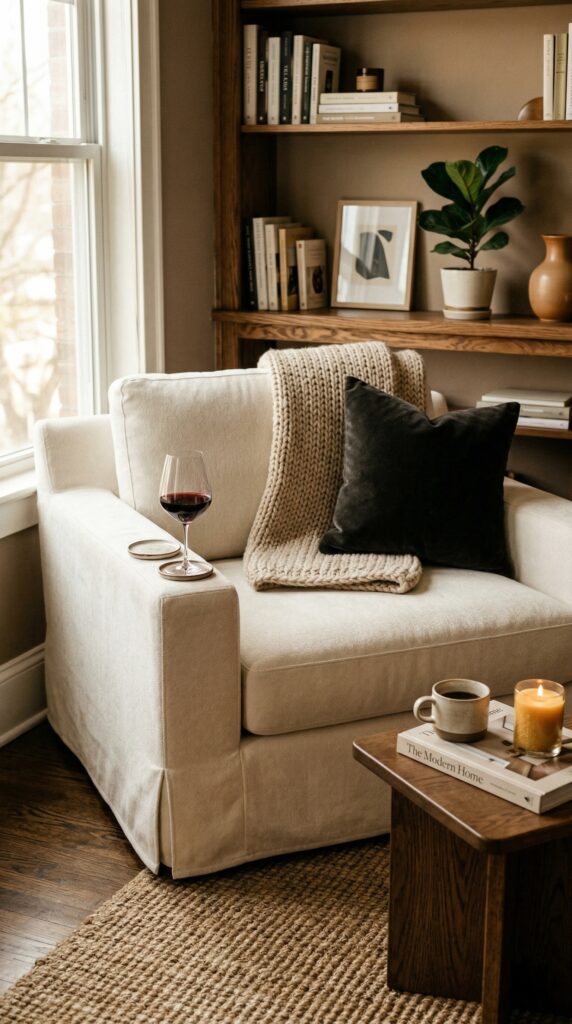
We love the cream aesthetic, but we also drink red wine. If you’re living with a partner, you need performance fabrics.
Look for solution-dyed acrylics or polyester blends labeled as stain-resistant or industrial-grade. They feel like soft linen or chenille but act like armor.
The Maintenance Strategy:
-
Crypton & Sunbrella: These aren’t just for patios anymore. They are the gold standard for indoor durability.
-
Removable Covers: If you can’t do a high-end fabric, get a sofa with machine-washable slipcovers.
-
Tightly Woven: Avoid loose knits if you have pets; they snag. Go for a tight twill or velvet for a luxurious yet tough finish.
| READ PILLAR GUIDE: Small Living Room Decor Ideas That Actually Work for Real Women (Apartments, Moms, Busy Lives & Budgets). |
Texture as Your Accent Color: Bouclé, Travertine, and Jute Layers
When you strip away color, texture is your only tool to prevent a “flat” room. You want a multi-dimensional look. I call it the sensory mix: pairing cold, hard surfaces with soft, organic materials.
The Layering Formula:
-
The Foundation: A large jute or sisal rug provides a rustic base. Layer a smaller, plush wool rug on top for comfort.
-
The Accents: Add a bouclé pillow or a chunky knit throw. The tactile contrast against a smooth leather chair is what makes a room feel “expensive.”
-
The Hard Goods: Use a travertine side table or a fluted wood console. These architectural details provide visual interest without needing a drop of paint.
The “Boutique Hotel” Glow: Banishing “The Big Light” in Studio Living
In a small-scale apartment, the overhead light is your enemy; it flattens the room and kills the ambiance. You need a layered lighting strategy to create “zones.”
Aim for a warm-toned glow ( bulbs) that makes your neutral palette look rich, not clinical.
The Lighting Blueprint:
-
The Task Layer: A brass pharmacy lamp by your reading chair or a sleek LED task light on your desk.
-
The Accent Layer: Use cordless table lamps on bookshelves to eliminate “dark corners” without messy wires.
-
The Mood Layer: Wall sconces (plug-in versions are renter-friendly) save precious floor space while adding an upscale hotel feel.
SEE THIS: Family-Friendly Small Living Room Decor That Still Feels Stylish.
Vertical Storage for the Wardrobe Obsessed: The Chic Way to Hide “The Clutter”
As a working professional, your “stuff” is the biggest threat to your minimalist peace. If you don’t have built-ins, go vertical.
Use floor-to-ceiling shelving in light oak or matte white to draw the eye upward and maximize cubic footage.
Sophisticated Storage Fixes:
-
Closed Cabinetry: Hide the printer and seasonal shoes behind caned doors or minimalist flat panels.
-
Uniform Containers: Use linen-textured bins or woven baskets. Visual consistency is key to a curated look.
-
The Edit: If it doesn’t fit the neutral aesthetic or your current life, it doesn’t belong on an open shelf.
SEE THIS: Affordable Small Living Room Decor That Feels High-End.
Biophilic Neutrals: Why the Olive Tree is the “Urbanite’s” Best Friend
You need life in a concrete jungle, but high-maintenance plants are a chore. The Olive Tree is the 2026 staple for a reason: its silvery-green leaves and sculptural branches fit the organic vibe perfectly without overwhelming the room.
The Greenery Edit:
-
Faux vs. Real: A high-quality silk olive tree is worth the $200 investment for a low-light apartment.
-
The Vessel: Use a terracotta or stoneware pot. The earthy texture grounds the airy foliage.
-
Dried Elements: If you have zero sunlight, pampas grass or dried eucalyptus provide that botanical touch with zero effort.
The “Wine & Charcuterie” Layout: Hosting Four Friends in 150 Square Feet
Don’t let a limited footprint kill your social life. You need a flexible floor plan. I’m a fan of nested tables—they stack away when you’re solo but provide three surfaces for drinks when the girls are over. Swap the bulky armchair for a velvet floor pouf or a slim bench that slides under your console.
The Entertaining Toolkit:
-
The Bar Niche: A mirrored tray on your sideboard creates a “bar” without a dedicated cart.
-
Movable Seating: Look for lightweight stools in natural oak or rattan.
-
The Ghost Factor: An acrylic coffee table is a spatial lifesaver; it’s there for your cheese board but visually disappears.
SEE THIS: Small Living Room Ideas for Suburban Homes That Feel Bigger Instantly.
Curating the “Visual Resume”: Why Your Bookshelf Should Tell Your Career Story
Your living room is your brand. Stop styling with “filler.” Every neutral object should be a curated reflection of your professional journey. Mix your hard-earned degree or awards with sculptural vintage brass and art books.
The Styling Strategy:
-
The Palette: Wrap mismatched books in parchment or turn the spines inward for a monochromatic look.
-
The Rule of Odds: Group items in threes—a tall ceramic vase, a medium brass object, and a flat marble tray.
-
Personalized Minimalism: One sentimental piece (like a travel find) is better than five Target knick-knacks.
SEE THIS: Small Living Room Ideas for Suburban Homes That Feel Bigger Instantly.
Making the “Small” Feel Significant
At the end of the day, your living room shouldn’t feel like a compromise; it should feel like a sanctuary. By leaning into a neutral, tonal palette and prioritizing spatial efficiency, you aren’t just decorating—you’re reclaiming your mental space.
Stop waiting for the “forever home” to start living in a place that reflects the sophisticated, organized woman you’ve become. Grab the linen pillows, dim “the big light,” and enjoy the quiet luxury you’ve built.