Let’s be honest—Indian decor can get heavy fast, especially in a small living room. The rich colors, layered fabrics, and detailed pieces we love can easily make the space feel crowded instead of beautiful.
And if you’re working with a small living room decor Indian style, every choice matters. One bulky sofa, too many cushions, or too much wall decor—and suddenly the room feels tight and overwhelming.
The goal isn’t to remove the Indian vibe. It’s to balance it—keep the warmth, culture, and personality, but make it feel lighter, cleaner, and easier to live in.
If you want your space to look modern, elegant, and still feel like home, this is exactly where to start.
Why Indian Decor Can Feel Too Heavy in Small Living Rooms (And How to Fix It)
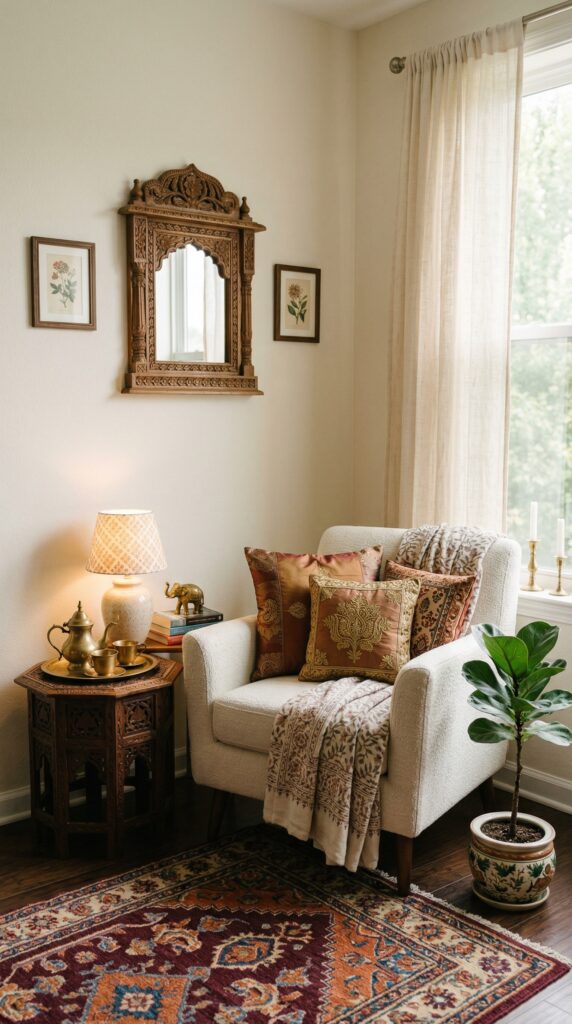
Indian decor is beautiful—but in a small living room decor Indian style, it can quickly feel overwhelming if everything is layered at once.
The “Too Much Layering” Problem
- Multiple patterns (cushions, rugs, curtains) competing
- Dark wood + bold colors + heavy fabrics all together
- Too many decor pieces on every surface
This creates visual weight and makes your small Indian living room feel tighter than it is.
How to Balance Richness with Space
- Pick one main focus (sofa, rug, or wall art)
- Keep other elements softer and simpler
- Leave some empty space—this is what makes everything stand out
Think: rich accents, not a fully loaded room
Choosing the Right Color Palette for Small Indian Living Rooms (Rich but Controlled)
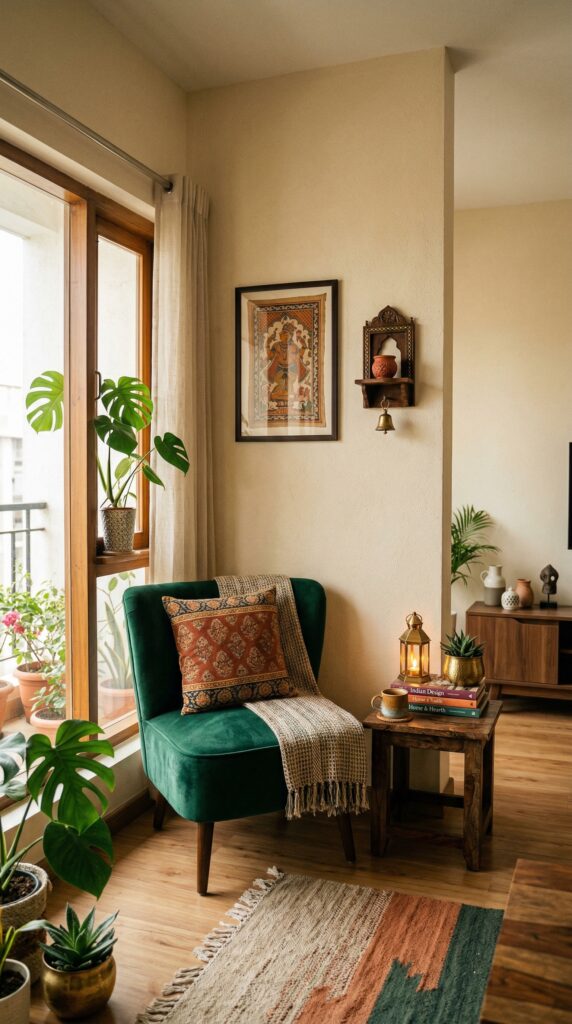
Color is where most spaces go wrong. Too many bold tones can shrink your room fast.
Best Colors for a Balanced Look
- Warm neutrals (cream, beige, soft brown) as your base
- One accent color (deep green, rust, navy, or mustard)
- Light walls to keep the room open
Avoiding Too Many Competing Tones
- Don’t mix 4–5 bold colors in one space
- Repeat 1–2 colors across cushions, rugs, and decor
- Keep your small Indian living room decor cohesive
The goal: controlled color, not color overload.
Sofa + Seating Ideas For Small Indian Living Rooms (Guests + Daily Life)
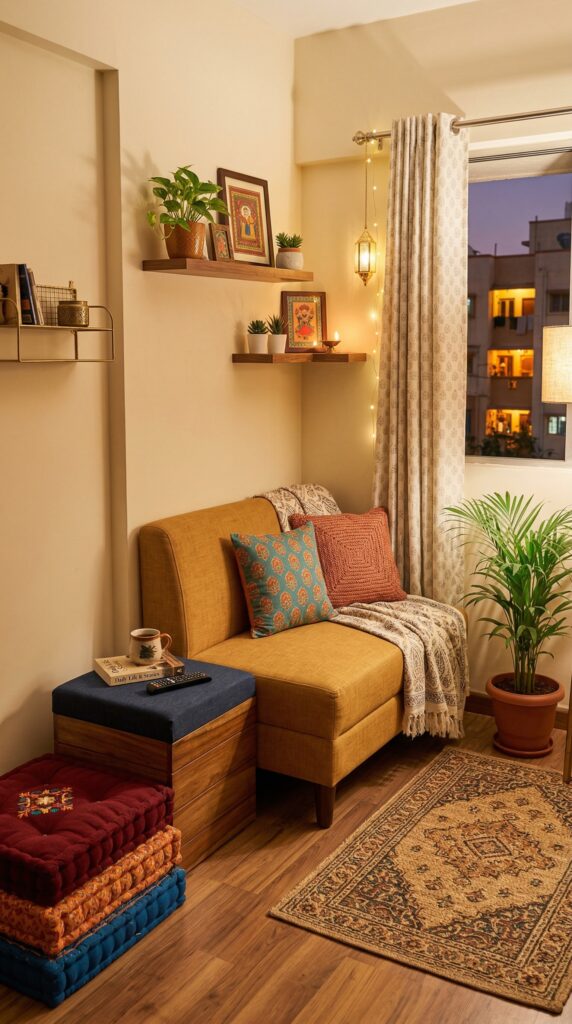
Pick a compact loveseat instead of a full-sized sofa to save floor space. Armless designs look lighter and won’t hog the room.
Add floor cushions for extra seating when guests drop by. Just stack them in a closet when you don’t need them—they’re lifesavers during festivals or family gatherings.
Try modular seating that you can move around. Set it up formally for guests or keep it casual for daily lounging.
Use ottomans with storage for those sneaky compartments. They double as extra seats and stash spots for remotes and magazines.
Consider wall-hugging sectionals in corners to get more seats without blocking pathways. Pick ones with visible legs—they create a sort of floating look that’s surprisingly airy.
Small Indian Living Room Layout Ideas That Don’t Feel Cramped
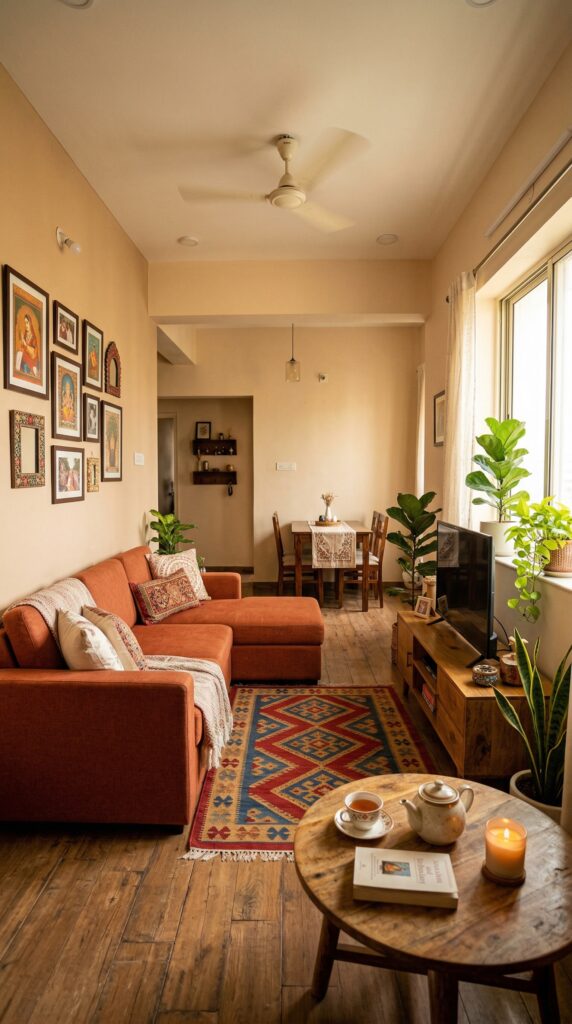
Linear layouts work well in narrow rooms. Place your sofa along one wall and keep the center open so you can move around easily.
L-shaped arrangements squeeze the most out of corner space and still offer plenty of seating. This setup fits right in with Indian apartments where every inch matters.
Try an open layout that merges your living and dining areas. Suddenly, your space feels bigger and more connected.
Key layout tips:
- Keep pathways clear (2-3 feet wide)
- Push furniture against walls
- Use corners for storage or seating
- Don’t block windows or natural light
Choose compact furniture that actually fits your space. Honestly, a two-seater sofa often beats a bulky three-piece set.
Add a patterned screen to define zones without closing off space. This classic touch brings privacy while letting your room flow—very Indian, very practical.
Smart Storage Ideas For Indian Homes (Hide Clutter, Keep Style)
Small Indian living rooms need smart storage to stay tidy without killing the vibe. Go for furniture that does double duty and storage that hides in plain sight.
Try these storage solutions:
- Ottoman seats with hidden compartments for blankets and magazines
- Coffee tables with drawers underneath
- Wall-mounted shelves to free up floor space
- TV units with closed cabinets to hide remotes and wires
Built-in storage makes the most of every inch of your walls. Add floating shelves up high or pick a sofa with storage underneath—honestly, it’s a game changer.
Wall Decor Ideas (Indian Art, Frames & Accents Without Overcrowding)
You can bring Indian charm to your living room walls without making them feel packed. Start with one statement piece—maybe a Madhubani painting or some Warli art.
Smart placement tips:
- Hang wall art at eye level
- Use decorative mirrors to make your room look bigger
- Choose lighter frames to keep things simple
Space your wall hangings out instead of bunching them together. Each piece gets to shine, and your walls can actually breathe—your small space will feel a lot more inviting.
Adding Indian Textures (Fabrics, Rugs & Layers That Don’t Feel Too Much)
Start with one statement piece instead of piling on everything at once. A dhurrie or kilim rug as your base layer? Always a good idea in a small living room.
Add embroidered cushions or throw pillows with traditional patterns—think paisley or ikat. Mix a couple of patterned cushions with some solids so it doesn’t get too wild.
Simple layering tips:
- Use one colorful rug to define your seating area
- Add 3-4 textured throw pillows in complementary colors
- Drape one ethnic patterned throw over your sofa
Richly textured fabrics bring depth without eating up space. Block-printed curtains or a silk tapestry will add Indian vibes to your walls.
Stick to a color palette with three main shades. That way, the room stays calm but still celebrates the beauty of Indian textiles.
Lighting Ideas That Make Indian Living Rooms Feel Warm, Not Dark
Soft lighting turns small Indian living rooms into cozy hangouts. Warm LED bulbs beat harsh white lights every time if you want that welcoming glow.
Layer your lighting with different sources. Combine a ceiling light with a couple of floor or table lamps to chase away dark corners.
Go for an ornate chandelier as a centerpiece—if your ceiling’s high enough, why not? It brings elegance and plenty of light.
Wall-mounted lights save floor space in tight rooms. They bounce light upward, making ceilings look taller and the whole place feel more open.
Modern + Traditional: How To Blend Indian Decor Without Looking Outdated
You can totally create a fresh Indian style living room by mixing old and new pieces. Start with a neutral base like beige or warm white—this lets traditional Indian decor pop without making things feel too busy.
Pick a few statement pieces instead of filling every corner:
- One carved wooden furniture piece like a coffee table
- Brass accents in lamps or small bowls
- Hand-painted ceramics on open shelves
- Jali work screens as room dividers
Keep your modern furniture simple and clean-lined. Then bring in traditional Indian touches through textiles and smaller accents. A sleek gray sofa with block-printed cushions? That’s the sweet spot.
Mix materials thoughtfully. Try handcrafted wood with metal legs or glass tops. Add a bronze accent here, a matte finish there. Set terracotta pots with plants by a piece of contemporary art—it’s all about balance.
The 80/20 rule makes sense here: stick to 80% modern neutrals and 20% traditional Indian crafts. Brass and earthy accents add character without overwhelming your small space.
Spread brass accents and Indian crafts throughout the room. Don’t let them pile up in one spot—your space will feel curated, not cluttered.
Common Mistakes In Small Indian Living Rooms (That Make Them Feel Smaller)
Oversized furniture can totally overwhelm compact Indian living rooms. A chunky three-seater sofa or a heavy center table just eats up precious floor space and makes it tough to move around.
Too many decorative items add visual clutter. Maybe you love those traditional brass lamps and ceramic vases, but squeezing all your favorites into a tiny living room? It just gets cramped, fast.
Blocking natural light by putting furniture near windows really darkens the room. You might want to keep those pathways to windows open, honestly.
Dark wall colors soak up light and make the walls seem like they’re closing in. Suddenly, your space feels way smaller than it actually is.
Placing furniture in the center rather than along the walls just messes with the flow. You lose out on usable area, and for what?