At some point, you look around your living room and realize—it works, but it doesn’t feel put together. Nothing is technically wrong, but it still looks like a mix of random pieces instead of a space that reflects where you are now.
That’s the difference between just having furniture and having a small living room that feels intentional, calm, and grown-up. And no, it’s not about spending more money or starting over.
It’s about fixing what feels off—your layout, your colors, your lighting, and the little details that make everything come together.
If you want your space to finally feel cohesive, elevated, and actually finished, this is where you start.
Why Your Living Room Feels Unfinished (Even When It’s Clean)
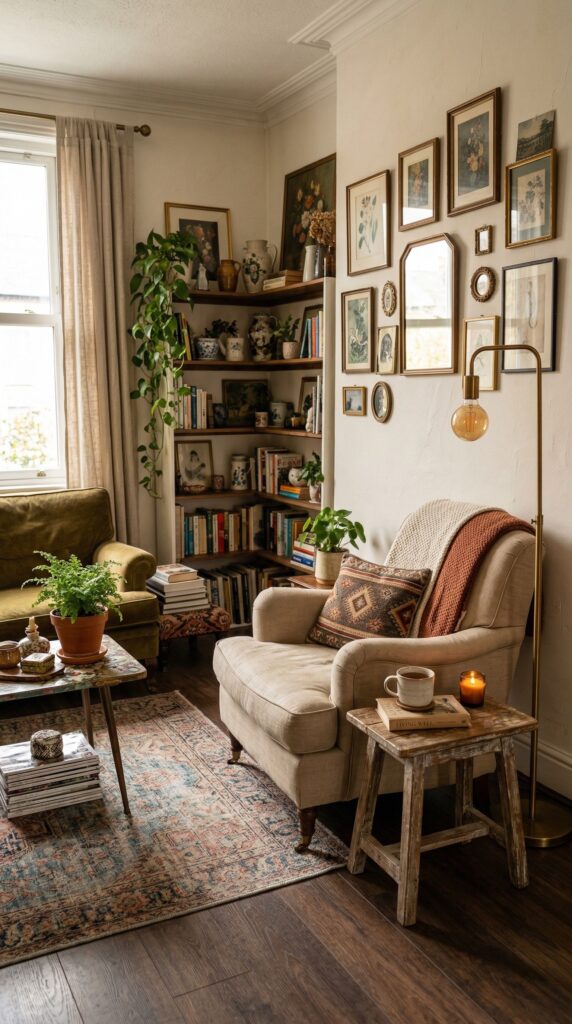
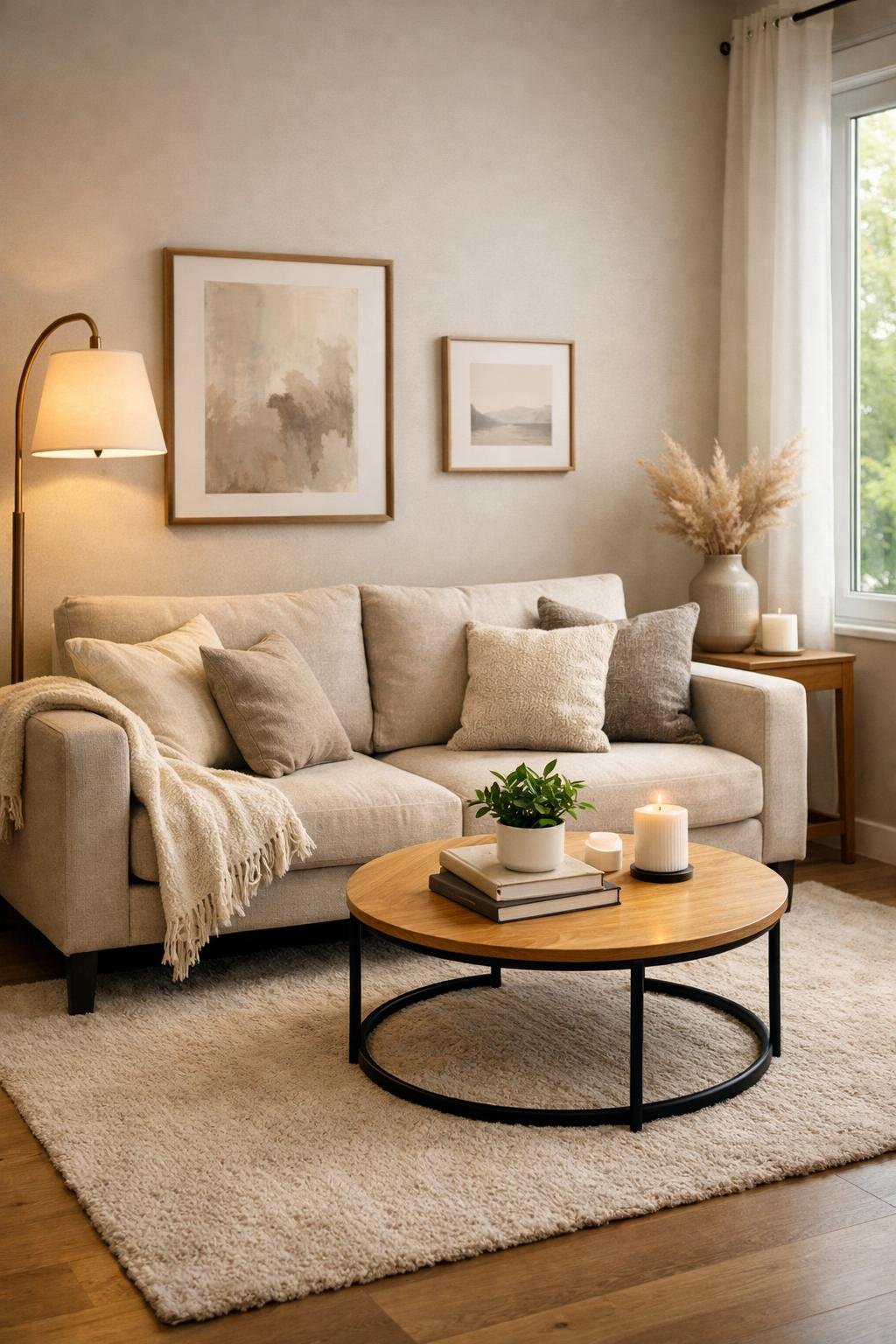
If your space looks “okay” but not put together, it’s usually not about mess—it’s about lack of cohesion. A small living room shows this faster because everything is visible.
The “Random Pieces” Problem
- Furniture from different phases that don’t connect
- No clear focal point (sofa, rug, or wall)
- Decor that doesn’t relate in color or style
This is why your small living room inspiration never matches real life—it feels scattered.
Lack of Cohesion vs Lack of Effort
- You’ve styled things… but they don’t tie together
- Colors, textures, and materials feel disconnected
- Nothing anchors the room visually
Fix this first: make your space feel connected, not just filled.
Create a Cohesive Color Palette (This Changes Everything Fast)
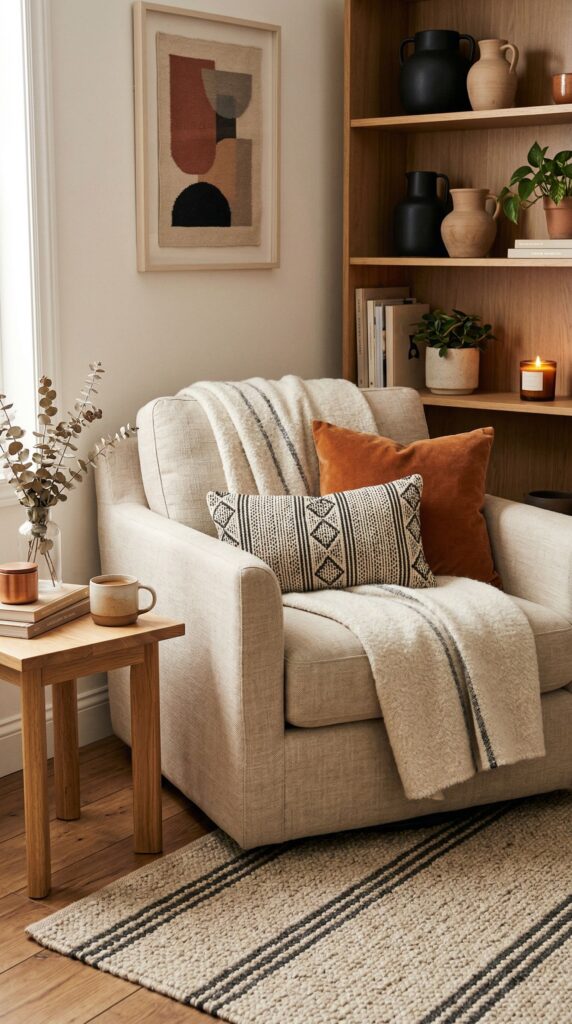
Color is the fastest way to make your room feel intentional. Without it, your space will always look unfinished.
The 2–3 Color Rule for a Pulled-Together Look
- Choose 1 base (neutral like beige, white, soft gray)
- Add 1–2 accent tones (black, wood, muted color)
- Repeat these colors across pillows, rugs, decor
How to Repeat Colors Across the Room
- Match tones between sofa, cushions, and art
- Keep your living room decor inspiration consistent
- Avoid adding new random colors later
TIPS: A simple small living room color palette makes everything look instantly more grown-up.
Upgrade Your Sofa Area (The Anchor That Sets The Tone)
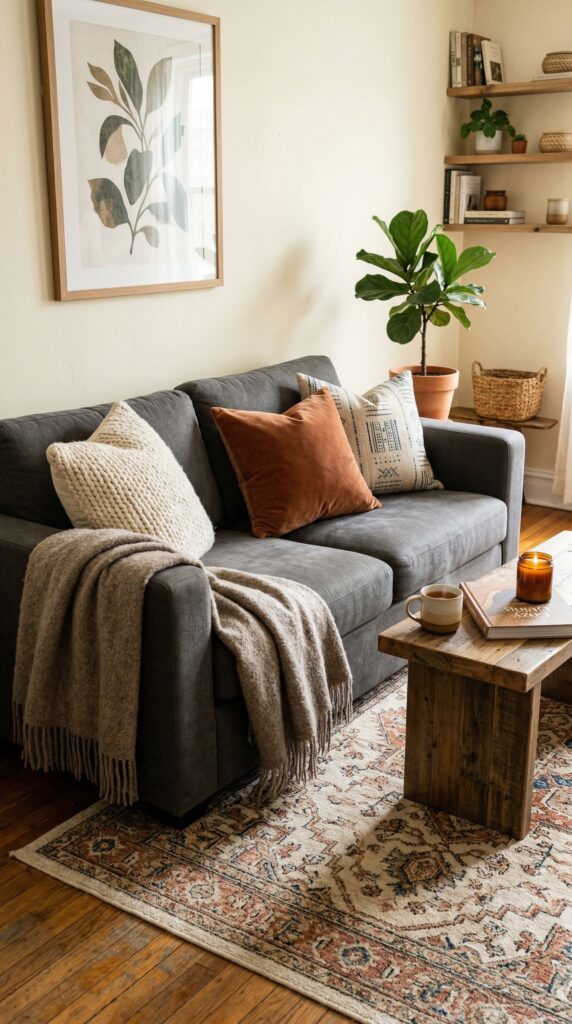
Your sofa sets the mood for the whole living room. Start by sliding a large area rug underneath—it anchors the space and makes it feel intentional.
Don’t skimp on rug size. The rug should stretch beyond the sofa’s edges to really define the zone.
Mix in textured throw pillows in two or three colors that work together. Try layering linen, velvet, or whatever feels good to you for a little depth.
Drape a cozy throw blanket over one arm. That simple touch adds warmth and makes the space feel lived-in, not just staged for Instagram.
Fix Your Layout So The Room Feels Intentional (Not Random)
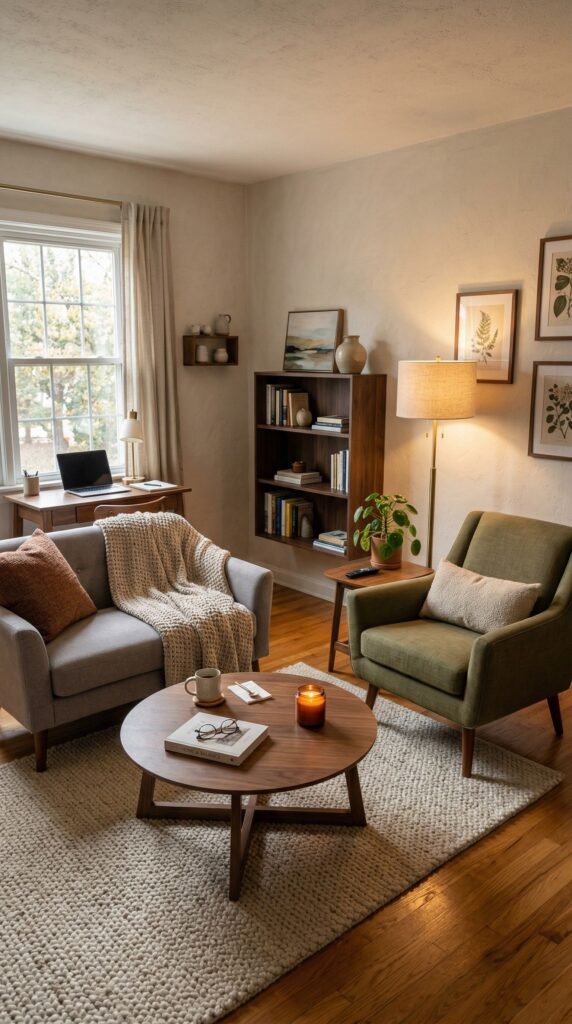
If you just shove furniture against the wall, the room ends up feeling incomplete. Try floating furniture away from the walls—even a few inches helps. Suddenly, the space breathes and the setup feels more thoughtful.
Arrange seating where conversations actually happen. Put tables within reach, so you’re not stretching for your coffee.
Create zones for whatever you do most. Anchor the sitting area with a rug. Tuck a small desk in a corner for work—each spot should have a clear purpose.
Lighting That Instantly Makes Your Living Room Look More Expensive
Lighting changes everything. Combine overhead lights, floor lamps, and table lamps at different heights for layered lighting—it adds instant depth.
Let in as much natural light as you can. Keep windows clear during the day, and use mirrors to bounce sunlight around and open up the space.
Choose warm, dimmable bulbs instead of harsh white ones. It’s a small switch, but it makes the room feel cozy and a bit more grown-up.
Hide The Clutter (Because “Grown-Up” = Clean + Controlled)
Clutter makes a space feel chaotic. Use a storage ottoman to stash blankets and magazines—it doubles as extra seating, too.
Take advantage of vertical space with ladder shelves or wall-mounted shelves. That way, you keep the floor clear and the room looks more open.
Hide cords with clips and cable boxes. Corral remotes in trays, and toss extra throws in baskets.
Wall Decor That Looks Intentional (Not Like You Filled Space)
Wall decor works best when you follow a plan. Pick one approach and stick to it, rather than scattering things wherever there’s room.
Smart options that look purposeful:
- Gallery wall in a grid – Matching frames lined up in neat rows (try 4, 9, or 16 for symmetry)
- One large piece – A single oversized artwork stands out way more than a bunch of tiny ones
- Picture ledges – They take up less space and make it easy to swap art whenever you’re bored
- Vertical columns – Stack art from floor to ceiling to emphasize height
Match a couple of colors from your wall art to other things in the room. It’s a quick way to get a cohesive look without overthinking it.
If you’re not ready to put holes in the wall, just lean big pieces on a console table or mantle. It’s flexible, and still looks pulled-together.
Choose Furniture That Looks Elevated (Not Leftover Or Temporary)
Furniture says a lot about your space. When you pick pieces that look intentional—not just whatever you could find—the room instantly feels more grown-up.
Look for these elevated options:
- A quality sofa instead of a sofa bed, unless you really need the extra sleeping space
- A glass or solid wood coffee table instead of plastic
- Real wood side tables, not particle board
- Low-profile furniture that won’t crowd the room
Skip anything that screams “college apartment”—no cheap futons, wobbly bookcases, or furniture that looks like it’s on its last leg.
Multifunctional furniture can still look upscale. Try an ottoman with hidden storage, or a sleek console table that doubles as a desk. Just make sure these pieces look polished and well-made.
Acrylic chairs and mirrored furniture work surprisingly well in small spaces. They reflect light, don’t take up much visual space, and still look sophisticated.
Add Texture To Make Your Living Room Feel Warm And Finished
White walls and light paint colors can open up a small space, but without texture, things get a bit flat. You’ll want to mix in different materials to keep the room from feeling sterile.
Easy ways to add texture:
- Layer soft throws and pillows on the sofa
- Mix up materials—wood, metal, woven baskets, whatever you like
- Add a textured rug to break up plain flooring
- Try plaster or subtle wall finishes for extra interest
Even if you stick to mostly one color, layering textures gives the room depth. It’ll feel polished and inviting—no need for wild patterns or loud colors if that’s not your thing.
Small Living Room Mistakes That Make Your Home Look Less Put Together
Oversized furniture is one of the biggest mistakes you can make. That deep sectional might look cozy in the store, but it can totally overwhelm your small living room.
Plus, moving around gets tricky when the furniture takes up every inch of space. Been there, regretted that.
Pushing all your furniture against the walls actually makes your space feel cramped. Try pulling pieces a little away from the walls—it’s surprising how much better the flow feels.
Relying only on overhead lighting makes your room feel flat and kind of uninviting. Bring in a floor lamp, maybe a table lamp, or even a wall sconce to add some warmth and layers.
Ignoring vertical space? That’s just missing out on extra storage and some fun decorating options. Tall shelves help, and hanging curtains closer to the ceiling draws the eye upward—makes the whole place feel taller, honestly.