Ceilings are often called the fifth wall in home design, yet they’re one of the most overlooked spaces in any room.
Adding ceiling trim or molding can completely change how a space feels, making it look taller, more polished, or even more expensive.
From modern crown molding in your living room to moisture-resistant options for bathrooms, the right ceiling design can instantly elevate every room in your home.
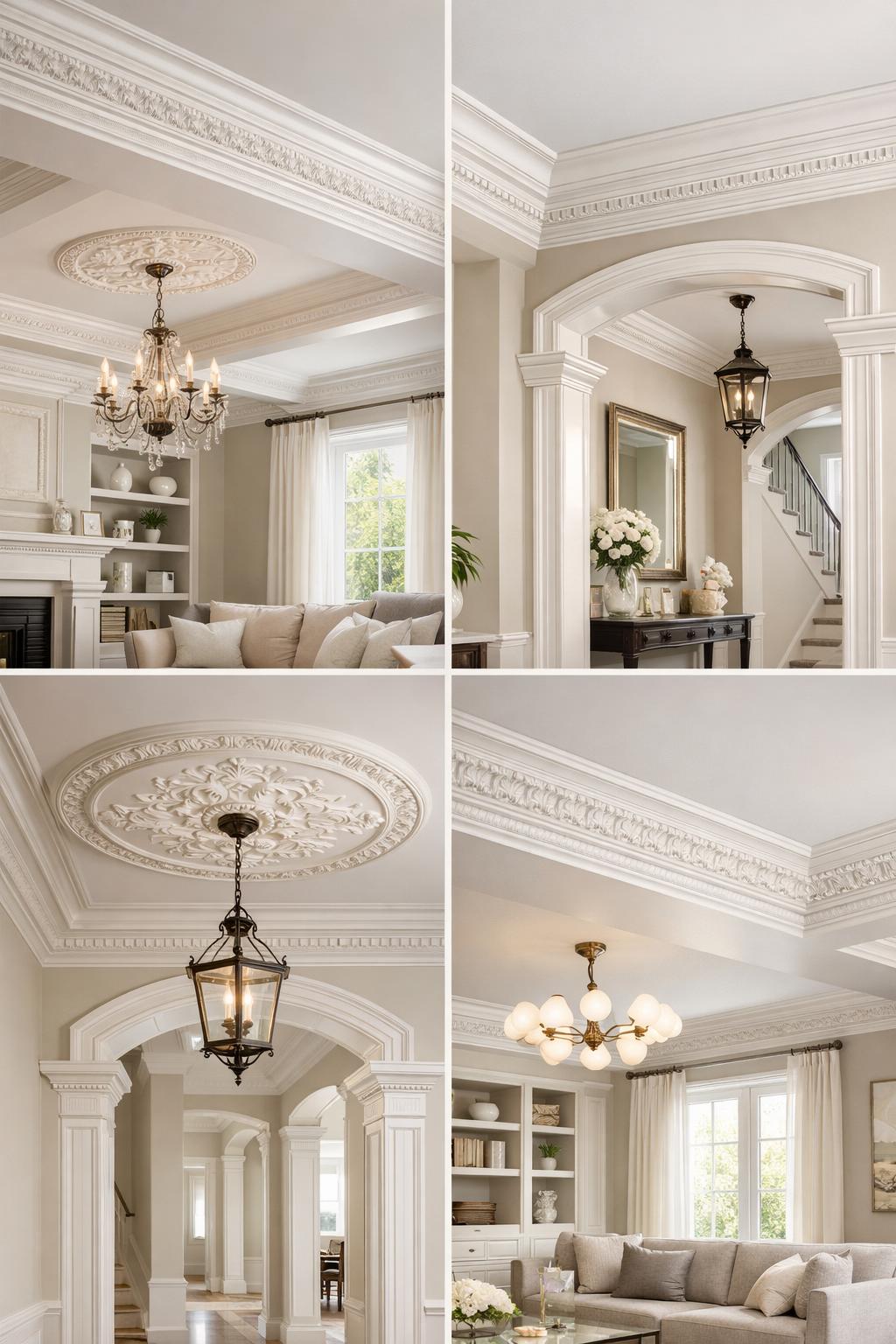
Whether you’re working with vaulted ceilings, small spaces, or open-concept layouts, ceiling trim ideas offer endless possibilities.
You can go bold with geometric patterns in your home office or keep things simple with clean-lined trim in hallways.
This guide walks you through 25 ceiling trim and molding designs tailored for specific rooms, from entryways to garages.
You’ll discover practical tips for choosing materials, styles that match your home’s vibe, and ways to make any space feel more thoughtfully designed.
Living Room Ceiling Trim Ideas with Modern Crown Molding Accents
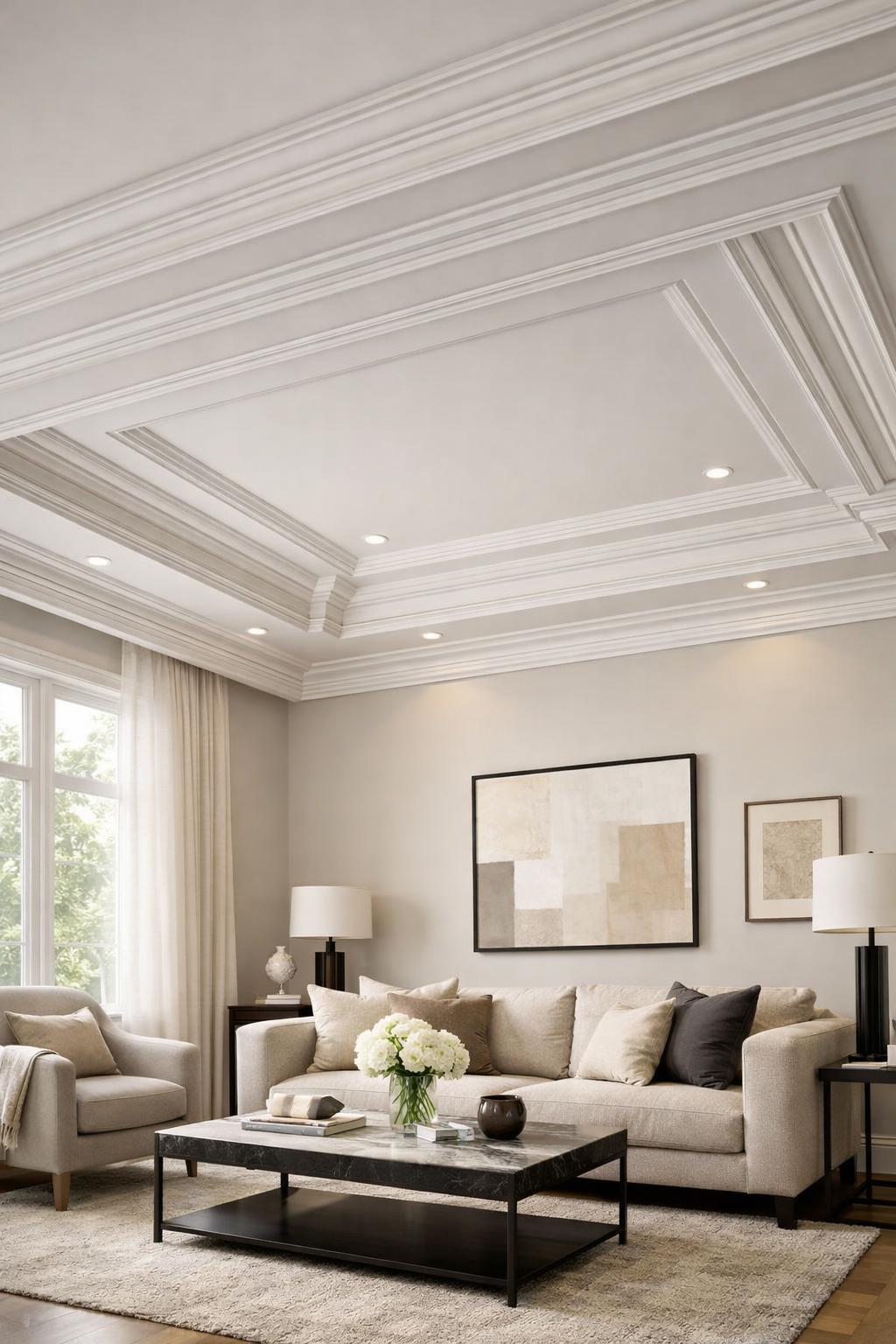
Modern crown molding can transform your living room without the heavy, outdated feel of traditional trim.
You can choose simple, clean-lined profiles that draw the eye upward and make your space feel taller.
Popular modern approaches include:
- High-contrast design – Paint your crown molding bright white against dark walls for a crisp, bold look
- Matching finish – Use the same color for your ceiling and trim to create an unexpected, contemporary effect
- Flat profiles – Combine two flat trim pieces at wall and ceiling for sharp, modern edges
- Glossy finishes – Try high-gloss paint in dark or bold colors for extra visual impact
You can also go big with extra-large crown molding that makes a statement through size rather than ornate details.
This works especially well in living rooms with high ceilings.
Creating a Cozy Bedroom with Soft Ceiling Molding
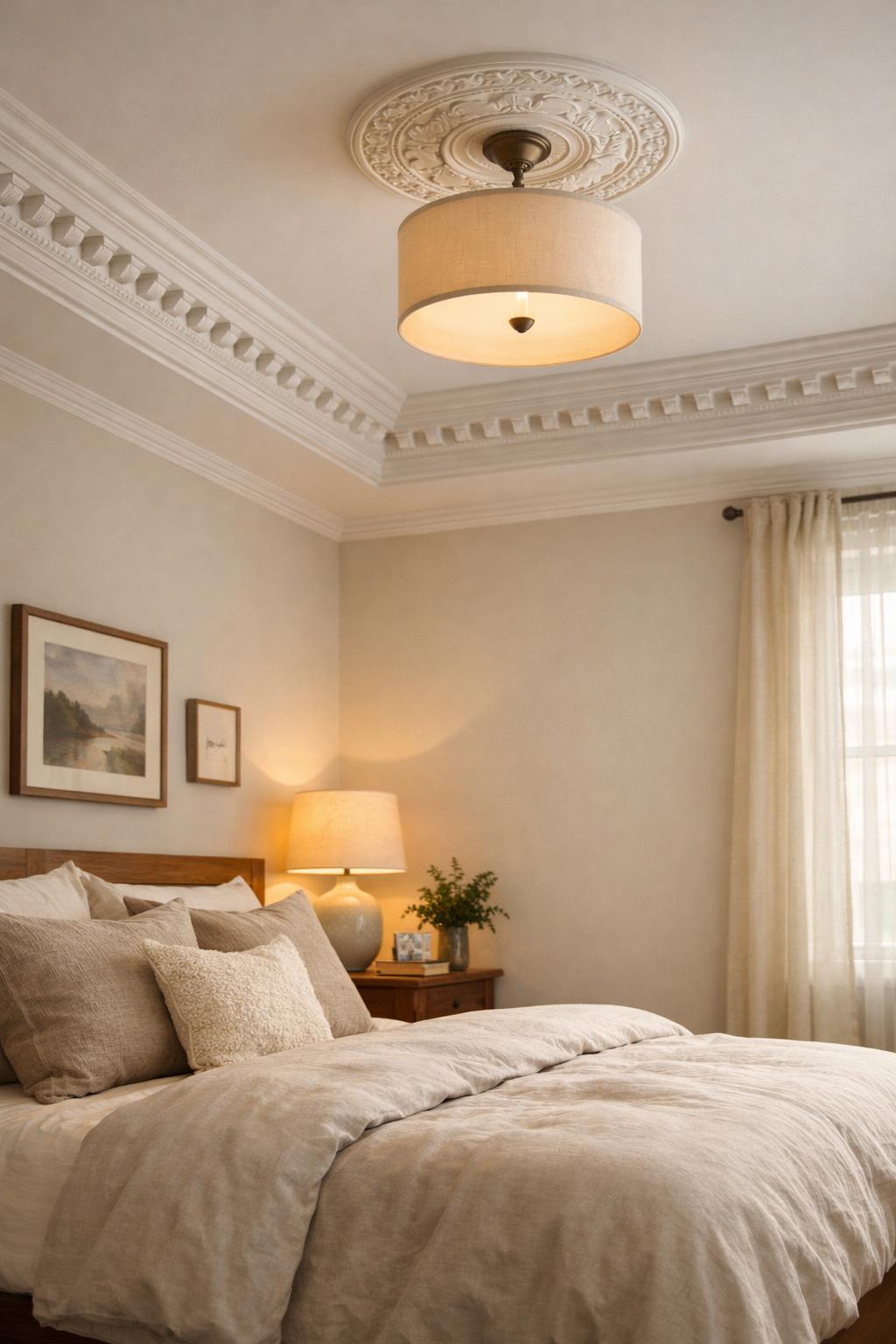
Soft ceiling molding makes your bedroom feel warm and inviting.
Crown molding with gentle curves works better than sharp angles when you want a cozy space.
You can paint your molding in warm whites or creamy tones to soften the room.
This creates a subtle frame between your walls and ceiling without being too bold.
Best molding styles for cozy bedrooms:
- Simple crown molding with rounded edges
- Delicate trim painted in soft neutrals
- Subtle cove molding that creates gentle transitions
Darker ceiling colors paired with white molding add intimacy to your bedroom.
The trim provides clean separation while the deeper tones make the space feel more personal and snug.
Elegant Coffered Trim Ideas for Dining Areas
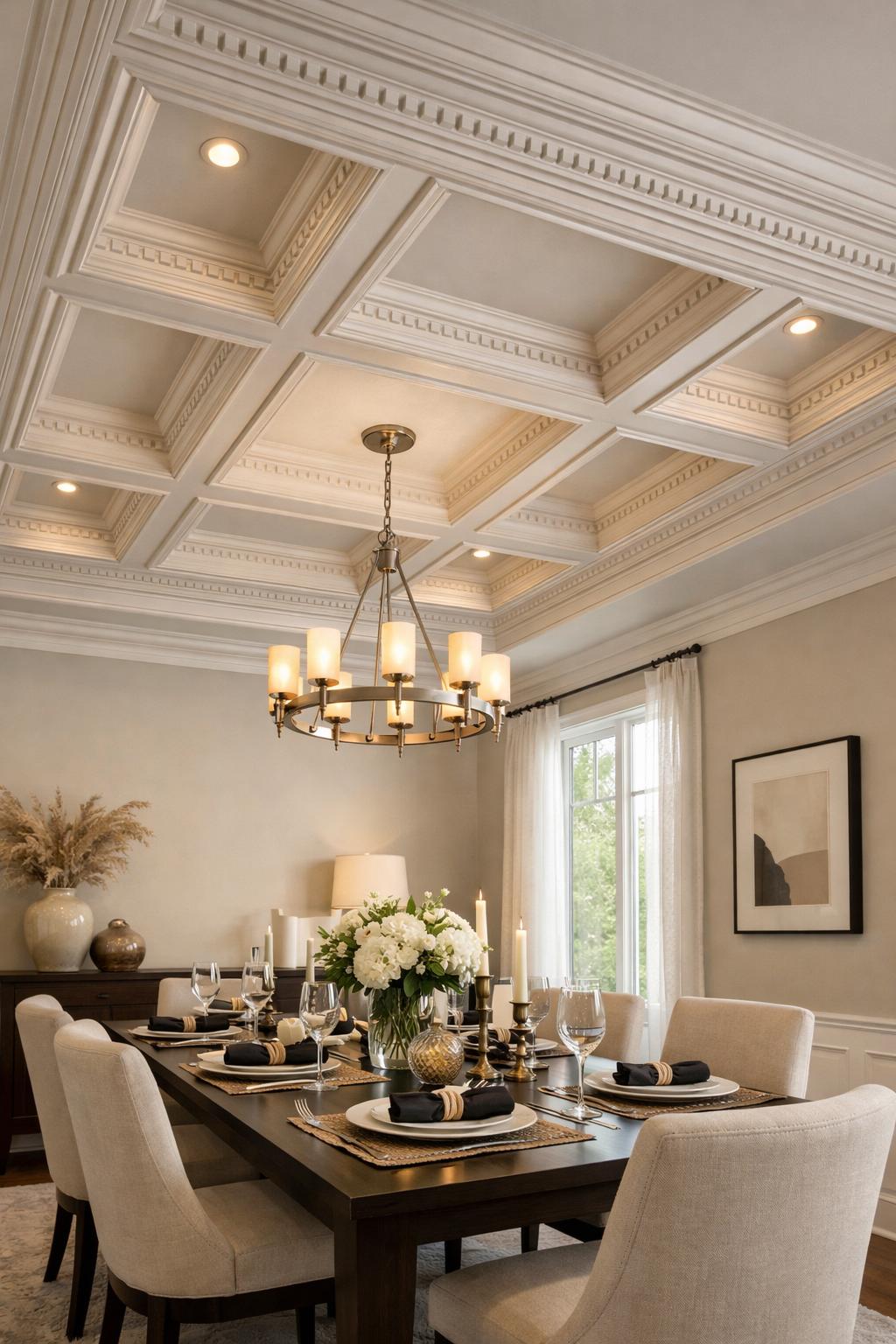
Coffered ceilings bring instant elegance to your dining room by adding depth and architectural interest overhead.
These grid-pattern designs work beautifully in both formal and casual dining spaces.
Key design choices to consider:
- Paint color: Match your coffered ceiling to wall trim for a cohesive look, or paint beams in a contrasting shade for bold visual impact
- Grid size: Choose larger rectangles to avoid overwhelming your space with too much detail
- Wood tones: Natural wood beams add warmth to painted rooms and complement traditional furnishings
Your ceiling should be at least nine feet high before adding coffered trim.
For modern dining rooms, keep the beam profiles simple and clean-lined.
Minimalist Crown Molding Designs for Kitchens
You can create a sleek look in your kitchen by choosing crown molding with simple, clean lines.
Small profiles work best for this style since they add a refined touch without overwhelming your space.
Key design choices for minimalist kitchens:
- Match your molding color to your cabinets or ceiling for a seamless look
- Pick low-profile designs that sit close to the ceiling
- Use straight edges instead of ornate details
You’ll find that monochromatic color schemes work perfectly with minimalist crown molding.
White molding on white cabinets creates a cohesive, modern feel.
Consider adding your molding between the top of your upper cabinets and the ceiling.
This fills the gap while keeping things simple and functional.
Entryway Makeovers with Grand Molding Details
Your entryway sets the tone for your entire home.
Adding grand molding details can turn this often-overlooked space into something special.
Crown molding works beautifully in entryways.
It draws the eye upward and makes your ceilings feel taller.
You can paint it white for a classic look or use a bold color for drama.
Picture frame molding creates elegant wall panels.
This style adds depth and makes your entryway feel more formal.
It works great with both traditional and modern designs.
Dentil molding brings architectural interest with its small, evenly spaced blocks.
This detailed trim style makes your entry feel more refined and welcoming to guests.
Moisture-Resistant Molding Ideas for Bathrooms
Bathrooms need special molding that can handle steam and humidity without warping or growing mold.
Regular wood trim won’t last long in these wet conditions.
Look for these moisture-resistant materials:
- PVC or vinyl molding (completely waterproof)
- Medium-density fiberboard with waterproof coating
- Cellular PVC crown molding
- Primed polymer-based trim
You can find moisture-resistant crown molding at stores like Lowe’s specifically made for bathrooms and kitchens.
These products resist moisture damage while still looking elegant.
For extra protection, seal any wood molding with waterproof finish before installing.
This works especially well if you want the warm look of stained wood crown molding against cool tile walls.
Simple and Linear Ceiling Trim for Hallways
Hallways are perfect for simple and linear ceiling trim.
These clean lines guide your eye down the space without making it feel cluttered or busy.
Linear molding works well in hallways because:
- It emphasizes the length of the space
- It keeps the design clean and modern
- It’s easy to install along straight runs
- It doesn’t overwhelm narrow areas
You can run a single strip of trim down the center of your hallway ceiling.
Or try parallel lines along each side where the walls meet the ceiling.
Paint the trim white to match your ceiling for a subtle look.
Use a contrasting color if you want more definition.
This approach works great in homes with lower ceilings.
The simple design won’t make your hallway feel cramped or too detailed.
Functional Garage Trim with Practical Moldings
Your garage deserves the same attention as the rest of your home.
Adding trim around the ceiling creates a polished look that makes the space feel finished.
Simple molding options for garages include:
- Basic crown molding along ceiling edges
- Flat trim boards for clean lines
- PVC materials that resist moisture
Garage trim serves practical purposes beyond looks.
It covers gaps between walls and ceilings where dust collects.
You can also hide wiring or pipes behind decorative trim pieces.
Choose durable materials that handle temperature changes and humidity.
PVC and composite options work better than wood in garages.
Paint your trim white or match it to your walls for a seamless appearance.
Adding baseboard trim along the floor completes the look and protects walls from bumps.
Hotel-Inspired Guest Room Ceiling Styles
You can bring boutique hotel luxury into your guest bedroom with ceiling trim that makes visitors feel special.
Coffered ceilings create instant grandeur with their deep squares and geometric patterns.
They work especially well above the bed as a focal point.
Tray ceilings with ambient lighting give your guest room a floating, elevated feel.
Add LED strips along the recessed edges for soft, welcoming light that guests can control.
Consider a high-gloss painted ceiling in navy or charcoal paired with crown molding.
The reflective finish bounces light around and makes the space feel larger and more intimate at once.
For a warmer approach, exposed wooden beams with simple trim molding add rustic charm without overwhelming smaller rooms.
Geometric Ceiling Patterns for Home Offices
Geometric ceiling patterns can make your home office feel more professional and inspiring.
These designs work especially well because they add visual interest without being too distracting while you work.
Popular geometric options for office ceilings include:
- Hexagon patterns in neutral colors
- Linear grid designs with thin trim
- Diamond-shaped coffers
- Angular patterns that create depth
You can paint geometric shapes directly on your ceiling or use trim to create the patterns.
White trim on a slightly darker ceiling creates subtle contrast.
For a bolder look, try navy trim with white ceiling panels.
Geometric patterns pair well with modern office furniture and clean lines.
They draw your eyes upward, making small home offices feel more spacious.
Making Small Living Rooms Feel Bigger
Ceiling trim can work wonders in compact living rooms by creating the illusion of higher ceilings.
Crown molding is your best friend here.
When you paint it the same color as your ceiling, it helps the walls appear to extend upward.
Keep your trim simple and clean.
Thick or ornate molding can make a small space feel cramped.
Instead, go for thin, linear profiles that draw the eye up without overwhelming the room.
Light colors are key.
White or light-colored trim against slightly darker walls creates vertical lines that make ceilings seem taller.
You can also try installing your crown molding a few inches below the ceiling line and painting the space between the same color as the ceiling.
Avoid heavy, decorative patterns in small living rooms.
Stick with minimalist designs that add character without eating up visual space.
Seamless Ceiling Trim for Open Concept Spaces
Open concept homes need careful trim planning to maintain visual flow between connected areas.
You’ll want to keep your trim heights and profiles consistent throughout the space.
Key strategies for cohesive trim:
- Use the same baseboard and crown molding style across all connected rooms
- Install trim at identical heights throughout the entire space
- Choose natural breaking points like columns or beams for transitions
When your kitchen flows into your living room, matching trim creates unity.
Keep crown molding at the same distance from the ceiling in each area.
For spaces with different ceiling heights, add transitional pieces where the heights change.
This creates a smooth visual connection instead of an abrupt stop.
Use architectural features as logical endpoints.
Pillars and support beams work perfectly as natural dividers where you can shift trim styles if needed.
Statement Vaulted Ceilings with Beams and Molding
Vaulted ceilings create instant drama in your space.
When you add exposed beams, you bring warmth and character to the room.
Popular beam styles include:
- Dark stained wood beams against white ceilings
- Light natural wood for a casual feel
- Painted beams that match your walls
You can extend beams down from the ceiling onto your walls to highlight the room’s unique shape.
This works well in living rooms and dining areas.
Pair your beams with shiplap or board and batten trim for extra texture.
The combination of vertical wall trim and horizontal ceiling beams creates visual balance.
Add crown molding where your vaulted ceiling meets the walls.
This detail frames the space and makes the ceiling design feel complete.
Layering Tray Ceilings for a Luxurious Look
Multiple tiers of molding can transform your tray ceiling into a fancy focal point.
You can create depth by adding two or three levels of trim that step up toward the center.
Each layer adds visual interest to your room.
Paint all the tiers the same color for a clean look, or use different shades to highlight each level.
Simple ways to layer your tray ceiling:
- Add crown molding at each tier transition
- Install beadboard or paneling in the recessed area
- Paint each level a slightly different shade
- Use decorative trim between layers
Clean-Lined Minimalist Ceiling Trim
Minimalist ceiling trim gives your rooms a sleek, modern finish without extra fuss.
These simple moldings focus on clean lines and understated design rather than heavy decoration.
You can choose thin profiles that barely stand out but still create a polished edge where your walls meet the ceiling.
This works great in contemporary homes and apartments where less is more.
Popular minimalist trim options include:
- Slim crown molding (1-3 inches wide)
- Flat panel trim with sharp edges
- Simple cove molding with gentle curves
Paint your minimalist trim the same color as your ceiling or walls for a seamless look.
This creates visual flow and makes rooms feel larger and more open.
Rustic Farmhouse Ceilings with Wood Accents
Wood brings warmth and character to your ceiling that paint alone can’t match.
A shiplap ceiling creates clean lines and farmhouse charm while keeping your space bright and airy.
You can paint it white for a modern look or leave it natural for more rustic appeal.
Beadboard ceiling panels offer a classic cottage feel with their distinctive grooved texture.
They work beautifully in kitchens, bathrooms, and covered porches.
Consider these popular wood accent options:
- Exposed beams across a white ceiling
- Full wood paneling from wall to ceiling
- Natural or painted finishes
Wood beams add visual interest without covering your entire ceiling.
Space them evenly across the room to draw the eye upward and make your space feel larger.
Sleek LED Lighting Paired with Modern Trim
Modern ceiling trim looks amazing when you add LED lighting to the mix.
You can tuck LED strips behind simple, clean molding to create a soft glow that makes your ceiling appear to float.
This works great with cove lighting designs.
The lights hide in the trim and wash your walls with gentle light.
Your room gets a calm, modern feel without bright fixtures hanging down.
Popular options include:
- Flat polymer molding with built-in LED channels
- Simple linear trim profiles
- Minimal crown molding with integrated lighting
The best part is how integrated lighting changes your space at night.
You get both style and function without the fuss of traditional fixtures.
Traditional Touches: Classic Crown Molding
Crown molding brings timeless elegance to any room.
This decorative trim sits where your walls meet the ceiling, creating a polished transition that makes spaces feel more complete.
Classic styles to consider:
- Simple profiles with clean lines for subtle sophistication
- Layered designs that stack multiple trim pieces for added depth
- Dentil molding featuring small rectangular blocks for architectural detail
You can paint your ceiling molding to match your walls for a cohesive look, or choose a contrasting color to make the trim stand out.
White crown molding against colored walls creates crisp, defined lines that highlight your room’s architecture.
The beauty of traditional molding is its versatility—it works beautifully in dining rooms, bedrooms, and living spaces.
Ornate Plaster Molding for a Luxury Finish
Plaster molding brings a high-end look to your ceilings that’s hard to match.
You can choose from ceiling medallions, decorative panels, and detailed crown molding designs.
Popular plaster molding options include:
- Ceiling medallions – circular designs that frame chandeliers or light fixtures
- Crown moldings – ornate trim that runs along where your walls meet the ceiling
- Ceiling panels – decorative sections that add texture and pattern
- Corners and domes – architectural details for dramatic effect
Plaster works well in formal dining rooms, entryways, and living rooms where you want to make a statement.
The material is durable and can be painted to match your decor.
Budget-Friendly Trim Solutions with a DIY Approach
You can save a lot of money by installing ceiling trim yourself.
Polyurethane molding costs less than real wood and looks just as good.
It’s lighter too, which makes it easier to work with.
Easy DIY Options:
- Crown molding – Basic cuts with a miter saw
- Beadboard panels – Nail or glue directly to ceiling
- Foam ceiling tiles – Stick on with adhesive
- Paint tricks – Use tape to create border designs
Painting your existing trim gives you instant results.
Pick a color that stands out from your ceiling or walls.
You don’t need special skills for this upgrade.
Rope trim adds texture and works great for nautical themes.
Just attach it along your ceiling edges with a hot glue gun.
Unified Walls and Ceilings with Panel Molding
Taking your panel molding from the walls up and onto the ceiling creates a seamless look that wraps your entire room in style.
This approach works like color drenching but with texture and dimension.
Benefits of continuous paneling:
- Makes rooms feel taller and more spacious
- Eliminates harsh lines where walls meet ceilings
- Creates a cozy, enveloped feeling
You can extend traditional wainscoting designs upward or use simpler panel styles for a modern take.
Paint everything the same color for maximum impact.
This technique works especially well in smaller rooms where you want to add visual interest without breaking up the space.
Brightening Interiors with White Ceiling Molding
White ceiling molding makes rooms feel larger and more open.
The light color reflects natural sunlight and artificial light throughout your space.
This creates an airy atmosphere that feels fresh and welcoming.
Painted trim in white works well with any wall color.
You can pair it with bold dark walls for dramatic contrast or neutral tones for a softer look.
The crisp white creates clean lines that draw your eyes upward.
Benefits of white molding:
- Makes ceilings appear higher
- Brightens darker rooms
- Complements all design styles
- Easy to touch up over time
Your choice of white shade matters.
Warm whites add coziness while cool whites feel modern and clean.
Dark Ceiling Trim for Dramatic Flair
Dark ceiling trim creates a bold statement that transforms ordinary rooms into striking spaces.
You can use black, navy, charcoal, or deep brown trim to frame your ceiling and add depth.
This approach works especially well in rooms with white or light-colored ceilings.
The contrast draws your eye upward and makes the ceiling feel taller.
Dark trim also pairs nicely with both modern and traditional styles.
Best rooms for dark trim:
- Living rooms with high ceilings
- Dining rooms where you want drama
- Bedrooms for a cozy feel
- Entryways to make an impression
You can paint existing crown molding or add new trim in a dark finish.
Wood stains in espresso or ebony give a rich, natural look.
Dark trim also hides dust and imperfections better than white trim, making it practical for busy homes.
Lightweight Molding Materials for Effortless Installation
You’ll love how easy lightweight materials make ceiling trim installation.
Polystyrene and polyurethane are your best friends for DIY projects.
Polystyrene crown molding weighs almost nothing and costs just $1-$3 per linear foot.
You can install it yourself using basic tools like a handsaw and adhesive.
No nail gun needed.
Polyurethane molding is slightly heavier but still manageable.
It costs $3-$6 per linear foot and offers water resistance for bathrooms and kitchens.
You can handle installation alone without help.
Both materials come pre-primed and ready for paint.
They won’t strain your arms during installation like wood does.
Corner pieces often snap together, eliminating tricky angle cuts.
Custom Moldings for Unique Statement Ceilings
Custom moldings let you create a ceiling design that’s completely your own.
You can work with a craftsman to design patterns that match your style perfectly.
This might include unique geometric shapes, personalized medallions, or trim that follows a specific theme.
Popular custom molding options include:
- Hand-carved wooden details
- Custom plaster designs
- Mixed materials like wood and metal
- Personalized patterns or monograms
- Unique color combinations
You can also combine different molding styles to create something new.
For example, mix traditional crown molding with modern linear trim.
Or add custom medallions around your light fixtures that feature designs meaningful to you.
Custom work costs more than standard trim, but it makes your ceiling truly one-of-a-kind.