Charleston is one of those cities that makes you want to slow down the moment you cross the city limits. The cobblestone streets, the historic architecture, the way the light hits the harbor at dusk, it all adds up to a place that has a very specific mood, and that mood is worth capturing even when you are living out of a camper.
A vintage camper is the perfect vessel for it, too. There is something about an older rig that already carries character, and when you lean into that character with the right interior design choices, the whole thing starts to feel less like a vehicle and more like a little piece of the coast you are visiting.
These eighteen ideas are built around Charleston specifically, drawing from the city’s nautical history, its architecture, and the way the Lowcountry landscape actually looks and feels. Whether you are planning a weekend on Sullivan’s Island or a longer stretch along the South Carolina coast, these ideas will turn your camper into the kind of space you actually look forward to coming back to at the end of the day.
Nautical Blue and White Color Schemes for Retro Charm
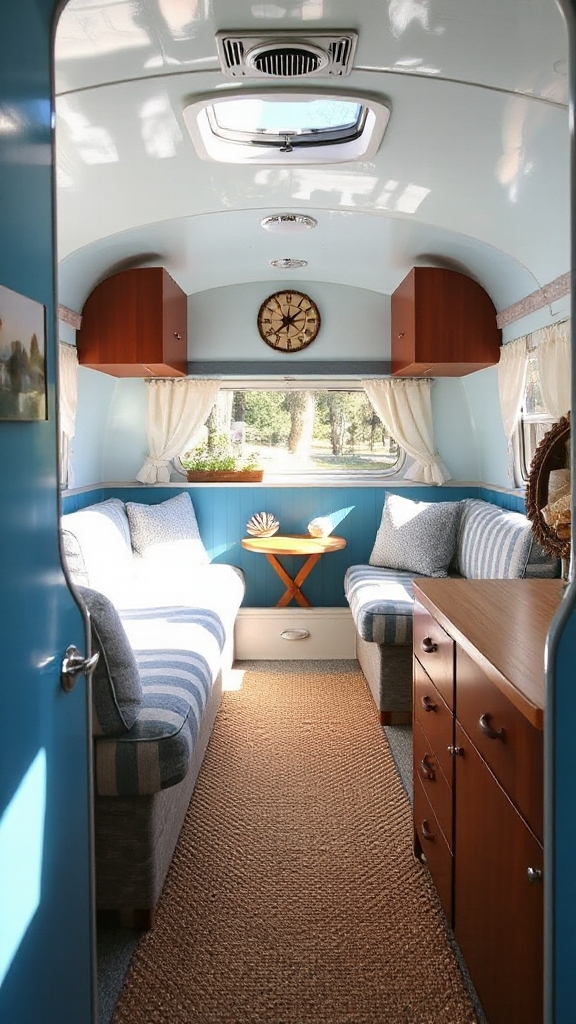
Blue and white is the oldest trick in the coastal design playbook, and it works in a vintage camper for the same reason it works in a beach house: it is simple, it is clean, and it immediately reads as seaside without trying too hard.
The key is choosing the right shades. Navy and crisp white feel classic and a little formal, while softer blues paired with off-white linen textures land closer to the relaxed Charleston vibe you are going for. Layer in Mediterranean-style woven fabrics on your cushions and curtains and the whole palette starts to feel like it belongs on the water rather than just near it.
Space-Saving Fold-Down Tables With Coastal Patterns
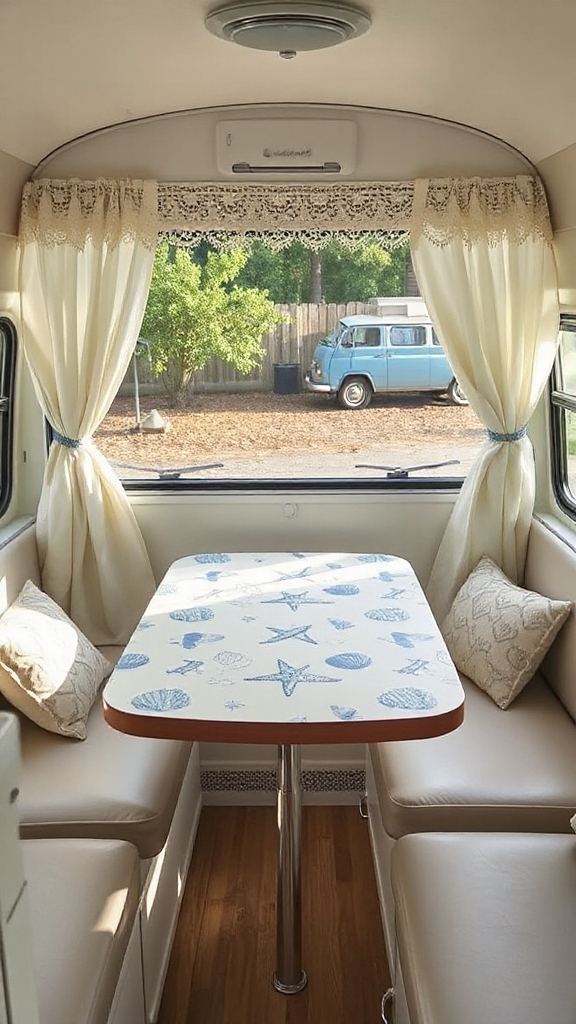
A fold-down table is one of the smartest pieces of furniture you can put in a vintage camper, because it gives you surface area when you need it and disappears when you do not. Zinc-plated steel supports are the way to go for the hardware if you want the thing to last.
It will take a beating from salty air and humidity and keep working smoothly year after year. For the surface itself, leaning into a retro coastal pattern like the polka dots and stripes that defined 1960s beach culture ties the table to both the vintage feel of the camper and the Charleston setting in one shot.
Vintage Navigation Charts as Statement Wall Art
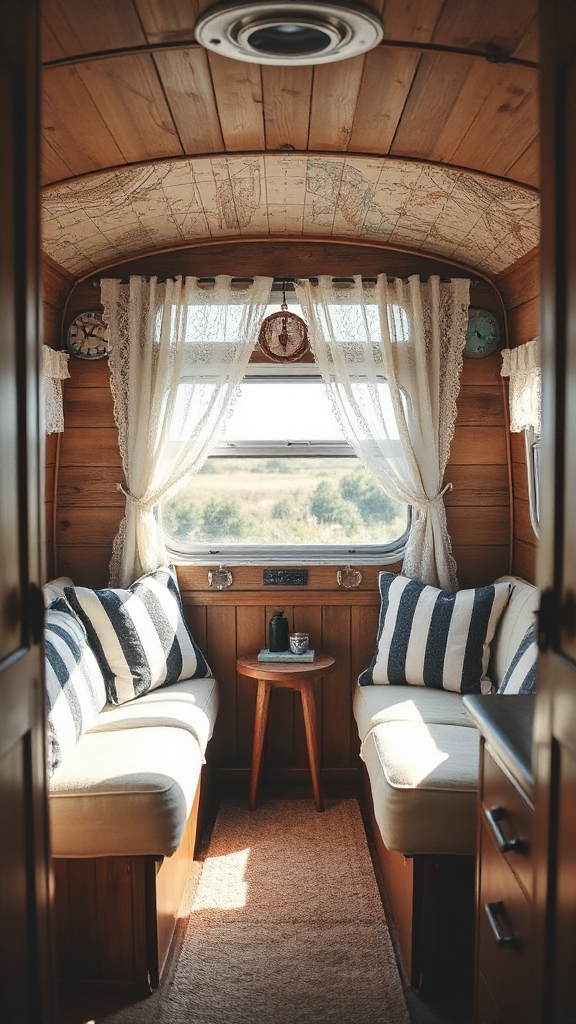
Blank camper walls are one of the most tempting canvases you will ever have, and vintage navigation charts are one of the best things to put on them. These are not the mass-produced nautical prints you see at every home decor store.
The real ones, or good reproductions of portolan charts drawn by hand centuries ago for actual ocean navigation, carry a weight and detail that stops people in their tracks. Mount one behind your dining area or arrange a triptych of charts that trace the coastline you are actually driving along, and suddenly, your wall is telling a story instead of just sitting there.
Charleston-Inspired Shell Collections and Display Cases
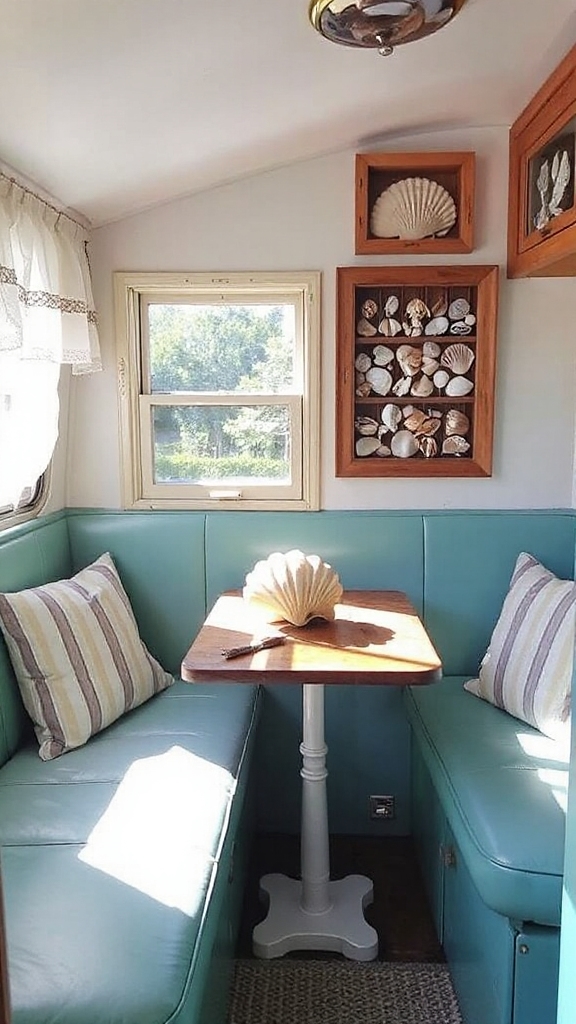
Charleston’s beaches produce some genuinely beautiful shells, and collecting them along the way gives your camper interior a connection to the place that no amount of bought decor can replicate. Custom acrylic display cases keep your collection visible without taking up much room, which matters in a tight space.
Shell-motif cabinet hardware is an easy way to carry the theme into the camper’s functional areas without overdoing it, and locally crafted oyster-shell ring dishes add a subtle, specific touch that signals to anyone who sees them that you actually spent time on this coast. The whole idea is that the decor grows with the trip rather than arriving fully formed before you leave home.
Maritime-Themed LED Lighting Solutions
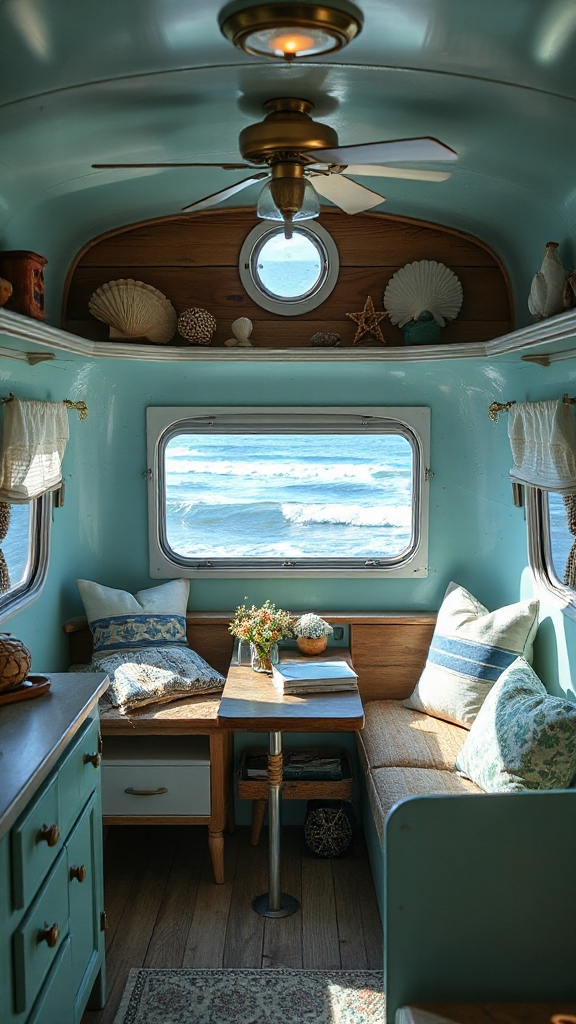
Lighting does more to set the mood in a small space than almost anything else, and in a vintage camper with a coastal theme, it is worth spending a little time getting it right. Marine-grade LED fixtures are built to handle humidity and salt air, which is exactly what you are going to throw at them on a Charleston road trip.
Dimmable options let you adjust the ambiance up or down, whether you are cooking dinner or settling in for the night, and they draw almost no power from your battery system compared to older fixtures. The maritime styling on the fixtures themselves, think brushed brass or weathered black finishes, keeps the whole setup feeling intentional rather than like you just screwed in whatever bulb fit.
Compact Modular Storage With Seafoam Green Accents
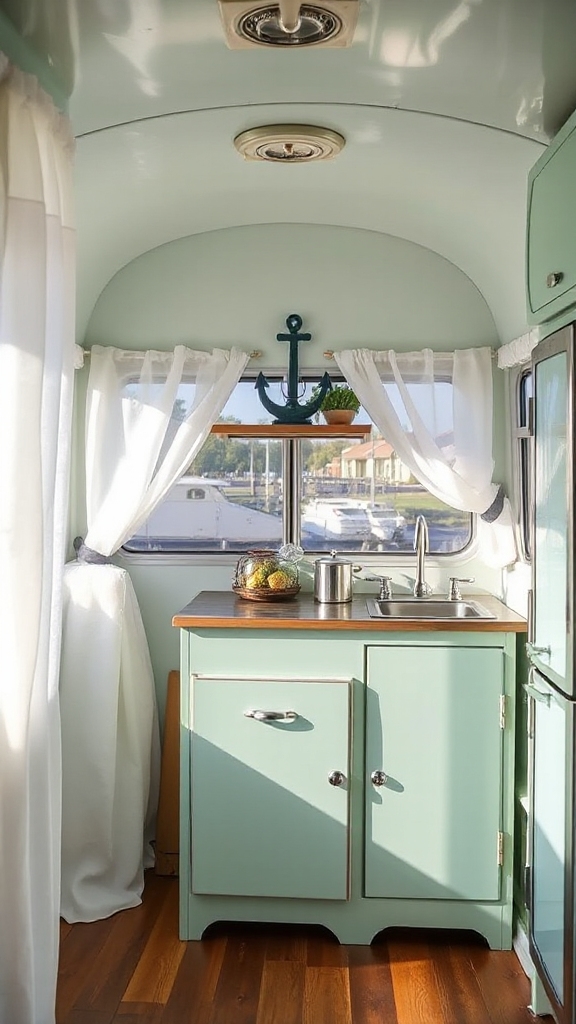
Seafoam green is one of those colors that only works in certain contexts, and a coastal camper is one of them. Modular storage units in that shade with sliding compartments and built-in dividers keep your stuff organized without cluttering the visual space, which is a hard trick to pull off in a small rig.
A convertible dinette set that flips between dining and sleeping configurations takes the pressure off every other piece of furniture to do double duty. The combination of the green accents and the clean lines of the modular pieces keeps the whole interior feeling airy and open, even when every inch of it is being used.
Retro Striped Upholstery for Built-in Seating
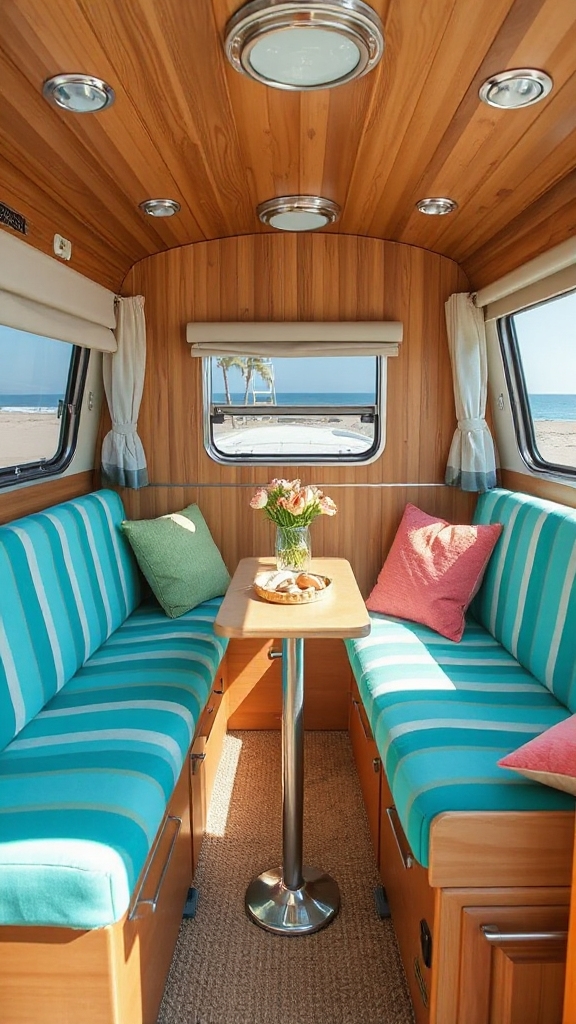
Built-in camper seating is one of the first things people notice when they step inside, and upholstering it in bold retro stripes is one of the easiest ways to make a vintage rig feel intentional and put together. Cotton canvas in classic coastal stripe patterns holds up well in humid conditions and comes in a huge range of colors, so finding something that fits your palette is not hard.
Suppliers like Gilbreath Supply and Laurel Leaf Farm carry vintage-style fabrics that range from 1950s to 1990s design, and the right pick will set the tone for everything else in the camper. Position the seating near a window if you can, because the stripes catch the light in a way that makes the whole space feel bigger than it actually is.
Solar-Powered Vintage Camper Essentials
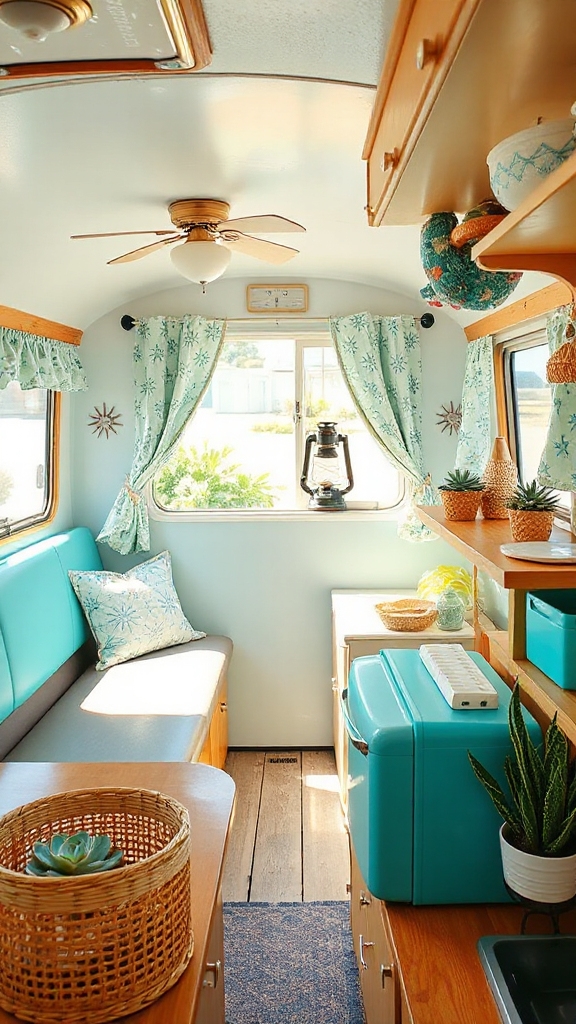
Running a vintage camper off the grid along the South Carolina coast is more achievable than most people think, and the solar setup does not have to be complicated. A system somewhere between 100 and 400 watts paired with a 30-amp PWM charge controller will cover your basics, from phone charging to running a small fan on a hot Charleston afternoon.
A 700-watt pure sine wave inverter handles the small appliances, and a 12-volt lithium battery stores enough energy to get you through the night without worrying about draining down. The best part is that none of this hardware has to be visible inside the camper, so the vintage aesthetic stays completely intact while the power system quietly does its job behind the scenes.
Lowcountry-Inspired Fishing Net Window Treatments
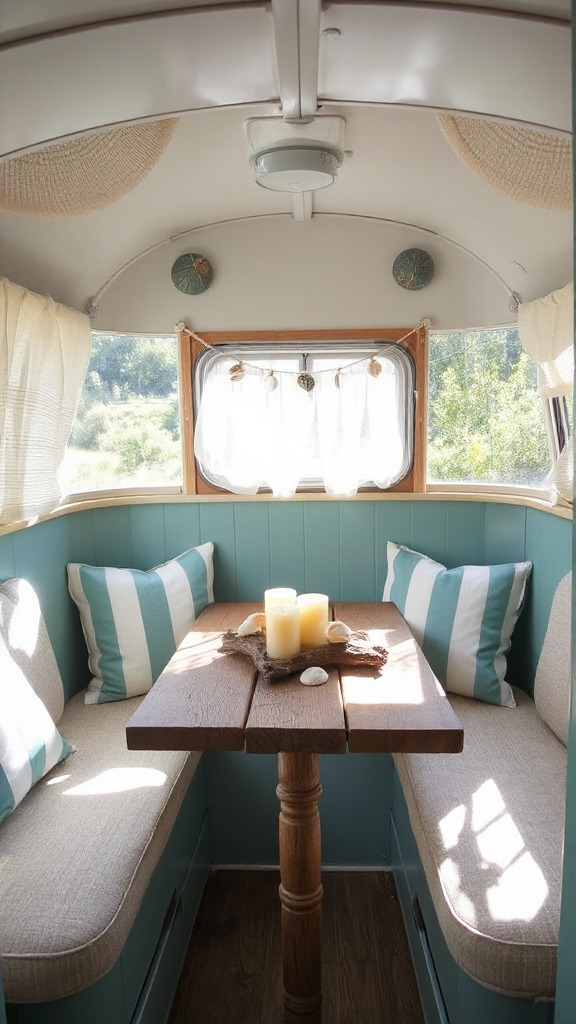
Fishing nets as window treatments sound like a cliche, but done right, they actually work beautifully in a coastal camper, especially one with a Charleston connection. Natural fiber nets let in filtered light and move with a breeze, which keeps the interior feeling open and ventilated during the warmer months.
The trick is in the details: driftwood mounting rods, a few shells woven into the net, and nautical rope ties for pulling them back all move it past decoration and into something that feels like it actually belongs on the Lowcountry coast. It is a treatment that costs almost nothing to put together and looks like you spent weeks on it.
Reclaimed Wood Cabinetry With Brass Hardware
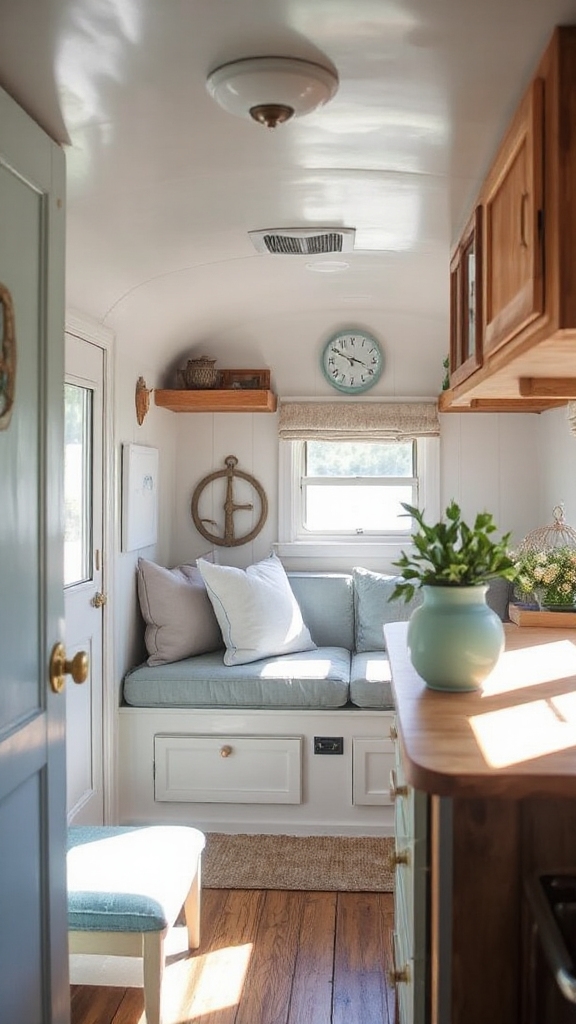
Reclaimed wood cabinets are one of the best ways to add warmth and history to a vintage camper interior without it feeling forced. The wood already carries character from wherever it came from, and pairing it with brass hardware gives the whole thing a maritime edge that ties directly into the Charleston theme.
Sealing the wood thoroughly before you install it is not optional if you are going anywhere near salt air and humidity. Get that right and the cabinets will hold up for years. Skip it and you will be replacing them before the next trip.
Smart Storage Solutions With Coastal Motifs
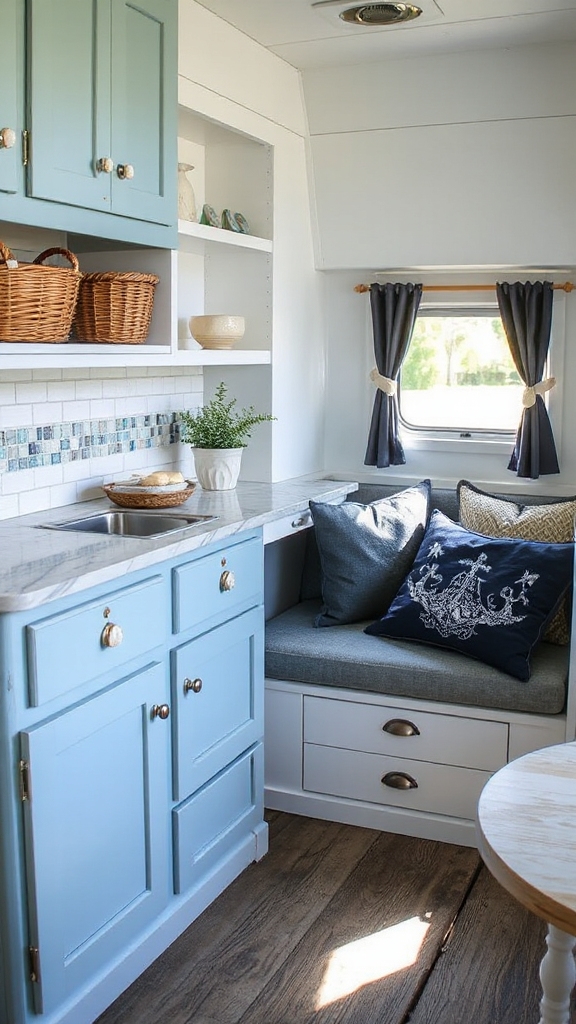
Storage in a camper is a constant negotiation between practicality and how the space looks, and the best solutions win on both fronts. Mesh bins work well for beach towels and linens because they breathe and let everything dry out, and stackable containers with subtle nautical prints keep the rest of your gear organized without looking like a supply closet.
Wall-mounted shelves displaying a few shells and a piece of driftwood add visual interest while also giving you a place to put things you actually reach for every day. A coastal-themed ottoman that opens up for storage underneath rounds out the system and gives you a place to sit while you are digging through it.
Vintage Nautical Photography Gallery Wall
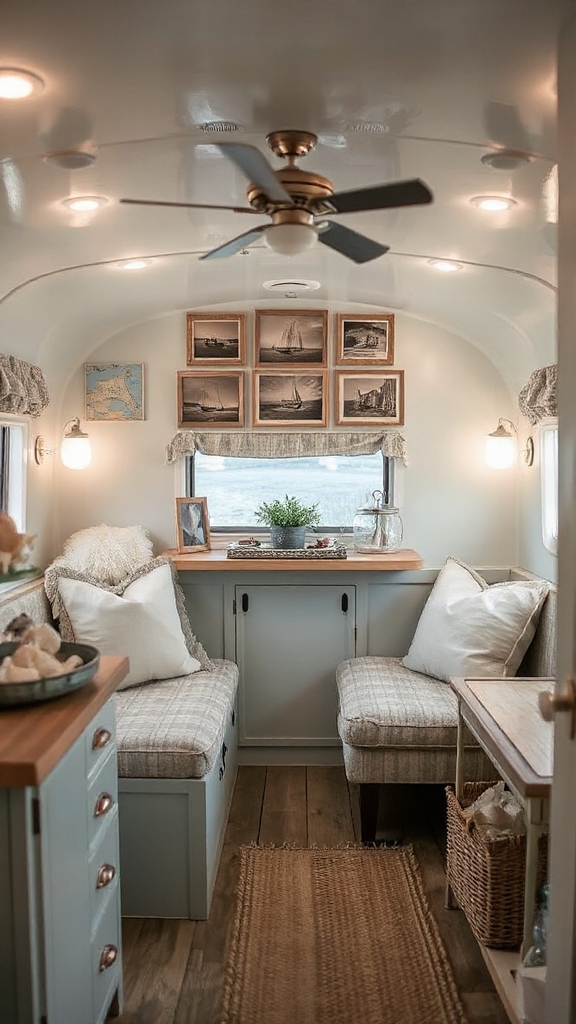
A gallery wall in a camper has to work harder than one in a house, because the space is smaller and every piece of it is closer to the viewer’s eye. Mixing black-and-white prints with sepia-toned photographs in weathered frames of different sizes creates the kind of layered, collected-over-time feeling that makes a wall look genuinely interesting rather than just decorated.
Classic seascapes and historic ship photographs carry the maritime theme without being heavy-handed about it, and vintage navigation charts can anchor the whole arrangement if you want a focal point. The key is keeping it balanced. Too many frames and the wall starts to feel cluttered. Too few and it looks like you forgot to finish.
Multi-Purpose Sleeping Areas With Beach House Vibes
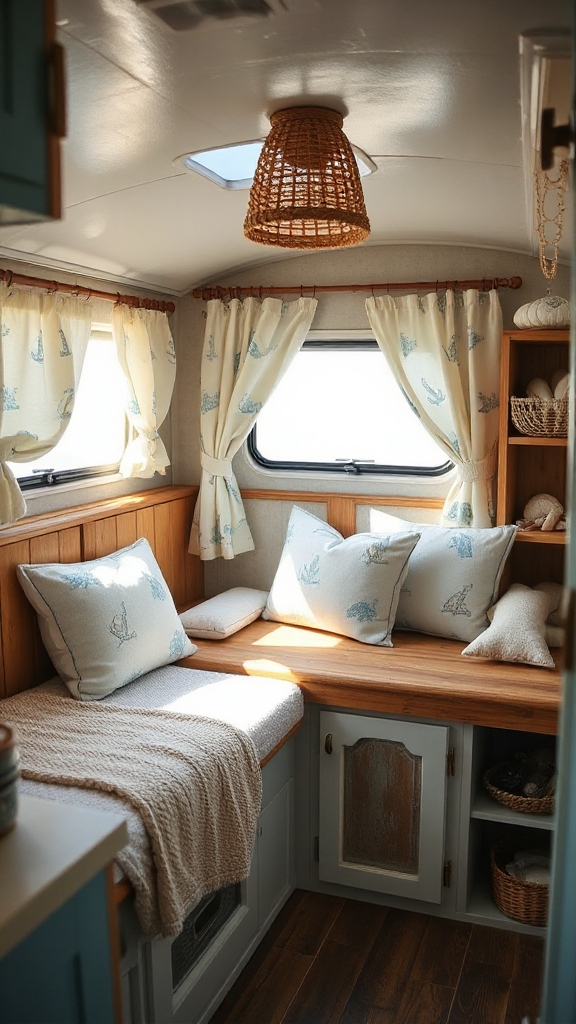
The sleeping area in a vintage camper is usually the smallest space doing the most work, and designing it around a beach house feel keeps it from turning into just another bunk. A convertible bed with built-in storage underneath solves the space problem without giving up any floor room during the day.
Light wood tones on the frame and trim paired with navy and white bedding pull the whole area into the coastal palette you have been building throughout the rest of the camper. A retractable table that folds out from the wall during daylight hours turns the same space into a breakfast spot or a place to read, which is exactly the kind of flexibility a small camper needs.
Antique Maritime Instrument Display Corner
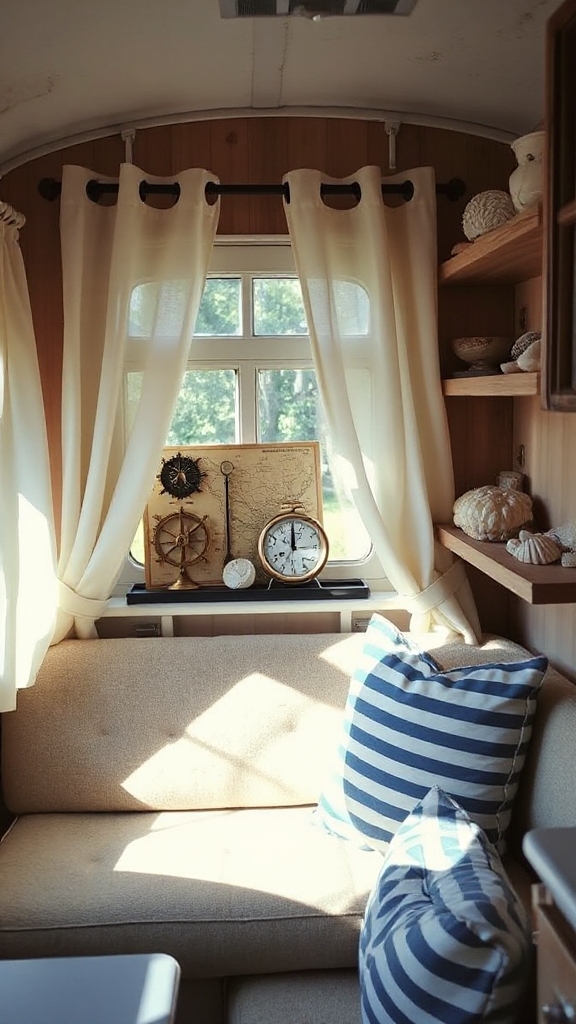
A corner display of antique maritime instruments is one of those details that turns a camper’s interior from something that looks nice into something that looks like it was put together by someone who actually knows and cares about the sea.
Brass sextants and antique barometers mounted on wood-paneled walls carry real history, and even if yours are reproductions, they add a weight and presence that printed artwork cannot match. Smaller compasses grouped in shadow boxes fill out the display without overwhelming the space.
Charleston Harbor-Inspired Color Palette
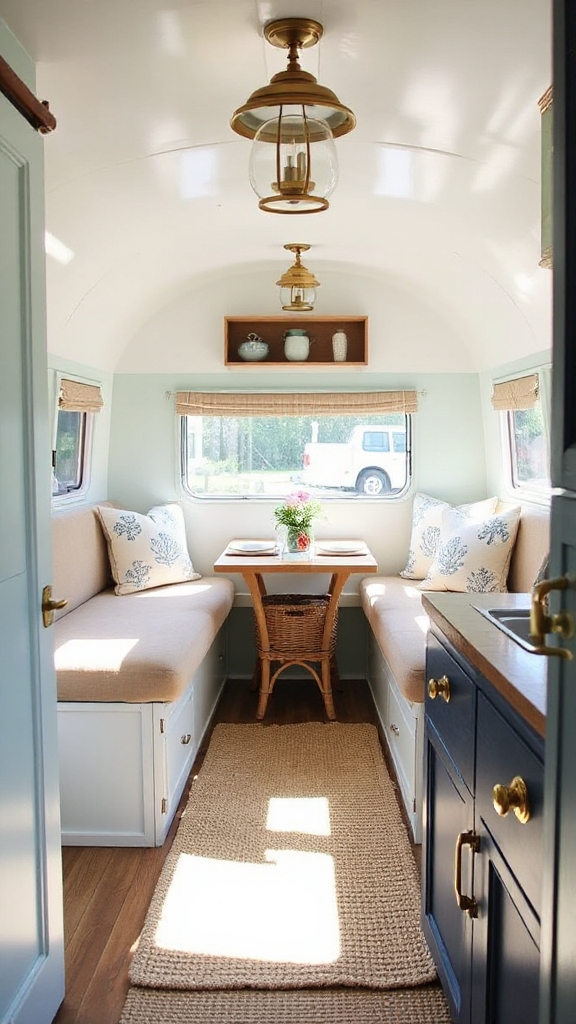
Charleston Harbor has its own color story, and it shifts depending on the time of day and the season. The classic Charleston Green that shows up on so many of the city’s historic buildings is a natural anchor for a camper palette, and it pairs well with the deep blues of the water and the sandy neutrals of the marsh grass.
If you want something warmer, the sunset colors over the harbor, soft golds and burnt oranges bleeding into pink, can drive the whole interior in a different but equally compelling direction. Either way, pulling your palette directly from the place you are visiting is what keeps the design feeling grounded rather than generic.
Space-Efficient Entertainment Center With Coastal Flair
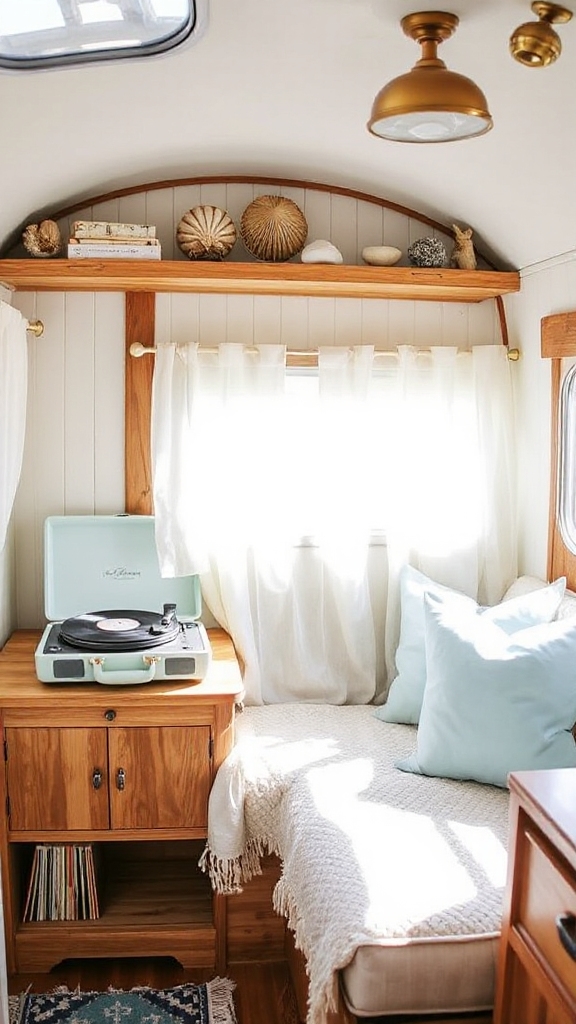
An entertainment center in a camper does not need to take up a whole wall to do its job, and in a vintage rig, you probably do not have a whole wall to give it anyway. A wall-mounted smart TV on a retractable arm swings out when you want to watch something and folds flat against the wall when you do not, which keeps the space open the rest of the time.
Modular shelving made from reclaimed driftwood around the TV ties the entertainment area into the coastal theme without it feeling like an afterthought. The whole setup stays compact, stays on brand, and stays out of the way when you do not need it.
Natural Fiber Textiles in Retro Coastal Patterns
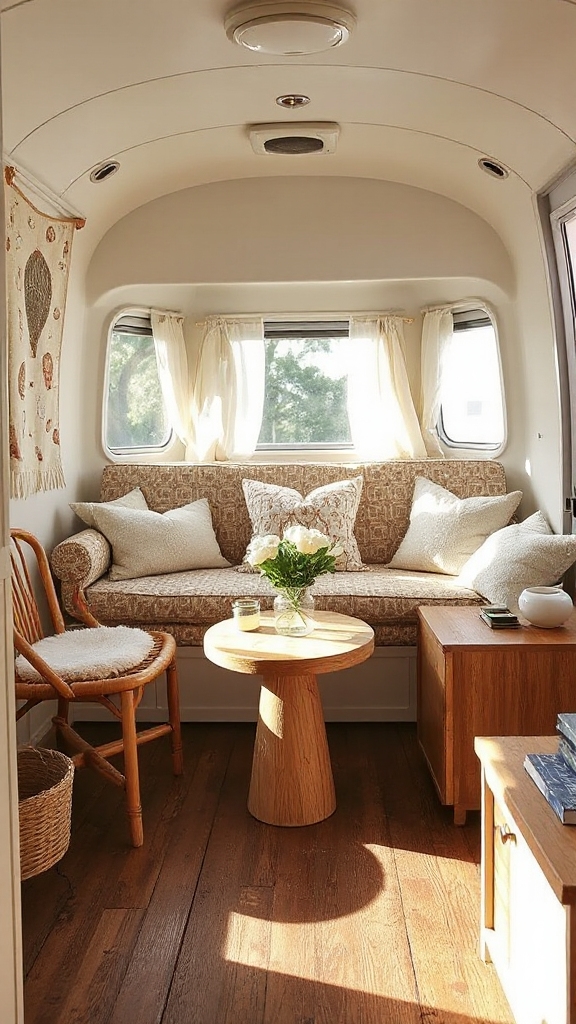
Charleston’s humidity is no joke, and the fabrics you choose for your camper interior need to be able to handle it without turning into a mess. Cotton and linen are the two best options because they breathe, they stay relatively cool against skin, and they dry out quickly after getting damp.
Classic nautical patterns like anchors and horizontal stripes in muted coastal colors give those fabrics a retro edge that fits the vintage camper without clashing with anything else in the space. They wear well, they wash well, and after a few trips along the coast, they start to develop the kind of soft, broken-in quality that makes a camper feel genuinely lived in.
Customized Beach Town Signage and Wall Decor
Personalized signage is one of the simplest ways to stamp your camper with the specific place you are visiting, and Charleston gives you a lot to work with.
Retro-style wooden plaques featuring landmarks like Fort Sumter or the Battery can be weathered down to look like they have been hanging in a beach cottage for decades, and a little LED backlighting behind them at night turns them into something more than wall decoration. Vintage-style maps of the Charleston coastline and palmetto symbols tie everything back to the Lowcountry without being heavy-handed about it.
The whole wall becomes a record of the trip, and every time you look at it, you are reminded of exactly where you have been.