Cape May sits at the very tip of New Jersey like it was placed there on purpose, and in a lot of ways, it was. The town has been a destination for beach lovers since the 1800s, and the Victorian architecture, the wide sandy beaches, and the way the light comes off the Atlantic in the late afternoon give it a character that most shore towns lost a long time ago.
If you are bringing a camper down to spend real time here, you have an opportunity to do something a little more interesting than just park and unload. These thirteen ideas pull directly from the town itself, from the colors of the water to the way the old beach cottages are built, and turn them into design choices that work in a small mobile space.
Beachcomber’s Dream: Light and Airy Color Schemes
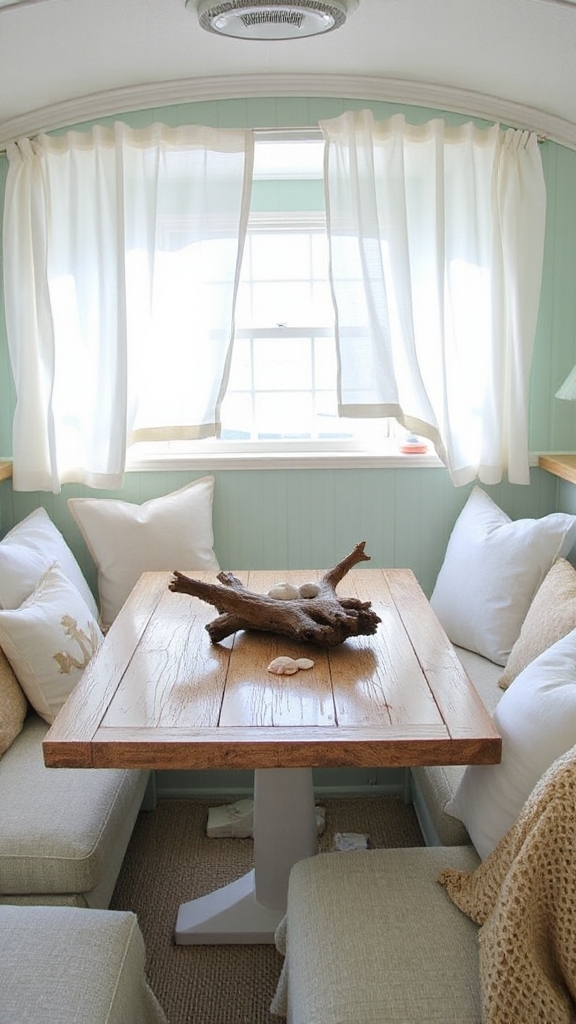
The first thing Cape May does for you is make everything feel lighter, and your camper’s interior should do the same when someone steps inside. Soft blues that sit somewhere between the color of the Atlantic on a calm day and the color of the sky above it form the backbone of the palette, and creamy whites keep everything from feeling heavy or closed in.
Seaside pastels, think the softest blush pink or the palest sage, can come in as accents on cushions or curtains without competing with the blues and whites for attention. Light wood accents on shelving or trim tie the whole thing to the beach without you having to spell it out for anyone.
Nautical Charm With Shiplap Wall Accents
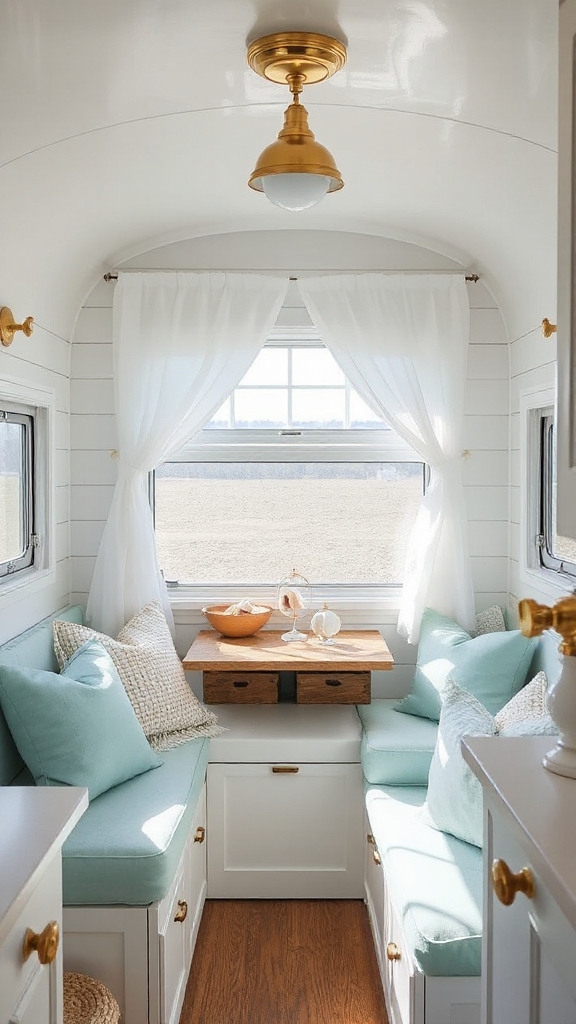
Shiplap has become so popular in interior design that it almost feels overdone, but in a camper, it still earns its place because it does things that flat walls simply cannot. The horizontal lines add visual texture to a small space and make it feel more layered and intentional, and in crisp white, it practically glows.
Pair it with navy accents and natural materials like rope or rattan, and you get a look that reads as genuinely coastal rather than just trendy. In a tight camper with limited ceiling height, running shiplap vertically on one accent wall can open up the space in a way that catches you off guard the first time you see it.
Cape May-Inspired Coastal Storage Solutions
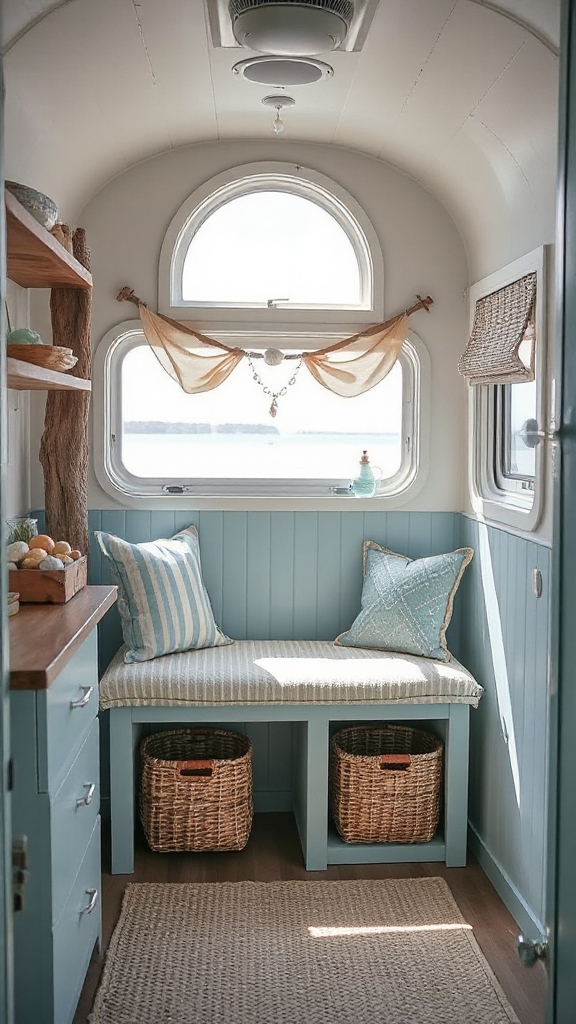
Cape May is a town that deals with salt air, humidity, and sand every single day, and your storage solutions need to be built for the same conditions. Moisture-resistant materials are non-negotiable for any closet or cabinet that is going to live in a camper parked within earshot of the ocean.
Adjustable shelving lets you reconfigure things as your needs change from day to day, and steel-framed construction keeps everything sturdy and secure whether you are driving or parked. The best storage in a camper is the kind you never have to think about, and getting the materials right from the start is what makes that possible.
Sea Glass and Driftwood Design Elements
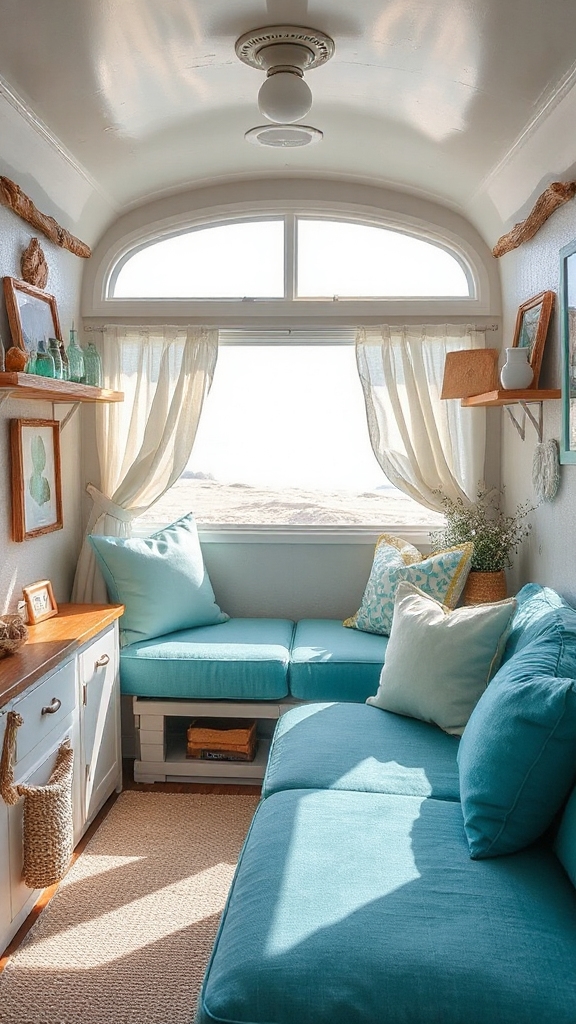
Sea glass and driftwood are two of the most reliable ways to bring a beach into a camper without it feeling forced, because they are literally already from the beach. A handful of sea glass pieces in a vintage mason jar set near a window will catch the light and scatter it in a way that feels alive rather than static, and it costs you nothing if you collect it yourself along the shore.
Weathered driftwood mounted on a wall or set on a shelf adds an organic, irregular shape that softens a camper’s interior and prevents it from feeling too rigid. A single well-chosen piece of driftwood on your dining table does more for the mood of the space than a dozen store-bought decorations ever could.
Space-Saving Beach House Furniture Ideas
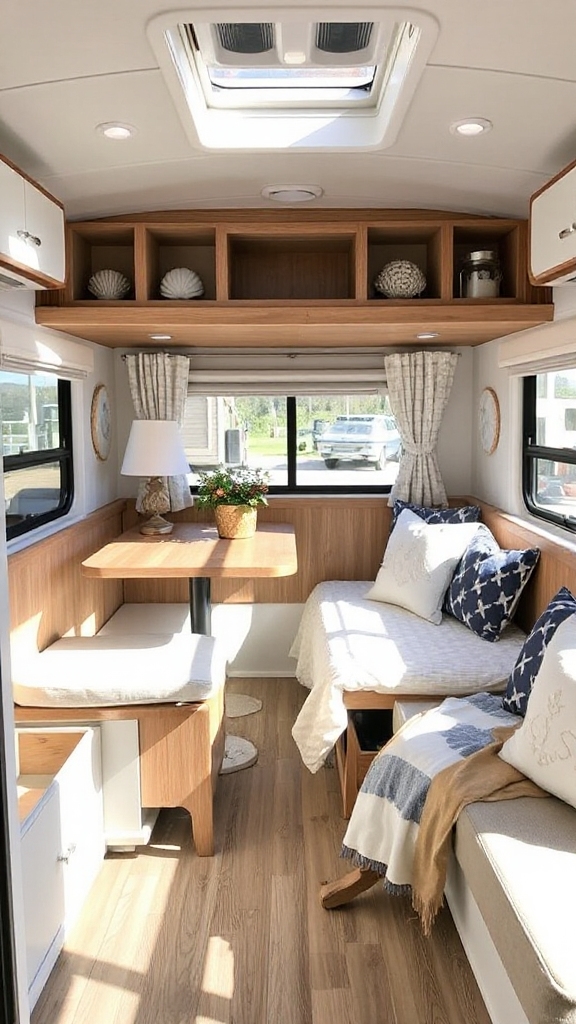
Furniture in a camper has to earn its spot, and in a beach-themed rig, that means every piece needs to look right and work hard at the same time. Neutral tones on the larger pieces, your sofa, your table, your built-in benches, keep the eye from getting cluttered and let the coastal accents around them do the decorating.
Washable slipcovers are less glamorous but arguably more important than anything else on this list, because sandy beach clothes and wet swimsuits are going to happen every single day you are in Cape May. Get the furniture right, and the rest of the design has something solid to build on.
Ocean-Themed Textiles and Patterns
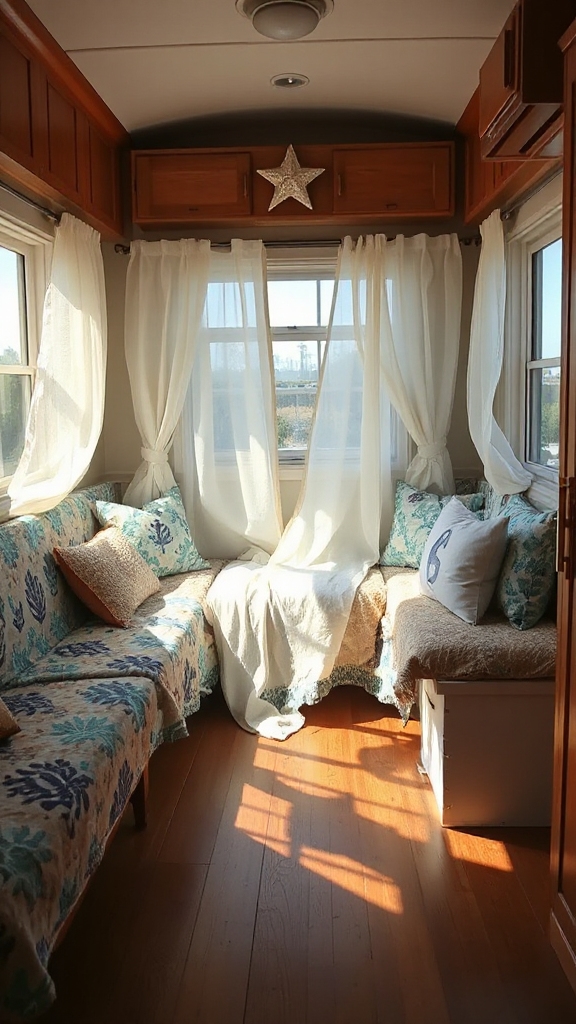
Textiles are where a camper’s interior picks up the most visual personality, and for a Cape May trip, the choices are pretty clear. Anchors, seashells, and subtle marine life motifs on cushions, curtains, and throw blankets carry the coastal theme without turning the place into a souvenir shop.
The fabric itself matters as much as the pattern. UV-resistant cotton and linen in ocean blues and sandy beiges hold up to the sun and humidity without fading or feeling stiff, and they wash clean after a day on the beach. That combination of good looks and durability is what separates a textile that works in a camper from one that just looks nice in the store.
Breezy Window Treatments for Beach Vibes
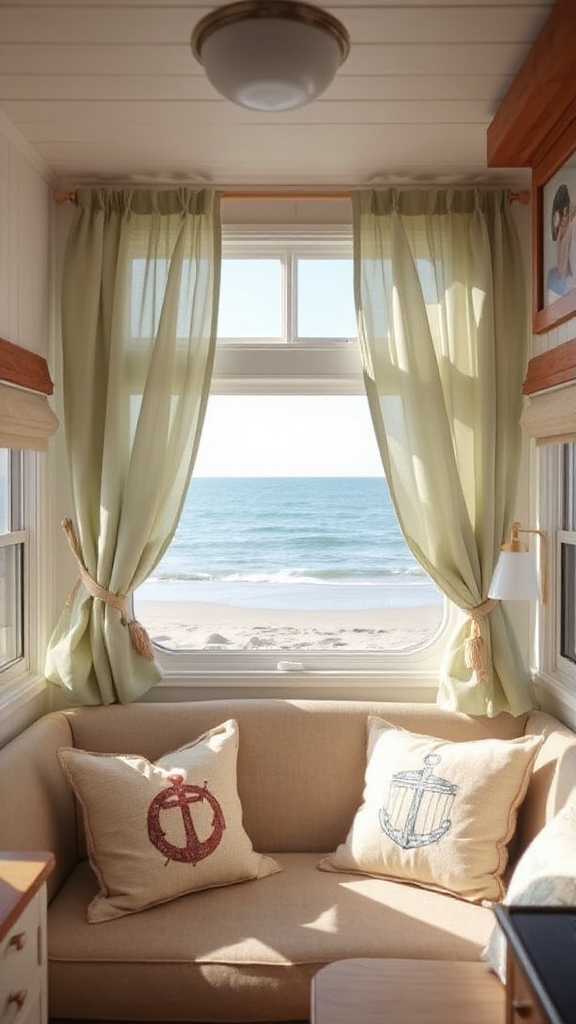
Cape May’s afternoon sun is no joke, and your window treatments need to handle it without blocking the view that is half the reason you are there. Faux wood blinds or aluminum mini blinds handle the salt and humidity without warping or rusting the way real wood does, and they give you precise control over how much light comes in at any given time.
A layer of lightweight linen curtains over the blinds softens the whole look and adds movement when a breeze comes through, which is exactly the feeling you are going for. Solar shades are worth adding if you want UV protection without losing sight lines, and they are easy to wipe down when the salt air inevitably gets to them.
Coastal Kitchen and Dining Essentials
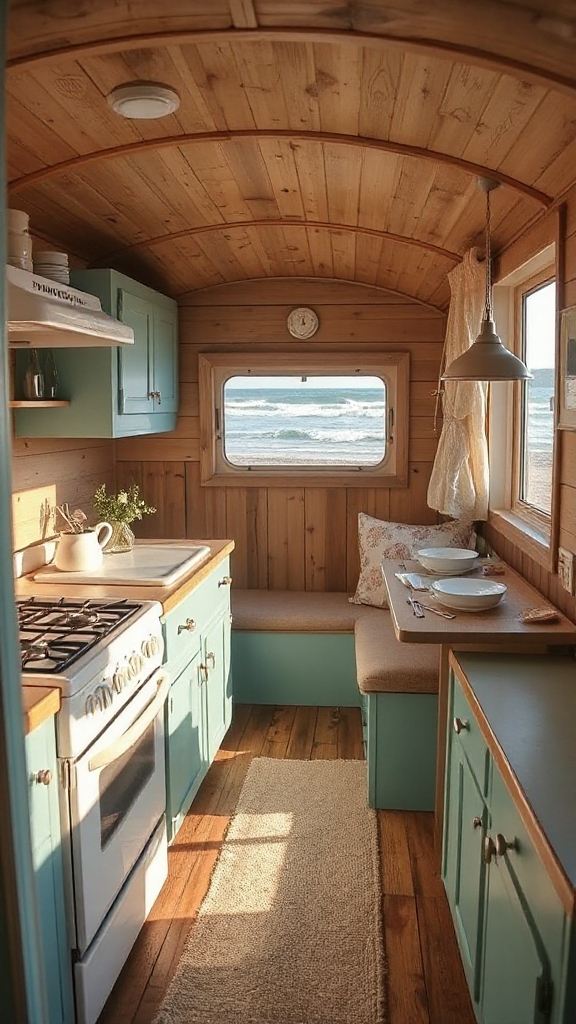
A camper kitchen at Cape May is going to see a lot of action, from quick breakfasts before a morning on the beach to dinners that stretch into the evening, and it needs to be set up to handle all of it without turning into a mess. Magnetic strips for utensils, stackable containers for dry goods, and overhead racks for pots keep everything within reach and off the limited counter space.
Durable non-stick cookware and tools that do more than one job cut down on how much you actually need to store in the first place. A few seashell displays or a small piece of driftwood near the stove tie the kitchen back to the coastal theme without interfering with what you are actually cooking.
Victorian Beach House Cabinet Makeovers
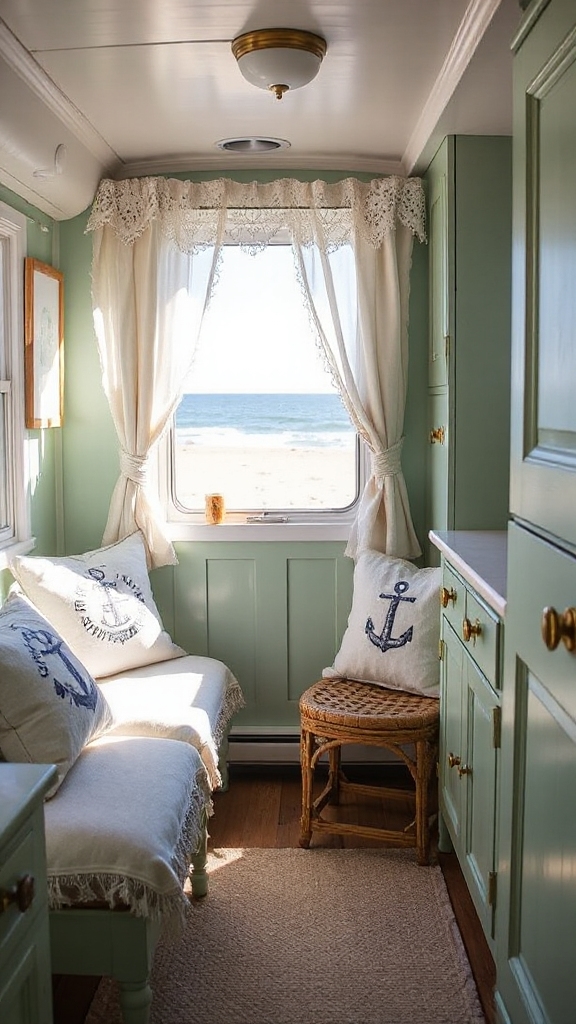
Cape May’s Victorian architecture is one of the things that makes the town feel distinct from other beach communities on the East Coast, and you can bring that influence directly into your camper cabinets. Chalk paint in seafoam green or muted teal is the easiest starting point, and distressing the edges after it dries gives the whole thing an aged, lived-in quality that feels right for a beach town this old.
Vintage brass hardware and simple decorative moldings along the cabinet edges push it further into Victorian territory without making it feel heavy or out of place in a small space. A coat of clear wax over everything seals it against humidity and helps prevent the finish from wearing off after a few trips to the coast.
Seaside-Inspired Lighting Solutions
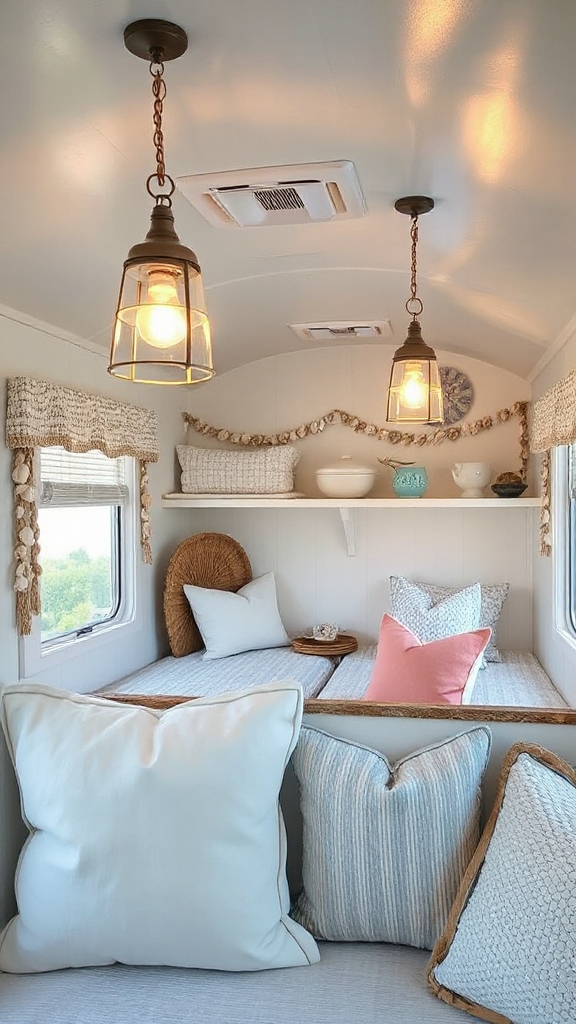
Getting the lighting right in a camper is one of those things that makes an outsized difference in how the whole interior feels, and for a Cape May trip, the goal is warm and soft rather than bright and clinical. Warm white LEDs around 3000 Kelvin tucked under cabinets and along the tops of walls create a glow that feels like golden hour all evening long.
Rope-textured fixtures and dimmable switches let you adjust the ambiance up or down, whether you are winding down for the night or relaxing after dinner. Waterproof strip lights under your awning extend the whole feel outside, and a couple of woven shades on overhead fixtures keep the light from being too harsh on anyone’s eyes.
Beach Cottage Bedroom Transformations
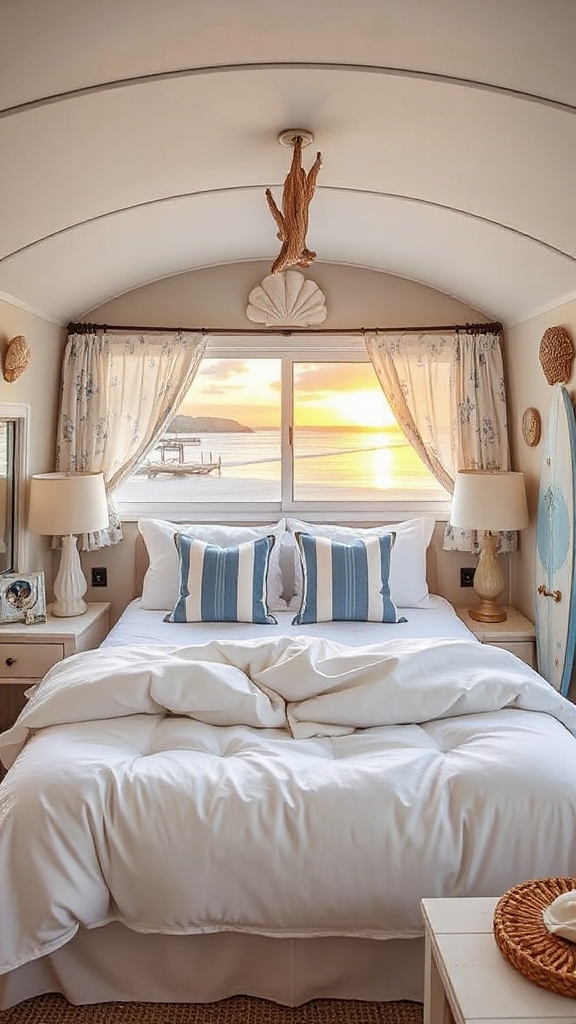
The bedroom in a camper is usually the smallest room doing the heaviest lifting, and in Cape May, it is also the place you are going to collapse into after a long day in the sun. Crisp whites and soft blues on the bedding and walls keep it feeling cool and open even when the space itself is tight.
Layer natural textures like rattan and jute on a headboard or a small side table, and the space feels more like a beach cottage than a camper. A few collected shells or a piece of driftwood on the nightstand is all it takes to remind you exactly where you are every time you wake up.
Creative Coastal Wall Décor and Artwork
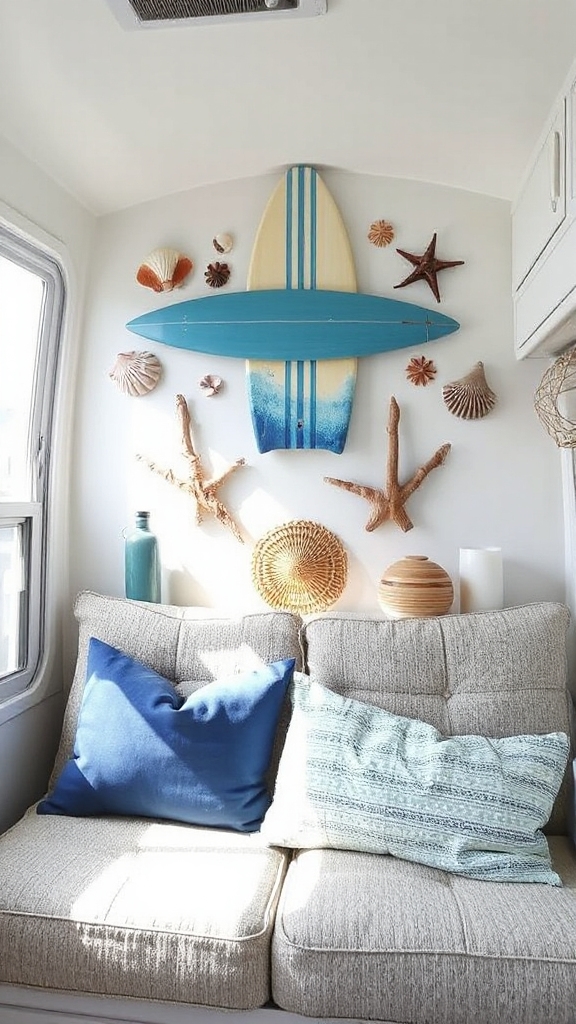
A camper’s walls are small, which actually works in your favor when it comes to coastal art, because you do not need a lot of pieces to make an impression. Metal nautical art, hand-carved driftwood hangings, and small wildlife sculptures can be mixed together on one wall to create something that feels collected and personal rather than coordinated and bought as a set.
The trick is varying the textures. A framed seascape, a piece of fishing net, and a mosaic tile piece keep the eye moving and give the wall a sense of depth that flat prints alone cannot achieve. Stick to ocean blues and sandy neutrals across all of it, and everything stays cohesive no matter how many different materials you throw in.
Multi-Functional Beach Living Spaces
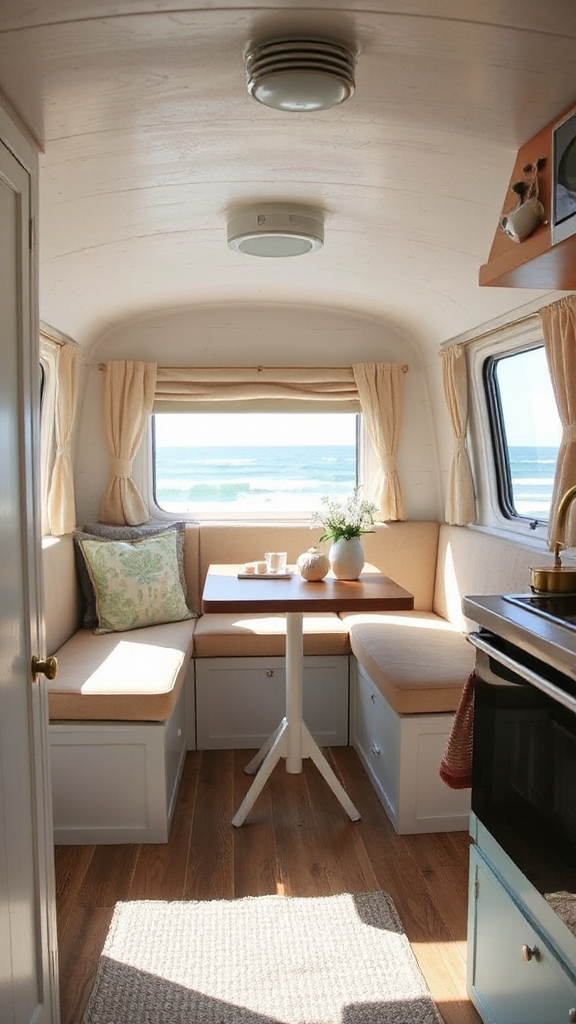
The living area of a beach camper needs to do more than look good. It needs to shift gears throughout the day without you having to tear everything apart and start over. A modular sectional sofa with reversible cushions lets you rearrange the layout depending on whether you are entertaining, watching something, or just lounging after a day at the beach.
Hidden storage built into the furniture keeps your beach gear, towels, sunscreen, and sand toys out of sight and out of the way, so the space stays clean and usable no matter how much you are hauling back and forth from the shore.