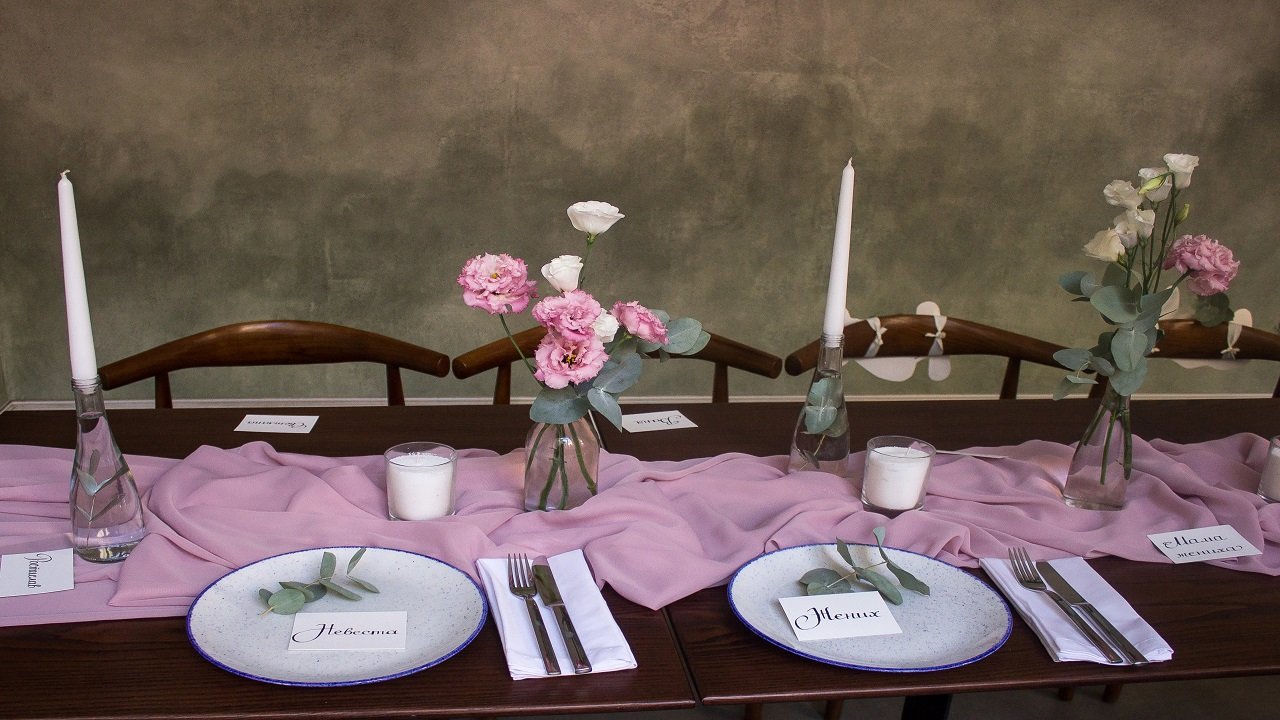
Colorado will humble you fast. One afternoon, you’re sweating in Moab’s red rock heat, and by nightfall, you’re digging for an extra layer at 10,000 feet.
I’ve camped in this state in every season, and the campers that hold up aren’t necessarily the biggest or the fanciest. They’re the ones set up with intention.
A pop-up done right for Colorado’s range of conditions feels less like roughing it and more like a well-edited life on wheels. These 21 ideas are built around exactly that.
Mountain-Inspired Color Schemes for Cozy Interiors
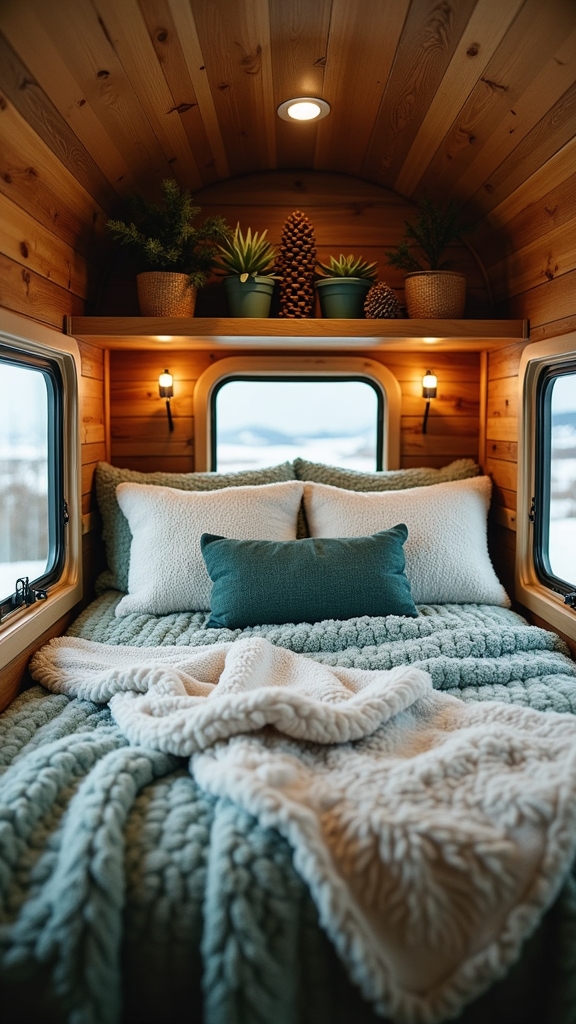
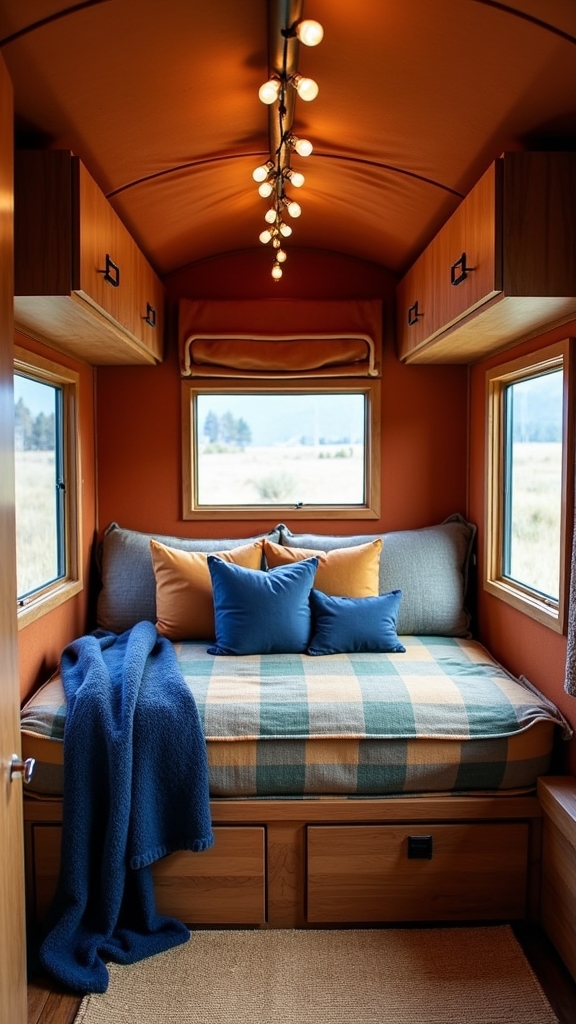
Colorado’s scenery does half your decorating work for you, so lean into it. Terracotta, clay, and weathered gray read as warm and grounded, honest to where you are rather than chasing any trend.
Pull in a forest green or autumn gold through a throw or curtain panel, and the view outside and the space inside start to feel connected. That continuity makes a small camper feel much less like a box you’re sleeping in.
SEE THIS: 29 Pop Up Camper Interior Ideas for Relaxed Living in Charleston, South Carolina!
Space-Saving Convertible Dining Areas
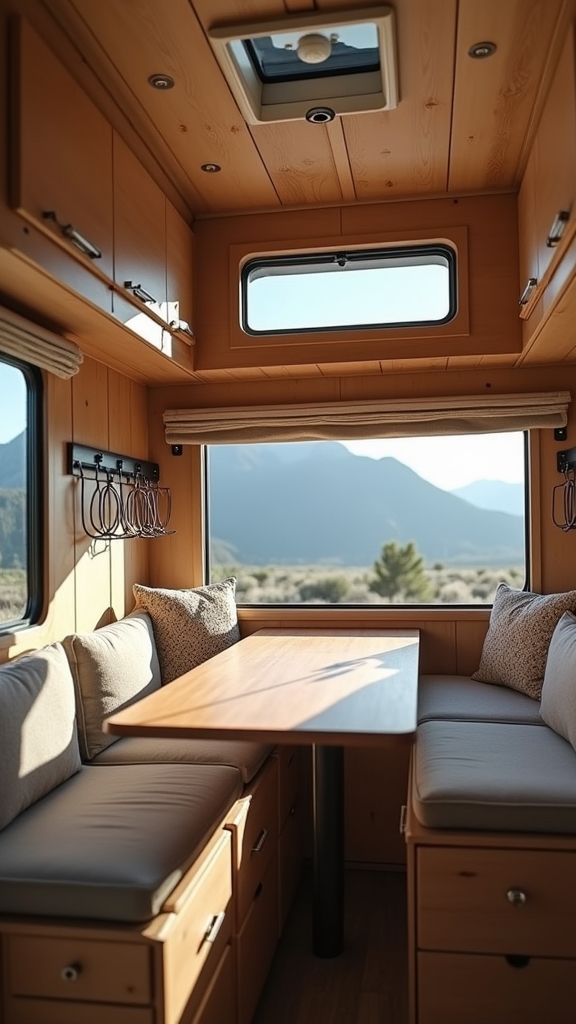
Folding tables with adjustable legs aren’t glamorous, but you’ll appreciate them at mile three of a muddy trail when you just want to sit and eat.
Drop-leaf extensions let you expand for a real meal and collapse everything back down when it’s time to move. Under-table bins handle the overflow: extra cookware, the dog’s food bag, whatever hasn’t found a home yet.
Pallet wood makes a decent tabletop if you’re building your own, and the worn texture hides scratches from the first trip out.
SEE THIS: 22 Pop Up Camper Interior Ideas for Glamping in Sonoma County, California!
Multi-Purpose Storage Solutions Under Seating
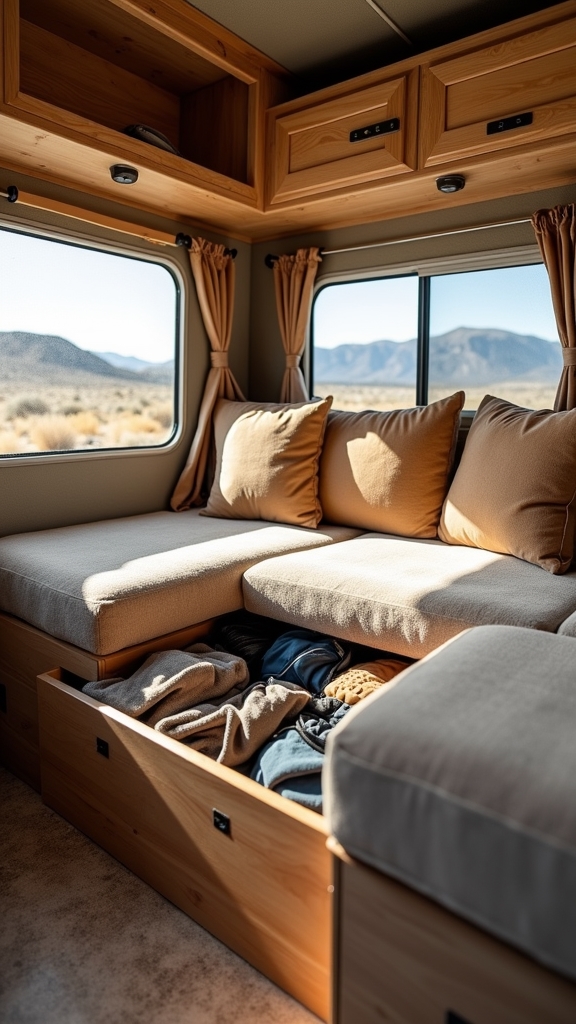
The space under your benches is some of the most underused real estate in a pop-up camper.
Modular bins slide in and out cleanly, and clear containers save you from unpacking half the rig to find your headlamp at midnight.
Hidden compartments underneath are worth building if you carry anything valuable: a backup GPS, maps, whatever you’d hate to lose at a trailhead.
SEE THIS: How to Get the Texas Ranch Look in Your Small Camper Interior!
LED Lighting Systems for Energy Efficiency
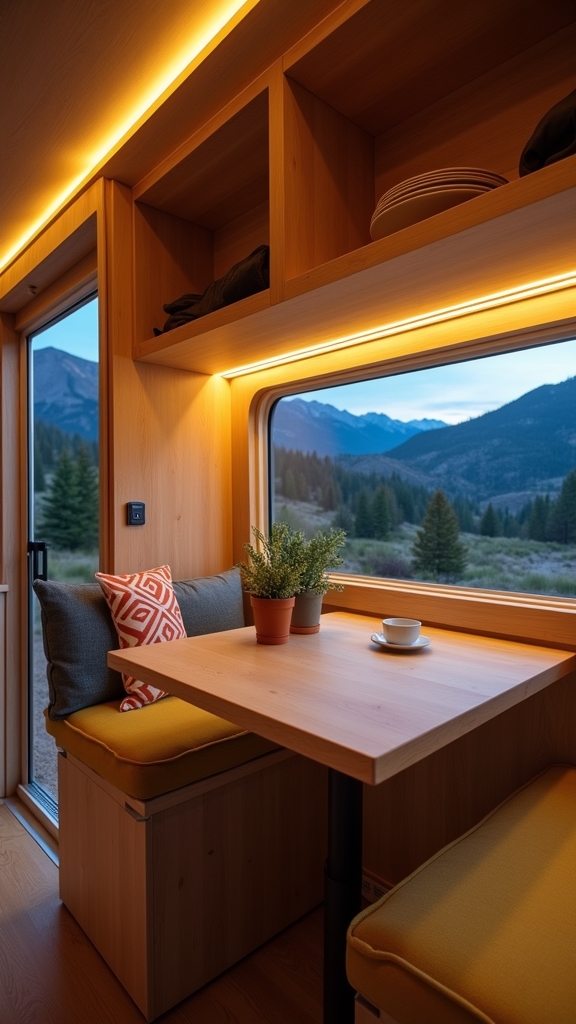
Standard RV bulbs draw power like they have a purpose. LEDs draw about 10% of that load, which matters a lot when you’re dry camping above treeline with no hookups for three days.
The light quality is better too, brighter and more consistent without the yellowish flicker of older fixtures. Factor in a lifespan that runs to 60,000 hours, and you’re essentially done thinking about bulbs for the foreseeable future.
SEE THIS: 19 Pop up Camper Interior Ideas From Boho-Chic Santa Fe, New Mexico!
Rustic Farmhouse Cabinet Makeovers
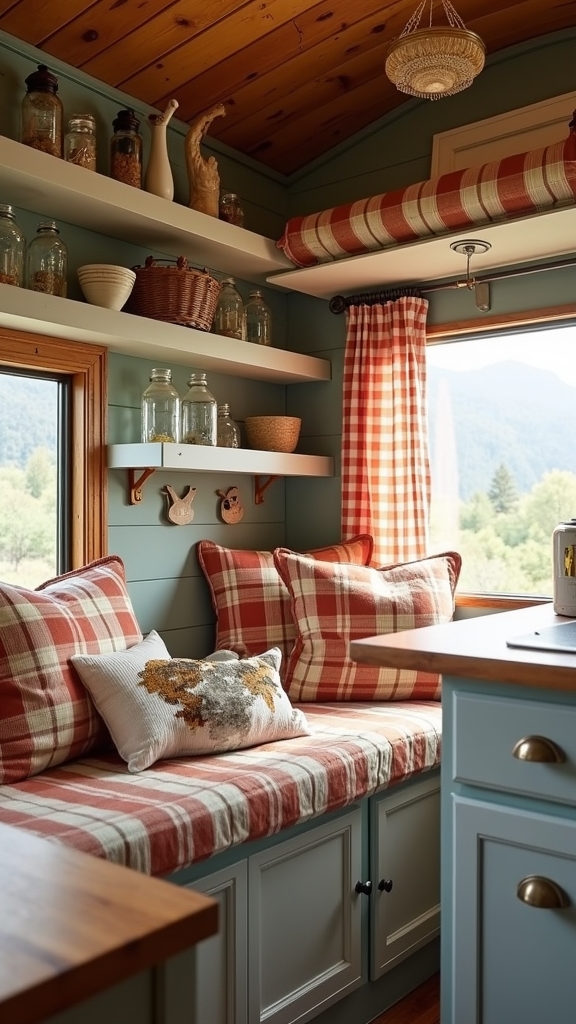
A coat of chalked paint and some open shelving can pull a tired camper interior away from rental unit and toward something that actually feels like yours.
Open shelves work well for items you reach for constantly: spices, a camp mug, a headlamp. Distressed wood accents are easy to source and add texture without adding weight.
Durable Textile Choices for Colorado Weather
Afternoon thunderstorms in the Rockies aren’t a possibility. They’re on a schedule.
Sunbrella’s acrylic fabrics handle UV and sudden soakings better than most alternatives, which is why you’ll find them on boats as well as campers.
For bedding and curtains, solution-dyed polyester dries fast and resists the mildew that sneaks in when you pack up damp.
Vertical Storage Maximization Techniques
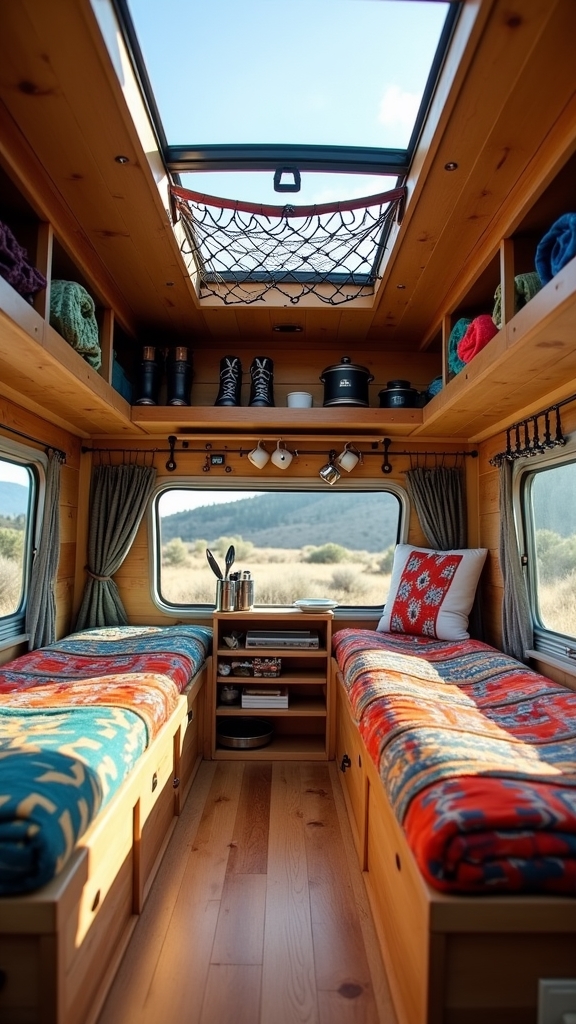
Wall space is the most overlooked resource in a small camper. Command hooks handle a lot: wet towels, a rain jacket, trekking poles waiting to dry, all without drilling a single hole.
Magnetic strips in the kitchen keep utensils off the counter and within reach during the cooking chaos that hits when you’re hungry after a long hike.
Stackable bins mounted high keep the floor clear, and that matters more than it sounds when you’re moving around in a space measured in feet.
Compact Kitchen Organization Strategies
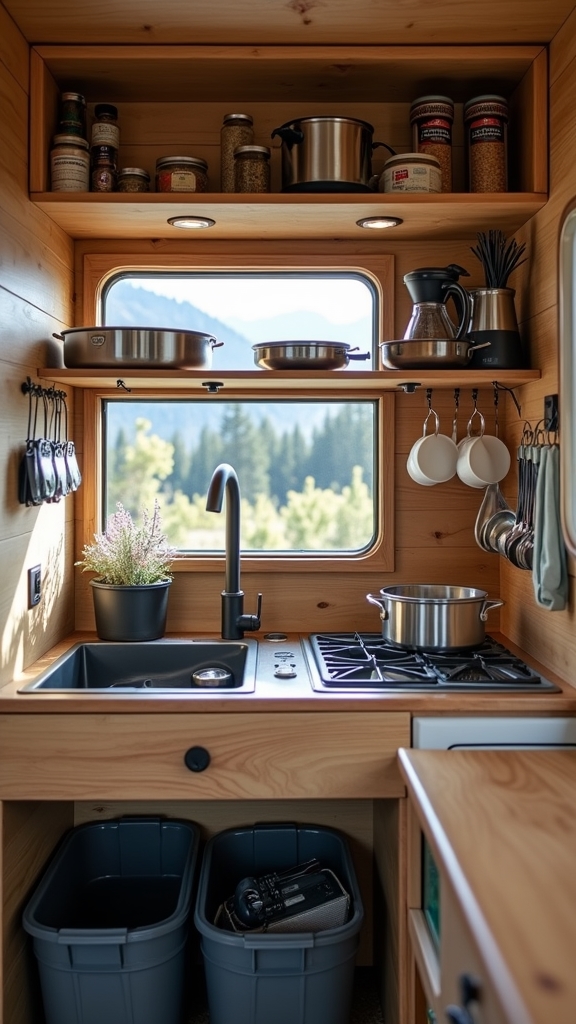
The first washboard road will rearrange everything you didn’t secure, and that’s a lesson most people only need once.
Pull-out drawers under the counter keep cookware from sliding, and stackable containers with locking lids stay put on the move.
Multi-functional tools cut down on the sheer volume of things you’re managing: a pot that doubles as a bowl, a knife that handles camp prep and trail snacking.
Nature-Themed Décor Elements
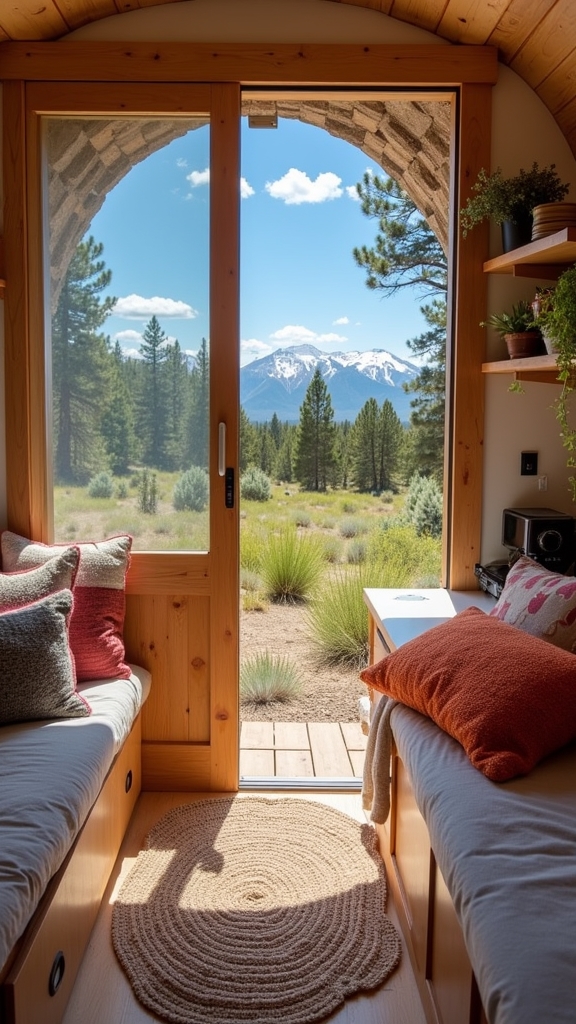
There’s a version of nature-themed camper décor that looks like a gift shop exploded, and then there’s the version that actually feels earned.
A few rocks from memorable campsites, a pressed wildflower under glass, a photograph from a ridge you worked hard to reach: those things carry weight.
Woven baskets keep collected items organized without turning your camper into a curio cabinet. Warm lighting does more for atmosphere than any single decorative object you could buy.
Modular Furniture Arrangements
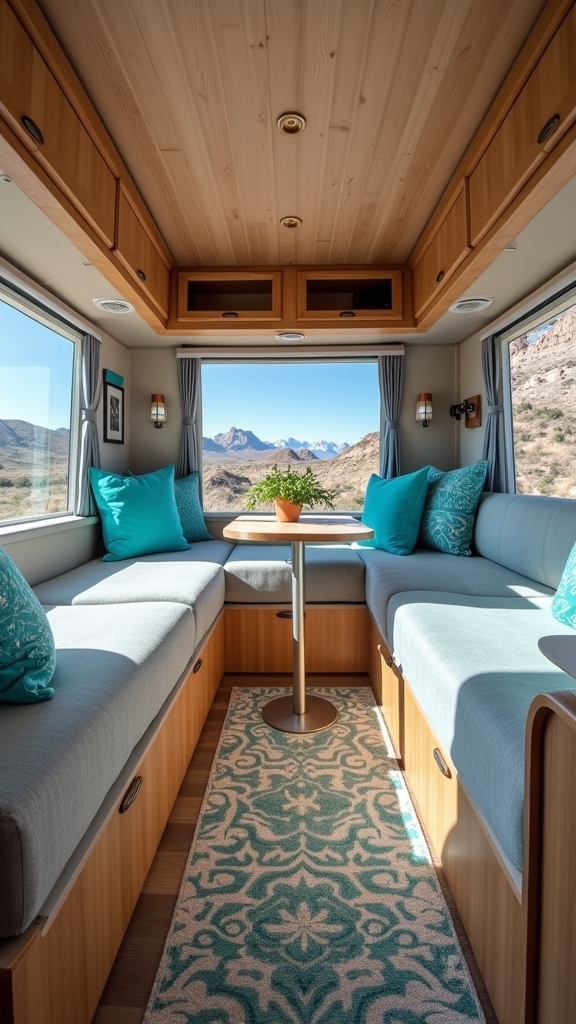
A Lagun table mount is one of those purchases that genuinely changes how you use your interior. It pivots, adjusts, and gets out of the way when you don’t need it.
Bootboxes that double as seating and storage are old news to experienced campers, but they work so consistently that they deserve repeating.
Fold-out sleeping modules that convert to daytime seating are the single most space-efficient modification you can make to a small camper.
Weather-Resistant Window Treatments
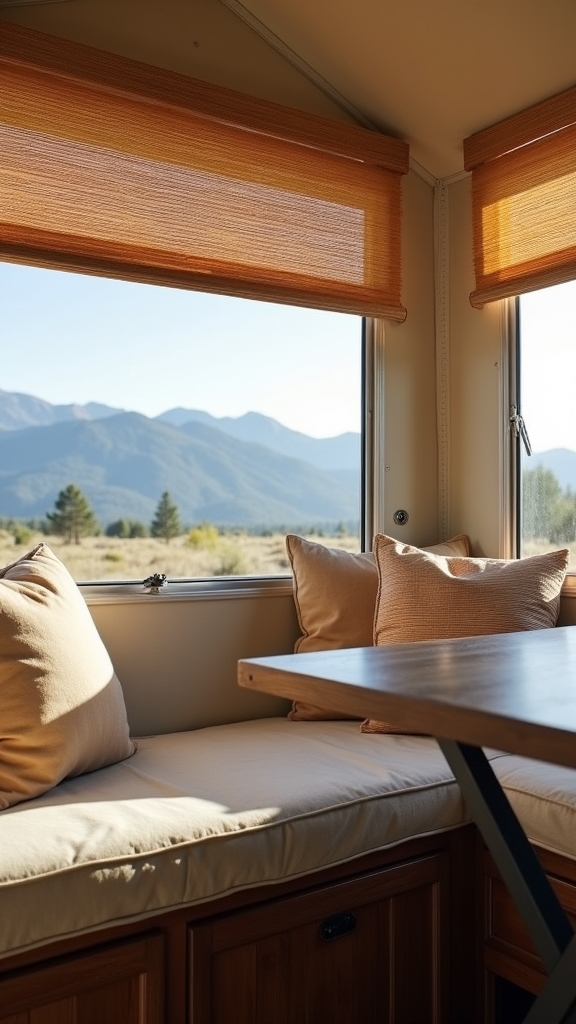
Well-chosen window treatments help protect your pop-up camper from unpredictable weather.
Consider cellular shades for superior insulation and UV protection, or opt for lightweight roller shades that offer simple installation and modern aesthetics.
For a budget-friendly solution, moisture-resistant vinyl mini blinds provide durability, while DIY options using felt-backed upholstery fabric can effectively regulate temperature.
Smart Storage Solutions for Outdoor Gear
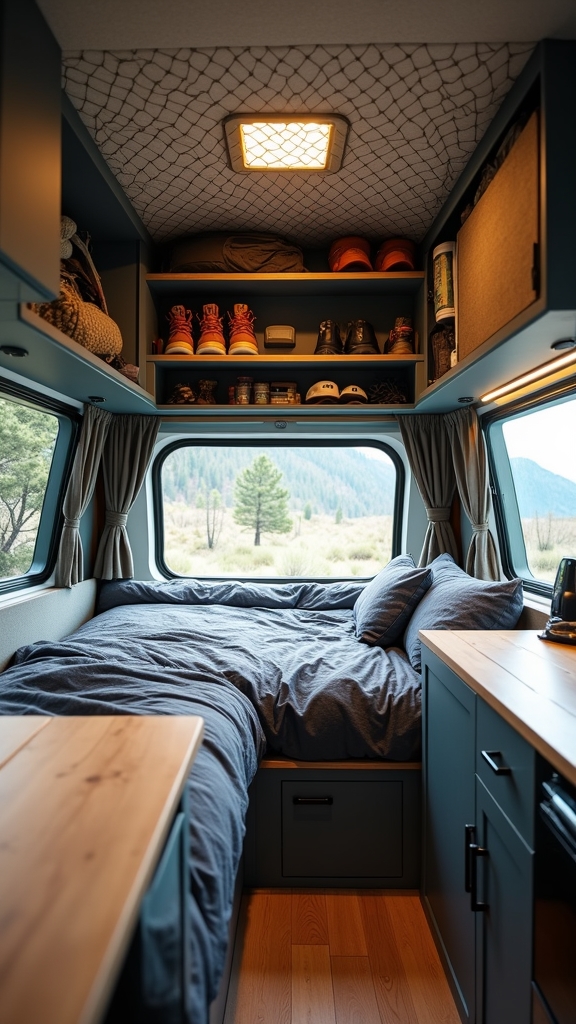
Weatherproof aluminum boxes mounted outside handle the bulky, dirty stuff: wet boots, a muddy trowel, firewood, and tools that don’t belong inside.
Cargo nets and mesh bags keep frequently grabbed items visible and reachable without digging through a pile. Adjustable shelving units let you reconfigure as your gear list changes across different trips and different seasons.
Lightweight Material Upgrades for Better Fuel Economy
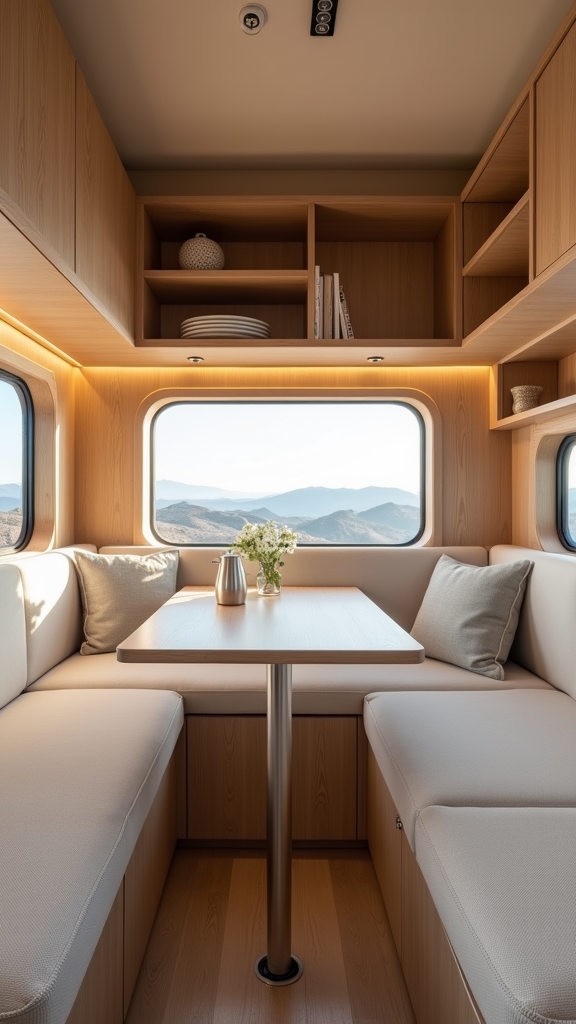
Every pound you pull out of a camper shows up eventually in fuel costs.
Peel-and-stick vinyl tiles replace heavy flooring and handle moisture well, which matters in a Colorado camper that regularly gets wet feet tracked through it.
Canvas drop cloth slipcovers replace heavy cushion fabric and clean up easily after a muddy trip. Chalked paint on cabinets weighs nothing and transforms dated wood in an afternoon.
Ambient Lighting for Evening Comfort
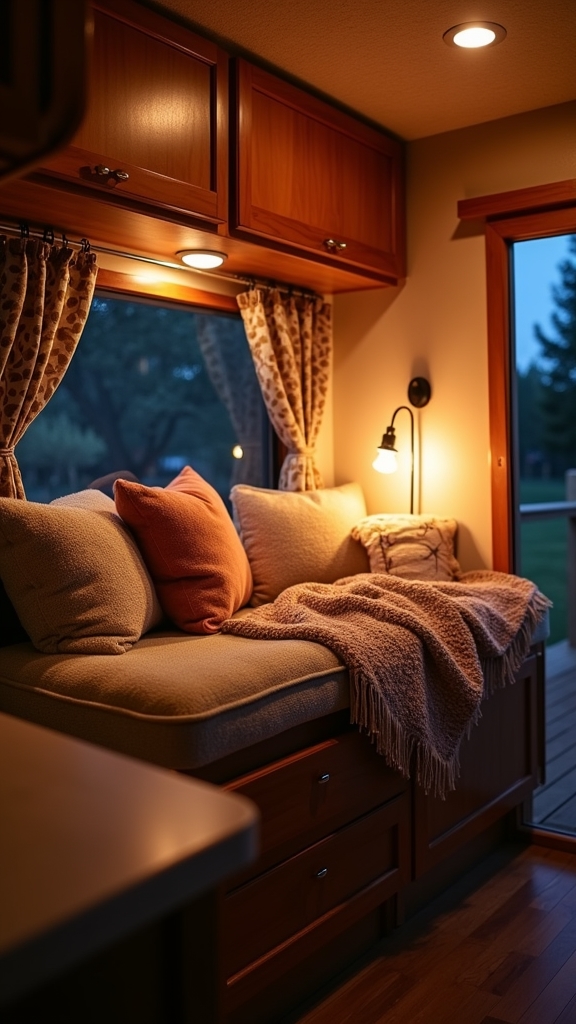
Dimmable LED strips along the ceiling edge change the whole mood of an evening in camp.
Bright enough to cook by when you need it, soft enough to wind down without feeling like you’re in a convenience store. I run mine off a small battery bank and rarely notice the draw.
The psychological difference between harsh overhead light and warm ambient glow is real, especially after a hard day outside.
Easy-Clean Surface Modifications
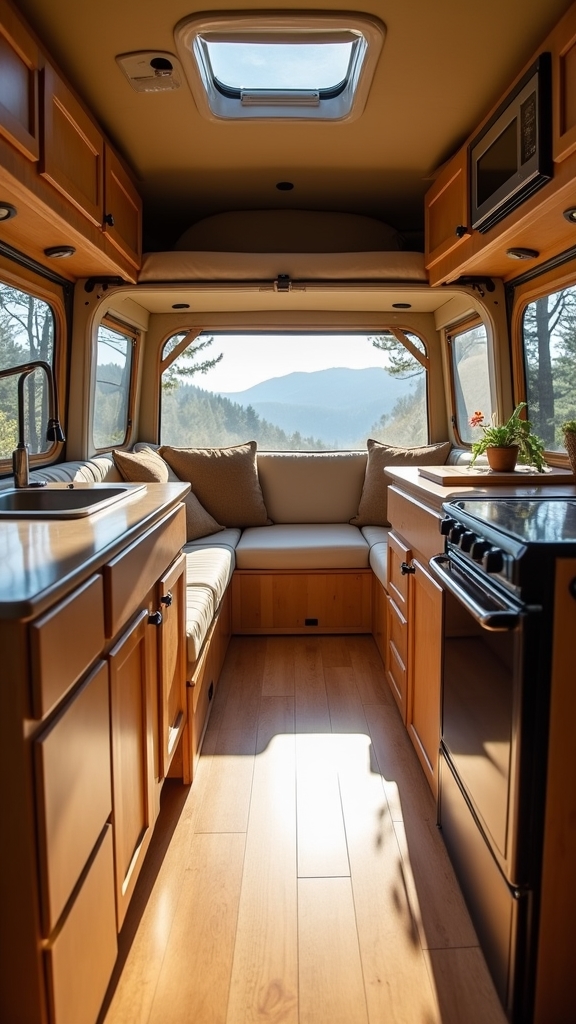
Mud, pine pitch, and sunscreen are the three substances that will test every surface in your camper.
Waterproof sealant on fabric surfaces and stain-resistant treatment on canvas are maintenance steps that extend the life of the camper itself, not optional extras.
Vinyl surfaces cleaned with 303 Multi-Surface Cleaner hold up better and longer than those wiped down with whatever’s handy.
Personalized Wall Art and Photography Displays
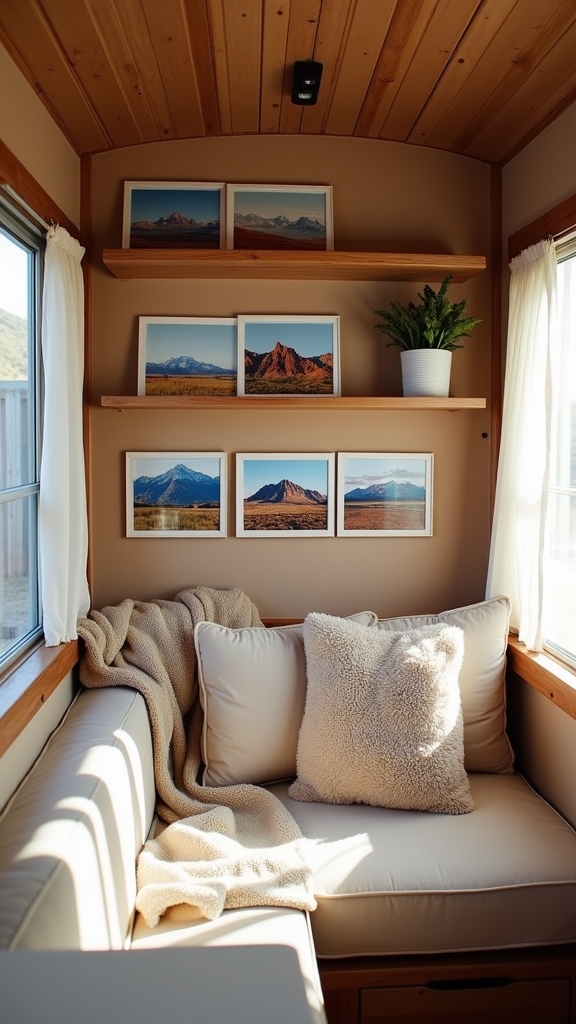
Lightweight frames with adhesive mounts let you hang photographs without putting permanent holes in your walls.
The best camper galleries aren’t curated for style; they’re honest records of where someone has been.
A photo from a campsite that meant something, a map of a trail system you keep returning to, a postcard from a town you didn’t expect to love. Keep it light in every sense of the word.
Fold-Away Workspace Solutions
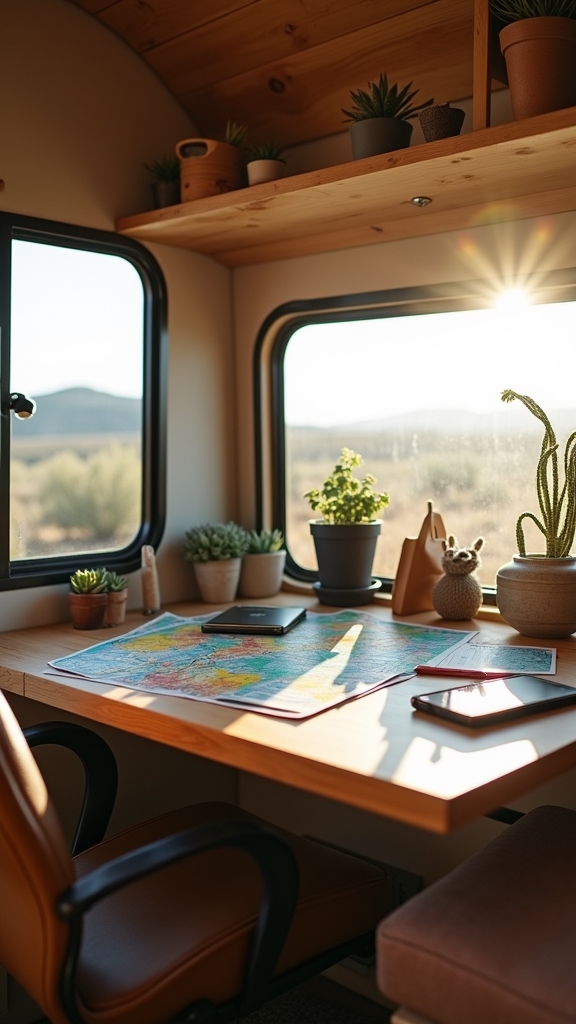
A wall-mounted fold-away desk solves the problem remote work created for many full-time campers: you need a real surface, but you can’t sacrifice floor space permanently.
Mounted at the right height, it works for a laptop, a topo map, or just a cup of coffee while you plan the next day’s route. Fold it up, and you’ve reclaimed the space entirely.
Climate-Conscious Ventilation Improvements
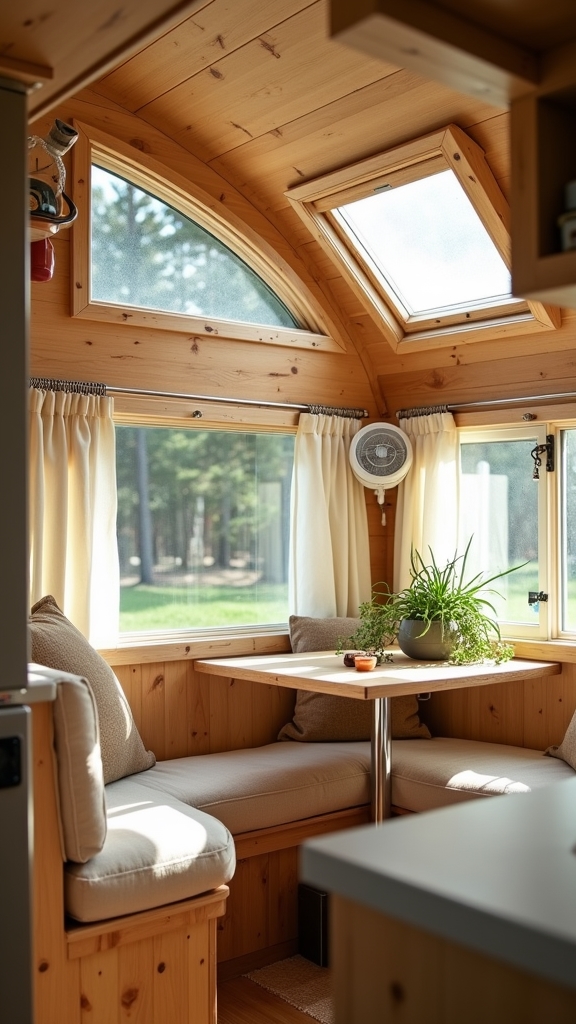
Canvas walls breathe better than hard-sided rigs, but that doesn’t mean airflow manages itself.
A roof vent fan positioned at the high point pulls warm air out while louvered vents low on the wall draw cooler air in, basic convection that works reliably without overthinking it.
In summer, this setup can drop the interior temperature by 10 degrees or more without any meaningful power draw. In shoulder seasons, close the low vents and run just the fan to keep condensation from building overnight.
Pet-Friendly Interior Adaptations
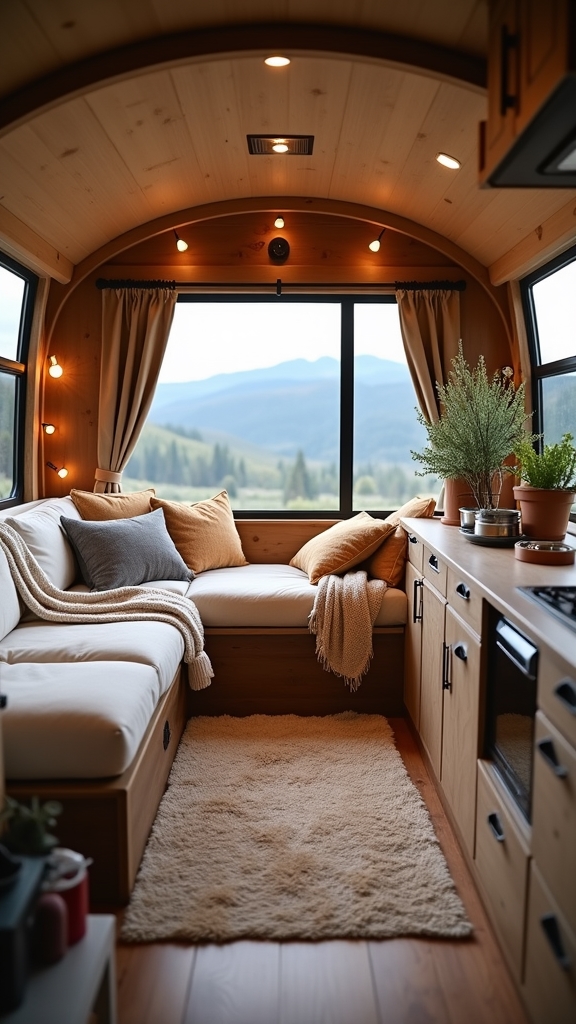
Dogs in pop-up campers are a logistical puzzle, but a solvable one.
Non-slip mats on the steps and floor prevent the scrambling chaos that happens on every exit and entrance, especially when your dog is excited, and you’re not.
A designated corner with a washable pad gives them a clear spot that’s theirs, which reduces the nightly competition for sleeping space.
Quick-Access Gear Storage Systems
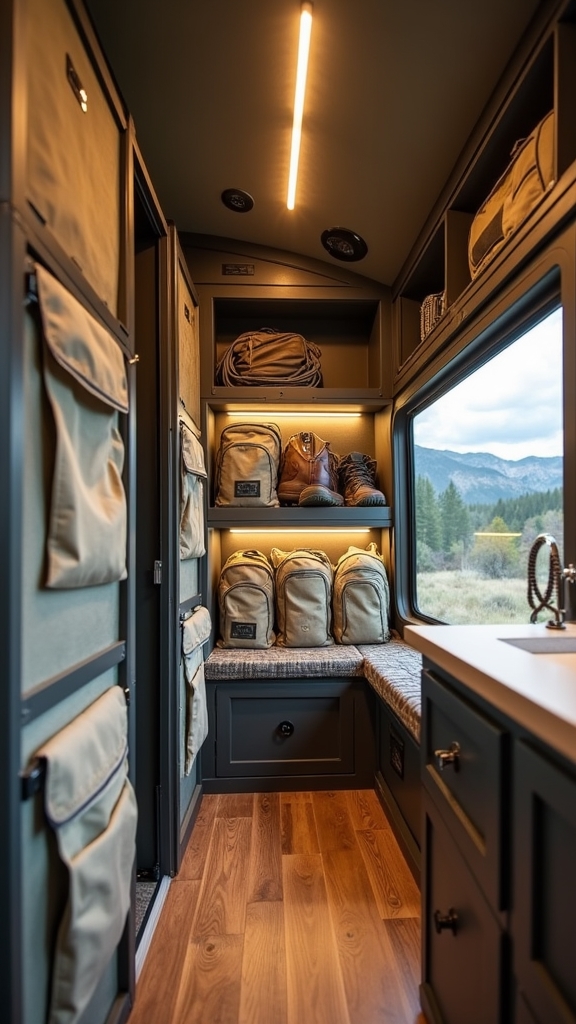
Wall space is the most overlooked resource in a small camper. Command hooks handle a lot: wet towels, a rain jacket, trekking poles waiting to dry, all without drilling a single hole.
Magnetic strips in the kitchen keep utensils off the counter and within reach during the cooking chaos that hits when you’re hungry after a long hike.
Stackable bins mounted high keep the floor clear, and that matters more than it sounds when you’re moving around in a space measured in feet.
Four-Season Comfort Modifications
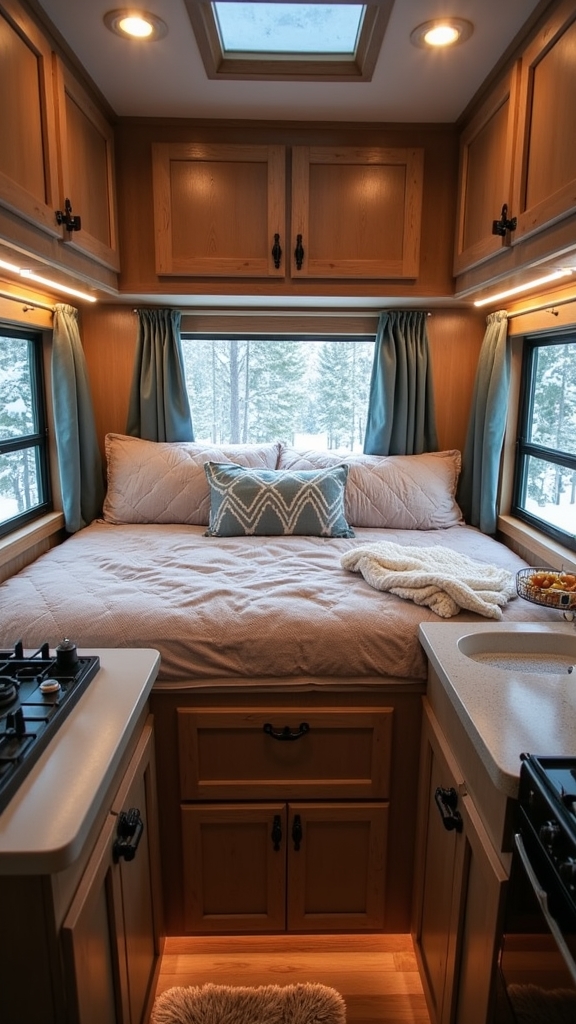
Colorado doesn’t do mild. It goes from a t-shirt afternoon to a frost warning overnight, sometimes in the same week.
Quality wall and roof insulation, tight weatherproofing, and an efficient heating system get you through the cold shoulder seasons that most campers avoid entirely.
Thermal curtains, insulated flooring, a memory foam topper, and a sleeping bag rated below your expected low temperature handle the rest, and a good night’s sleep at altitude is what makes the next day worth having.