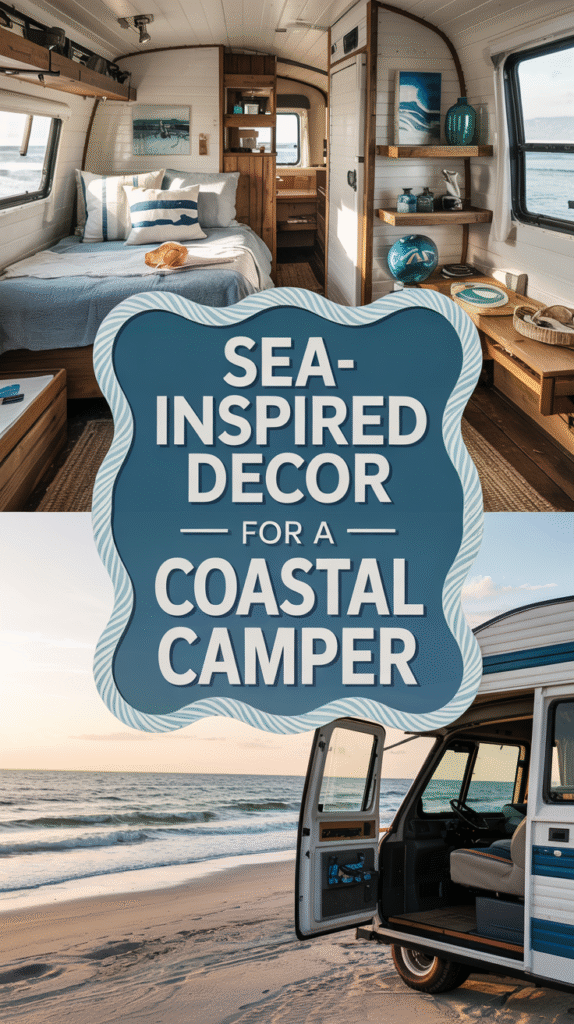
Some campers smell like salt air even when it’s parked in a field. The fisherman aesthetic taps into that feeling, pulling from weathered wood, nautical hardware, and the kind of faded, sun-bleached colors you only get from years near the water.
It’s not a theme you buy in a kit. You piece it together the way a real working fisherman furnishes a cabin: practically, slowly, with things that earn their keep.
Get it right, and your rig will feel like it belongs at the end of a dock. These ideas show you how to build it that way.
What Is the Fisherman Aesthetic?
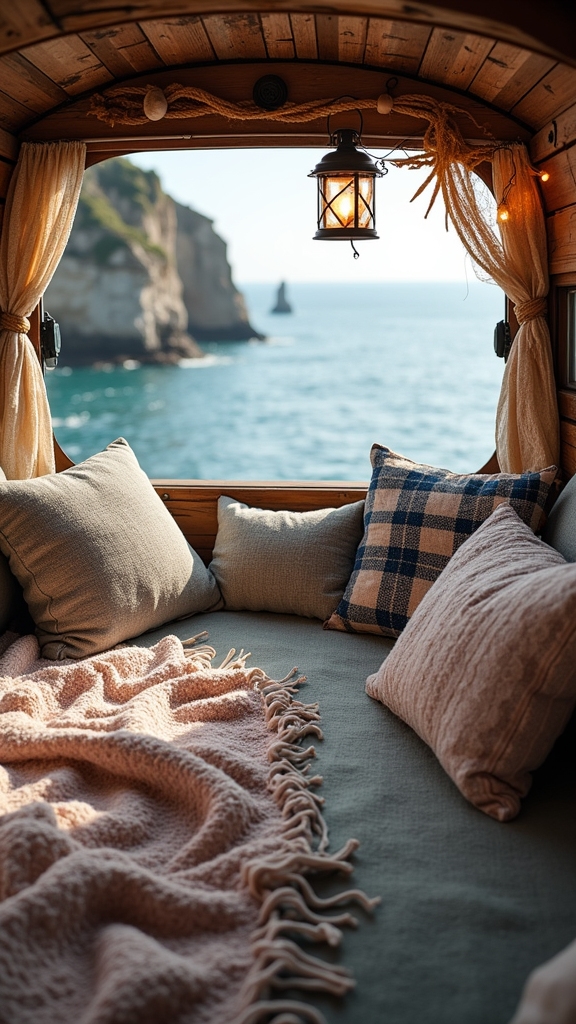
This style lives at the intersection of function and wear, where gear looks used because it was. Think rope handles, canvas bags, lanterns built for weather, and wood that shows its history.
The whole point is a space that could survive a squall and still feel like home when the storm passes. Nothing here is precious, and nothing is fussy.
Nautical Meets Nostalgia: A Style Overview
Picture a harbor town tackle shop crossed with your grandfather’s fishing cabin, and you’re somewhere close. Weathered maps tacked to walls, oars leaning in corners, nets draped from ceiling hooks: these aren’t decorations so much as artifacts.
The aesthetic works because it doesn’t try to romanticize the sea from a distance; it brings the actual working tools of coastal life inside. That honesty is exactly what gives the style its staying power.
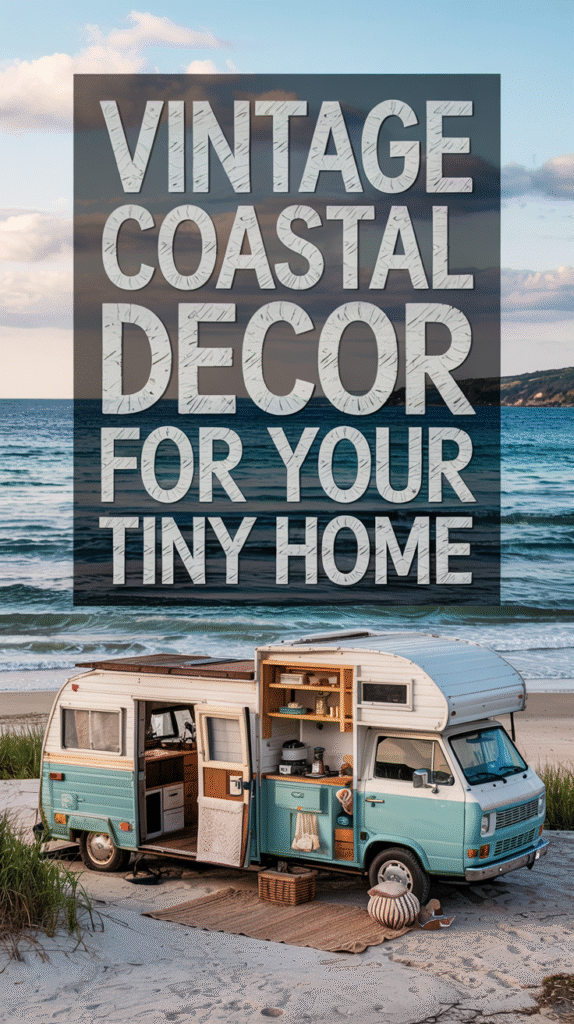
Why This Trend Resonates With Coastal Campers
People who camp near water aren’t usually looking for luxury. They want a space that shrugs off a bit of sand, dries fast after rain, and still feels like somewhere worth coming back to.
The fisherman aesthetic matches that instinct better than any other style because it’s built around the same priorities: durability, simplicity, and a deep respect for the environment outside the door. It doesn’t just look coastal; it thinks coastal.
Choosing a Color Palette Inspired by the Sea
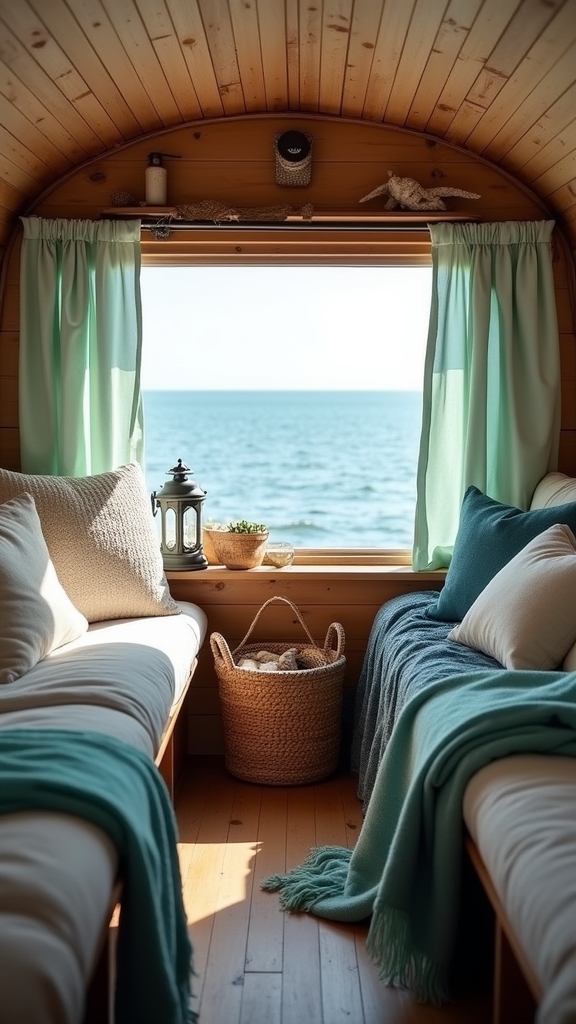
Your foundation colors should feel like the ocean on a cloudy morning: deep navy, driftwood brown, and an off-white that leans toward salt rather than bleach. From there, small doses of mustard yellow and seafoam green carry the light and warmth.
The trick is restraint; let the base colors do the heavy lifting and use the accents the way a painter uses a signature, sparingly and with intention. Coordinate with whatever natural landscape surrounds your campsite and the palette will always feel grounded.
Deep Navy, Driftwood Browns, and Saltwater Whites
Navy is the anchor color for a reason: it reads as depth, calm, and seriousness without being cold. Driftwood brown brings the warmth that navy can’t, and together they create a palette that feels both grounded and open.
Saltwater white, that slightly warm, slightly grey off-white you find on old boat hulls, brightens everything it touches without making the space feel clinical. These three colors alone can carry an entire camper interior if you use them confidently.
Using Accent Colors Like Mustard Yellow and Seafoam Green
Once your base palette is locked in, a single mustard yellow throw or a seafoam green mug on the table changes the whole room’s energy.
Yellow pulls in the warmth of sun on water; green echoes the color of shallow tidal flats at midday. Used together in small hits, they stop the darker foundation colors from feeling heavy. Go overboard with either one, though, and you’ll push the whole thing toward novelty shop rather than working pier.
Fabrics and Textures That Evoke the Sea
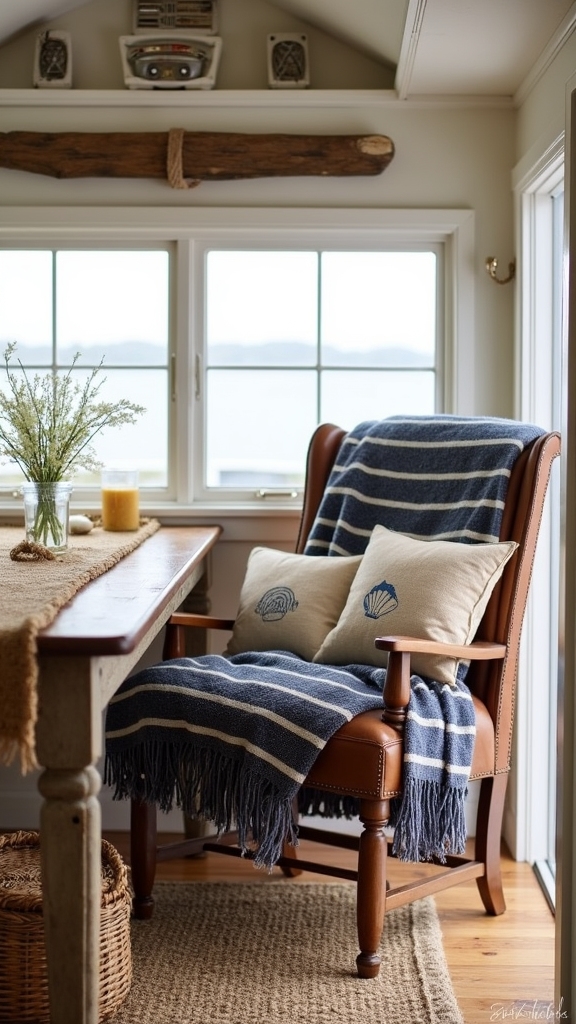
The materials you choose should be able to handle a damp morning without complaint. Natural fibers, rough weaves, and worn-in textures do most of the work here.
Anything that looks too new or too polished breaks the spell immediately. Layer your textiles rather than matching them, and the space will feel lived-in rather than staged.
Cable Knit Blankets and Wool Throws
A thick cable knit blanket draped over a bench or bunk does more for a camper interior than almost any other single item. The heavy texture reads as warm and coastal at the same time, which is a harder combination to pull off than it sounds.
Wool throws earn their place by actually keeping you warm when the temperature drops near the water, not just by looking the part. Buy ones in navy, oatmeal, or grey and they’ll fit the palette without any effort.
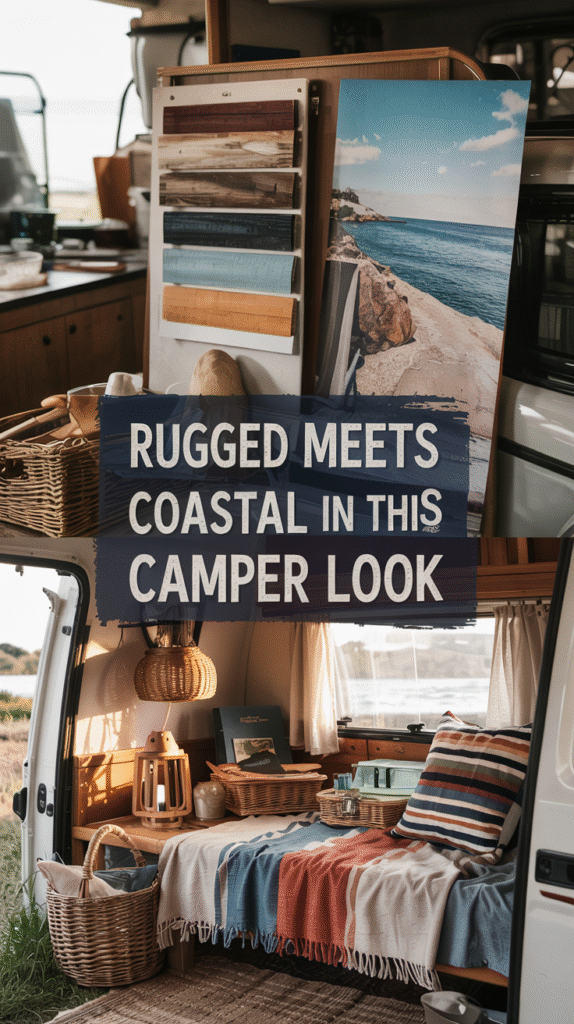
Linen Curtains and Weathered Canvas
Linen curtains filter morning light the way fog filters the sun: softly, evenly, without glare. They dry fast, hang without fuss, and get better looking the more they wrinkle.
Weathered canvas on cushion covers or a wall-hung tote adds that working-boat texture without tipping into costume territory. Together, these two fabrics give the interior a breezy, hard-wearing quality that holds up through a real camping trip.
Coastal-Inspired Furniture and Accessories
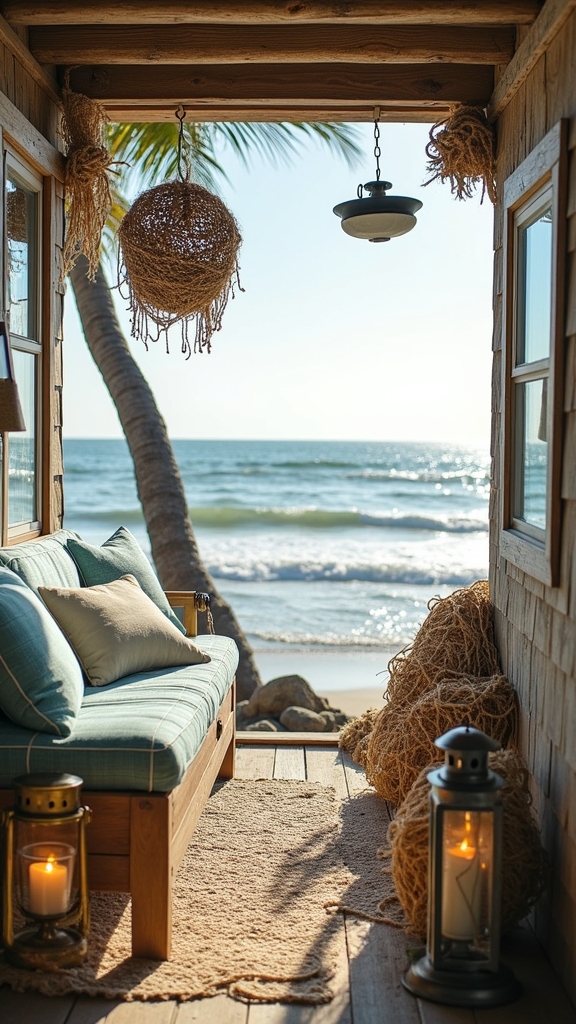
The furniture in a fisherman-aesthetic camper should look like it could take a knock and not care. Rough-hewn wood, metal hardware, and natural rope are your main materials.
Every piece should pull its weight: storage that actually stores things, seating that actually seats people, fixtures that actually light the space. When form and function line up that cleanly, the whole room looks intentional without looking designed.
Crate Storage and Rope-Wrapped Fixtures
Wooden crates are one of the most honest storage solutions you can put in a camper. Stack them against a wall, screw a few together, and you’ve got shelves that look like they belong on a fishing pier and cost almost nothing.
Rope-wrapped lamp bases or pendant lights carry the nautical thread through the whole space without making the room feel like a theme park. Keep the rope natural and undyed so it ages well rather than looking new.
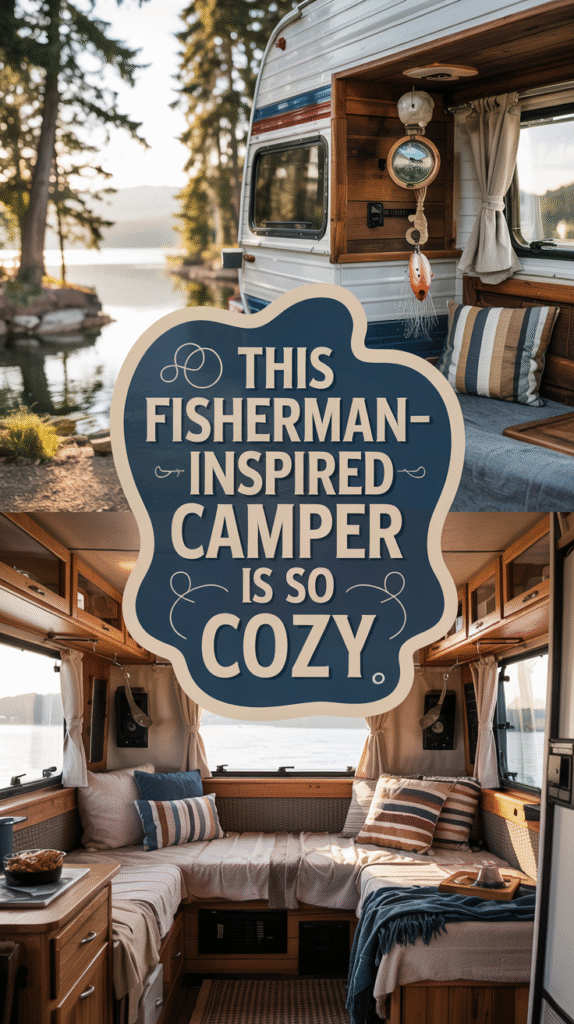
Rustic Benches, Stools, and Marine-Grade Tables
A low bench near the door with a rough-hewn finish handles boots, tackle, and wet gear without complaint. Short wooden stools tuck away easily and double as side tables when you need the extra surface.
Marine-grade tables are worth the investment because they’re built for the moisture and temperature swings that come with camping near water. Choose weathered wood finishes over anything sanded smooth; the texture is part of what makes these pieces work.
Decorating Your Camper Walls Fisherman-Style
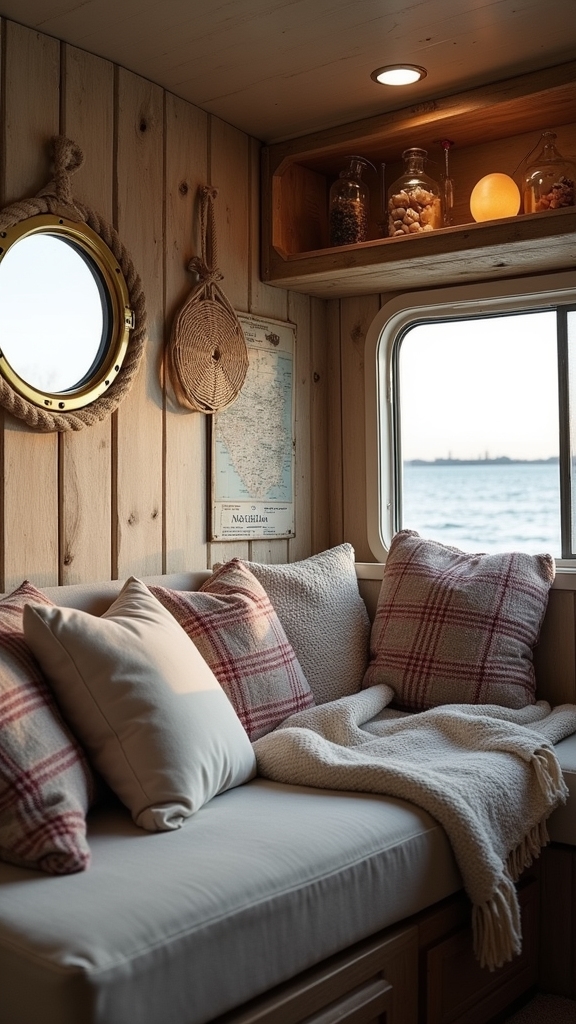
Bare walls in a camper are a missed opportunity, and in the fisherman aesthetic they’re the main canvas. The goal is to make the walls feel like they’ve accumulated meaning over time, not like someone hung things up on move-in day.
Mix dimensional objects with flat ones: something with physical presence next to something that recedes into the wall. Pull it off and the interior starts to feel like a place that has a history.
Hanging Nets, Oars, and Buoys
A fishing net draped across one wall does more work than any framed print you could hang in its place. Tuck glass floats, dried starfish, or old cork buoys into the mesh and it becomes a display case that costs almost nothing and takes up no floor space.
A single oar mounted diagonally adds length and visual movement that flat art can’t match. These objects carry real associations with the sea, which is exactly why they read as authentic rather than decorative.
Driftwood Frames and Porthole Mirrors
Driftwood frames bring the actual texture of the coastline onto your walls: salt-bleached, worn smooth, and honest about where it came from. Frame an old coastal photograph or a hand-drawn map inside one and the whole thing becomes a small window into somewhere specific.
Porthole mirrors are the one splurge worth making in this aesthetic because they bounce light around a tight space in a way nothing rectangular can match. Hung at eye level, they also create the illusion of looking through a ship’s hull, which never gets old.
Creating a Focal Wall With Vintage Charts or Maps
Old nautical charts carry a kind of authority that reproduction prints never will. The depth soundings, the compass roses, the faded ink of coastlines that have since changed: all of it tells a story before you’ve read a word.
Pick one that means something to you, a stretch of water you’ve fished or sailed or simply love, and secure it with rustic wood frames or simple clip hardware. A map hung well becomes the first thing everyone notices when they step inside.
Lighting Ideas for a Seaside Mood
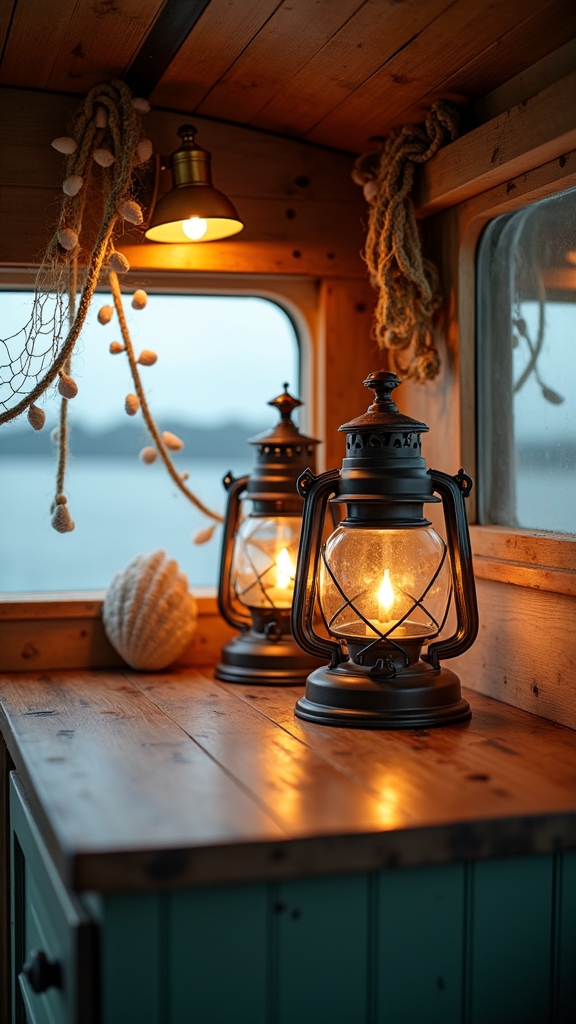
Lighting in a fisherman-aesthetic camper should feel warm, directional, and a little moody. Think about how light actually behaves near water: flickering, shifting, never harsh. Every fixture you choose should contribute to that feeling rather than working against it.
Get the lighting right and the whole space transforms after dark in a way that no amount of decor can replicate on its own.
Battery Lanterns and Hurricane Lamps
Hurricane lamps belong on every flat surface you’ve got, and a good battery lantern belongs near the door for practical use. Their glow mimics firelight, which is the closest thing to a campfire you can bring inside a camper.
Look for weather-resistant models with adjustable brightness so they work both as ambient lighting and as a real light source when you need to find something in the dark. The shape alone, that classic glass chimney silhouette, is enough to set the mood before you’ve even switched them on.
Rope Pendant Lights and Mason Jar Sconces
A rope pendant light overhead ties the nautical thread through the whole interior and casts warm, directional light that flatters every material in this aesthetic. The braided texture reads as intentional and handmade, which fits the fisherman sensibility perfectly.
Mason jar sconces mounted to the wall beside a bunk or above a table add a vintage quality that pairs well with the rougher materials around them. Neither fixture needs to be expensive; the effect comes from placement and warmth, not wattage.
Flickering Candlelight for Nighttime Ambience
When the sun goes down at a coastal campsite, the right kind of light makes the difference between cozy and just dark. Lantern-style candle holders placed on tables and hung from hooks cast that slow, shifting glow that feels nothing like overhead electric light.
Battery-operated candles are the practical choice here, especially in a small camper where an open flame near fabric is a real concern. Arrange several at different heights and the whole space starts to feel like a lighthouse keeper’s quarters after a long day on the water.
Creating a Fisherman-Inspired Outdoor Setup
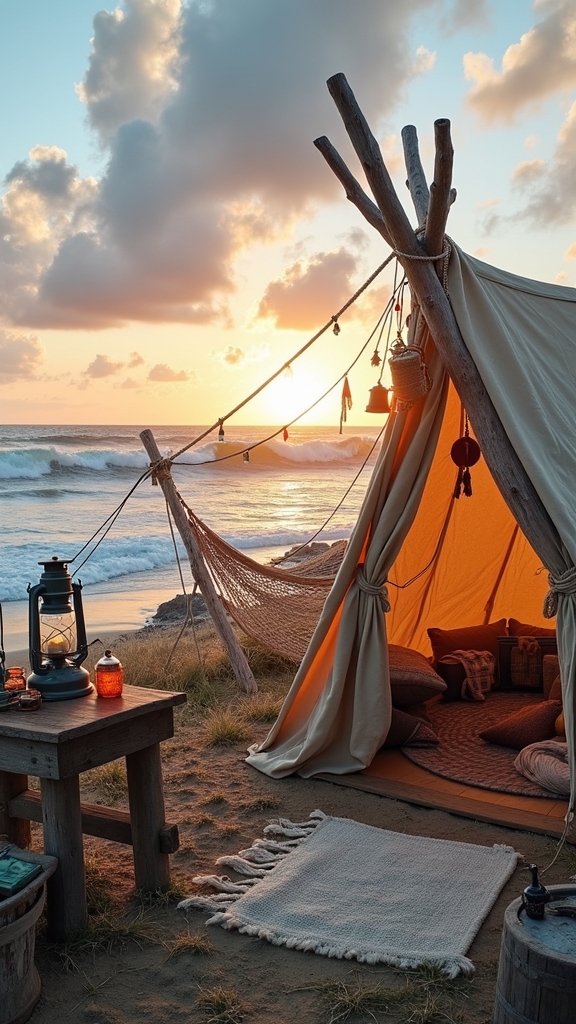
The inside of your camper sets the tone, but the outdoor space is where the fisherman aesthetic really opens up. You’ve got more room to work with and fewer constraints, so don’t just drop a folding chair outside the door and call it done.
Think about how a working waterfront actually looks: functional furniture, weather-beaten surfaces, light sources that make sense in open air. Build the outdoor setup with the same intentionality you brought inside.
Building a Beachy Picnic Table or Firepit Lounge
A picnic table built from reclaimed wood or thick rough-cut lumber anchors the entire outdoor setup. Position it near the firepit and arrange rough wooden benches in a loose semi-circle so the seating invites people to gather rather than just sit.
Use lanterns on the ground around the firepit rather than overhead string lights; the low placement mimics the way firelight actually falls. Get this right and you’ll have a spot people drift toward without being asked.
Weather-Resistant Textiles and Floor Mats
Outdoor cushions and pillows in marine-grade canvas or heavy waterproof polyester handle rain and sun without fading or mildewing the way cheap outdoor fabric does. Stick to navy, natural linen, or worn canvas tones so they read as part of the aesthetic rather than an afterthought.
For floor mats, rubber-backed rugs or recycled plastic options give you traction on wet ground and clean up with a hose. These are working materials, and they should look and behave like it.
Coastal Table Settings With Enamelware and Tin
Classic blue-and-white enamel plates, bowls, and mugs have been standard issue on boats and at fishing camps for over a century, and they’re standard issue for good reason. They’re nearly indestructible, they don’t shatter when they hit a wooden table, and they look exactly right next to a campfire.
Pair them with tin utensils and simple cloth napkins in navy or natural linen. The combination is so honest and unfussy that it makes every meal feel like it belongs somewhere near the water.
DIY Projects for Coastal Camper Charm
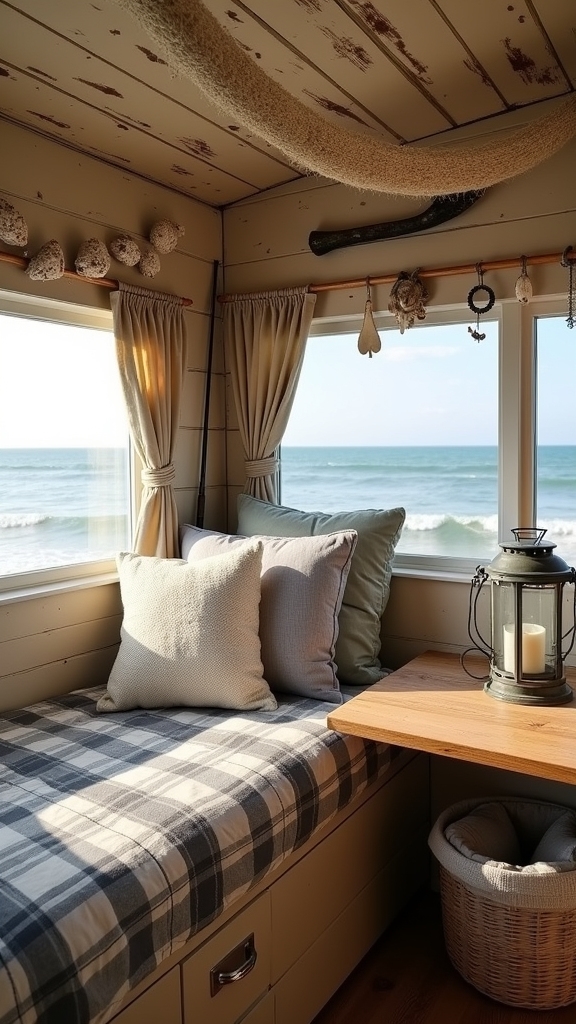
You don’t need a big budget to pull this aesthetic off; you need a good eye for material and a few hours on a weekend. The best DIY projects for this style are the ones that use raw, honest materials and look better slightly imperfect than overly finished.
Rope, driftwood, old metal, and worn canvas are your four main ingredients. Start with one project, see how it sits in the space, and build from there.
Making Rope Curtain Tiebacks or Wall Hangers
Natural jute rope is cheap, widely available, and looks like it belongs in a fishing shed, which is exactly the right association. Cut a length, tie it into a simple loop or knot, and attach it to a curtain or wall, and you’ve got a tieback that took twenty minutes and costs almost nothing.
For wall hangers, a few well-placed knots and a piece of driftwood as a dowel create a functional hook that also looks deliberate. These small details signal that the rest of the space was thought through, not assembled in an afternoon.
Painting Driftwood Signs With Nautical Phrases
Collect driftwood pieces with interesting shapes rather than perfectly straight ones; the irregular edges are what make the finished sign feel found rather than made. Sand lightly so the surface takes paint without sealing in too much of the texture, then block-letter a short word or phrase in white or black acrylic.
Keep the language short and specific: “LOW TIDE,” “HAUL,” “HARBOR” work better than anything inspirational. Seal with a matte clear coat, hang it on a nail, and it looks like it’s been there for years.
Upcycling Tackle Boxes Into Storage Decor
Old metal tackle boxes from a thrift store or flea market are some of the most useful objects you can bring into a fisherman-aesthetic camper. Clean them up, hit them with a coat of paint if the rust is cosmetic rather than structural, and line the compartments with a scrap of nautical fabric.
Use them to store spices, first aid supplies, small tools, or anything else that needs to stay organized in a tight space. The rugged design does visual work even when the box is closed.
Packing List for the Full Fisherman Aesthetic
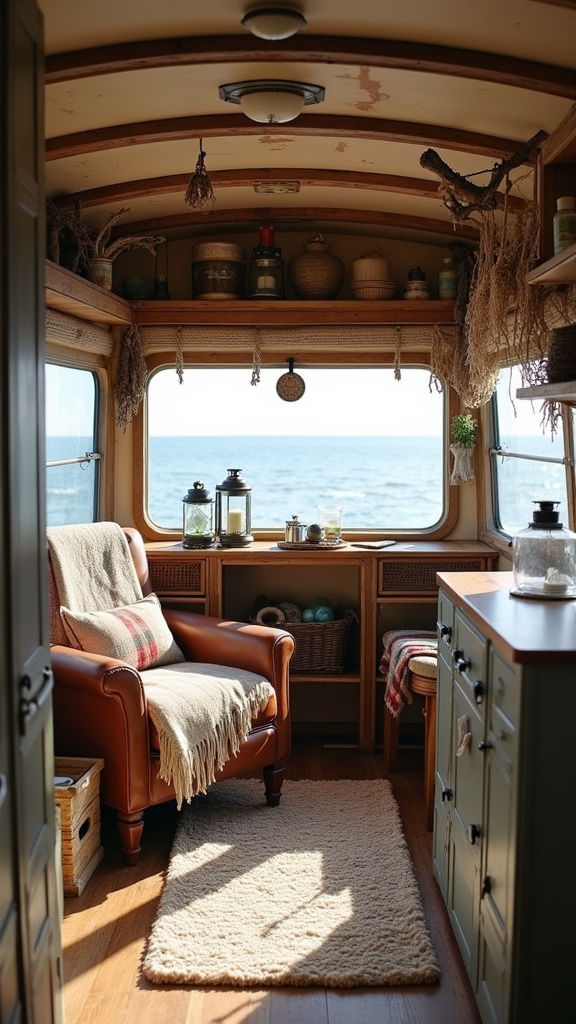
The gear you bring into the camper should follow the same logic as the decor: practical, layered, and honest about its purpose. Nothing in a fisherman-aesthetic space should be purely decorative; everything should be able to justify its presence.
Think about what an actual person who works on or near the water would carry, and start there. Get the wardrobe and accessories right and the whole aesthetic holds together even when you step outside.
Functional Wardrobe With Layers and Knits
Heavy knit sweaters, flannel shirts, waterproof shells, and wool socks cover every condition you’ll face camping near water. Build in layers rather than trying to find one piece that does everything, because coastal weather rarely cooperates with single-layer thinking.
Stick to neutral tones, navy, grey, oatmeal, and weathered green, so your clothing reads as part of the same palette as your campsite. A wardrobe that works this hard on function tends to look good without trying.
Vintage-Inspired Gear and Marine Accessories
A weathered canvas duffel bag carries your gear and looks like it’s logged a few thousand miles doing it. Add a brass compass, a classic pocket knife, and a rugged waterproof watch, and you’ve got the kind of kit that belongs in this aesthetic without crossing into costume territory.
These pieces should be genuinely functional; a compass you’d actually use, a knife with a real edge, a watch you’d trust in the rain. That’s the whole point of the fisherman aesthetic in a single rule: if it can’t pull its weight, it doesn’t belong on the boat.