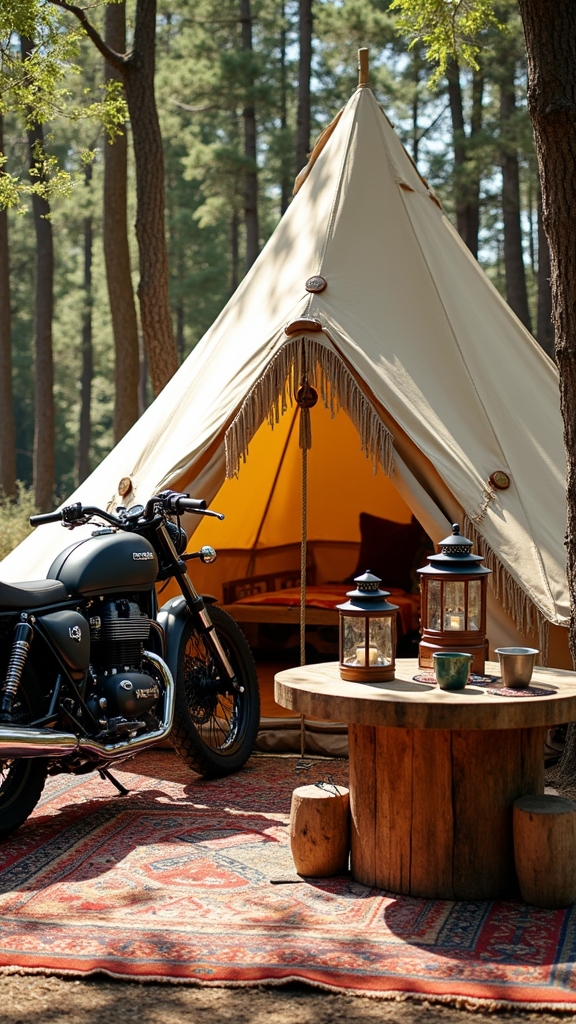
Moto boho aesthetic does not play it safe, and that’s exactly why it works outdoors. It draws on bohemian layering and biker culture equally, landing somewhere between a desert road trip and a music festival.
The result is leather against woven cotton, fringe swaying next to iron hardware, a campsite that looks like it was built deliberately, mile by mile. The ideas ahead show you how to pull that look together without it feeling like a costume.
What Is the Moto Boho Aesthetic?
Boho on its own leans soft: macramé, gauze, wildflowers in mason jars. Biker culture pulls hard the other way, toward leather, hardware, and attitude.
Moto boho lives in the tension between those two worlds without apologizing for either. Think fringe on a leather jacket, or a woven blanket draped over a military cot.
USE THIS: Solarpunk Camper Makeovers: 10 Eco-Friendly Ideas for the Future of Van Life.
Breaking Down the Boho and Biker Fusion
These two styles look like opposites until you put them in the same space. Bohemian style brings the color, the layering, and the handmade quality.
Biker culture brings the edge: worn leather, dark metals, and the kind of toughness that comes from actually being outside. Together, they stop each other from going too far in either direction.
USE THIS: Maximalist Camper Decor: Bold Patterns and Vintage Vibes for Tiny Living.
Why It’s Gaining Popularity in the Camping World
People are tired of campsites that look like an REI catalog exploded. Moto boho fills that gap because it has a personality, and more importantly, it encourages you to build a site that reflects yours.
The materials are practical too: leather holds up, canvas breathes, and iron hardware doesn’t crack in the cold. That combination of visual identity and real-world durability is hard to argue with.
Choosing the Right Color Palette and Textures
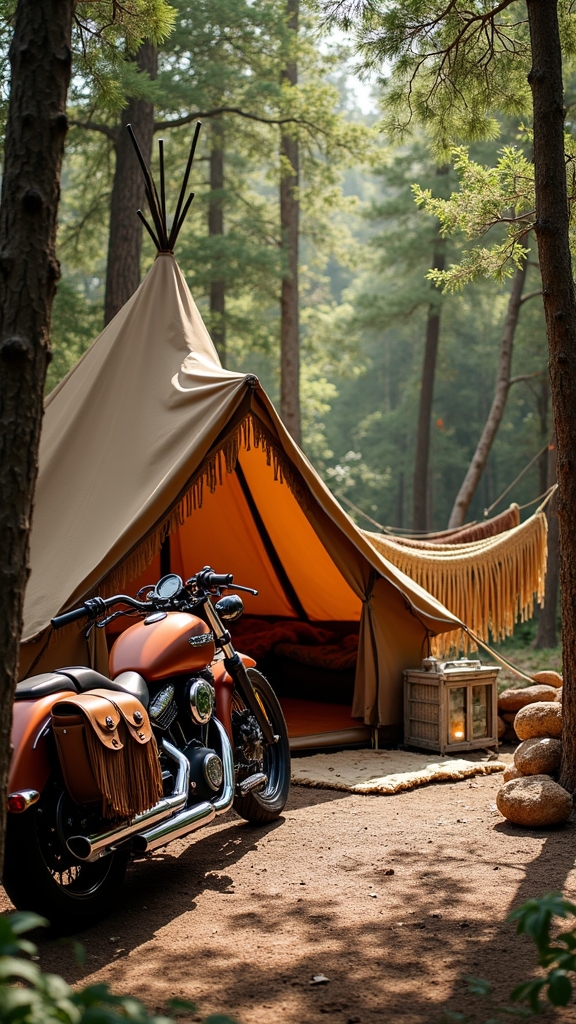
Your palette should feel like the high desert at dusk. Start with tans, creams, and sun-bleached whites as your foundation, then cut in deep blacks and burnt oranges for contrast.
Texture carries as much weight as color in this aesthetic, so treat it with the same intention. Layer leather against canvas, introduce some suede, and close it out with handmade-looking woven textiles.
USE THIS: How to Create a Castlecore Campsite That Feels Straight Out of a Fairytale.
Earthy Neutrals, Deep Blacks, and Sunset Tones
The neutrals do the quiet work of holding everything together. Tans and creams keep the space from feeling heavy, while deep black grounds the look and keeps it from reading as too soft.
Sunset tones, warm oranges and rich brick reds, bring the fire and keep the palette from going flat. Three or four tones is enough; beyond that, the palette starts competing with itself.
USE THIS: The Fisherman Aesthetic: Coastal Camper Decor That’s Rugged, Cozy & Cool.
Blending Leather, Canvas, Suede, and Woven Textiles
Leather is your anchor material here. It signals durability and age in a way that synthetic fabrics simply cannot replicate.
Canvas fills in the structural pieces: tent walls, tarps, storage bags. Suede and woven textiles layer over the top, softening the harder edges and giving the space somewhere comfortable to land.
Moto Boho-Inspired Tents and Shelter Ideas
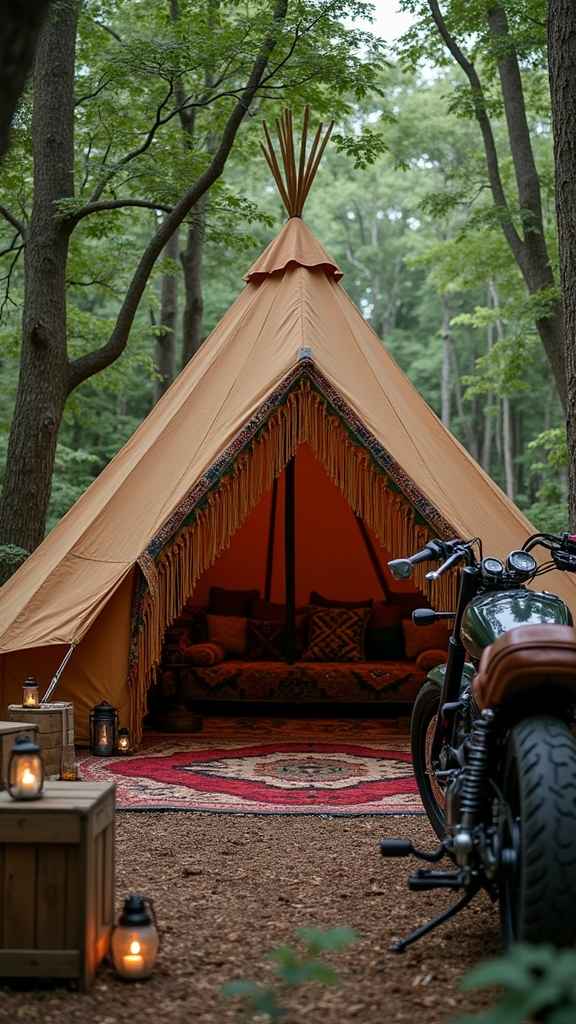
Modern nylon tents work against this aesthetic from the first stake. Canvas is the obvious starting point, and bell tents or wall tents both carry the right visual weight.
Add leather lacing, metal ring hardware, and iron hooks where you can. The shelter should look like it was chosen, not just purchased.
Canvas Tents With Fringe Trim or Leather Accents
Canvas tents age the way good leather does: they get better looking with every trip. Adding fringe trim along the entry or roofline takes about an afternoon and immediately reads as intentional rather than decorative.
Leather lacing threaded through grommets or wrapped around poles adds the biker edge without overwhelming the whole structure. These details are small, but they signal that the whole campsite was thought through.
Using Motorcycle Tarps or Saddle Blankets as Shade
A motorcycle tarp stretched between two trees gives you shade with the right visual weight. Olive, brown, and weathered tan all work well and hold up to sun and rain equally.
Saddle blankets draped over a line or pinned to poles bring in pattern and texture without looking precious. The bonus is that both of these pack small and do double duty as ground cover or wraps at night.
Decorating With Industrial or Vintage Hardware
Old hooks, pulleys, and iron brackets can be picked up at flea markets for almost nothing and they add years of character instantly. Hang them from tent poles to hold lanterns, hats, and leather pouches.
Weathered finishes work far better here than anything polished or new-looking. The goal is hardware that looks like it has already been on a few long trips.
Statement Furniture for Edgy Boho Vibes
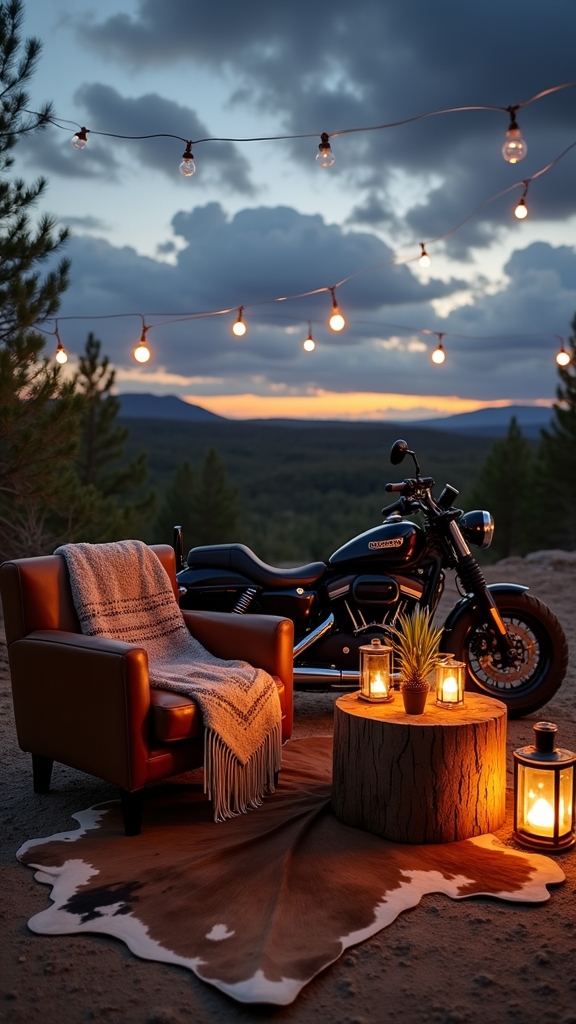
Furniture sets the tone before anyone sits down. Keep everything low, irregular, and nothing matches. The right pieces make the campsite feel lived-in and intentional rather than staged.
A butterfly chair, a military cot, and a folding stool cover the range from lounging to sleeping to utility without cluttering the space.
Butterfly Chairs, Folding Stools, and Military Cots
Butterfly chairs have been around since the 1940s and still belong here. Their sling seats and splayed metal legs suit the moto boho visual perfectly, and they fold flat for easy transport.
Military cots are honest, utilitarian, and look exactly right under a Pendleton blanket. Folding stools fill in wherever you need seating without demanding attention.
Slouchy Floor Cushions and Rug Layers
Low seating pulls people toward the fire and slows the evening down in the best way. Pile floor cushions in leather and woven fabric wherever chairs run short, and choose patterns in deep ochres, brick, and black.
Layering flat-weave rugs underneath anchors the sitting area and adds warmth underfoot on cold nights. The more worn the rugs look, the better they work.
Lighting That Feels Rugged and Romantic
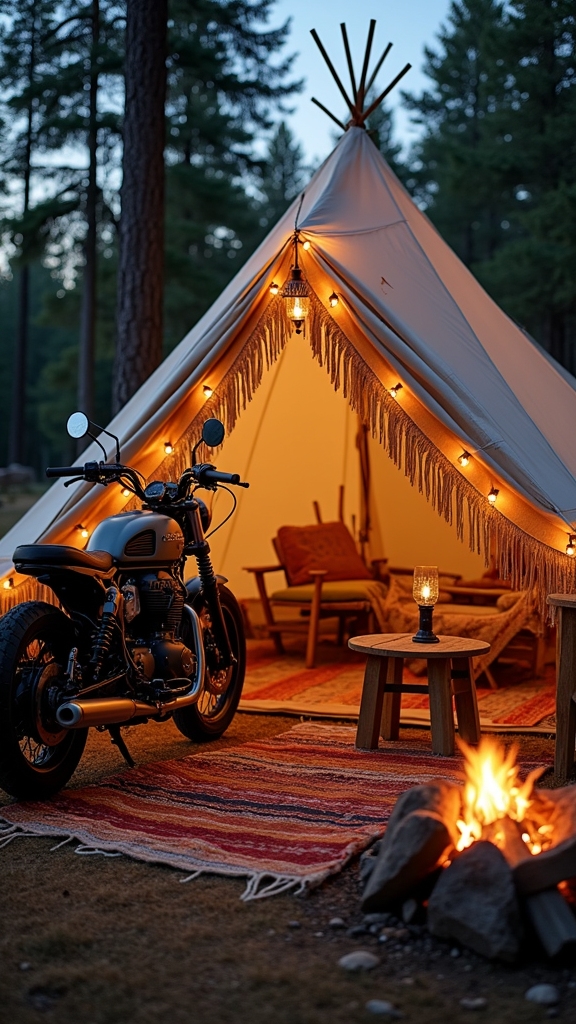
Once the sun drops, lighting is doing most of the atmospheric work. The wrong choice, bright white LEDs or fluorescent camp lanterns, kills the whole vibe in seconds.
Warm amber sources keep the mood alive and let the textures around you do what they’re supposed to do. Layer your sources so nothing is too bright and nothing is too dark.
Using String Lights With Cage Bulbs or Copper Sconces
Cage bulb string lights do something white LEDs never can: they give the whole campsite a warm, low glow that feels earned rather than plugged in. Run them between poles or drape them across the tent roof line, and they turn a functional camp into a place people want to stay after dinner.
Copper sconces mounted on wooden posts or tent poles add a fixed point of light that anchors the space. Position these to define edges, pathways, and seating zones rather than flooding everything evenly.
Leather-Wrapped Lanterns and Vintage Oil Lamps
A leather-wrapped lantern sitting on a stump costs almost nothing to make and looks like it came off a very long road. Wrap a basic metal lantern in a few strips of scrap leather, secure with rivets or lacing, and the transformation takes under an hour.
Vintage oil lamps bring a different quality of light: slower, flickering, and deeply atmospheric once the fire burns low. Set them on low surfaces where the light pools rather than reaches, and they carry the whole evening.
Firelight Reflections on Metallic and Raw Materials
Fire is free lighting, and most campers underuse it. Place copper, iron, and raw brass pieces where the flames can find them, and the reflections do more for ambiance than any lantern you can buy.
Raw wood picks up the warmth differently than metal does, so mixing the two gives the firelight multiple surfaces to work across. This costs nothing extra; it just requires setting things up with intention before dark.
Fringe & Leather Decor Touches
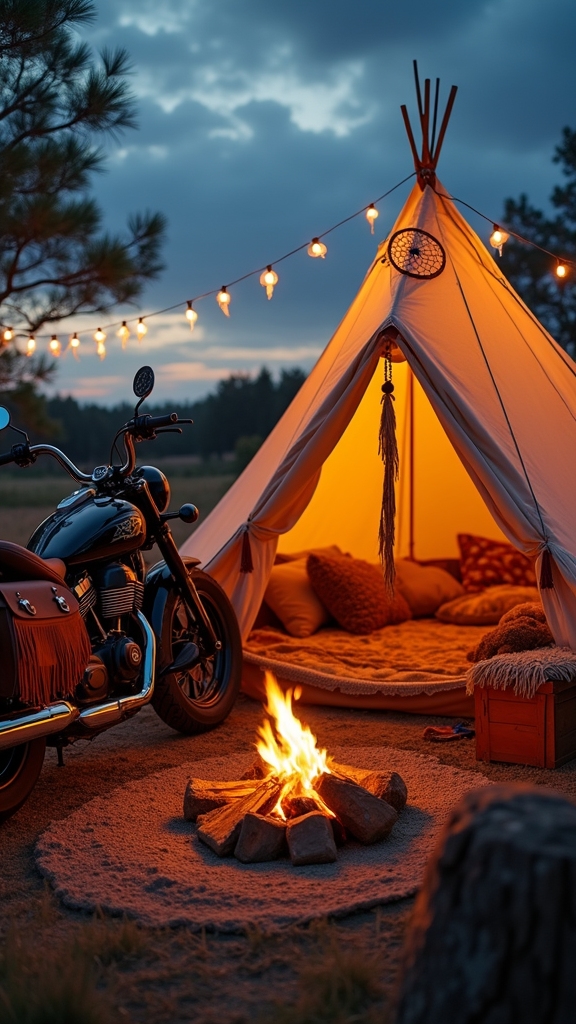
Decor in a moto boho camp should look handmade and a little road-worn. Fringe and leather are the two materials that carry this look most naturally because they both move, age, and improve with wear.
Keep the application deliberate: a few strong pieces beat a scattered collection of small ones. The goal is a campsite that looks like it was built by one person with a clear point of view.
DIY Fringe Banners and Macramé Wall Accents
A fringe banner strung across the tent entrance sets the tone before anyone steps inside. Cut suede or leather into long strips, knot them onto a branch or dowel, and you have a piece that looks deliberate and takes twenty minutes.
Macramé wall hangings bring in the boho side of the equation: their knotted texture softens the harder leather and iron elements. Choose cotton cord in natural or cream tones so they read as handmade rather than purchased.
Decorating With Leather Pouches, Straps, or Tie-Backs
Small leather pouches hung from poles or hooks solve the clutter problem while adding to the visual. Keep sunscreen, a lighter, and a pocket knife in them so the decor is also doing a job. Leather straps lashed around rolled blankets or sleeping bags look sharp and take two seconds to undo.
Tie-backs on tent flaps made from leather strips replace the cheap nylon versions and hold open better in a breeze.
Adding Fringe to Chair Backs, Pillows, or Tent Edges
Fringe earns its place because it moves. A few inches of suede fringe sewn across the back of a butterfly chair catches every breeze and reads as intentional from across the campsite.
Trim the edges of throw pillows in fringe and they go from simple to styled immediately. Running fringe along the bottom of a tent awning ties the whole look together and gives the structure a finished, deliberate silhouette.
Outfits and Accessories for Full Moto Boho Vibes
What you wear and what you build around yourself should come from the same instinct. This aesthetic rewards dressing like you actually packed with care rather than grabbing whatever was clean.
Earth tones, worn leather, and handmade-looking accessories carry the same visual language as the campsite itself. The goal is coherence, not a costume.
Leather Jackets, Fringe Bags, and Ankle Boots
A worn leather jacket is the single hardest-working piece in this wardrobe. It handles cold mornings, looks right around the fire, and gets better with every scuff and crease.
A fringe bag adds movement and the right textural contrast against all that leather. Pair both with solid ankle boots, something with a lug sole that can handle uneven ground, and the foundation of the look is done.
Turquoise Jewelry and Bandanas for Color Pops
Turquoise does something to earth tones that no other color quite manages: it deepens them without competing. A turquoise ring or a stone pendant reads as personal and worn-in rather than decorative. Bandanas in rust, cream, or deep burgundy add color while staying in the palette.
Tied around a wrist, knotted at the neck, or tucked in a pocket, they cost almost nothing and pull the whole outfit together.
Styling Looks That Match Your Camp Setup
The best-looking campsites have a visual through-line between the person and the space. Wide-brimmed hats in felt or straw match the textures of the tent and rugs better than a baseball cap ever will.
Layer a fringed vest over a linen shirt and you’re already echoing the fringe banners and leather tie-backs around you. This isn’t about coordinating perfectly, it’s about speaking the same visual language throughout.
Creating a Moto Boho Fire Pit Area
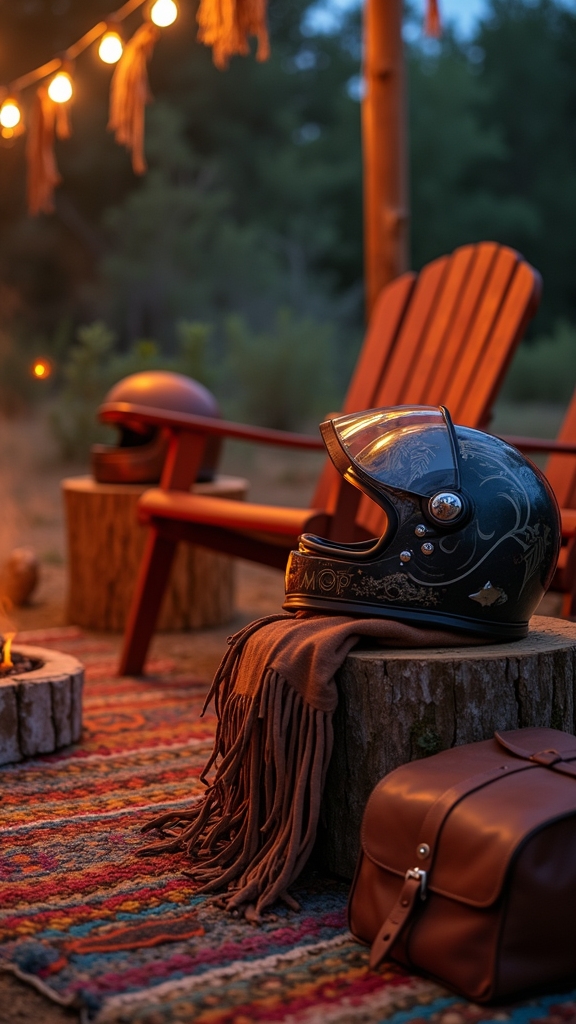
The fire pit is the center of gravity for any campsite, and this aesthetic treats it accordingly. Ring it with low seating, layered textiles, and decor pieces that have weight and character.
Safety and style are not competing priorities here: fire-resistant materials and smart placement handle both at once. Get this area right and everything else in the camp feels like it’s orbiting something real.
Surrounding the Fire With Mixed Textures and Pillows
Pull floor cushions and woven throws close to the pit and give everyone somewhere to settle in for the long part of the evening. Leather cushions hold up to sparks better than cotton, so put those closest to the flame and layer softer textiles further back.
Deep patterns in ochre, rust, and black keep the palette consistent with the rest of the camp. The mix of textures is what makes the space feel assembled rather than purchased as a set.
Using Vintage Helmets or Tire Rims as Decor Pieces
A vintage helmet sitting beside the fire pit stops conversation and starts it at the same time. Position one on a low stump or rock and it does more visual work than any purpose-made camp decor.
Tire rims work as low tables or as a frame for the fire pit itself, and their industrial weight suits the biker side of this aesthetic perfectly. The rule is restraint: one or two strong pieces, not a collection that starts to look like a salvage yard.
Tips for Fire-Safe Rug and Textile Placement
Keep all rugs and fabric at least three feet back from the pit, no exceptions. Sparks travel further than most people expect, especially on windy nights.
Weight down rug edges with flat stones or heavy gear so nothing creeps toward the flame and nobody trips in the dark moving around the fire. Wool and canvas tolerate proximity to fire better than synthetic fabrics, so factor that into what you place closest.
DIY Moto Boho Projects
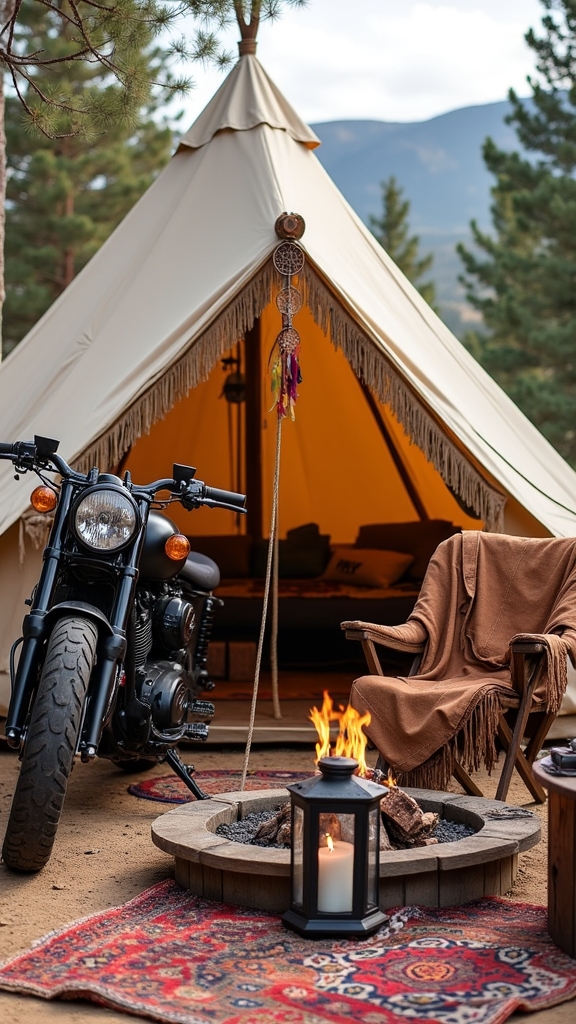
The campsites that look the most like this aesthetic are built, not ordered online. DIY projects bring in the handmade quality that separates moto boho from just buying brown things.
Leather scraps, old motorcycle parts, and basic craft supplies are all you need to start. The best results come from working with materials that already have some age and wear on them.
Turn Old Leather Into Handles or Tent Details
Cut old leather belts into strips and you have instant tent handles, tie-backs, and lashing material. The thicker the leather, the longer it will hold up to repeated use and weather exposure.
Attach strips to tent poles or gear bags with rivets rather than glue for anything that needs to carry weight. Leather that’s already broken in looks far better here than new leather you’ve artificially distressed.
Paint Your Own Fringe Flag With Biker Symbols
Start with a piece of canvas cut to whatever proportions feel right, roughly flag-shaped and generous in size. Sketch your design in pencil first: a skull, a pair of wings, a compass rose, or a simple road line all suit this aesthetic.
Go over the sketch with fabric paint in earthy tones, then cut fringe along the bottom edge once everything is dry. Hang it at the tent entrance and it becomes the landmark that tells people exactly which campsite is yours.
Repurpose Motorcycle Parts Into Functional Decor
Old sprockets and chains make surprisingly good wind chimes, and they sound nothing like the tinny store-bought versions. A vintage helmet with the liner removed becomes a planter for a small succulent or a catch-all for sunglasses and keys.
Bike chains wrapped around a piece of driftwood create a frame or wall hanging with genuine weight and texture. The point is to give forgotten hardware a second life that earns its place in the campsite.
Photo Tips for Capturing the Moto Boho Aesthetic
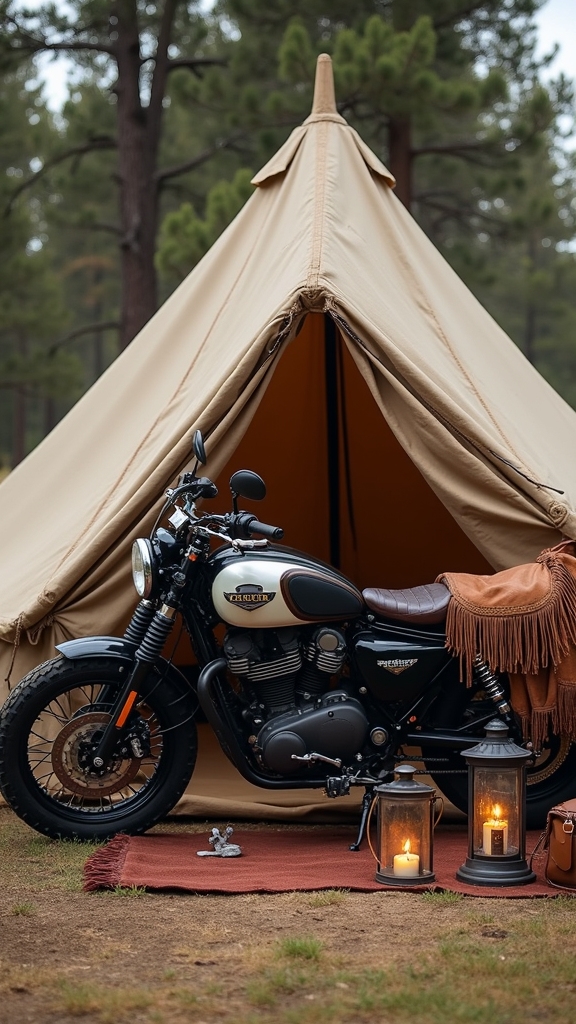
This aesthetic photographs best when it looks lived-in and slightly imperfect. Overly tidy, symmetrical shots work against the whole spirit of the style.
Seek out the details that tell the story: worn leather, a fringe banner moving in the breeze, firelight catching a copper lantern. The best images from this kind of campsite feel like they were taken mid-trip, not set up for a shoot.
How to Style Shots With Grit, Texture, and Sunlight
Golden hour does half the work for free, so plan your hero shots around it without apology. The warm low light pulls leather and suede tones forward and softens the harder iron and metal elements.
Position subjects against textured backgrounds: weathered wood, dry grass, cracked earth. The interplay between those rough surfaces and the fringed, layered clothing is where the visual tension lives.
Editing With Warm Tones and Contrast for Mood
Start the edit by pulling the temperature warmer and you’ll immediately see the earthy palette deepen. Boost contrast next to give leather its texture back and separate the dark tones from the shadows.
Dehaze slightly if the image feels flat, but don’t push it so far that the natural dust and atmosphere disappear. The goal is moody and warm, not overworked.
Creating Poses That Show Off Movement and Fringe
Still poses flatten fringe and kill the energy that makes this aesthetic worth photographing. Ask subjects to walk toward the camera, spin slowly, or reach for something at a distance.
Shoot in bursts during any movement so you can choose the frame where the fringe is fully extended and alive. That single frame, fringe mid-swing against a golden background, is the shot that captures what moto boho camping actually feels like.