
Sometimes you wonder whether those impossibly picturesque winter-village photos actually exist. They do, and they’re scattered across mountain ranges from the Alps to the Japanese highlands, each one preserving centuries of architectural tradition against backdrops that’ll make you question your camera’s capabilities.
What separates these villages from ordinary ski towns isn’t just the snow or the peaks. It’s the cobblestone alleys winding between buildings that have weathered hundreds of winters, the preservation codes that keep modern eyesores at bay, and the distinct cultural fingerprints each region has pressed into its high-altitude settlements.
The 21 villages ahead represent some of the most breathtaking examples of all of that. Places where the fairytale feeling isn’t manufactured, it’s just what centuries of careful preservation look like.
Salzburg, Austria: Baroque Beauty Beneath Snow-Capped Peaks
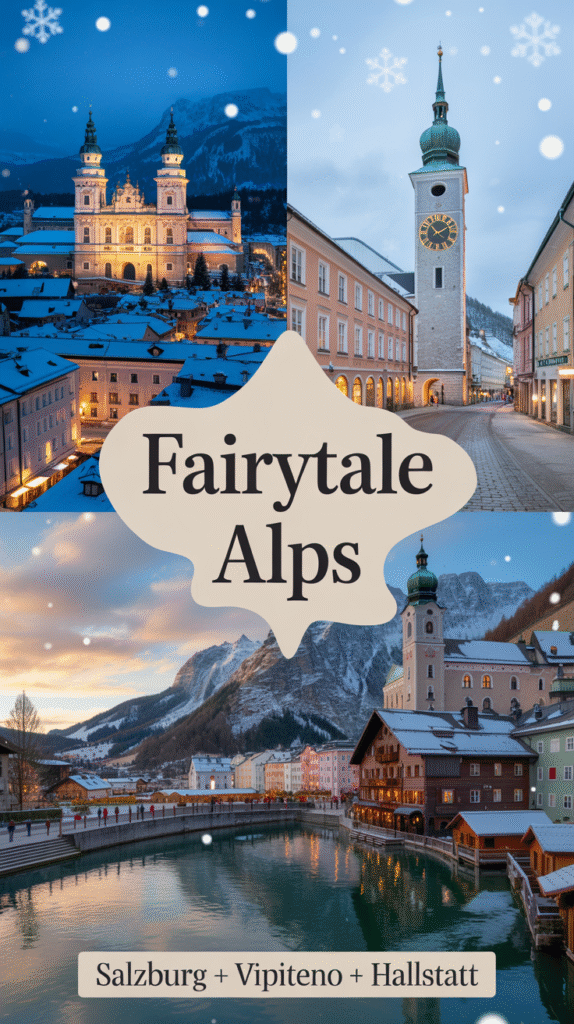

Salzburg doesn’t just have beautiful buildings. Prince-Archbishop Wolf Dietrich essentially rebuilt the city in the 1600s with a singular vision of creating a northern rival to Rome itself. What resulted was a cathedral district so ornate, so unapologetically theatrical in its Catholic Counter-Reformation swagger, that UNESCO had no choice but to grant it World Heritage status.
When winter snow dusts those golden domes and palatial facades, you’re looking at baroque architecture doing exactly what it was designed to do: overwhelm you with beauty as a form of spiritual persuasion.
SEE THIS: 15 Snowy Mountain Hot Springs You Won’t Believe Exist.
Vipiteno, Italy: Medieval Charm With a Towering Clock
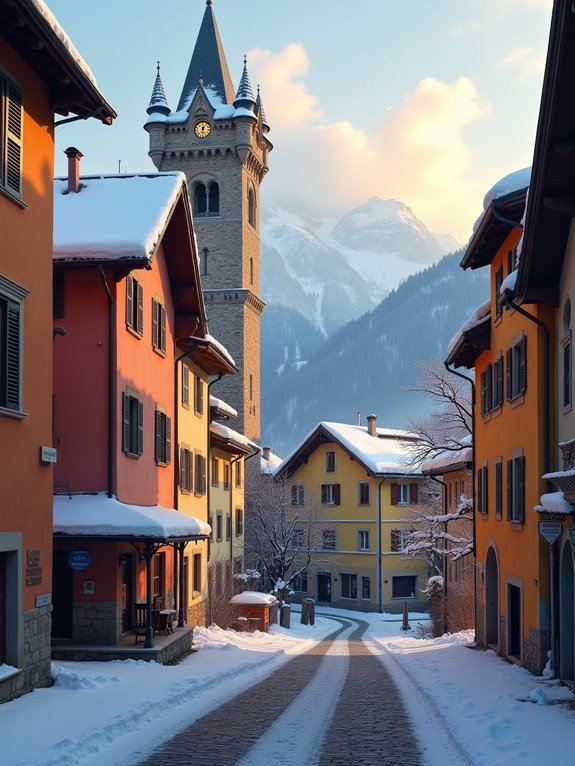
South Tyrol exists in a perpetual cultural tug-of-war between Italian and Austrian identities, and Vipiteno wears both influences proudly. The Torre delle Dodici rises 150 feet above the town center, a medieval clock tower from 1469 that literally divides old Vipiteno from its newer sections.
Pastel buildings with those distinctive crow-stepped gables line streets that could pass for either side of the Brenner Pass. This isn’t a village trying to be quaint for tourists; it’s a place where the architecture naturally reflects centuries of being passed between empires.
SEE THIS: Escape the Chill: 17 Cozy Indoor Experiences for a New York Winter Day.
Hallstatt, Austria: UNESCO Heritage Among Winter Wonderlands


Hallstatt has been continuously inhabited for 4,500 years, which means people have been living on this narrow strip of land between the Dachstein Alps and the Hallstätter See since before the pyramids were built. The salt mines beneath your feet created the wealth that funded all those Gothic and Baroque buildings crowding the lakefront.
Every wooden house seems to be clinging to the hillside at an improbable angle, and when winter fog rolls across the water, the whole scene looks like it belongs in a dream sequence. This is Austria’s most photographed village for good reason, though the hordes of tourists can sometimes make you wish you’d gotten that shot first.
SEE THIS: 19 Winter Moments at the New York Cloisters That Will Transport You to Europe.
St. Moritz, Switzerland: Luxury Meets Alpine Perfection

Ancient Celts soaked in St. Moritz’s mineral springs millennia before ski lifts existed, but the town really hit its stride when it hosted back-to-back Winter Olympics. Now it’s the kind of place where your hotel’s tourist tax during high season runs 3.05 CHF per person per night, and nobody blinks.
The skiing is legitimately world-class, sure, but St. Moritz’s real appeal has always been about seeing and being seen against that pristine Upper Engadine valley backdrop. Luxury here isn’t an add-on; it’s baked into the town’s entire identity.
Saas-Fee, Switzerland: The Car-Free Pearl of the Alps
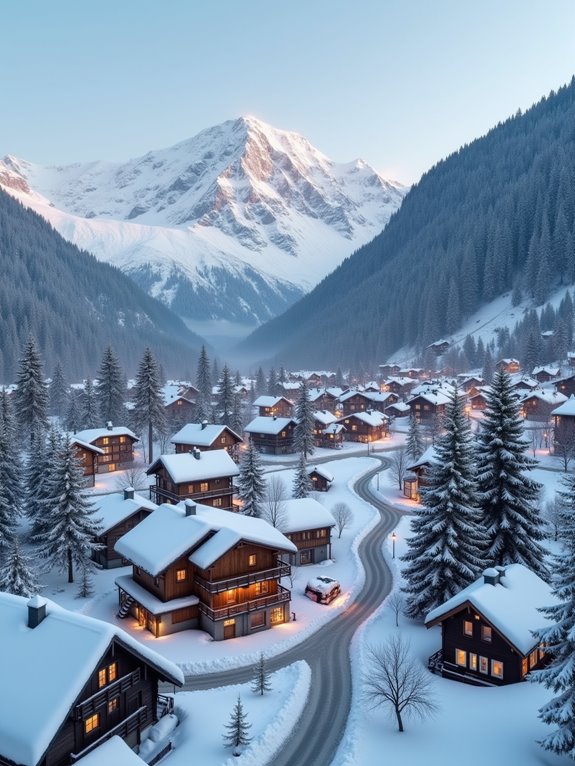
Cars have been banned from Saas-Fee since 1951, back when most mountain towns were just starting to pave their roads. Only electric vehicles hum quietly through streets at 5,900 feet, surrounded by thirteen peaks that all top 13,000 feet, including the Dom.
The village powers itself entirely on renewable energy, with solar panels catching what little sun makes it between those massive peaks. Traditional wooden chalets haven’t been bulldozed for concrete monstrosities because there’s no way to get construction trucks in here anyway.
Appenzell, Switzerland: Award-Winning Village at 1000 Meters


Appenzell looks like someone’s idealized fantasy of a Swiss village, all colorful gingerbread-style houses with flower boxes at 1,000 meters. What makes it genuinely special is the Landsgemeinde, an open-air assembly every April where locals still practice direct democracy the old-fashioned way.
This is the capital of Switzerland’s smallest Catholic canton, and centuries-old traditions aren’t museum pieces here. They’re still how things actually get done.
Schwellbrunn, Switzerland: Traditional Houses Below Mount Säntis
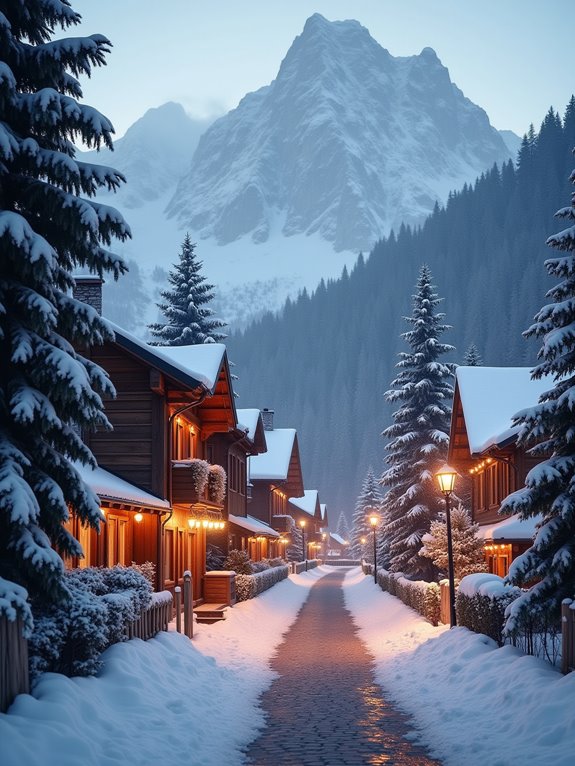
Mount Säntis looms over Schwellbrunn like a patron saint, and in 2017, Switzerland officially declared this the country’s most beautiful village. The Appenzell-style wooden houses here are covered in elaborately painted motifs and carved facades that took generations of craftsmen to perfect.
At 1,000 meters altitude, the whole village feels frozen in time, though that has more to do with careful preservation than actual freezing. Every detail here screams traditional Alpine architecture, the kind that’s increasingly rare even in Switzerland.
Zermatt, Switzerland: Matterhorn’s Majestic Shadow

The Matterhorn’s pyramid shape is so iconic that it’s basically been trademarked by Swiss tourism, and Zermatt sits directly beneath all 4,478 meters of it. Edward Whymper made the first ascent in 1865, a climb that ended in tragedy and cemented the peak’s reputation.
The village itself banned cars long before it became trendy, leaving 500-year-old wooden houses lining streets where electric taxis are the only motors you’ll hear. Eighty percent of visitors return, which tells you something about how that car-free intimacy works on people.
Verbier, Switzerland: Extensive Slopes and Village Life

Verbier doesn’t do quaint and quiet. This is Switzerland’s largest connected ski domain, with the 4 Vallées system offering roughly 100 runs across every difficulty level you can imagine.
Mont Fort’s off-piste terrain attracts skiers who consider groomed runs boring, while beginners have plenty of forgiving slopes to build confidence. The village architecture is traditionally Alpine, but Verbier’s real draw has always been the sheer scale of skiable terrain beneath your boots.
Grindelwald, Switzerland: Dramatic Peaks and Quintessential Charm

The Eiger’s north face rises nearly 1,800 meters of sheer rock and ice just kilometers from Grindelwald’s hotels, close enough that you can watch climbers through binoculars from your breakfast table.
This is the Bernese Oberland’s most dramatic setting, and Grindelwald has capitalized on it without losing its essential Swiss character. Fruit trees dot the slopes between pasturelands, creating a pastoral scene that feels almost absurd when you’ve got that massive wall of mountain looming overhead. Quintessential charm here comes with a side of genuine alpine danger.
Ogimachi, Japan: 250-Year-Old Farmhouses in Shirakawa-go

Shirakawa-go’s gassho-zukuri farmhouses look nothing like European chalets, and that’s exactly the point. These structures with their triangular thatched roofs, some 250 years old, were engineered specifically for the crushing snowfall this region gets every winter.
The preservation movement started in the 1970s, rescuing buildings that locals were ready to abandon. Now Ogimachi Village holds UNESCO World Heritage status, and the “praying hands” rooflines create a winter landscape that proves fairytale aesthetics aren’t exclusive to the Alps.
Banff, Alberta: Gateway to Canada’s Winter Playground

Banff sits in the heart of the Canadian Rockies with world-class amenities and none of the European pretension. Winter transforms the town into a proper wonderland where dog sledding and snowshoeing compete with gondola rides for your attention.
The skiing is legitimately excellent, and the mountain vistas deliver exactly what you’d expect from this landscape. What separates Banff from European competitors is the massive scale of wilderness surrounding it and the distinctly North American approach to mountain hospitality.
Jasper, Alberta: Spectacular Rocky Mountain Landscapes
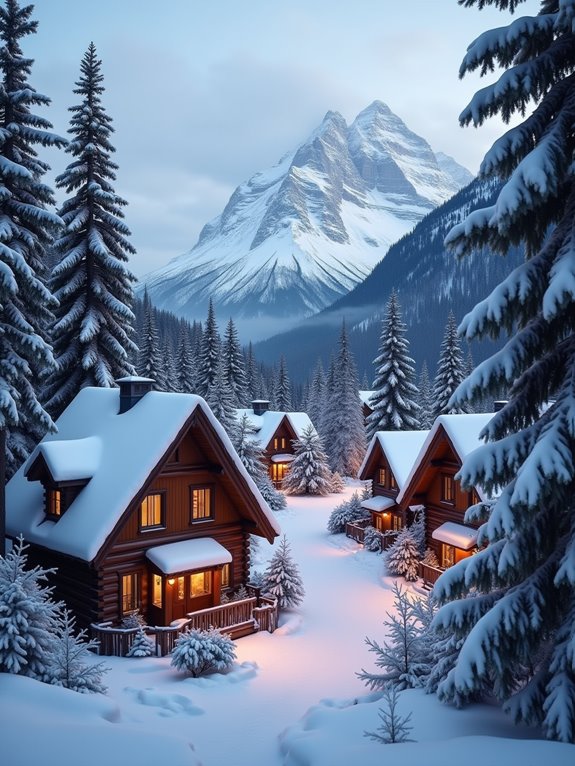
Canada’s largest Rocky Mountain national park doesn’t do delicate or manicured. Jasper sprawls across more than 11,000 square kilometers of wilderness that still feels genuinely untamed.
The world’s second-largest Dark Sky Preserve means stargazing here operates on a different level than anywhere light pollution reaches. Drive the Icefields Parkway, and you’ll pass glaciers and mountain vistas that make you understand why early explorers thought this landscape was impassable.
Whistler, British Columbia: World-Class Skiing and Village Scene

Whistler and Blackcomb mountains combine to create one of North America’s premier ski destinations, pulling three million visitors every year. The pedestrian village uses timber architecture to maintain that alpine aesthetic without feeling fake or manufactured.
This is modern resort development done right, where you can actually walk between shops and restaurants without dodging traffic. The terrain across both mountains handles everyone from tentative beginners to extreme skiers who think groomed runs are for tourists.
St. Anton, Austria: The Cradle of Alpine Skiing

Hannes Schneider developed the Arlberg Technique in St. Anton in 1921, fundamentally changing how skiing was taught worldwide. This isn’t just marketing; St. Anton genuinely deserves its “cradle of Alpine skiing” title.
The terrain climbs to 2,811 meters, and the off-piste runs have legendary status among skiers who know what they’re doing. Every chalet in this village carries echoes of skiing’s evolution from Norwegian curiosity in the 1880s to the global obsession it became.
Cortina D’ampezzo, Italy: Queen of the Dolomites

Cortina sits at 4,016 feet, surrounded by UNESCO World Heritage peaks like Tofane and Cristallo that justify the “Queen of the Dolomites” nickname. This has always been an exclusive resort where 87 miles of slopes serve a clientele expecting luxury.
The Dolomites’ distinctive pale limestone peaks create scenery that looks almost alien compared to typical Alpine granite. Year-round adventures here come with accommodations that treat you exactly like royalty, assuming royalty pays resort prices.
Kitzbühel, Austria: Traditional Ski Town Beneath Snowy Peaks

Kitzbühel has been around for 750 years, but the Hahnenkamm downhill course is what put it on the global map. This is one of skiing’s most dangerous and prestigious races, run annually on slopes that terrify even World Cup athletes.
Colorful traditional architecture lines cobbled streets that predate skiing by centuries. Kitzbühel balances its world-class winter sports reputation with genuine historic character, a combination that most purpose-built resorts can’t touch.
Alpbach, Austria: Tyrolean Wooden Architecture in White

Alpbach passed a building code in 1953 requiring all structures to maintain traditional Tyrolean wooden design, and the village has stuck to it religiously. Intricately carved facades and ornate balconies covered in flower boxes aren’t happy accidents.
Large hotels are explicitly prohibited, keeping the scale intimate and the integration with surrounding alpine terrain harmonious. This is cultural preservation through legal enforcement, and the result is a village that looks remarkably unchanged across decades.
Flam, Norway: Fjords Meet Snow-Covered Mountains

Flåm sits where dramatic fjords meet snow-covered peaks, creating scenery that feels almost excessive in its beauty. Snowshoe hiking here means traversing terrain carved by glaciers over millennia. Winter fjord safaris take you across water hemmed in by mountains that rise straight up from sea level.
The train journey through this landscape is scenic to the point of absurdity, each turn revealing another view that seems designed to sell Norway tourism.
Girdwood, Alaska: Mountain Snowfields Near Pacific Waters
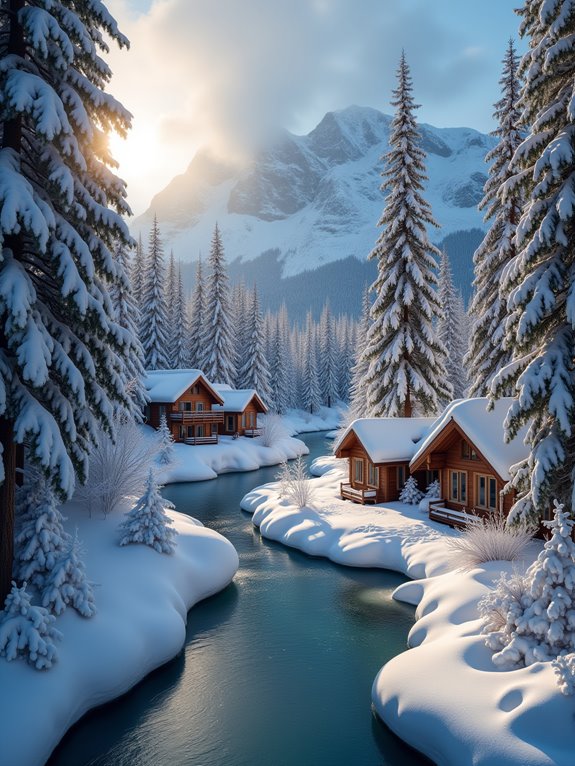
Girdwood started as a gold rush town and evolved into something far more valuable to modern visitors. Alyeska Resort offers world-class skiing surrounded by seven glaciers and temperate rainforest, a combination you won’t find in the Alps.
The Chugach Mountain Range rises above Pacific waters just thirty-six miles from Anchorage. This is Alaska’s version of an accessible mountain town, where “accessible” still means genuinely wild terrain in every direction.
Kotor, Montenegro: Adriatic Coast With Alpine Backdrop

Kotor’s bay is called Europe’s southernmost fjord, though technically it’s a drowned river canyon. Limestone peaks plunge straight into calm Adriatic waters, creating one of the continent’s most dramatic combinations of Alpine and Mediterranean landscapes.
Medieval stone architecture climbs the slopes of Mount Lovćen, with ancient fortifications zigzagging up the mountainside. Protected waters sparkle below, and the whole scene manages to feel both imposing and inviting simultaneously.