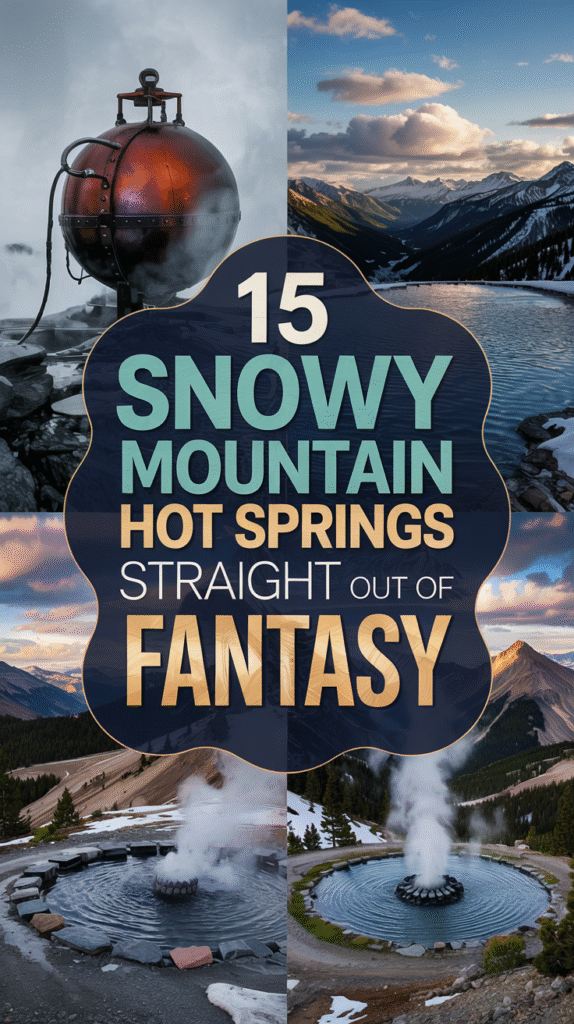
You’ve probably seen photos of Yellowstone’s erupting geysers, but there’s something entirely different about lowering yourself into 104°F water while fresh snow settles on your shoulders at 7,500 feet. The contrast hits you immediately: your body wrapped in heat while your breath clouds in the frigid air above.
These high-altitude thermal pools remain the most surreal places I’ve ever soaked. Whether they’re bubbling up through volcanic craters in New Zealand or steaming in hidden Himalayan valleys, these fifteen locations prove that the planet’s most hostile winter environments can hide its most welcoming waters.
Frying Pan Lake, New Zealand – The World’s Largest Hot Spring in a Volcanic Crater


This thing is massive, stretching across 3.8 hectares in what used to be Echo Crater before Mount Tarawera blew its top in 1886. The water stays between 50 and 60°C year-round, which is too hot for soaking but absolutely mesmerizing to watch from the crater rim.
Sulfur deposits paint the surface in yellows and oranges that shift as steam rolls across the water. Geothermal vents deep in the Earth’s crust keep pumping heat into this lake, making it the largest hot spring by surface area anywhere in the world.
SEE THIS: 21 Snowy Mountain Villages That Feel Straight Out of a Fairytale.
Norris Geyser Basin, Yellowstone – Underground Waters Reaching 459°F

Underground temperatures here hit 459°F, which is wild when you consider that’s hot enough to melt lead. Steamboat Geyser sits in this basin, and when it decides to erupt (which is completely unpredictable), it shoots higher than any other active geyser on the planet.
Three major fault lines converge right here, creating a geological pressure cooker that keeps the entire area in constant flux. The acidity levels are extreme, giving the whole landscape an otherworldly, almost hostile appearance that makes you very aware you’re standing on top of a supervolcano.
SEE THIS: Escape the Chill: 17 Cozy Indoor Experiences for a New York Winter Day.
Deildartunguhver, Iceland – Europe’s Most Powerful Boiling Spring


Every single second, 180 liters of boiling water come roaring out of the ground at exactly 212°F. Unlike geysers that tease you with intervals, this spring never stops flowing, which is why Iceland tapped it to heat 8,700 homes through the country’s longest hot water pipeline.
The minerals in the runoff have created a micro-ecosystem around the spring where rare ferns like struthiopteris somehow thrive in soil that would kill most plants. Watching that much boiling water constantly surge from the earth gives you a real sense of the raw geothermal power sitting just below Iceland’s surface.
SEE THIS: 19 Winter Moments at the New York Cloisters That Will Transport You to Europe.
Banff Upper Hot Springs, Canada – Rocky Mountain Thermal Paradise

At 5,200 feet up in the Rockies, this is as high as natural hot springs get in Canada. The pool stays right around 100°F, warm enough to feel incredible without cooking you, while Mount Rundle dominates the view to the east.
About 300,000 people make the trip here every year, and honestly, I get it. There’s something about soaking in mineral water while watching snow fall on jagged peaks that makes you forget whatever was stressing you out before you arrived.
Kheerganga Hot Spring, India – Himalayan Peak Thermal Waters

The 22-kilometer trek to reach this spring isn’t easy, but at 10,000 feet in the Parvati Valley, nothing comes easy. Sulfur-rich water heated by dormant volcanic activity pools up right next to a Shiva temple, creating a spot that feels sacred even if you’re not Hindu.
Locals call it Parvati Kund, and pilgrims have been making this climb for centuries. The Himalayan views from the pools are worth the sore legs, assuming you can stop staring at the steam rising into the thin mountain air.
Vranjska Banja, Serbia – One of Earth’s Hottest Surface Springs

Water breaks through the surface here at over 110°C, which will absolutely destroy your skin if you’re foolish enough to test it. These are some of the hottest surface springs anywhere in Europe, loaded with hydrogen sulfide and minerals that Romans used for healing two thousand years ago.
The springs sit in southern Serbia’s mountains, far enough off the beaten path that they still feel like a discovery. Modern facilities have tamed the water down to soakable temperatures, but standing near the source reminds you that this heat comes from processes we still don’t fully understand happening miles beneath your feet.
Mammoth Hot Springs, Yellowstone – 37-Acre Travertine Wonderland

Travertine terraces stack up here like someone’s building a white stone amphitheater one layer at a time. The springs deposit up to a meter of calcium carbonate annually, fed by more than two tons of mineral-rich water flowing through every day.
What makes Mammoth different from other hot springs is how visible the geology is: you can literally watch the landscape change shape as minerals build up and old formations crumble. The terraces glow in the morning light, and the whole 37-acre complex looks more like a sculpture garden than something created by mindless geological processes.
Colca Canyon Hot Springs, Peru – Andean Mountain Thermal Pools

These pools sit in one of the deepest canyons on Earth, where geothermal water heated by active volcanoes bubbles up through the canyon floor. The water carries sodium, sulfur, and calcium that locals have trusted for healing as long as anyone can remember.
You reach the springs after hiking through landscapes that switch between barren and terraced, with condors sometimes circling overhead. Soaking here feels earned in a way that resort hot springs never do, probably because you spent half the day getting to them.
Machu Picchu Pueblo Hot Springs, Peru – Ancient Inca Thermal Heritage
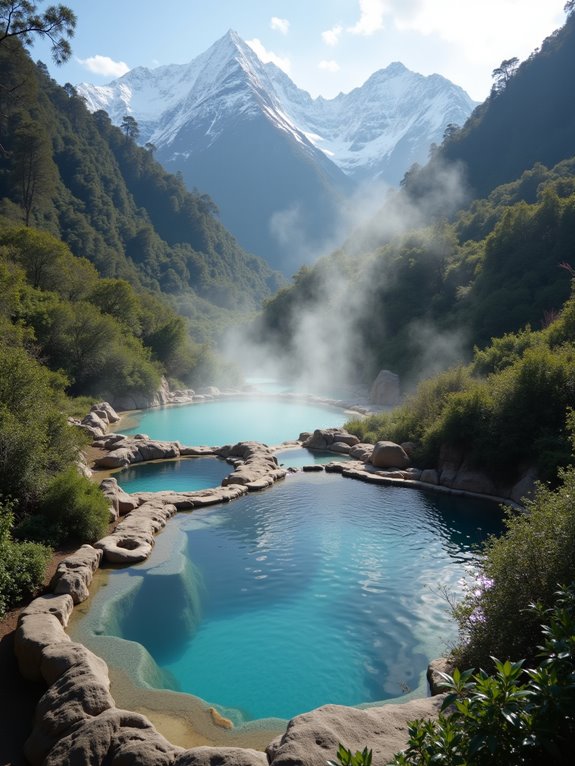
Just down the mountain from the ruins, these springs sit at 2,040 meters where clouds roll through the valleys most afternoons. The Inca considered these waters sacred, which makes sense when you’re sitting in them watching mist obscure and reveal the surrounding peaks.
After a day scrambling around Machu Picchu’s stone terraces, these pools feel less like a luxury and more like a necessity. The geothermal activity here is constant but gentle, keeping the water at that perfect temperature where you could stay submerged for hours.
Doho Hot Springs, Ethiopia – Highland Thermal Waters Near Awash
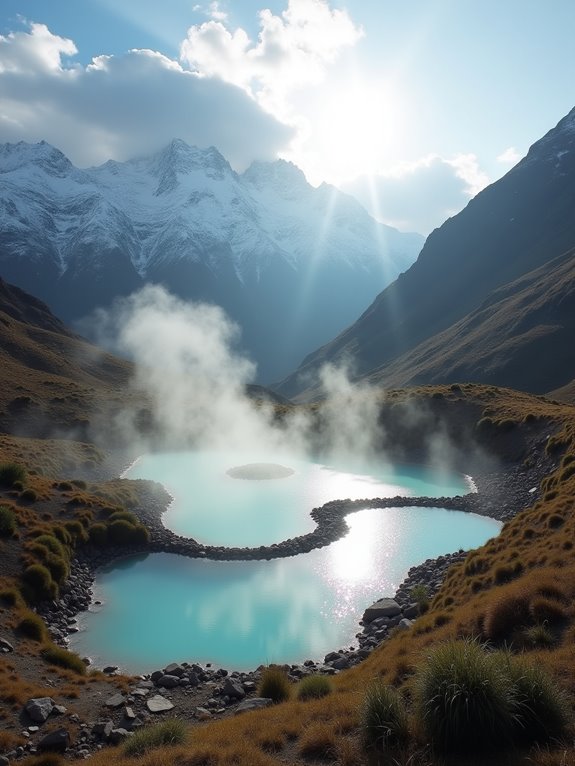
The Great Rift Valley created the geology that feeds these highland pools with their sweeping views across volcanic rock. Acacia woodlands surround the springs, and if you’re lucky, you might spot hippos, baboons, or any of the dozens of bird species that live near Awash National Park’s northern boundary.
Ethiopian hot springs don’t get much attention compared to Iceland or Japan, but the combination of wildlife and thermal water makes this place special. The pools sit in landscapes that feel ancient, because they are.
Big Spring at Thermopolis, Wyoming – Historic Mineral Spring Giant

At 4,331 feet in the Big Horn Basin, this spring pumps out 2,027 gallons per minute at 135°F. An 1896 treaty with the Shoshone and Arapaho tribes guaranteed free public access to these waters, which is why you can still soak here without paying a dime.
The mineral content is high enough to leave deposits on everything the water touches, building up colorful formations around the spring’s edges. Thermopolis isn’t glamorous, but the spring itself is legitimate, powerful, and historically significant in ways that matter more than fancy resort amenities.
Waimangu Valley Thermal Features, New Zealand – Rift Valley Steam Lakes

Frying Pan Lake dominates this valley, but Inferno Crater’s geyser-like cycling and the actively forming silica terraces make the whole area feel alive with geological activity. Steam rises from multiple vents across the valley floor, and the colors shift from milky blue to rust orange depending on the minerals in each pool.
Volcanic rifts created this landscape, and the hydrothermal features here change constantly as underground pressures shift. Walking through Waimangu is like touring a laboratory where Earth experiments with heat, water, and chemistry right out in the open.
Japanese Alpine Onsen – Snow Monkey Mountain Retreats
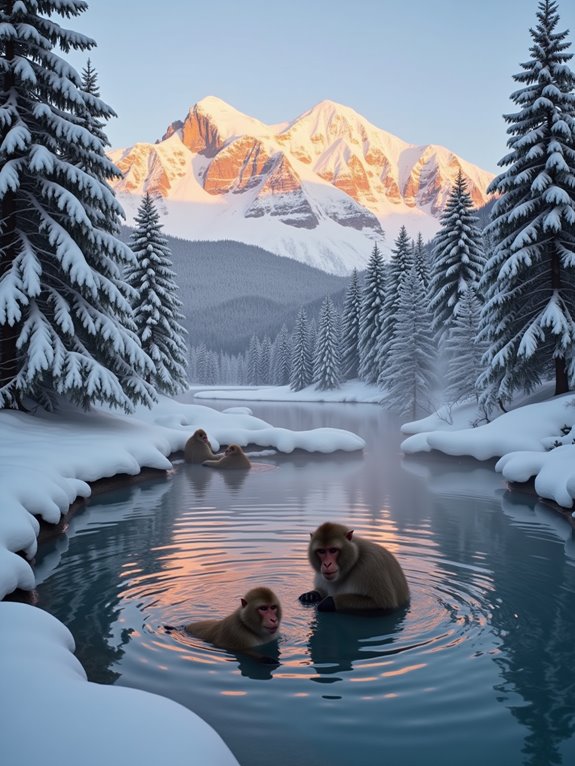
Japanese macaques sit chest-deep in steaming pools while snow piles up on their heads, completely unbothered by the winter cold. The park sits in Nagano Prefecture’s mountains, where natural hot springs create these warm refuges that the monkeys discovered on their own.
Watching them soak with their eyes half-closed while snowflakes melt on the water’s surface is genuinely surreal. The contrast between their obvious contentment in the heat and the frozen landscape around them captures something essential about why we seek out hot springs in winter.
Himalayan Hot Springs of Nepal – High-Altitude Thermal Sanctuaries

Trekkers on the Annapurna Base Camp and Circuit routes stumble into these thermal pools after days of hard hiking at altitude. Sulfur-rich water emerges at 118°F from deep geothermal sources, creating pockets of warmth in landscapes dominated by snow and ice.
The springs aren’t developed or commercialized, just natural pools where the earth happens to be releasing heat. Soaking in them helps with muscle recovery and altitude acclimatization, but mostly they just feel like small miracles in places where warmth seems impossible.
Taiwan Mountain Hot Springs – Volcanic Island Alpine Thermal Baths
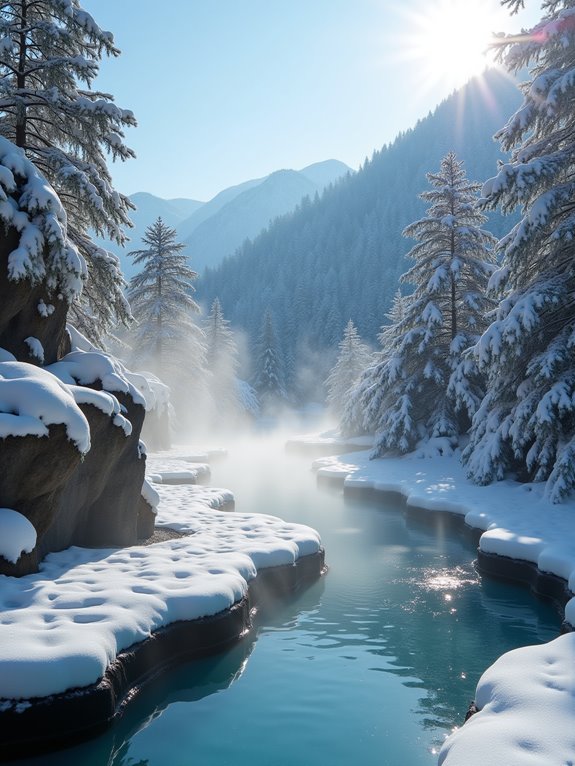
Where the Philippine Sea Plate grinds against the Eurasian Plate, Taiwan’s volcanic terrain produces hot springs with wildly different mineral content. Yangmingshan’s volcanic massif offers sulfur springs, iron-rich springs, and carbonic springs, each with distinct therapeutic properties.
Beitou near Taipei gives you easy access to volcanic baths without leaving the city, while remote mountain locations require serious hiking to reach. The variety here is impressive, with enough different spring types that you could spend weeks soaking in completely different water chemistry each day.
Conclusion
These hot springs prove that the planet’s most extreme environments often hide its most rewarding experiences. The combination of freezing air and scalding water creates a physical sensation you can’t replicate anywhere else, something that stays with you long after you’ve toweled off.
I’ve found that the best thermal pools require effort to reach, whether that’s a 22-kilometer trek or just the willingness to brave subzero temperatures. If you’re going to chase these experiences, bring a swimsuit that can handle mineral water, accept that the weather might be miserable, and remember that the contrast is the entire point.