The amateur Halloween setups that actually work aren’t just passageways. They’re a psychological journey.
The difference between a corridor with some plastic skeletons taped to the walls and a genuinely unsettling haunted forest comes down to treating your space like a narrative, where every element builds tension as visitors move through it.
When you nail the fundamentals of lighting, texture, and strategic prop placement, you create something that sticks with people long after they’ve left your house. The 22 ideas ahead show you how to build that experience from the ground up.
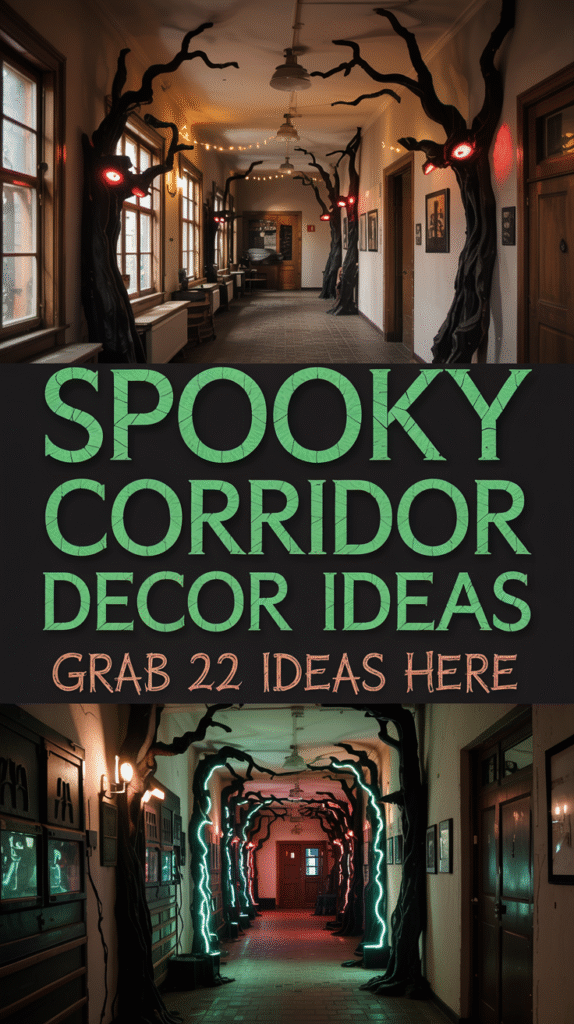
Eerie Tree Silhouettes With Glowing Red Eyes
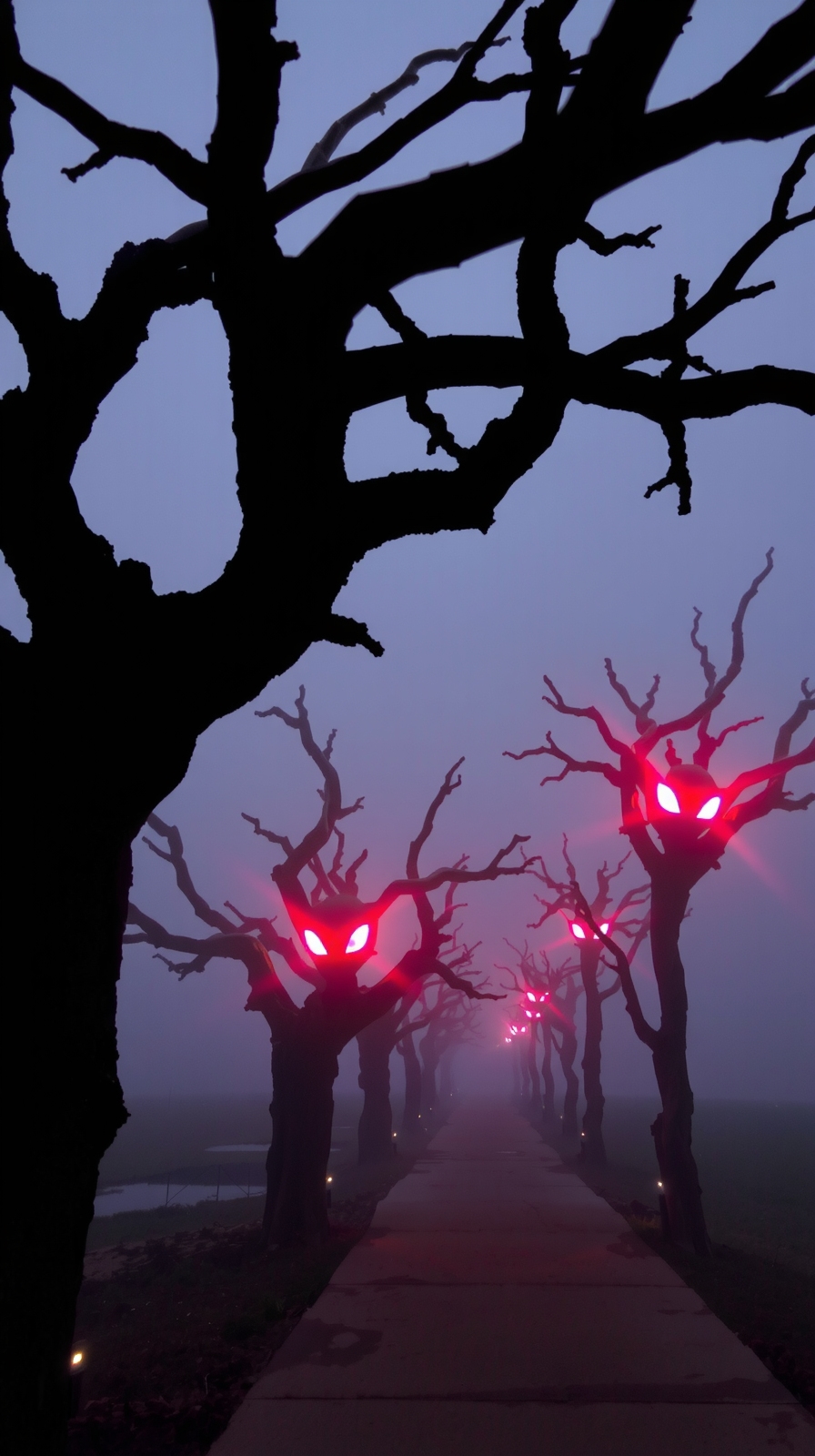
The primal fear of being watched in the woods is hardwired into us, which makes tree silhouettes with glowing eyes devastatingly effective. Cut irregular, gnarled shapes from lightweight plywood and embed LED lights behind red diffusers for eyes that pierce through the darkness.
The key is asymmetry in your tree shapes because perfect symmetry reads as artificial and kills the organic menace you’re building. Position these at varying heights along your corridor so the eyes appear at different levels, creating the sense that multiple creatures are tracking movement through their territory.
SEE THIS: 23 Elegant Halloween Living Rooms Inspired by the Victorian Era.
Flickering LED String Lights in Forest Colors
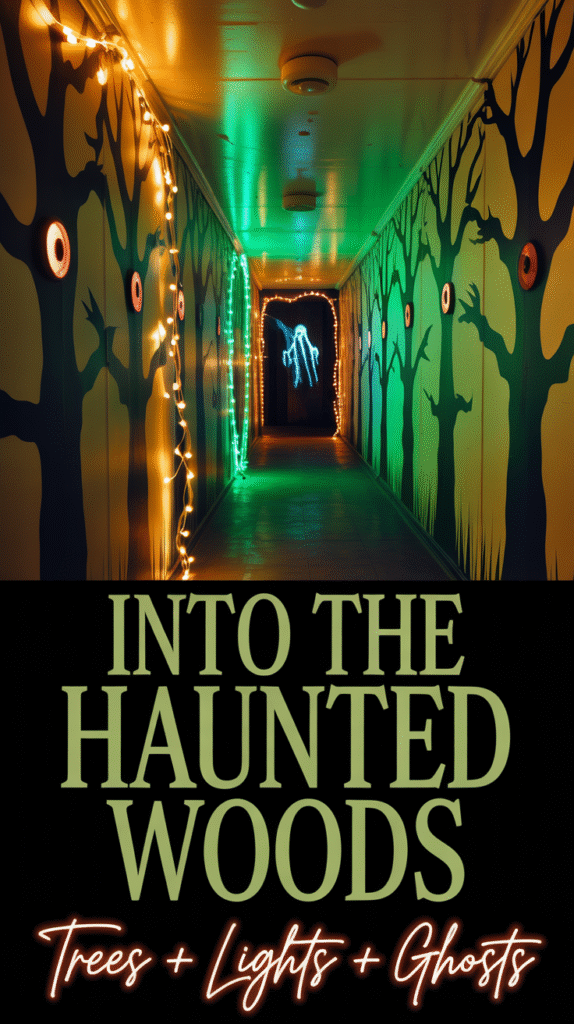
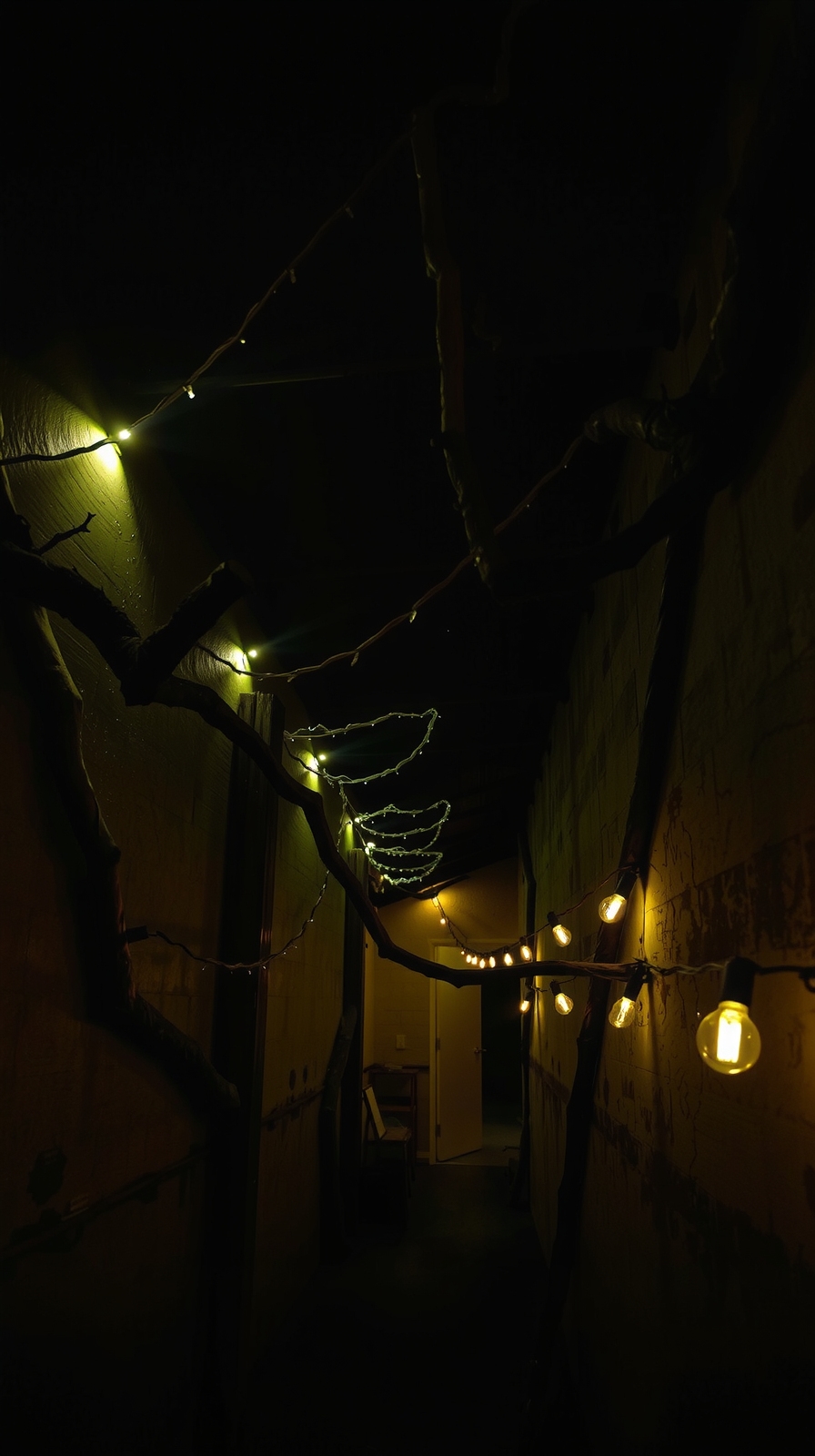
Static lighting feels dead, but flickering LEDs introduce the kind of unpredictable movement that keeps people on edge. Go for deep forest greens, amber, and warm whites that replicate the way moonlight filters through dense canopy.
The newer LED strings use pulse width modulation to create genuinely random flickering patterns rather than the obviously programmed sequences that cheapen the effect. Weave them through any overhead elements, around doorframes, and behind translucent materials to build depth and make your corridor feel like it extends beyond its actual boundaries.
SEE THIS: 21 Cozy Halloween Home Decor Ideas That Are More Chic Than Spooky.
Faux Branch and Moss Wall Coverings
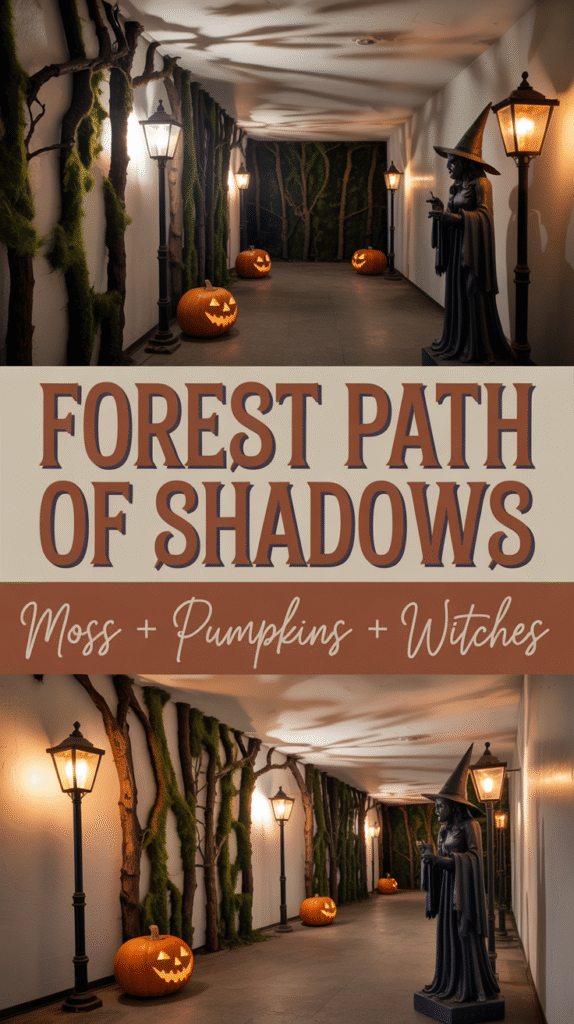
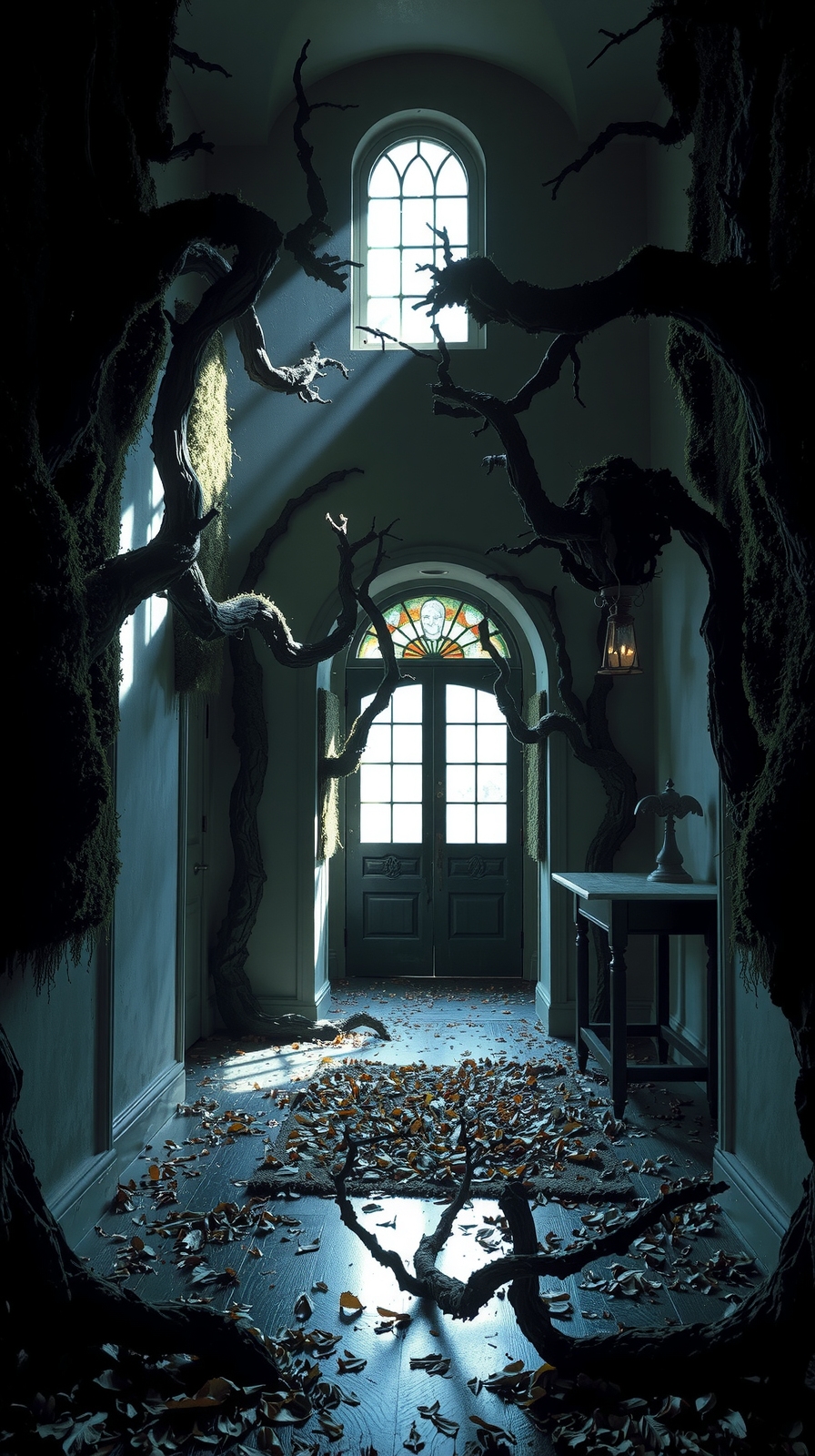
Preserved moss panels give you authentic woodland texture without the headaches of keeping live plants happy indoors. The beauty of preserved cushion, sheet, and reindeer moss is that it maintains its soft, organic appearance while staying completely stable in indoor conditions.
You’re eliminating mold risks while getting texture that photographs beautifully and feels real when people inevitably reach out to touch it. Layer these panels strategically rather than covering every surface because negative space creates visual rhythm and prevents your corridor from reading as a craft store exploded.
SEE THIS: Velvet Pumpkin Decor: 20 Luxe Fall Trend You’ll Want This Season.
Jack-o’-Lantern Lamppost Installations
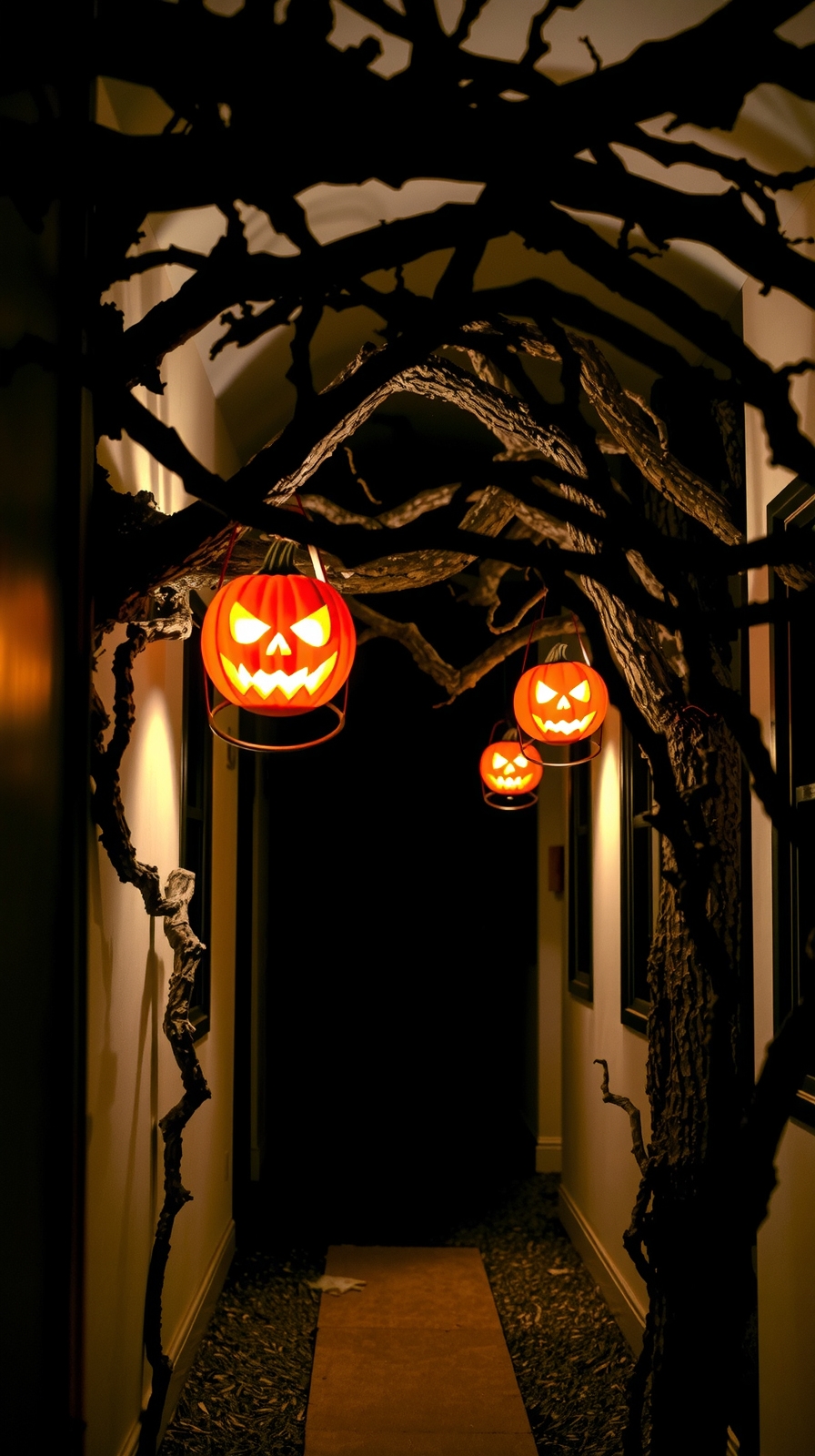
Vertical lighting draws the eye upward and makes standard ceiling heights feel taller and more imposing. Stack two or three carved pumpkins on a steel rod core, which gives you stability while creating that classic lamppost silhouette.
LED illumination keeps things safe and lets you run these installations for weeks without worrying about fire hazards or energy costs. The powder-coated steel construction means you can move these pieces outdoors for your front walkway and back inside without corrosion issues.
SEE THIS: 19 DIY Dried Citrus Garlands That Make Your Fall Home Smell Amazing.
Haunted Mansion Portrait Gallery

Portraits create character in ways that random props never will because they suggest backstory and history. Commission or create images that incorporate subtle decay elements like wilting flowers, cracked frames, or eyes that seem to track movement across the room.
The progression matters here, so start with fairly normal portraits near the entrance and increase the supernatural elements as visitors move deeper into your corridor. Variable lighting on each portrait lets you reveal or conceal details depending on how much you want to unsettle people at different points along their path.
UV-Reactive Ghost Paint Effects
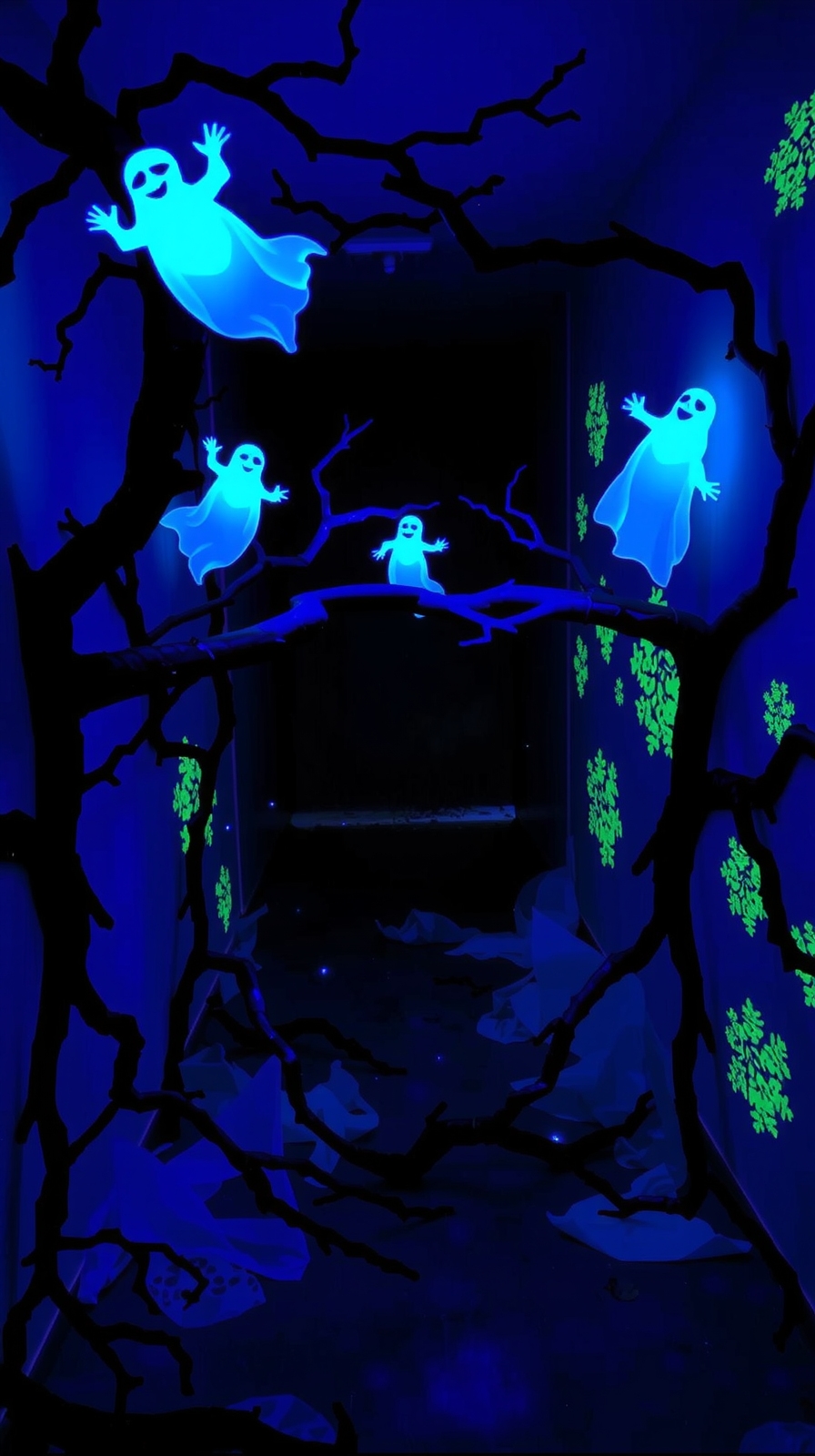
Clear UV paint stays invisible under normal conditions but erupts into glowing apparitions when blacklight hits it. Apply multiple thin coats to transparent plastic sheeting using natural sponge brushes, which creates irregular edges that read as genuinely ethereal.
Your blacklight positioning determines where ghosts appear, so map out your effect before committing to paint placement. Seal outdoor applications with brush-on varnish because moisture will degrade the paint’s reactive properties and leave you with expensive invisible decorations that stay invisible.
Witch Statue Forest Guardians
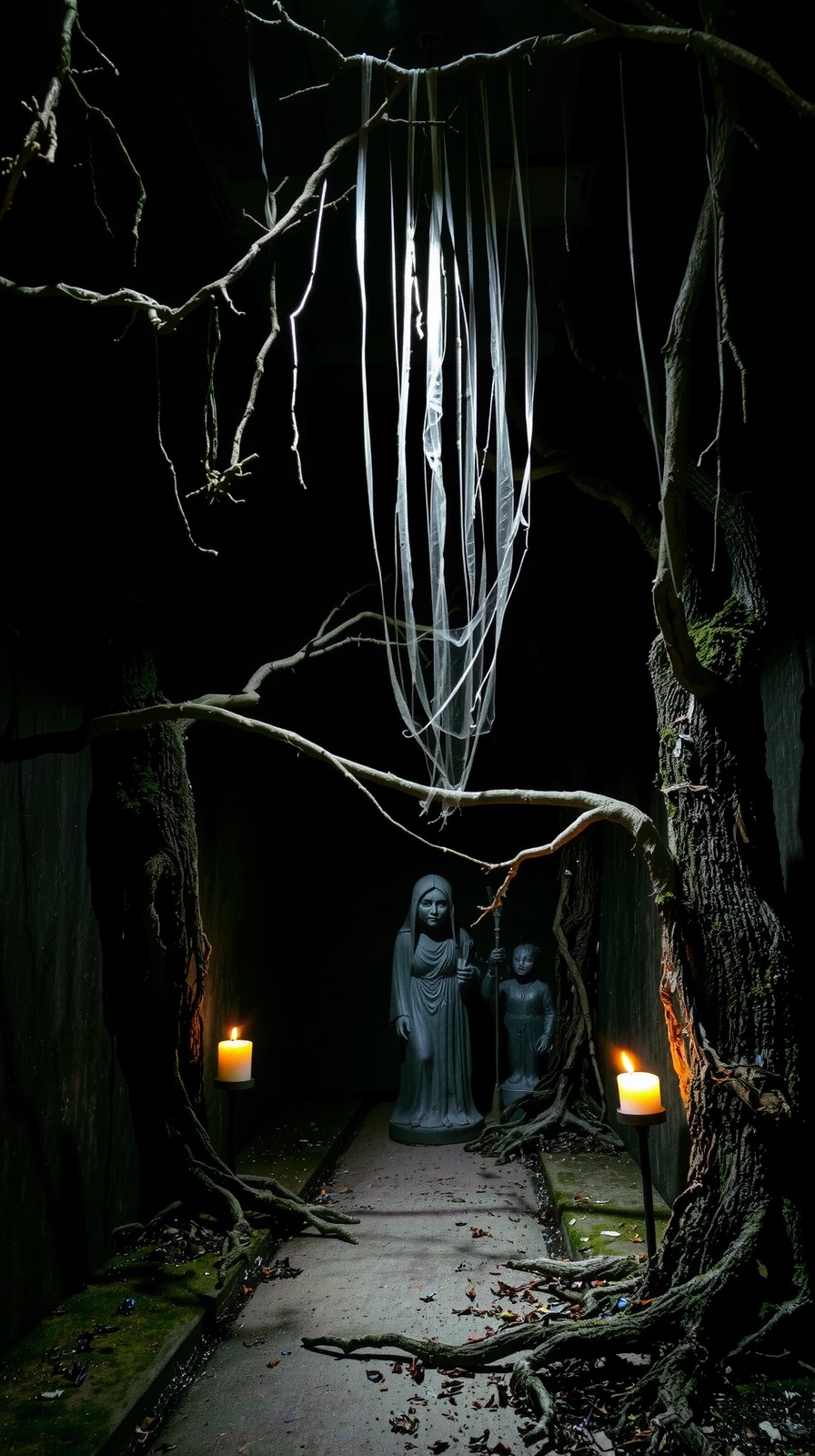
Witches carry cultural weight that generic spooky figures can’t match, especially when you give them symbolic elements like staffs, crescent moons, and animal familiars. Earth-toned materials help these statues feel like they’ve been standing in the forest for generations rather than purchased last week.
Light them from below to create the impression they’re emerging from the ground itself. Natural elements like real moss or lichen attached to the base of each statue reinforces the idea that these guardians have been here long enough for nature to reclaim them.
Zombie Figurine Surprise Placements
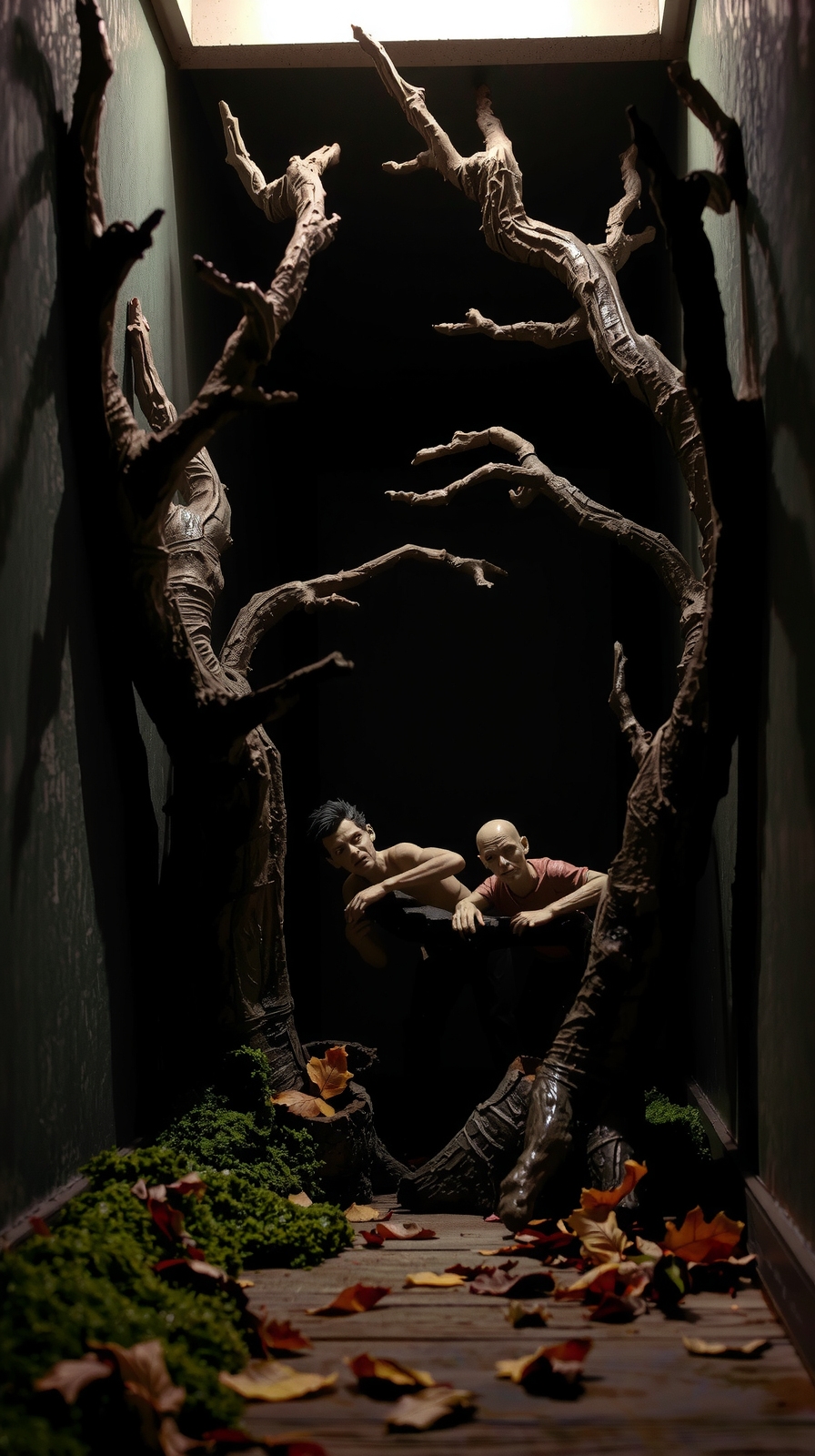
Zombies work best when they violate expectations about where threats should appear. Partially conceal them behind furniture, bury limbs in gathered leaves, or position them just around doorway edges where they’re visible only after people have committed to moving forward.
Clustering multiple figures at staggered distances creates the advancing horde effect that makes zombies genuinely threatening rather than campy. The psychological principle here is simple: anticipated scares build dread, but unexpected placements deliver actual fright.
Carved Wooden Spirit Masks
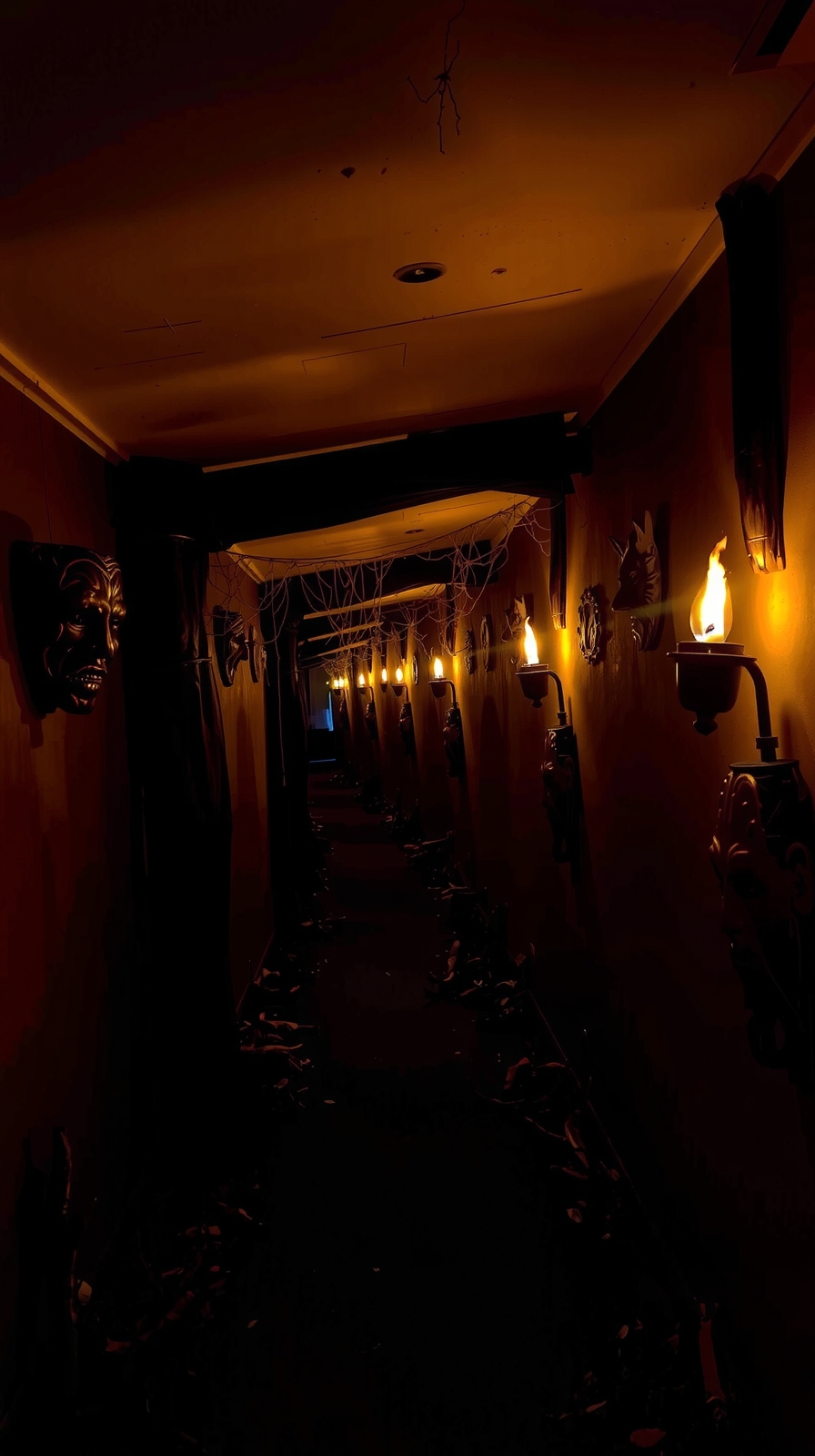
Traditional carved masks carry centuries of spiritual mythology that plastic Halloween masks can’t replicate. The handcrafted irregularities in wooden masks create shadows and depth that change as people move past them.
Mount these at slightly above eye level so visitors have to look up, which psychologically puts them in a submissive position relative to the mask. Pair them with moss, small branches, or dried flowers to suggest these spirits have some connection to the natural world you’re creating.
Gothic Tapestry Wall Treatments
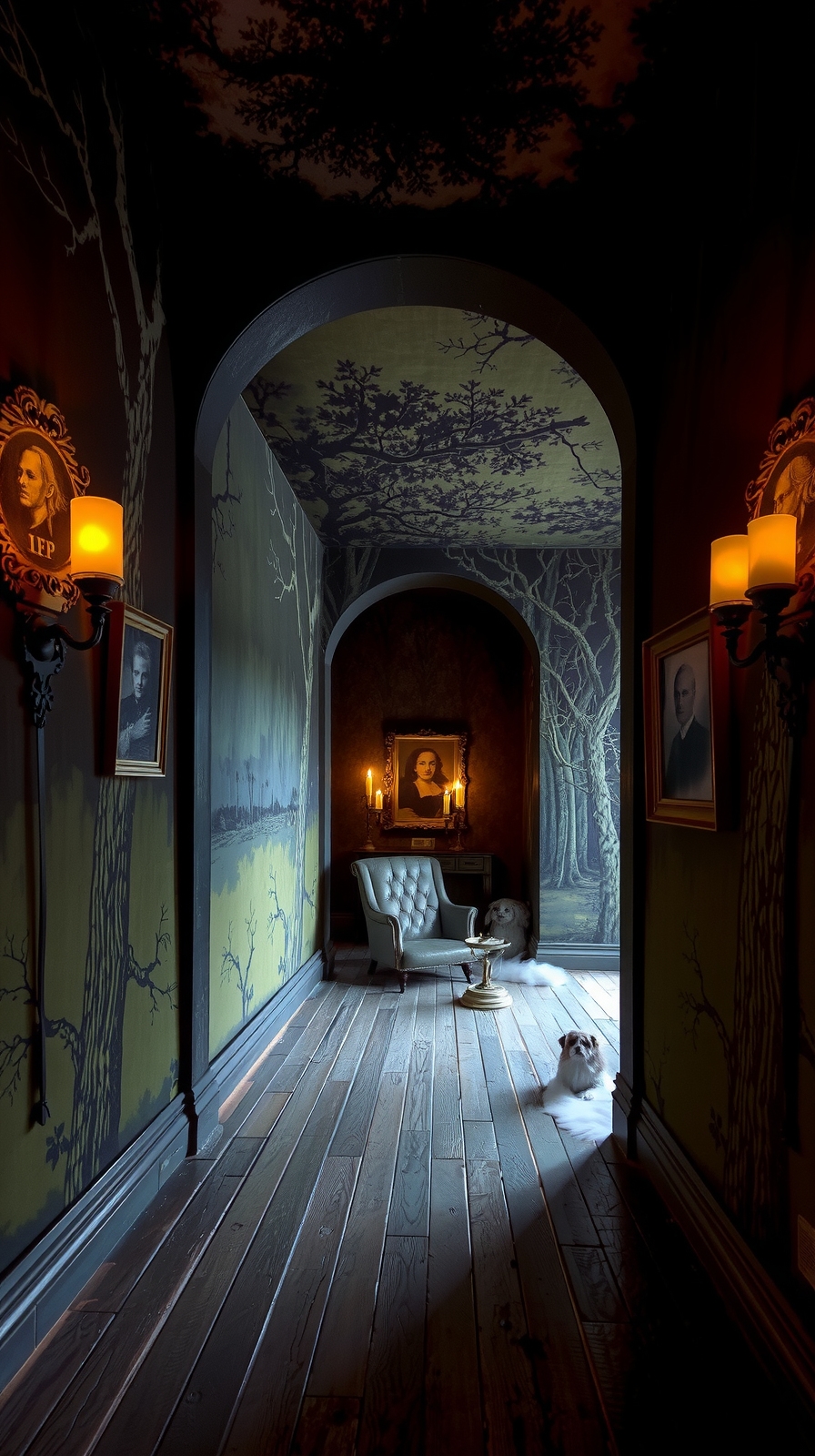
Polyester tapestries featuring skulls, ravens, witches, and occult symbols give you instant atmosphere without permanent wall modifications. The key is hanging them above standard eye level to create focal points that pull attention upward and make your space feel more expansive.
Layering multiple smaller tapestries builds visual density and creates forest-like depth better than one large piece ever could. Hemmed edges mean these pieces won’t fray even after multiple seasons of use.
Motion-Activated Supernatural Glows

Movement-triggered effects catch people when they’re mentally relaxed, which makes the startle response much stronger. Infrared sensors pick up motion from five to fifteen feet away, giving you flexibility in placement and trigger timing.
Choose ghostly white or toxic green LEDs for classic supernatural coloring, and adjust sensor sensitivity so you’re not getting false triggers from air movement. Battery-powered units free you from outlet placement constraints and let you hide effects in unexpected locations.
Fuzzy Cat Forest Gatekeeper Figurines
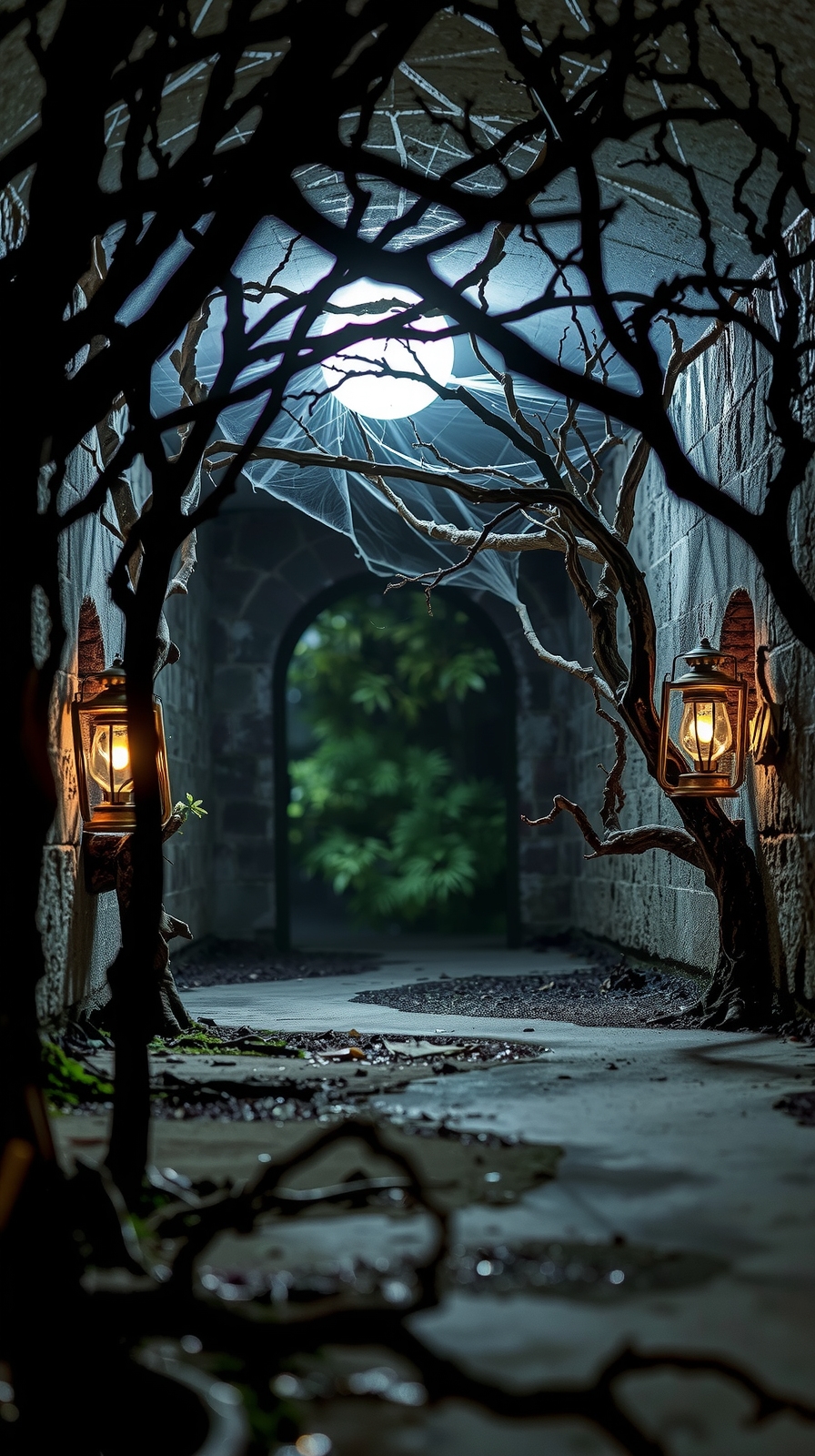
Cats in folklore guard thresholds between worlds, which makes them perfect for doorway and archway placement. These plush figurines with oversized mystical features tap into that mythology while maintaining enough whimsy to keep things from getting too intense for younger visitors.
Surround them with artificial foliage to suggest they’re emerging from undergrowth, and add small uplights or sound effects triggered by proximity. The combination of cute and eerie creates cognitive dissonance that people find memorable.
Backlit Color Gel Dramatic Effects
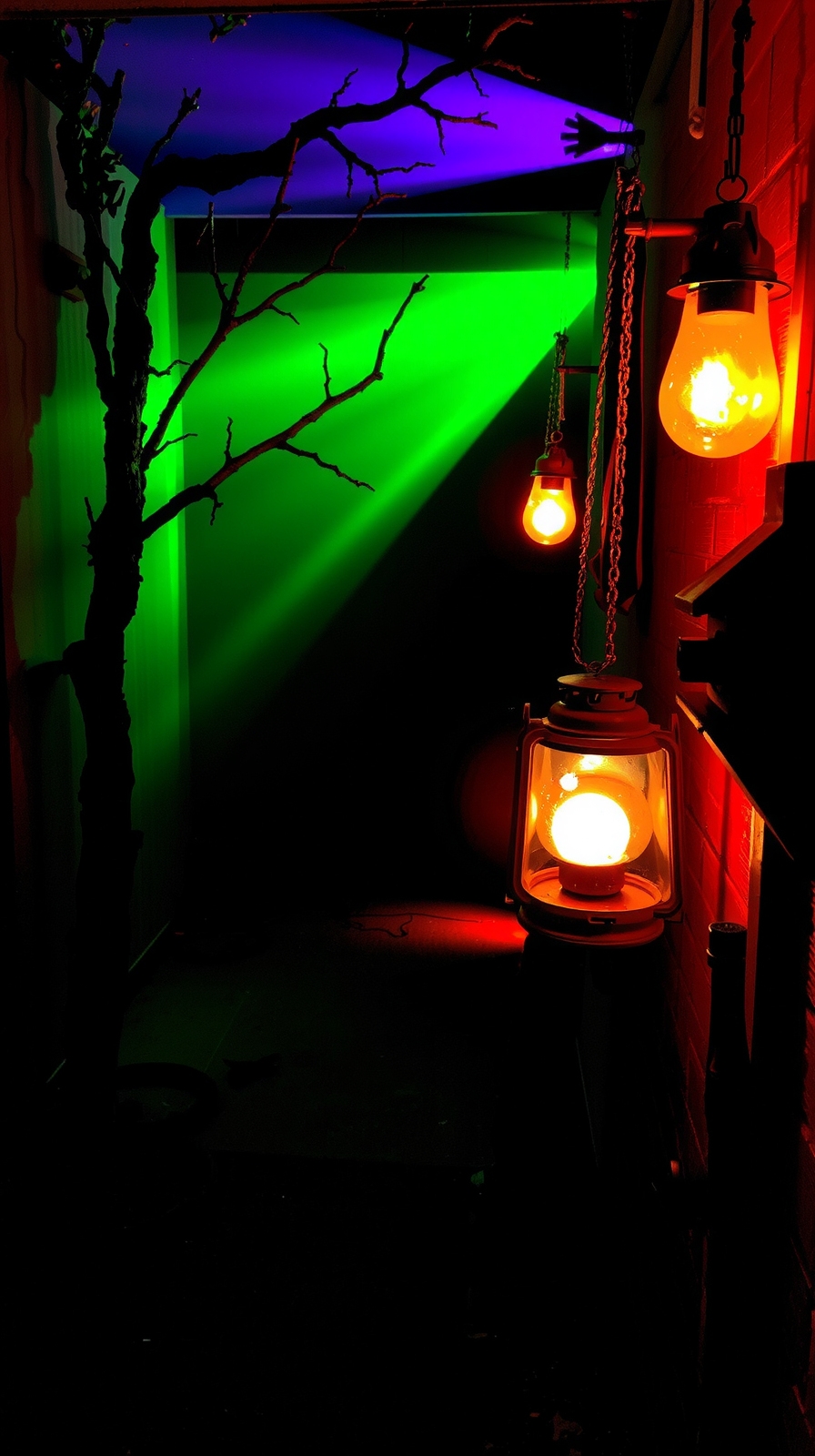
Color gels over backlighting give you professional theatrical effects without professional costs. Deep blue behind translucent panels creates convincing moonlight that reads as cold and otherworldly.
Red gels establish danger zones and warm areas that feel aggressive rather than welcoming. Layering multiple colors builds atmospheric complexity, though you’ll need to increase your light intensity to compensate for the output reduction darker gels create.
Cobweb and Decay Texture Accents
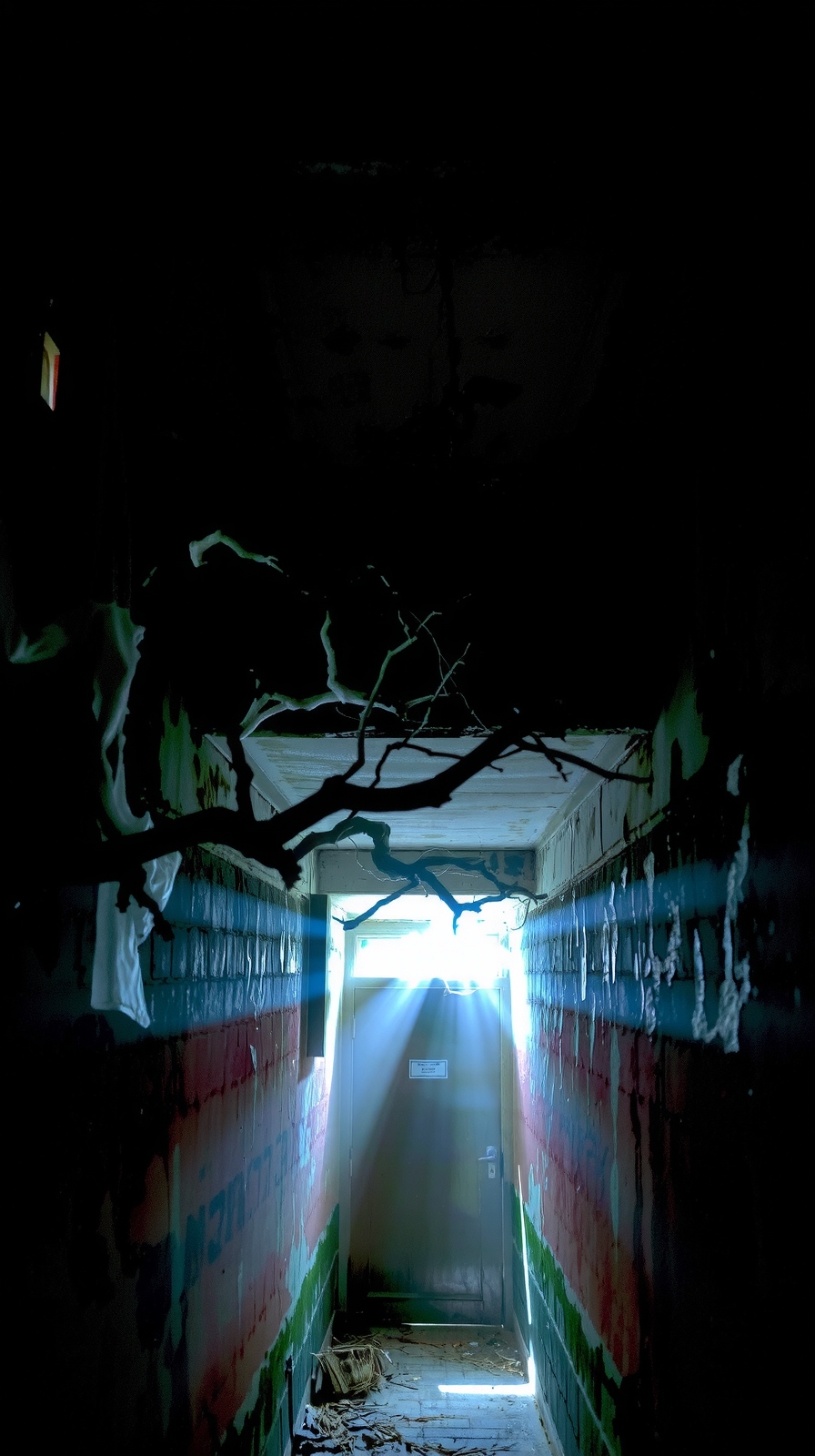
Stretching fake spider webs until they’re thin and translucent makes them read as aged and authentic rather than obviously fake. Corners, light fixtures, and anywhere two surfaces meet are natural accumulation points where real webs would form.
Layer stretchy synthetic webs over creepy cloth for dimensional variety, and add subtle dirt effects using diluted black paint or cocoa powder. Off-white tones look more natural than stark white because real decay isn’t pristine.
Horror Film Character Murals
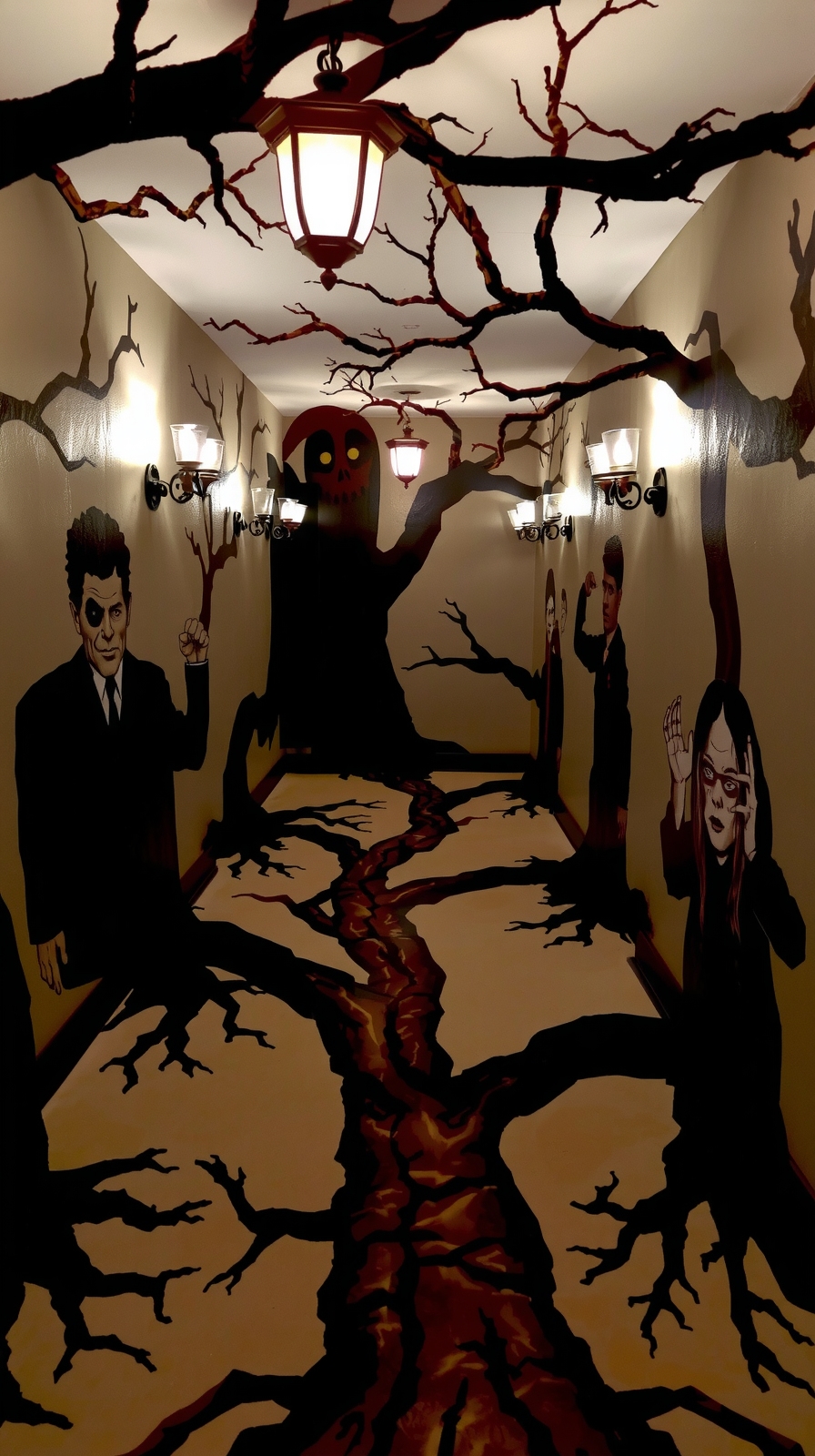
Pennywise, Michael Myers, Freddy Krueger, and Jason Voorhees carry instant recognition that lets you shortcut the atmosphere-building process. Large-scale murals featuring these characters create focal points that anchor your entire design.
Apply high-contrast imagery that mimics the dramatic lighting from their respective films, and add distressed effects around the edges to suggest these images have been there for years. The cultural familiarity visitors have with these characters means you’re borrowing established dread rather than building it from scratch.
Soft Spotlighting for Key Figures
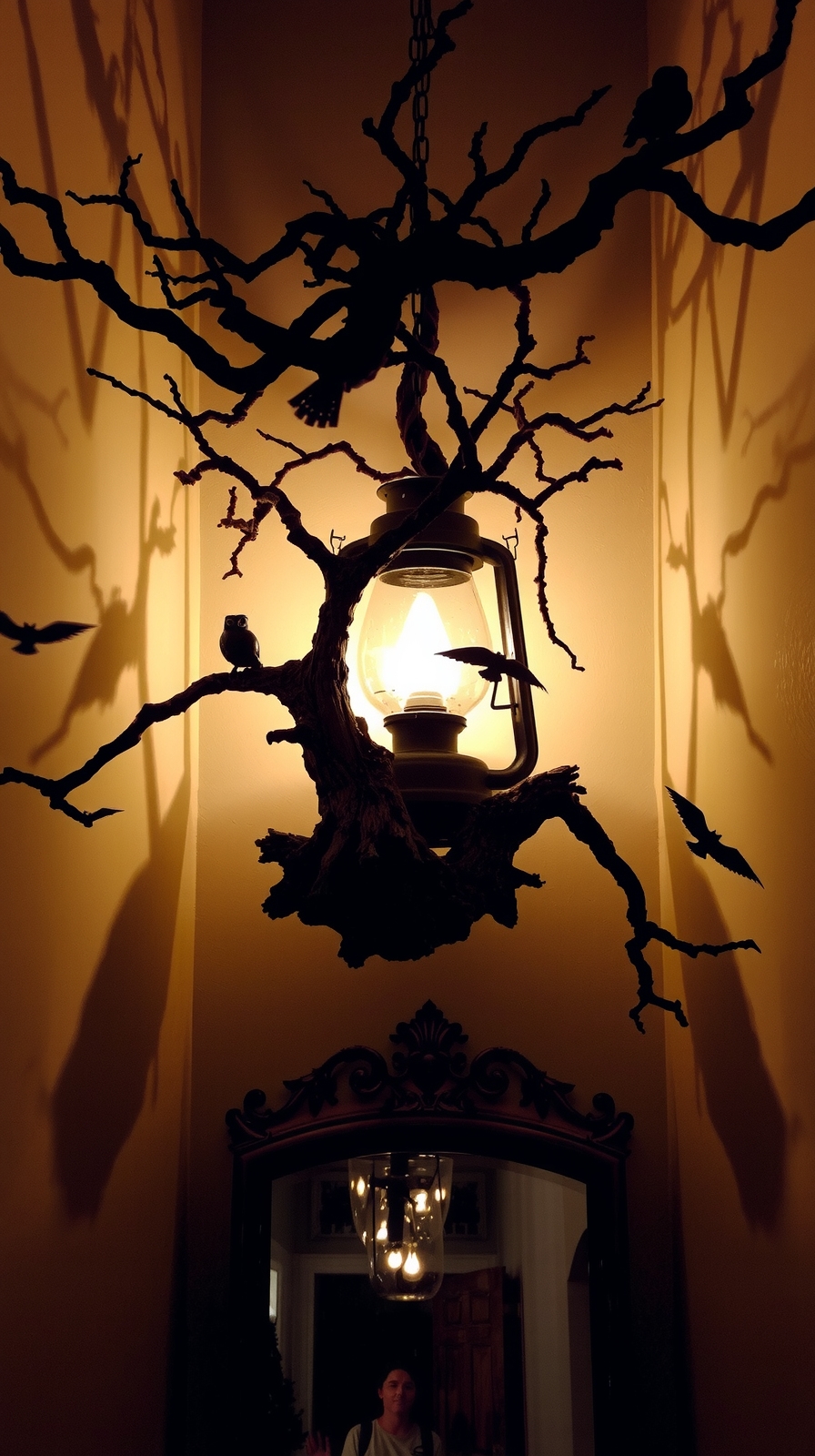
Directional LEDs with diffusers eliminate the harsh shadows that make props look cheap while creating haunting focal points throughout your corridor. Cool colors like green and purple mixed with warm white build layered lighting that has depth and dimension.
Low-angle positioning enhances textures and creates elongated shadows that make normal-sized props feel larger and more imposing. The interplay between lit and unlit areas guides visitor attention and creates visual rhythm.
Folklore Creature Decal Applications
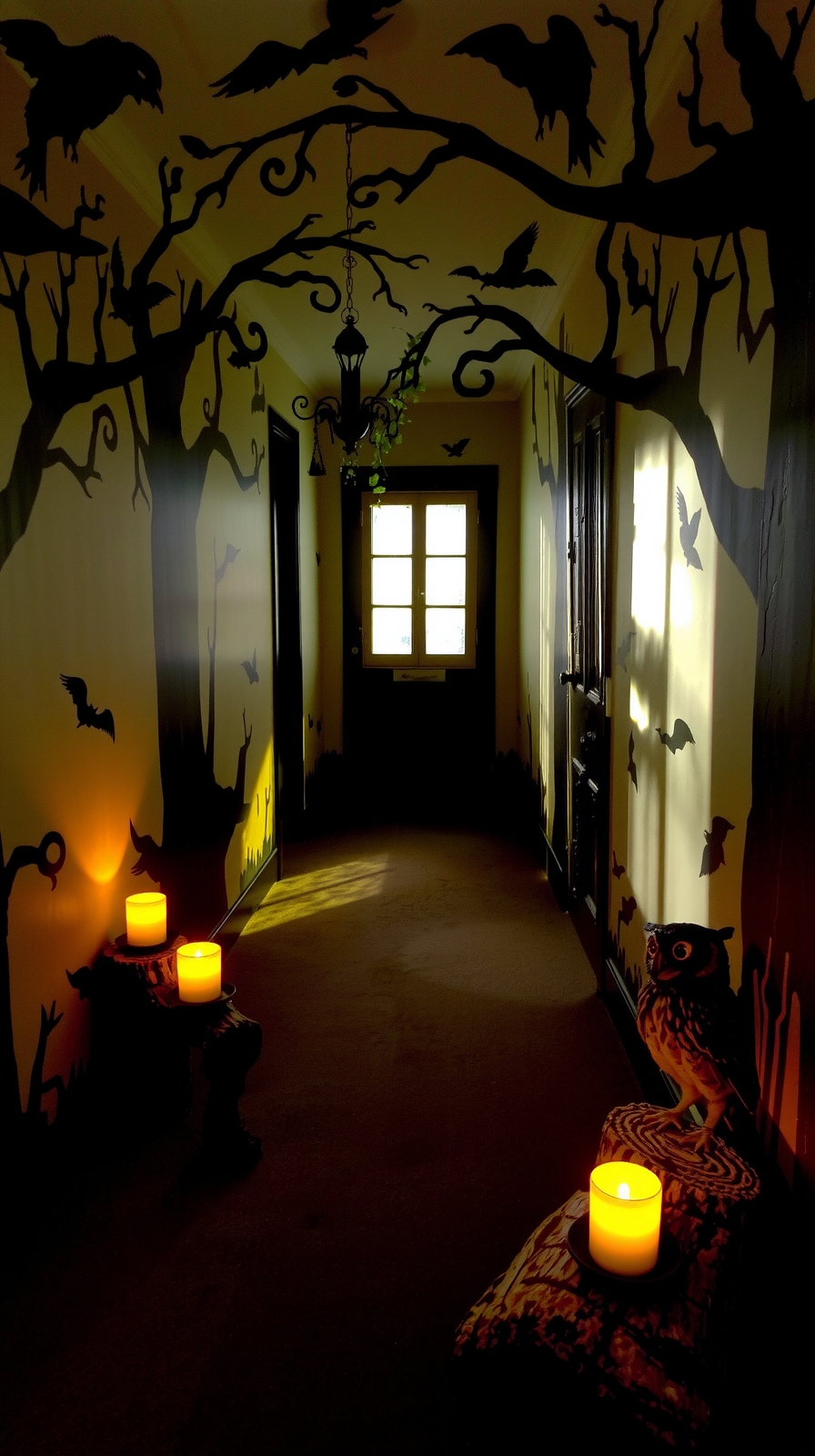
Wendigo silhouettes near doorways suggest something large and dangerous has recently passed through. Smaller dryads and elves in corner spaces populate your forest with varied inhabitants beyond the obvious scares.
Semi-transparent materials for Night Hags create ghostly layers that show wall texture through them. Scale your creatures variably because uniform sizing flattens visual interest, while mixed scales create depth and suggest a complex ecosystem.
Faux Leaf Floor Covering Arrangements
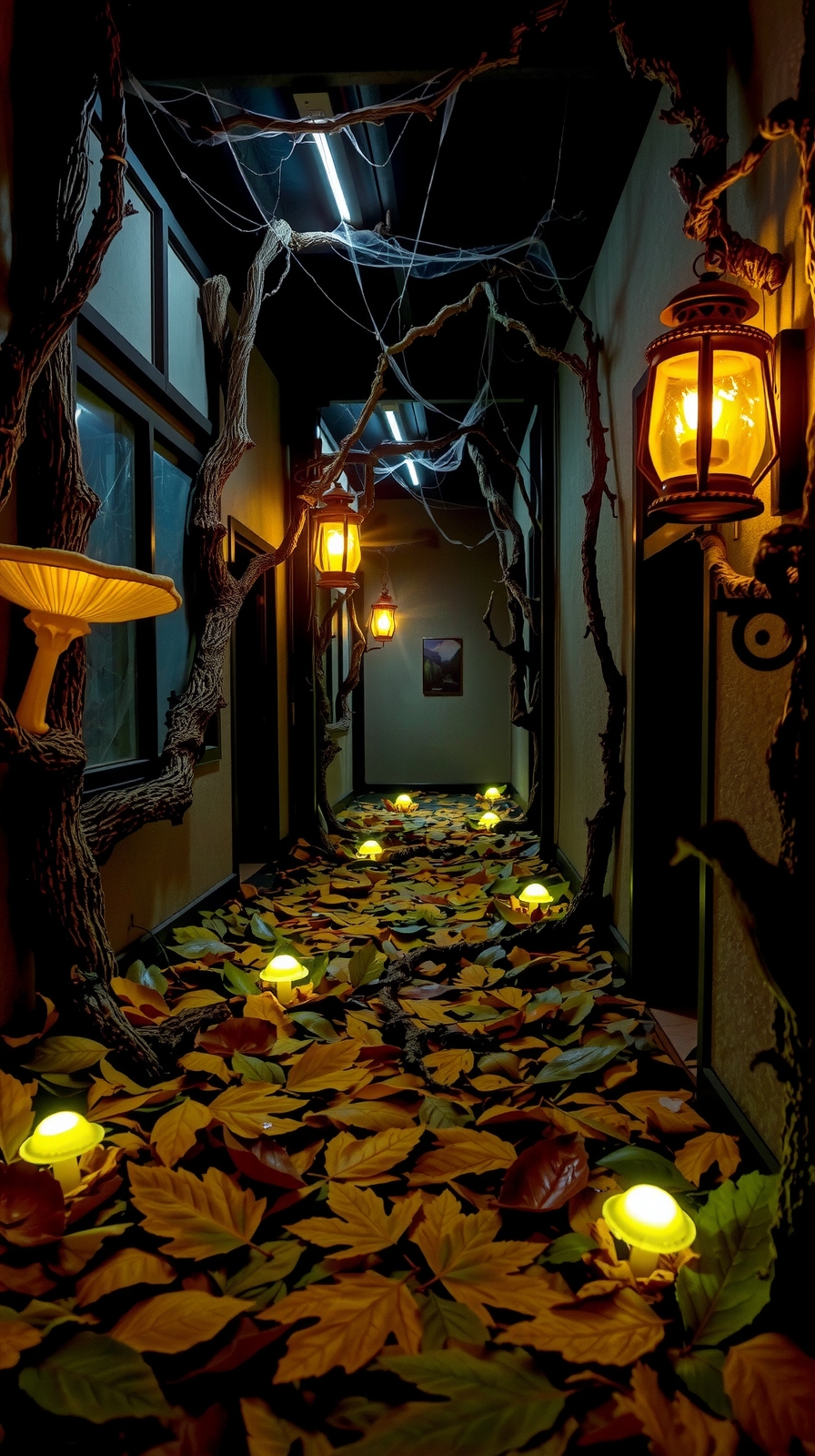
Your floor treatment either grounds the illusion or breaks it, so layer different leaf shapes and colors to replicate natural forest floor variation. Adhesive-backed options eliminate shifting and bunching that happens with loose scatter.
Anti-slip varieties keep things safe for visitors moving through dimly lit spaces. Leave intentional gaps that reveal dark underlayers beneath, creating the impression of shadowed soil and adding another layer of depth.
Textured Bark and Moss Wallpapers
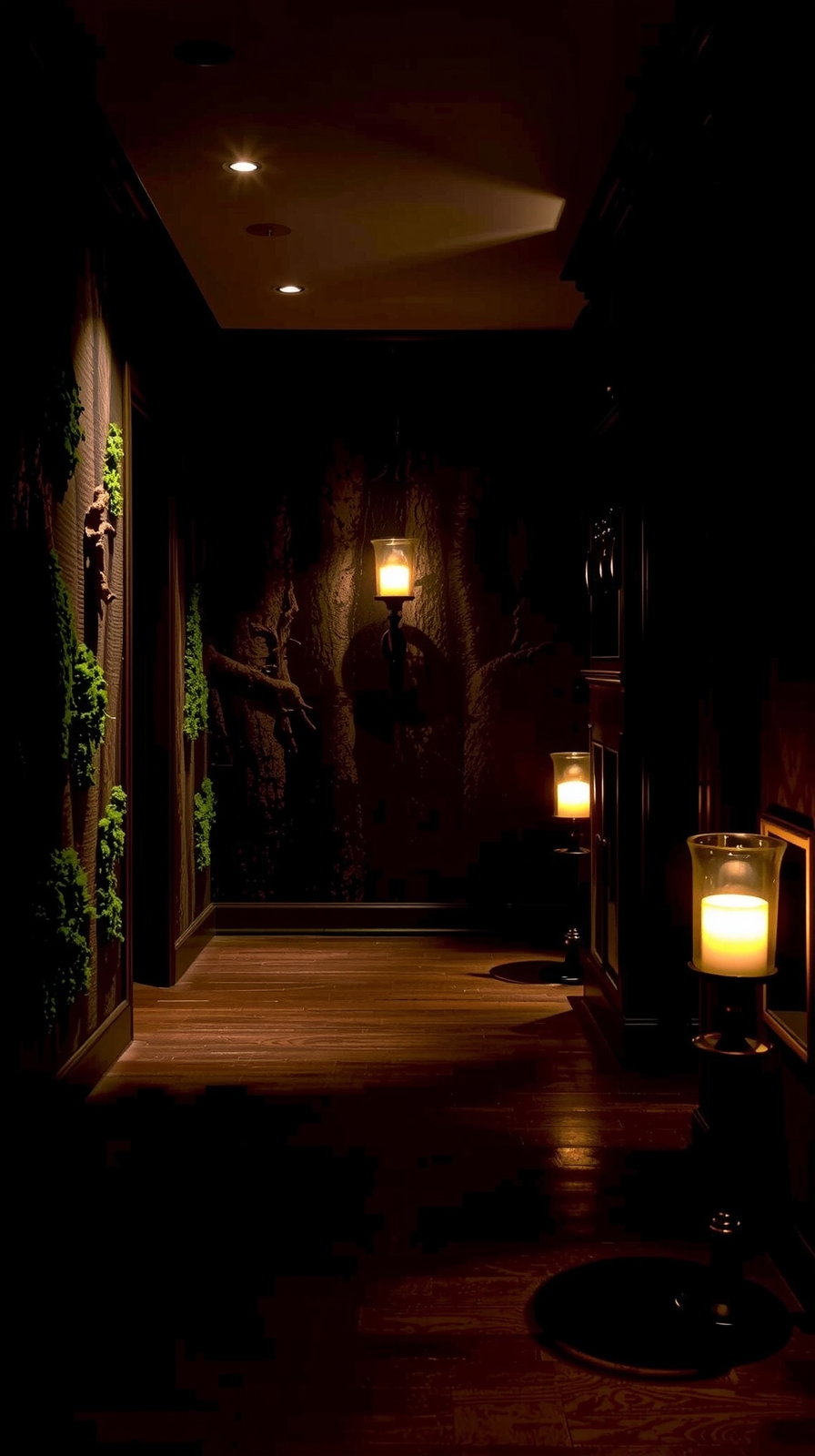
Peel-and-stick wallpapers featuring realistic bark texture and moss accents transform vertical surfaces into forest surroundings that envelope your corridor. The 3D texturing creates actual depth rather than just printed simulation, which holds up under varied lighting conditions.
Dark browns combined with green moss accents trigger psychological associations with deep woods and enclosed spaces. Natural groove patterns and organic irregularities prevent the mechanical repetition that reveals printed materials as fake.
Moonlight Shadow Play Techniques
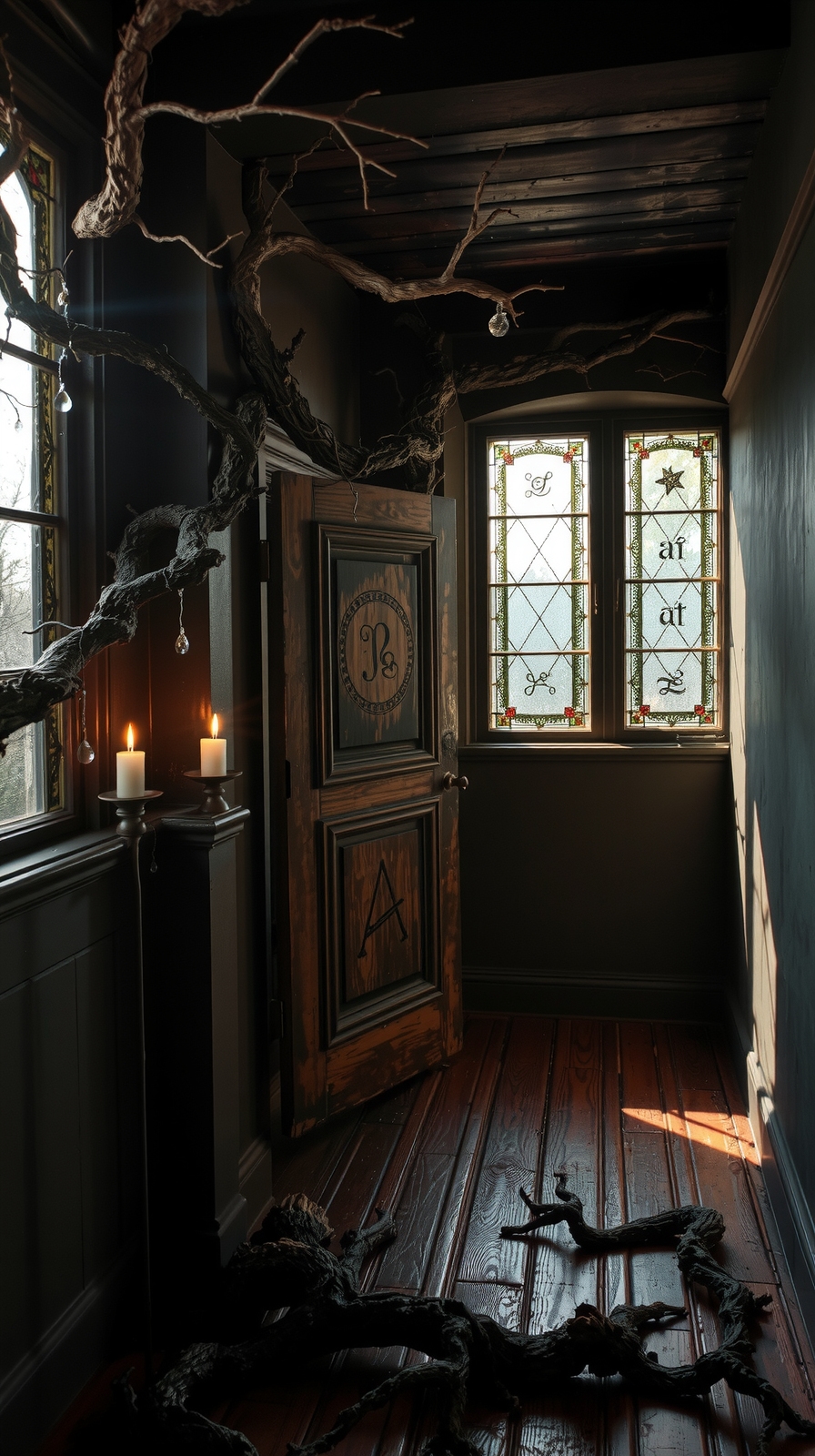
Strong light sources positioned behind tree-shaped cutouts cast dramatic shadows that multiply your decorating impact without adding physical props. The shadows become your decoration, shifting and changing as people move through the space.
Colored gels in orange or purple over your lights evoke supernatural moonlight that feels alien rather than natural. This technique transforms empty wall space into dynamic scenery that costs almost nothing but delivers professional results.
Warm Orange Nostalgic Path Lighting
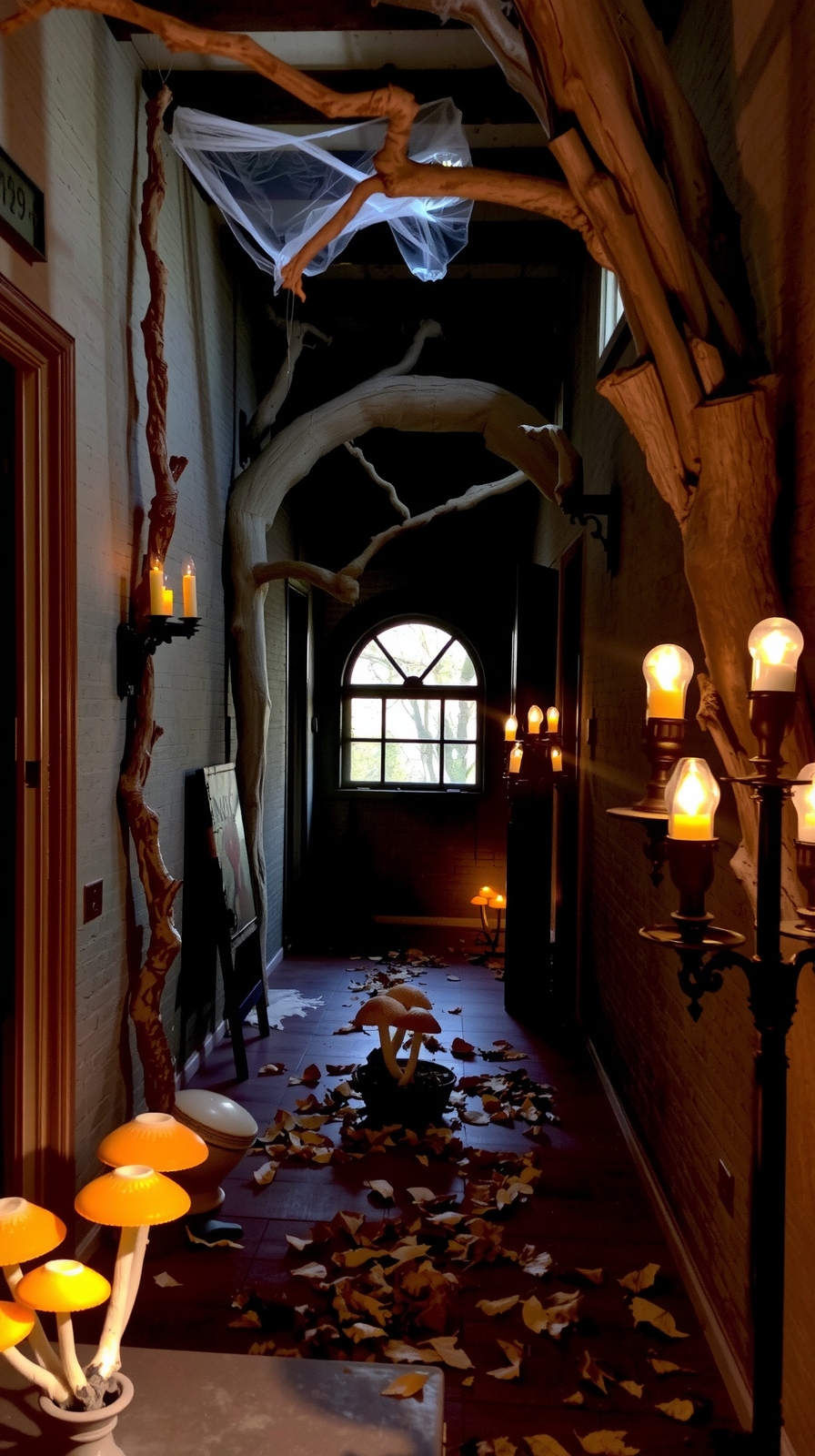
Orange hits the sweet spot between Halloween atmosphere and accessibility for younger trick-or-treaters who might find harsh red overwhelming. Solar-powered stake lights with flickering LED elements simulate candlelight without fire risks or battery replacements.
The warm glow creates nostalgic autumn associations while maintaining enough eeriness to feel intentionally spooky. Weather-resistant construction means consistent performance through October’s unpredictable conditions.
Trick-or-Treat Trail Marker Signage
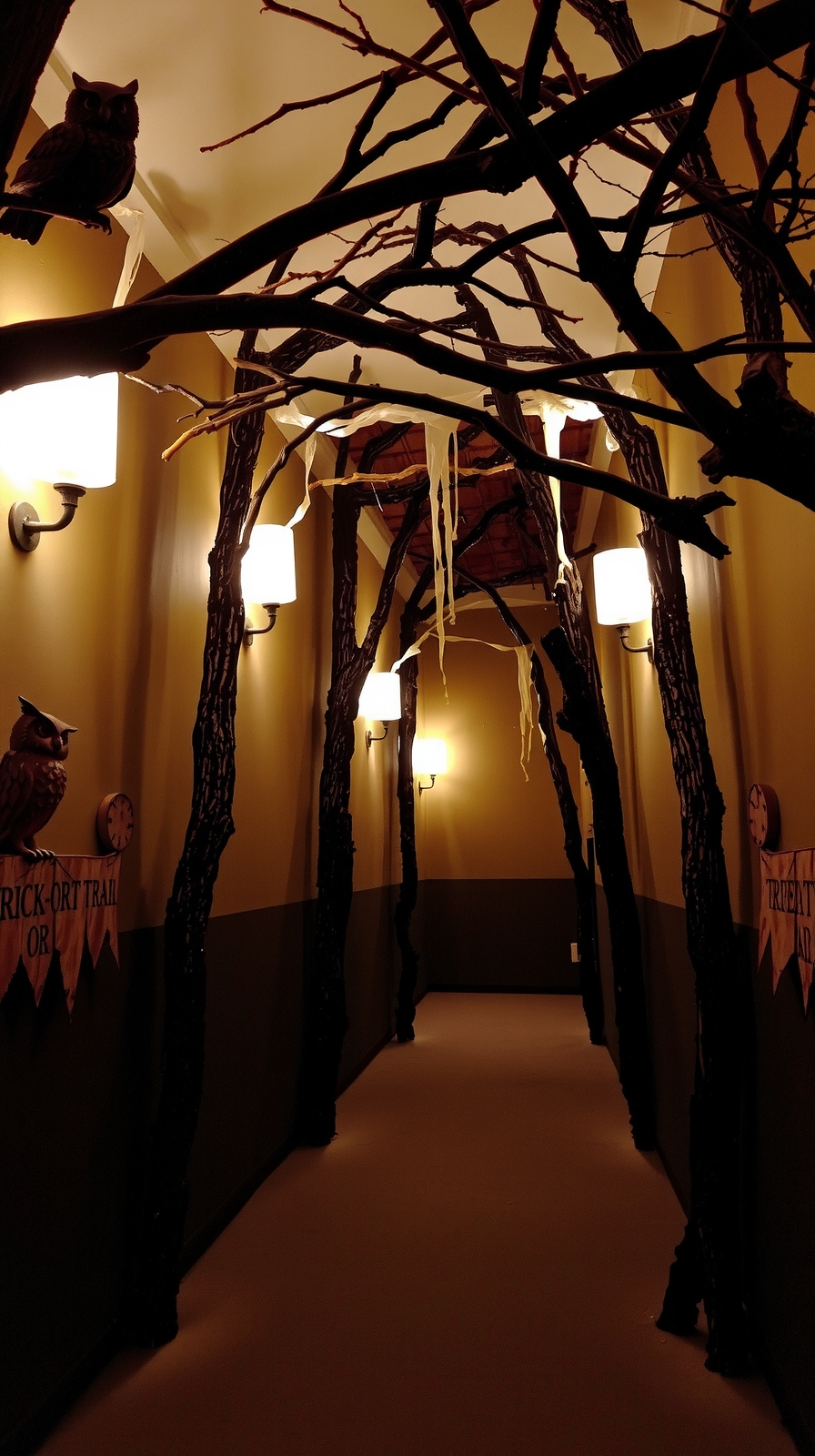
Reclaimed wood painted with directional signs and spooky phrases like “Zombie Trail” or “Witch’s Path” guides visitors while building narrative. Position these markers at corridor intersections to eliminate confusion about where people should go next.
Distressed fonts and weathered paint effects suggest these signs have been here far longer than one Halloween season. The signage maintains atmospheric continuity by reinforcing your theme at decision points where immersion typically breaks down.