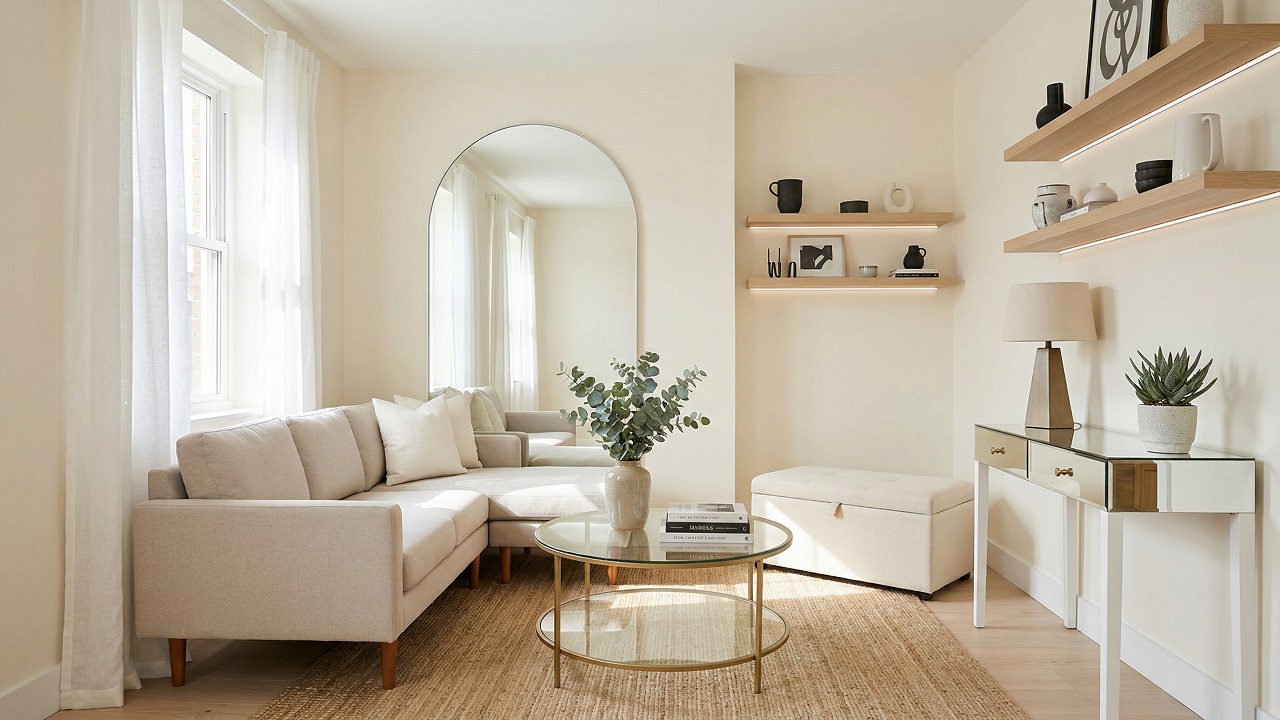
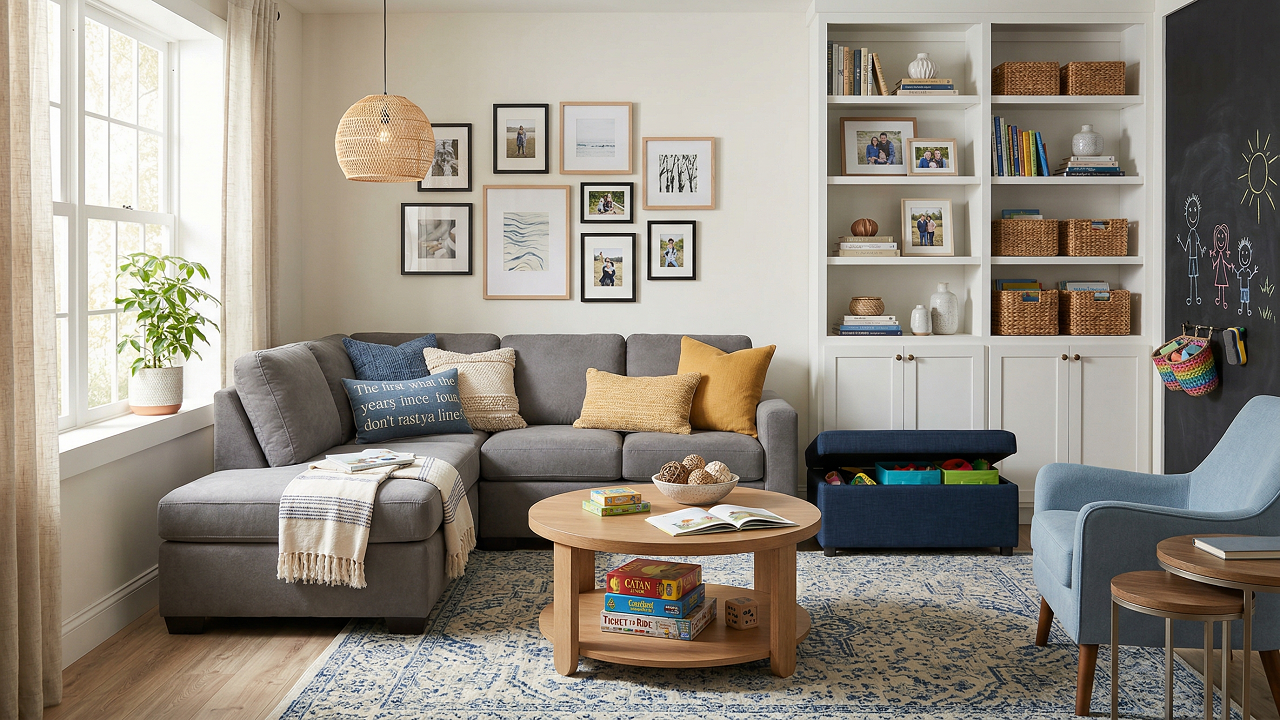
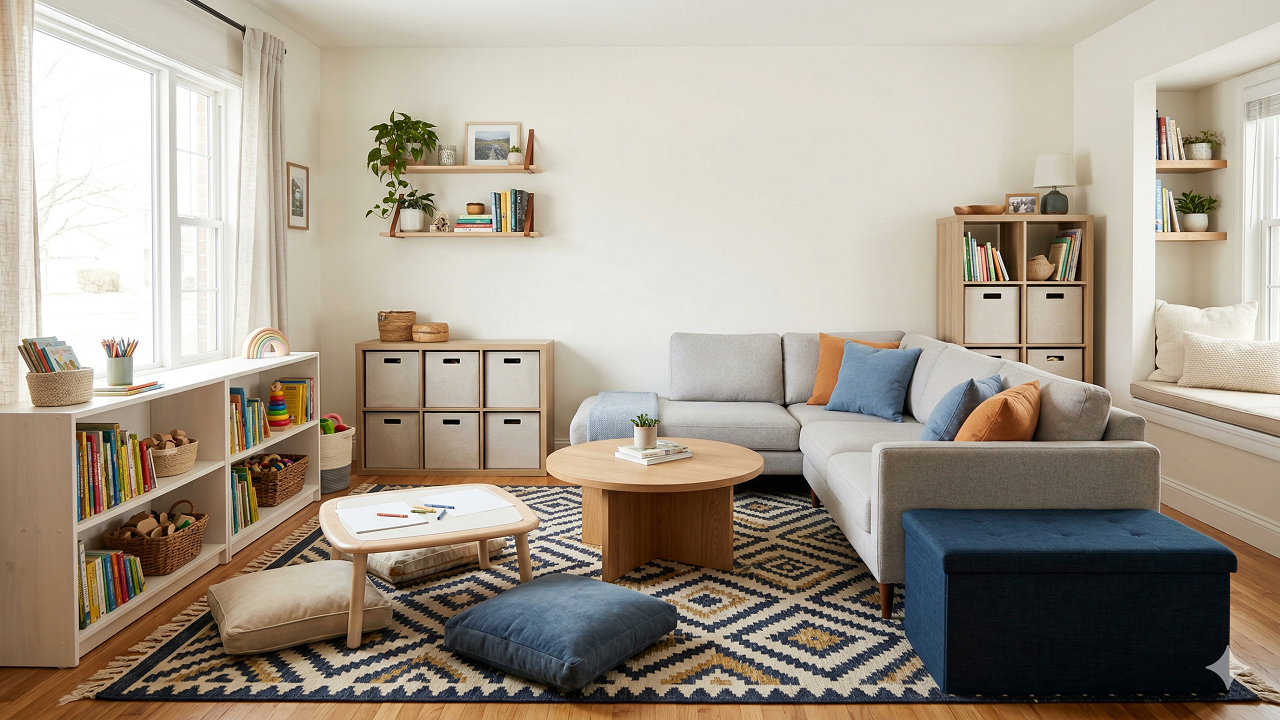
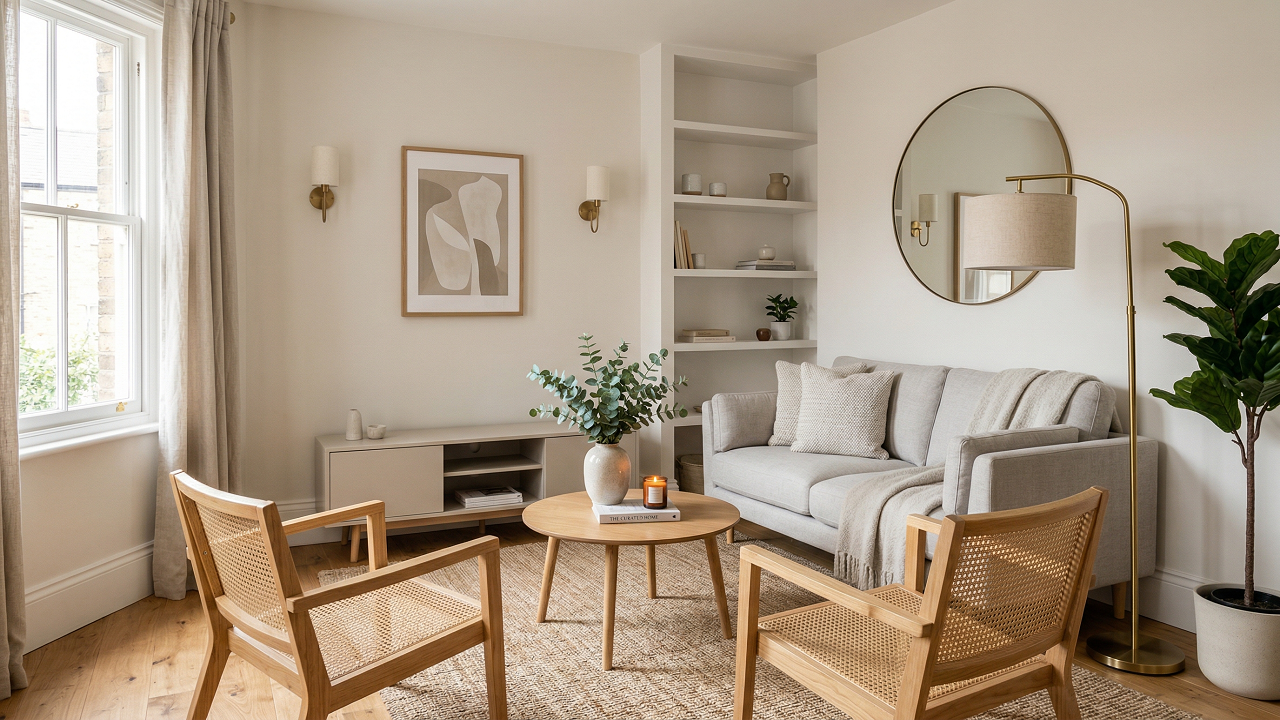
The backyard guest house trend has exploded over the past five years, and honestly, it makes complete sense. Your in-laws need a place to stay for extended visits, your adult kids are boomeranging back home, or maybe you’re just tired of paying for hotels when friends come to town.
The rental income potential is real, too, with some homeowners pulling in enough to cover their mortgage payment. I’m going to walk you through 16 approaches I’ve seen work in real-world situations, from budget-friendly conversions that cost less than a used car to luxury setups that rival boutique hotels.
Contents
- 1 The Classic Studio Cottage: 400-600 Square Feet of Cozy Comfort
- 2 Convert Your Garage Into a Stylish Guest Suite
- 3 Prefab Paradise: Quick-Install Guest House Kits
- 4 The One-Bedroom Retreat: Perfect for Extended Family Stays
- 5 Loft-Style Living: Maximize Vertical Space in Compact Designs
- 6 Pole Building Guest Houses: Budget-Friendly and Customizable
- 7 Transform Your Shed Into a Charming Guest Quarters
- 8 The Two-Bedroom ADU: Maximum Rental Income Potential
- 9 Tiny Home Guest Houses: Big Style in Small Spaces
- 10 Modern Minimalist Cabins for Contemporary Backyards
- 11 The Murphy Bed Studio: Space-Saving Solutions for Small Lots
- 12 Rustic Retreats: Bring Cabin Vibes to Your Backyard
- 13 Year-Round Comfort: Fully Insulated and Climate-Controlled Guest Houses
- 14 The Artist Studio Guest House: Creative Space Meets Accommodation
- 15 Budget Conversions: Upgrading Existing Structures Under $30,000
- 16 Luxury Backyard Villas: High-End Amenities and Finishes
The Classic Studio Cottage: 400-600 Square Feet of Cozy Comfort
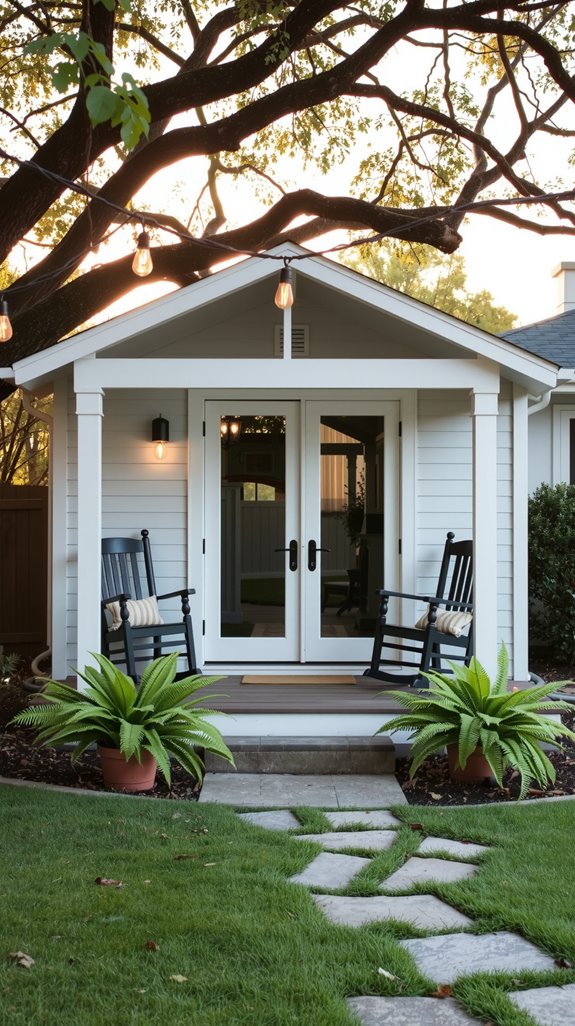
Studio cottages in this size range hit a sweet spot that most builders agree on. You’re looking at $60,000 to $120,000 for construction, which sounds steep until you compare it to buying a second property or paying for long-term hotel stays.
The open floor plan isn’t just a design trend; it actually makes a small space feel livable instead of cramped. Large windows do the heavy lifting here, bringing in enough natural light that your guests won’t feel like they’re sleeping in a closet.
Convert Your Garage Into a Stylish Guest Suite
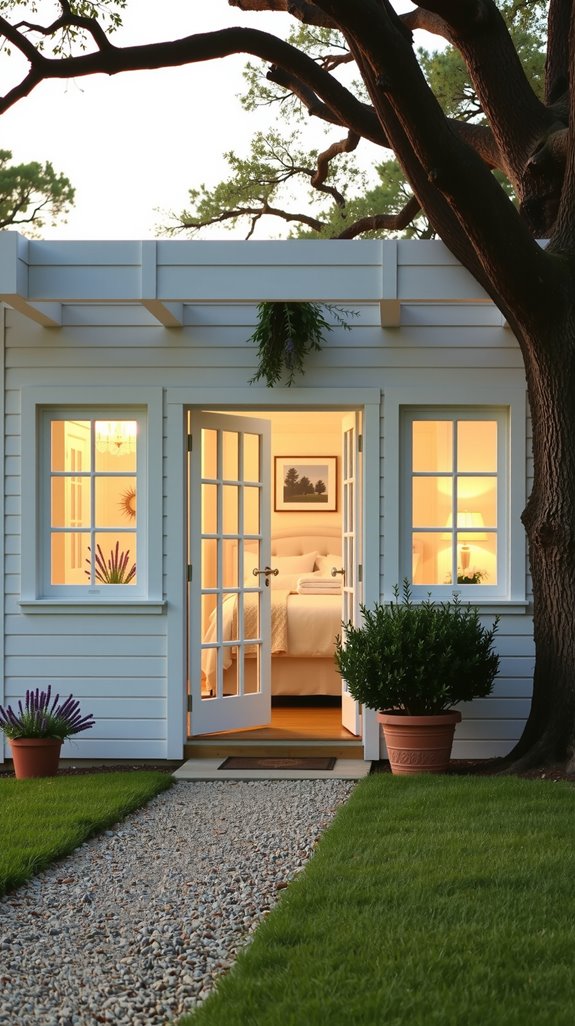
Here’s where things get interesting if you’ve already got a detached garage sitting there. Basic conversions run $15,000 to $25,000, while going all out with a full bathroom and kitchen pushes you into the $20,000 to $100,000 range.
The permitting process varies wildly depending on where you live, but budget around $1,000 to $2,000 for attached garages and potentially more for detached structures. Insulation and HVAC are non-negotiable unless you want your guests texting you complaints about being too hot or too cold.
Prefab Paradise: Quick-Install Guest House Kits
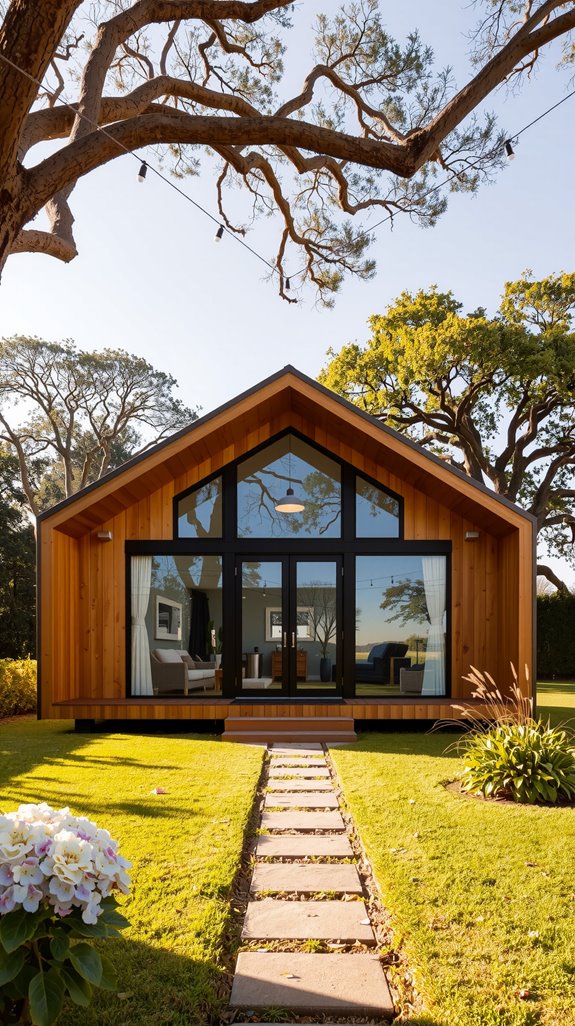
Prefab kits have come a long way from those sketchy shed conversions you see on Pinterest. These systems show up as flat packed panels with everything pre-cut and ready to assemble, cutting your construction timeline from months down to days.
Western Red Cedar options give you natural weather resistance without the constant maintenance headaches of painted wood. You can customize windows, porches, and climate control to match what you actually need instead of settling for a cookie-cutter design.
The One-Bedroom Retreat: Perfect for Extended Family Stays
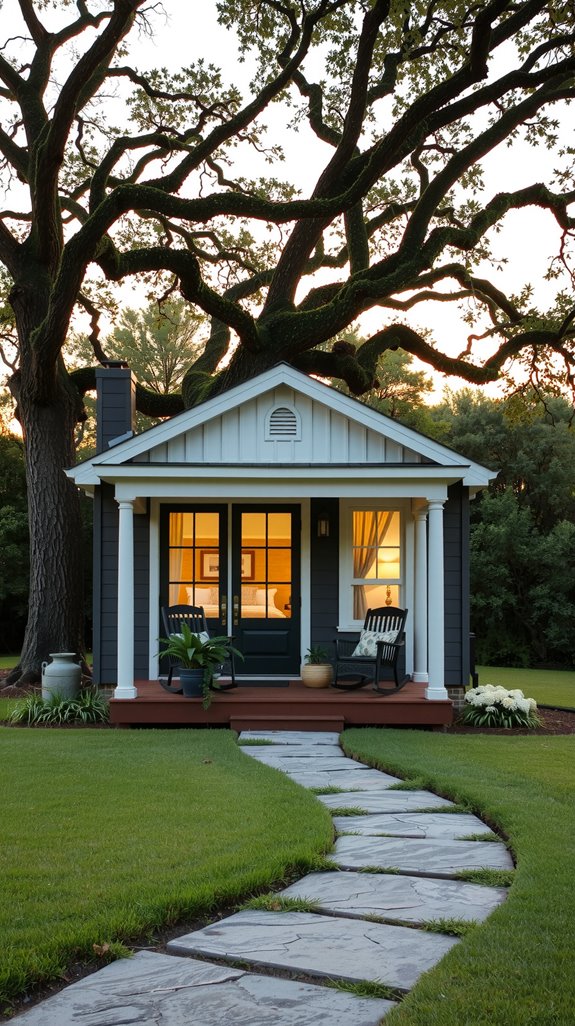
One-bedroom guest houses give your visitors actual independence instead of that awkward “living in someone else’s house” feeling. We’re talking 300 to 750 square feet with a real kitchen, a bathroom that includes laundry hookups, and enough living space that people can spread out.
Vaulted ceilings are worth the extra construction cost because they make smaller footprints feel twice as spacious. Ductless HVAC systems mean you won’t be running ductwork all over the place, which saves money and hassle during installation.
Loft-Style Living: Maximize Vertical Space in Compact Designs
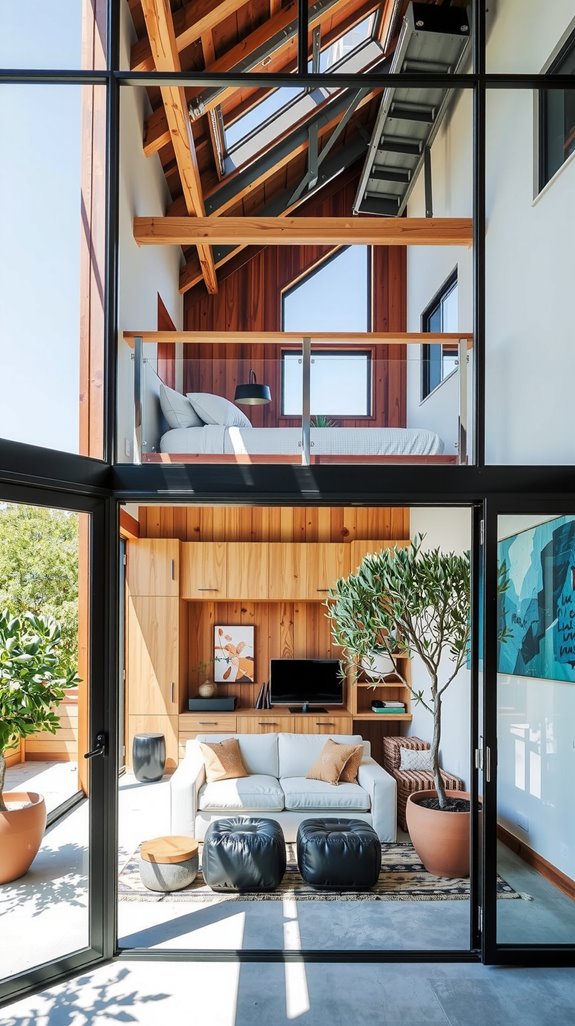
Vertical space is free real estate that most people completely ignore. Loft-style layouts put the sleeping area up top while keeping the ground floor open for living, working, or whatever your guests need.
Natural light flows better in these designs because you’re not chopping up the space with walls. Construction costs drop compared to adding more square footage, and you end up with built-in storage options under the stairs or in the loft area.
Pole Building Guest Houses: Budget-Friendly and Customizable
Pole buildings get dismissed as barn-style structures, but they’re actually one of the smartest budget plays out there. Complete homes run $50 to $150 per square foot, and shell-only versions start at just $10 to $30 per square foot if you’re willing to do interior work yourself.
The post-frame construction method is faster than traditional building and handles customization better than you’d expect. Engineered trusses and quality materials mean these aren’t the flimsy sheds your grandpa built; they’re legitimate structures that pass inspection.
Transform Your Shed Into a Charming Guest Quarters
That shed taking up space in your backyard might already be halfway to becoming guest quarters. Check your local zoning first because some municipalities get picky about converting storage structures into living spaces.
Insulation, electrical work, and plumbing permits will eat up a chunk of your budget, but you’re still ahead compared to building from scratch. Multifunctional furniture and good lighting turn what was essentially a box into a space where people actually want to spend time.
The Two-Bedroom ADU: Maximum Rental Income Potential
Two bedrooms change the entire financial picture if you’re thinking about rental income. Monthly rents hit $2,000 to $4,500 depending on your market, with Bay Area properties pulling $2,300 to $3,200 and Los Angeles pushing past $4,000.
Most owners break even within 4.5 to 6 years, which beats a lot of other real estate investments. Your property value jumps significantly too, giving you equity even if you never rent the place out.
Tiny Home Guest Houses: Big Style in Small Spaces
Tiny homes deliver privacy and function starting around $65,000, which undercuts two-bedroom construction by a significant margin. Lofted sleeping areas and multi-purpose zones squeeze surprising utility out of limited square footage.
Built-in storage eliminates the need for bulky furniture that would overwhelm a small space. These work particularly well if you’re targeting short-term vacation rentals instead of long-term tenants.
Modern Minimalist Cabins for Contemporary Backyards
Clean lines and natural materials define the modern minimalist approach. Timber construction paired with floor-to-ceiling windows brings the outdoors inside without actually being outside.
Open floor plans maximize natural light while built-in furniture keeps clutter from taking over. Decks extend your usable space and create that indoor-outdoor flow everyone talks about but few people actually achieve.
The Murphy Bed Studio: Space-Saving Solutions for Small Lots
Murphy beds aren’t just retro novelties; they genuinely double your functional space. The room transforms from bedroom to office or living area in under a minute, which matters when you’re working with tight lot dimensions.
Integrated desks and storage cabinets make the most of every inch without requiring expensive additions. These setups work especially well for city lots where adding square footage costs a fortune.
Rustic Retreats: Bring Cabin Vibes to Your Backyard
Reclaimed wood and natural stone create that cabin atmosphere without requiring an actual mountain location. Earth-toned textiles and vintage accents build character that new construction usually lacks.
Fire pits turn the space into a gathering spot instead of just a place to sleep. Mason jar lighting and stone pathways complete the look without breaking into designer price territory.
Year-Round Comfort: Fully Insulated and Climate-Controlled Guest Houses
Proper insulation isn’t optional if you want year-round use. Modern prefab options include R-15 walls and R-21 roofs that cut energy costs in half compared to basic construction.
Structural Insulated Panels and Insulated Concrete Forms cost more upfront but pay off through lower utility bills. Smart thermostats and double-pane windows maintain comfortable temperatures while keeping your energy bills reasonable.
The Artist Studio Guest House: Creative Space Meets Accommodation
Artists need workspace, storage, and occasionally a place for guests to crash. Large windows and skylights provide the natural light that makes or breaks a creative space.
Flexible floor plans let you zone off living areas from work areas without building permanent walls. Custom storage keeps art supplies organized, while compact kitchenettes and sliding doors to outdoor areas make the space livable for extended stays.
Budget Conversions: Upgrading Existing Structures Under $30,000
Existing structures offer the fastest path to usable guest space. Basic one-bedroom conversions typically run $10,000 to $15,000, putting them within reach for most homeowners.
Windows, flooring, and HVAC systems take priority over fancy finishes. Adding a bathroom pushes costs up by $3,000 to $5,000, but that investment makes the space genuinely functional instead of just technically habitable.
Luxury Backyard Villas: High-End Amenities and Finishes
High-end villas represent a different category entirely. Natural stone, teak decking, and infinity pools create resort-style experiences in your own backyard.
Folding glass doors eliminate the barrier between inside and outside, while built-in fire pits and outdoor kitchens with professional appliances justify the premium price tag. These projects make sense if you’re focused on property value and lifestyle over pure return on investment.
Conclusion
Your backyard has potential that’s probably sitting there unused right now. Budget conversions get you started for less than the cost of a new car, while luxury builds create spaces that rival high-end hotels.
The rental income from a two-bedroom ADU might cover your mortgage, or a tiny home could give aging parents independence while keeping them close. Pick the approach that matches your budget and needs, then actually move forward instead of just thinking about it for another year.