Camping doesn’t have to mean sleeping on scratchy nylon with nothing but a headlamp for ambiance. You can actually turn your tent into something that feels warm and personal without hauling half your living room into the backcountry.
The whole boho approach works because it’s built on layers, textures, and pieces that actually serve a purpose beyond looking pretty on Instagram. Whether you’re car camping for a weekend or setting up a semi-permanent basecamp, these ideas will help you create a space that feels like yours.
Contents
- 1 Creating a Layered Textile Paradise With Mixed Patterns
- 2 Designing Your Bohemian Reading Nook
- 3 Setting up a Meditation Corner With Natural Elements
- 4 Crafting the Perfect Boho Sleeping Haven
- 5 Incorporating Vintage Finds for Authentic Character
- 6 Arranging Multiple Light Sources for Ambient Glow
- 7 Establishing a Cozy Tea and Coffee Station
- 8 Maximizing Floor Seating With Style
- 9 Mixing Patterns and Textures in Your Tent Space
- 10 Adding Natural Elements With Potted Plants
- 11 Creating Flow With Strategic Furniture Placement
- 12 Building a Dreamy Canopy Over the Bed
- 13 Styling With Handmade Macramé Accents
- 14 Arranging an Intimate Dining Area
- 15 Incorporating Essential Storage Solutions
- 16 Designing With Moroccan-Inspired Elements
- 17 Setting Up a Relaxing Morning Yoga Space
- 18 Mixing Modern and Vintage Lighting Fixtures
- 19 Styling With Dried Flowers and Botanicals
- 20 Creating Zones With Rug Layering Techniques
- 21 Adding Warmth With Traditional Textiles
- 22 Designing an Entertainment Corner
- 23 Incorporating Rustic Wood Elements
- 24 Styling With Global-Inspired Accessories
- 25 Creating a Welcoming Entryway
- 26 Arranging Cozy Conversation Areas
- 27 Building a Peaceful Sleeping Sanctuary
Creating a Layered Textile Paradise With Mixed Patterns

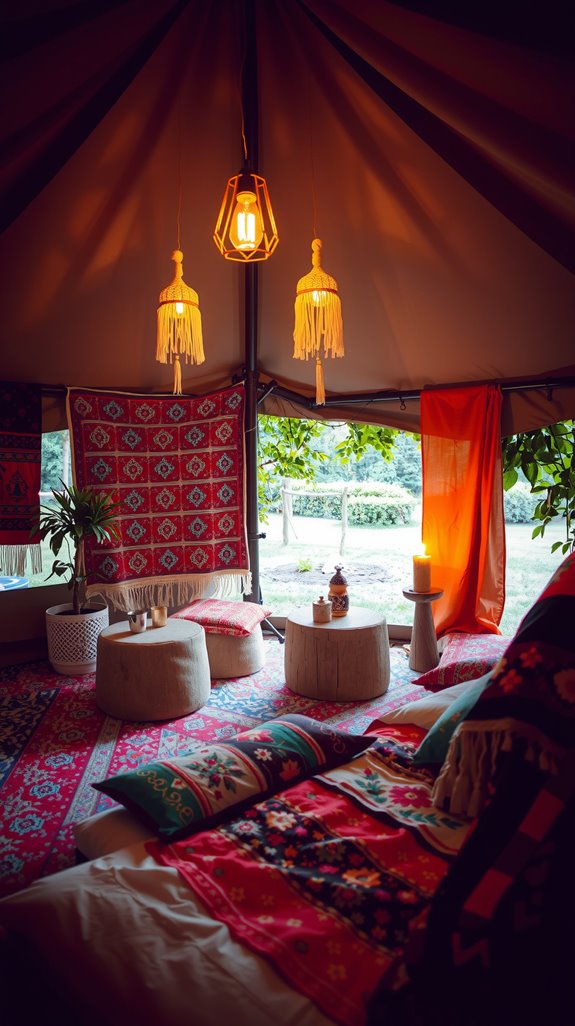
Start with what you’re putting on the ground because that’s where everything else builds from. A good Persian rug or kilim creates an actual floor in your tent, something that separates you from the cold earth and makes the whole space feel contained. Then you stack from there: cotton throws, wool blankets, maybe a sheepskin if you’re feeling fancy.
The patterns don’t need to match perfectly, and honestly, they shouldn’t. What matters is that you’re mixing weights and textures so the whole thing feels rich without looking like you ordered a boho starter pack off Amazon.
SEE THIS: 29 Luxury Tent Set Up Ideas Inside That Bring Glamping Indoors.
Designing Your Bohemian Reading Nook
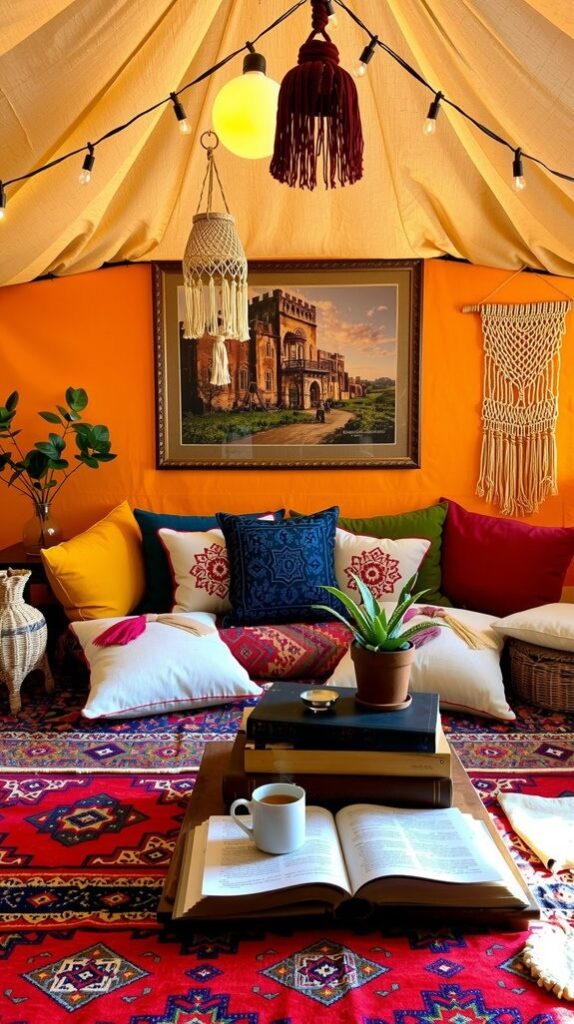
Every tent needs a spot where you can disappear with a book when the group gets too loud or the weather turns. I usually claim a back corner and anchor it with floor cushions that are thick enough to actually sit on for more than ten minutes.
A small wooden crate works as a side table for your mug, and if you can rig up a hanging chair from the tent frame, even better. The key is making sure you’ve got light that works: string lights give you ambiance, but you’ll want a small LED lantern or clip light for when you’re actually trying to read past sunset.
SEE THIS: The Ultimate Festival Camping Setup: Make Your Tent Glamping and Homely.
Setting up a Meditation Corner With Natural Elements

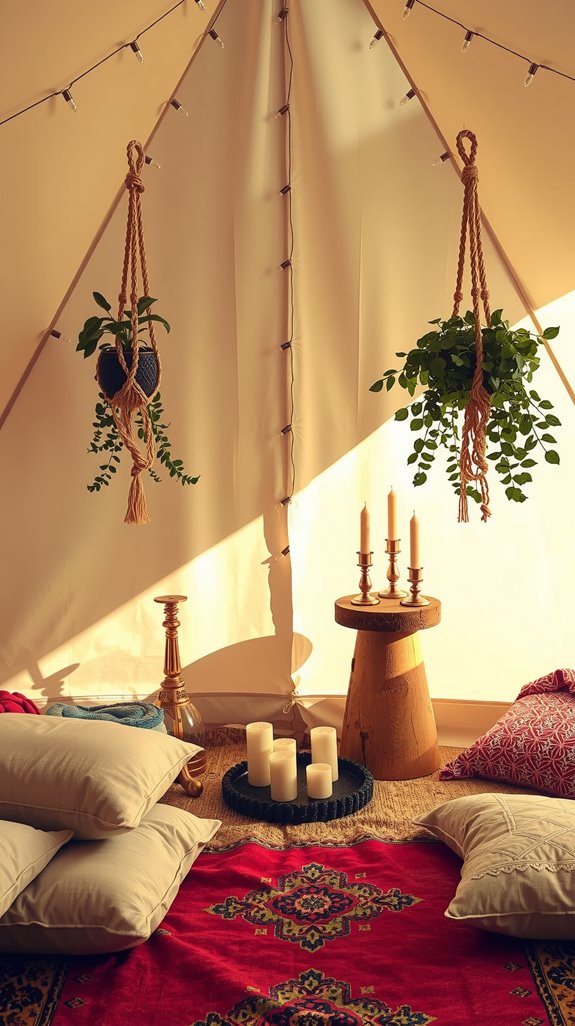
Meditation corner sounds precious, but what I really mean is a spot where you can sit with your coffee before everyone else wakes up and starts asking what’s for breakfast. Pick the area with the best natural light and keep it simple: a cotton cushion or yoga mat, maybe a small plant in a clay pot.
I like to keep a wooden box nearby with matches and a stick of incense for those mornings when the campfire smell from last night is still clinging to everything. The whole setup takes maybe two square feet, but it gives you somewhere to breathe before the day gets going.
Crafting the Perfect Boho Sleeping Haven

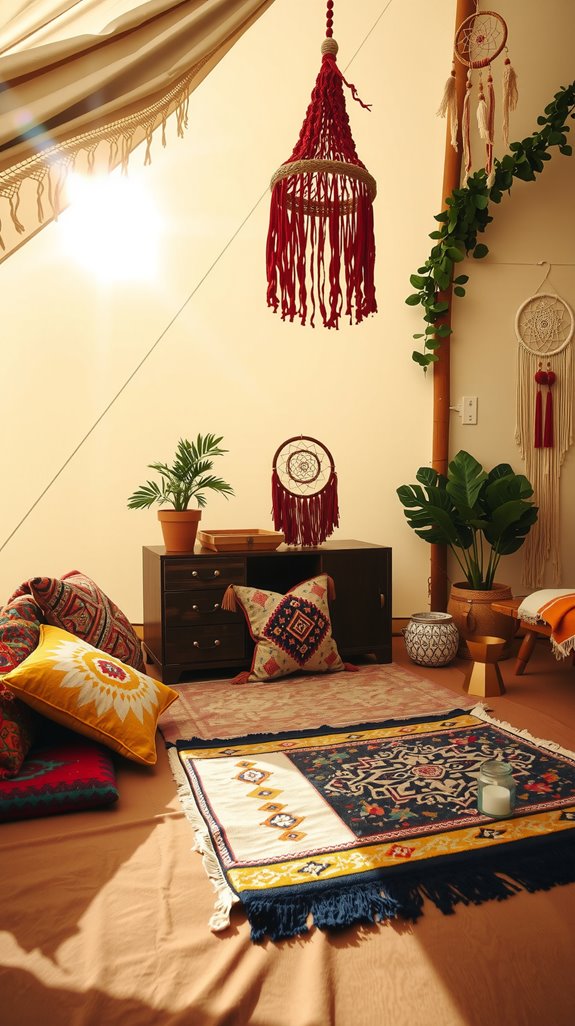
Sleeping on the ground is overrated, and anyone who tells you otherwise is lying or twenty-two years old. Get yourself a decent cot or raised platform, then cover it with a real mattress pad, not just a thin camping mat. Layer your bedding the same way you would at home: fitted sheet, flat sheet, a couple of blankets in different weights.
Hang a tapestry behind your bed to cut down on condensation against the tent wall, and yeah, throw some pillows around because why shouldn’t camping be comfortable? String lights above the bed give you enough glow to find your water bottle at 2 AM without blinding yourself.
Incorporating Vintage Finds for Authentic Character

The best boho tents I’ve seen aren’t decorated with new stuff made to look old. They’re filled with actual vintage finds that someone dragged to five different campsites because they couldn’t bear to leave them behind.
I’m talking about a thermos your dad used in the seventies, a wool blanket that’s been patched twice, maybe an old camping lantern that still works if you’re patient with it. These pieces add weight to your setup in a way that matters, and they usually function better than their modern equivalents anyway.
Arranging Multiple Light Sources for Ambient Glow

One overhead light makes your tent feel like a hospital room, so don’t do that. Instead, you want light coming from multiple places at different heights: strings wrapped around the tent poles, a lantern hanging from the center point, maybe some battery votives scattered on surfaces.
Warm bulbs only, because cool white LEDs will kill the whole vibe instantly. I usually run everything off a portable battery pack so I can dim things down as the night goes on without fumbling with individual switches.
Establishing a Cozy Tea and Coffee Station

Nothing fancy here, just a dedicated spot where all your coffee or tea gear lives so you’re not digging through bins at dawn. A small folding table works, or even a sturdy crate turned on its side. Keep your kettle, French press, mugs, and coffee in one place, ideally in containers that seal properly so you’re not attracting every ant in the campground.
I use bamboo shelving that folds flat for transport, and it holds everything I need without taking up half the tent. The ritual of making coffee in your own little setup beats stumbling to a campground bathroom any day.
Maximizing Floor Seating With Style
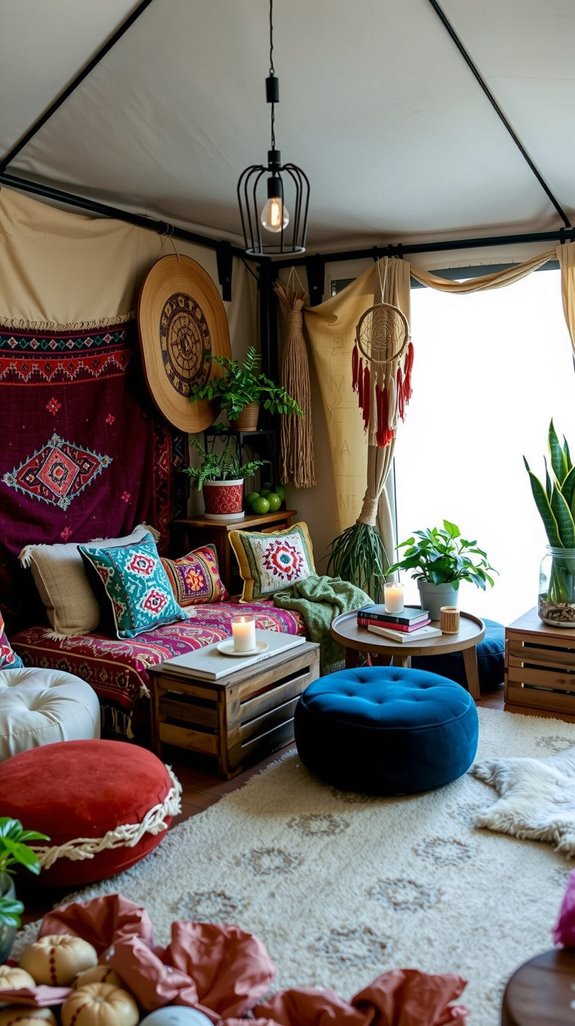
Chairs are fine, but floor seating creates a different energy in a tent. People sit closer, conversations last longer, and nobody’s fighting over the one good camping chair. I collect cushions and poufs throughout the year, mixing Turkish patterns with solid colors so nothing feels too matchy.
Arrange them in a loose circle around a low table or just around the edge of a rug, and suddenly you’ve got a gathering space that actually invites gathering. Just make sure your cushions have removable covers because camp dirt is real and you’ll want to wash them eventually.
Mixing Patterns and Textures in Your Tent Space
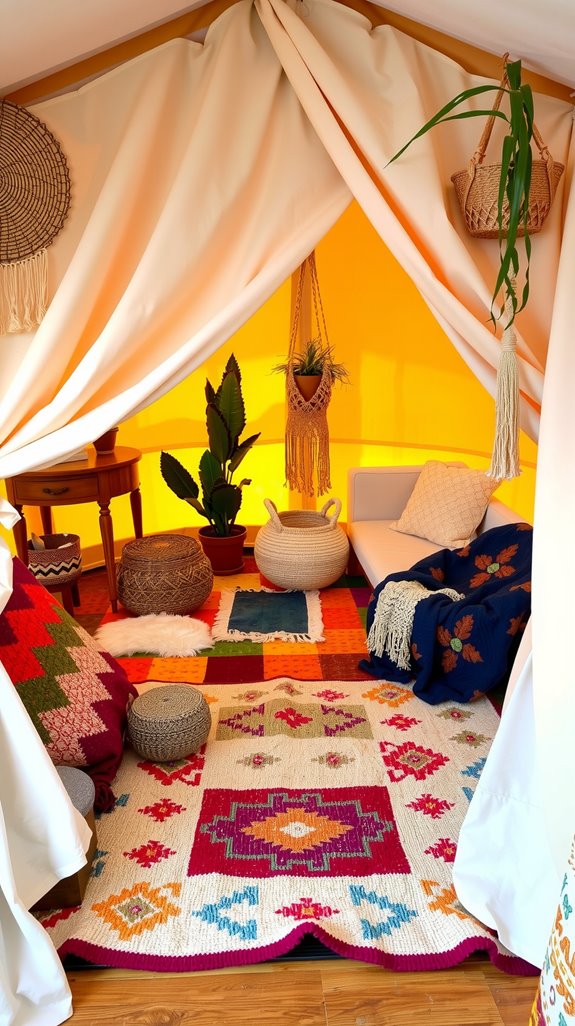
The whole boho thing falls apart if you get too precious about coordination. Start with a neutral base like a jute rug or plain canvas, then layer in patterns that share a color family but not necessarily a style. Geometric prints next to florals, tribal designs next to paisleys, it all works if your colors are talking to each other.
I tend to stick with terracotta, mustard, and cream as my anchors, then throw in whatever catches my eye. The texture matters as much as the pattern, so mix your chunky knits with smooth cottons and rough wovens.
Adding Natural Elements With Potted Plants

Live plants in a tent seem impractical until you try it, and then you realize they make the whole space feel alive in a way that fabric and wood can’t. I stick with hardy stuff like pothos or succulents that can handle some neglect and variable light.
Hang them in macramé holders near the door where they’ll get sun, or cluster a few pots in a corner on a wooden tray. Herbs work great too: a small pot of rosemary or thyme smells incredible and you can actually use them for cooking. Just water them like you would at home and they’ll be fine.
Creating Flow With Strategic Furniture Placement
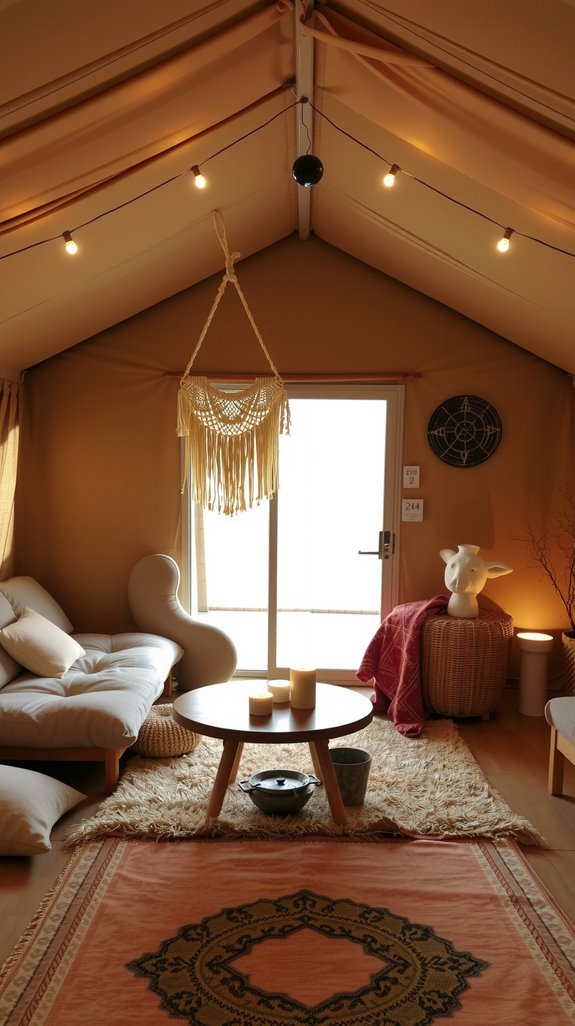
Your tent layout should make sense when you’re moving through it half-awake at dawn. I always put the bed against the back wall, then work forward with defined zones: sleeping area, sitting area, maybe a small work surface if I’m camping long-term.
Rugs mark the boundaries between spaces without blocking your path, and keeping low furniture like floor cushions and storage crates means you’re not constantly bumping into things. Walk through your layout a few times and adjust until it feels natural.
Building a Dreamy Canopy Over the Bed

A canopy over your sleeping area isn’t just decorative, it actually helps with temperature regulation and makes the space feel protected. I’ve used everything from bamboo poles to repurposed hula hoops as the frame, then draped muslin or light cotton over the top.
Add some string lights woven through the fabric and you’ve created a real refuge inside your tent. The whole thing packs down small and takes maybe ten minutes to set up, but it changes how your sleeping space feels completely.
Styling With Handmade Macramé Accents

Macramé gets a bad rap because people use too much of it, but a few well-placed pieces add texture that’s hard to get any other way. A wall hanging behind your sitting area creates a focal point, and plant hangers get your greenery off the floor where it’s easy to kick over.
I also use macramé pillow covers because they’re interesting to look at and surprisingly durable. Just keep it to three or four pieces maximum, or your tent starts looking like a craft fair booth.
Arranging an Intimate Dining Area
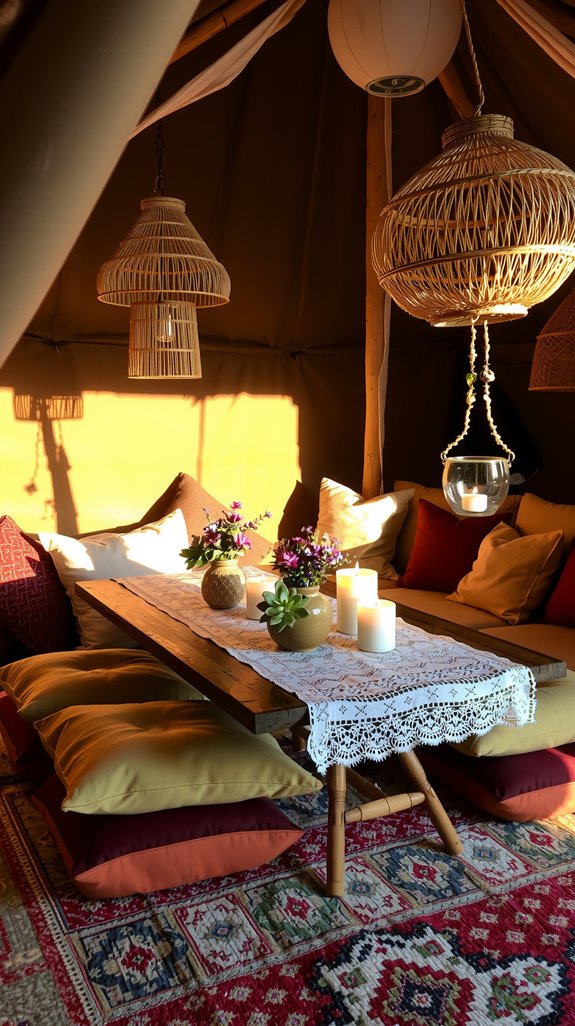
Eating on the ground around a low table changes the whole meal dynamic. I use a couple of layered rugs to define the dining zone, then surround it with floor cushions and a few low stools for people who need back support.
The dishes don’t need to match, in fact it’s better if they don’t. Mix your enamelware with wooden plates and ceramic mugs, and use a length of fabric as a table runner if you want to get fancy. Lighting matters here too: a couple of lanterns or a strand of lights overhead makes dinner feel like an event instead of just fuel.
Incorporating Essential Storage Solutions

Storage is where most tent setups fall apart because plastic bins are ugly and nobody wants to look at them. I switched to woven baskets and canvas bags years ago, and yeah, they cost more upfront but they last forever and actually look good sitting in a corner.
Hanging organizers work great for small stuff, and vintage crates stack nicely while giving you surface space on top. The goal is to keep everything accessible without having gear scattered across every surface.
Designing With Moroccan-Inspired Elements

Moroccan design gives you a lot of visual impact for minimal effort. A few geometric rugs, some embroidered cushions in jewel tones, and suddenly your tent has depth. I love those perforated metal lanterns because the light they throw is incredible once the sun goes down, all those shadows dancing across the tent walls.
Poufs are perfect for extra seating that you can move around, and they’re way more comfortable than they look. Add a few ceramic pots with succulents and you’ve got that layered, collected look without trying too hard.
Setting Up a Relaxing Morning Yoga Space

If you’re doing morning yoga at camp, you want a spot that’s flat and relatively private. I usually stake out a patch of ground just outside the tent where I can get morning light but I’m not in the middle of camp traffic.
A cork or rubber mat goes down first for grip, then I keep a basket nearby with a blanket, a couple of blocks, and whatever else I need. The whole thing takes two minutes to set up and gives you a dedicated space that feels separate from the rest of camp chaos.
Mixing Modern and Vintage Lighting Fixtures

Mixing your light fixtures keeps things from feeling too theme-y. I’ll hang a sleek modern pendant next to a vintage brass lantern, or put a black rattan shade near a wooden bead chandelier. The contrast makes both pieces more interesting, and you get the benefit of modern LED efficiency with vintage character.
Battery-operated lights have gotten good enough that you can run everything off a power bank and still have dimming capability. Just make sure your fixtures are actually secured because wind will test every hanging piece you’ve got.
Styling With Dried Flowers and Botanicals
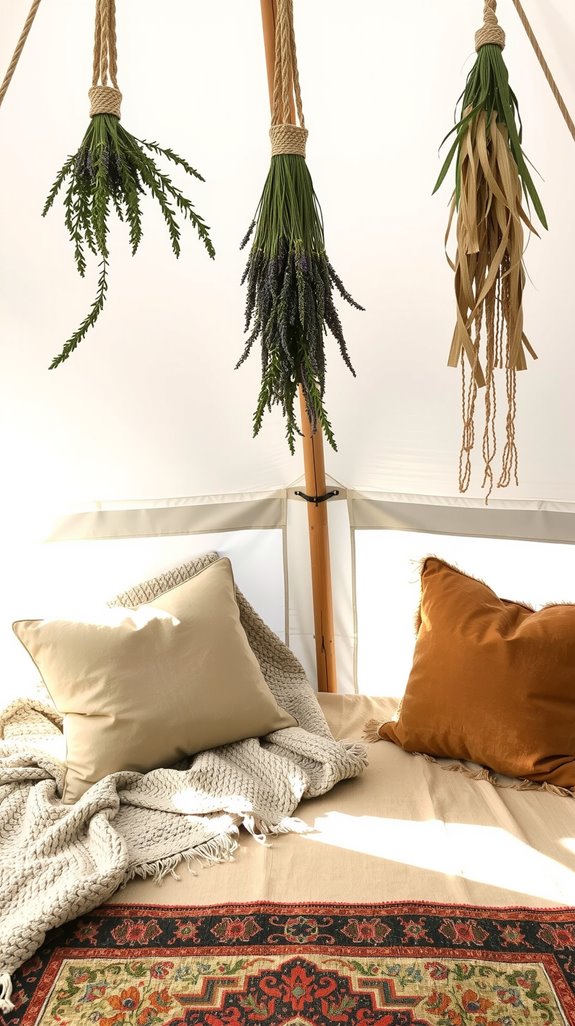
Fresh flowers are great until they die two days into your trip and you’re stuck with wilted stems. Dried flowers and grasses last the whole season and honestly look better in a tent setting. I keep bundles of pampas grass, dried lavender, and whatever seed pods I find on hikes, then rotate them through small vases around the tent.
They add color and texture without any maintenance, and you can pack them flat between trips. Just keep them away from your camping stove because dried plants plus open flame equals a bad time.
Creating Zones With Rug Layering Techniques
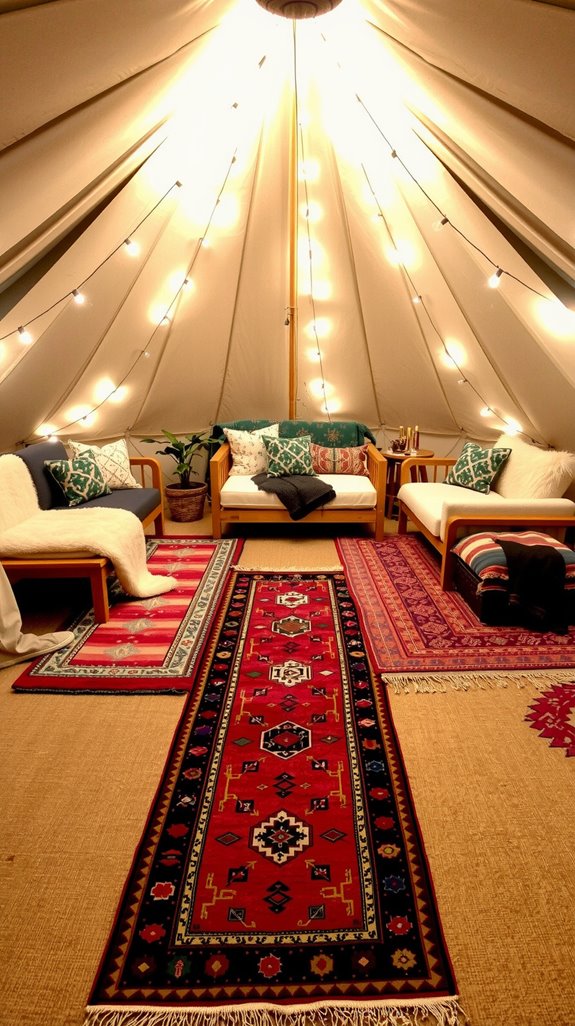
Rugs are your best tool for creating separate areas without actually building walls. I start with a large neutral rug as the foundation, usually jute or sisal, then layer smaller patterned rugs on top to mark each zone.
A sheepskin under the reading chair, a colorful kilim under the dining area, maybe a flat-woven runner leading to the door. The layers add warmth and visual interest, plus they give you real insulation from cold ground. Don’t line everything up perfectly either, angled rugs feel more natural and less staged.
Adding Warmth With Traditional Textiles

Good textiles make the difference between a tent that looks decorated and one that actually feels warm. I collect pieces year-round: kilim pillows, Indian block-print throws, Turkish blankets with those satisfying geometric patterns.
Layer them everywhere, over seating areas, across the bed, even hung on walls where condensation isn’t an issue. The mix of patterns and textures creates visual warmth that translates to actual warmth once the temperature drops at night.
Designing an Entertainment Corner

Every camp needs a spot where people naturally gather when the weather’s bad or the evening’s winding down. I set this up with layered rugs, a bunch of floor cushions, and a low table in the center for cards or snacks.
A portable speaker goes on a nearby shelf, and I keep a basket of books and games within reach. String lights overhead create the right mood, and having this dedicated space means your sleeping area stays calm and uncluttered when things get social.
Incorporating Rustic Wood Elements

Raw wood grounds a boho tent in a way that plastic and metal can’t. I use reclaimed pieces whenever possible: a weathered plank as a shelf, an old crate as a side table, maybe a simple wooden bench for seating.
The imperfections matter here, those knots and worn edges add character that new lumber doesn’t have. If you’re setting up for more than a weekend, wooden floor panels or a small platform under your bed create a real foundation that makes the whole tent feel more permanent.
Styling With Global-Inspired Accessories

Boho design works because it pulls from different cultures without trying to recreate any single one perfectly. I’ve got Moroccan lanterns, Indian textiles, a few dreamcatchers from a trip out west, some hand-knotted rugs from Turkey.
Each piece came from somewhere specific and means something, which makes the whole collection feel intentional rather than random. The key is buying things you actually connect with instead of just grabbing whatever looks vaguely ethnic at the home goods store.
Creating a Welcoming Entryway

The entry to your tent sets expectations for everything inside, so give it some attention. I frame the doorway with potted plants or hanging ferns, then line the path with small lanterns or solar lights.
A good rug at the threshold signals the transition from outside to in, and a small bench nearby gives people a place to deal with shoes. Hang some wind chimes or a piece of macramé near the door, and maybe keep some lavender or sage nearby for scent. The whole setup takes minimal space but makes arriving at your tent feel welcoming.
Arranging Cozy Conversation Areas

Seating arrangements matter more than people think. I arrange cushions and low chairs in a loose circle around a central rug or table so everyone can see each other without craning their necks.
The setup feels casual but intentional, and it naturally encourages longer conversations than sitting in a row of camp chairs would. Keep some small side tables within reach for drinks, and make sure your lighting is warm and low. A little space between seats keeps things comfortable without feeling formal.
Building a Peaceful Sleeping Sanctuary

Your bed is where you’ll spend a third of your camping time, so make it count. I start with a quality sleeping pad or cot, layer rugs underneath for insulation, then build up the bedding like I’m home. Real pillows, not stuff sacks, and enough blankets that you can adjust layers as the temperature shifts.
Soft lighting around the bed, either strings or small battery candles, gives you enough glow to navigate without flooding the tent. A tapestry or curtain creates a sense of enclosure that makes the space feel protected and separate from the rest of the camp.
Conclusion
After a few trips of actually living in these spaces, you start to realize that the decorating part is just the framework. What makes a boho tent work is how it changes the way you experience being outside, how it gives you a home base that feels intentional instead of just functional.
The layered rugs keep your feet warm when you’re getting dressed at dawn, the good lighting means you can actually read after dinner, and having dedicated zones for different activities keeps you from living out of a duffel bag for a week. None of this requires a massive budget or perfect execution, just some thought about what makes you comfortable and a willingness to haul a few extra things that matter.