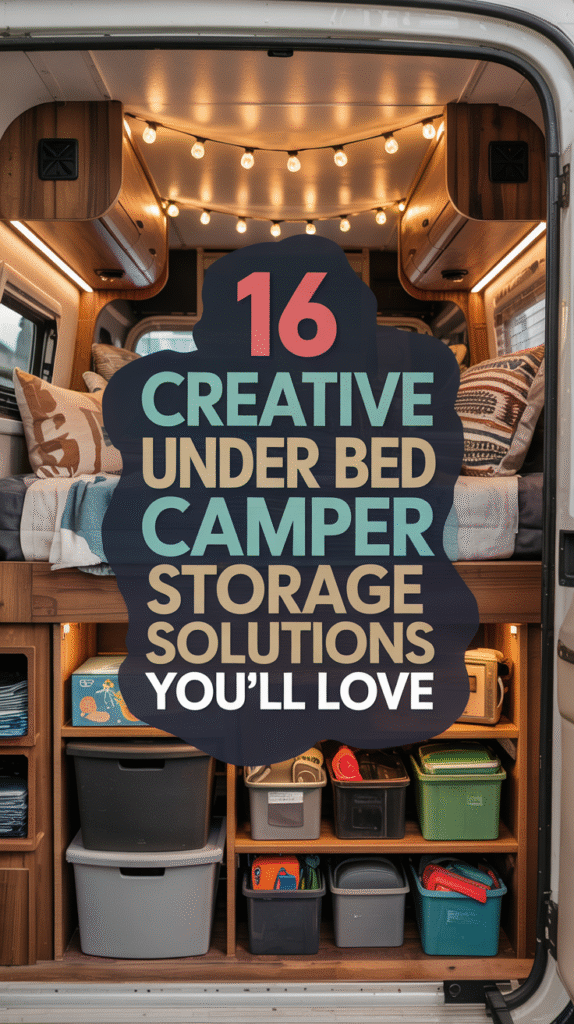
The space under a camper bed is either your best friend or a black hole where gear disappears. Some people treat it as an afterthought, tossing things in and hoping for the best. Spend a few nights fumbling for a headlamp or digging past three sleeping bags to find a socket wrench, and you’ll rethink that approach fast.
Done right, under-bed storage can hold everything from tools and pantry staples to lithium battery banks and off-season clothing. These 16 ideas come from real builds, real mistakes, and real road trips.
Contents
- 1 Installation of Prop Rods for Mattress Support
- 2 Incorporating Sliding Trays or Pull-Out Drawers
- 3 Subdividing Storage Areas With Plywood Panels
- 4 Reinforcing Storage Lids With Hinges and Prop Systems
- 5 Organizing Tools and Camping Gear
- 6 Packing Seasonal Clothing and Bedding
- 7 Enhancing Visibility With Lighting and Reflective Surfaces
- 8 Utilizing Gas Struts for Effortless Mattress Elevation
- 9 Creating Hinged Access Panels From Spare Camper Doors
- 10 Designing Multiple Smaller Access Doors
- 11 Building Sturdy Wooden Bed Frames With Integrated Drawers
- 12 Choosing Lightweight and Resilient Materials
- 13 Using Modular Storage Chests for Versatility
- 14 Storing Pantry Items Under the Bed
- 15 Integrating Dedicated Lithium Battery Compartments
- 16 Converting Unused Spaces Into Custom Compartments
Installation of Prop Rods for Mattress Support
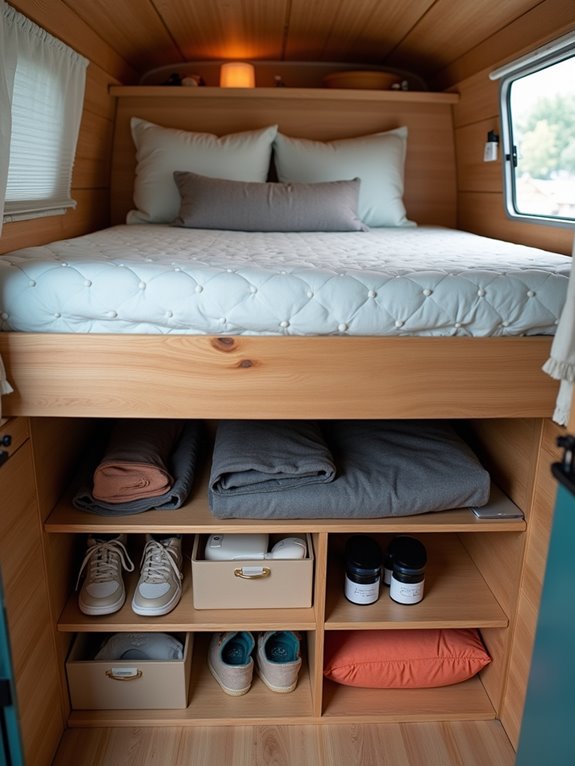
Getting into under-bed storage starts with a lid that stays open while you’re using both hands. A 3/4-inch maple dowel set into a notched closet rod support is the simplest solution that actually holds up over time.
Cut it to fit snugly, install the notched brackets with the larger notch facing up, and test it under a real load before you rely on it. This takes maybe an hour to build and costs almost nothing, which makes it one of the best first upgrades on any camper bed.
SEE THIS: White Cabinets + Wood Accents = The Perfect Rustic RV Makeover Every Camper Girl Dreams Of.
Incorporating Sliding Trays or Pull-Out Drawers
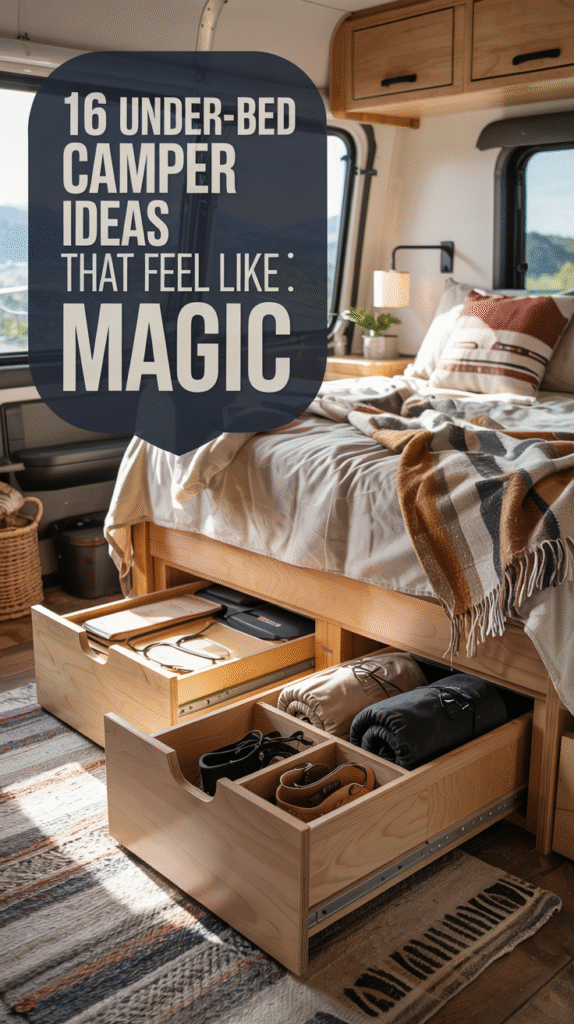
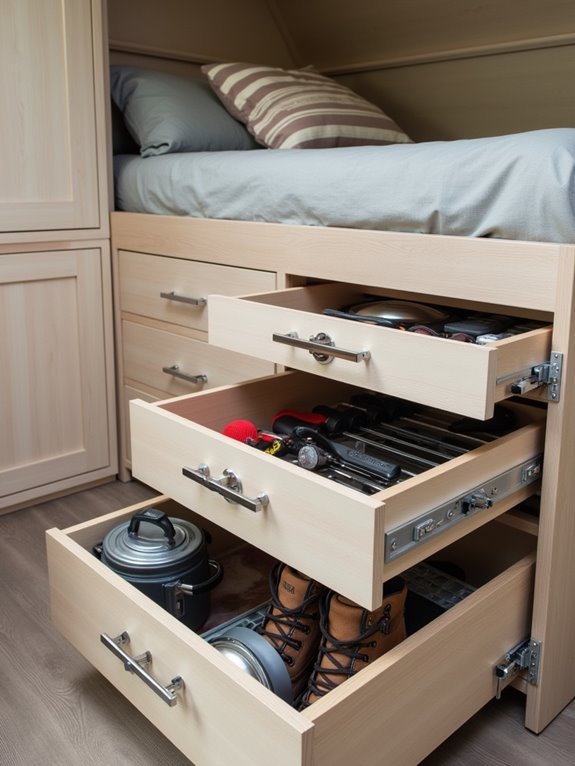
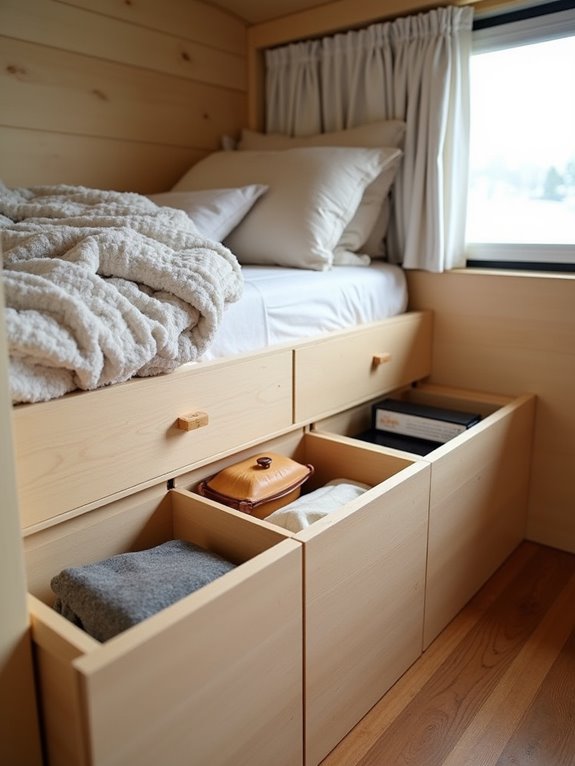
Pull-out drawers changed how I think about under-bed storage entirely. Cut them from 15mm birch ply, run them on ball-bearing drawer slides, and you can pull out a fully loaded tray without getting on your knees.
Steel L-brackets keep them from racking side to side when the road gets rough. Size them right and a single drawer can carry 120 kilograms without complaint, which covers most tool kits and a serious amount of camping gear.
SEE THIS: Before & After $200 Camper Bathroom Makeover Will Blow Your Mind.
Subdividing Storage Areas With Plywood Panels
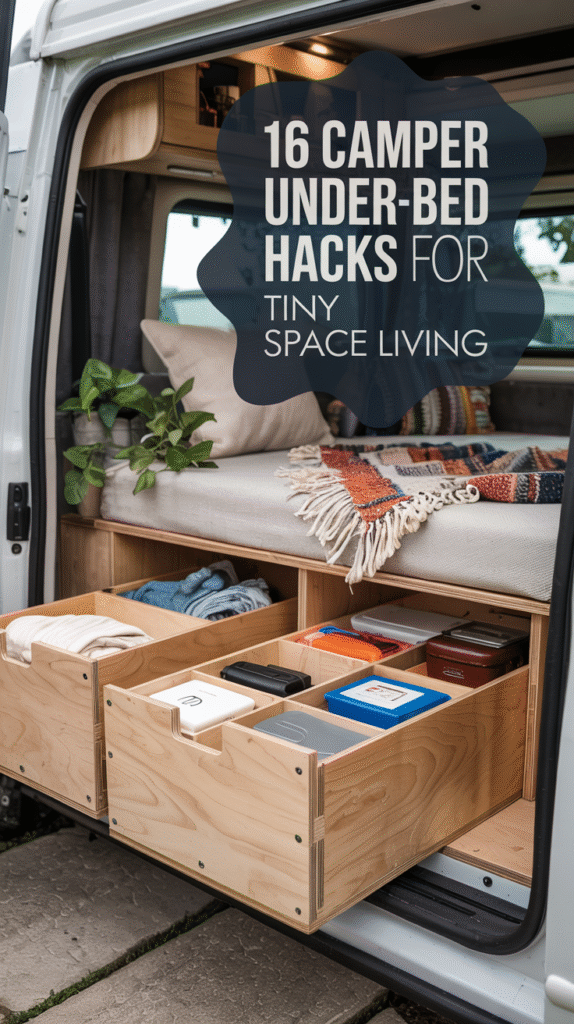
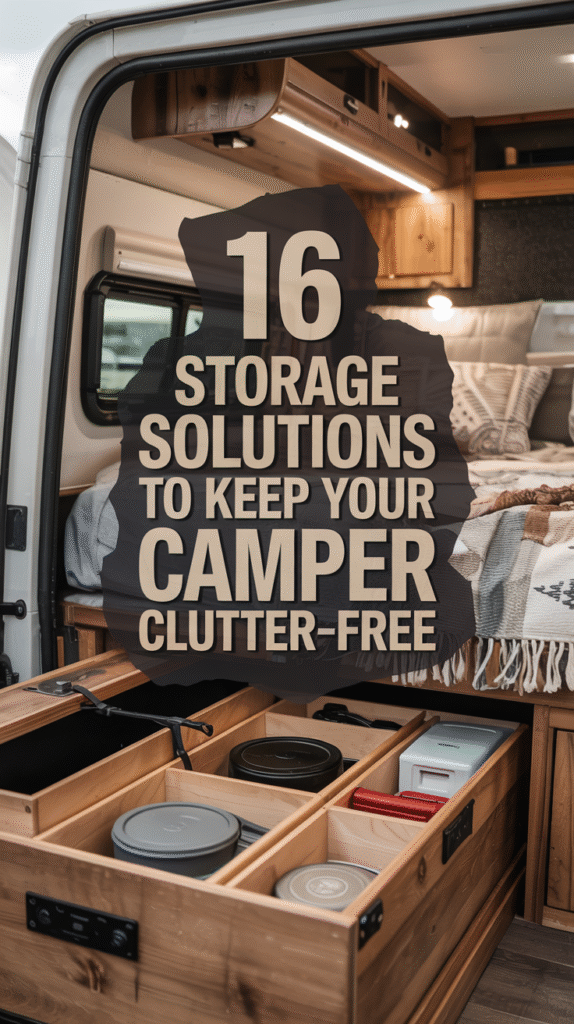
Raw under-bed space is just a cave until you put some walls in it. Three-quarter-inch plywood panels, glued and screwed into place, create compartments that stop gear from migrating across the full length of the bed on every corner.
The real payoff is knowing exactly where things are without moving half your kit to find them. Think of it as building a filing system, just one designed for camp chairs and spare propane canisters.
SEE THIS: 17 Cozy Boho RV Bedroom Ideas That Feel Like a Boutique Hotel.
Reinforcing Storage Lids With Hinges and Prop Systems
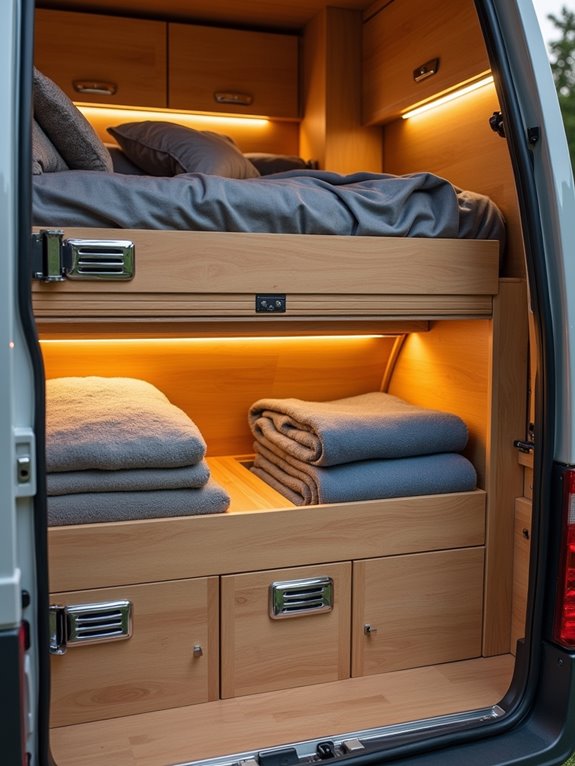
A flimsy lid seems fine until it fails, usually at the worst possible moment. Heavy-duty piano hinges distribute load across the full frame length, which matters on something you open and close daily.
Stainless steel holds up far better than zinc in wet or coastal climates, so spend the extra few dollars there. A hardwood dowel backup prop costs almost nothing and could save your hand if a strut ever fails mid-trip.
SEE THIS: Before & After: You Won’t Recognize This Camper Kitchen Remodel Glow-Up.
Organizing Tools and Camping Gear
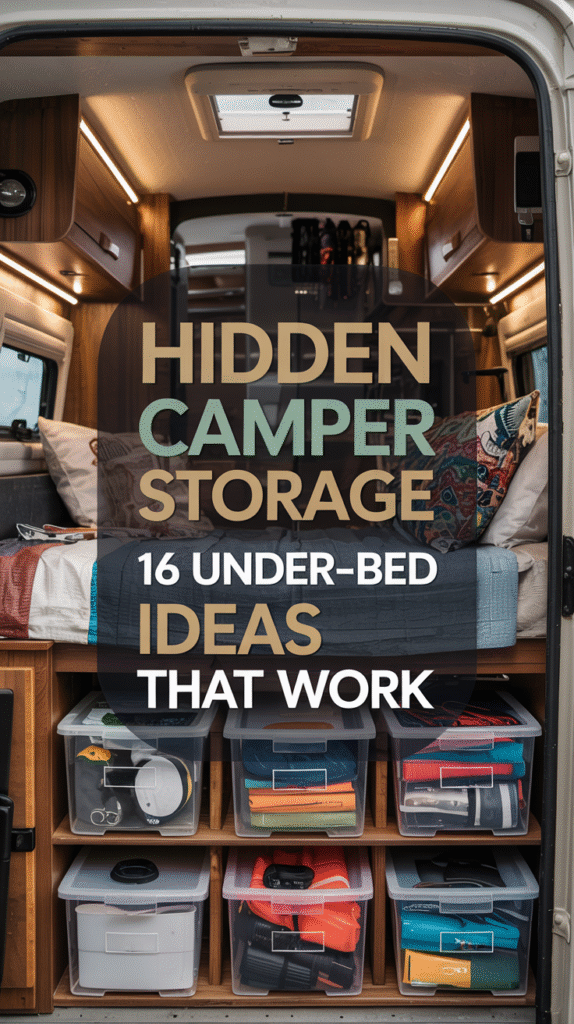
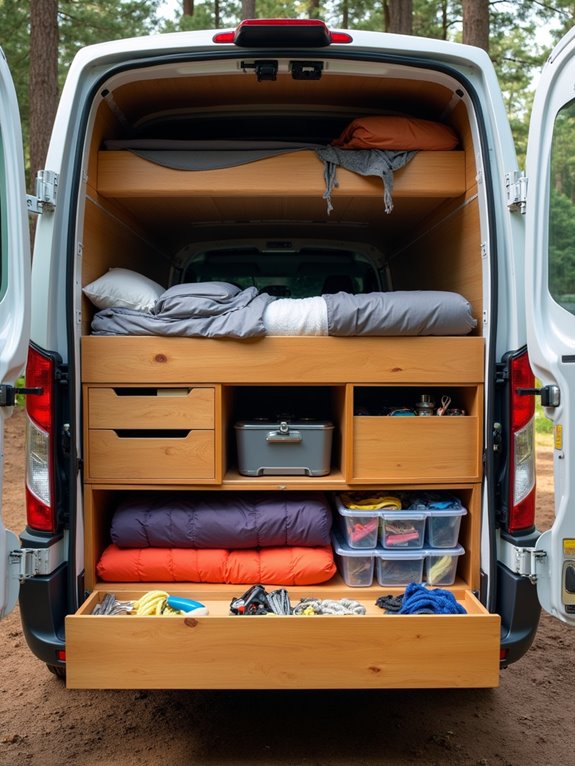
Tools are the worst offenders when it comes to under-bed chaos, and without a system they multiply. Wrenches end up tangled with tent stakes, and you spend ten minutes finding a screwdriver you know you packed.
Group by category in stackable bins, keep what you use most closest to the access point, and label everything even when it feels unnecessary. Clear tubs earn their place every time you’re reaching in without full light.
Packing Seasonal Clothing and Bedding
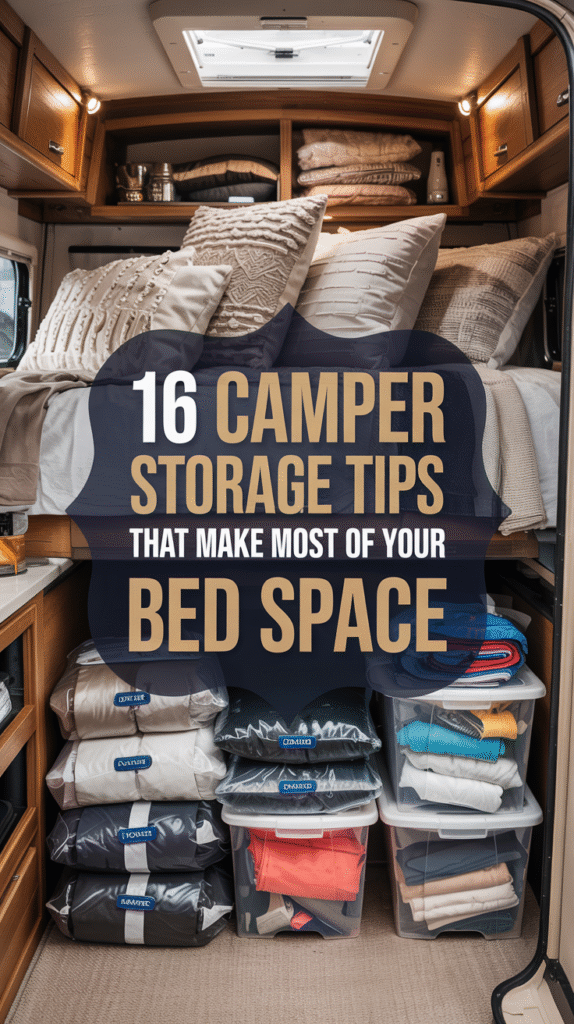
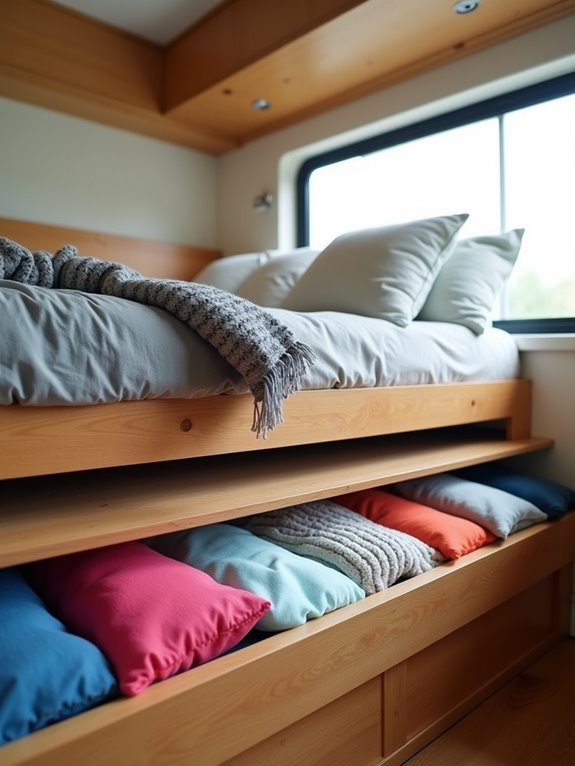
Off-season clothes take up real estate you can’t afford to waste in a camper. Vacuum compression bags are the honest answer for bulky items like down jackets and sleeping bags, cutting volume down to something actually manageable.
Plastic tubs with secure lids keep moisture and road dust out better than any soft bag will. Throw in a few silica gel packets and you won’t pull out a musty fleece six months down the line.
Enhancing Visibility With Lighting and Reflective Surfaces
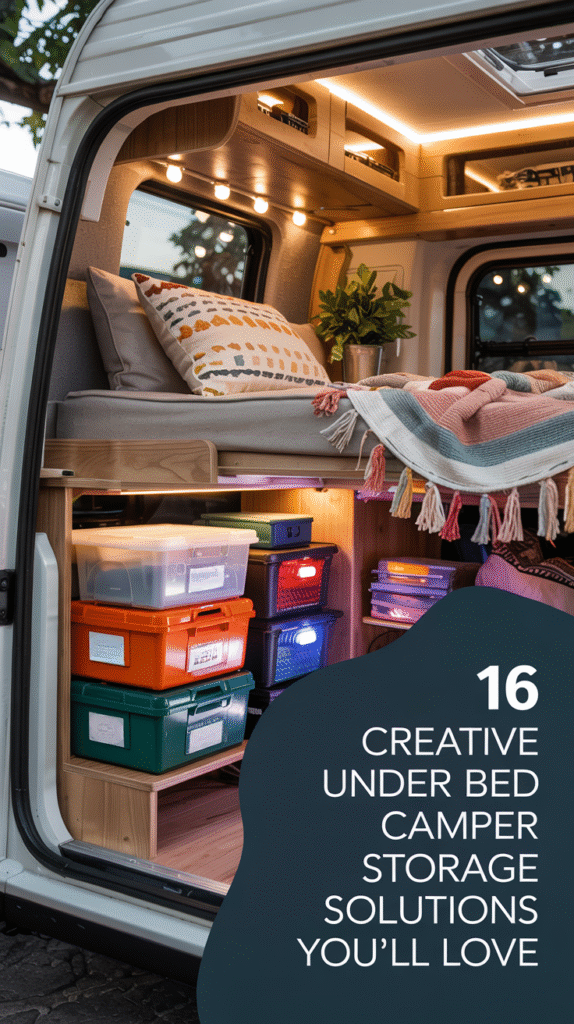
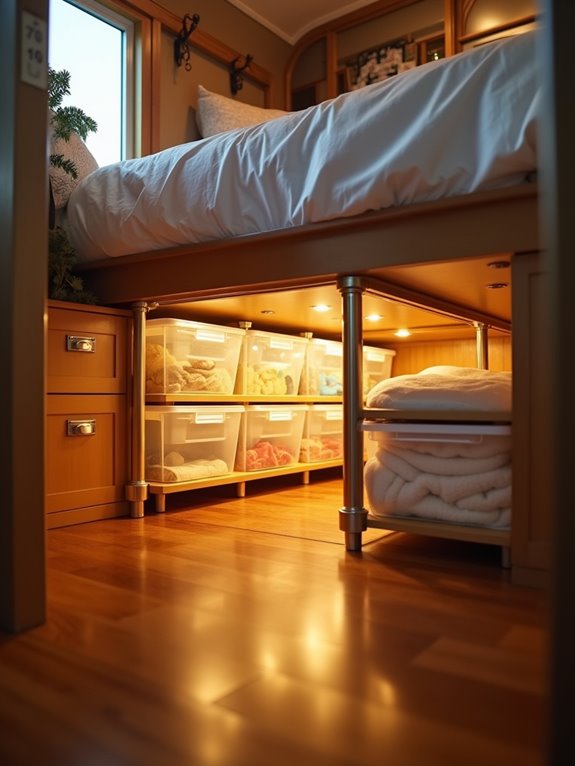
Under-bed storage without lighting is just a dark hole you reach into and hope for the best. LED strip lights mounted along the inside edge of the frame run for hours on a small draw and illuminate the full depth of the space.
A coat of white paint or a strip of reflective foil on the back wall bounces that light forward and fills corners that would otherwise stay shadowed. Motion-activated switches mean the lights come on the moment you lift the lid and shut off on their own when you close it.
Utilizing Gas Struts for Effortless Mattress Elevation
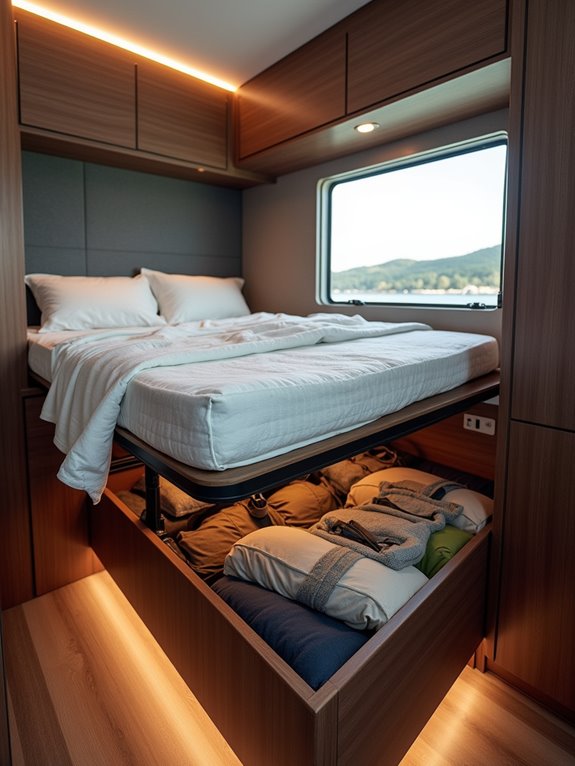
Gas struts are the step up worth taking if you’re doing a proper build rather than a quick fix. They handle the mattress weight automatically, hold the lid at a consistent angle, and save you from the ugly moment when a poorly propped lid falls on your head mid-rummage.
Match the strut rating to your actual mattress weight, or you’ll end up with a lid that either slams shut or won’t stay up. Once you’ve used a well-specced setup, going back to a prop rod feels like settling.
Creating Hinged Access Panels From Spare Camper Doors
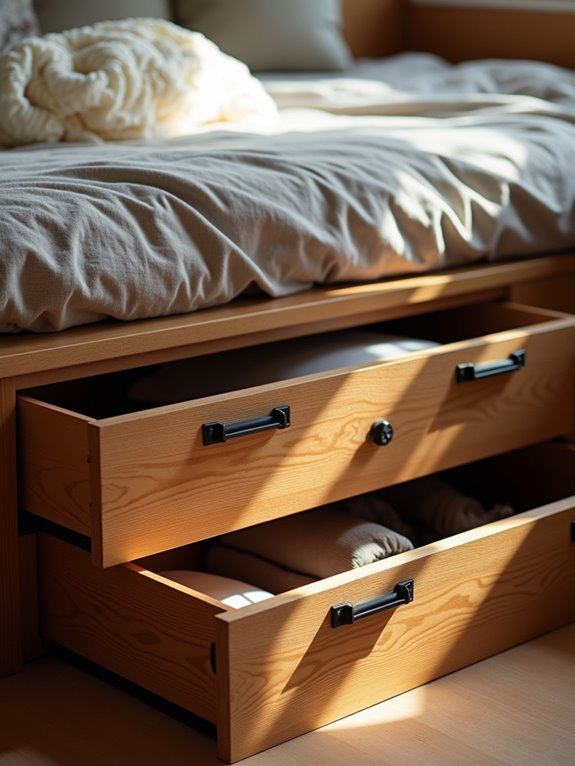
Spare camper doors make surprisingly good access panels, and reusing them saves both money and waste. Sand them back, check for structural soft spots, and fit corrosion-resistant hinges before reinstalling.
Magnetic catches keep the panel flush during travel without needing a latch you have to fumble with in the dark. The result is a clean, purpose-built access point that doesn’t require you to lift the entire mattress every time you need something.
Designing Multiple Smaller Access Doors
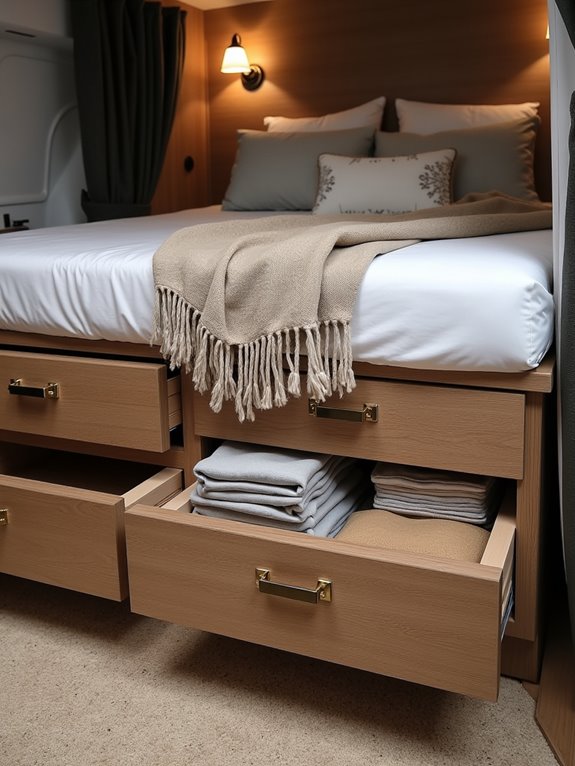
A single large lid sounds convenient until you realize it means disturbing the whole mattress every time you want something from the far end. Multiple smaller panels, each opening into its own zone, solve that problem cleanly and immediately.
Custom sizing lets you work around existing frame members and camper components without compromising the structure. Lockable latches on any panel holding valuables take five minutes to fit and are worth every one of them.
Building Sturdy Wooden Bed Frames With Integrated Drawers
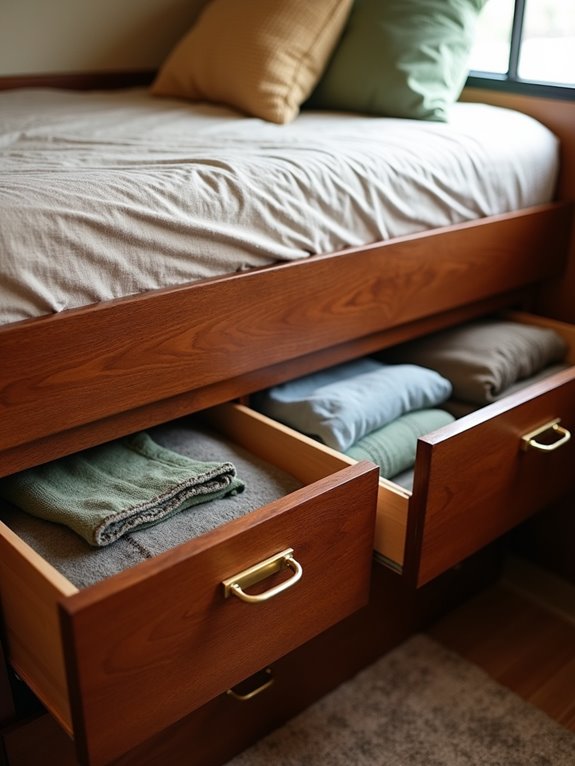
Nothing adds storage capacity and character to a camper interior quite like a properly built wooden bed frame. Pine and plywood are the go-to combination since both are easy to work, widely available, and light enough not to hurt your payload.
Pocket hole joinery keeps the finish clean on the outside and the structure strong on the inside. Travel latches on the drawer slides prevent anything from rolling out on a steep descent.
Choosing Lightweight and Resilient Materials
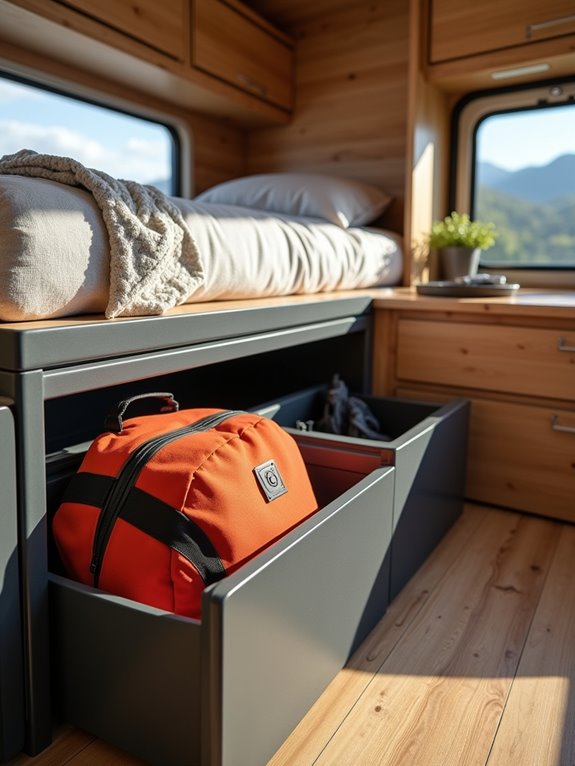
Material choices matter more in a camper than in a garage workshop because every kilogram costs you somewhere, whether that’s fuel or payload capacity. EPS foam sheet over pine framing keeps weight low while still giving you a rigid panel that won’t flex under load.
Aluminum hardware outperforms steel in wet or coastal environments where rust shows up faster than you’d expect. Thin plywood panels with proper cross-bracing carry more than you’d think without adding unnecessary bulk to the build.
Using Modular Storage Chests for Versatility
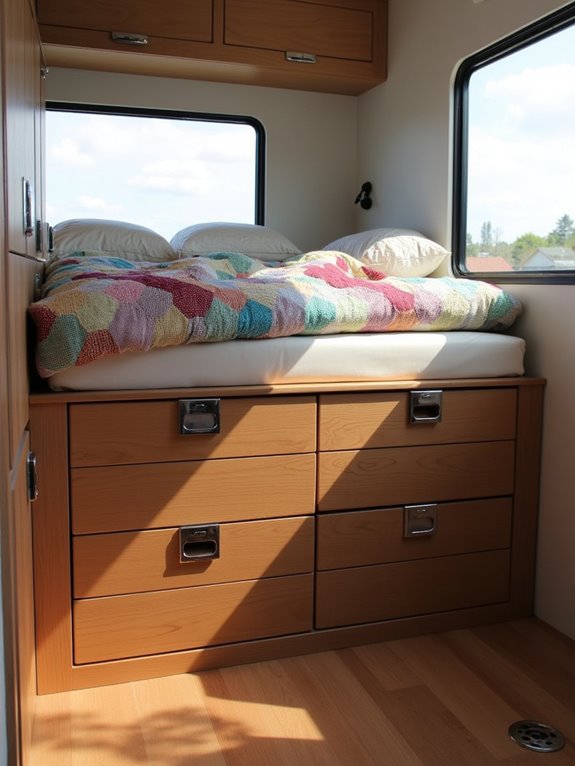
Modular plastic storage chests are the solution that keeps working as your trips and needs change. Stack them differently for a ski trip than you would for a summer desert run, and the whole space reconfigures in minutes.
Adjustable internal shelves handle awkward gear that fixed compartments simply can’t accommodate. The honest reason they belong in a camper build is that no two trips look the same, and rigid systems eventually work against you.
Storing Pantry Items Under the Bed
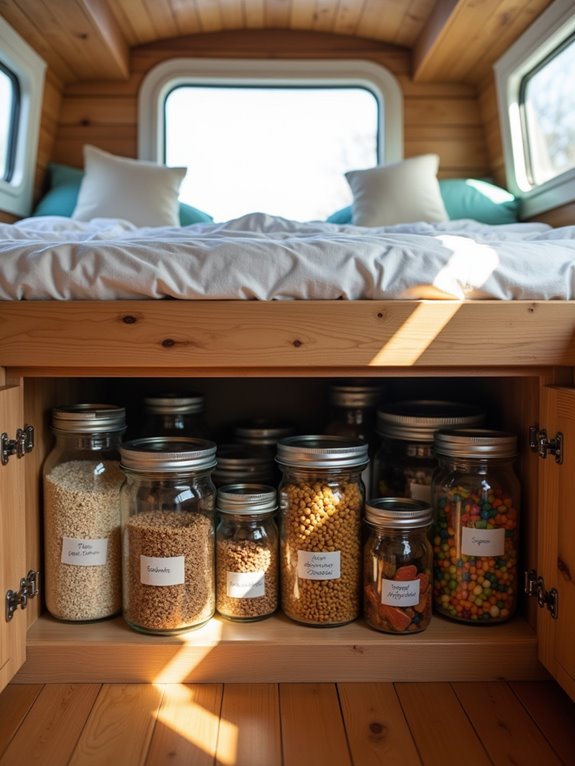
Long, shallow bins work better than deep ones for food storage because you can actually see what you have without unpacking everything. Clear stackable containers with locking lids survive the inevitable spill when a rough road catches you by surprise.
Anything temperature-sensitive benefits from a thin insulated liner, which adds minimal thickness but makes a real difference on a hot summer drive. Label the bins by category and restocking before a trip takes half the time it used to.
Integrating Dedicated Lithium Battery Compartments
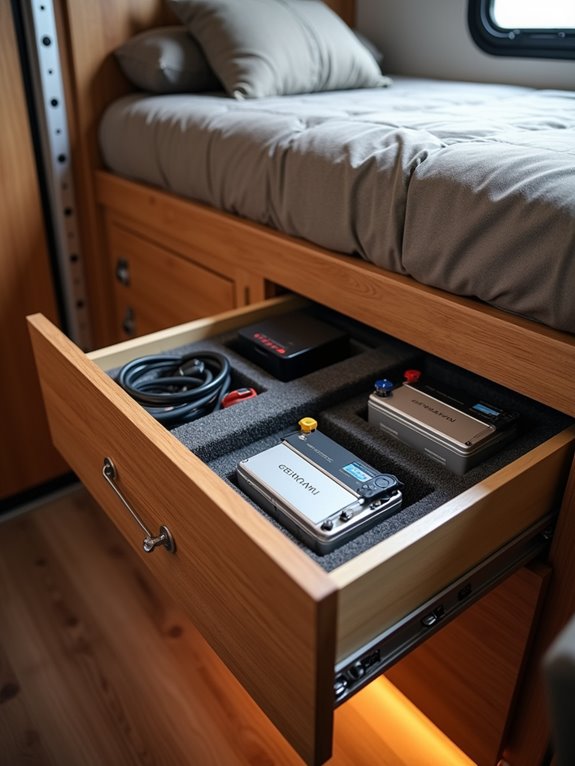
Lithium batteries belong in their own dedicated, secured space rather than sharing a bin with camping gear. Mount the compartment near your electrical breakers so cable runs stay short, tidy, and easy to inspect when something acts up.
Vented enclosures are non-negotiable since batteries can off-gas under certain conditions and you don’t want that accumulating in a sealed void. Route cables through grommeted holes to protect the insulation, and fit a locking box on any compartment accessible from outside the camper.
Converting Unused Spaces Into Custom Compartments
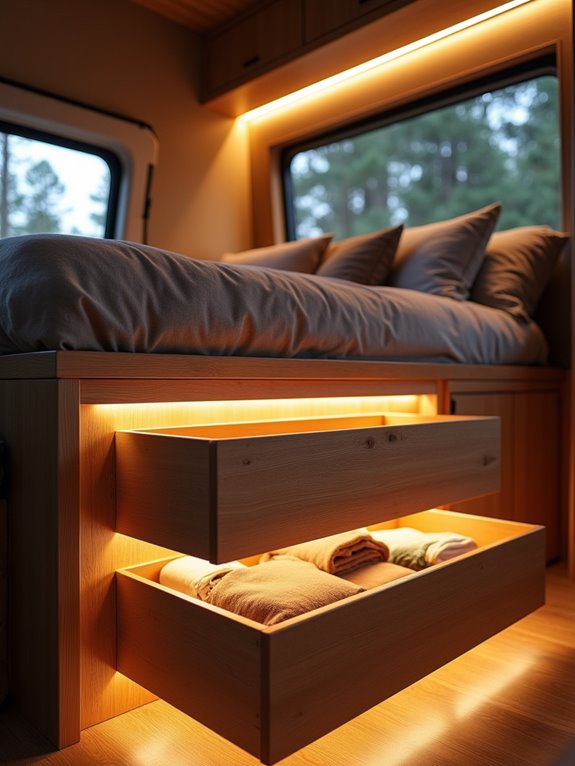
Every camper has awkward voids that don’t fit a standard bin and end up being ignored. Framing them out with 2×2 and 1×2 lumber turns dead space into compartments sized precisely for what you actually need to store.
Sliding or open-top containers built to those dimensions move in and out cleanly without the rattle that loose gear produces over a long drive. Moisture-resistant plywood is the right call for anything near the floor where condensation and road spray are simply part of the deal.