When I first started camping, I thought camping gear was all about having more stuff. More gadgets, more tools, more “just in case” items.
Over time, I learned that the right camping equipment, outdoor gear, and camping essentials matter far more than how much you pack. The right setup makes camp feel calm, comfortable, and easy—while the wrong gear can turn even a short trip into unnecessary stress.
Now, when I plan a trip, I focus on practical camping gear, reliable outdoor equipment, and camping supplies that actually support the way I camp.
Whether I’m packing for a family-friendly weekend, a simple backyard setup, or a more off-grid adventure, I’ve learned that choosing the right camping gear is about balance – comfort, safety, and simplicity.
This guide breaks down the gear I’ve found most useful, how I choose it, and how you can build a setup that works for your camping style, not someone else’s checklist.
Contents
- 1 Essential Camping Gear for Every Trip
- 2 Camping Gear Essentials for Beginners
- 3 Camping Gear for Survival & Emergency Situations
- 4 Camping Gear for Families and Kids
- 5 DIY Camping Gear and Smart Gear Hacks
- 6 Indoor & Backyard Camping Gear
- 7 Seasonal Camping Gear You’ll Actually Use
- 8 How to Choose the Right Camping Gear for Your Style
Essential Camping Gear for Every Trip
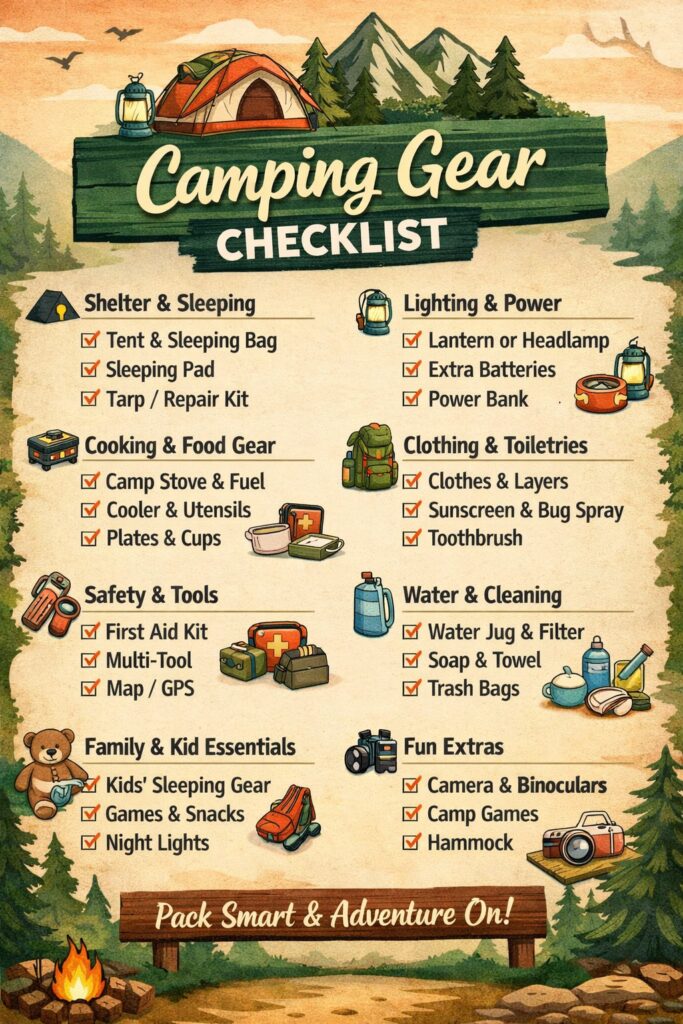
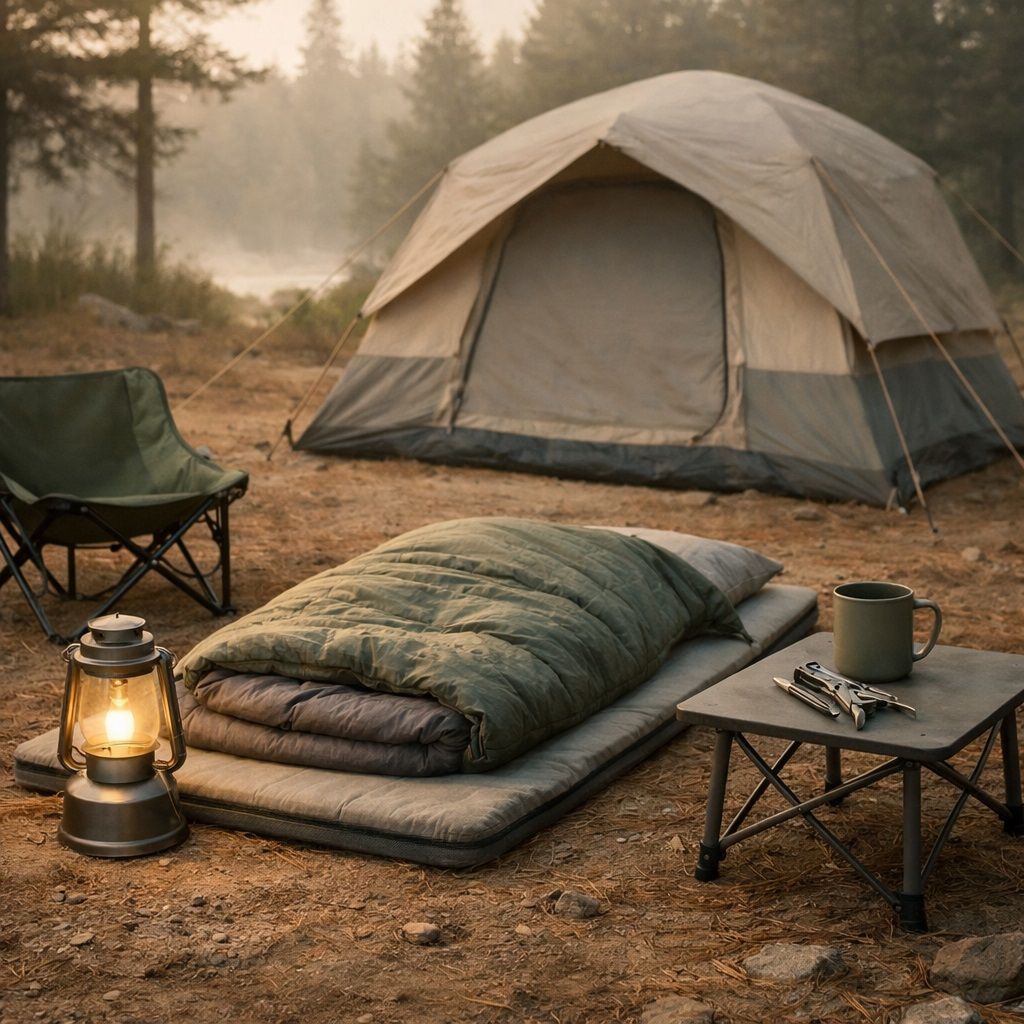
The must-have items that apply to almost every camping style, whether you’re car camping, backyard camping, or heading into the woods:
Tent or shelter – Types of tents, weather ratings, and why setup ease matters
Sleeping system – Sleeping bags, sleeping pads, air mattresses, and temperature ratings
Lighting – Lanterns, headlamps, flashlights, and backup lighting options
Camp furniture – Folding chairs, compact tables, and when they’re worth packing
Basic tools – Multi-tool, duct tape, extra cord, and repair basics
When I think about camping gear, I think about the core items that make outdoor living possible and comfortable. These are the camping essentials, basic camping equipment, and outdoor gear that work for nearly every trip.
This includes shelter like tents or camping shelters, a reliable sleeping system (sleeping bags, pads, or air mattresses), and dependable camp lighting such as lanterns or headlamps.
I also group in camp tools, outdoor accessories, and portable camping furniture that make daily camp life smoother. Without these foundational pieces of camping equipment, even short trips can feel stressful instead of enjoyable.
Camping Gear Essentials for Beginners
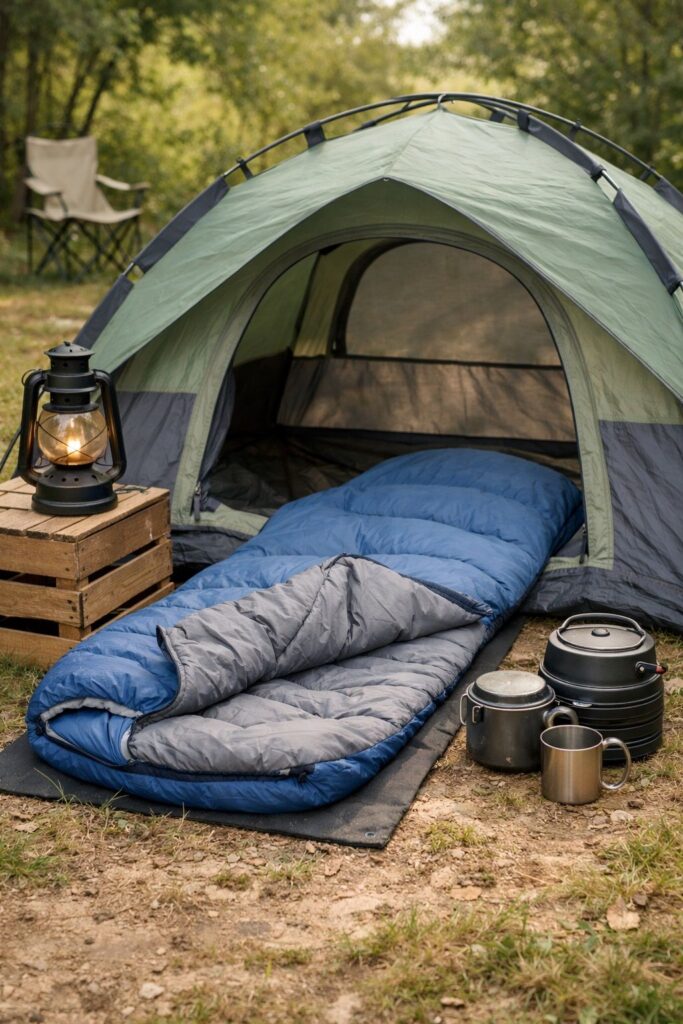
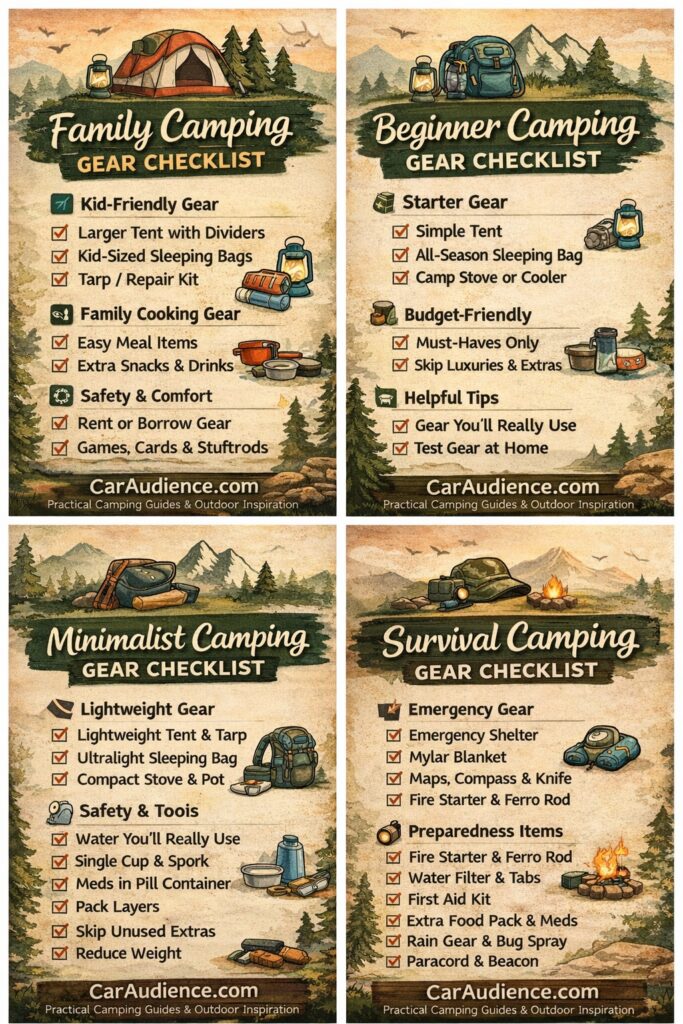
This section is focused on first-time campers who want clarity without overwhelm:
Beginner-friendly gear choices – Simple tents, forgiving sleeping bags, no-fuss cookware
What to skip at first – Gear that sounds useful but isn’t necessary early on
Budget-friendly options – Renting vs buying, starter kits, and multipurpose gear
Mistakes beginners make – Overpacking, wrong sleeping bag temps, forgetting lighting.
For beginners, camping gear essentials should feel simple, forgiving, and easy to use.
I always recommend focusing on starter camping gear, entry-level camping equipment, and beginner-friendly outdoor gear that doesn’t require expert setup or maintenance.
Things like instant tents, all-season sleeping bags, and basic cookware fall under first-time camping supplies that help new campers build confidence.
Instead of buying everything at once, beginner campers can prioritize must-have camping items and slowly add extra camping accessories as they learn what they truly need. This approach keeps camping approachable and avoids unnecessary spending.
Camping Gear for Survival & Emergency Situations
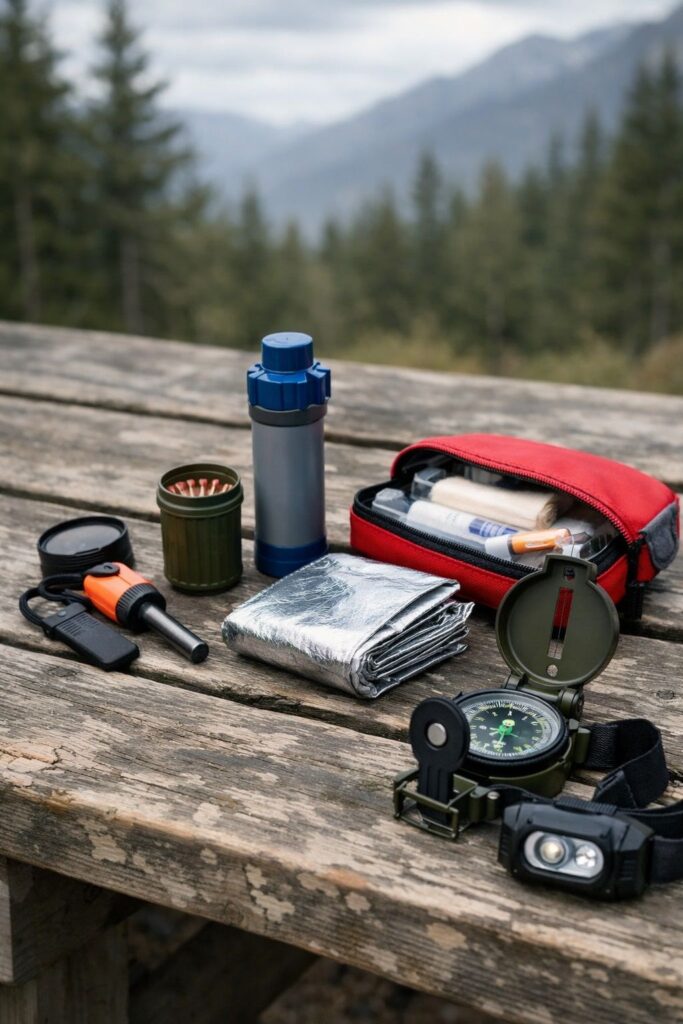
This covers preparedness-focused gear for off-grid, remote, or unpredictable environments:
Fire-starting tools – Lighters, waterproof matches, ferro rods
Water purification – Filters, tablets, and backup methods
Navigation & safety – Maps, compass, GPS, whistle, emergency beacon
First aid & emergency kits – What to include beyond store-bought kits
Weather protection – Emergency blankets, ponchos, extra layers.
Camping gear for survival is all about preparation, safety, and self-reliance. This category overlaps with survival camping gear, emergency outdoor equipment, and backcountry essentials designed for unpredictable conditions.
Items like fire starters, water filtration systems, emergency shelters, and first aid kits fall under camp survival tools and outdoor emergency gear.
These aren’t just for extreme adventures—they also add peace of mind during regular trips. Having reliable safety camping gear ensures you’re prepared for weather changes, injuries, or unexpected delays in remote areas.
Camping Gear for Families and Kids
This is about comfort, safety, and sanity when camping with kids
Larger family tents – Room dividers, head height, and ventilation
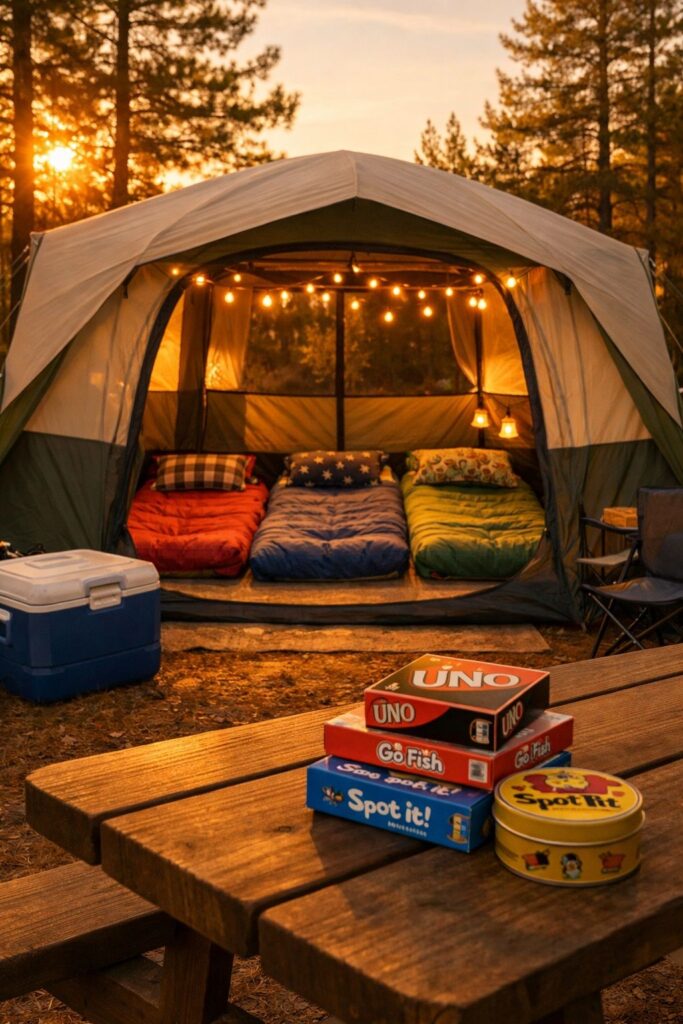
Kid-friendly sleeping gear – Sized sleeping bags, bunk cots, shared bedding setups
Family cooking gear – Larger coolers, simple meal systems, mess-minimizing tools
Entertainment & comfort – Games, lights, cozy extras that help kids settle
Safety-focused gear – Night lights, ID bracelets, bug protection.
When camping with kids, camping gear for families becomes about comfort, safety, and organization.
Family-focused setups rely on family camping equipment, kid-friendly camping gear, and group camping supplies that accommodate multiple people.
Larger tents, shared sleeping spaces, easy-to-clean cookware, and durable storage solutions are essential family camping items.
I also include child-safe outdoor gear, like soft lighting, bug protection, and comfort extras that help kids feel secure. The right camping gear for kids turns family trips into memories instead of meltdowns.
DIY Camping Gear and Smart Gear Hacks
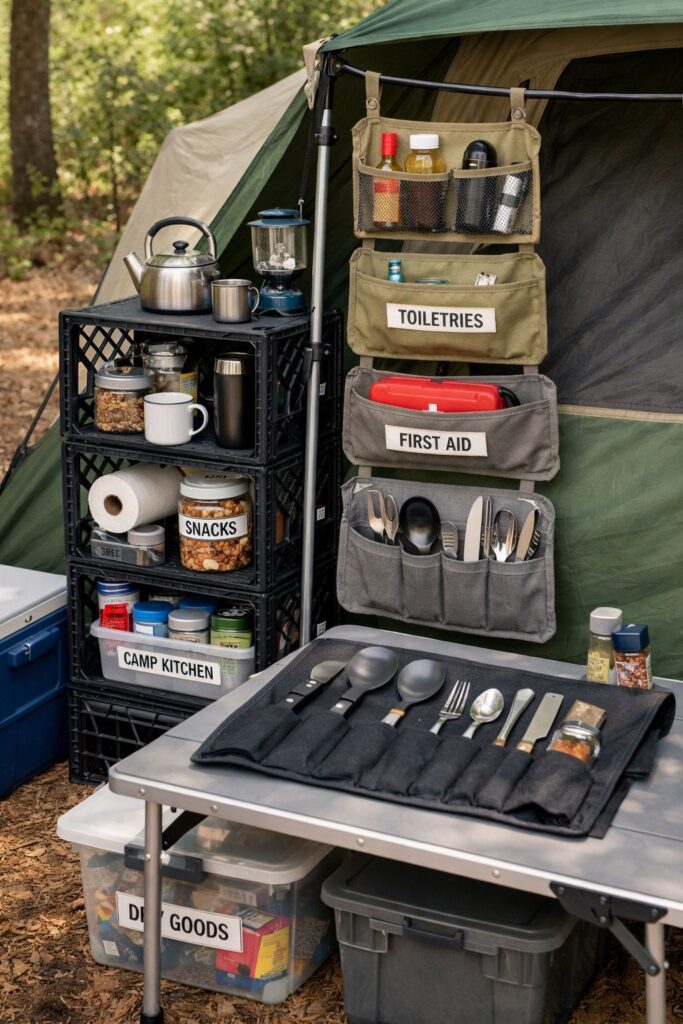
DIY storage solutions – Milk crates, hanging organizers, labeled bins
Homemade camping tools – Fire starters, utensil rolls, camp tables
Upgrading cheap gear – Reinforcing tents, improving insulation, weatherproofing
Repurposing household items – What works surprisingly well outdoors
When DIY is NOT recommended – Safety-critical gear you shouldn’t hack.
DIY camping gear is perfect for campers who love creativity and budget-friendly solutions.
This includes homemade camping equipment, camping gear hacks, and DIY outdoor gear made from repurposed or affordable materials.
Storage bins, utensil organizers, fire starters, and even simple furniture upgrades can become functional custom camping gear.
DIY approaches also help personalize setups using handmade camping accessories that fit your style. While not every item should be DIY’d, smart projects can enhance comfort and reduce reliance on expensive gear.
Indoor & Backyard Camping Gear
Perfect for kids, rainy days, or test runs before real trips:
Indoor-safe tents & forts – Pop-up tents, play tents, sheet forts
Lighting alternatives – Battery fairy lights, lanterns, projector night skies
Sleep setup indoors – Sleeping bags vs blankets, floor padding ideas
Camping-style activities – Pretend campfires, games, storytelling setups
Why indoor camping still counts – Skill-building and comfort practice.
Indoor camping gear brings the camping experience into controlled spaces like living rooms and backyards.
This category overlaps with backyard camping equipment, home camping supplies, and indoor-friendly camping gear designed for safety and convenience.
Pop-up tents, battery-powered lanterns, sleeping bags, and soft mats create a cozy indoor camp setup. It’s especially popular for kids, rainy days, or trial runs before real trips.
Even though it’s at home, indoor camping equipment still builds camping skills and excitement.
Seasonal Camping Gear You’ll Actually Use
Summer camping gear – Ventilated tents, cooling bedding, shade tools
Cold-weather camping gear – Insulated pads, winter-rated bags, heat management
Rain-ready gear – Tarps, seam sealers, dry bags
Shoulder-season add-ons – Flexible layers and modular systems.
Seasonal planning helps avoid overpacking and under-preparing.
Seasonal camping gear includes summer camping equipment, cold-weather camping gear, and rain-ready outdoor supplies tailored to specific conditions.
Lightweight tents, breathable bedding, and cooling accessories work best in warm weather, while insulated sleeping systems and weatherproof layers define winter camping equipment.
Shoulder seasons benefit from all-weather camping gear that adapts easily. Choosing the right camping gear by season improves comfort and safety year-round.
How to Choose the Right Camping Gear for Your Style
This wraps the article with practical decision-making guidance
Car camping vs backpacking – Weight, size, and durability differences
Solo vs group camping – Shared gear vs personal gear
Comfort vs minimalism – Finding your personal balance
Storage & transport – How gear size affects packing and setup
Building a gear system over time – Upgrading gradually instead of all at once.
Choosing the right setup depends on how you camp, not just what’s popular. I always look at camping gear selection, outdoor gear choices, and camping equipment planning through the lens of personal style.
Car campers, backpackers, solo travelers, and families all need different types of camping gear.
Weight, durability, comfort level, and storage space matter when building a personal camping gear system.
The best outdoor camping equipment is the gear that fits your habits, destinations, and comfort preferences—not someone else’s checklist.