Camping always looks simple from the outside. Pitch a tent, light a fire, fall asleep under the stars. But after enough trips, I’ve learned that the gap between a relaxing weekend and a miserable one usually comes down to what’s in your bag.
My packing list has evolved from chaotic and overstuffed to something I actually trust. This guide breaks down what I rely on, organized by trip type, so you can stop second-guessing and start enjoying being outside.
Camping Necessities (Core Essentials for Every Trip)
Camping always looks simple from the outside. Pitch a tent, light a fire, fall asleep under the stars. But after enough trips, I’ve learned that the gap between a relaxing weekend and a miserable one usually comes down to what’s in your bag.
My packing list has evolved from chaotic and overstuffed to something I actually trust. This guide breaks down what I rely on, organized by trip type, so you can stop second-guessing and start enjoying being outside.
| TO BUY ON AMAZON 1) Tent Equipment – Get some options here. 2) Camping Necessities – There are plenty options here. 3) Everything Camping Items – GO browse this page. |
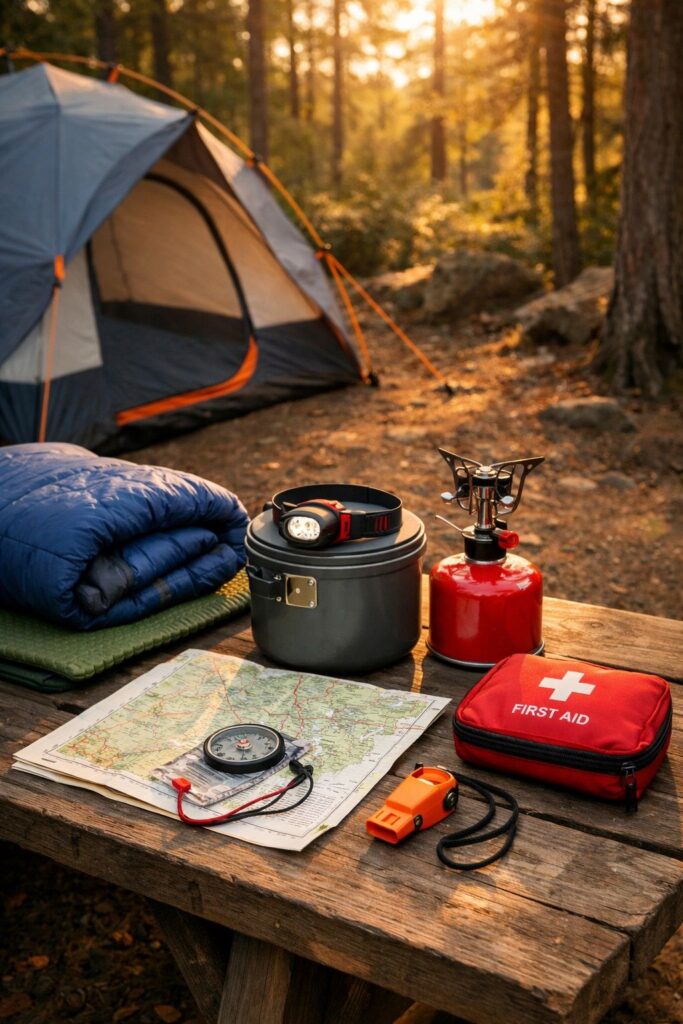
Every trip I’ve taken has taught me something different about what I actually use versus what I thought I’d use. A reliable tent, a well-rated sleeping bag, and a sleeping pad that insulates from the ground are the three things I check first, every time.
Nighttime temperatures have a way of dropping faster than the forecast suggests, and being caught underprepared for sleep ruins the next day completely. A headlamp and a basic first-aid kit round out what I consider the true minimum, and I don’t leave home without either.
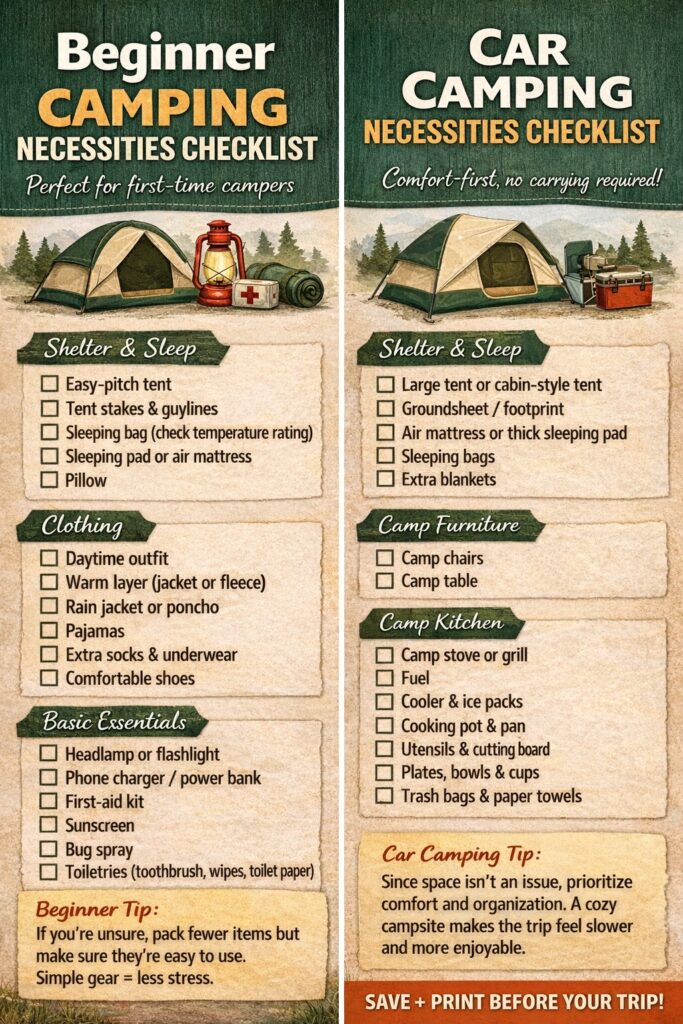
Camping Necessities List (Beginner-Friendly Checklist)
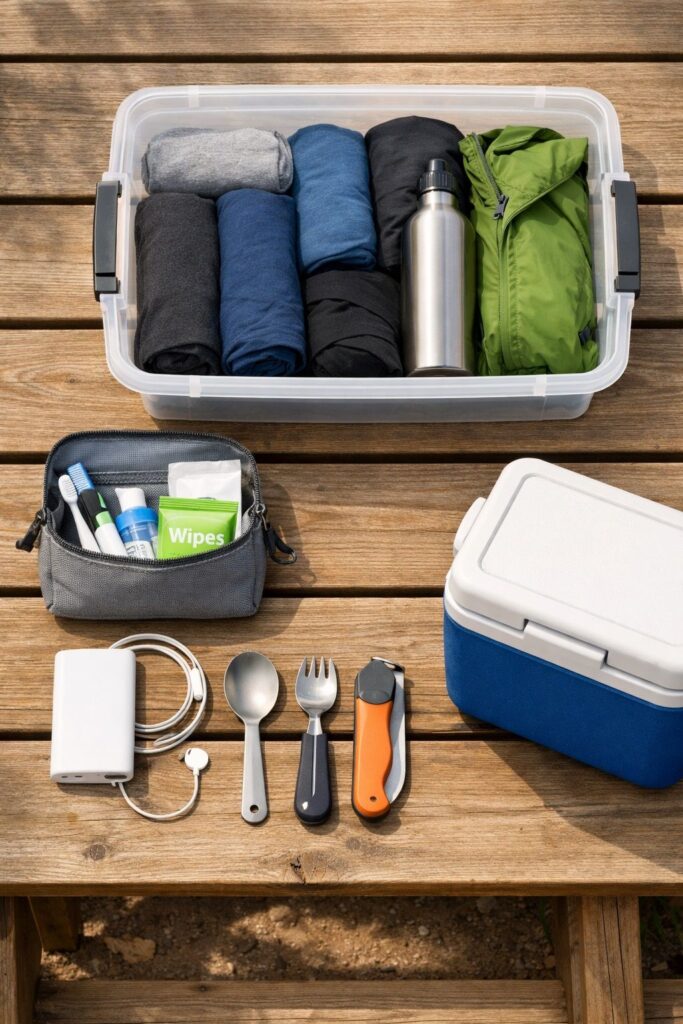
New campers almost always overpack the wrong things and forget the right ones. Focus on four categories: warmth, food, water, and hygiene. A weather-appropriate layer system, a refillable bottle, simple meals, and biodegradable soap will carry you through a first trip without drama.
A small power bank matters more than most people expect, because being able to charge a phone reduces anxiety and lets you actually relax.
Car Camping Necessities (Comfort-Focused Essentials)
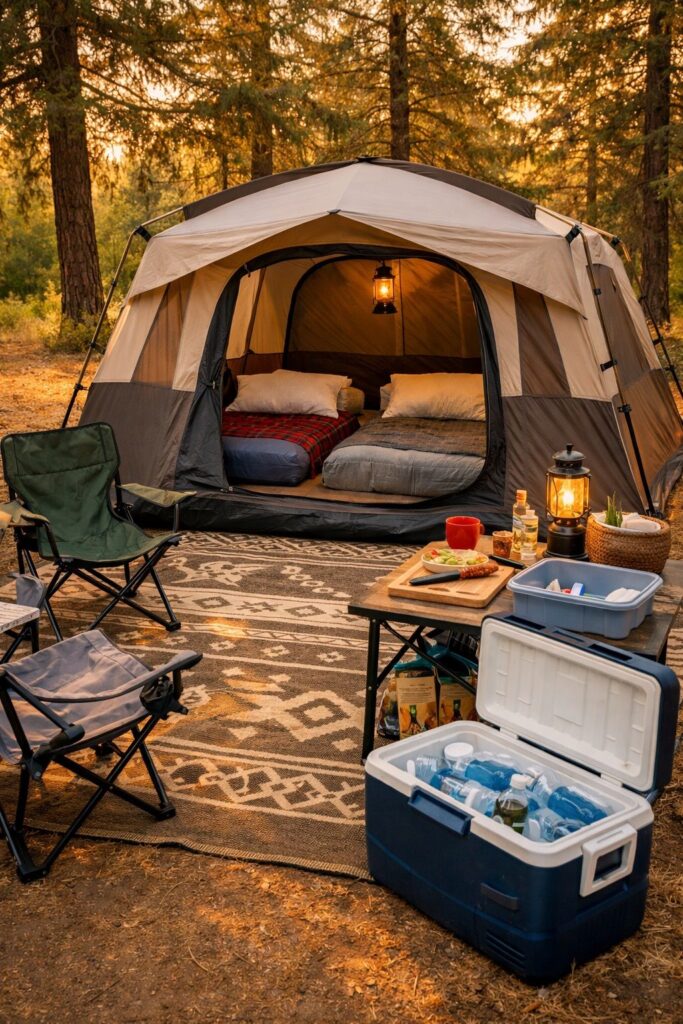
Driving straight to your site changes everything about how you pack. I bring a larger tent, a thick sleeping pad, real pillows, and extra blankets because there’s no reason not to.
A two-burner stove, a cutting board, and a good cooler system turn cooking into something you actually enjoy instead of something you tolerate. Camp chairs and a folding table might sound indulgent, but they’re the difference between a campsite and an outdoor living room.
Camping Necessities for Women (Thoughtful, Practical Add-Ons)
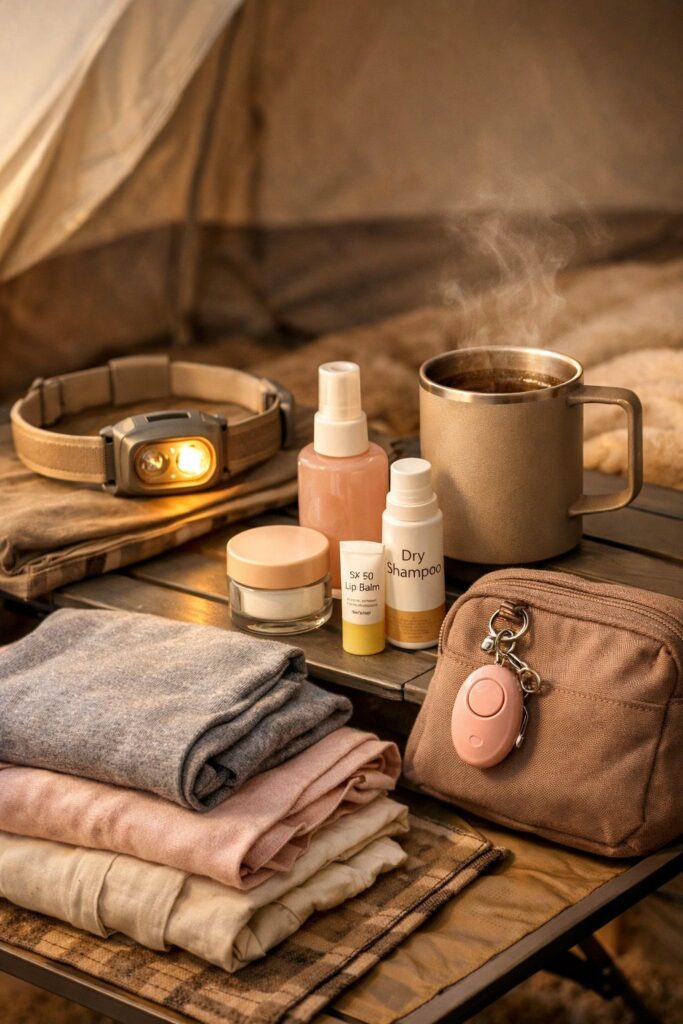
This isn’t about packing more; it’s about packing smarter for your own comfort. Menstrual supplies, a travel mirror, dry shampoo, and a few face wipes make a multi-day trip feel far more manageable.
Layering pieces that work for both hiking and sitting around the fire cut down on how much clothing you need to bring. A headlamp with a strobe mode and a personal alarm aren’t dramatic additions, they’re just practical ones.
Beach Camping Necessities (Sun, Sand & Wind Protection)
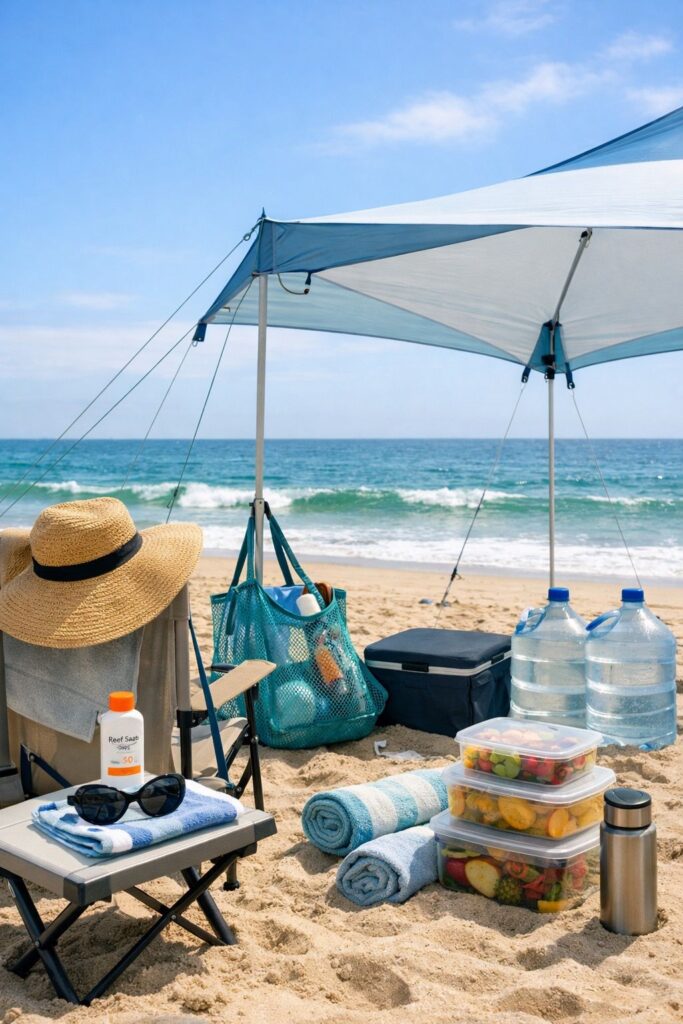
The coast is its own environment, and your gear needs to match it. Wind-resistant tents with sand-specific stakes are worth every penny, and reef-safe sunscreen stops being optional after your first beach sunburn.
Sand gets into everything, so mesh bags, sealed food containers, and a jug of rinse water save you hours of frustration. Low beach chairs and a microfiber blanket keep you comfortable without turning the tent into a sandbox.
Camping Necessities for Families (Kid-Friendly & Stress-Reducing)
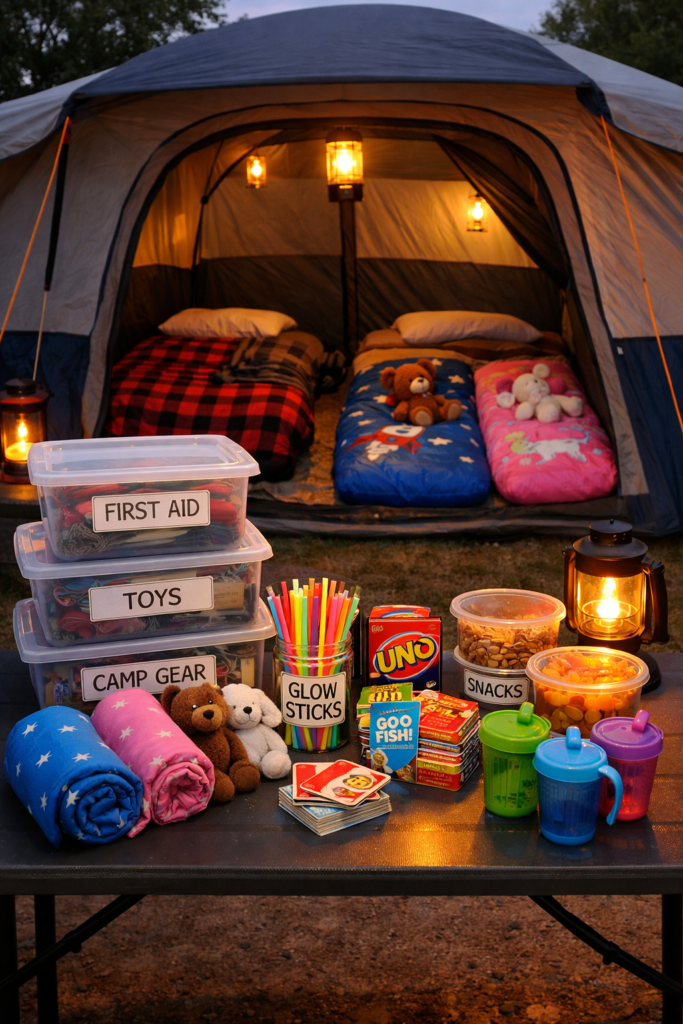
Family trips go smoother when you stop trying to minimize and start thinking about routine. A spacious tent with enough room for everyone to spread out reduces nighttime squabbles before they start.
Familiar items from home, a stuffed animal, a favorite blanket, a small nightlight, help younger kids settle faster in an unfamiliar place. Easy meals, a deck of cards, and a few glow sticks handle the rest.
Camping Necessities for Beginners (No-Overwhelm Setup)
New campers almost always make the same mistake: they try to solve every possible problem before the first trip. An easy-pitch tent, a single-burner stove, one warm layer, one rain layer, and comfortable shoes cover the vast majority of situations.
Simple one-pot meals and a printed checklist take the mental load down to something manageable. The goal on a first trip isn’t to be fully optimized; it’s to have a good enough experience that you want to go again.
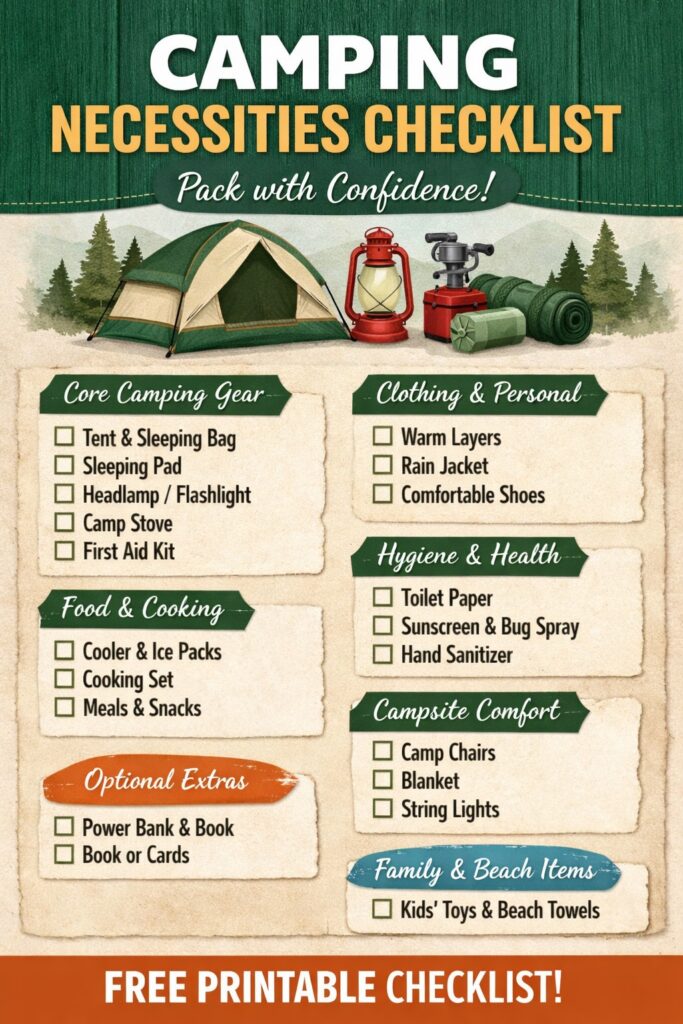
Minimalist Camping Necessities (Pack Light, Camp Calm)
Stripping a kit down to true essentials is genuinely clarifying. I choose multi-use gear wherever I can: a pot that doubles as a bowl, a headlamp instead of a lantern, neutral layers that mix across days.
No-cook or dehydrated meals cut pack weight and eliminate the need for a full stove setup on shorter trips. Safety gear never gets cut, but everything else has to justify being there.
Seasonal Camping Necessities (Adjusting for Weather)
Cold trips demand an insulated sleeping pad more than almost anything else, because ground cold drains your body heat faster than air temperature does. Summer camping flips the priorities toward ventilation, bug protection, and lightweight bedding that won’t trap heat.
Rain means waterproof stuff sacks, a tarp, and quick-dry fabrics, not necessarily more gear, just smarter gear. Wind-prone locations deserve extra guy lines and a low-profile tent before you discover why the hard way.
Optional Camping Necessities That Improve the Experience
Once the essentials are sorted, there’s a short list of optional items that genuinely improve a trip. String lights or a warm-glow lantern change the feel of a campsite after dark in a way that’s hard to explain until you’ve experienced it.
A hammock, a journal, or a paperback book slows the whole trip down, which is usually the point. A multi-tool and a roll of duct tape don’t take up much room, and they’ve saved more trips than I can count.