Portland has a way of making things look pulled together, and it is one of the best cities in the country for learning how to do that yourself. The creative community there, woodworkers, designers, artists, makers of all kinds, has been turning out thoughtful, well-crafted interiors for decades, and a lot of that thinking translates directly into camper design.
The city sits right at the edge of the Pacific Northwest, surrounded by forests and mountains, and that natural landscape shows up in almost everything Portland designers touch. These nineteen ideas draw on the same ethos: artisanal craftsmanship, sustainable materials, and a willingness to make something feel personal rather than generic.
Earthy Color Palettes Meet Bold Accents
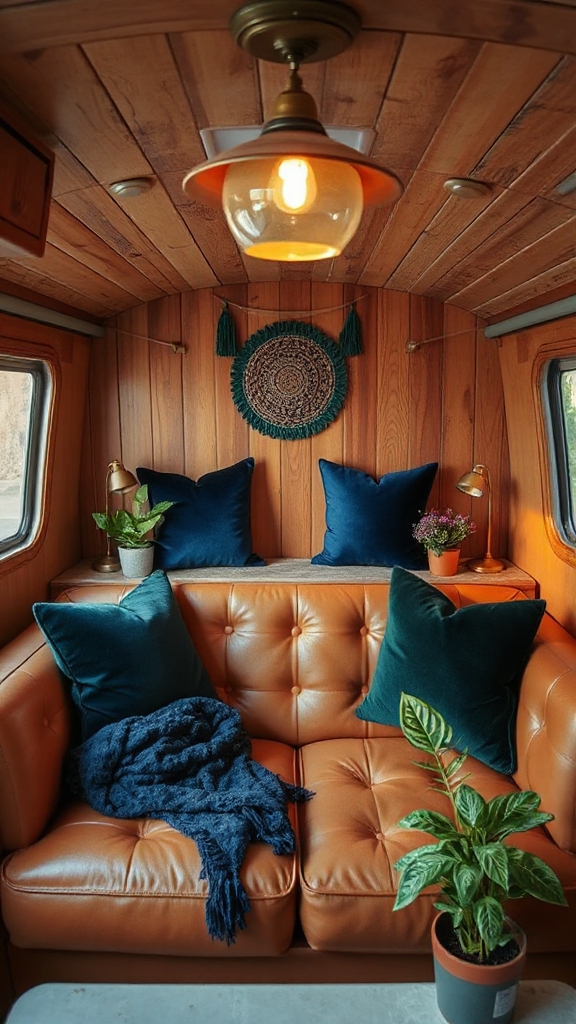
Portland interiors lean toward earth tones as a baseline, soft greens, warm browns, muted grays, but they also know when to throw in a bold accent to keep things from feeling flat. The trick is restraint. Pick one or two bold colors and let them show up in smaller doses on cushions, a backsplash, or a single painted cabinet rather than spreading them everywhere.
Rich textures and layered patterns add visual interest that keeps an earthy palette from becoming boring, and in a small camper space, that layering gives the interior depth without making it feel cluttered.
SEE THIS: The Complete Guide to Renovating Camper Interiors in Flagstaff, Arizona!
Contents
- 1 Two-Tone Cabinet Magic for Small Spaces
- 2 Natural Wood Elements and Textures
- 3 Handcrafted Storage Solutions
- 4 The Art of Mixed Materials
- 5 Sustainable Textile Layering
- 6 Transformable Living Areas
- 7 Vertical Storage Maximization
- 8 Bohemian-Inspired Accent Walls
- 9 Indoor Plants and Living Walls
- 10 Artisanal Lighting Fixtures
- 11 Multi-Purpose Kitchen Design
- 12 Custom Built-In Features
- 13 Outdoor Living Integration
- 14 Local Artist Collaborations
- 15 Eco-Friendly Material Choices
- 16 Creative Storage Solutions
Two-Tone Cabinet Magic for Small Spaces
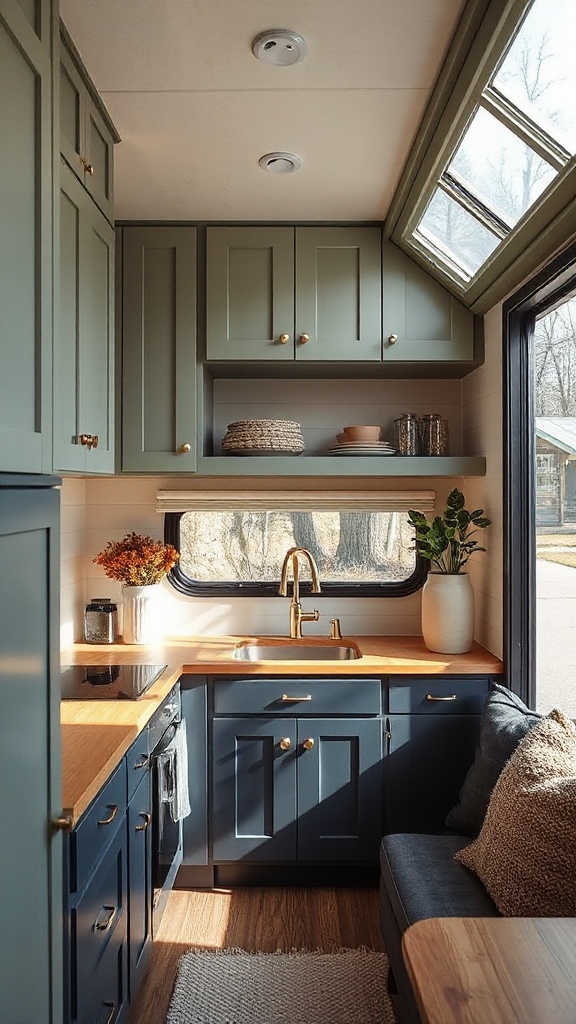
Two-tone cabinetry is one of the easiest ways to add visual complexity to a camper without actually complicating the build. Dark lower cabinets paired with light uppers anchor the space and create a sense of balance that a single color cannot quite pull off on its own.
The contrast also makes the ceiling feel higher, and the whole interior feel more open, which is exactly what you need in a compact rig. It is a simple trick that works almost every time, and it gives you room to play with materials and finishes without the whole thing turning into a mess.
SEE THIS: 15 Mid-Century Modern Camper Interiors for Palm Springs, California!
Natural Wood Elements and Textures
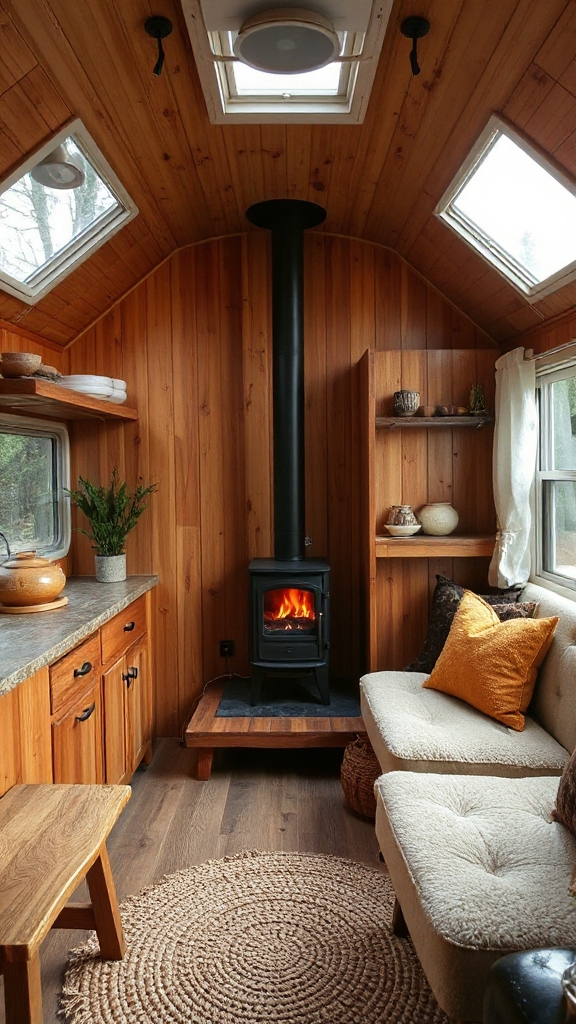
Wood is the backbone of Portland design, and in a camper, it does the same job it does in a house: it adds warmth, it ages well, and it connects the interior to the natural world outside. Curved wood paneling that flows from the walls to the ceiling softens the hard angles of a camper shell and makes the whole space feel more organic.
Reclaimed barn wood on cabinetry or a countertop brings in history and character that new lumber just does not have, and a resin-inlaid wood countertop turns a functional surface into a focal point. Layer in macramé hangings, jute rugs, and woven baskets, and the whole interior starts to feel layered and lived in rather than assembled from a kit.
Handcrafted Storage Solutions
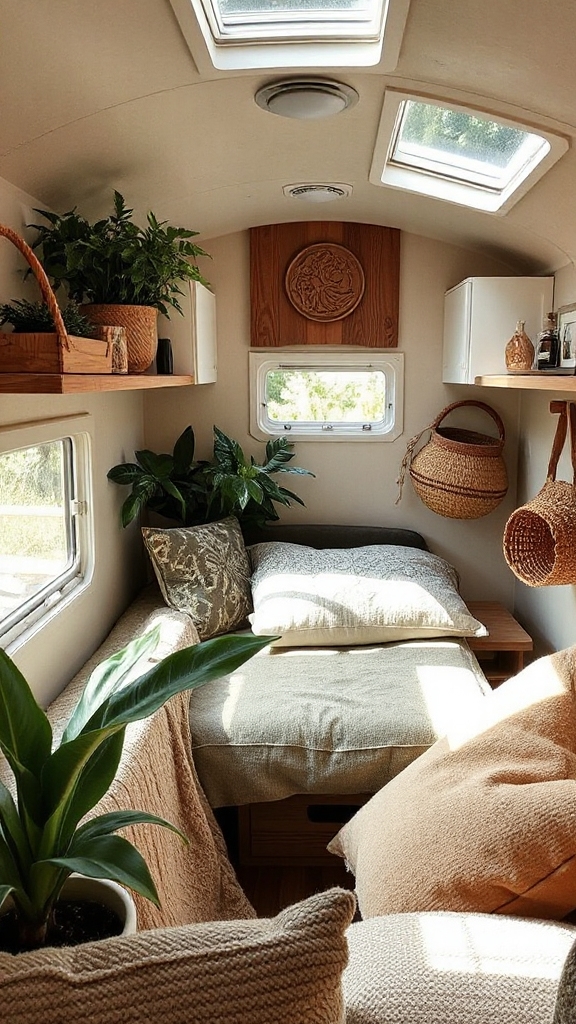
Mass-produced storage systems work fine, but handcrafted solutions fit better and last longer, and in Portland, that craftsmanship shows up in almost every well-designed camper. Custom modules built to fit your specific truck and camper combination eliminate the wasted space that generic bins and shelves always leave behind.
Strategic layout planning keeps everything accessible without forcing you to crawl into tight corners every time you need something, and the whole system feels intentional rather than improvised. It is the kind of detail that separates a camper that works from one that actually works well.
The Art of Mixed Materials
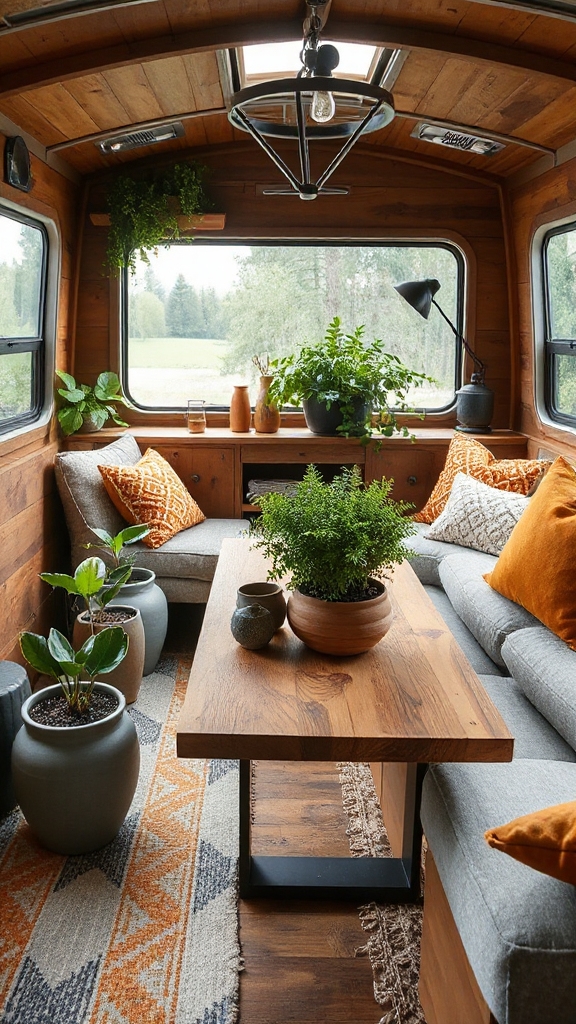
Portland designers understand that mixing materials is what gives a space texture and personality, and in a camper, that mix is even more important because you have limited space to work with.
Blackened steel paired with light birch plywood creates a contrast that feels industrial without being cold, and brushed metal contrasts with wire-brushed oak, adding a tactile quality that makes the whole interior more engaging. A neutral base palette keeps different finishes from competing, resulting in a space that feels carefully considered rather than thrown together. The mix itself becomes the design.
Sustainable Textile Layering
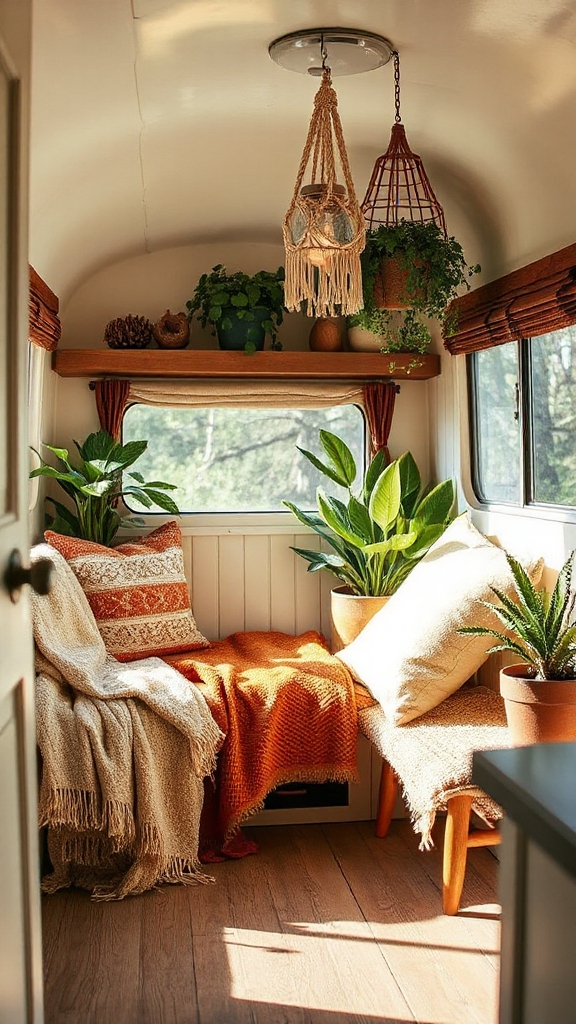
Sustainability is not just a buzzword in Portland. It is a design principle, and in a camper, that means choosing textiles that actually last and have a low environmental footprint. Eco-certified fabrics layered with recycled synthetics give you both the look and the durability you need without compromising on either one.
Sheer textiles let natural light filter through while still giving you privacy, and stain-resistant finishes keep everything looking clean even after weeks on the road. The approach reduces energy consumption and keeps your footprint small, exactly what Portland Design has been pushing for years.
Transformable Living Areas
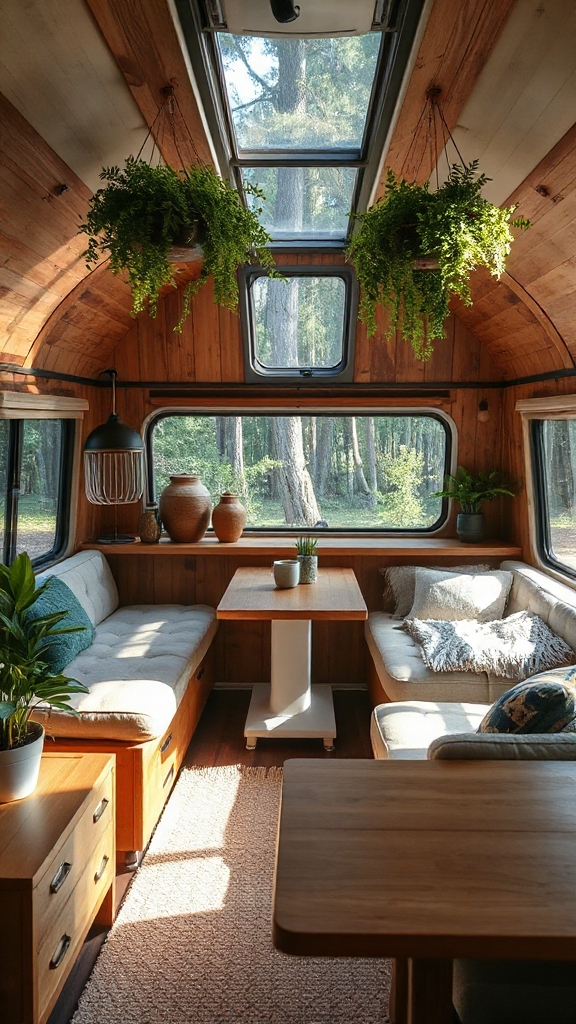
A camper interior that can shift from a living room to a bedroom to a workspace is a camper that actually works, and transformable design is one of Portland’s strengths. Sliding barn doors separate areas when you need privacy and open everything up when you do not, and versatile LED lighting changes the mood depending on what you are doing in the space at any given time.
The whole idea is that the interior adapts to you rather than forcing you to adapt to it, and in a small rig, that flexibility is what makes the difference between a cramped space and a functional one.
Space-Saving Furniture Designs
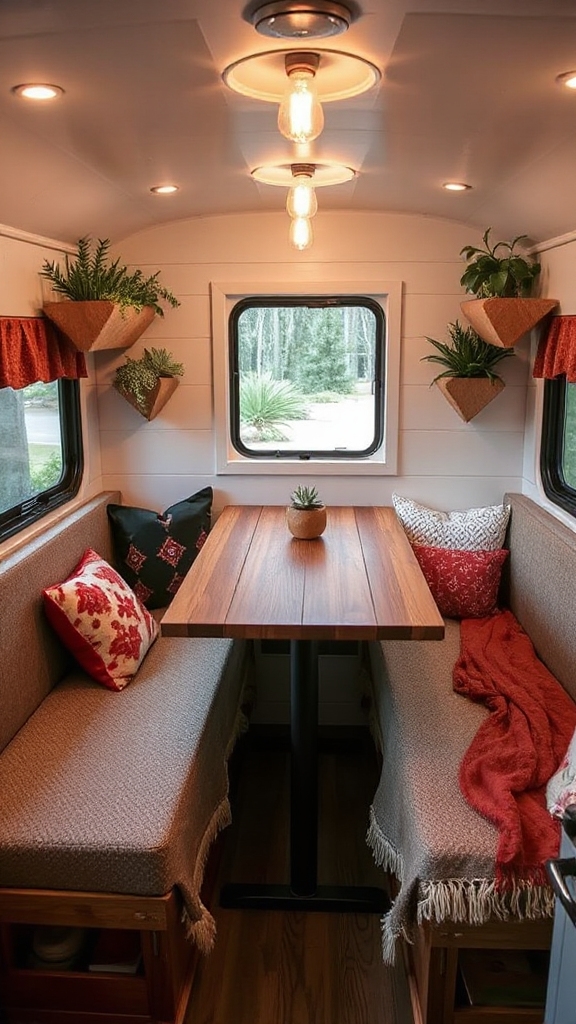
Every piece of furniture in a camper needs to earn its place, and space-saving designs help ensure nothing is just sitting there taking up room. Modular furniture systems that rearrange depending on your needs give you the kind of adaptability that fixed layouts cannot match.
Collapsible tables, fold-down benches, and nesting chairs stow flat when not in use and reappear when needed, keeping the floor space open most of the time. It is a level of efficiency that Portland designers have been refining for years in tiny homes, and it translates perfectly into camper builds.
Vertical Storage Maximization
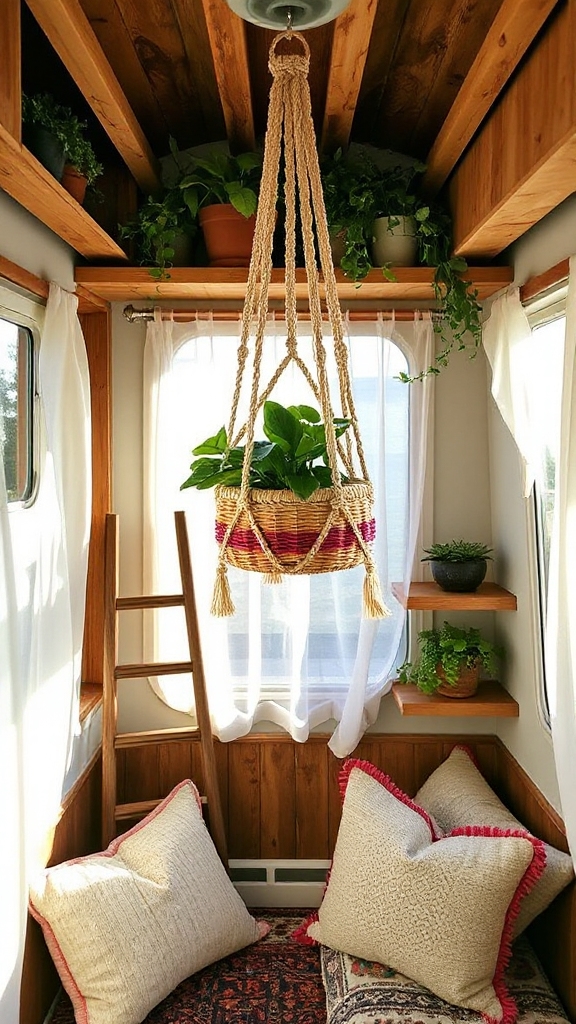
Floor space in a camper is limited, but vertical space is usually wide open, and making the most of that height is one of the simplest ways to add storage without crowding the interior. Wall-mounted racks, overhead compartments, and pegboards turn empty walls into functional surfaces, and magnetic strips keep kitchen tools organized and off the counters.
Over-the-door organizers are one of those small upgrades that make a surprisingly big difference in how much you can fit into the space. The whole strategy is about looking up instead of out, which is exactly what you need to do in a compact rig.
Bohemian-Inspired Accent Walls
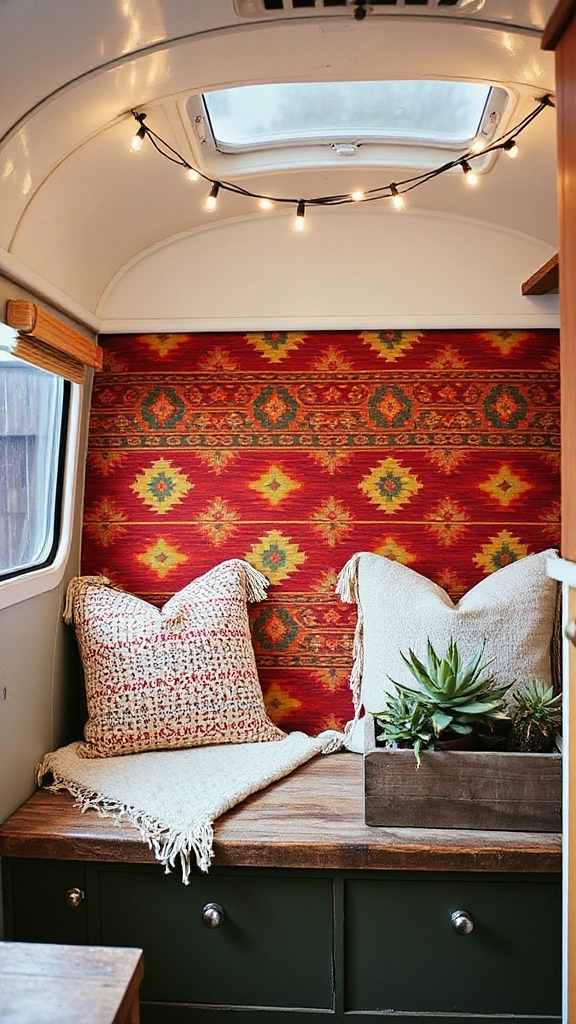
Portland has a strong bohemian streak running through its design community, and an accent wall is one of the easiest places to let that show up in a camper. Rich textures, bold patterns, and eclectic layering turn a flat surface into something that catches the eye every time you walk in.
Vintage textiles and woven wall hangings add depth, and metallic accents, such as brass fixtures or copper lighting, keep it from feeling too soft or muted. The whole wall becomes a statement without overwhelming the rest of the space, and that balance is what makes a bohemian accent wall work in a small interior.
Indoor Plants and Living Walls
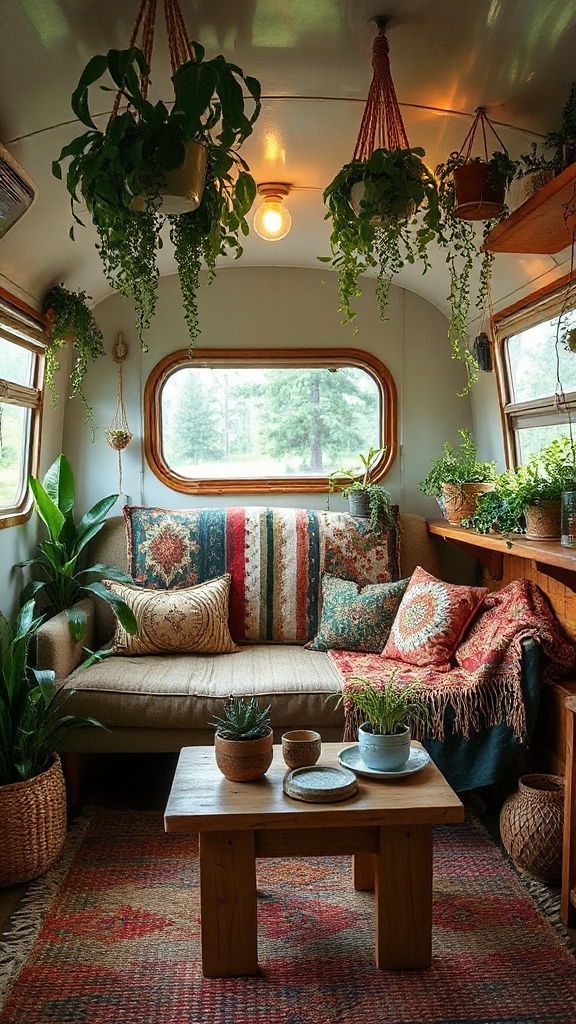
Portland loves its greenery, and bringing plants into a camper is one of the best ways to make a small space feel alive and connected to the outdoors. Low-maintenance options like tillandsia mounted on simple brackets or succulent arrangements in wall planters do not require much care and hold up well during travel.
Earthquake putty keeps everything secure while you are driving, and self-watering systems let you leave for a day or two without worrying about whether your plants will survive. A living wall occupies minimal floor space and adds a layer of texture and color that no amount of decor can replicate.
Artisanal Lighting Fixtures
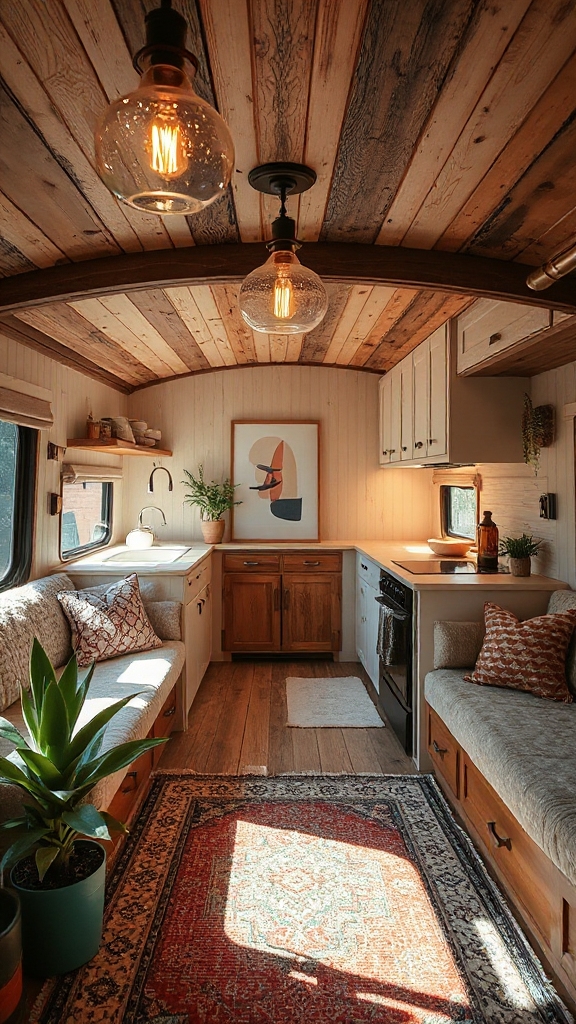
Lighting in a camper sets the overall mood, and Portland has no shortage of local artisans crafting fixtures that turn a utilitarian necessity into a design piece. Cedar and Moss produces handcrafted mid-century modern lights that feel polished without being flashy, and HiiH Lights makes sculptural paper fixtures that diffuse light in a way that softens the whole interior.
If you are working with a tighter budget, options like the Portland chandelier from Velora run around $280 and add a rustic edge with customizable finishes. The right fixture does more than just light the room. It becomes part of the story the space tells.
Multi-Purpose Kitchen Design
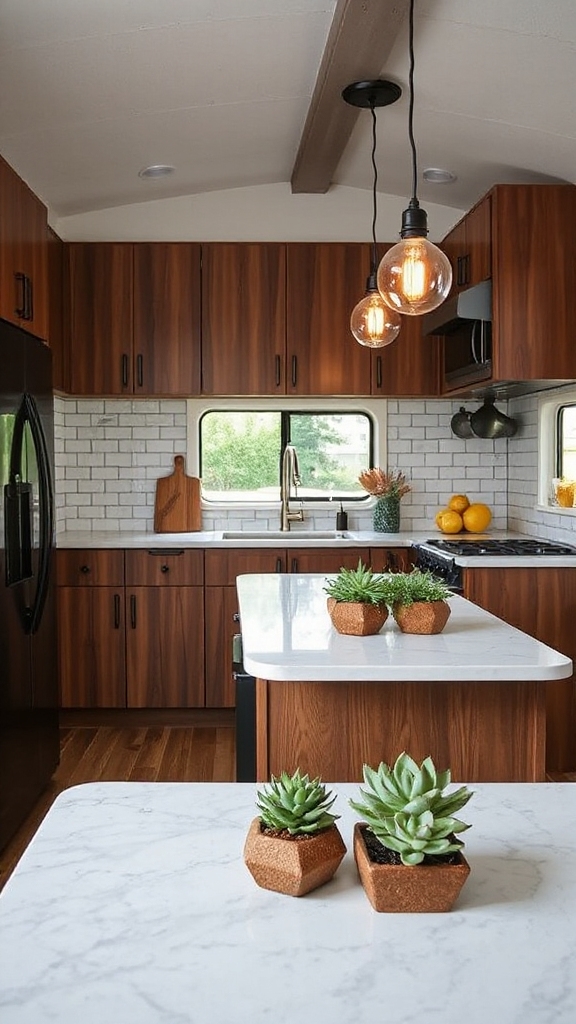
A camper kitchen needs to handle everything from a quick breakfast to a full dinner without eating up the entire interior, and a multi-purpose design is how you make that happen. Foldable countertops expand when you are cooking and disappear when you are not, and pull-out pantries keep dry goods organized without requiring a dedicated cabinet.
Nesting kitchenware and magnetic strips for utensils keep the drawers from becoming a junk pile, and integrated water tanks paired with energy-efficient appliances make the setup functional off the grid. The kitchen should feel capable of real cooking; if it cannot, you will not use it.
Custom Built-In Features
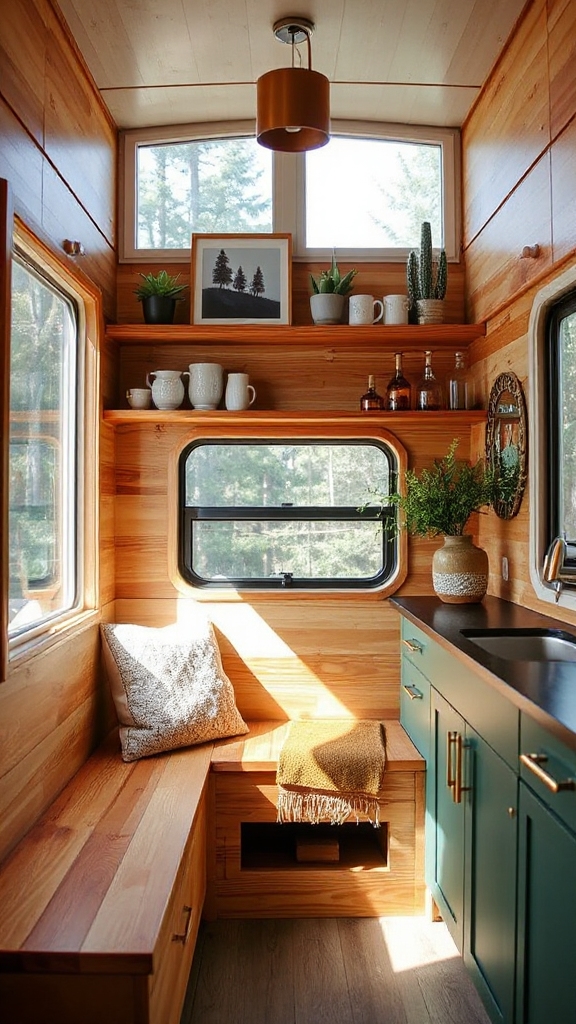
Custom-built-ins are what separate a camper that feels like a project from one that feels like a home, and in Portland, the craftsmanship behind those features is typically high. Convertible benches that turn into beds with storage underneath give you flexibility without requiring you to move furniture around every night.
Fold-away desks built into the wall enable remote work without dedicating permanent office space, and integrated charging stations keep your devices powered without cords running everywhere. Every built-in should solve a problem you actually have, rather than just looking clever, and when it does, the whole interior starts to work the way it is supposed to.
Outdoor Living Integration
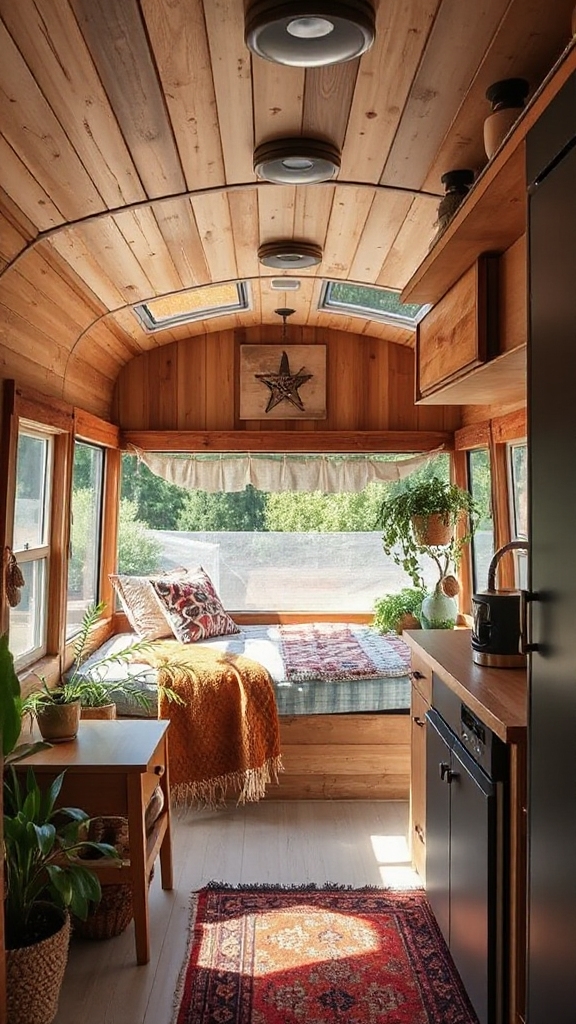
Portland design blurs the line between indoors and outdoors, and in a camper, that philosophy makes the whole rig feel bigger than it actually is. Large windows and retractable awnings create a natural connection between the interior and whatever landscape you are parked in, and that visual continuity is what keeps the space from feeling claustrophobic.
Sustainable materials, like reclaimed wood, carry through from the inside out, so the design language remains consistent whether you are sitting at the dinette or under the awning. Modular storage that extends to the outdoor area keeps everything organized without forcing you to haul bins back and forth every time you set up camp.
Local Artist Collaborations
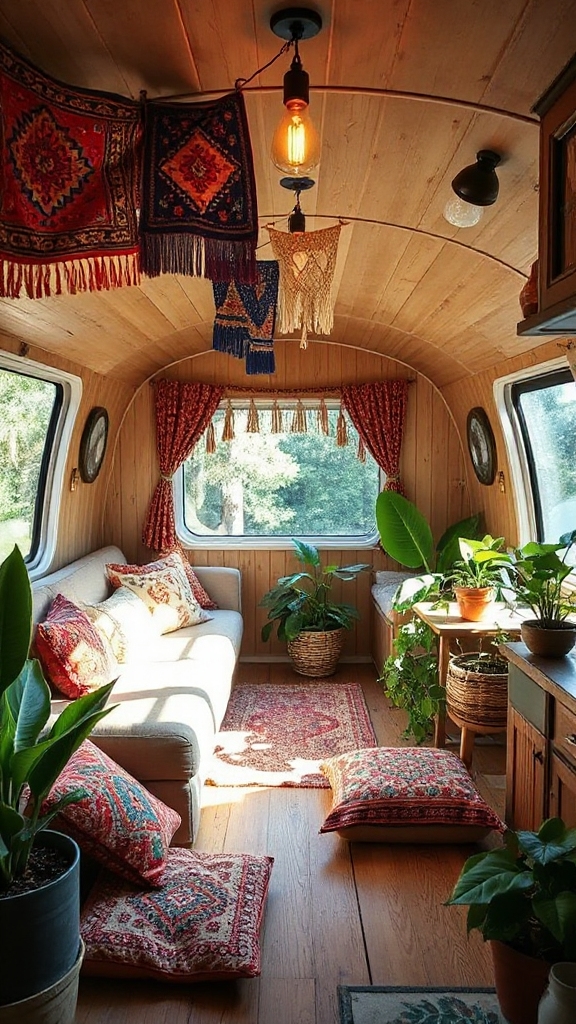
Working with local artists to customize your camper interior is one of the most Portland things you can do, and it gives your space a personality that mass-produced decor never will. Groups like Elbow Room and the Portland Street Art Alliance connect you with artists who can create commissioned pieces that reflect your style and tie directly into the city’s creative culture.
A custom mural, a hand-painted cabinet, or a unique textile piece transforms your camper into something one-of-a-kind while supporting the local creative economy. It is the kind of detail that makes a camper feel genuinely yours rather than just well-decorated.
Eco-Friendly Material Choices
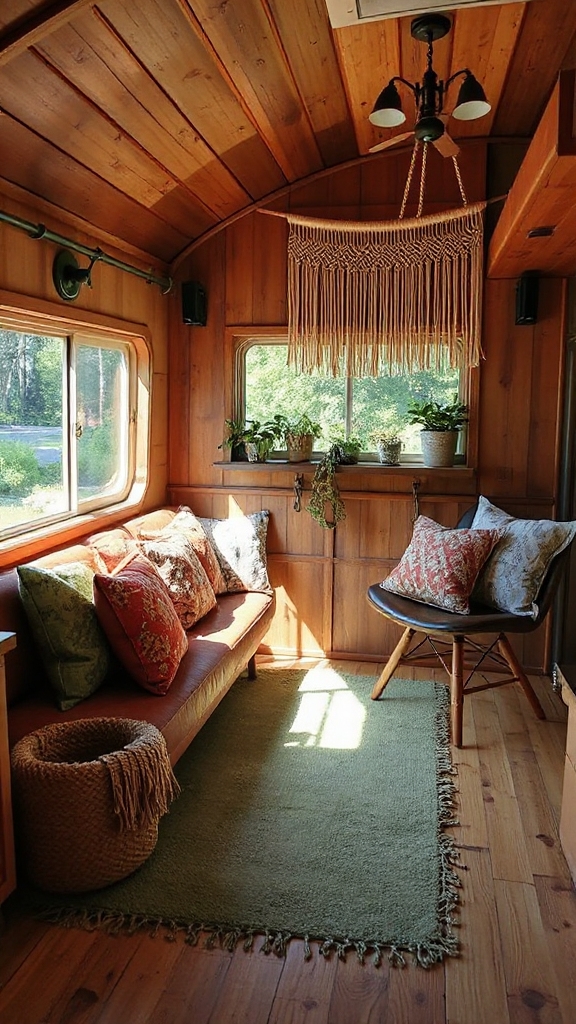
Portland has been ahead of the curve on sustainable building materials for decades, and those same choices work beautifully in a camper interior. Forbo Marmoleum linoleum is water-resistant, durable, and made from renewable resources, which makes it a better flooring option than most vinyl or laminate.
Havelock Wool insulation is natural and non-toxic, performs better in humid conditions than fiberglass, and Marquesa Lana polyolefin upholstery holds up well to heavy use while being fully recyclable. Every material choice you make either increases or reduces your environmental footprint, and in a camper where space is limited, choosing materials that do more than one job well helps keep the build sustainable.
Statement Pieces in Small Spaces
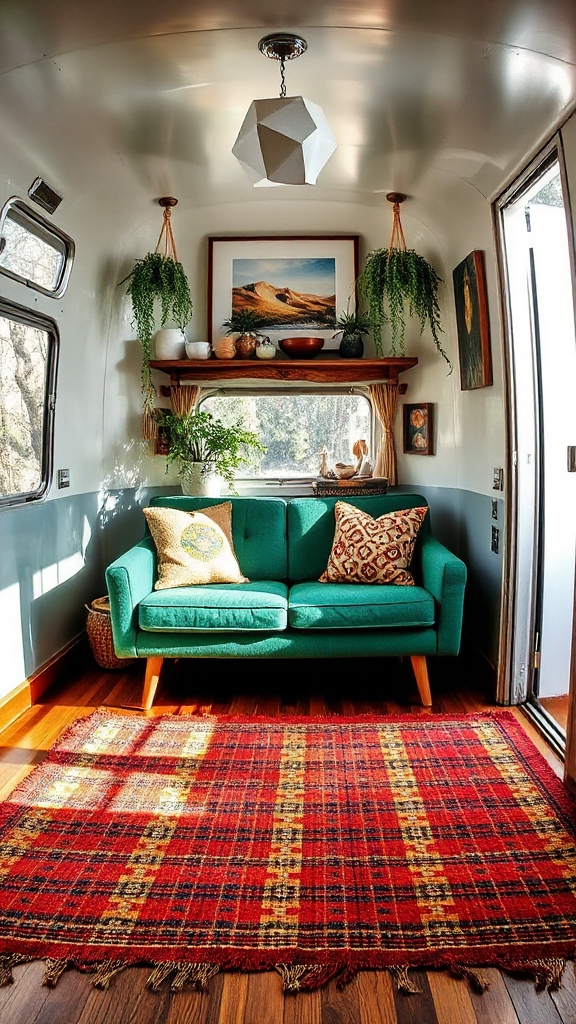
A single well-chosen statement piece in a small camper can do more for the design than a dozen smaller decorative items, and Portland interiors understand that principle better than most. A large-scale art piece on one wall or a unique light fixture over the dining area becomes the focal point that pulls the whole space together.
Bold, compact furniture that reflects the city’s creative edge gives the interior personality without taking up too much room, and earthy textures and vibrant textiles layered around it add depth without competing for attention. The statement piece does the heavy lifting, and everything else supports it.
Creative Storage Solutions
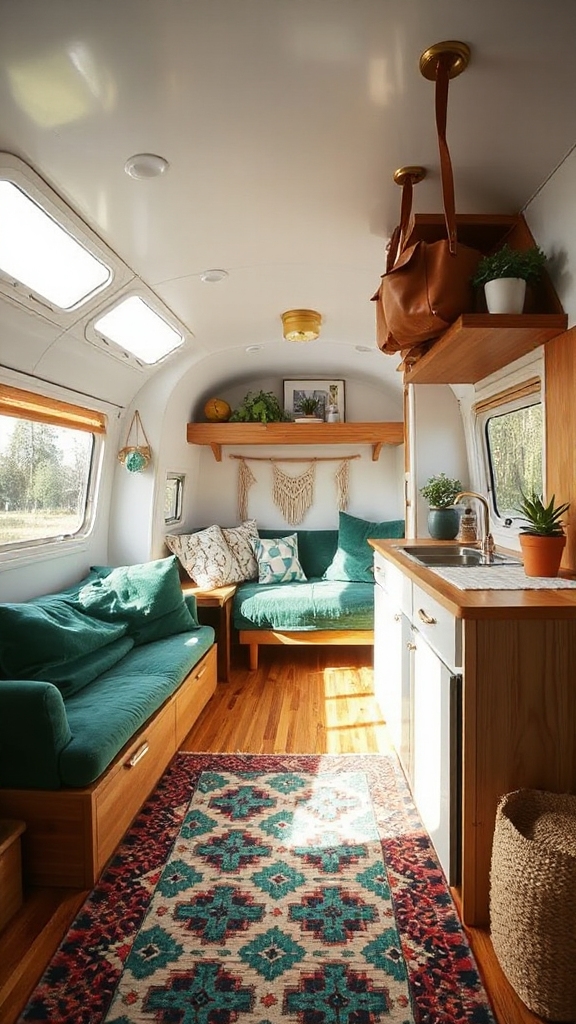
Storage in a camper is a constant challenge, and creative solutions are what keep the interior from becoming cluttered. Magnetic strips mounted inside cabinet doors or along the wall keep kitchen tools organized and accessible without taking up drawer space.
Wall-mounted hooks hold bags, hats, and jackets so they are not piled on the bed or the bench, and multipurpose furniture, such as storage ottomans and pull-out couches, provides places to stash gear without adding dedicated storage units. The best storage is the kind you do not notice until you need it, and in a small space, that invisibility is what makes the whole system work.