The Pacific Northwest has a way of making you want to bring it with you. The moss, the mist, the way morning light filters through a Douglas fir canopy at low angle.
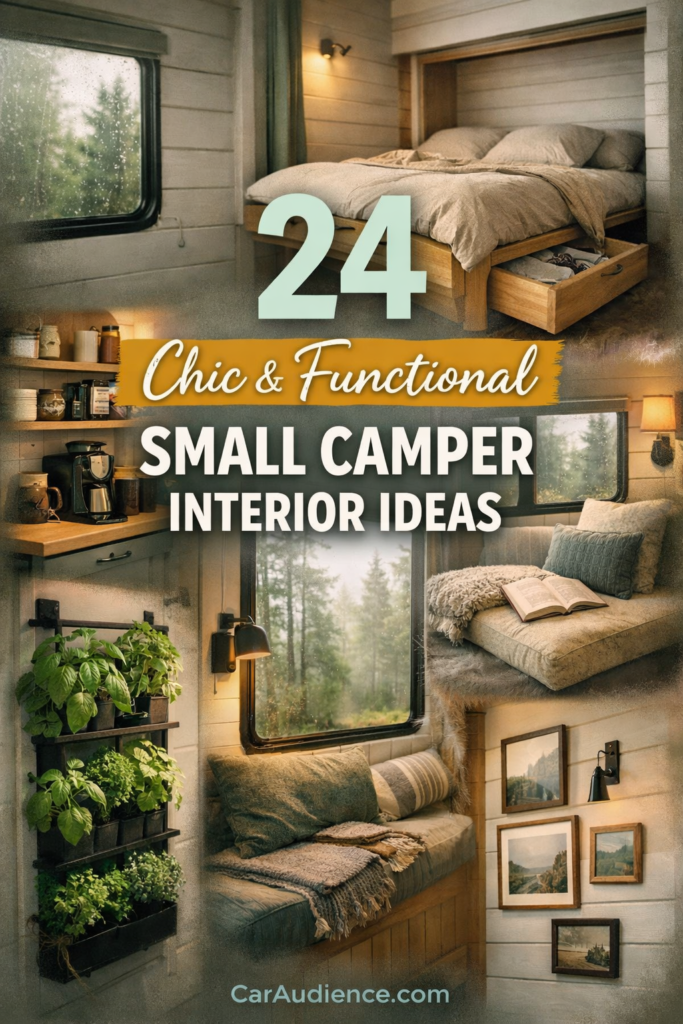
People who camp out here long enough start designing their rigs to match that feeling, and the results are some of the most livable small spaces I’ve ever stepped into. These 24 ideas pull from that regional sensibility and apply it to the real constraints of mobile living.
Contents
- 1 Pacific Northwest-Inspired Color Palette
- 2 Space-Maximizing Murphy Bed Installation
- 3 Retractable Dining Solutions
- 4 Vertical Garden Wall Feature
- 5 Multi-Purpose Storage Benches
- 6 Modern Shiplap Accent Walls
- 7 Compact Coffee Station Design
- 8 Hidden Pantry Pull-Out Systems
- 9 Rustic Cedar Ceiling Treatment
- 10 Transformable Work-From-Camper Setup
- 11 Creative Door Storage Solutions
- 12 Minimalist Scandinavian Touches
- 13 Built-In Reading Nook Design
- 14 Modular Kitchen Organization
- 15 Ambient LED Lighting Schemes
- 16 Mountainscape Wall Murals
- 17 Foldable Bathroom Solutions
- 18 Vintage-Modern Hardware Updates
- 19 Under-Bed Storage Systems
- 20 Northwest Artist Gallery Wall
- 21 Cozy Window Seat Configuration
- 22 Smart Tech Integration Corners
- 23 Pet-Friendly Space Solutions
- 24 Eco-Friendly Material Upgrades
Pacific Northwest-Inspired Color Palette
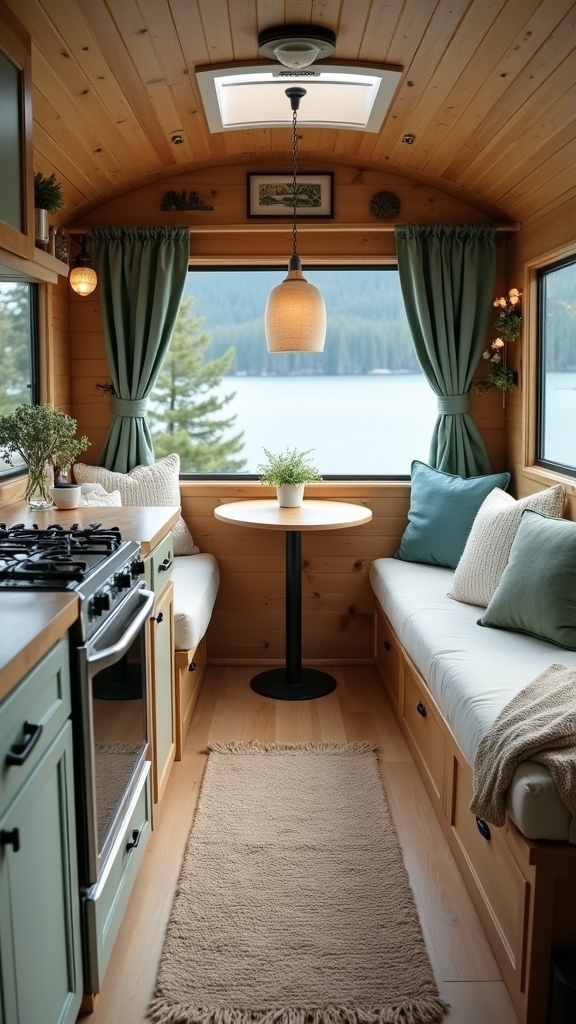
The colors that work in a PNW-inspired camper are the ones already outside the window. Misty grays, deep forest greens, and the kind of muted oceanic blue you see on an overcast Puget Sound morning.
Revere Pewter by Benjamin Moore has become something of a go-to for this reason; it shifts warm or cool depending on the light, which mirrors exactly what the Northwest sky does. Keep the palette to three tones and let the natural materials carry the rest.
Space-Maximizing Murphy Bed Installation
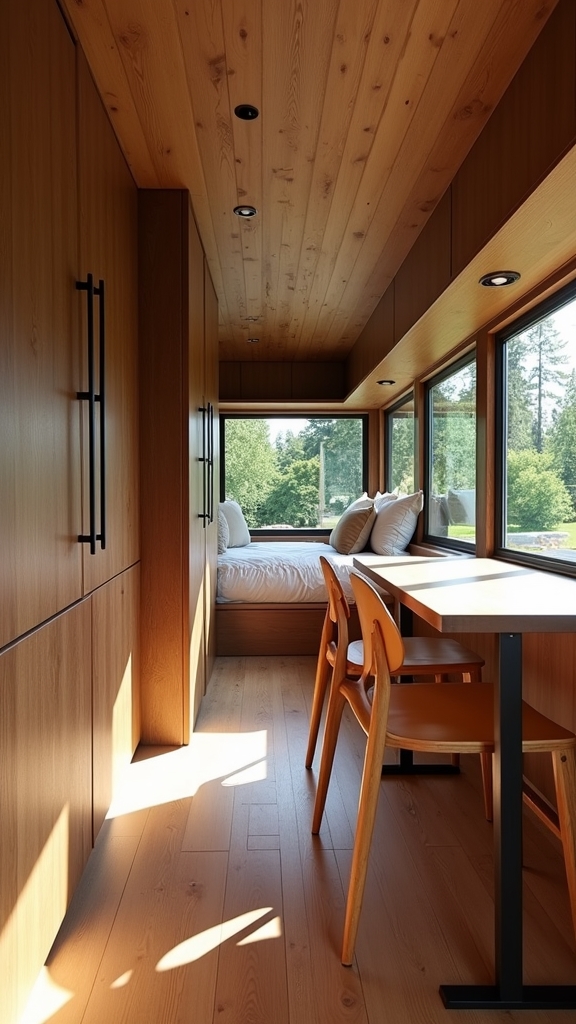
A Murphy bed is the single highest-impact change you can make to a camper’s daytime livability, and the difference between a well-installed one and a poorly installed one is everything.
Find the wall studs before you do anything else, use quality hardware with soft-close hinges, and build storage into the surrounding structure rather than treating it as an afterthought. Done right, you recover the equivalent of a second room every morning.
Done wrong, you have a wall that terrifies you every time you fold it down.
SEE THIS: 22 Vintage Small Camper Interior Ideas That Shine in Texas Hill Country!
Retractable Dining Solutions
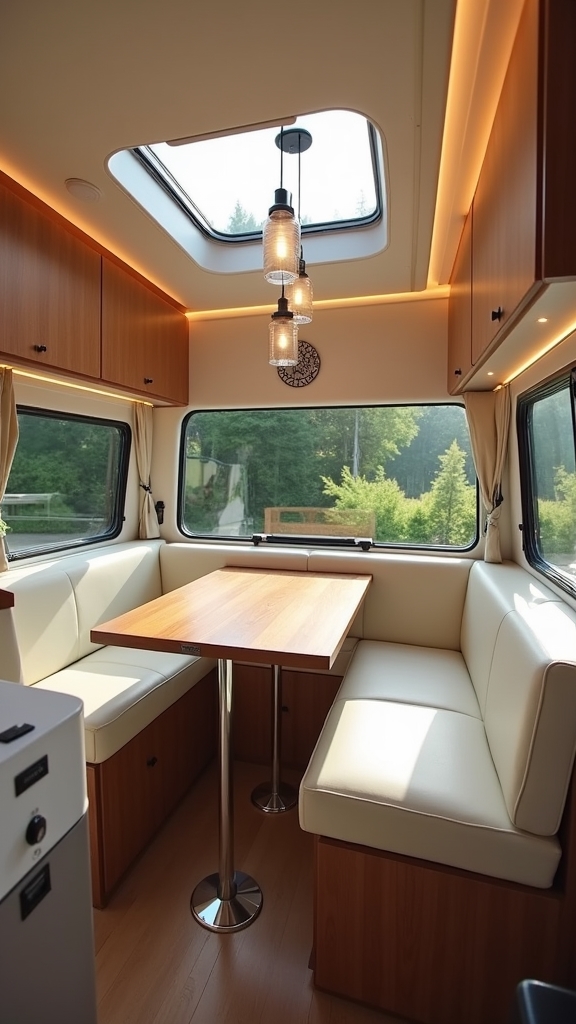
A drop-leaf table mounted to the wall on a swivel pedestal occupies almost no space when folded and seats four when open, which is exactly what a camper needs. Recycled materials work beautifully here because the slightly imperfect grain of reclaimed wood reads as intentional in this context rather than budget-conscious.
If permanent installation isn’t an option, a quality portable camping table on a quick-release mount solves the same problem with considerably less commitment. Either way, the goal is a surface that earns its place twice: once for meals and once for not existing.
SEE THIS: Before & After: Camper Renovation That Doubled Living Space!
Vertical Garden Wall Feature
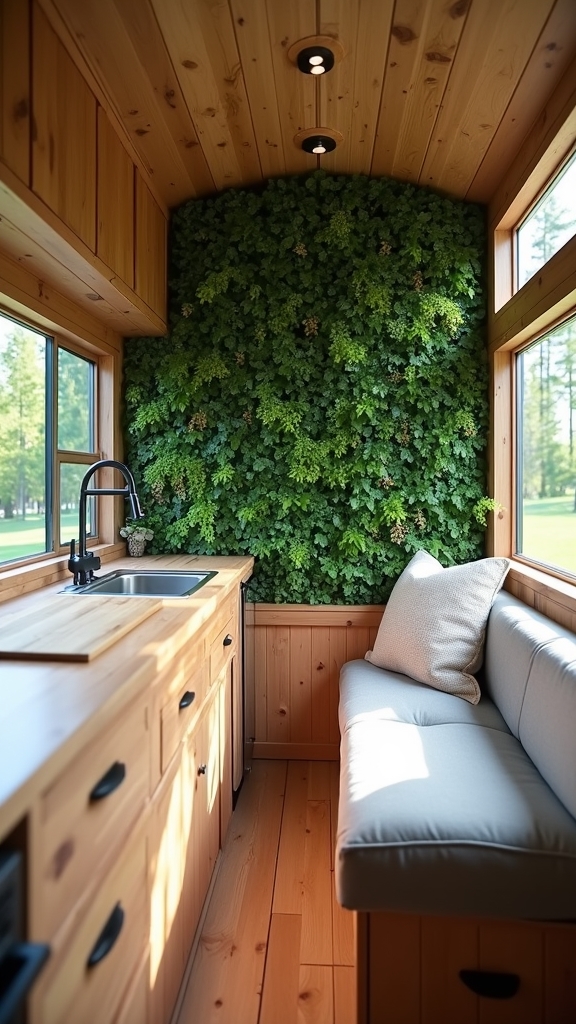
A section of pegboard or a pocket planter system mounted to an interior wall gives you fresh herbs without sacrificing any counter space, which is a trade worth making in a camper kitchen.
Basil and thyme handle the inconsistent watering that road life produces better than most herbs, and low-maintenance succulents need almost nothing from you.
The living element also does something no poster or artwork can do, which is change with the season and remind you that something is actually growing in here. It sounds like a small thing until you’ve spent three weeks in a rig with nothing alive in it.
Multi-Purpose Storage Benches
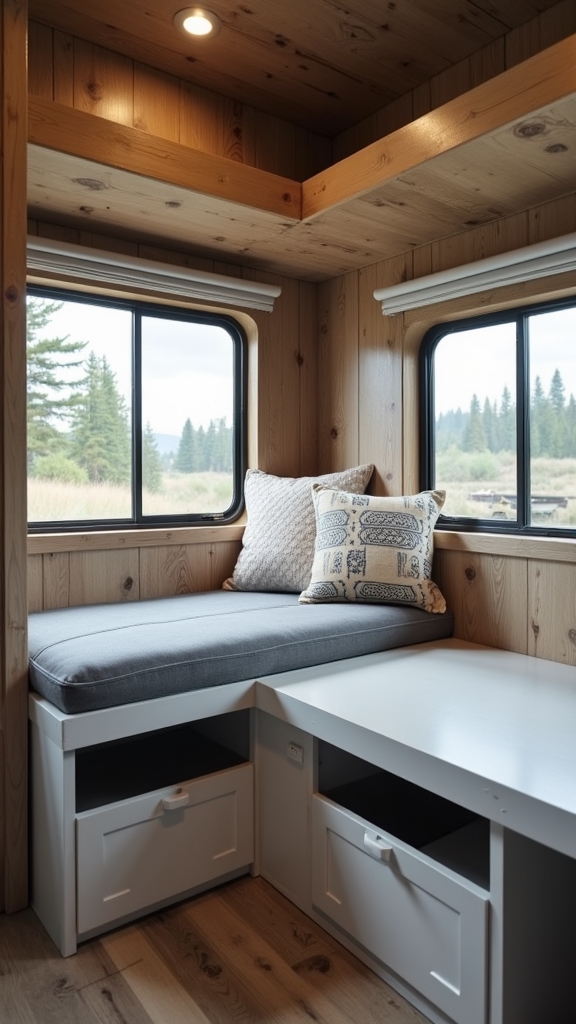
A bench that doesn’t open up to store something is a bench that isn’t doing its job in a camper. The best versions assemble in under thirty minutes, offer customizable interiors with optional shelving and lighting, and use upholstery durable enough to handle wet gear and muddy dogs without complaint.
Position one at the dinette and one at the entry, and you’ve created natural landing zones that keep the rest of the space from absorbing the chaos of daily life on the road. Storage that’s also seating that’s also a visual anchor is the kind of efficiency that small spaces demand.
Modern Shiplap Accent Walls
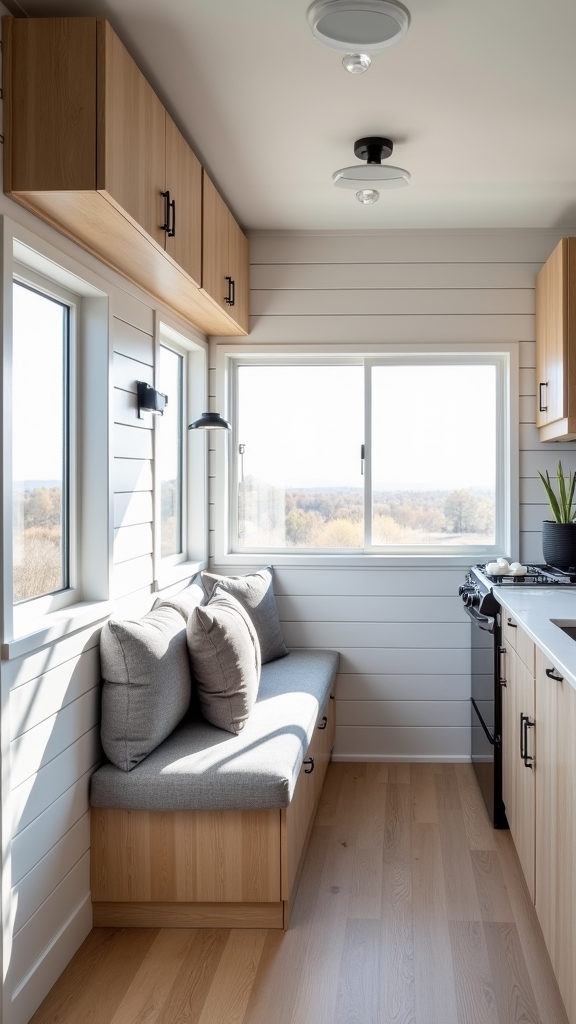
Real shiplap adds weight that a camper’s structure wasn’t designed to carry, which is why lightweight faux shiplap panels have become the practical standard for this look. The visual effect is identical from any normal viewing distance, and the wall gains texture and warmth that flat paint simply cannot produce.
In a PNW interior, go with a natural white or soft gray rather than stark bright white, because the goal is cozy rather than clinical. One wall is enough; doing all four turns a camper into a farmhouse imitation.
Compact Coffee Station Design
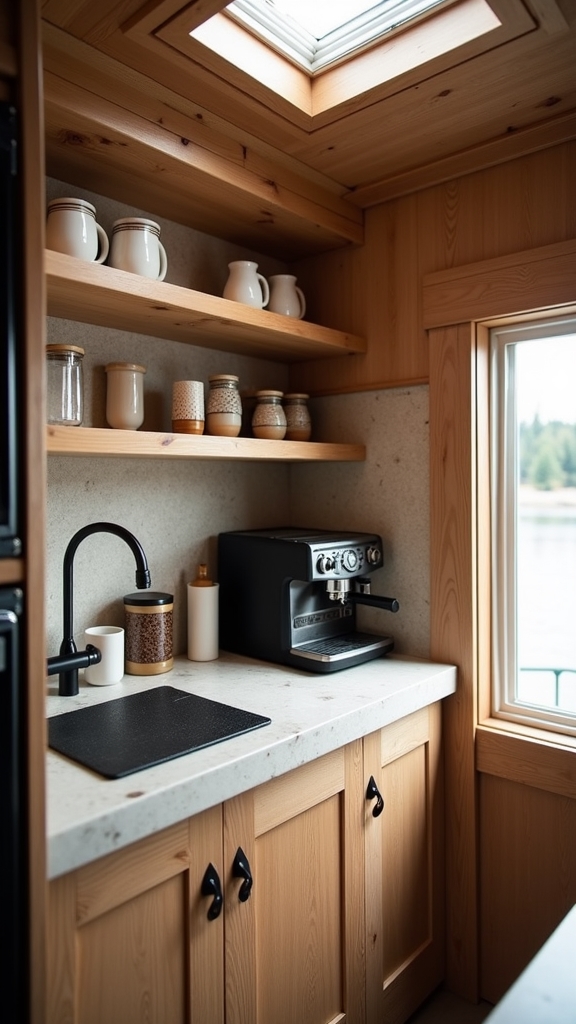
A dedicated coffee station in a camper sounds indulgent until you’ve tried navigating a chaotic galley kitchen at six in the morning in a campground.
Floating shelves above a small section of counter, pull-out trays for the machine, labeled containers for beans and supplies, and a few pieces of stoneware that stack cleanly all combine to make the ritual actually pleasant.
Compact multipurpose appliances like a combination grinder and brewer keep the footprint honest. The station takes up eighteen inches of counter and saves the entire tone of the morning.
Hidden Pantry Pull-Out Systems
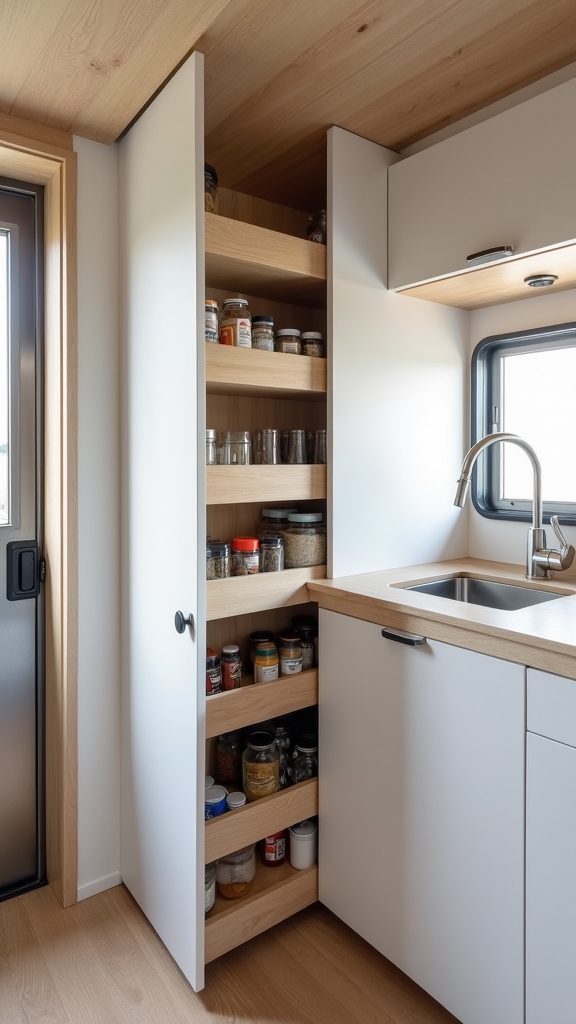
The space inside a camper cabinet is rarely used as efficiently as it could be, and a pull-out pantry system on heavy-duty drawer slides fixes that immediately. Custom-built from wood or composite panels, these systems can be sized to fit almost any existing cabinet depth and make everything visible and reachable in a single motion.
The alternative is the camper pantry most people actually have, where things disappear behind other things, and you buy a second jar of cumin because you couldn’t find the first one. This is a weekend project with returns that compound every single trip.
Rustic Cedar Ceiling Treatment
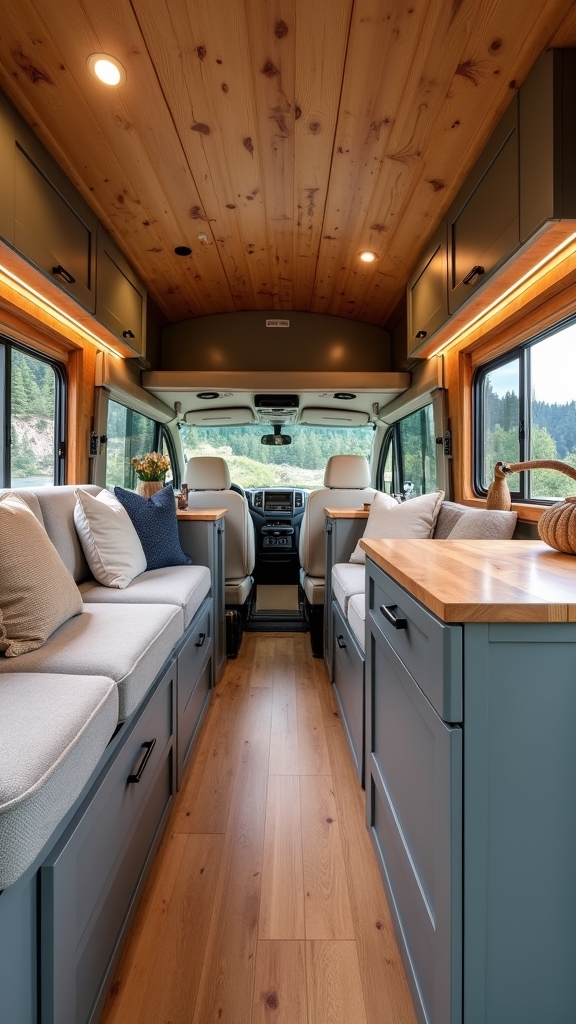
Cedar planks mounted on furring strips transform the ceiling of a camper from its least interesting surface into its most memorable one. The grain pattern and natural scent of unfinished cedar do more atmospheric work than almost any other single material you could choose for a PNW interior.
Stain it dark for a moody, forested feel or leave it natural and let it lighten gradually over time. Look up in most campers, and you see nothing; look up in one with a cedar ceiling, and you feel like you’re already somewhere worth being.
Transformable Work-From-Camper Setup
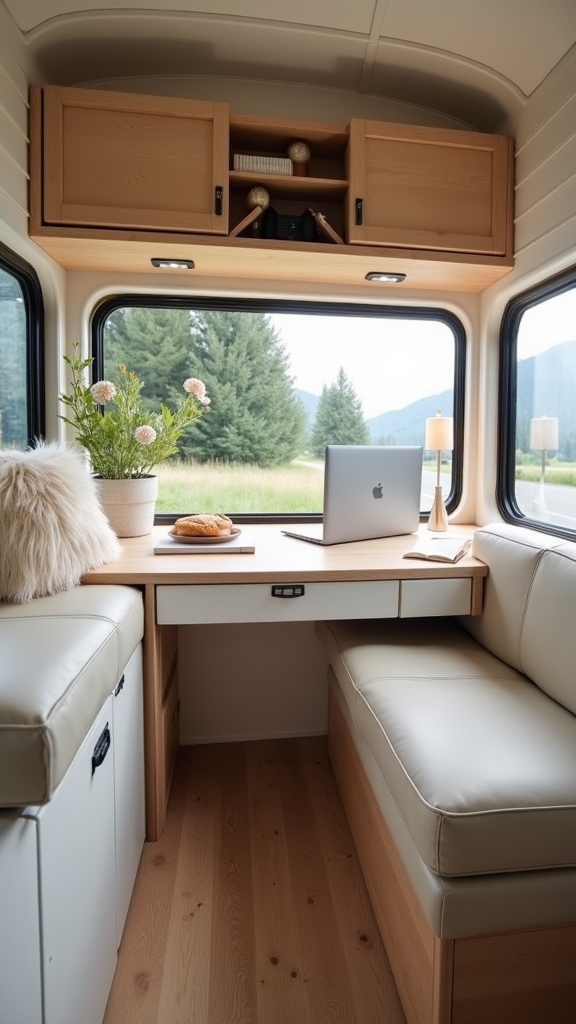
A fold-down desk mounted at seated height, a task light on an adjustable arm, and a power strip with organized cable management turn a blank wall section into a functional office. Wall-mounted accessories, like a small pegboard, keep the desk surface clear without eliminating the tools you reach for constantly.
The key is designing the setup to disappear when the workday ends, because a camper that looks like an office at dinner is a camper that stops feeling like an escape. Fold it up, stow the chair, and the room is yours again.
Creative Door Storage Solutions
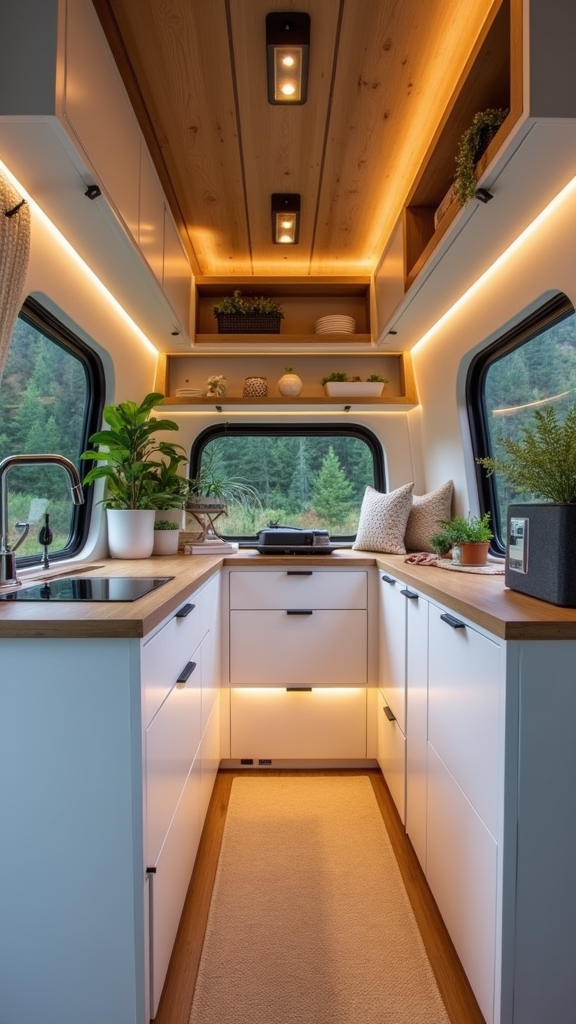
The back of every door in a camper is real estate that almost nobody develops, and it’s some of the most accessible storage in the whole rig. Over-door hooks handle jackets, bags, and towels without requiring a single hole in the wall.
Tension-rod shelves inside cabinet doors hold toiletries, spice jars, and cleaning supplies so they are immediately findable rather than eventually. The modification takes an hour and costs almost nothing, which makes it the highest return-on-effort upgrade on this entire list.
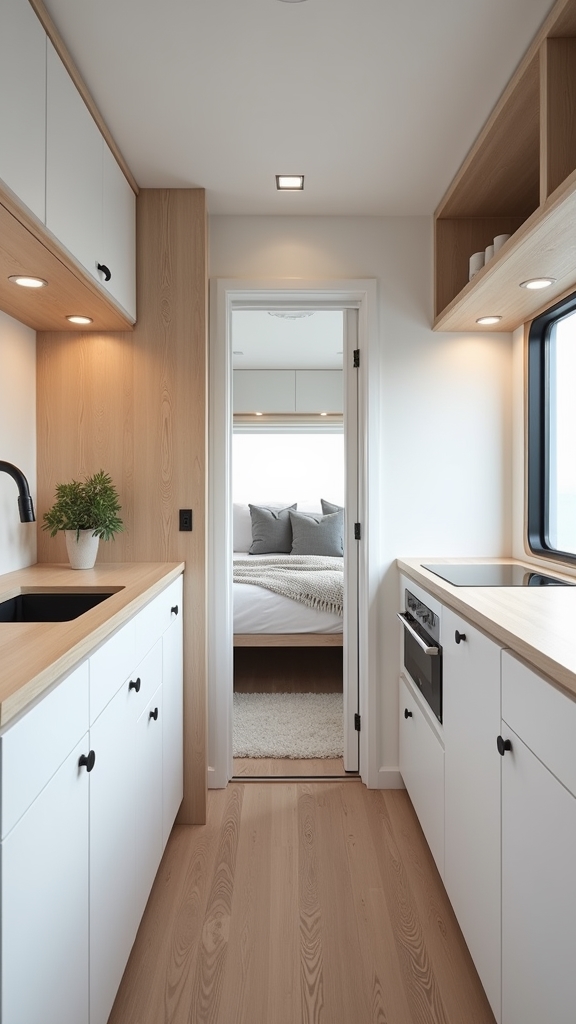
The overlap between Scandinavian design philosophy and Pacific Northwest sensibility is larger than most people realize, because both are fundamentally about bringing natural materials indoors and removing everything that doesn’t need to be there.
Light wood paneling, inset cabinet doors with clean lines, a chunky knit throw over a simple bench, and a single well-placed pendant light cover most of the visual work. Hygge isn’t a decorating style so much as a feeling, and in a camper, it’s achieved more by subtracting than by adding. Less stuff, better stuff, warmer light.
Built-In Reading Nook Design
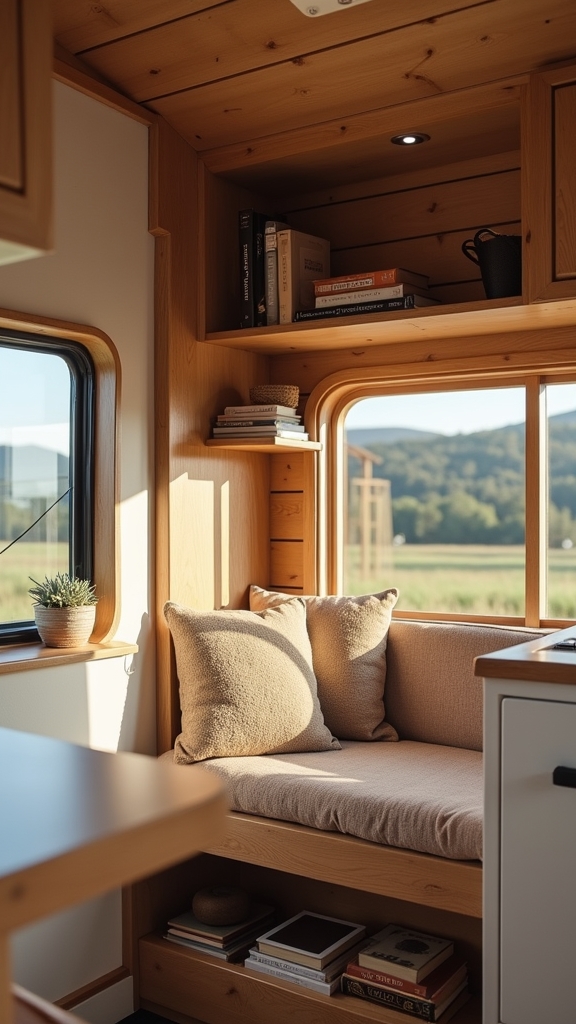
A two-sided bookshelf positioned near the dinette creates a natural enclosure that, with the addition of plush upholstery and a good reading light, becomes the spot everyone wants to sit.
The shelves do double duty as storage and as the architectural element that defines the nook without requiring walls. Use a warm-toned LED strip along the underside of the upper shelf to create the soft, directional light required for reading. In a camper, a reading nook is also a quiet corner, and quiet corners are worth designing for.
Modular Kitchen Organization
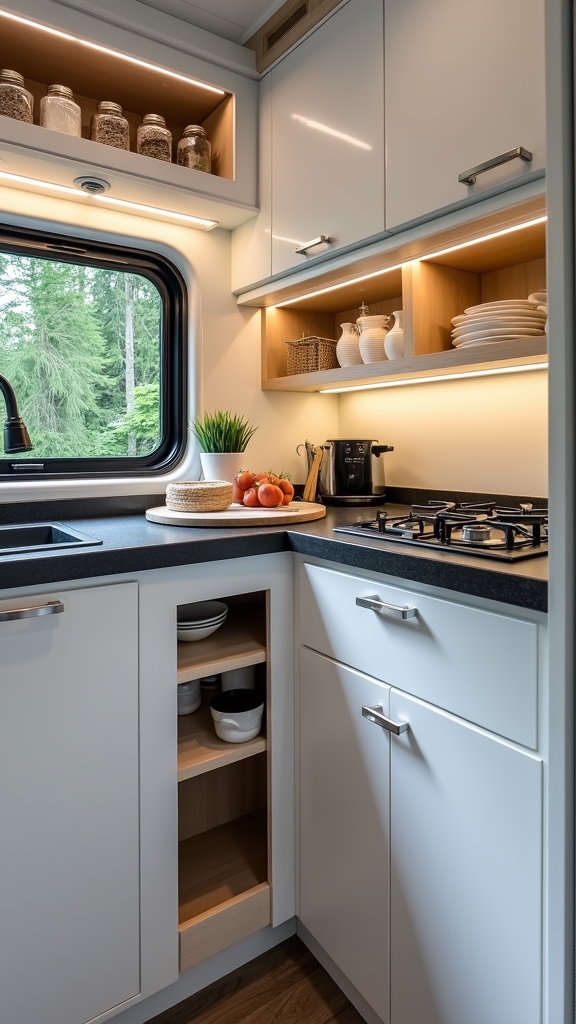
Corner carousels and pull-out baskets solve the camper kitchen’s fundamental problem, which is that things stack on top of other things, and the bottom layer becomes inaccessible within a week.
A modular system lets you reconfigure as your needs change, rather than committing to a layout that may not accommodate how you actually cook on the road. Install drawer dividers, add a pull-out cutting board if the counter depth allows it, and address the cabinet corners first because that’s where storage goes to die.
Ambient LED Lighting Schemes
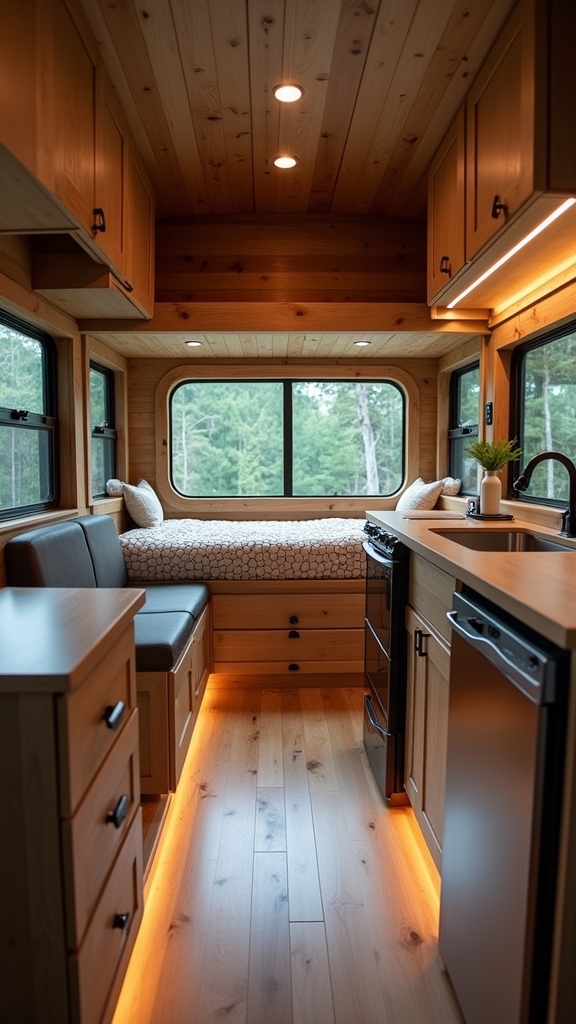
The difference between a camper that feels like a storage unit and one that feels like a home is almost entirely lighting, and LED strips have made it cheap enough that there’s no excuse for getting this wrong.
Warm white in the sleeping and living areas, cooler task lighting over the kitchen counter, and a dimmer on anything that touches the dining space give you control over the atmosphere that a single overhead fixture never could. Run strips under cabinets, inside shelves, and along the ceiling perimeter rather than only in fixture locations.
Mountainscape Wall Murals
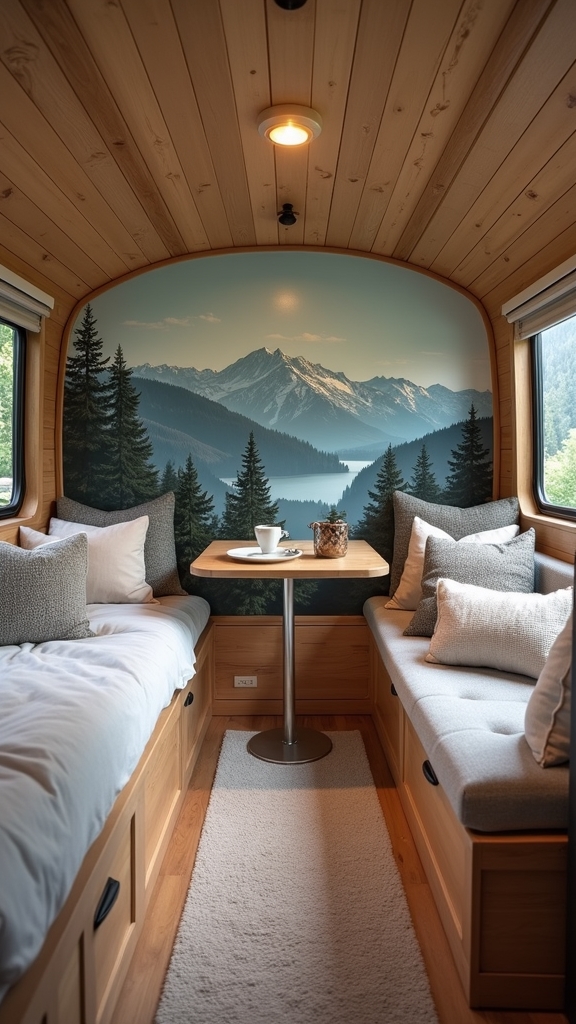
A well-chosen mural on the longest interior wall visually pushes the wall back and gives the eye a focal point in a space where it would otherwise run out of room quickly. Realistic PNW imagery, old-growth firs, mountain ridgelines, fog sitting in a river valley, works better here than abstract designs because it extends the landscape rather than decorating over it.
Peel-and-stick mural panels have gotten good enough that installation is a solo afternoon project, and removal is clean. It’s the most dramatic single change you can make to how a camper feels from the inside.
Foldable Bathroom Solutions
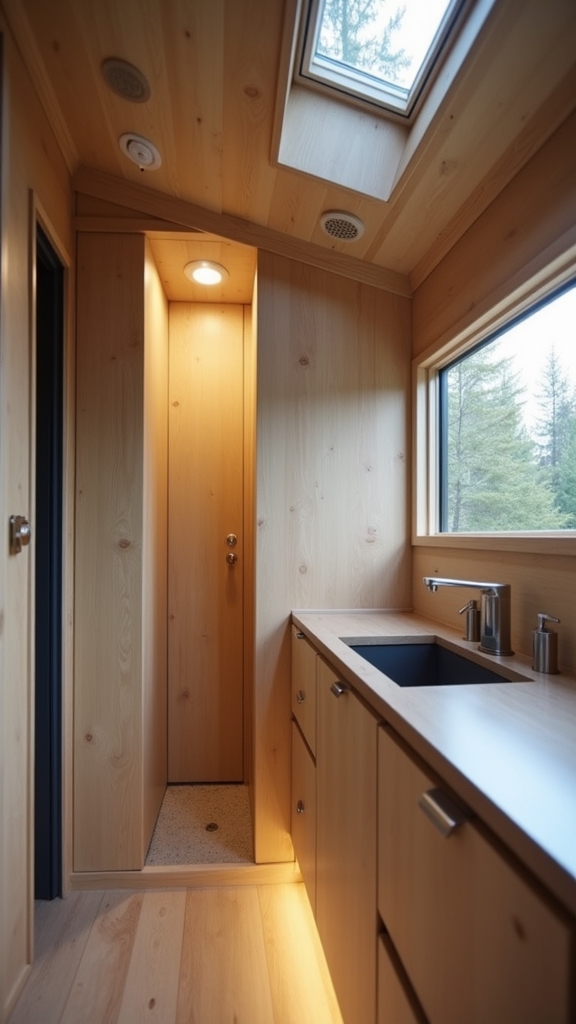
A camper bathroom asks you to do full-size things in a half-size space, and foldable fixtures are the only honest answer to that constraint. Wall-mounted fold-down sinks and collapsible shower elements recover floor space that a fixed layout consumes permanently.
For toilet solutions, the Luggable Loo is unglamorous but genuinely practical, and it doubles as a storage container when not in use. The bathroom that functions well without requiring you to think about it is the one you designed correctly.
Vintage-Modern Hardware Updates
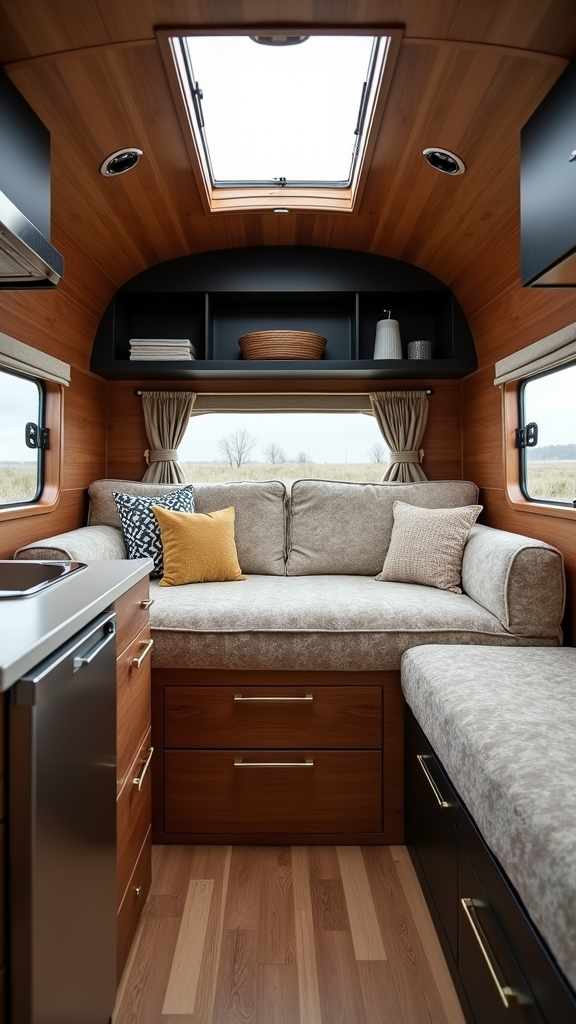
Swapping cabinet pulls and knobs is the lowest-commitment, highest-visibility upgrade in any camper renovation. Matte black finishes read as modern and intentional; Rub ‘n Buff metallic wax in a warm gold applied to existing hardware costs almost nothing and looks like you spent considerably more.
Mix two finishes across the interior rather than committing to one throughout, because the layered result feels collected rather than catalog-ordered. The hardware you touch every day should feel like a decision you made, not one the factory made for you.
Under-Bed Storage Systems
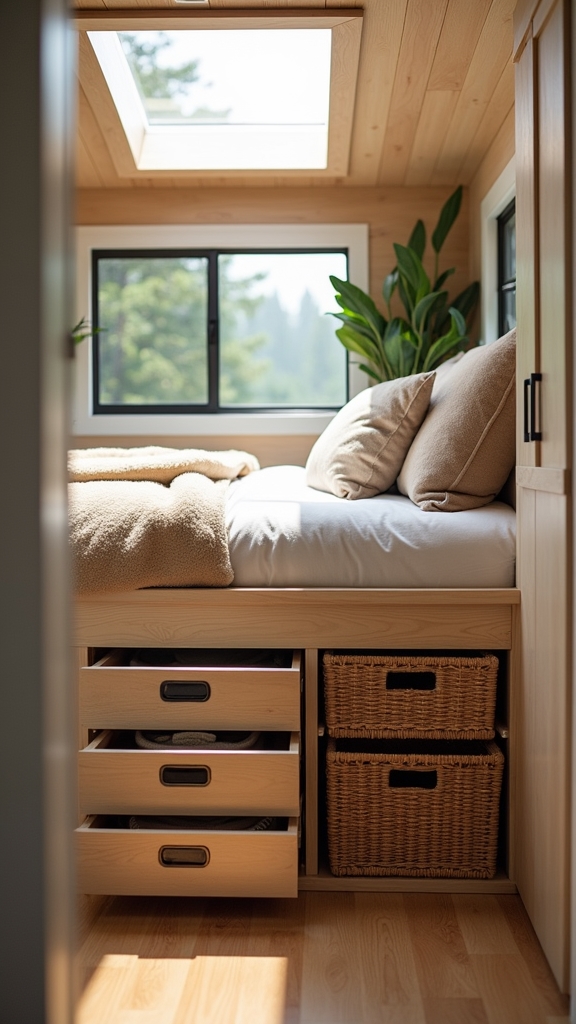
The space under a fixed bed is the most underutilized real estate in any camper, and organizing it by category from the start prevents the slow collapse into chaos that most under-bed storage experiences.
IKEA’s SKUBB boxes and similar soft-sided organizers from Target fit most camper bed profiles and keep items easily accessible without requiring you to pull everything out to reach one item.
Store bedding, off-season gear, and anything accessed less than weekly here, and keep the frequently needed items in pull-out bins at the perimeter. Treat it like a proper storage system, and it behaves like one.
Northwest Artist Gallery Wall
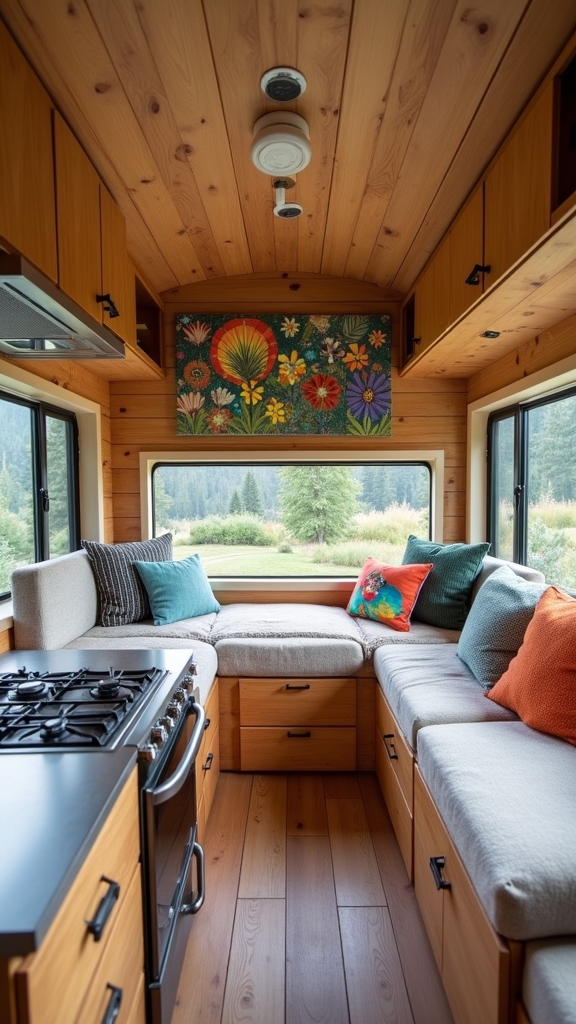
Regional art grounds a camper interior in a specific place rather than making it feel like it could belong to anyone. Local photography, nature prints, and handcrafted pieces mixed in frames of varying sizes and warm wood tones create a display that reads as personal and considered rather than decorated.
Arrange at staggered heights and mix frame depths to add dimension to what is otherwise a flat wall. Every piece should be something you’d want to look at for a week straight, because on a long trip, you will.
Cozy Window Seat Configuration
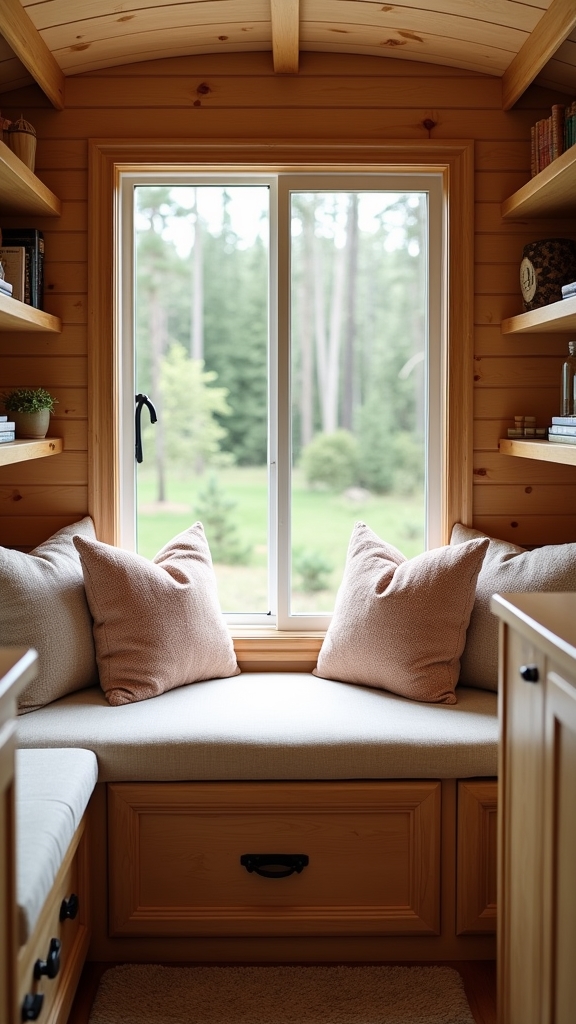
A window seat built over storage with a well-cushioned top and an LED strip along the underside of the window frame earns its footprint three times over.
It’s a seat, a storage zone, and a place to sit with coffee and watch the weather move across a campground at dawn, which is one of the better things a camper can offer. Use stackable cushions rather than a single fixed pad so the configuration can shift depending on whether you need seating or a surface.
Smart Tech Integration Corners
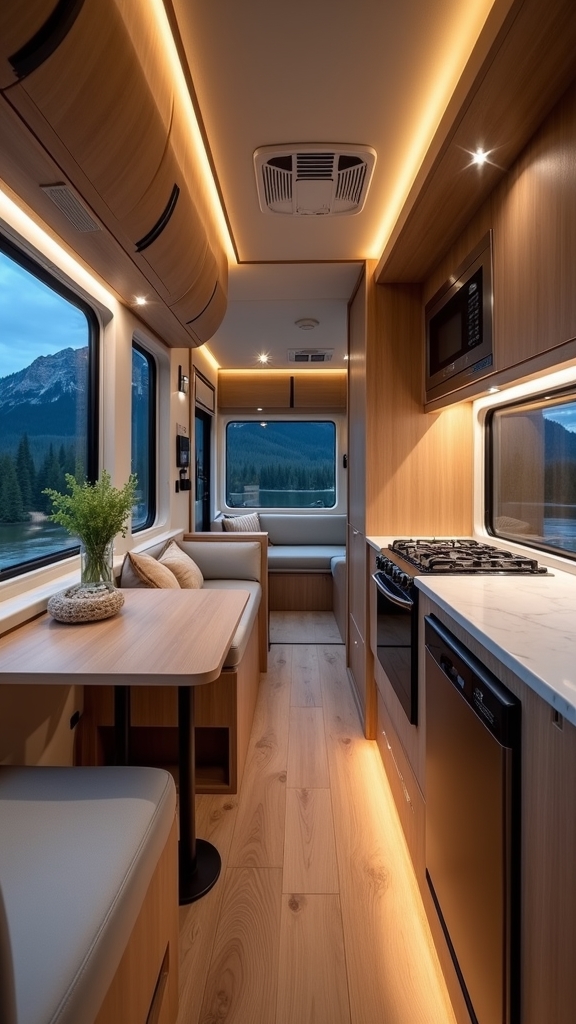
A 5-inch Lynx touchscreen mounted at eye level near the entry consolidates solar monitoring, battery status, and climate control into one interface that doesn’t require digging through menus on three separate devices.
Keep the tech corner tight and organized with proper cable management because a nest of visible cables undermines every other design decision in the rig. Automate the routine monitoring tasks so you’re checking in rather than constantly managing.
Pet-Friendly Space Solutions
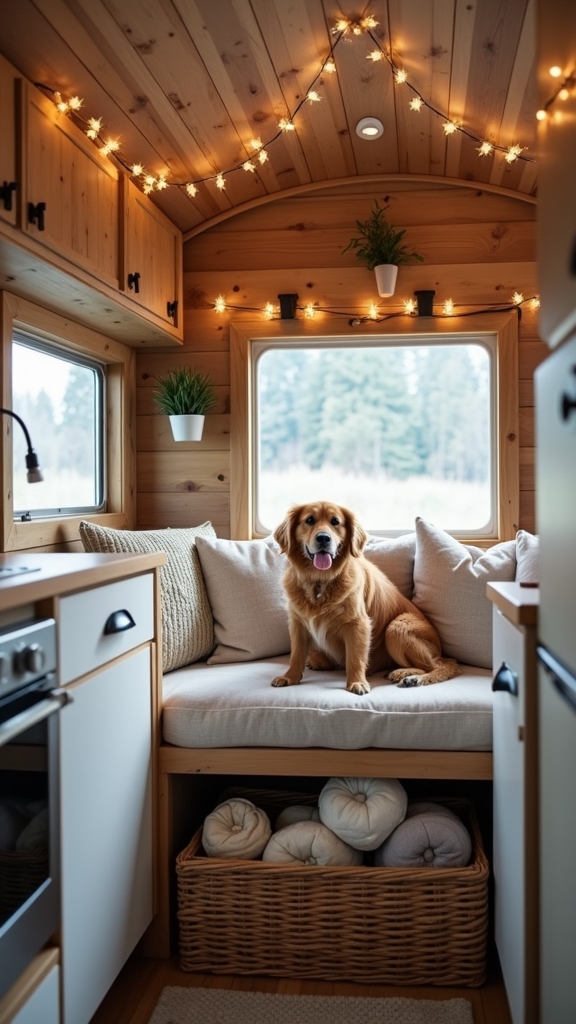
A dog or cat in a camper is not an afterthought; it’s a design constraint that must be addressed before the layout is finalized. Built-in sleeping spots under a bunk, kick-out feeding stations that tuck flush when not deployed, and a designated supply cabinet keep the pet’s needs from colonizing the human living space.
Non-slip flooring matters more than people expect until the first time a nervous dog skids across a wet vinyl floor at a highway rest stop. Proper ventilation and a pet window at sitting height make long drives tolerable for everyone.
Eco-Friendly Material Upgrades
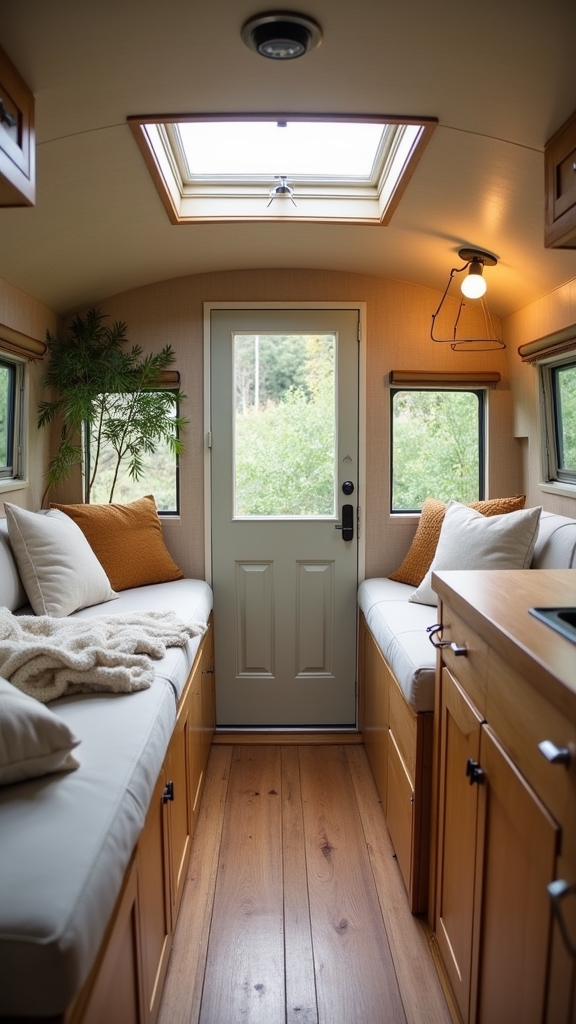
Reclaimed wood, recycled composite panels, low-VOC finishes, and natural fiber textiles are not just the environmentally responsible choices for a camper renovation; they’re also the ones that tend to look and feel better over time than their conventional equivalents.
A rig that moves through national forests and wilderness areas every weekend carries a certain obligation to the places it visits, and the materials inside it are a reasonable place to honor that.