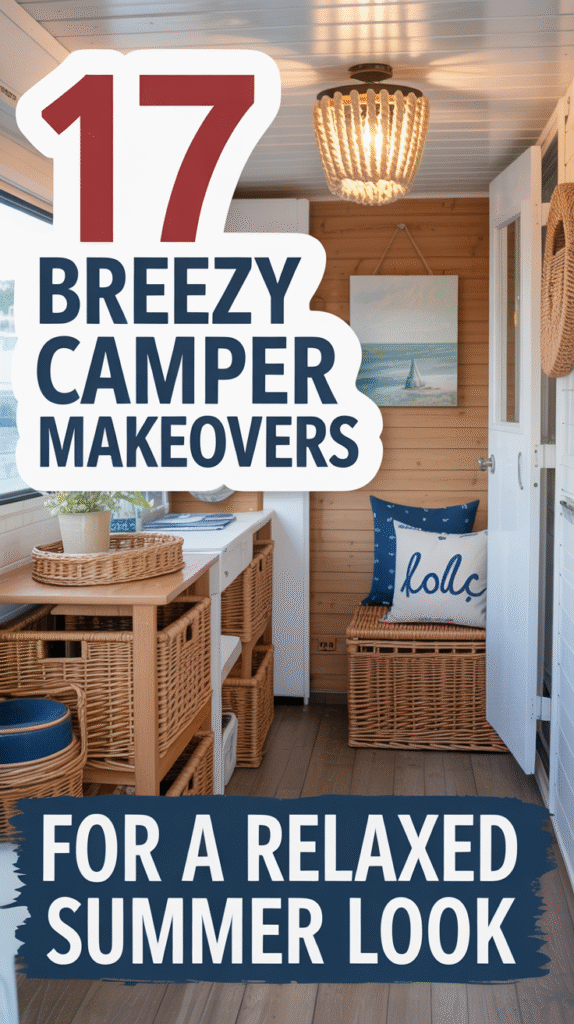
Your cramped camper doesn’t have to feel like a prison when you’re landlocked at a campsite three states away from the nearest beach.
Transforming your camper is more than simply dumping money into renovations or ripping out perfectly good fixtures.
What works is understanding how light, texture, and a few smart choices can trick your brain into thinking you’re waking up to ocean breezes, even when you’re parked next to someone’s diesel pusher in Arizona. These 17 makeover ideas show you exactly how to pull that off.

Contents
- 1 Embrace a Soft Neutral Foundation With Whites and Creams
- 2 Add Classic Navy Blue Accents for Nautical Charm
- 3 Incorporate Light Wood Tones and Natural Finishes
- 4 Use Pastel Shades to Evoke Beachy Tranquility
- 5 Install Porthole Mirrors and Rope Details for Authentic Flair
- 6 Display Starfish, Seashells, and Coastal Treasures
- 7 Hang Fish Netting Above Storage for Cottage Vibes
- 8 Create Focal Points With Coastal Wallpaper or Shiplap
- 9 Choose Multi-Functional Furniture for Maximum Space
- 10 Layer Coastal Patterns With Pillows and Throws
- 11 Ground Your Space With Natural Fiber Rugs
- 12 Install Custom Light Fixtures With Beaded or Rope Designs
- 13 Add Faux Beach View Windows for Ocean Scenery
- 14 Style With Decorative Glass Jars Filled With Sand and Shells
- 15 Update Headboards With Peel-And-Stick Coastal Wallpaper
- 16 Incorporate Woven Baskets for Stylish Storage Solutions
- 17 Finish With Beach-Themed Wall Art and Signs
Embrace a Soft Neutral Foundation With Whites and Creams
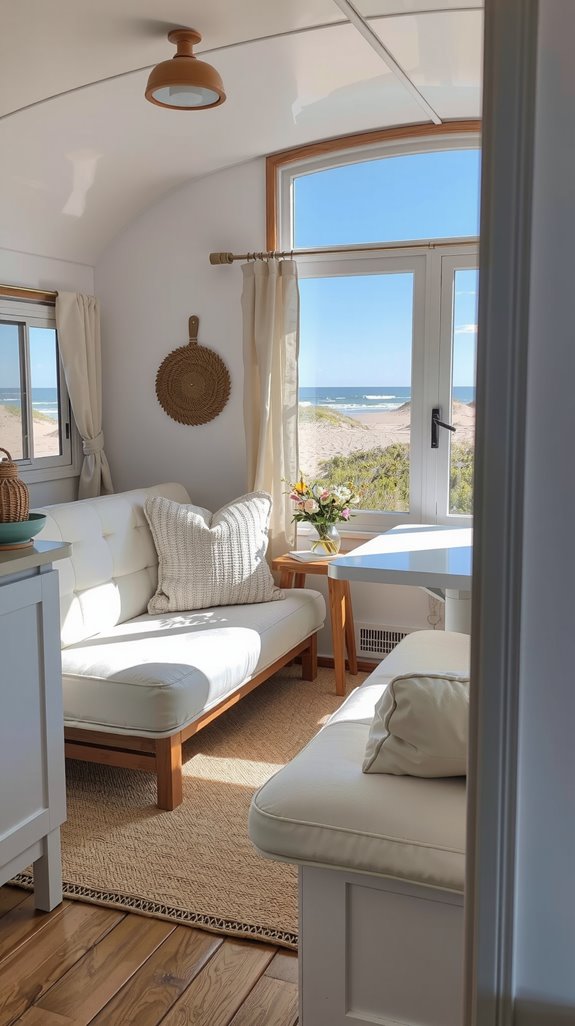
Most people grab whatever white paint is on sale and wonder why their camper still feels like a cave. Benjamin Moore’s “Simply White” and Behr’s “Swiss Coffee” aren’t just marketing names—they have warm undertones that prevent that sterile hospital vibe you get from stark whites.
Before you crack open any paint can, spend twenty minutes scrubbing down your walls with a degreaser, because road grime and cooking residue will make even the best paint job look patchy within a month. These lighter shades bounce available light around your tight quarters, which matters more than you’d think when you’re working with windows the size of dinner plates.
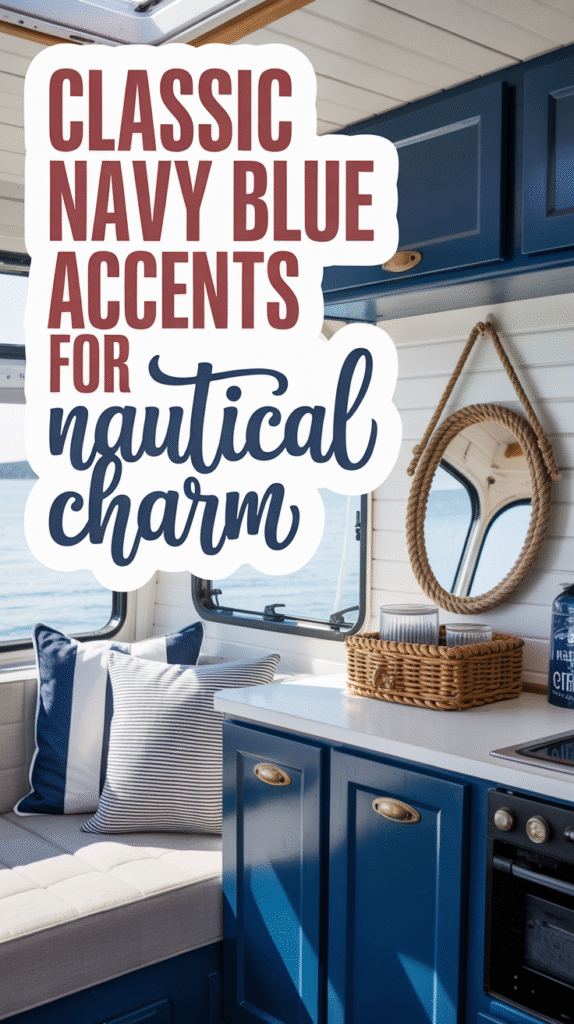
Navy gets a bad reputation because people slap it everywhere and end up with a space that feels like a nautical gift shop exploded. Pick one element—maybe your dinette booth or a cabinet panel—and commit to a deep, true navy that doesn’t read purple in different light.
Brass hardware and genuine rope details (not the plasticky stuff from craft stores) give you that yacht club look without the yacht club price tag. When you layer in navy through textiles like pillows and curtains, stick with simple stripes rather than anchors and sailboats, because subtlety is what separates adult coastal style from beach kitsch.
Incorporate Light Wood Tones and Natural Finishes
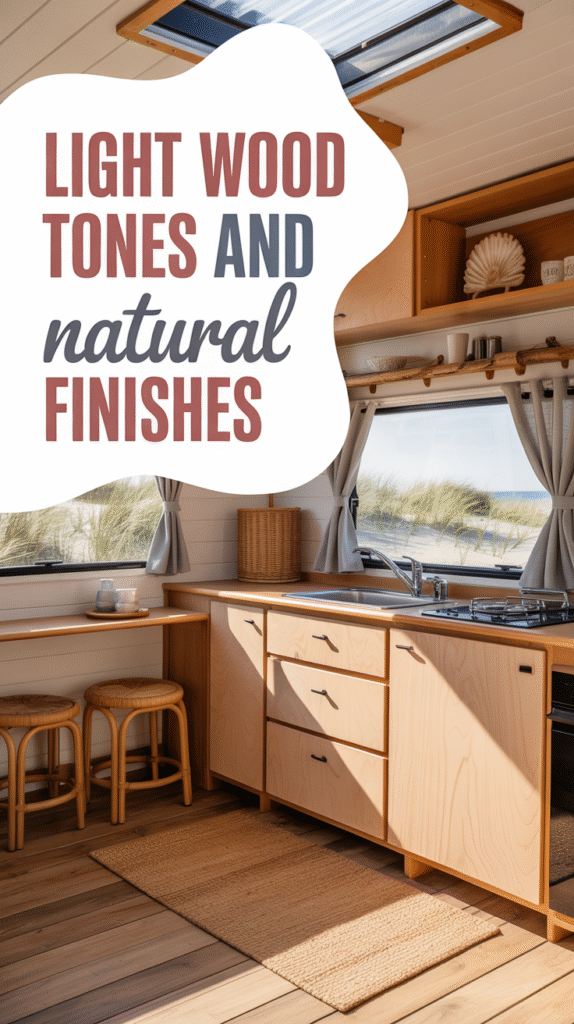
The blonde wood trend isn’t new, but it works in campers for reasons beyond aesthetics. Birch and oak reflect whatever light you’ve got instead of absorbing it like those dark cherry cabinets from the ’90s.
I’ve watched people sand down their existing cabinetry and apply a light natural stain, which costs maybe fifty bucks and completely changes how spacious their rig feels. The grain pattern in real wood gives you visual interest without adding clutter, something you desperately need when every surface is within arm’s reach of every other surface.
Use Pastel Shades to Evoke Beachy Tranquility
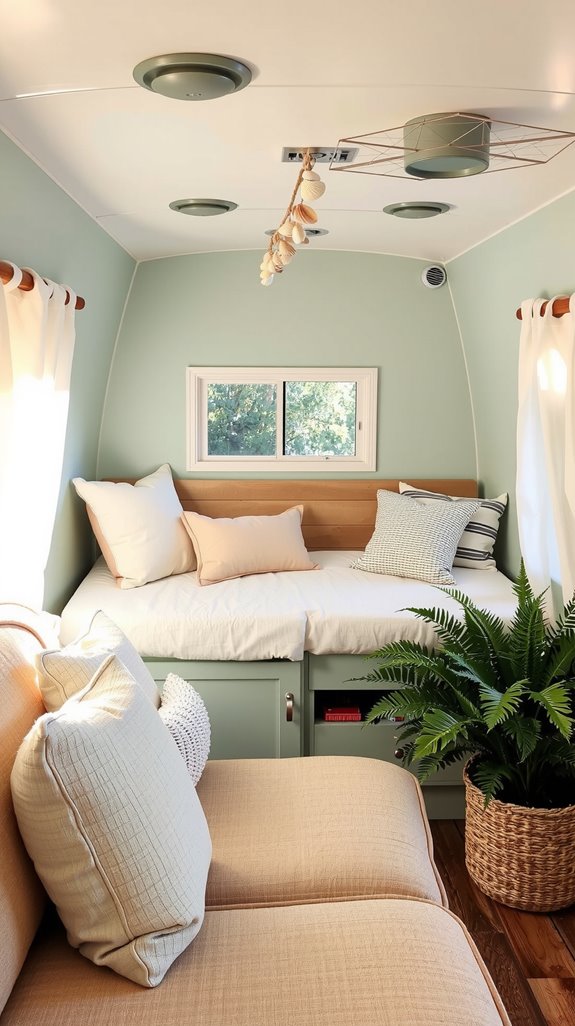
Mint green and lavender sound risky until you see them working as quiet accents against a neutral base. The key is going lighter than you think—we’re talking colors so soft they almost disappear, not the Easter egg shades that make your space look like a children’s party.
A few peach cushions on a white dinette or sage green dish towels hanging in your galley add personality without committing you to a look you’ll hate in six months. These washed-out tones have enough color to feel intentional but enough white mixed in that they keep your small space from closing in on you.
Install Porthole Mirrors and Rope Details for Authentic Flair
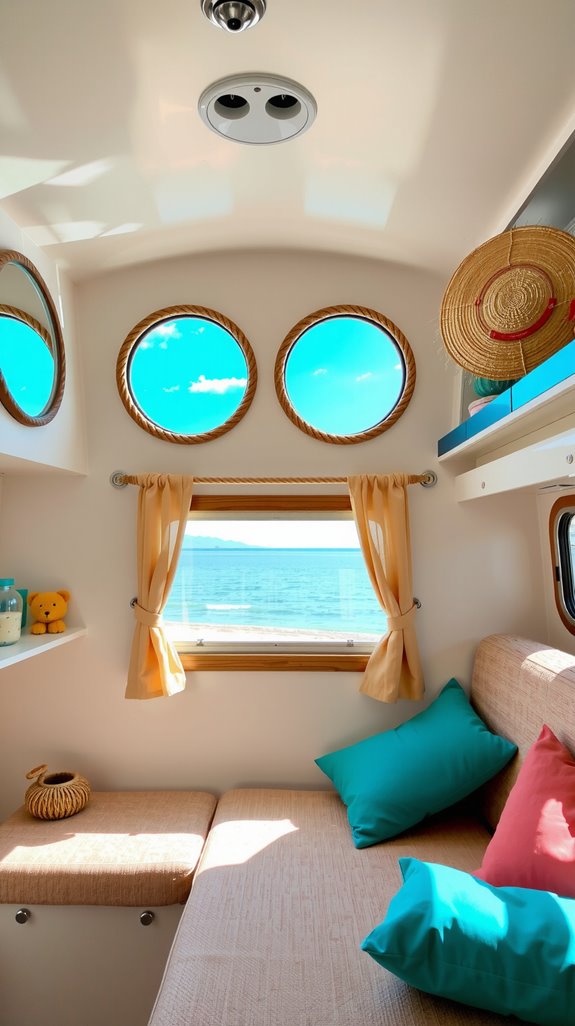
Those decorative porthole mirrors from home goods stores will rattle themselves off your wall the first time you hit a pothole. Mount them with proper anchors rated for RV walls, not the flimsy picture hangers they come with. Natural fiber rope (sisal or jute, not nylon) wrapped around cabinet pulls and curtain rods brings in texture that actually feels like something you’d find on a boat.
Learn one or two basic nautical knots—a monkey’s fist or a Turk’s head—because the difference between rope that’s intentionally knotted and rope that’s just twisted around something is the difference between looking coastal and looking confused.
Display Starfish, Seashells, and Coastal Treasures
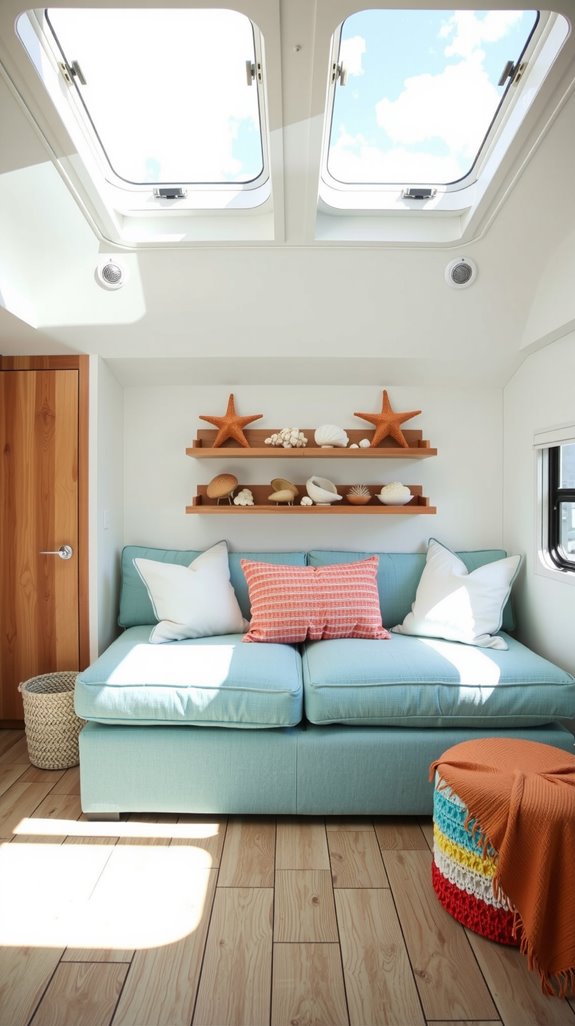
Your collection of shells and starfish deserves better than sitting in a cardboard box under the bed. Glass cloches and shadow boxes keep your treasures visible while protecting them from the constant vibration of road travel.
Mix in some driftwood pieces and sea glass, arranging them with actual thought rather than just dumping everything into a bowl. Soft LED puck lights positioned above these displays create shadows and depth that make your collections look intentional rather than random, especially important when you’re showing off finds from that perfect morning beach walk in Oregon.
Hang Fish Netting Above Storage for Cottage Vibes
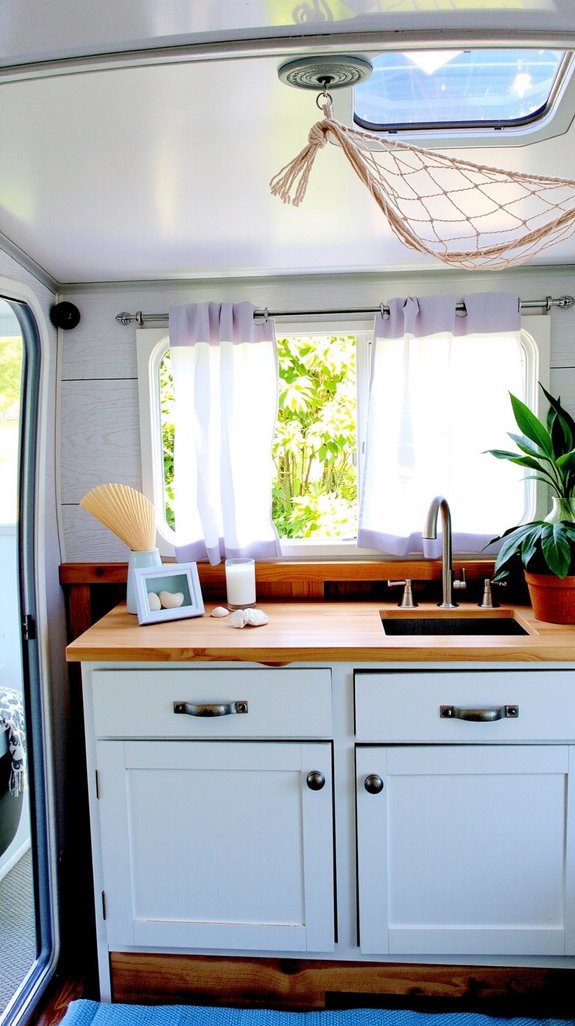
Ceiling-mounted fish netting isn’t just decoration if you use it right. Cotton or jute nets stretched across your overhead bunk area can hold rolled blankets, stuffed animals for the kids, or even lightweight dry bags.
Install it with marine-grade hooks that won’t rust when humidity creeps into your rig, and make sure the tension cables are actually taut. Saggy netting looks sloppy and defeats the whole purpose. You can tuck lightweight items like sun hats or beach towels into the netting, keeping them accessible while freeing up your precious cabinet space for things that actually need to be enclosed.
Create Focal Points With Coastal Wallpaper or Shiplap
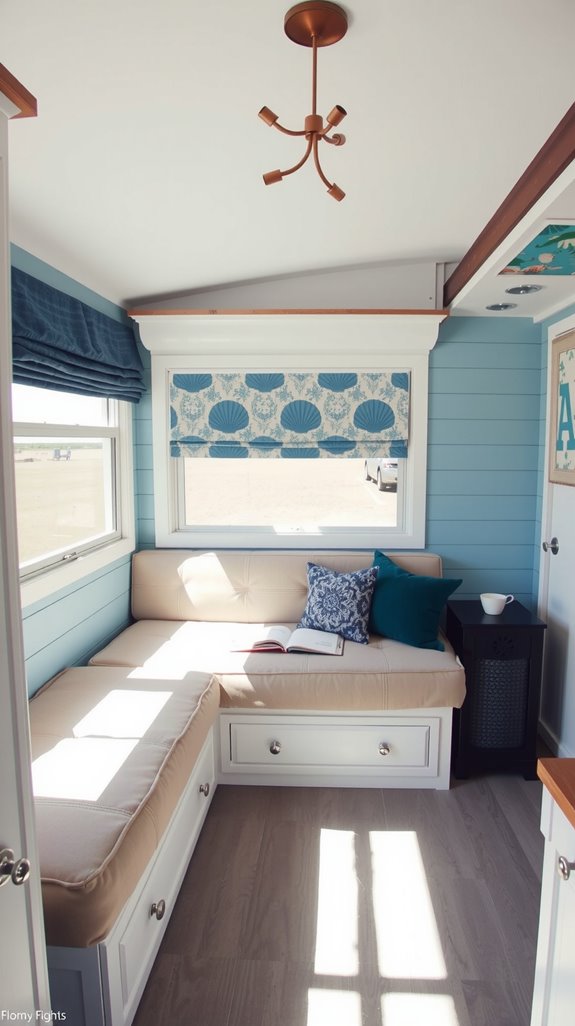
Peel-and-stick coastal wallpaper has come a long way from the garbage versions that peeled off in the heat five years ago. Focus it on one accent wall or your headboard area rather than papering your entire camper like an overeager Pinterest project.
If you’re handy, lightweight shiplap planks installed horizontally make your space feel wider, though you need to account for the weight. RVs have limits, and covering every wall isn’t worth the payload penalty. Stick with subtle patterns like weathered wood or soft wave designs, because bold tropical prints will make you want to rip everything out within three camping trips.
Choose Multi-Functional Furniture for Maximum Space
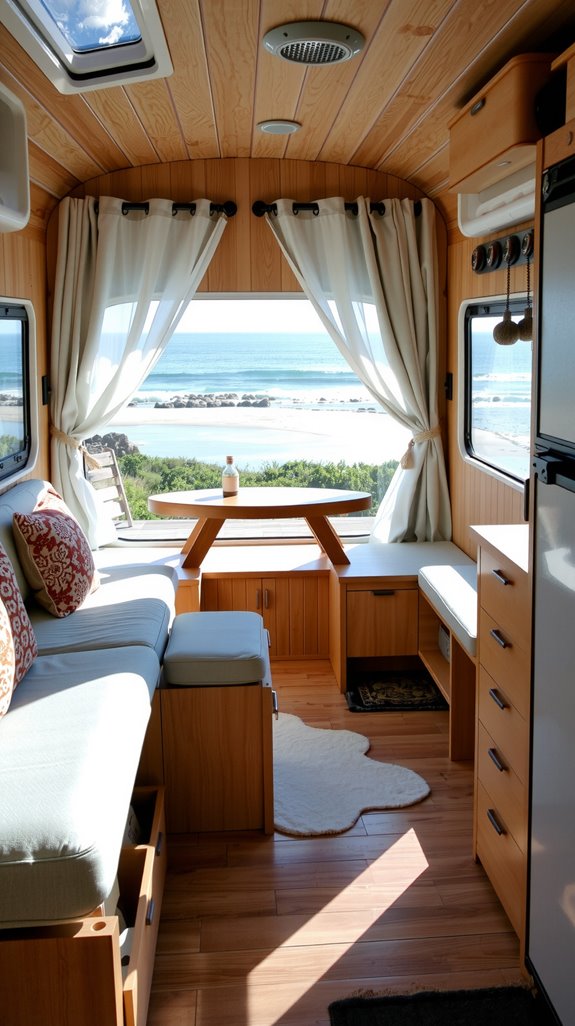
Every piece of furniture in your camper needs to justify its existence, period. A sofa bed seems obvious, but make sure it’s actually comfortable as both a sofa and a bed. I’ve seen too many that fail at both jobs.
Storage ottomans work overtime by hiding your beach gear, providing extra seating during card games, and sometimes doubling as a step stool for reaching overhead storage. Wall-mounted fold-down desks give you workspace for trip planning without permanently sacrificing floor space, and nestable side tables can expand when you need them and disappear when you don’t.
Layer Coastal Patterns With Pillows and Throws
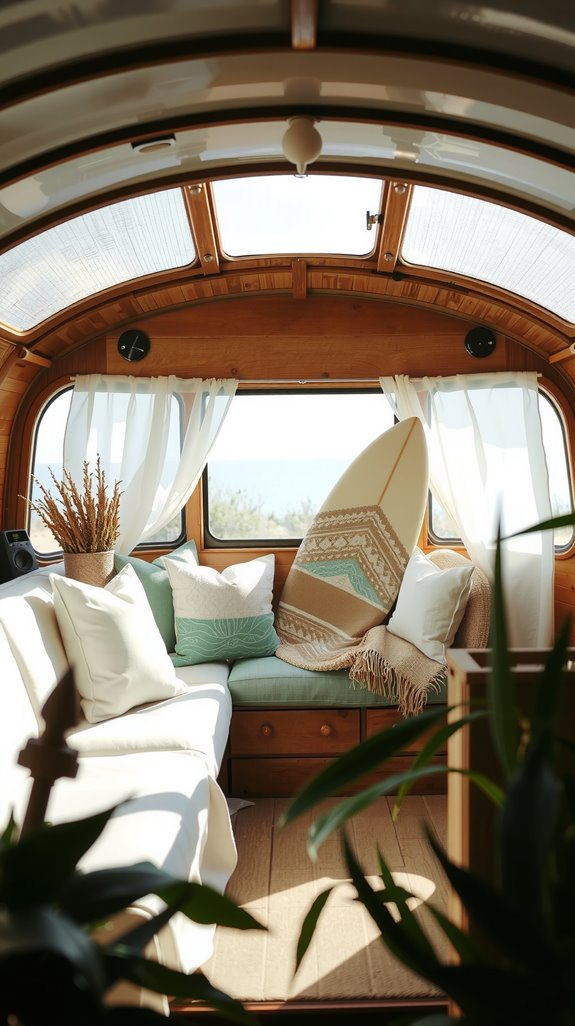
Throwing random coastal pillows on your dinette won’t create a cohesive look, it’ll just create a mess. Start with larger solid pillows in ocean blues or sandy beiges, then add smaller patterned ones with nautical stripes or subtle coral prints.
Natural fabrics like linen and cotton feel better in hot weather and wash up cleaner than synthetic materials that hold onto campfire smoke. The trick is varying your pillow sizes and shapes while keeping your color palette tight—three or four colors maximum, or your tiny space starts feeling like a souvenir shop.
Ground Your Space With Natural Fiber Rugs
Sisal, jute, and seagrass rugs bring that beachy texture everyone loves, but they’re not forgiving materials. Keep them out of your bathroom and galley areas where spills happen, because moisture will rot these natural fibers faster than you’d believe.
They excel in your main living area, where they trap dust and sand (which you’ll have plenty of), plus they dampen the hollow sound of footsteps on your RV floor. Just commit to vacuuming them regularly, because once dirt works its way deep into the weave, you’re basically done with that rug.
Install Custom Light Fixtures With Beaded or Rope Designs
Beaded chandeliers and rope-wrapped pendants look incredible in magazine photos and terrible in real life if they’re not properly secured for travel. Check the weight specs on any fixture before installing it, because RV ceilings weren’t designed to support a ten-pound chandelier bouncing down the highway.
LED bulbs that work with your 12V system are non-negotiable unless you enjoy replacing blown bulbs every other week. Mount everything with lock washers and thread-locker, and do a shake test before your first trip—if it rattles when you push it, it’ll rattle itself apart on the road.
Add Faux Beach View Windows for Ocean Scenery
Faux window decals have gotten surprisingly convincing, especially the 3D film versions that create actual depth perception. Position them on interior walls where a real window would make structural sense, not randomly slapped over your water heater panel.
The best ones let existing light play across the image, creating subtle changes throughout the day that sell the illusion. They also give you privacy from that neighbor who parks eighteen inches from your door and seems intensely interested in your breakfast routine.
Style With Decorative Glass Jars Filled With Sand and Shells
Mason jars and apothecary containers filled with sand and shells are coastal decor 101, but they’re also road trip disasters if you don’t do it right. Use jars with gasket lids or screw-top seals that actually lock, because regular pop-top lids will dump sand across your shelf on the first sharp turn.
Layer your materials deliberately. Coarse sand on the bottom, then shells, then smaller decorative elements, so everything doesn’t just shake into an ugly mixed pile. Group your jars in threes or fives at varying heights, and nestle them into non-slip shelf liner so they stay put when you’re mobile.
Update Headboards With Peel-And-Stick Coastal Wallpaper
Peel-and-stick wallpaper behind your bed creates an instant focal point without the commitment of paint or permanent installation. Measure twice and cut once, because these materials are forgiving but not infinitely repositionable despite what the packaging claims.
Clean your surface with rubbing alcohol first—any dust or oils will create bubbles that drive you crazy every time you look at them. Premium vinyl wallpapers handle temperature swings better than paper-backed versions, which matters when your camper bakes in summer sun and freezes on spring mountain trips.
Incorporate Woven Baskets for Stylish Storage Solutions
Woven baskets look great until the first time you brake hard and send them flying into the back of someone’s head. Secure them with bungee cords, hook-and-loop straps, or install them in cubbies where they’re naturally contained.
Bamboo and wicker hold up better than water hyacinth or seagrass in humid conditions, which you’ll encounter whether you’re camping near the coast or just dealing with shower steam. Use them for corralling toiletries, organizing pantry items, or keeping charging cables from becoming a tangled nightmare, and enjoy how much quieter your camper becomes when loose items aren’t rattling around.
Finish With Beach-Themed Wall Art and Signs
Your final layer should be beach-themed art and signs that reflect your actual taste, not someone else’s idea of coastal style. Canvas prints of ocean scenes work better than framed art with glass that can shatter, and they’re lighter for your payload limits.
Wooden signs with beach quotes either land perfectly or feel incredibly cheesy—there’s no middle ground—so choose carefully and maybe skip the live-laugh-love variations. Position your art above beds, seating areas, or anywhere your eye naturally lands when you walk in, because random placement makes even good art look like an afterthought.