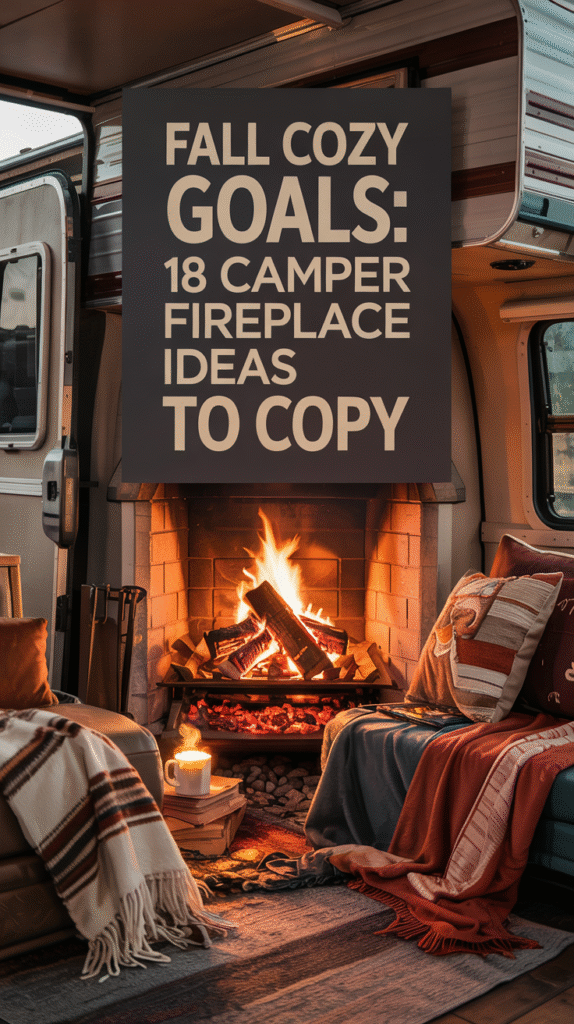
Fall camping hits different when your camper feels warm the moment you step inside. The smell of wet leaves, a cold sky through the window, and a flickering flame in the corner pull the whole experience together. Getting there doesn’t require a full renovation or a wood-burning stove you can’t legally install in an RV.
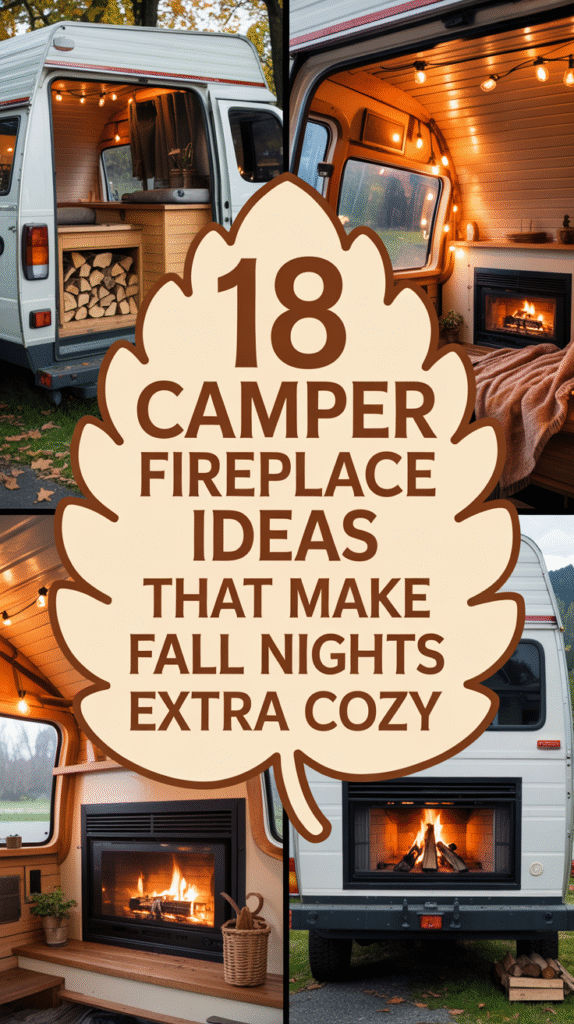
The right electric insert or propane unit can completely transform both the temperature and the mood of a small space. These ideas cover everything from high-tech LED units to rustic freestanding stoves, so you can find what fits your rig and your style.
Contents
- 1 LED Flame Technology for Realistic Ambiance
- 2 Compact Fireplace Inserts for Space Efficiency
- 3 Adjustable Brightness and Heat Settings
- 4 Curved Glass Designs for Modern Appeal
- 5 Crackling Sound Effects for Authentic Atmosphere
- 6 Remote Control and App Connectivity
- 7 Infrared Quartz Heaters for Larger Spaces
- 8 Freestanding Stoves With Classic Charm
- 9 Wall-Mount Units for Seamless Integration
- 10 Crystal Log Sets for Visual Enhancement
- 11 Portable Heaters With Rustic Styling
- 12 Safety Features for Peace of Mind
- 13 Energy-Efficient Operation in RVs
- 14 DIY Decorative Mantels and Surrounds
- 15 Multifunctional Storage and Shelving Ideas
- 16 Seasonal Décor Enhancements for Fall
- 17 Smart Controls for Customization
- 18 Color and Style Options to Match Décor
LED Flame Technology for Realistic Ambiance
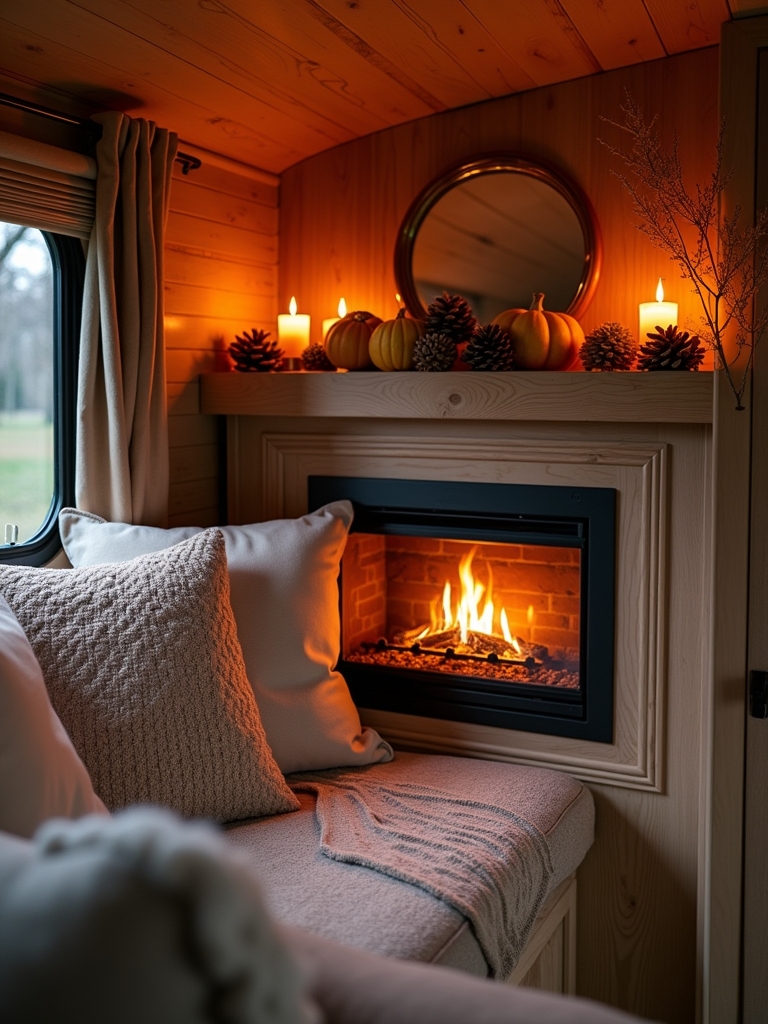
The gap between a real fire and a good LED unit has closed dramatically in recent years. Modern units layer adjustable flicker rates, color temperatures, and flame heights that genuinely fool the eye in low light.
You can dial the intensity up for a dramatic evening look or drop it to a soft reading glow with zero heat output. Nothing gets hot except the air from the heater, which matters enormously when your living space is essentially a hallway.
SEE THIS: 17 Budget RV Remodels That Feel Magazine-Worthy Using Paint + Fabrics.
Compact Fireplace Inserts for Space Efficiency
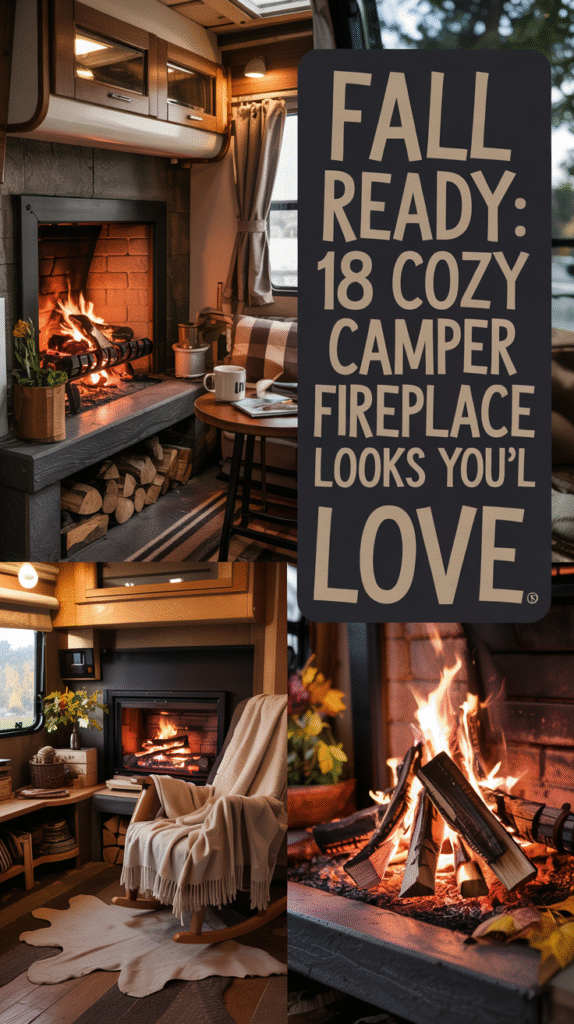
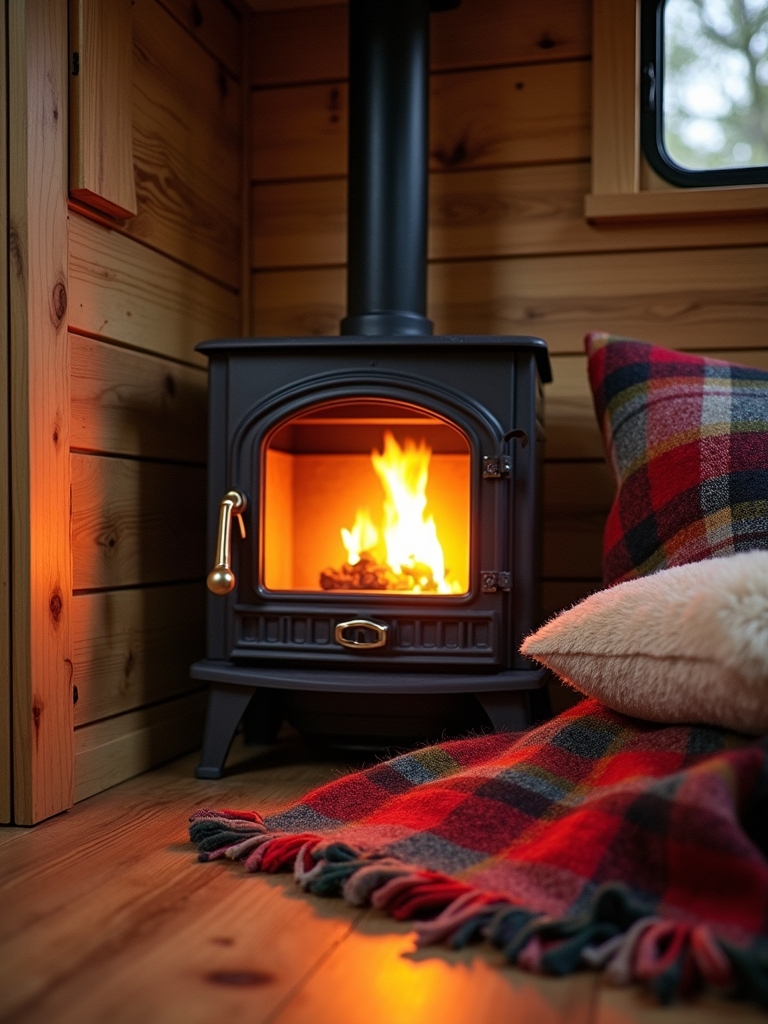
Finding an insert that actually fits an RV used to mean serious compromises. Today’s units run as narrow as 18 inches wide and as shallow as 5 inches deep, tucking neatly under a TV or into a cabinet opening without swallowing your living space.
Most include thermal cut-off sensors and zero-clearance ratings that handle the safety side so you’re not babysitting the unit every time you turn it on. You get real warmth and real ambiance without surrendering square footage you don’t have to spare.
SEE THIS: 21 Neutral RV Living Rooms That Feel Chic, Cozy + Elevated.
Adjustable Brightness and Heat Settings
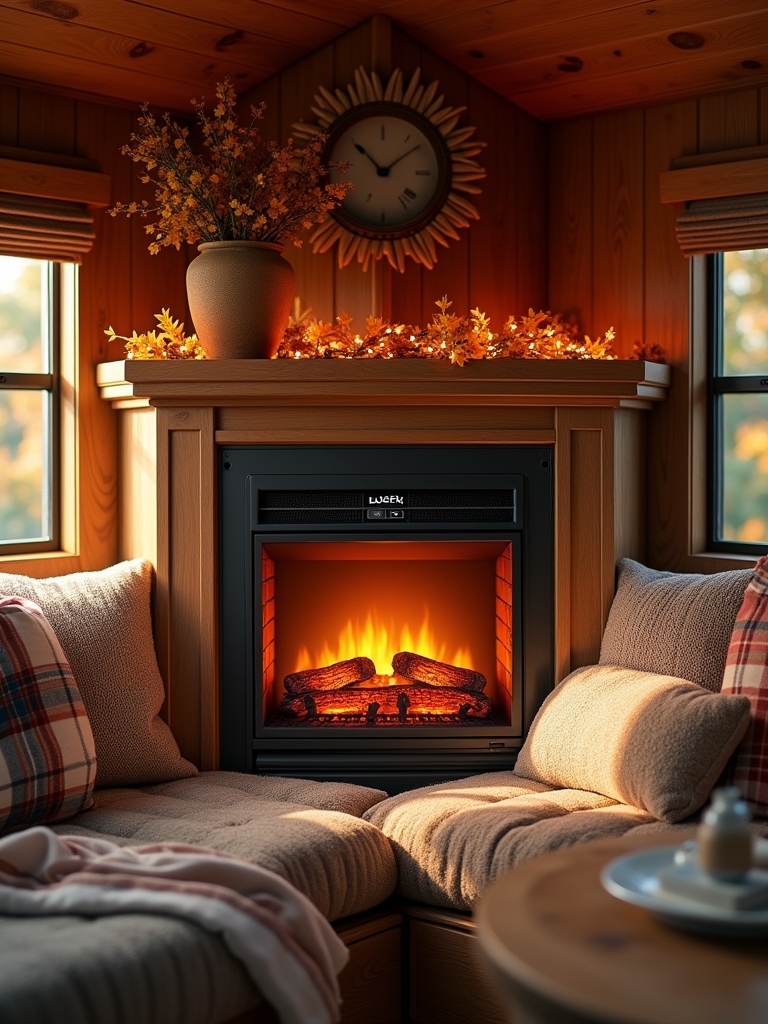
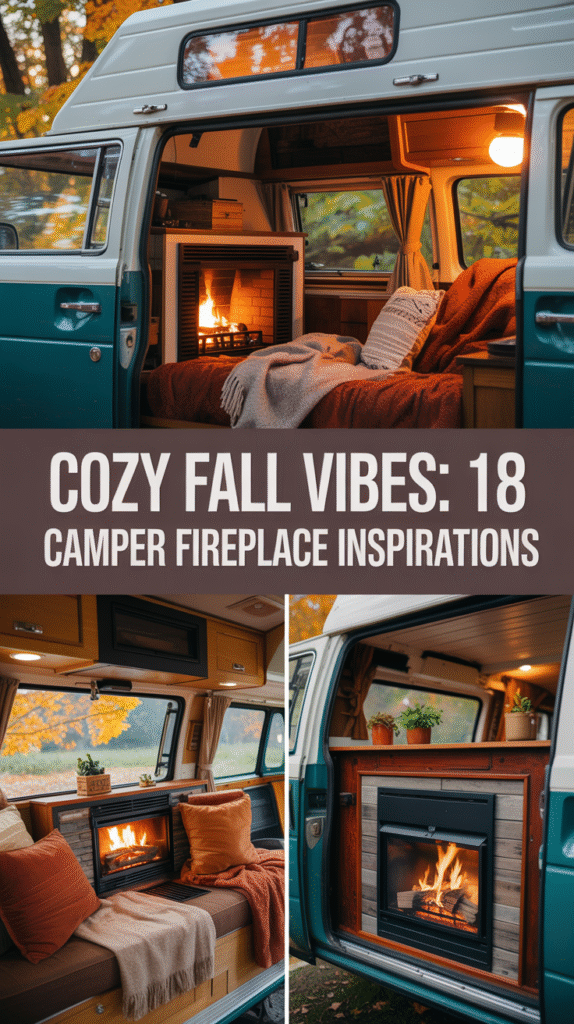
Flexibility matters more inside a small rig than in any other living space. Most quality inserts offer multiple heat levels controlled through a digital thermostat, letting you ramp from a gentle background warmth to a more aggressive output as the night gets colder.
Brightness controls work independently from heat, so you can run full visual flame with zero heat on a mild evening when you just want the atmosphere. Overheating protection shuts the unit down automatically if something goes wrong, which is the kind of quiet safety feature you only appreciate when you actually need it.
SEE THIS: The Farmhouse Kitchen Every Camper Needs to See.
Curved Glass Designs for Modern Appeal
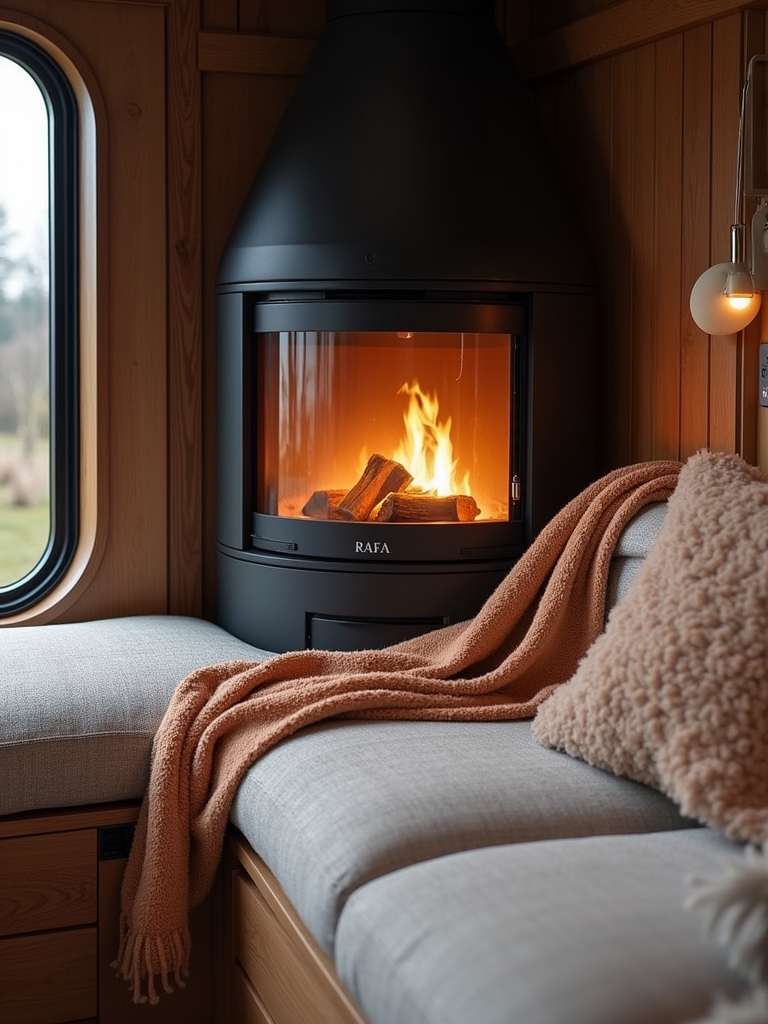
Standard flat-glass fireplaces do the job, but curved glass changes the entire feel of a small space. The wraparound view creates a panoramic flame effect that reads as fuller and more dimensional than any flat panel can manage.
Black finishes and crystal log sets pair naturally with this style, lending a clean contemporary look that doesn’t fight with modern RV interiors. These designs typically recess into cabinetry and sit flush, so they don’t reach out into the room and interrupt the flow.
SEE THIS: Before & After: Old Camper to Instagram-Worthy RV.
Crackling Sound Effects for Authentic Atmosphere
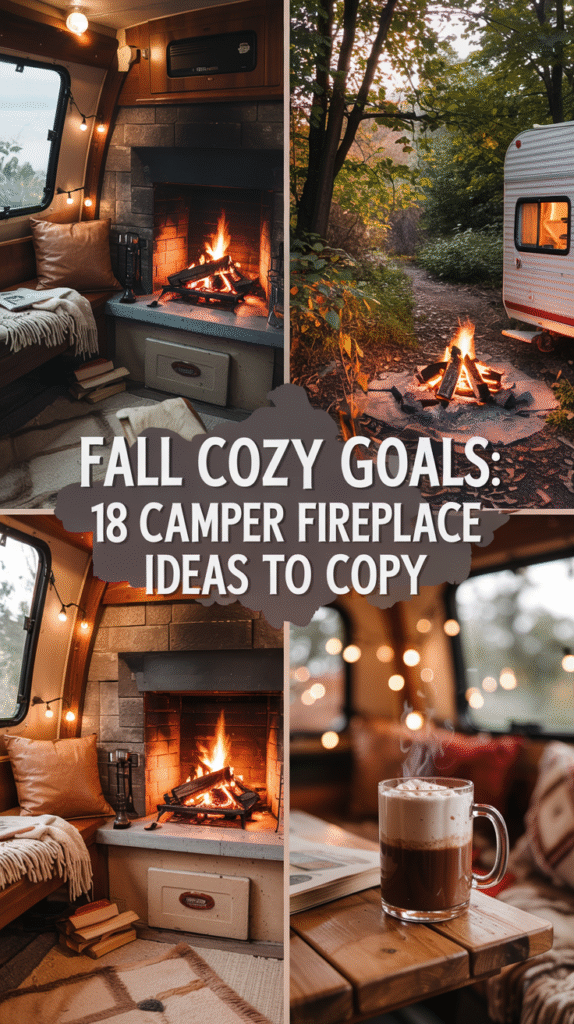
Visual flame is convincing, but sound is what really sells the illusion. Quality recordings layered with crackles, pops, and the occasional hiss replicate the auditory texture of a real wood fire better than most people expect.
That sound alone carries a measurable calming effect, which is exactly why campfire audio has been a sleep aid staple for years. Run it through a small Bluetooth speaker positioned near the unit, and the whole effect snaps completely into place.
SEE THIS: 19 Camper Dining Spaces With the Prettiest Boho Vibes With Macramé + Plants.
Remote Control and App Connectivity
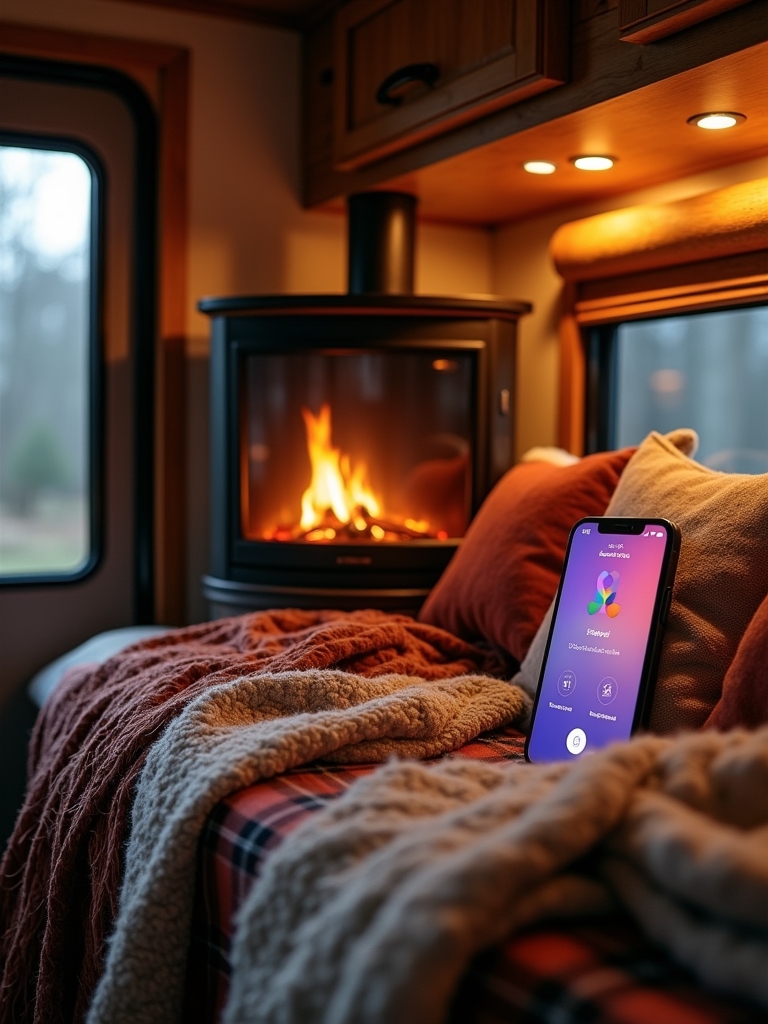
The best camper fireplace is one you can adjust without leaving your sleeping bag. Most quality electric units come with remotes that handle temperature, flame brightness, and heat output from across the room.
App-connected models go further, letting you schedule heat cycles or pre-warm the camper before you return from a hike. The convenience is real, but so is the energy management benefit when you’re trying to stretch battery life on a cold night off-grid.
Infrared Quartz Heaters for Larger Spaces
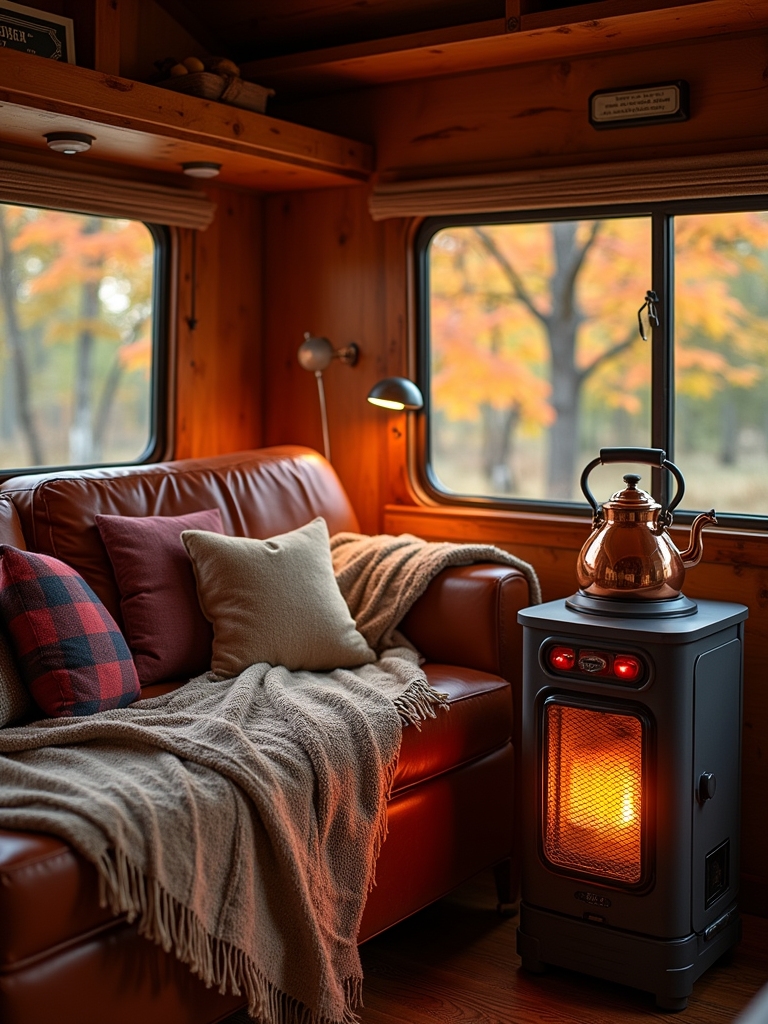
Standard electric fireplaces work well in a small Class B, but bigger rigs need more output. Infrared quartz units running at 1500 watts push around 5200 BTUs, covering up to 1000 square feet in a well-insulated space.
They heat people and objects directly rather than warming the air first, which feels noticeably faster when you step inside from a cold night. Overheat shut-off protection comes standard on most models, and they pair well with propane when temperatures really drop hard.
Freestanding Stoves With Classic Charm
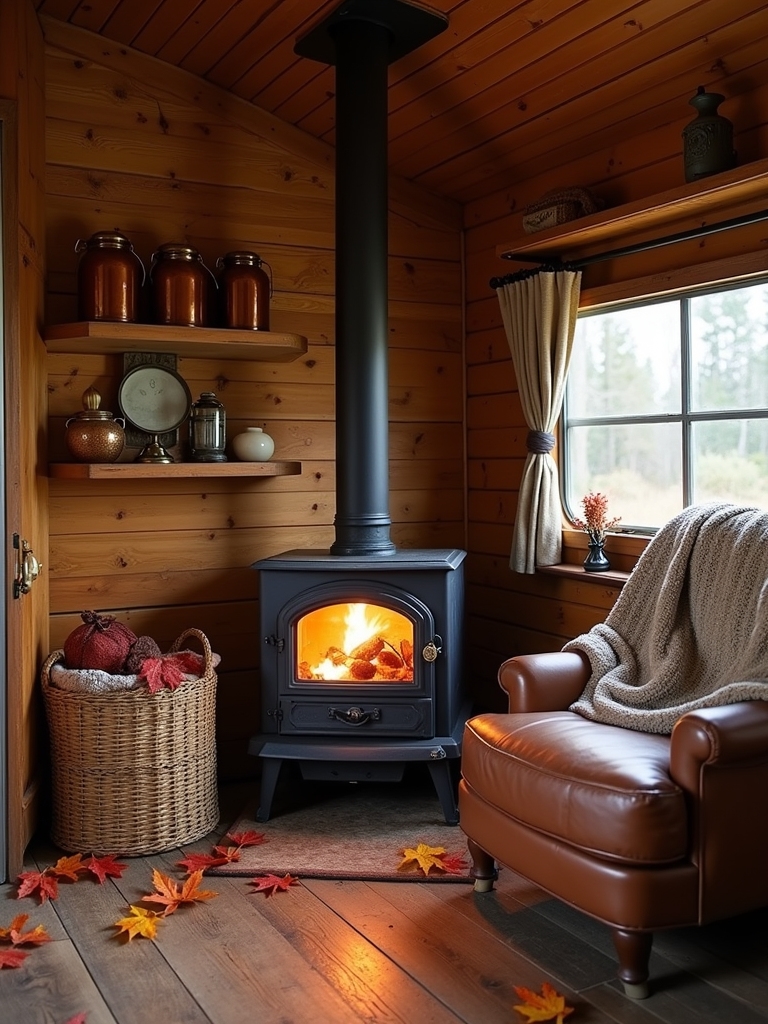
Some setups just call for a stove rather than an insert. Freestanding electric stoves in cast iron or steel bring the classic silhouette of a wood burner without venting requirements, fire risk, or ash cleanup.
You’ll find arched, square, and more contemporary profiles available, leaving room to match different interior styles from mountain cabin to modern farmhouse. Starting around 6 inches deep, they avoid dominating a small floor plan while still carrying real visual weight in a room.
Wall-Mount Units for Seamless Integration
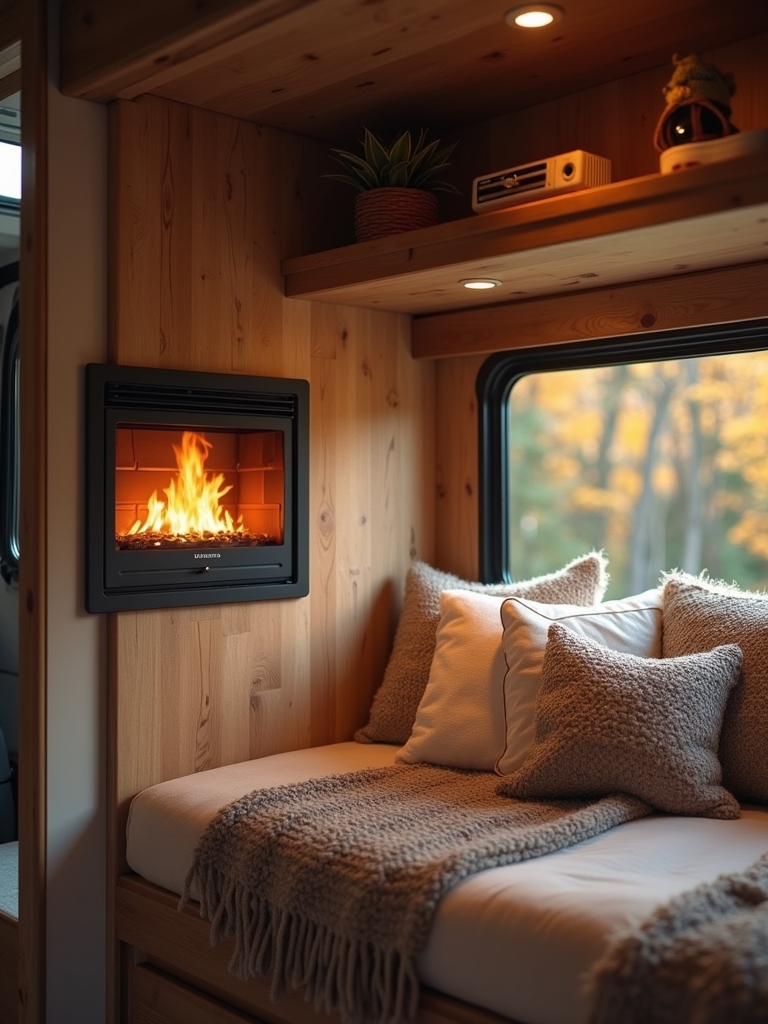
Hanging a fireplace on the wall sounds unconventional until you see how much floor space it returns to you. Wall-mount units come with mounting brackets and sit flush against the surface, leaving the area below entirely clear for storage or seating.
Cool-to-the-touch glass makes them safe in close quarters, even inside a narrow slide-out or a converted cargo trailer. Adjustable heat and brightness settings give you the same functionality as any floor unit without surrendering a single square foot.
Crystal Log Sets for Visual Enhancement
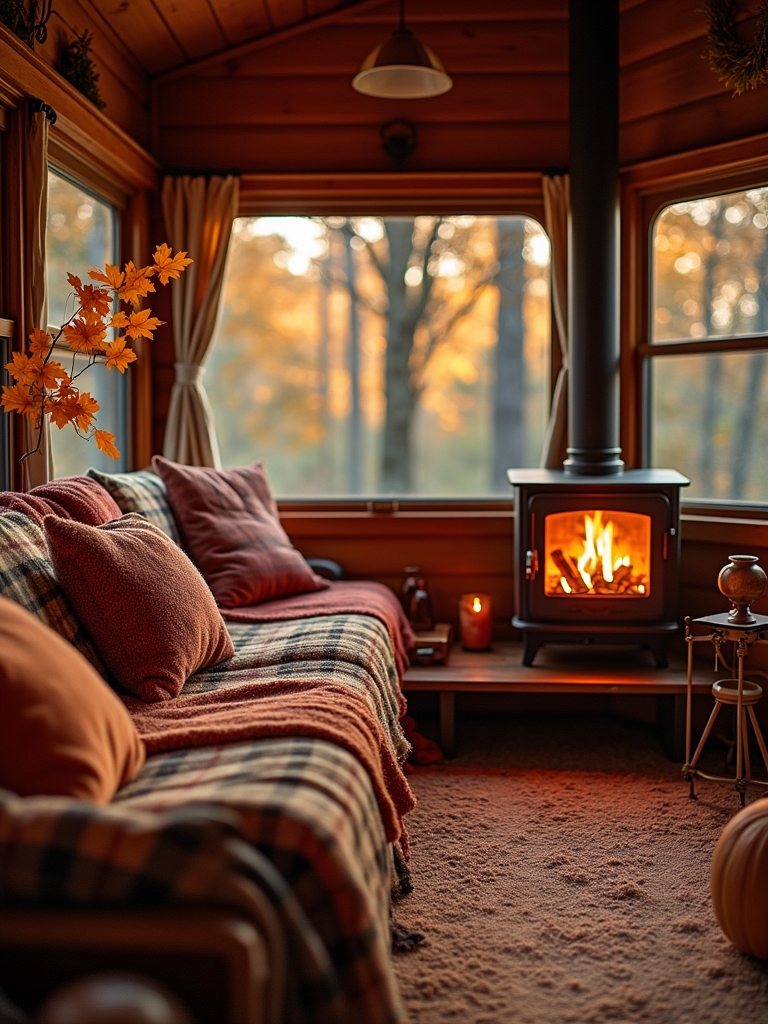
Crystal log sets look better in person than in any product photo, and that’s not something you can say about much gear. The crystals scatter LED light into shifting, multi-colored flame effects that standard ceramic logs simply cannot replicate.
Glass-front fireboxes amplify the result, adding depth that makes the whole unit look considerably more expensive than it is. The practical bonus is zero maintenance since there’s no ash, residue, or sooty glass to deal with at the end of a trip.
Portable Heaters With Rustic Styling
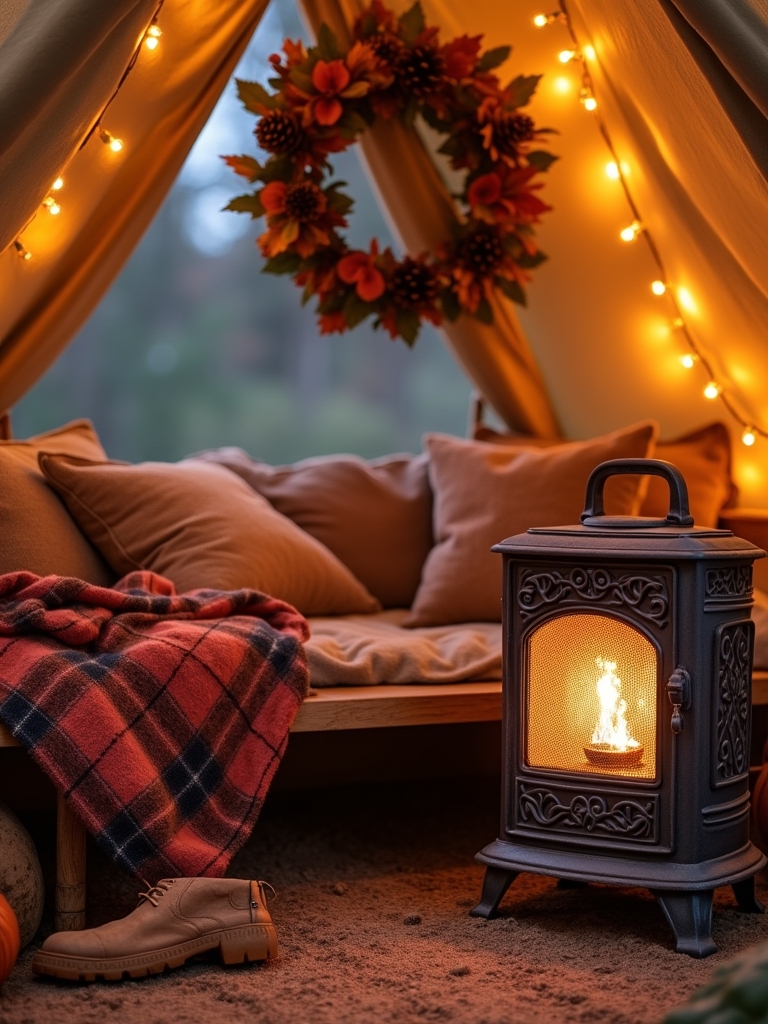
Not every solution needs to be permanent or installed. Portable heaters styled like vintage lanterns or old cast iron stoves bring warmth and character without any mounting hardware at all.
Stainless steel bodies with bronze tones, wooden handles, and earthy finishes make them look intentional rather than utilitarian. They move freely between the camper interior and a covered outdoor cooking area, which no fixed unit can offer when the weather refuses to cooperate.
Safety Features for Peace of Mind
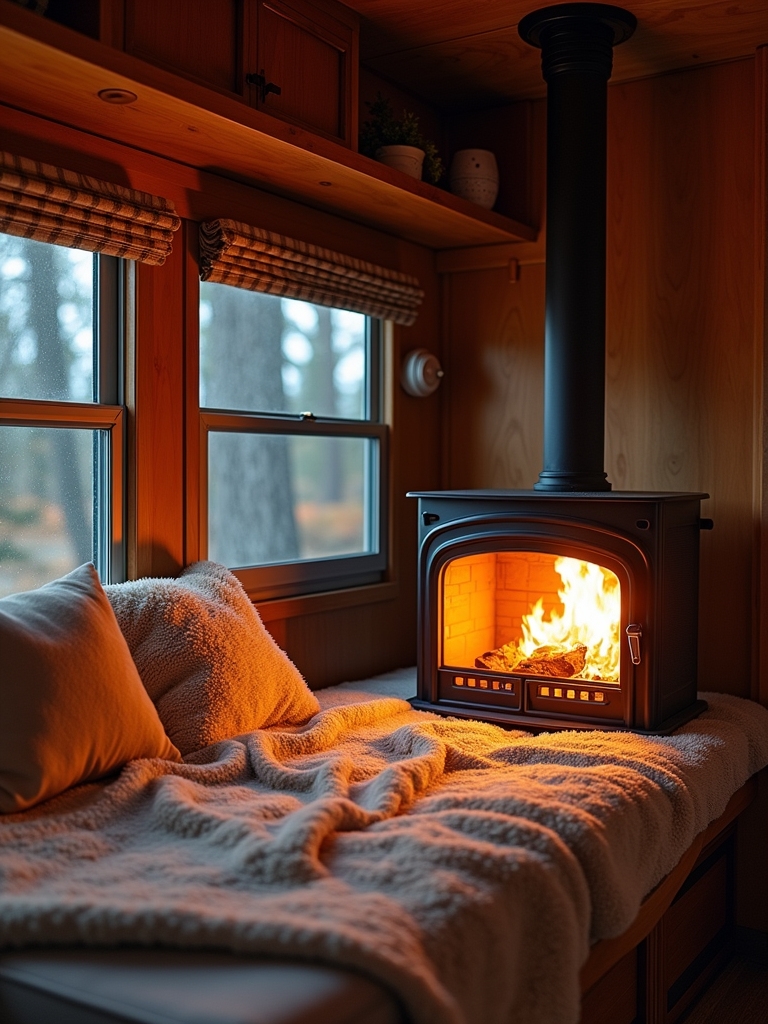
A fireplace in a small enclosed space demands more attention than the same unit in a house. UL-certified smoke and carbon monoxide detectors are non-negotiable, and they need testing before every trip, not just once a season.
Keep a Class B/C extinguisher within reach and make sure everyone in the rig knows exactly where it is and how to use it. Electrical system inspections matter too, since an overloaded circuit causes more problems in most cases than the fireplace itself ever would.
Energy-Efficient Operation in RVs
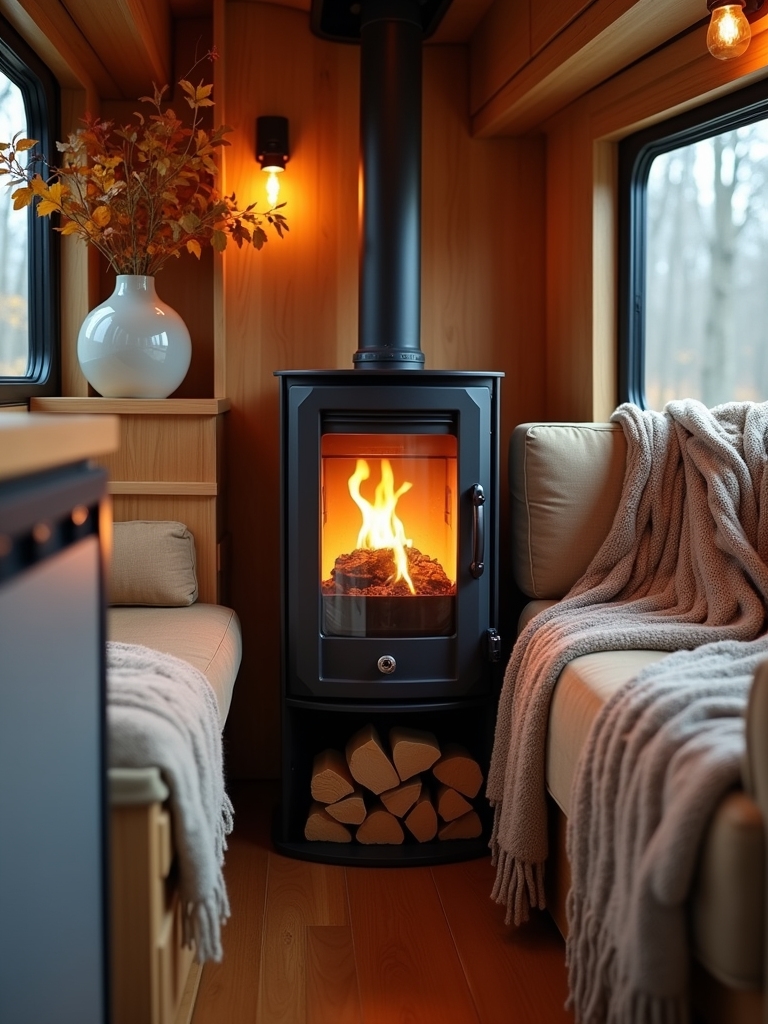
Heating an RV efficiently means balancing comfort against how fast you drain your battery bank or propane supply. Electric fireplaces convert power to heat with very little waste, but running one overnight while boondocking hits your reserves harder than most people plan for.
Propane furnaces deliver consistent, powerful heat but burn through fuel faster than expected during a genuine cold snap. The smartest setup layers both options, using LED-only mode for ambiance on mild nights and switching to propane when the temperature actually demands it.
DIY Decorative Mantels and Surrounds
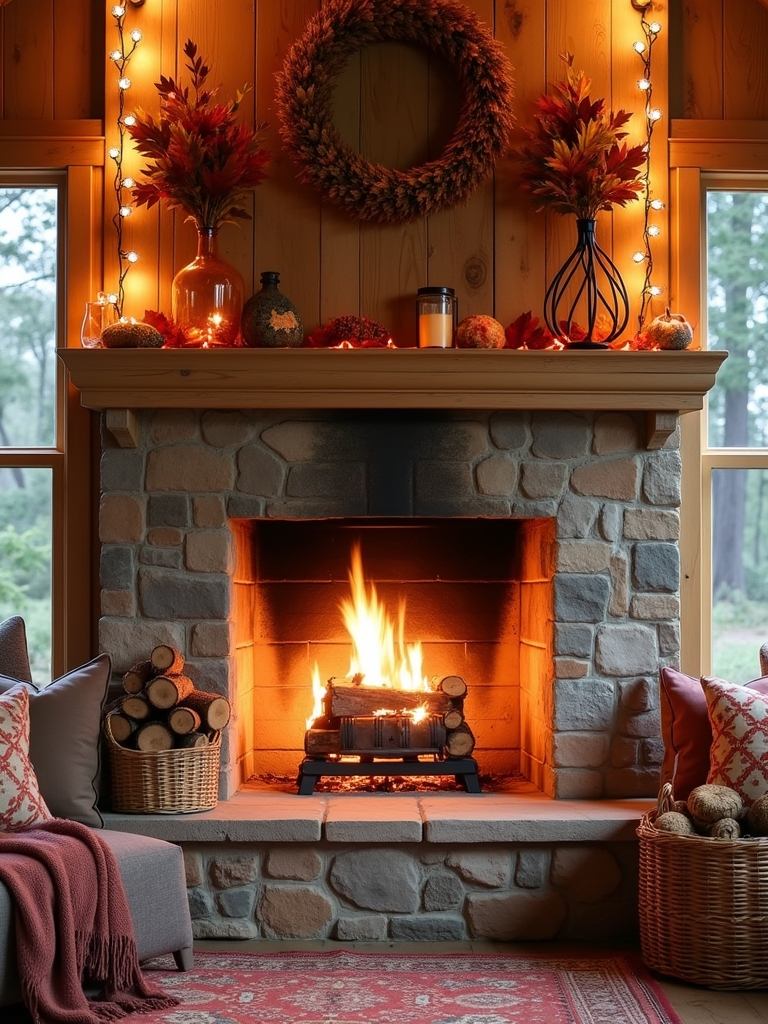
An electric insert without a surround looks exactly like what it is: a box mounted on a wall. A simple mantel built from plywood, wooden shims, and trim pieces changes the entire context of the unit and makes it feel like a considered design decision rather than an afterthought.
Sand, prime, and paint the assembly before installation for a clean finish, then add crown molding or fluted casing where the style calls for something more traditional. Materials cost considerably less than most people expect, and the visual payoff in a compact interior is genuinely outsized.
Multifunctional Storage and Shelving Ideas
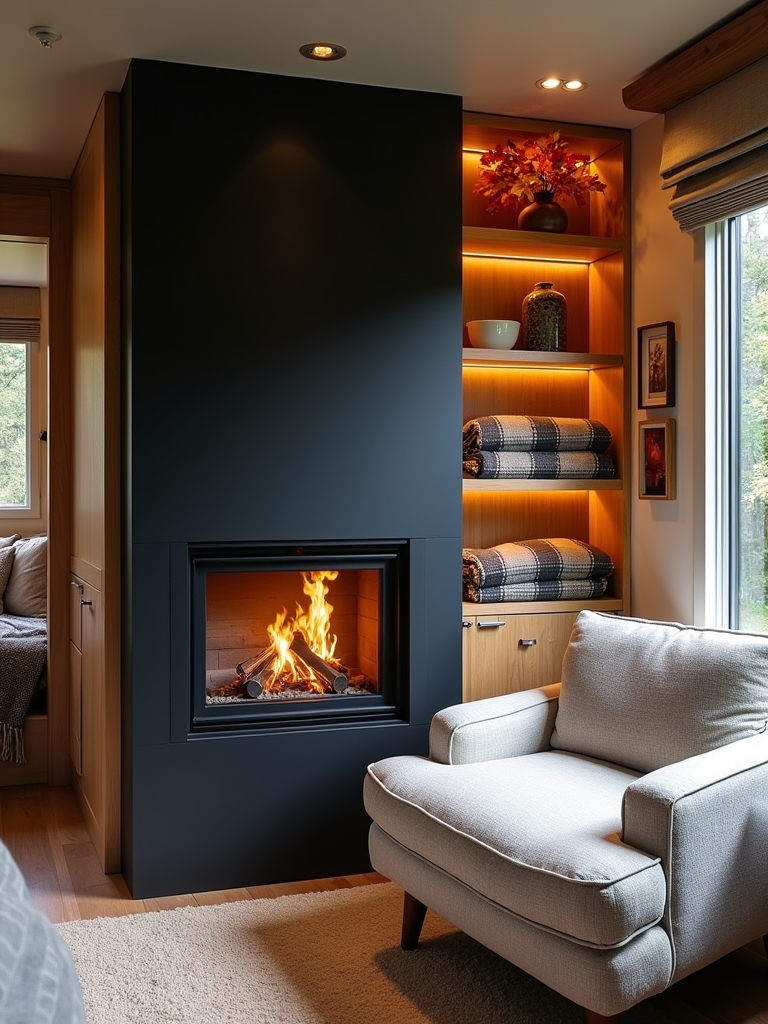
The wall space around a fireplace is too valuable to leave blank inside a camper. Cabinet surround designs can incorporate hidden compartments behind the unit for remotes, cords, and small accessories that tend to clutter a countertop.
Vertical space above and beside the firebox handles hooks, magnetic strips, and small shelving without adding visual noise. Baskets tucked into the base of a mantel surround manage overflow and contribute texture without requiring any additional installation work or tools.
Seasonal Décor Enhancements for Fall
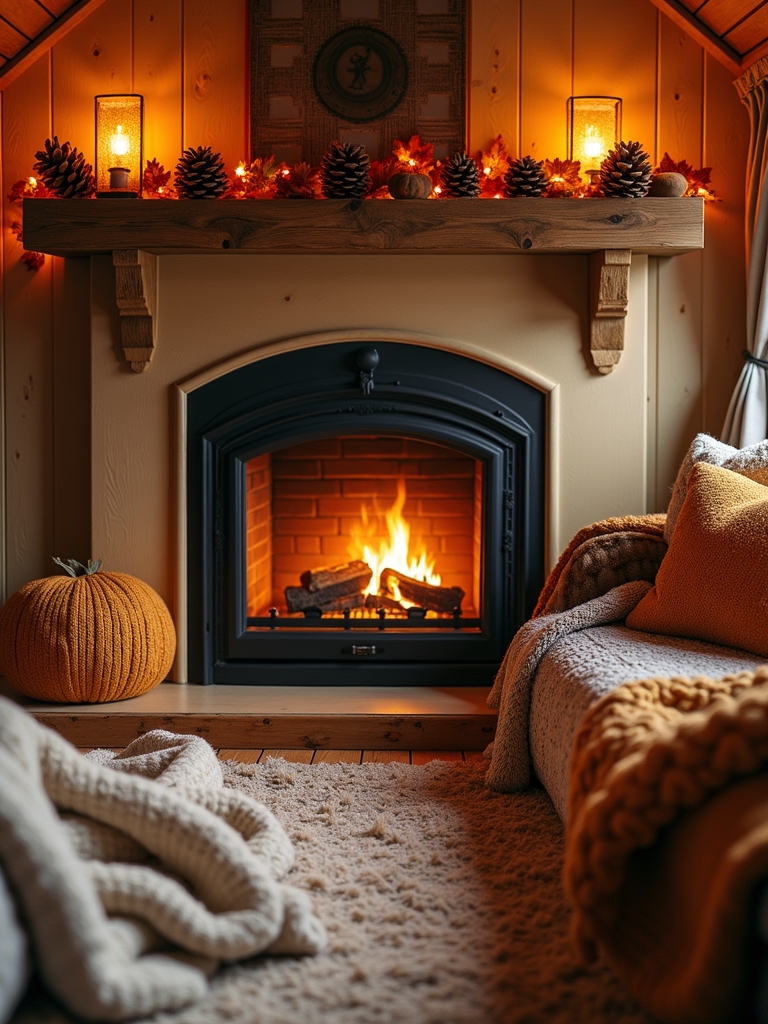
The quickest way to make a camper feel like fall is to work with what the season already provides freely. Mini pumpkins, dried gourds, and pinecones pack flat and cost almost nothing, making them genuinely practical decorations for a traveling space.
Pillar candles and votive holders on the mantel add warm, low light that electric flames alone don’t quite replicate. Swapping in velvet or chenille throws in rust, ochre, or deep olive shifts the whole color temperature of the interior without a single permanent change.
Smart Controls for Customization
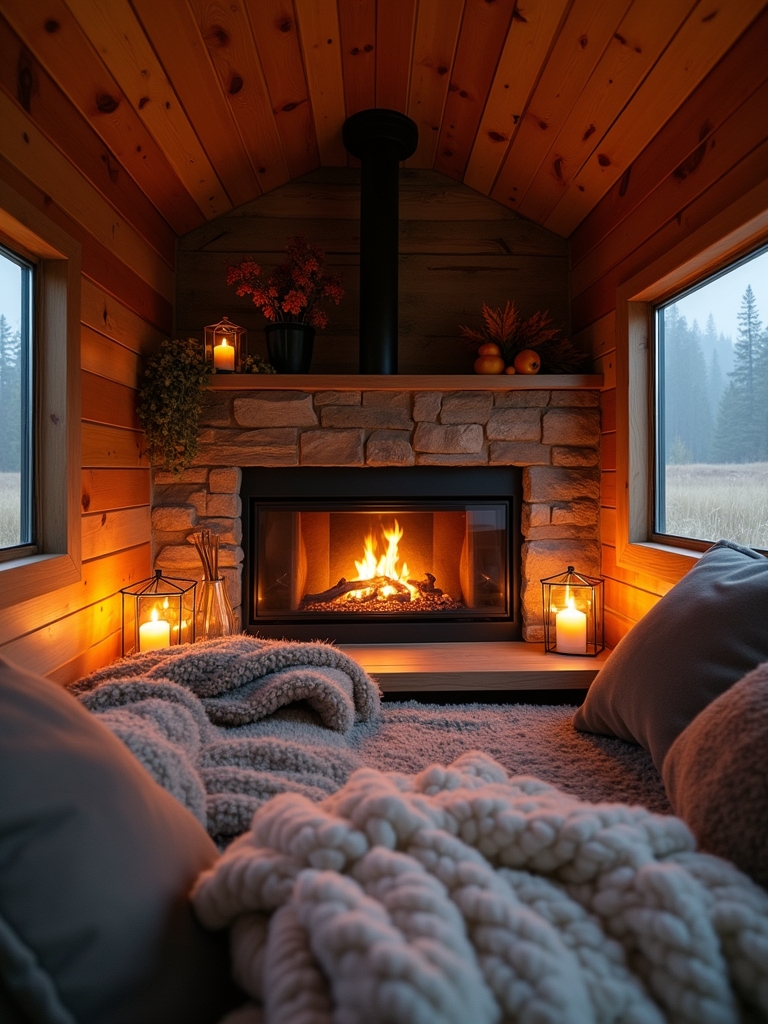
Programmable controls are where a simple electric fireplace starts behaving more like a climate system. Brands like RecPro build remotes that handle temperature and flame brightness independently, so you’re not locked into a fixed pairing between heat output and visual intensity.
Scheduling features let you set the unit to warm the camper before you wake up, which feels like a small luxury but makes a real difference on a 30-degree morning. An intuitive interface matters more than a long feature list, and the best units keep all of it manageable from across the room.
Color and Style Options to Match Décor
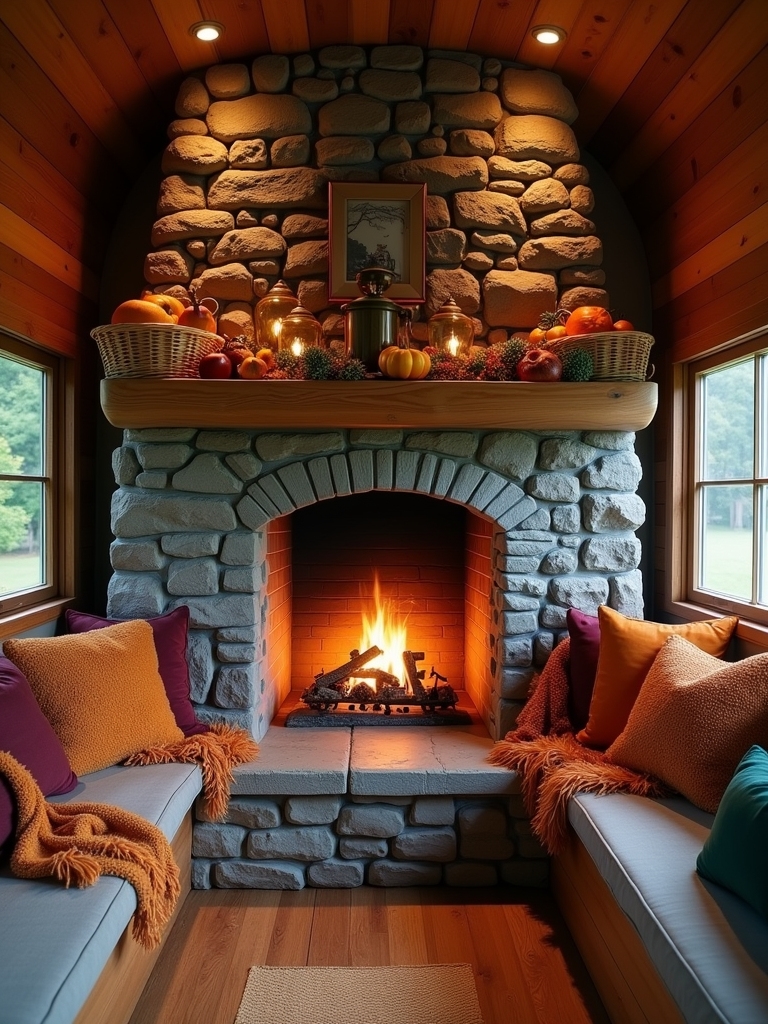
The fireplace unit matters, but the surrounding wall and mantel determine whether the whole installation looks intentional or accidental. Bold monochromatic walls in dark green or deep navy make the flame effect pop against a saturated, rich surface in a way that neutral walls rarely achieve.
Bright cabinet fronts paired with neutral walls keep the space from feeling heavy while still giving the fireplace area a clearly defined presence. Tones like evergreen, warm rust, and muted gold layer naturally with the wood finishes and textile textures already common in most RV interiors.