Austin attracts people who refuse to live like everyone else, and that restlessness shows up in how they camp. The city’s maker culture has quietly produced some of the most inventive camper interiors in the country.
These 27 renovations pull from that same well: handwoven textiles, reclaimed materials, and color choices that feel personal. Some are Airstreams, some are vintage trailers, and a few are things that barely qualify as either.
All of them prove that a small rolling box can feel like home if you know what you’re doing.
Desert Dreams: A Sunset-Inspired Airstream Revival
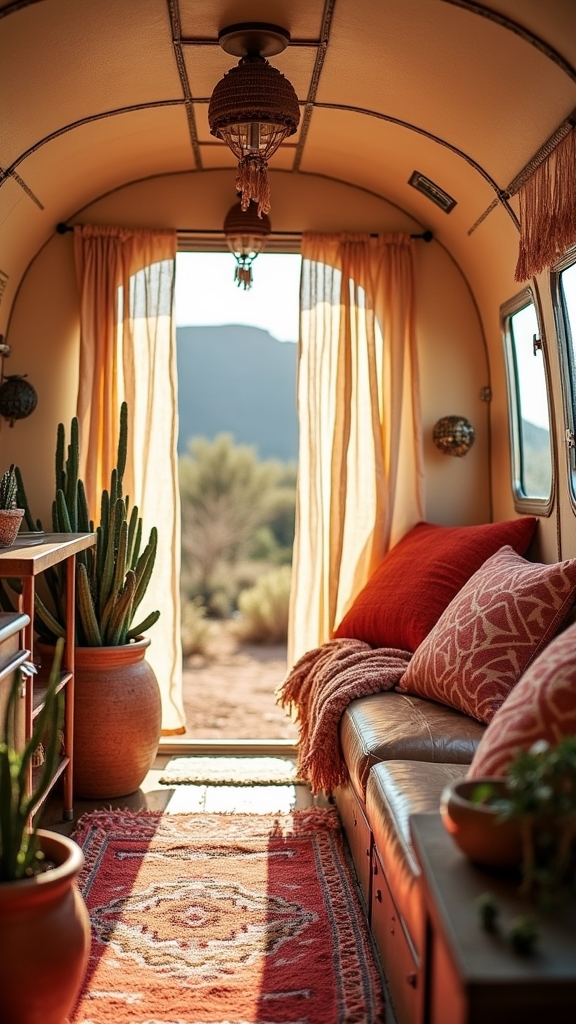
Warm LED lighting does more work inside an Airstream than most people expect. It shifts the whole mood from aluminum box to something that actually feels welcoming.
Pair that with southwestern textiles in rust, ochre, and deep clay, and you’ve got the bones of something beautiful.
Vintage patterns ground the space without making it feel like a museum, and Airstream’s curved walls suit earthy tones naturally.
SEE THIS: 23 Feminine Boho Camper Interior Renovations From Boulder, Colorado!
Contents
- 1 The Vintage Bohemian Wanderer’s Haven
- 2 Earth-Toned Elegance in a Compact Space
- 3 Rattan Paradise: A Natural Light Haven
- 4 The Modern Nomad’s Boho Retreat
- 5 Copper and Canvas: A Metallic Boho Blend
- 6 Macramé Magic in a Mobile Home
- 7 The Textile Collector’s Rolling Gallery
- 8 Pastel Perfection: A Soft Boho Sanctuary
- 9 Woven Wonders: A Basket-Filled Beauty
- 10 The Plant Lover’s Mobile Oasis
- 11 Golden Hour: A Sun-Drenched Design
- 12 Minimalist Meets Boho: A Clean Design
- 13 String Light Serenity Under the Stars
- 14 The Artisan’s Handcrafted Haven
- 15 Desert Botanicals Meet Modern Comfort
- 16 Southwestern Charm on Wheels
- 17 The Cozy Textile Traveler’s Nest
- 18 Rustic Romance: A Wooden Wonderland
- 19 Moroccan Dreams in Texas Style
- 20 The Eclectic Explorer’s Rolling Home
- 21 Neutral Nature: A Calming Escape
- 22 Velvet and Vintage: A Luxe Blend
- 23 The Sustainable Wanderer’s Paradise
- 24 Crystal Kingdom: A Mystical Mobile Space
- 25 Texas Wildflower-Inspired Wanderlust
The Vintage Bohemian Wanderer’s Haven
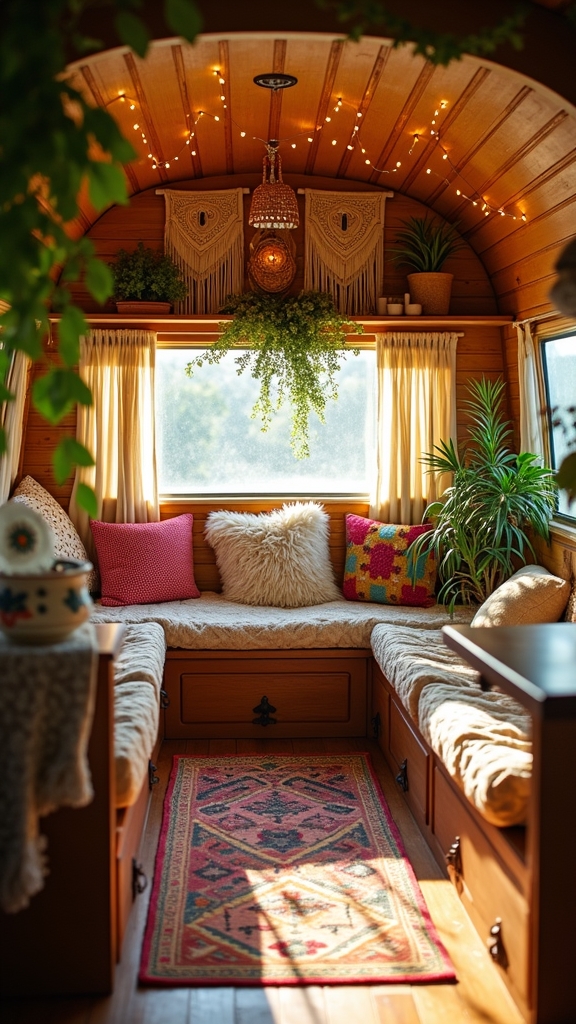
Layered rugs are the fastest way to make a camper floor feel intentional rather than improvised. Stack a worn jute runner under a faded kilim and the whole interior suddenly has depth and history.
Vintage maps on the walls and reclaimed wood shelving reinforce that well-traveled feeling without tipping into theme park territory.
Chunky knit throws in earthy tones earn their keep in the sleeping nook when the temperature drops and the windows start to fog.
SEE THIS: 18 Ideas to Layer Textures and Patterns for a Boho Camper Interior in Missoula, Montana!
Earth-Toned Elegance in a Compact Space
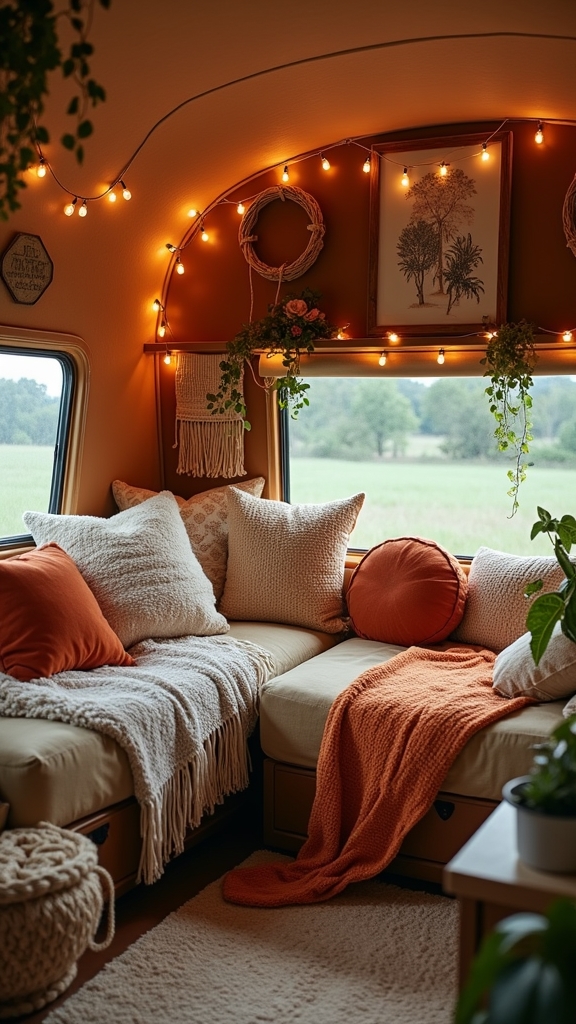
Terra cotta and fern green against a white backdrop sounds simple, but the proportions matter enormously. Too much white and the space reads clinical; too much terra cotta and it starts to feel heavy.
Jute rugs and woven baskets on raw wood shelving pull the warmth back into balance. Brass lanterns and a few macramé pieces add texture without crowding a space that can’t afford to feel stuffed.
SEE THIS: 18 Free-Spirited Boho Camper Interior Styles From Sedona, Arizonas!
Rattan Paradise: A Natural Light Haven
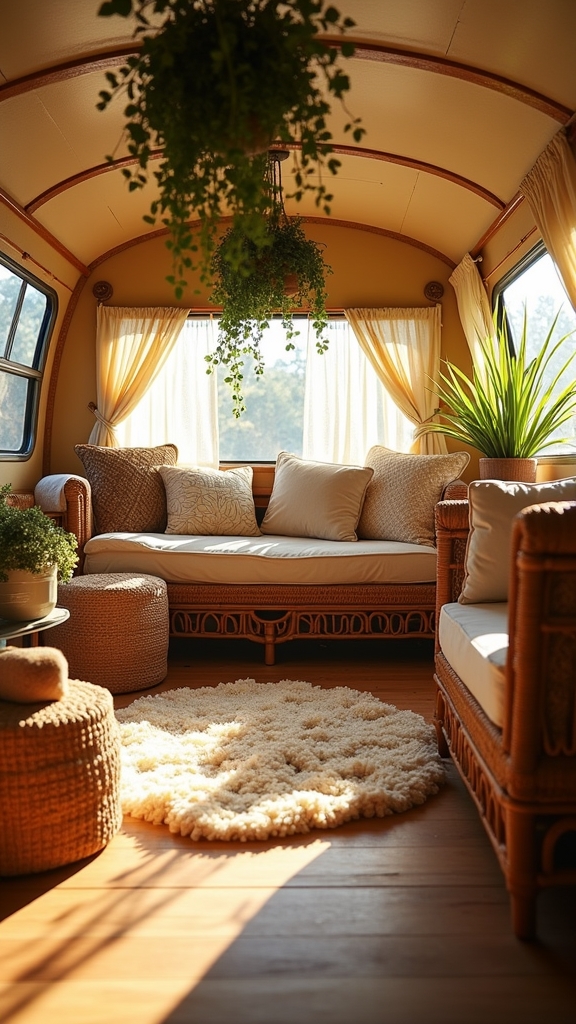
Good rattan furniture does two things most camper materials can’t. It stays lightweight and bounces light around in a way that makes tight spaces feel roomier.
Mirrors placed opposite windows amplify that effect considerably. One strong rattan piece reads as intentional; four of them start to look like a porch sale.
The Modern Nomad’s Boho Retreat
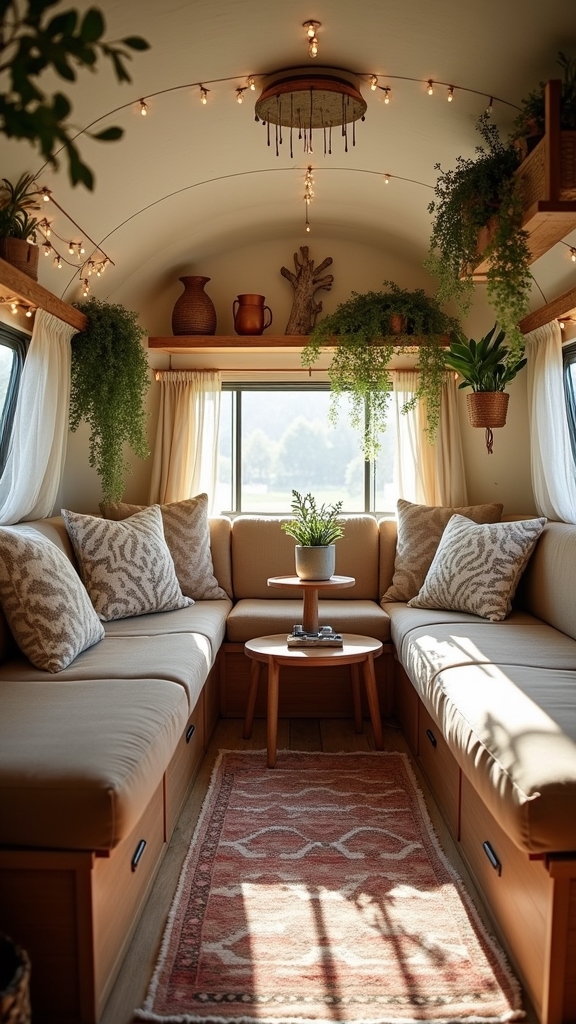
Multi-functional furniture separates a livable camper from a frustrating one.
A fold-down desk, a bench with hidden storage, a lofted sleeping platform: these aren’t extras, they’re the whole plan.
Natural materials age well on the road and don’t show the wear that cheap laminates telegraph immediately.
Vintage textiles from markets and estate sales add character that flat-pack furniture simply cannot fake.
Copper and Canvas: A Metallic Boho Blend
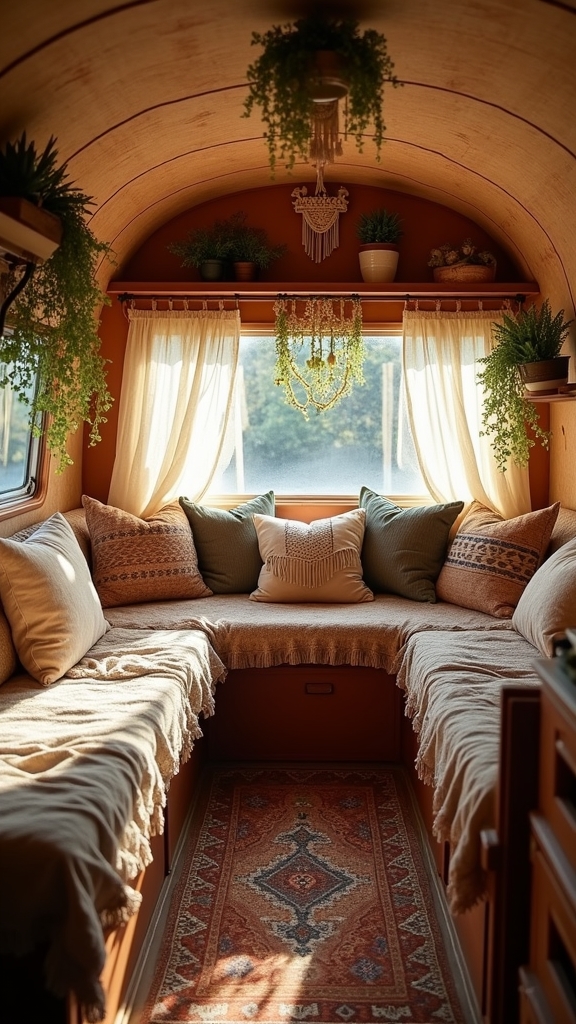
Copper gets a lot of use in boho design because it ages into something even better than it starts as. That warm patina develops over months of handling and humidity.
Canvas plays the opposite role, softening the metallic sharpness and grounding the palette in something natural.
Copper cabinet pulls, a canvas curtain dividing sleeping from living, a few copper-framed prints: small commitments go a long way here.
Macramé Magic in a Mobile Home
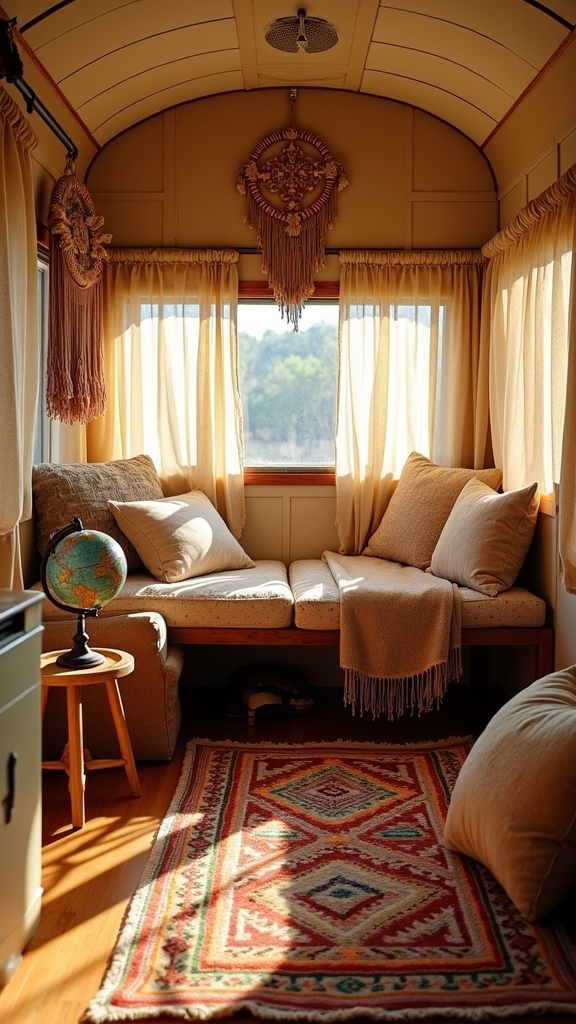
Vertical space is the most underused real estate in any camper, and macramé solves that problem while adding real texture.
Handcrafted wall hangings in natural cotton or hemp fill the wall space that would otherwise sit empty and cold.
Wooden dowels keep the pieces structured without making them rigid, and earthy tones in the fiber tie the interior palette together.
The best macramé pieces in a camper are sized for the space, not borrowed from a house wall.
The Textile Collector’s Rolling Gallery
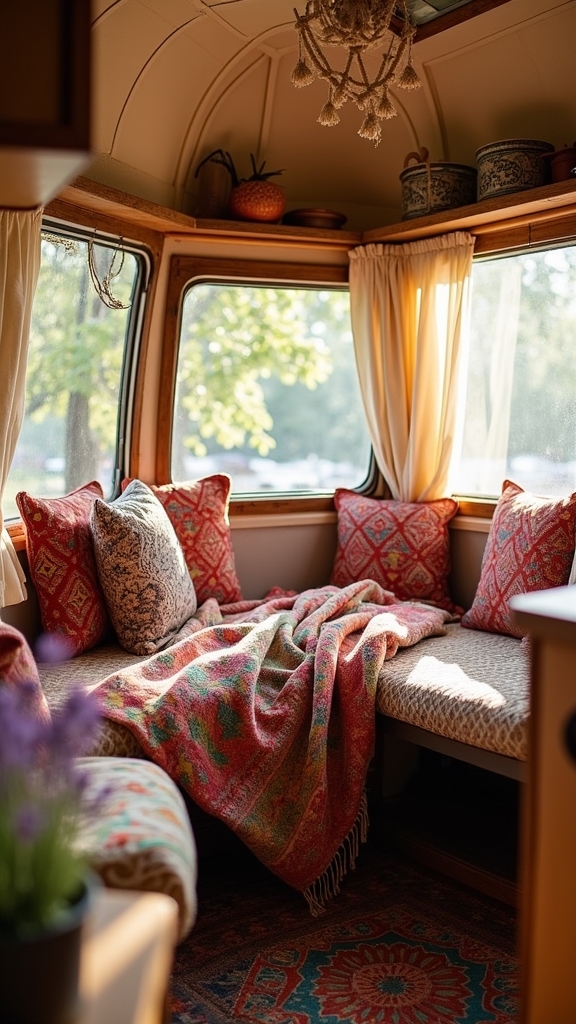
Collecting textiles on the road is one of the better travel habits you can develop. A woven piece from an Oaxacan market or a hand-dyed fabric from a craft fair carries real memory.
Flexible display solutions like tension rods and removable hooks let you rotate pieces without committing to permanent installation.
Strategic lighting, even just a few well-placed clip lights, can turn a textile collection into something that looks carefully considered.
Pastel Perfection: A Soft Boho Sanctuary
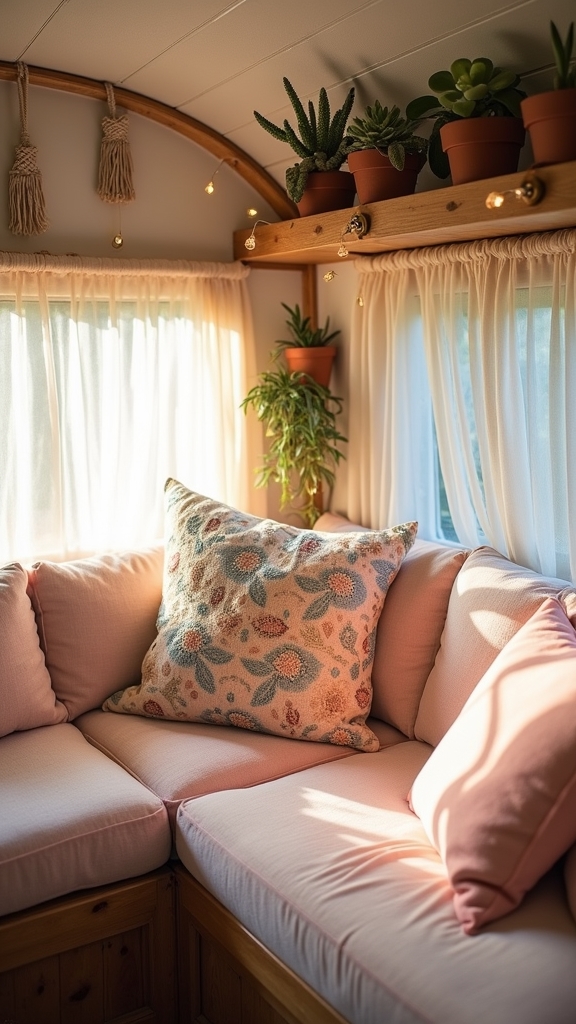
Pastels work in a camper the same way they work in small apartments: they open the space up without sacrificing warmth.
Soft pink, lavender, and mint read too sweet without neutral anchors, so raw linen and natural wood are essential companions.
Macramé details and hanging plants introduce organic shapes that offset the softness of the color palette.
String lights and pastel-tinted glass fixtures shift the whole atmosphere after dark into something calm and worth staying in.
Woven Wonders: A Basket-Filled Beauty
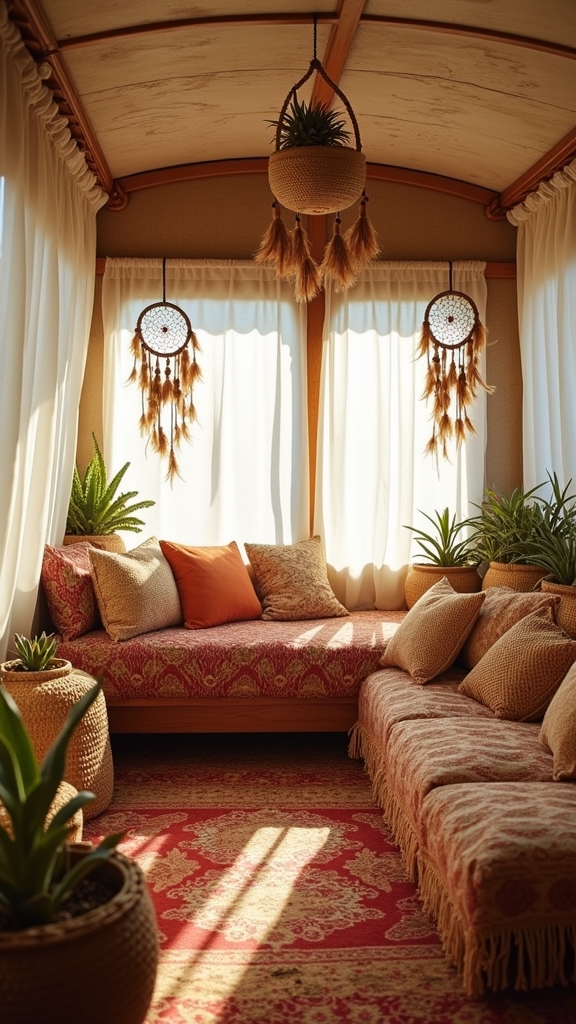
A well-chosen basket collection does double duty in a camper: it stores things and travels beautifully as decor.
Mix vintage market finds with newer pieces in complementary textures, and the result feels globally gathered rather than mass-produced.
Different weave patterns and materials create visual rhythm across a wall or shelf without requiring any formal arrangement logic.
The pieces that get handled most develop the best character over time, which is what makes this approach worth committing to.
The Plant Lover’s Mobile Oasis
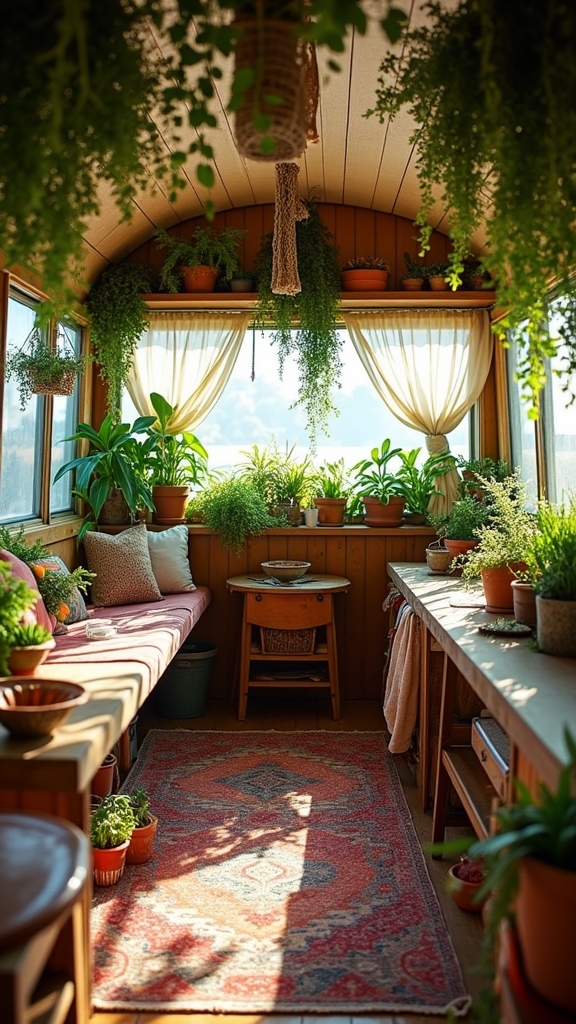
Not every plant survives life on a moving vehicle, but succulents, air plants, and small pothos are remarkably road-tolerant.
Macramé hangers keep pots off limited counter space and add another layer of texture near windows where light is best.
Vintage botanical prints fill the wall space between living plants and extend the green palette into the corners.
Terracotta pots and olive-toned linens tie the plant collection to the broader color story rather than a separate department.
Golden Hour: A Sun-Drenched Design
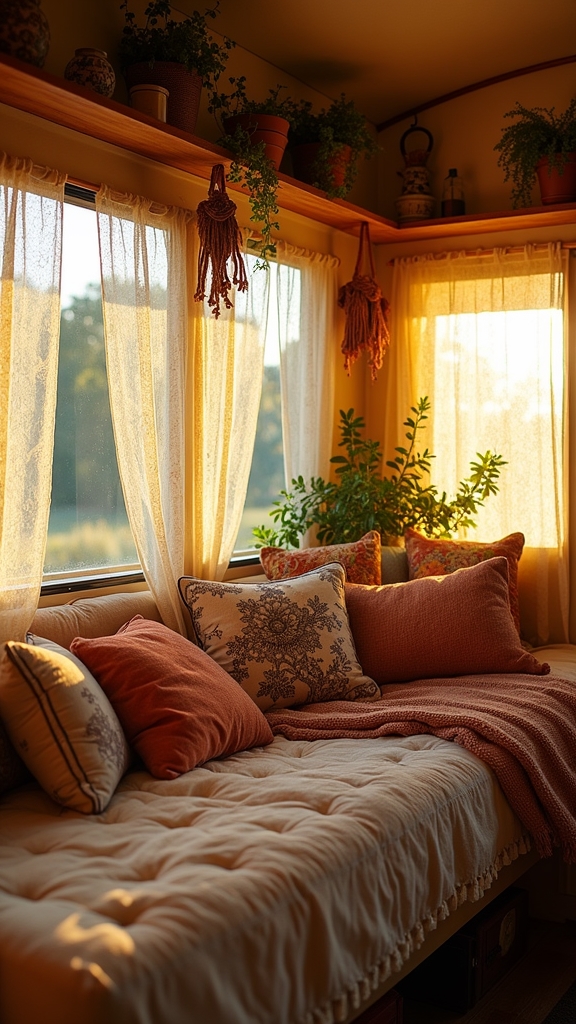
The warm light that hits just before sunset is worth designing a whole interior around. String lights with a warm color temperature get close after dark, and a brass lantern pushed into the corner does the rest.
Faded Persian rugs in amber and rose tones absorb light in a way that makes the floor feel like part of the scheme.
Wooden furnishings and cotton textiles complete the palette, and multi-functional pieces keep the space from being sacrificed to aesthetics alone.
Minimalist Meets Boho: A Clean Design
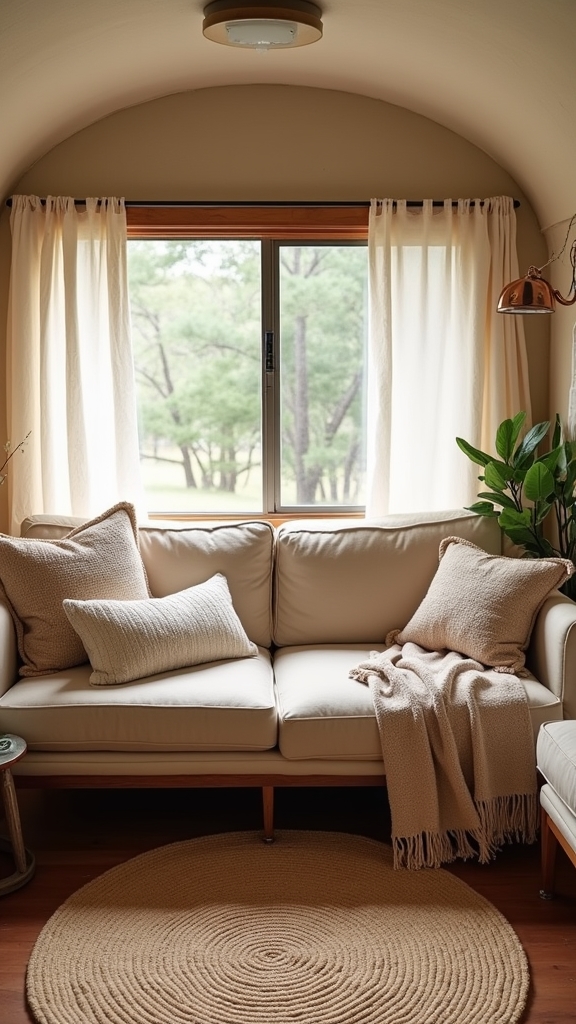
The mistake most people make with minimalist boho is stripping too much out and ending up with something sterile.
Clean lines create breathing room, but texture still has to show up somewhere. Reclaimed wood grain, a macramé panel, or the weave of a jute rug will do the job without breaking the calm.
Keeping the color palette in the neutral-to-earthy range lets each material speak without competing for attention.
String Light Serenity Under the Stars
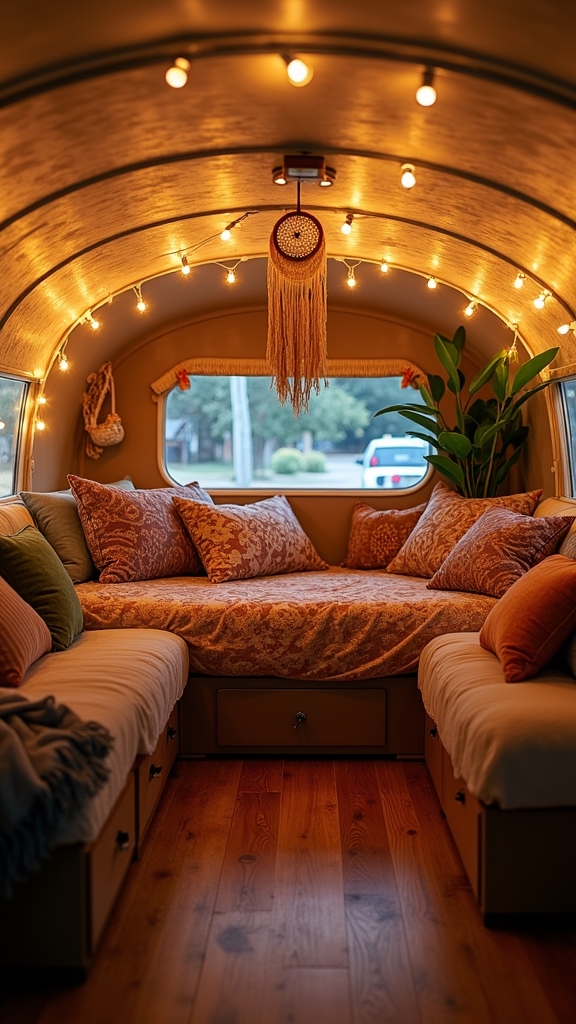
Few things transform a camper exterior faster than a strand of well-placed lights after dark.
LED globe lights around the awning push the usable space into the evening and shift the whole feel of a campsite.
Inside, the same warm-toned lights near windows create a glow that reads from outside as inviting.
The Artisan’s Handcrafted Haven
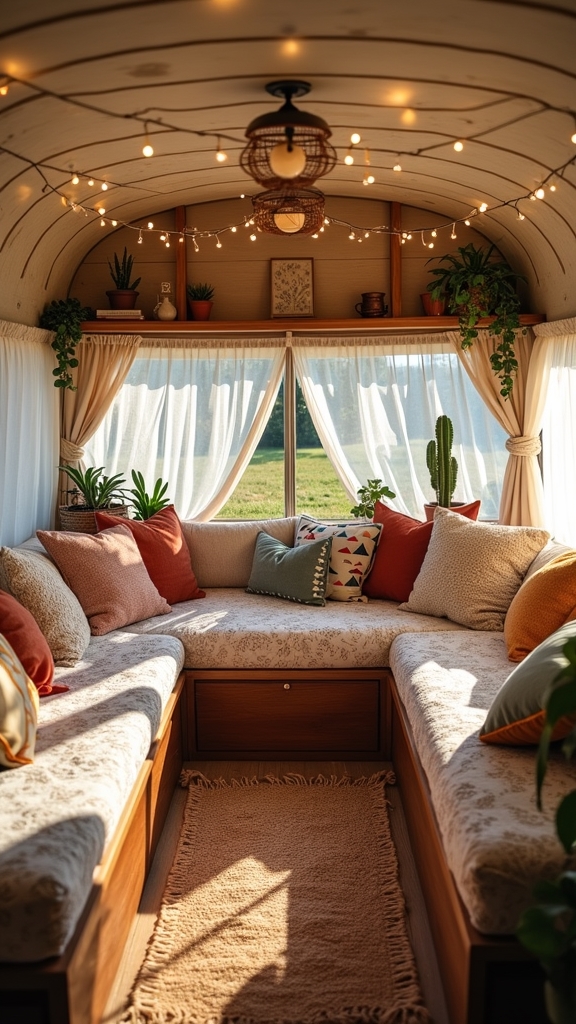
Austin’s maker community is deep enough that you could furnish an entire camper without buying anything mass-produced.
Ceramic pieces, handworked metal accents, and carved wooden details each carry the fingerprints of someone who made them deliberately.
Glass art catches light differently than manufactured alternatives, and that variation keeps a space from feeling flat.
Mixing locally made pieces with vintage finds creates a narrative that no catalog interior can replicate.
Desert Botanicals Meet Modern Comfort
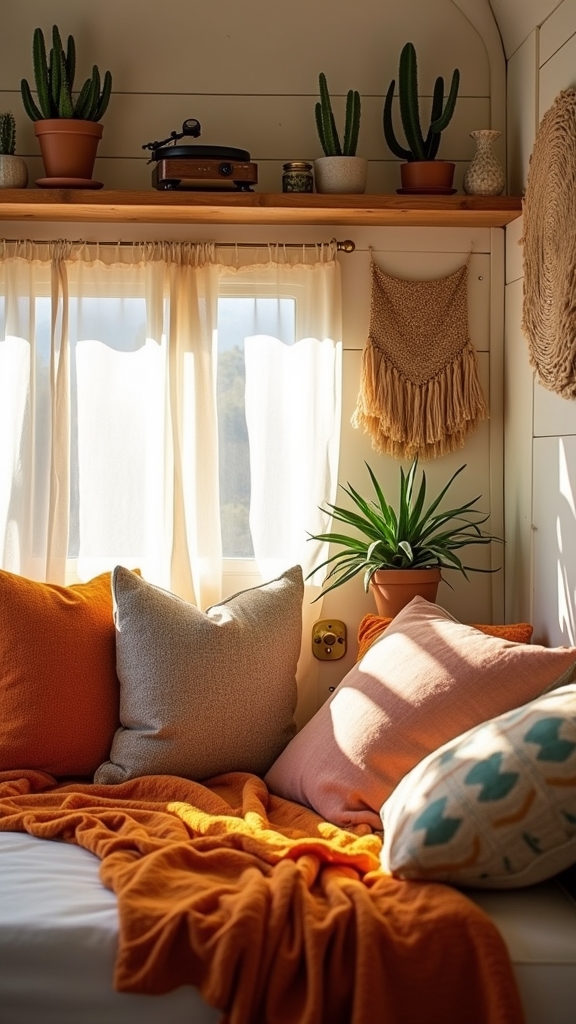
Succulents and cacti in copper or brass pots suit a desert-themed camper in a way that feels appropriate rather than decorative.
Their low water needs make them practical travel companions, which is a consideration most design articles skip over entirely.
A jute rug layered under a vintage Moroccan carpet creates the kind of floor that makes people want to take their shoes off.
Brass lanterns at eye level warm the space without overwhelming the botanical elements nearby.
Southwestern Charm on Wheels
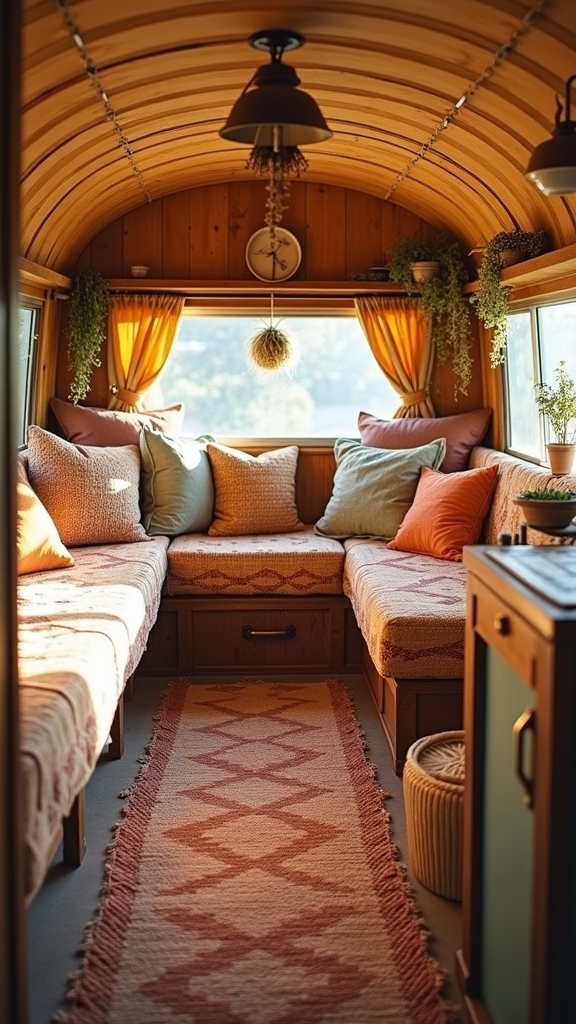
The American Southwest has a visual language that translates well to camper interiors. Hand-hammered metals, worn leather, and geometric patterns in deep red and gold are the starting point.
Traditional Navajo textiles anchor this look, and sourcing them through Native-owned sellers matters both ethically and for authenticity.
Keep the palette grounded in the actual colors of the landscape rather than a tourist-shop approximation.
The Cozy Textile Traveler’s Nest
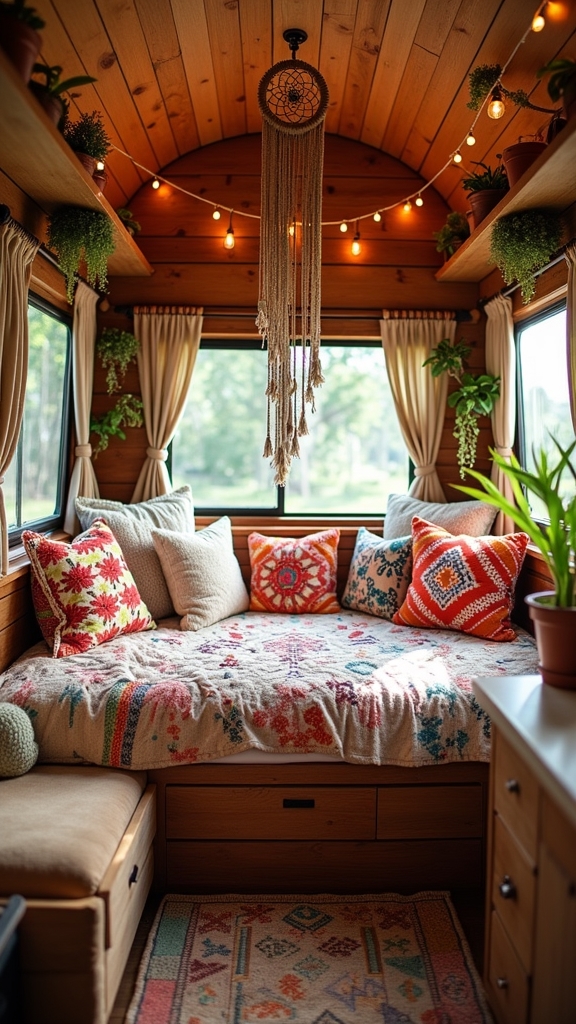
A camper built around textiles has a warmth that hard-surface interiors simply don’t achieve.
Cotton throws, velvet pillows, and handwoven wool blankets layered together create a sleeping area that feels like a genuine nest.
Natural fibers breathe better than synthetic alternatives, which matters more in a small sealed space than most people anticipate.
The layering approach lets you adapt to temperature by adding or removing pieces rather than running climate control.
Rustic Romance: A Wooden Wonderland
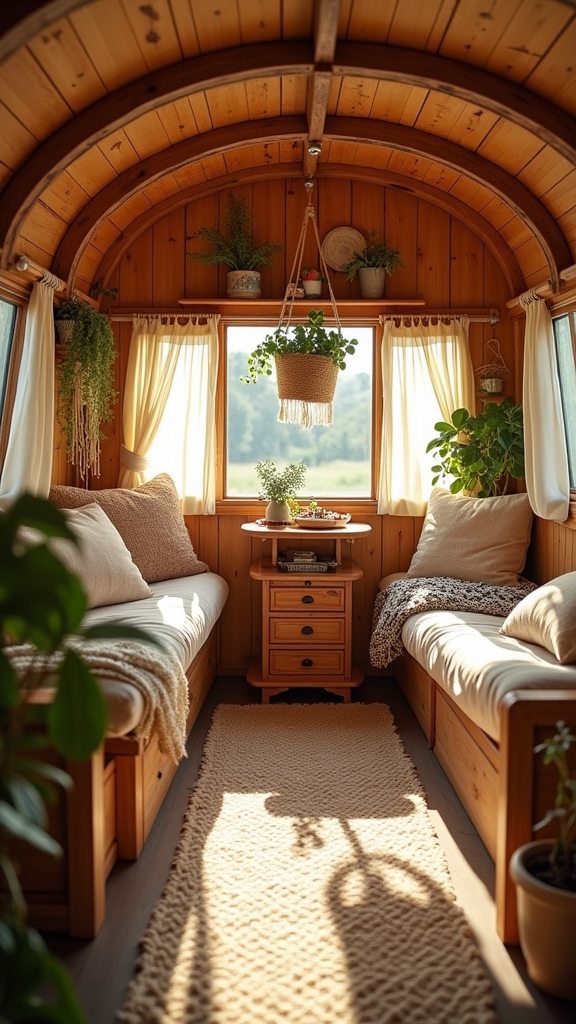
Wood in a camper ages the way good leather ages: it gets better, more characterful, more itself. Varying tones from pale ash to deep walnut create depth without requiring a complicated design scheme.
Products like Stikwood make application manageable in tight curved spaces where traditional millwork would be impractical.
Smart storage integrated into the woodwork keeps the rustic aesthetic intact without sacrificing what road life actually demands.
Moroccan Dreams in Texas Style
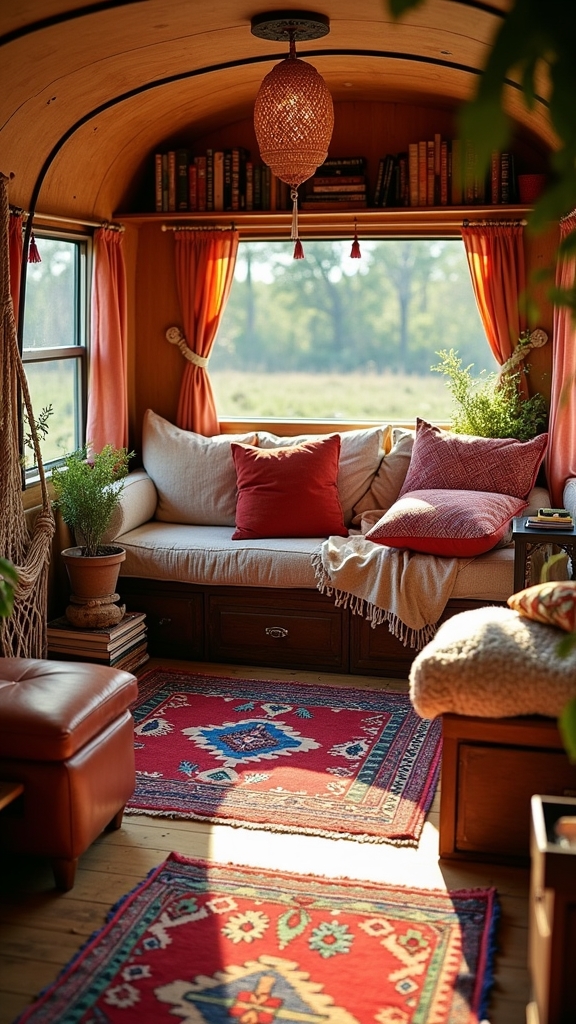
Traditional Moroccan lanterns throw light in a way no modern fixture replicates. The geometric shadow patterns they cast across a ceiling are the whole point.
Layering that influence over a Texas sensibility means keeping things rougher and less precious than a strict Moroccan interior would be.
It’s a combination that shouldn’t work, but the lanterns, vintage maps, and handwoven textiles make a strong case.
The Eclectic Explorer’s Rolling Home
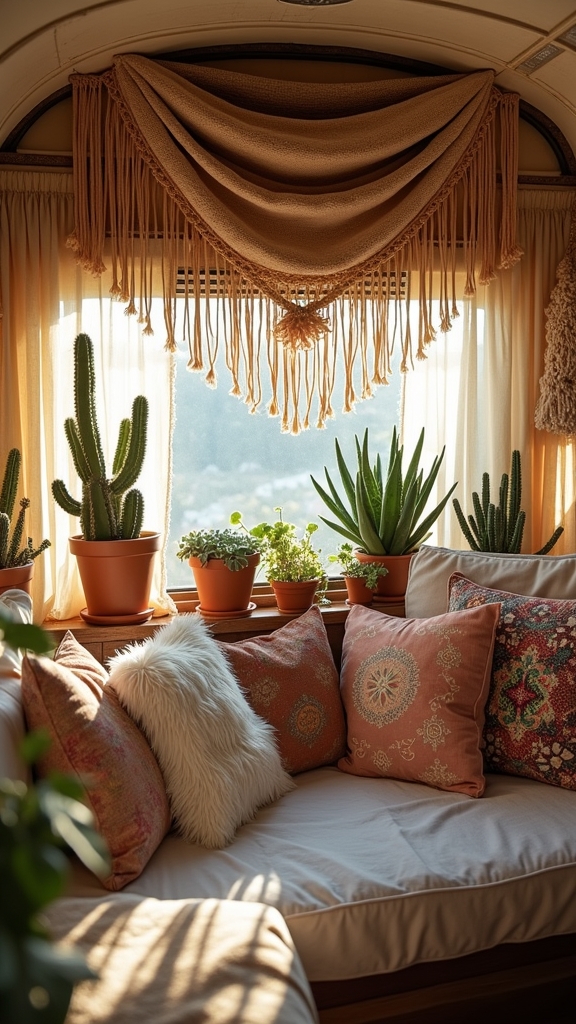
Eclectic interiors live or die by curation: without a unifying thread, they tip from layered to chaotic and fast.
Natural materials provide that thread here, tying together vintage accents and colorful textiles through shared tactile quality.
The goal is a space that looks accumulated over years of travel rather than styled all at once. Worn edges, mismatched frames, and fabrics at different stages of fading tell the story a well-traveled camper should.
Neutral Nature: A Calming Escape
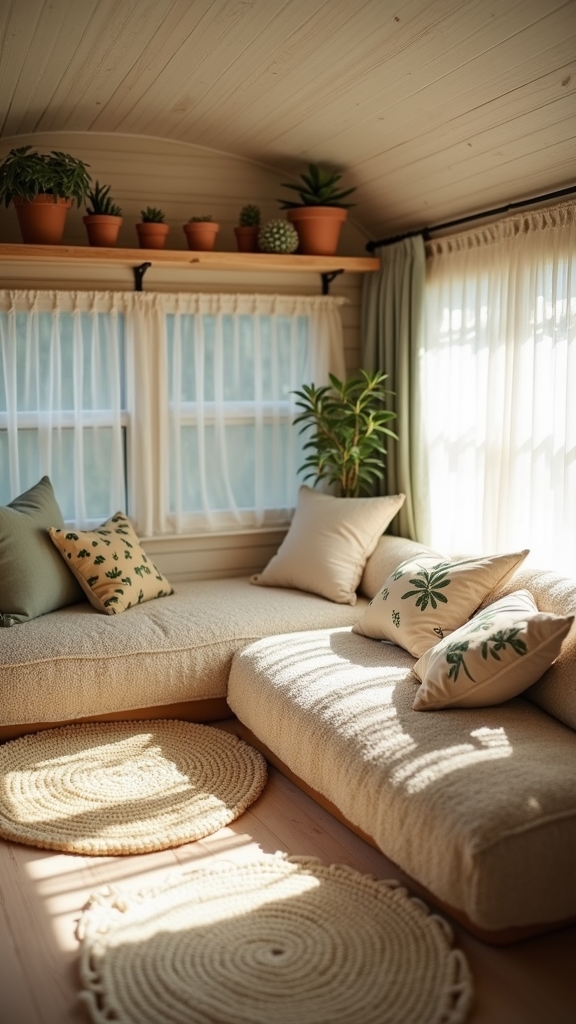
Soft whites, earthy greens, and sandy beiges are the quietest design choices and often the most effective in a camper.
They don’t compete with the landscape outside the windows, which is usually why you’re out there.
Fairy lights and chunky knit throws bring warmth into the space without disrupting the calm that neutral tones establish. The result is an interior that lowers your heart rate rather than demanding your attention.
Velvet and Vintage: A Luxe Blend
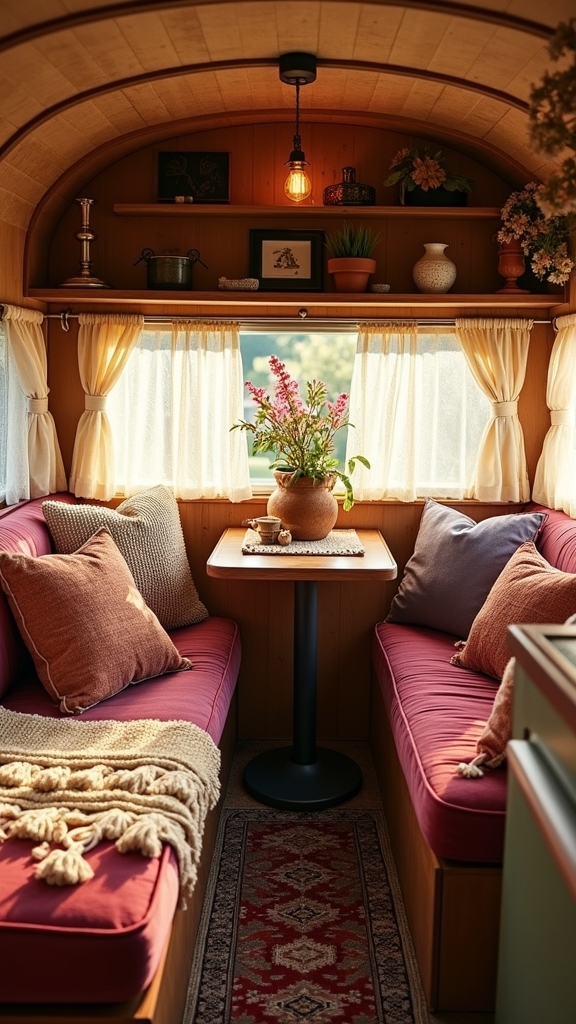
Velvet in a camper sounds impractical until you actually try it. A velvet cushion holds its shape through road vibration better than you’d expect and adds richness that nothing else quite matches.
Pairing it with vintage pieces in worn leather or aged wood keeps the combination grounded rather than precious. Warm lantern light plays up velvet’s particular depth in a way that overhead fixtures simply can’t.
The Sustainable Wanderer’s Paradise
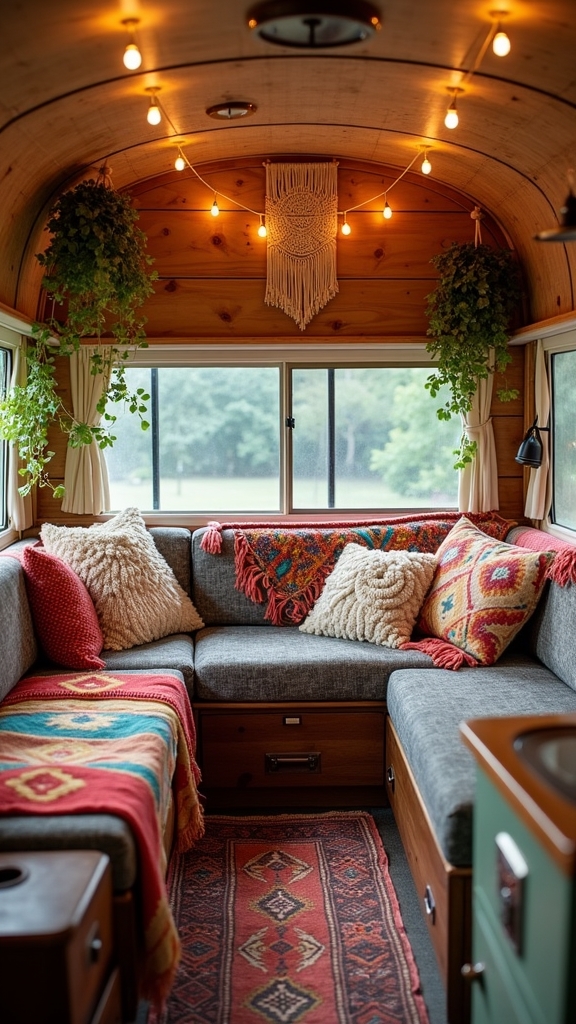
A lofted bed over a daytime living area is the most efficient use of vertical space in a small camper.
Reclaimed wood brings character and reduced environmental cost at the same time, and it improves with age. LED lighting and solar panels cut the dependency on hookups and open up campsites that a grid-reliant setup can’t reach.
Water-efficient solutions matter most on longer trips when freedom depends on not needing a dump station every two days.
Crystal Kingdom: A Mystical Mobile Space
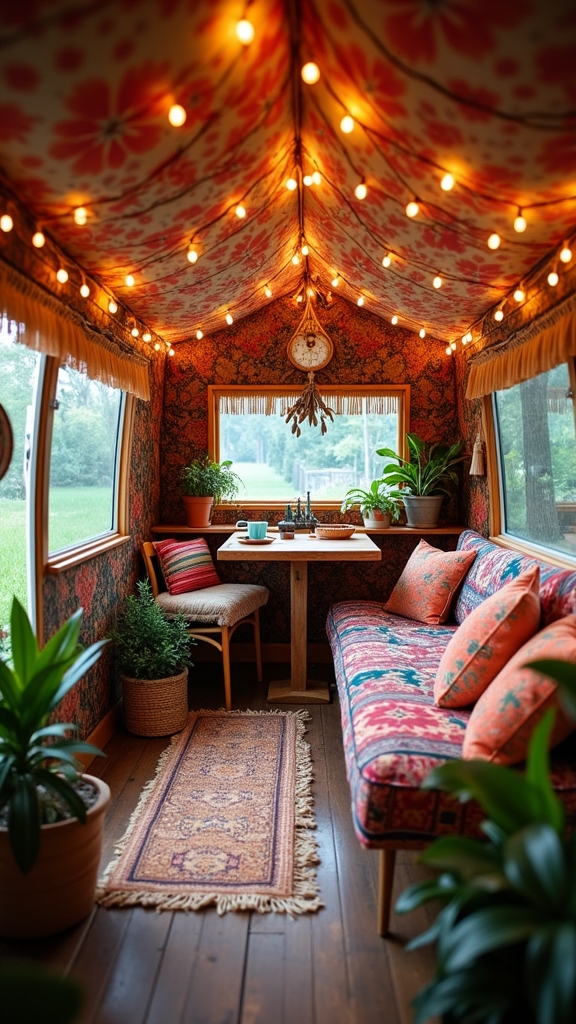
Crystalline accents catch light in ways that shift throughout the day as the sun moves, making them surprisingly dynamic.
Soft pastels and layered lighting create the atmosphere that makes those accents feel intentional rather than eccentric.
Austin’s artisan community produces locally made pieces that tie the mystical aesthetic to something grounded and real.
USB outlets and a compact sound system integrated discreetly keep the space functional without breaking the spell.
Texas Wildflower-Inspired Wanderlust
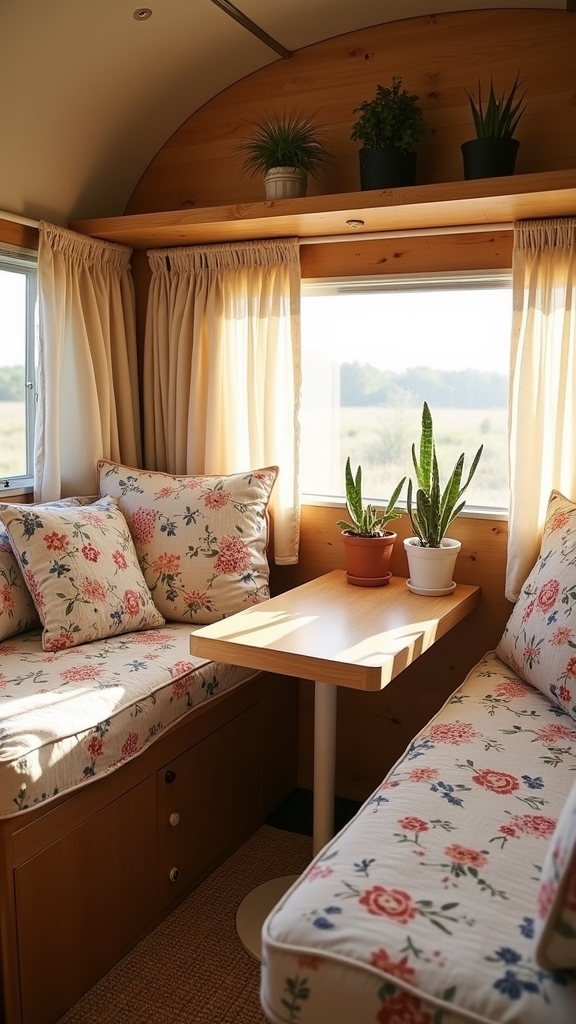
Bluebonnet blues and Indian paintbrush reds translate into textiles well because they’re bold enough to work at a small scale.
Dried flower arrangements handle road movement better than fresh ones and hold their color for months if kept out of direct sunlight.
Locally sourced wood and vintage Texas maps connect the interior to the landscape the camper was built to traverse.
Large windows do the most important work of all, bringing the actual wildflowers in when the season cooperates.