Every craft store in October has the same tired displays: plastic leaves, orange ribbon, and fake pumpkins that look nothing like the real thing. The terrariums are worth making, drawing from what’s actually outside your door.
Pinecones, dried seed pods, foraged moss, and the last of the garden’s hydrangeas cost nothing and look like they belong together.
Get those elements right, and your arrangement will outlast every trend on the shelf. It starts with the right container, and the 17 ideas ahead show you exactly where to go from there.

Contents
- 1 Pumpkin Patch Terrarium
- 2 Rustic Dough Bowl Display
- 3 Minimalist Modern Harvest
- 4 Fairy Garden Fall Scene
- 5
- 6 Pine Cone and Acorn Collection
- 7 Layered Sand and Glitter Base
- 8 Autumn Forest in Glass
- 9 Wheat Bundle and Cotton Stem Arrangement
- 10 Gilded Pumpkin and Feather Accent
- 11 Seasonal Scent Potpourri Mix
- 12 Twinkle Light Illumination
- 13 Translucent Pyramid Vase Showcase
- 14 Moss-Covered Miniature Landscape
- 15 Harvest Garland Integration
- 16 Grouped Jar Vignette
- 17 Candlelit Terrarium Ensemble
- 18 Seasonal Transition Design
Pumpkin Patch Terrarium
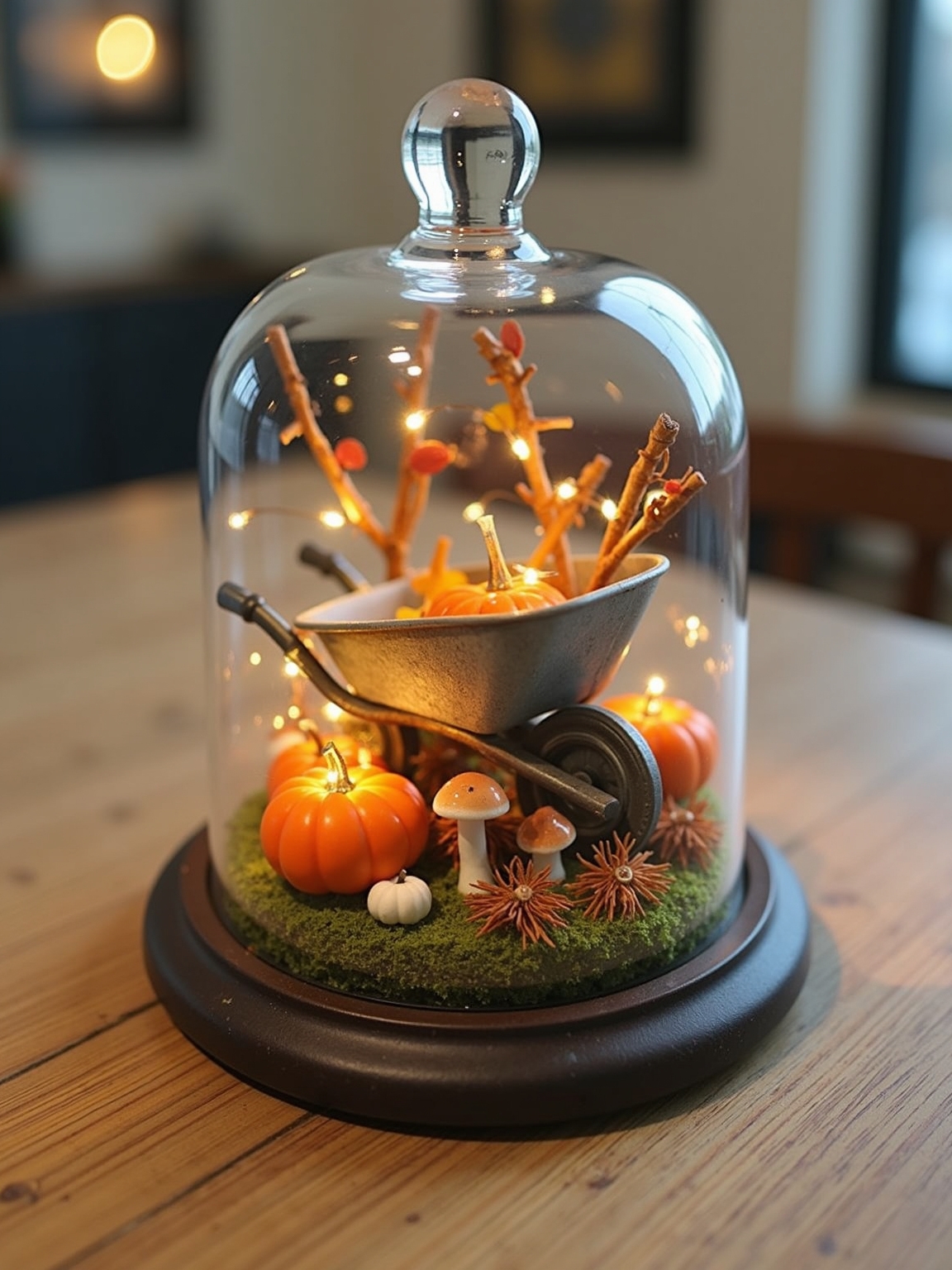
A flat-top pumpkin makes a better base than a round one because it sits without wobbling and gives you a stable surface to work on.
Press sheet moss onto the exterior with non-toxic craft glue, then carve a wide lid into the top and hollow out enough space for small succulents.
Cluster a few miniature pumpkins and a wisp of hay toward one side rather than centering everything, since asymmetry reads as intentional instead of accidental.
Build this one close to Halloween, because live plants inside a carved pumpkin have maybe two good weeks before things start to soften.
SEE THIS: 19 Amber Glass Fall Decor Ideas That Glow in Golden Light.
Rustic Dough Bowl Display

An old wooden dough bowl is one of the most forgiving vessels you can work with because its irregular shape makes every arrangement look considered. Press floral foam into the base, then layer raffia and dried moss over it so the mechanics disappear entirely.
Push in faux squash, real dried wheat, and a few chrysanthemums at different heights so the eye moves around rather than landing in one spot. This is the kind of arrangement that looks better with a few extra elements tucked in than it does sparse, so don’t hold back.
SEE THIS: Velvet Pumpkin Decor: 20 Luxe Fall Trend You’ll Want This Season.
Minimalist Modern Harvest
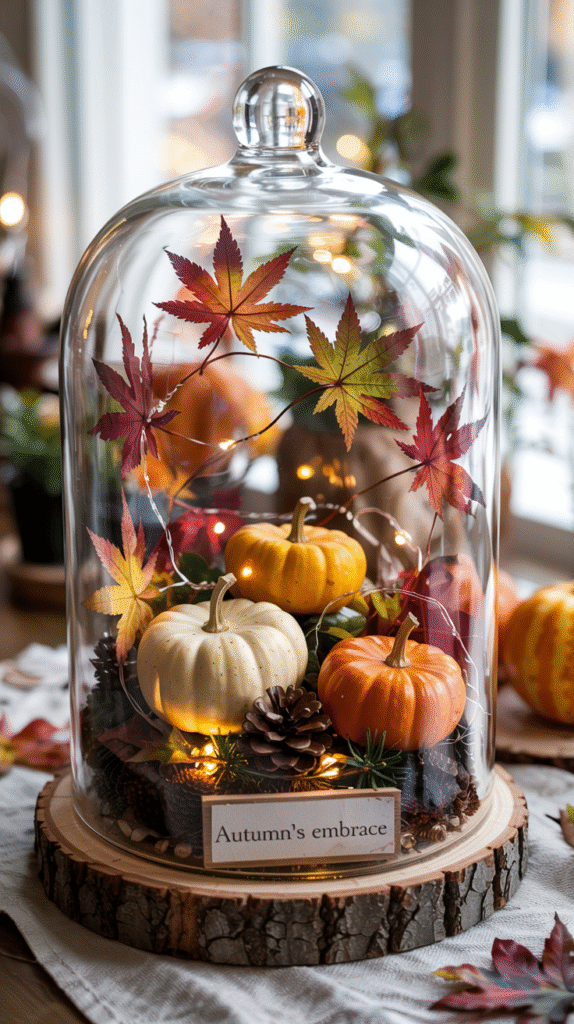

Not every fall arrangement needs to announce itself. A neutral palette of warm white, soft beige, and muted terracotta can feel more autumnal than anything dyed bright orange. Dried hydrangeas from the garden work beautifully here, especially once they’ve faded to that dusty parchment color they get in late September.
Tuck them into a low geometric container alongside a simple pumpkin and a handful of dried seedheads, and you have something that looks considered without looking curated.
SEE THIS: 19 DIY Dried Citrus Garlands That Make Your Fall Home Smell Amazing.
Fairy Garden Fall Scene

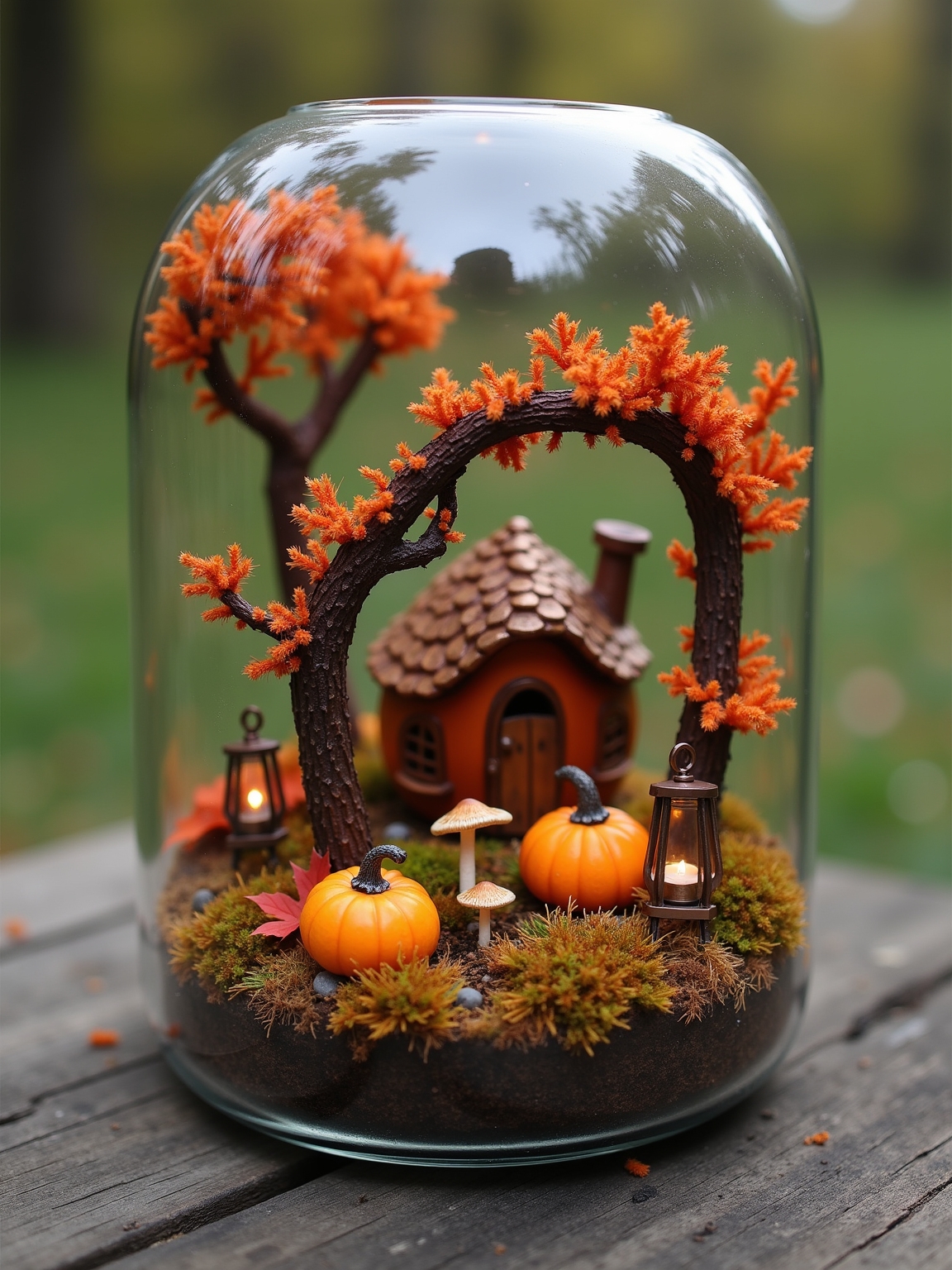
A craft pumpkin with drainage holes punched in the bottom gives you a container that holds up for the whole season without rotting.
Plant small ferns or creeping thyme inside, then scatter miniature hay bales, a tiny wheelbarrow, and a fairy figurine or two around the base of the plants.
Corn stalks trimmed down to a few inches add a harvest feeling that fairy gardens in other seasons simply can’t pull off. Run a thin strand of copper fairy lights through the arrangement, and the whole thing glows like something from a children’s book once the sun goes down.
SEE THIS: 20 Ways to Layer Rugs for a Cozy & Stylish Fall Look.
Pine Cone and Acorn Collection
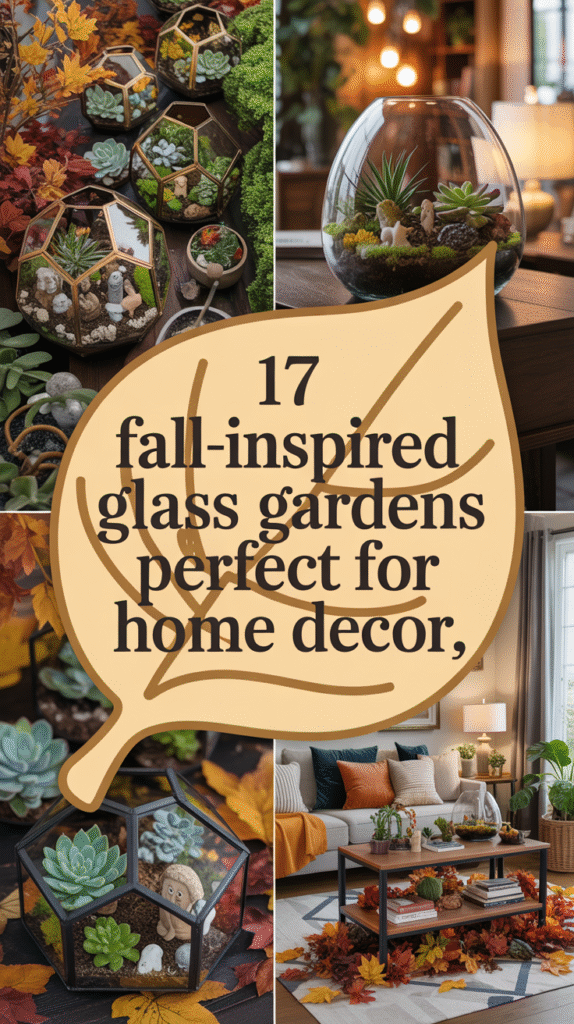
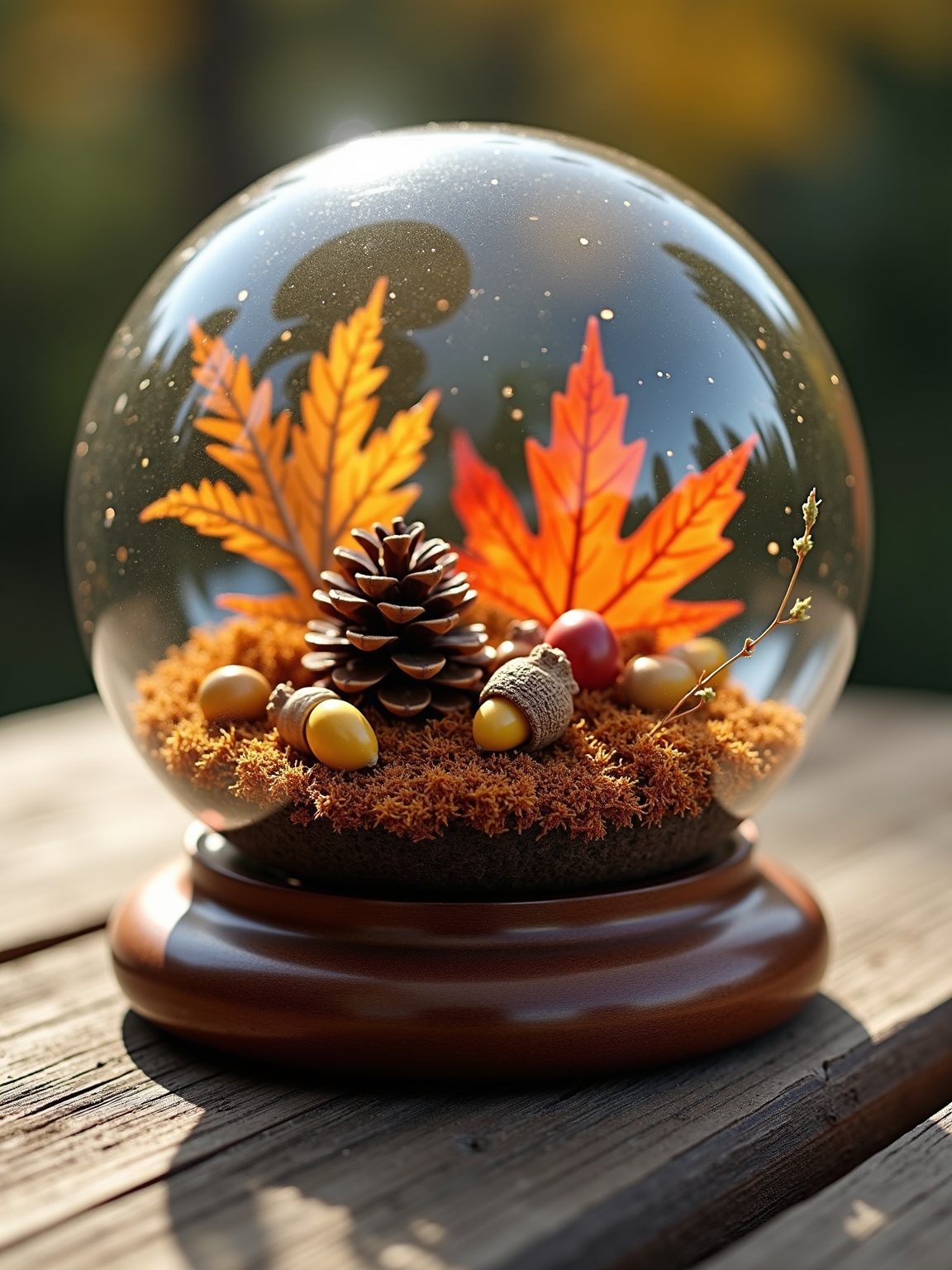
Shortleaf pine cones and white oak acorns are worth collecting together for the texture difference alone, one spiked and architectural, the other smooth and compact. Arrange them on a layer of dried moss inside a wide glass bowl, working asymmetrically so the grouping looks foraged rather than staged.
A light brush of gold acrylic paint on a few of the acorn caps catches the light without overwhelming the naturalistic feeling. Pheasant feathers or a few pressed oak leaves pushed in at the edges finish the whole thing without forcing it.
SEE THIS: 19 DIY Dried Citrus Garlands That Make Your Fall Home Smell Amazing..
Layered Sand and Glitter Base
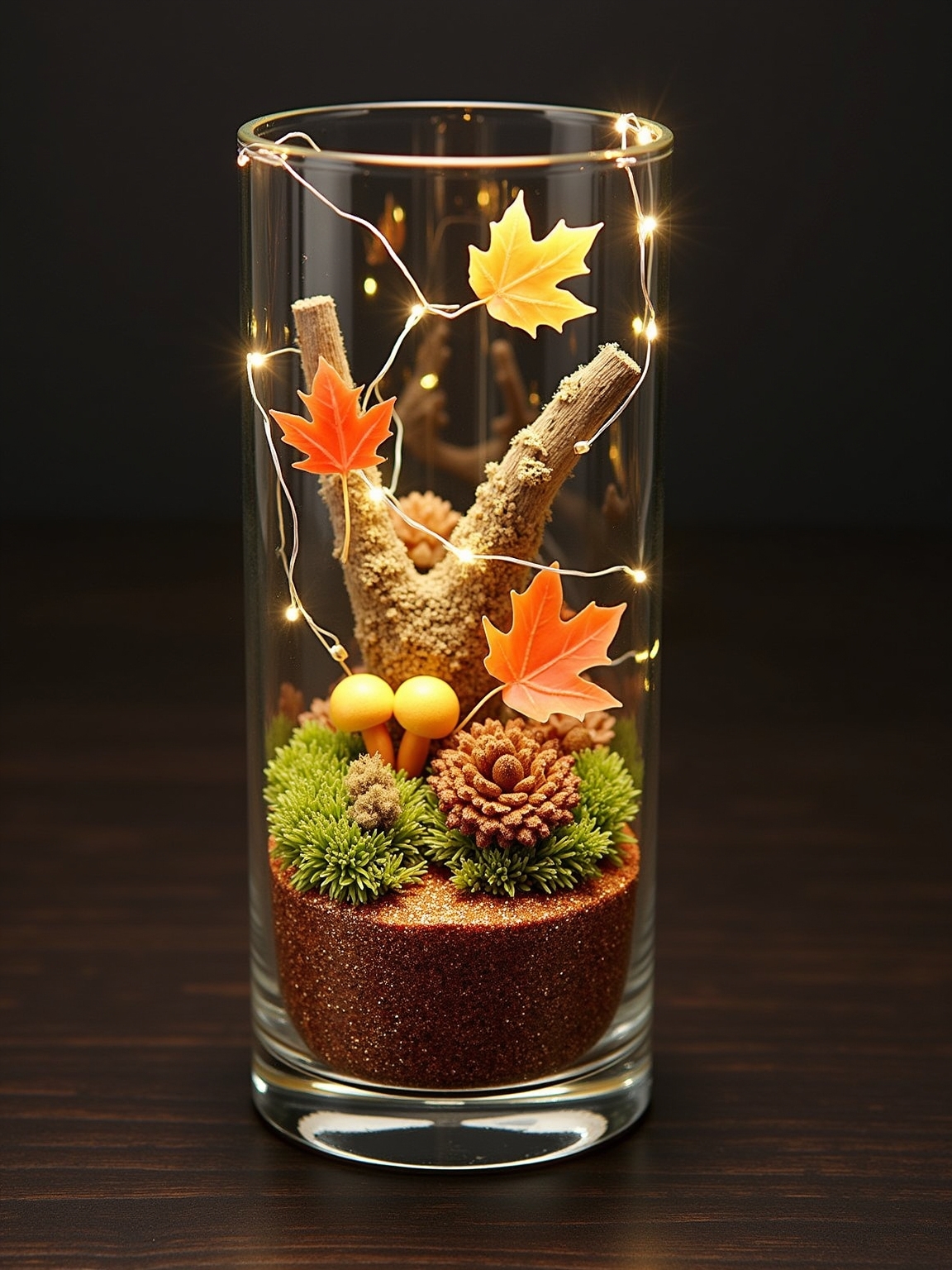
The sand layer at the bottom of a terrarium does real work: it anchors the composition visually before you’ve added a single plant or decoration.
Use two or three colors, something like cream, charcoal, and warm amber, and pour them in slowly with a narrow funnel so the layers stay distinct and sharp.
Keep the sand completely dry before adding anything on top, because moisture causes the colors to bleed and the whole effect collapses immediately. A single pass of very fine glitter over the top layer is enough, because anything more starts to look like a school project rather than a display piece.
SEE THIS: 20 Ombre Painted Pumpkin Ideas for a Modern Fall Aesthetic.
Autumn Forest in Glass

The forest floor effect depends entirely on building it from the bottom up in the right order. Start with small stones for drainage, then charcoal, then a layer of sphagnum moss before you add soil, because skipping those steps leads to rot and a terrarium that smells like a wet basement within a month.
Ferns, air plants, and shade-tolerant mosses layered around twigs and bark fragments do the heavy lifting visually. Add a few tiny woodland figurines only if they’re proportional to the space, because an oversized gnome ruins the illusion faster than anything else.
SEE THIS: 19 Terracotta Painted Pumpkins That Bring Warm Farmhouse Vibes.
Wheat Bundle and Cotton Stem Arrangement
Dried wheat bundled into an hourglass shape with floral wire has a graphic quality that works in modern spaces as well as farmhouse ones. Push cotton stems in between the wheat stalks, distributing them evenly so the softness reads throughout the bundle rather than clumping in one area.
The contrast between the rigid, golden wheat and the soft, white cotton bolls is what makes the arrangement visually interesting from across a room.
Set the bundle inside a tall glass cylinder or lean it against a stack of books, and it becomes a centerpiece without needing anything else around it.
Gilded Pumpkin and Feather Accent

Small gilded pumpkins, real or artificial, earn their place in a terrarium because the gold reads warm rather than flashy when it’s surrounded by natural materials.
Tuck them low into a bed of preserved moss so they look settled rather than placed, then push rust-colored or cream feathers in at angles around them.
The feathers do something that most decorative elements can’t: they move slightly in air currents and give the whole arrangement a living quality.
Add a strand of micro LED lights underneath the moss, and the gold picks up the glow in a way that looks genuinely beautiful rather than overdone.
SEE THIS: 22 Spooky Corridor Decor Ideas Inspired by Haunted Woods.
Seasonal Scent Potpourri Mix
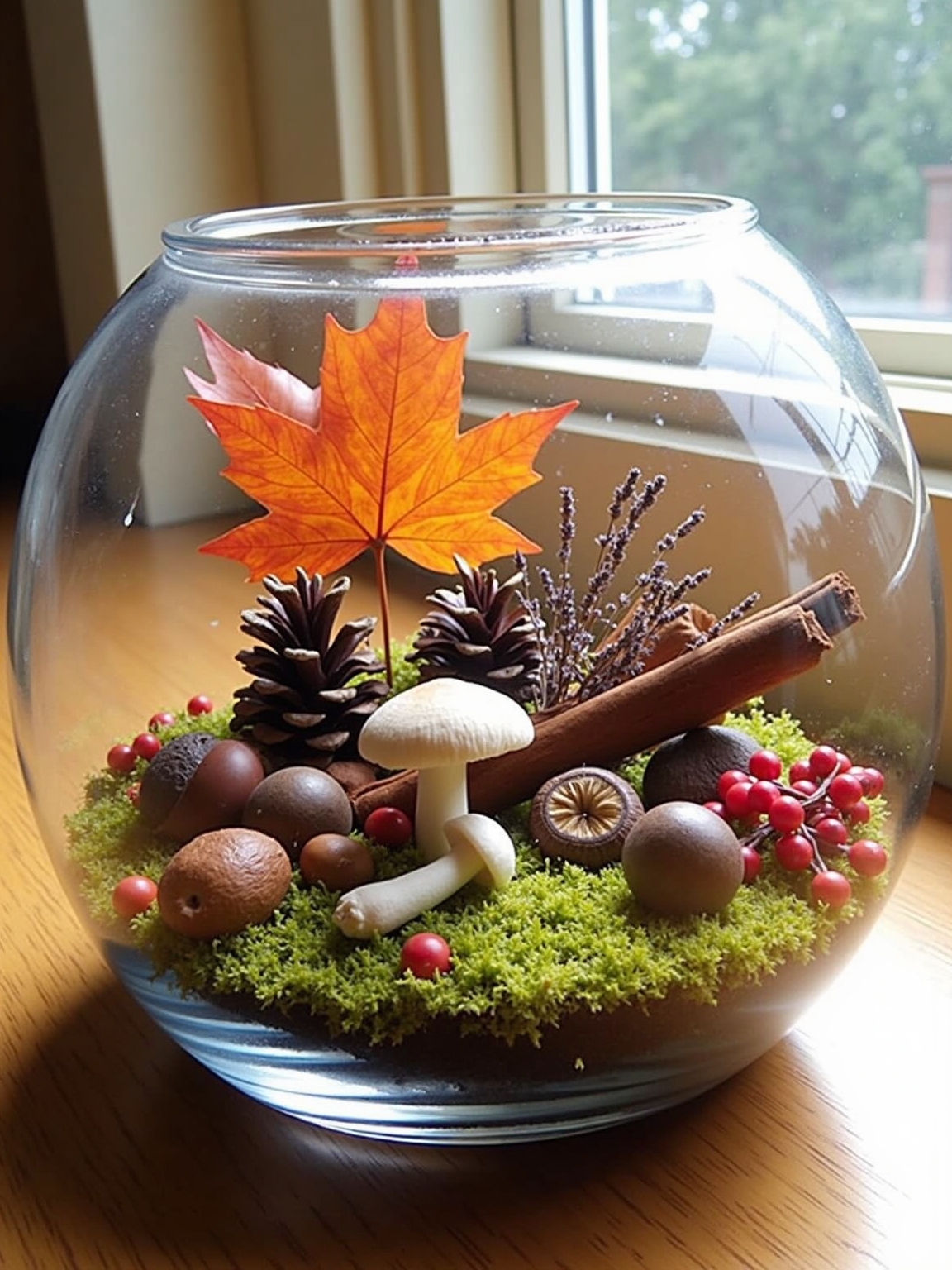
A simmering pot of cinnamon sticks, whole cloves, dried apple slices, and citrus peels does more for the feeling of autumn in a room than almost any visual element can. Add a splash of vanilla extract or a pinch of pumpkin pie spice to the water, and the depth of the fragrance changes entirely.
Keep a kettle nearby to replenish the water as it evaporates, because letting it boil dry scorches the spices and the smell turns acrid fast. This costs almost nothing to make, and the dried ingredients can sit in a decorative bowl between uses as part of the display itself.
Twinkle Light Illumination
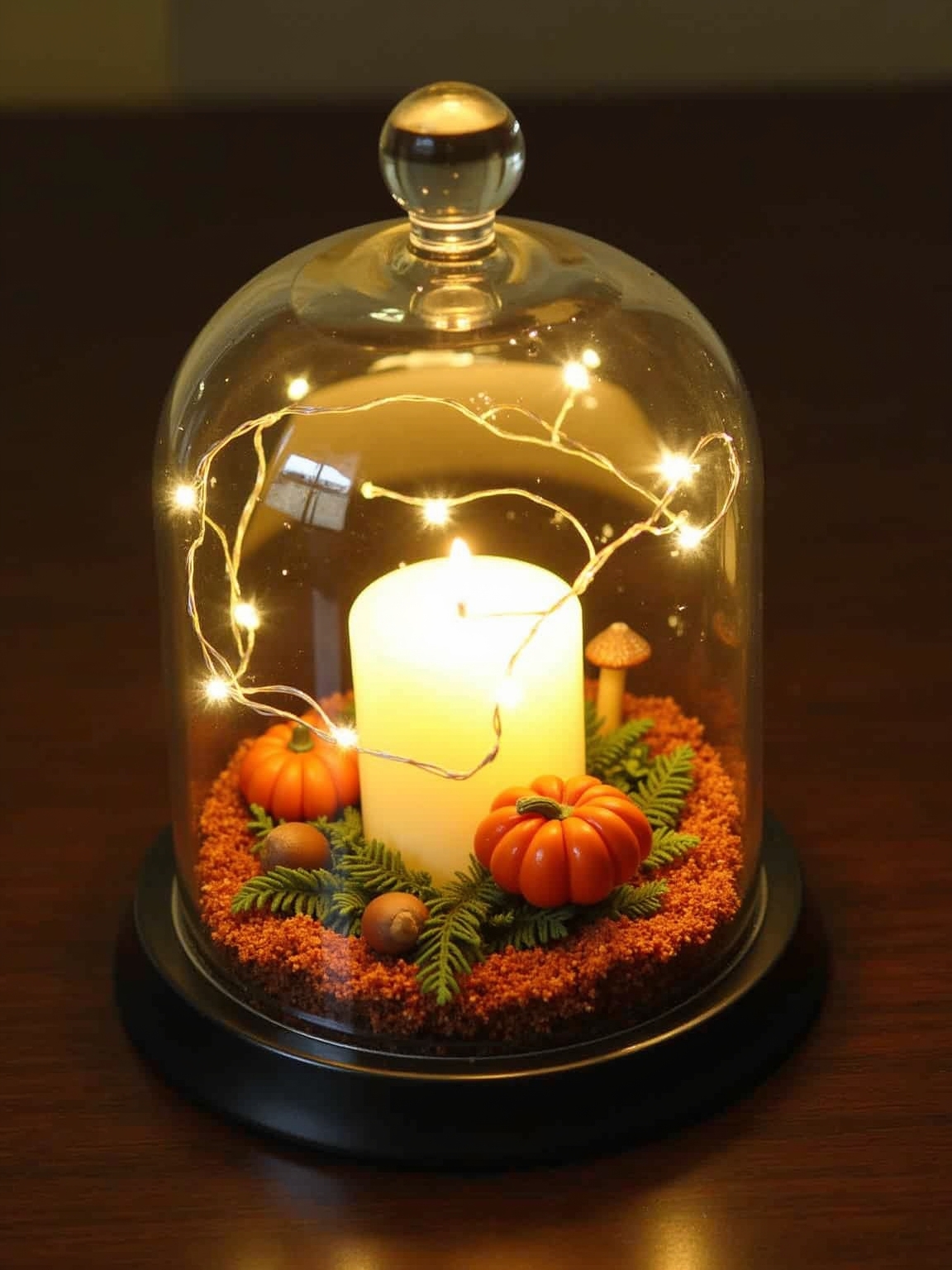
Copper wire string lights are flexible enough to wind through moss and around small pumpkins without disturbing the arrangement, and the battery pack tucks neatly under a layer of sheet moss so it disappears completely.
The warm amber glow they throw is closer to candlelight than standard white fairy lights, which matters when you’re trying to make a fall arrangement feel cozy rather than festive.
Wind them loosely rather than tightly so the light distributes through the terrarium instead of pooling in one spot. The difference between a terrarium that looks good in daylight and one that stops people cold in the evening usually comes down to whether you’ve thought about light at all.
Translucent Pyramid Vase Showcase
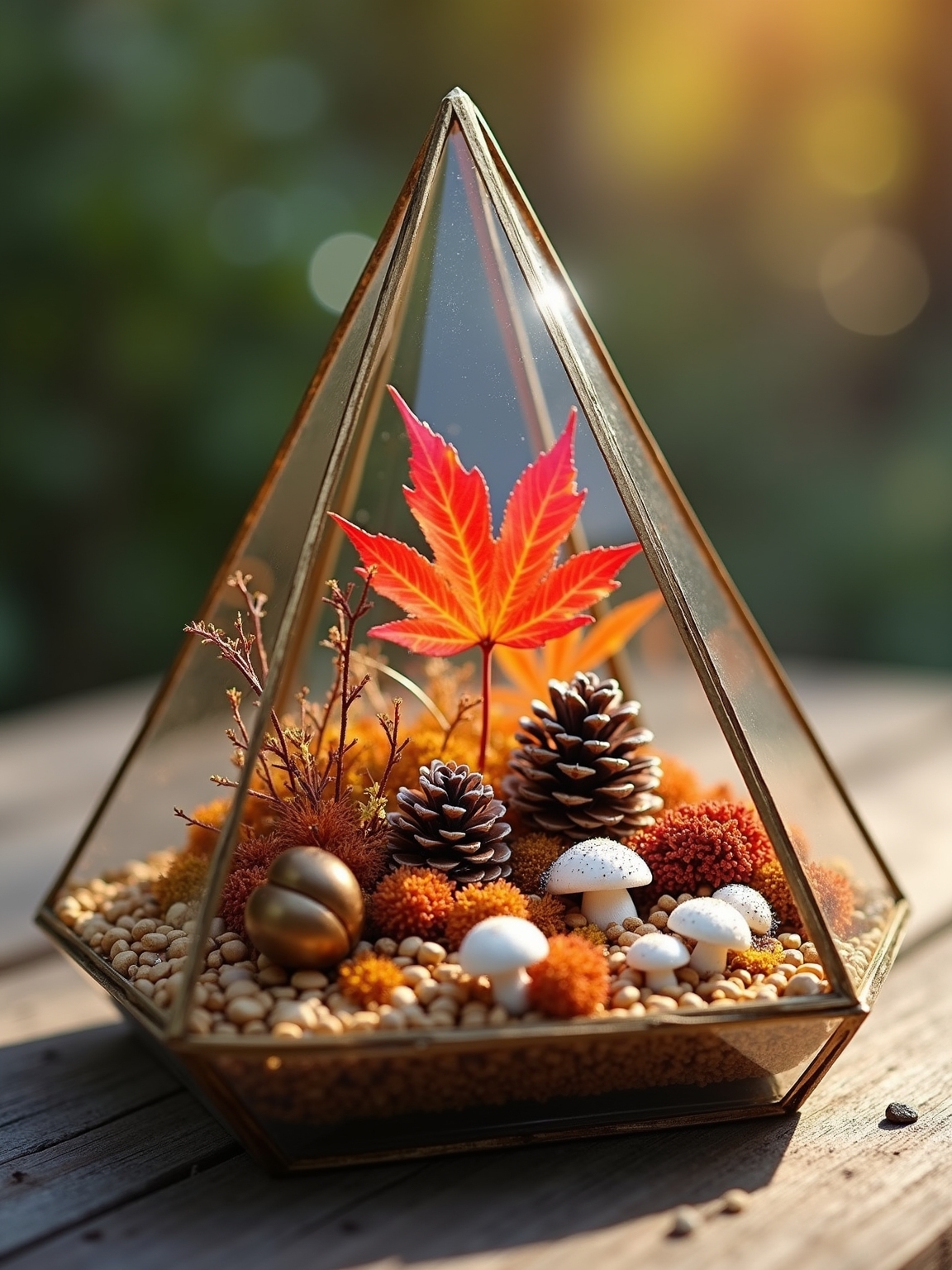
A pyramid-shaped glass or resin vase brings something to fall decor that round containers don’t: clean geometric lines that make organic materials look more intentional by contrast.
Fill the base with a layer of dried leaves or small branches before adding your primary arrangement, so there’s visual interest at every level of the vase.
The transparency matters here, so resist the urge to pack the interior too densely, because the whole appeal of this container is that you can see through it.
Position a small light source behind or below the vase and the faceted shape throws interesting shadows across the surrounding surface.
Moss-Covered Miniature Landscape
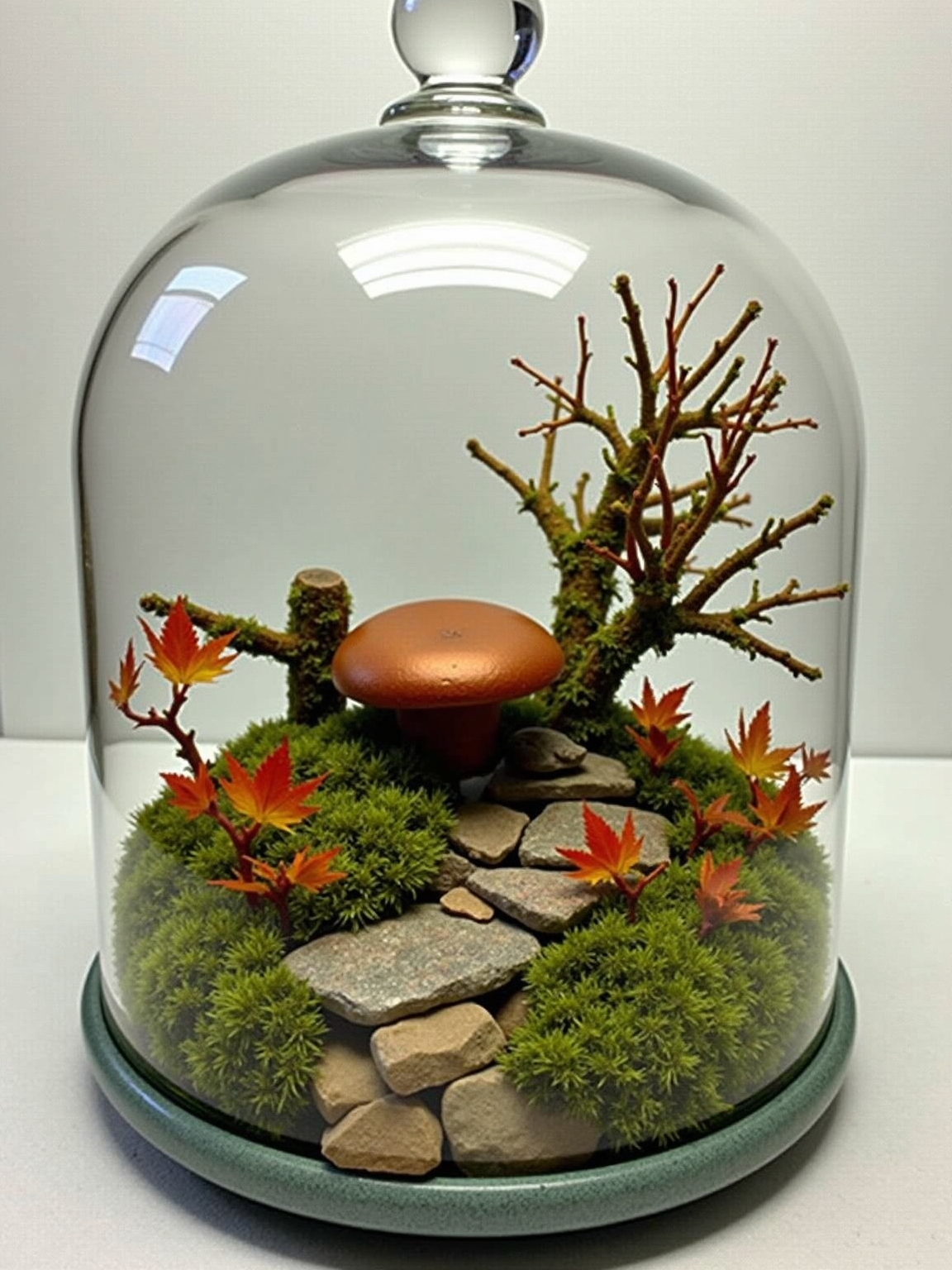
Sheet moss alone looks flat; the trick is mixing two or three varieties so the landscape reads as something that grew rather than something arranged.
Build the base with drainage rocks, a thin layer of activated charcoal, and sphagnum moss, then add soil and sculpt it into gentle hills before planting anything.
Cushion moss, fern moss, and a few small stones placed at irregular intervals create depth that catches the eye from different angles.
Mist the whole thing every few days, and it will stay green well into winter, long after most fall decor has been boxed up and put away.
Harvest Garland Integration
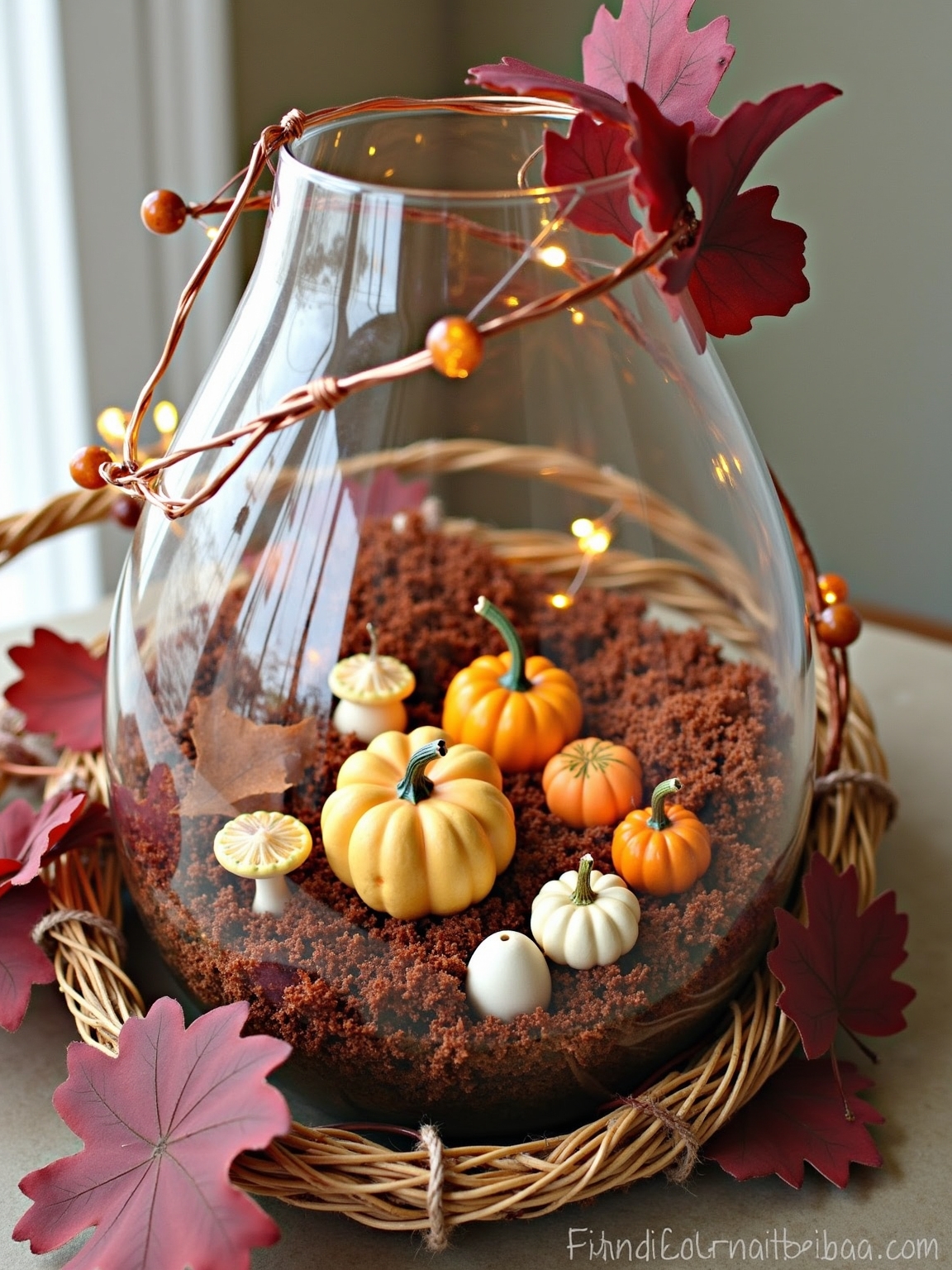
A garland woven from dried acorns, mini pumpkins, cinnamon sticks, and dried orange slices bridges the gap between a single terrarium and a full mantel display. Secure everything with floral wire as you go, because a garland that’s only loosely assembled will shift and sag within a day.
Drape it around the base of a grouped terrarium arrangement rather than above it, so the garland frames the display from the ground up rather than competing with it from overhead. The fragrance from the cinnamon and citrus elements does quiet work in the background, making the whole corner of the room feel seasonal without a single candle lit.
Grouped Jar Vignette
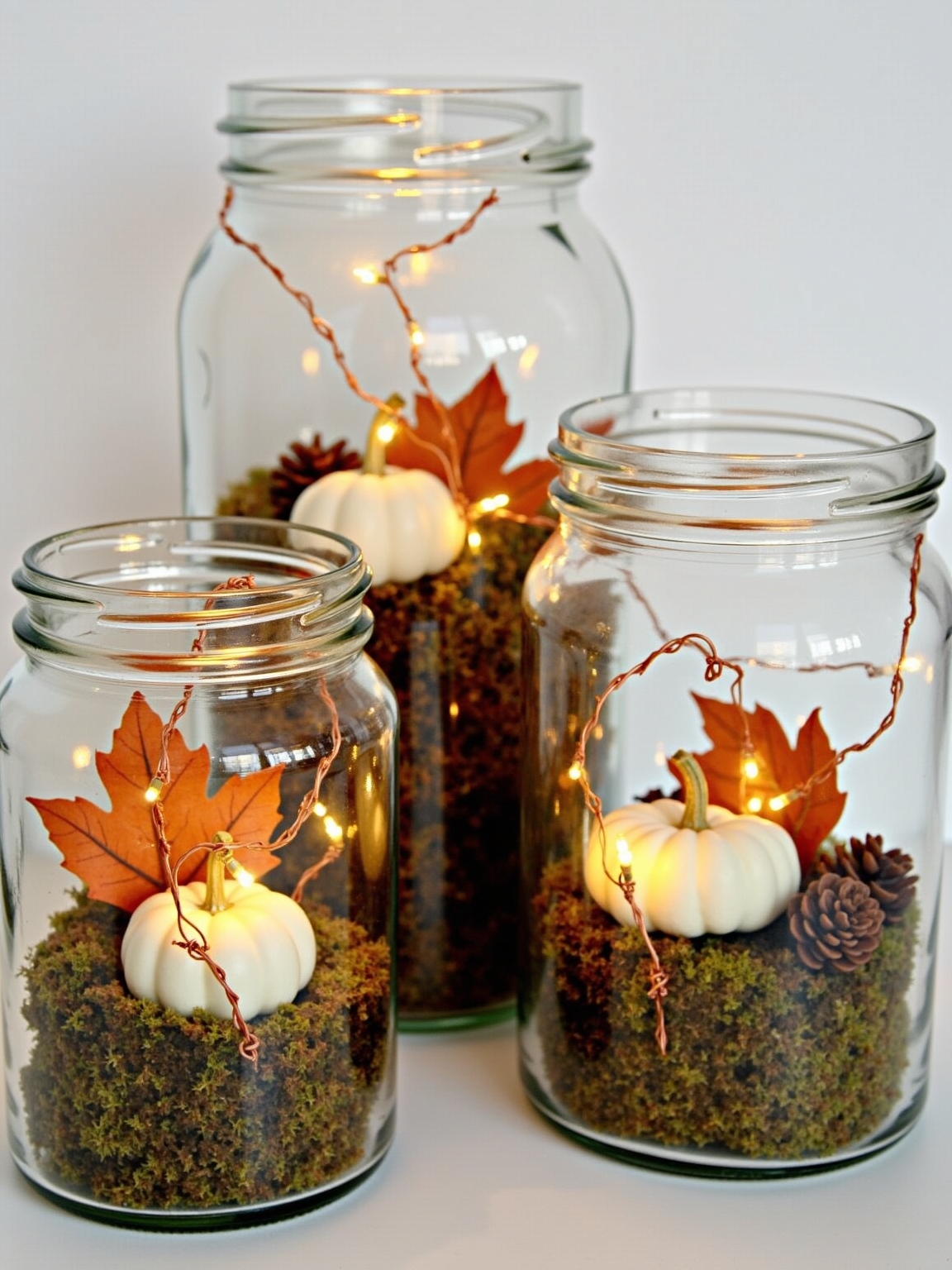
Three or four glass jars of mismatched shapes, hexagonal, cube, cylindrical, grouped together read as a collection rather than clutter when they share a common color story. Fill each one with something different: succulents in one, a sand layer arrangement in another, dried leaves and a miniature pumpkin in a third, so there’s a reason for the eye to move between them.
Clear glass is essential here because the contents are the point, and an opaque container kills the effect entirely. Arrange them at slightly different heights using small books or a wooden cutting board underneath, and the grouping takes on a deliberate, gallery-like quality.
Candlelit Terrarium Ensemble
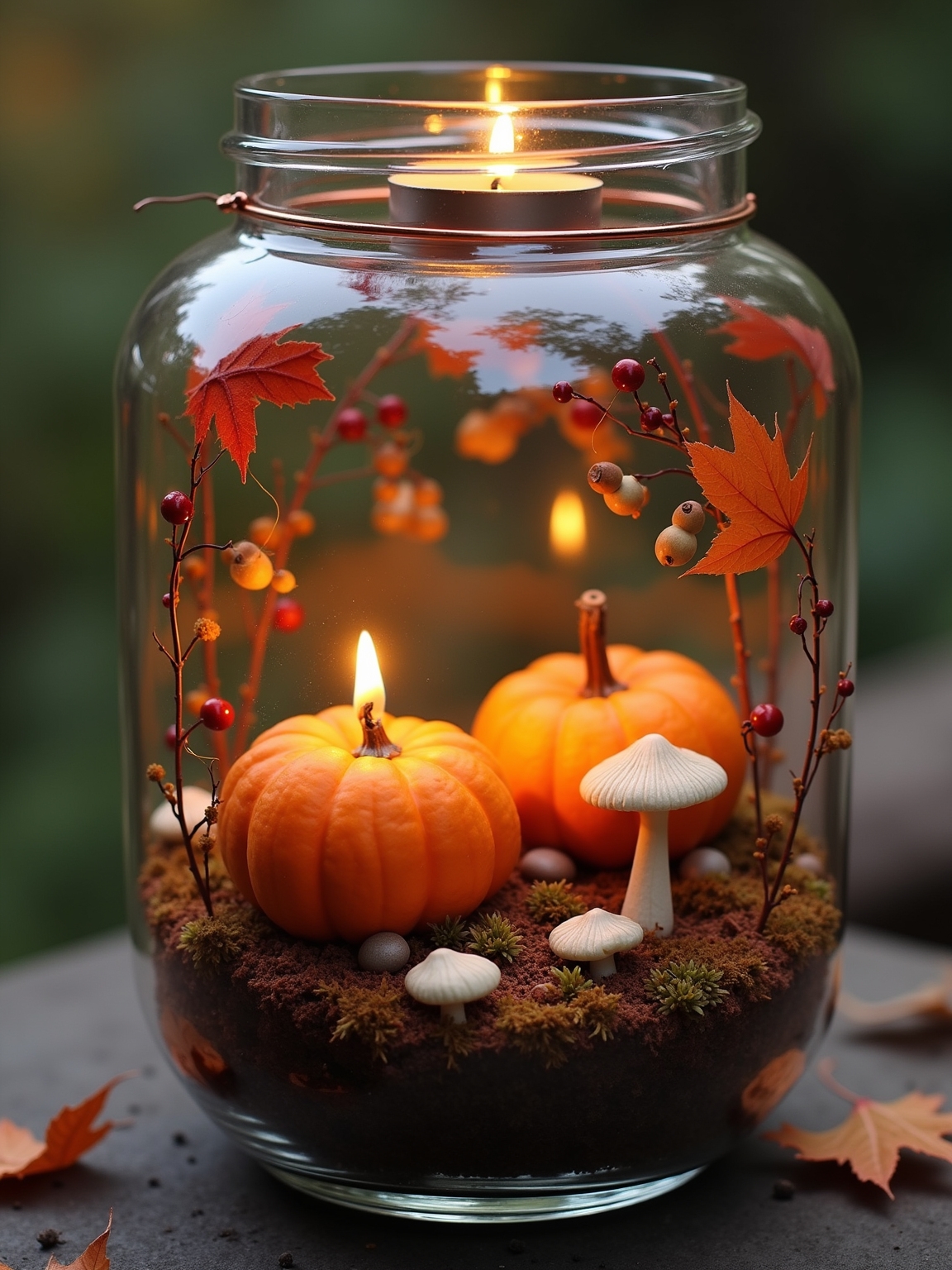
A glass terrarium with a pillar candle set in crushed quartz at its center looks formal enough for a dinner table and natural enough for a windowsill. Surround the base of the candle with preserved moss, a few small autumn leaves, and a miniature pumpkin so the inside of the terrarium has context beyond just the flame.
Vary candle heights across a grouping of two or three terrariums so the illumination feels layered and intentional rather than uniform. Indoors, with dry plant material nearby, LED candles are the smarter call, and the good ones flicker convincingly enough that most guests never notice the difference.
Seasonal Transition Design

The smartest fall terrarium is one you can update rather than rebuild from scratch when the seasons shift. Start with hardy evergreen ferns or hellebores as the permanent backbone, since they carry the arrangement through temperature changes without needing to be replaced. Swap out the seasonal decoratives, pinecones and acorns for fall, small bare twigs for winter, without disturbing the root system underneath.
Choose a container with a wide enough opening to make those swaps easy, because a beautiful terrarium you can’t comfortably get your hand into becomes a frustrating one very quickly.