| What this is: A practical guide to evolving your cozy fall room into a winter aesthetic without starting over — keeping what already works and adding the deeper, darker, warmer layers that cold-weather months call for. Who it’s for: Anyone who has nailed the cozy autumn home vibe and doesn’t want to lose it when November tips into December — and anyone tired of feeling like they have to choose between fall decor and holiday decor. Why read it: Most decor guides treat fall and winter as completely separate projects. They’re not. The same principles power both — and this guide shows you exactly how to shift from one to the other without dismantling everything you built. |


Here’s something nobody in the seasonal decor world talks about enough: fall room vibes and winter room vibes are built from the exact same foundation. Warm light. Layered textures. Earthy, deep tones. Natural materials. The cozy you’ve been chasing in October is the same cozy you need in January — you’re just dialing it deeper and darker as the season progresses.
That’s the season-extension angle this guide is built around. Instead of treating the autumn to winter decor shift as a full swap, treat it as an evolution.
You’re not replacing; you’re building on. The fall foundations stay — and the winter additions layer over them, so the room carries you all the way from September leaf-fall through the deep cold of January without ever feeling like it belongs to the wrong season.
Here’s exactly how to make that shift!
Keep What Works — The Foundation Doesn’t Change
Before anything else, let’s identify what never needs to leave the room. These are the elements that belong to both seasons equally:
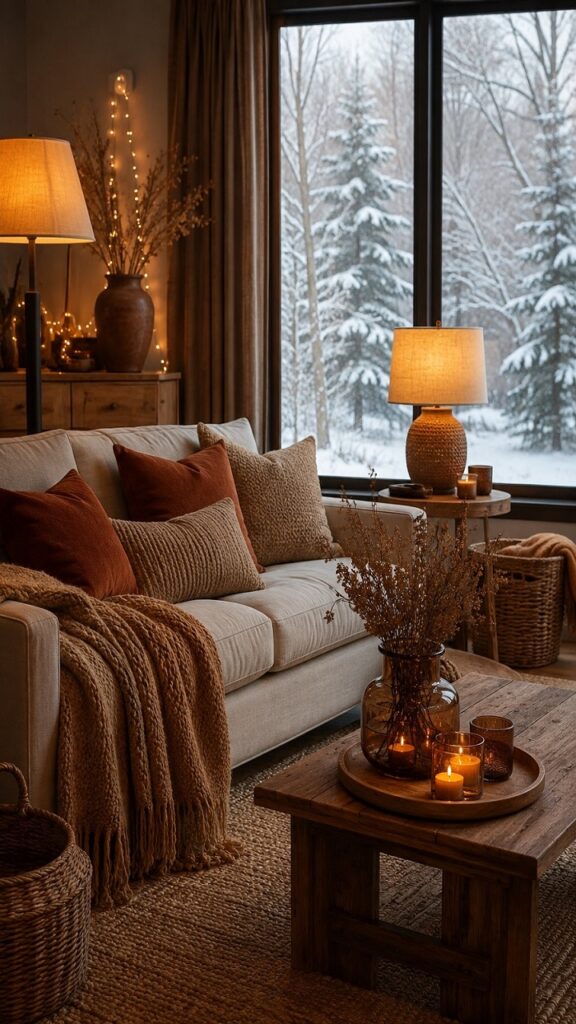
Warm lighting — your amber glass votives, your layered lamps, your warm-white fairy lights? They are just as cozy in December as October. Don’t touch them. The warm, golden glow of layered light sources is the single most cozy thing in any room and it belongs to winter just as completely as fall. Same wattage. Same bulbs. Same placement.
Earthy, warm tones — your rust cushions, your terracotta accents, your warm camel throw? These aren’t fall colors. They’re cold-weather colors. They work September through February.
A deliberate warm color palette built around deep neutrals is the backbone of both the cozy autumn aesthetic and the winter aesthetic cozy look — the seasonal content industry just likes to convince you otherwise so you buy more stuff. Keep it all!
Natural materials — your dried botanicals, your jute rug, your woven baskets, your wooden trays? Permanent. Seasonal. These are year-round cozy fixtures, not autumn-only accessories. The only natural elements that feel specifically fall-only are orange foam pumpkins. Everything else transitions beautifully!
The Swap: What Actually Needs to Change
The transition from fall to winter room decor comes down to four specific swaps, and none of them require a complete overhaul.
You’re editing, not rebuilding.
1) Swap the overtly orange accents. The one concession to the calendar is bright orange — foam pumpkins, novelty orange pillow covers, explicit harvest graphics.
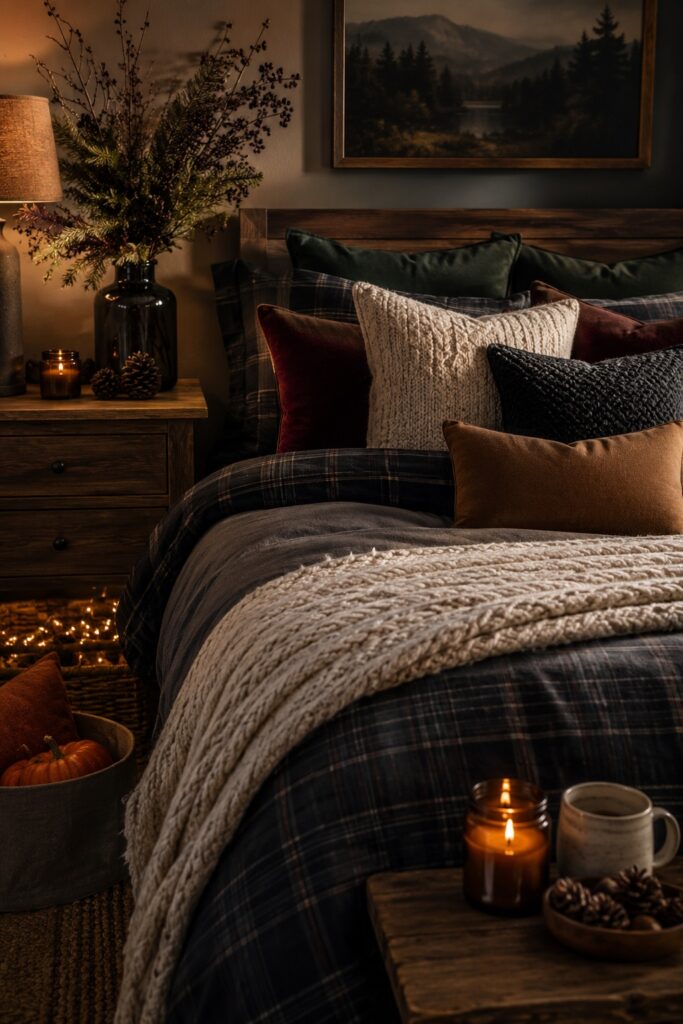
Box those. In their place, shift to deeper, moodier versions of the same tone: burgundy instead of orange-rust, forest green instead of olive, navy or charcoal as an accent instead of bright mustard. You’re not changing the warmth level — you’re deepening it. Think of it as turning the saturation down and the richness up!
2) Swap seasonal symbols for universal naturals. Replace the pumpkins and leaf garland with pinecones, bare branch arrangements, evergreen sprigs, and dried berry clusters.
These are natural elements that read as winter without screaming Christmas — which means they work through January without feeling dated. A dark bottle arrangement with evergreen and dried stems is as cozy in January as any autumn vignette and requires zero seasonal packaging. Total genius!
3) Scale up the textile weight. This is the most impactful autumn to winter decor transition you can make, and it’s purely practical. Your fall throw is lovely; your winter duvet, weighted blanket, and flannel sheets are functional.
As temperatures drop, layering breathable bedding materials — flannel base sheet, a substantial duvet or comforter, a chunky knit throw at the foot — is what keeps you sleeping well without overheating.
According to Healthline, the ideal sleep temperature for winter is 60–67°F, which means a well-layered bed lets you keep the room cooler (and more energy-efficient) while staying perfectly warm under the covers. Smart and cozy — the best combination!
4) Deepen the scent. Fall scents are warm and harvest-y: apple, cinnamon, pumpkin spice. Winter scents are darker and woodsier: cedar, clove, frankincense, sandalwood, pine, amber.
The transition is simply a swap of your wax melts or reed diffuser fragrance — the delivery method stays exactly the same. One new scent and the room’s seasonal identity shifts completely, which honestly still amazes me every single time. No $40 candle needed — just a new wax disc!
Add the Layers That Are Uniquely Winter
Once the fall foundation is preserved and the four swaps are made, there are three additions that belong specifically to late autumn room decor and winter that you don’t need in October:
More candlelight. The Danish concept of hygge — the philosophy of creating cozy, restorative warmth in the darkest months — treats candlelight as an absolute non-negotiable for winter home comfort.
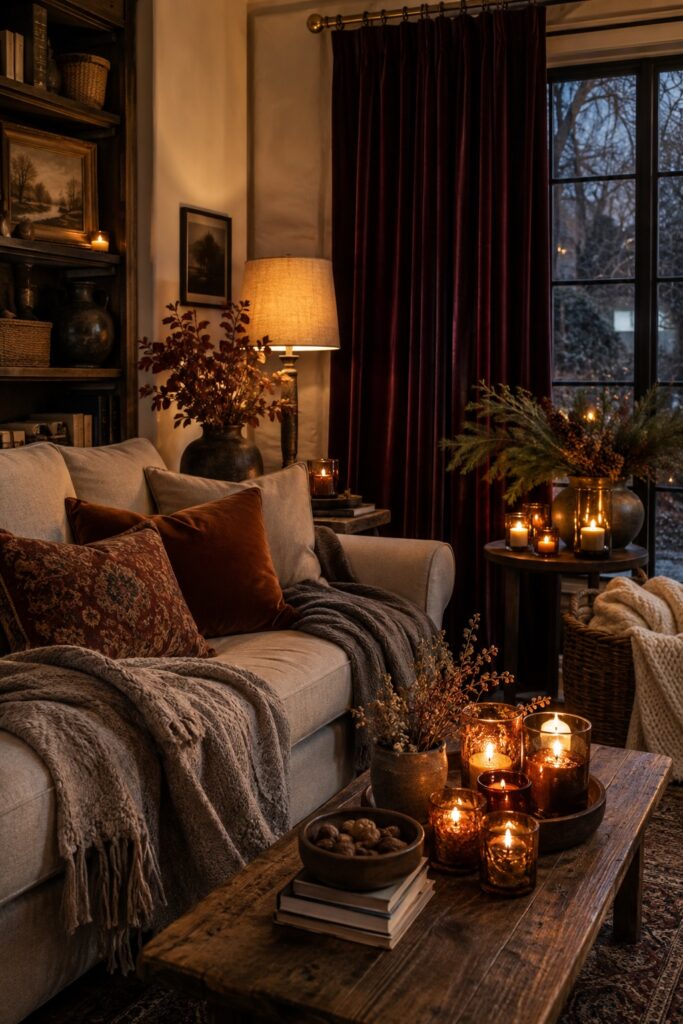
And for good reason: the shorter the days get, the more the room needs warm, flickering light to feel sheltered rather than dark. Add more candles from November onward — cluster them in odd groups of three or five on trays, mantels, and coffee tables.
Use amber glass holders to amplify that golden, honeyed glow. This is the single most impactful winter-specific upgrade, and every single candle doubles as decor. Obsessed!
Heavier, darker curtains. This is the post-fall decor swap that nobody thinks of and everybody notices. Heavy thermal curtains in deep jewel tones — forest green velvet, midnight navy, rich burgundy.
Do three things simultaneously: they trap the warmth already in the room, they block the cold radiating from windows at night, and they make the room look dramatically more intimate and sheltered in the way only a well-dressed window can. The combination of dark curtains and warm lamplight is the definition of winter aesthetic cozy. So incredibly good!
One deep, moody accent wall moment. Fall rooms tend to work in warm mid-tones. Winter rooms earn from going one level darker in at least one spot.
This doesn’t have to mean repainting — a large, deep-toned tapestry behind the sofa, a gallery of dark-framed prints on a single wall, or a dark throw draped dramatically over the corner of the bed creates that moody, deep-winter pocket of drama. Darker tones add intimacy that makes a room feel like somewhere to retreat to, not just pass through, and they require absolutely nothing permanent. Stunning, every time!
The Holiday Question: How to Carry the Room Through Christmas and Beyond
Here’s the part of the seasonal room transition that trips the most people up: what happens in December when holiday decor wants to move in? The answer is actually very simple — add, don’t replace.
Your winter foundation (warm lights, deep tones, heavy textiles, candlelight) is already the world’s most natural backdrop for holiday additions.
Fairy lights that were already there now read as festive. Warm string lights draped over shelves suddenly have a Christmas-adjacent glow without you changing a single thing. Evergreen sprigs that replaced your fall botanicals now look seasonal in a December way. A deep red or forest green cushion that came in for late autumn now anchors the holiday palette perfectly.
The holiday additions themselves should be light touches on a cozy foundation — a few ornaments in a glass bowl, a sprig of holly in your existing vase, a single wrapped gift on the coffee table as a vignette accent — rather than a full seasonal overhaul that dismantles everything you built.
The room that carries beautifully from fall into winter into the holidays is one built on permanent cozy foundations, not swappable seasonal theming. Truly the most satisfying room you’ll ever build!
January Is Not the End — It’s the Peak
The final mindset shift this guide wants to leave you with: January is when your cozy room earns its keep. November and December have the warmth of anticipation and festivity to carry them. January is the month with nothing to look forward to, the darkest evenings, and the coldest mornings — and it’s the month a beautifully transitioned cozy winter room does its most important emotional work.
So don’t strip the room in January. Keep the candles going. Keep the heavy curtains. Keep the warm lamp layers. Swap out the evergreen sprigs for fresh dried botanicals if you want a refresh.
Put the holiday ornaments away but leave the warm, golden, deeply layered room exactly as it is. This is what you built it for. This is the cozy winter season your room was always supposed to carry you through.
The cold is outside. Stay in!