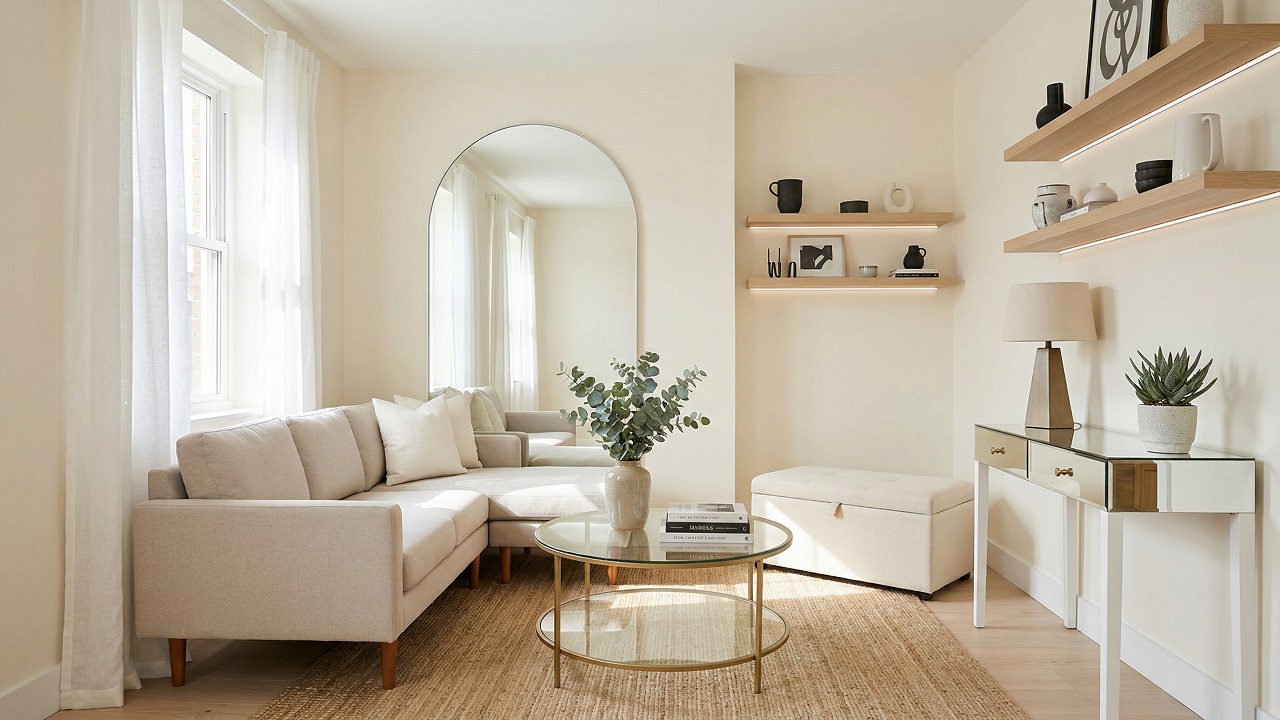
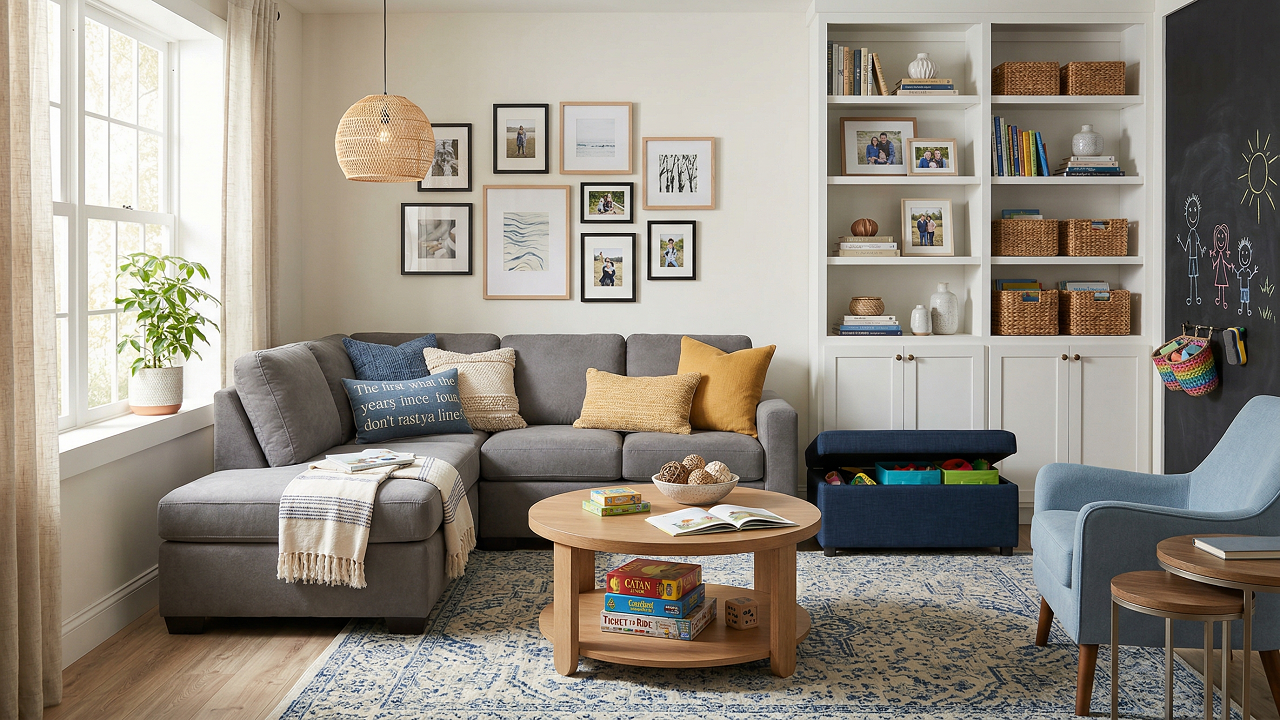
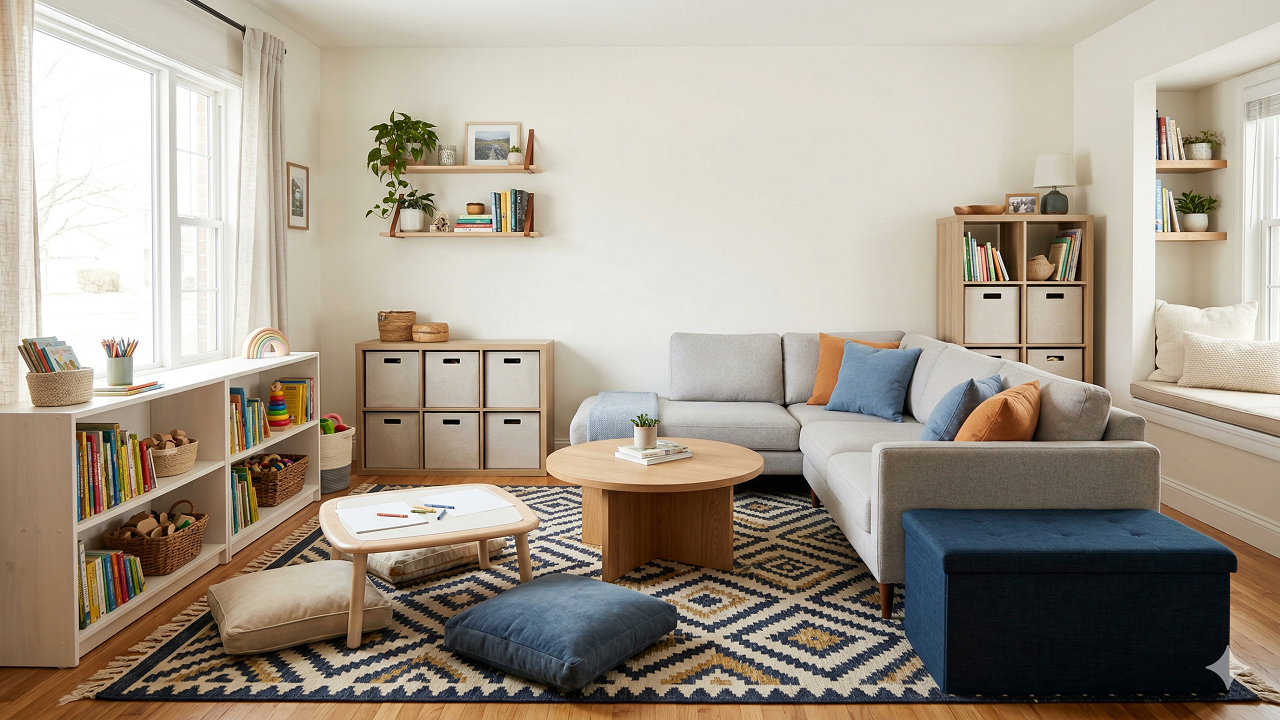
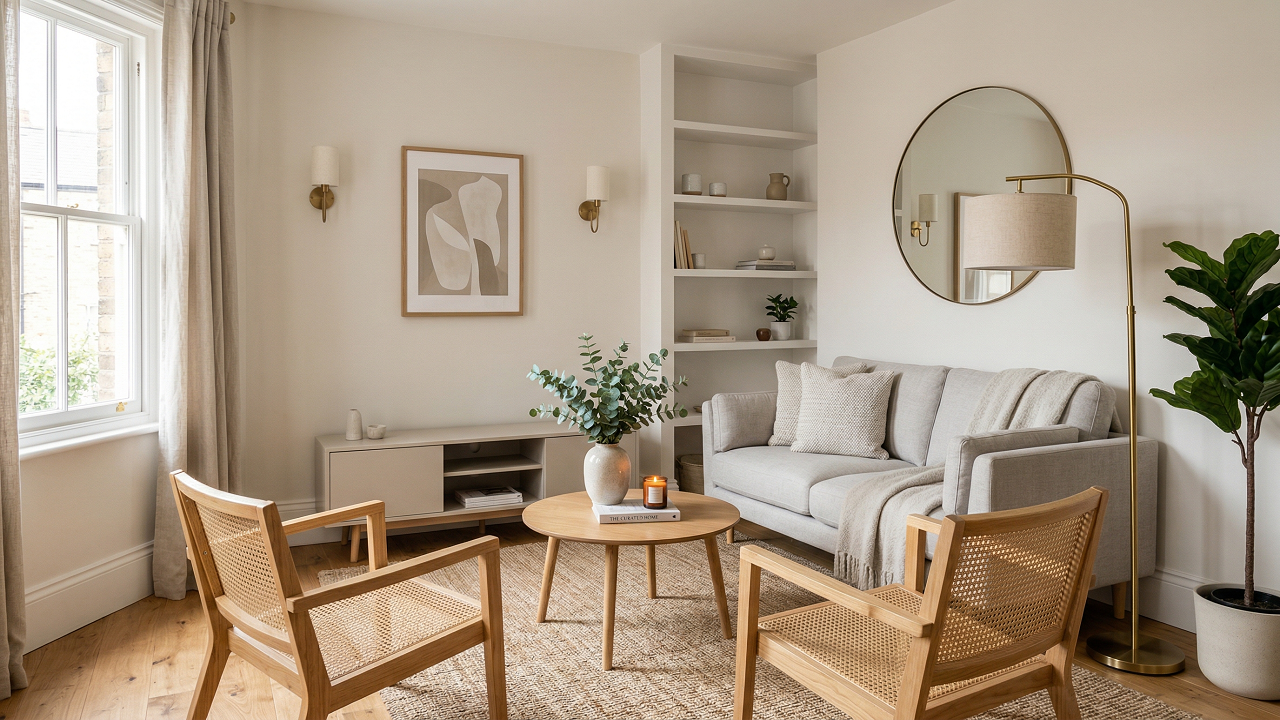
A small living room doesn’t mean you have to sacrifice style or function when you have kids running around.
You can create a space that handles daily family life while still looking put together and inviting by choosing the right furniture, storage, and layout strategies. The key is making smart choices that work double duty.
Many families struggle with keeping their compact living spaces organized without turning them into cluttered toy storage areas. The good news is that designing a small family room is actually an opportunity to get creative with how you use every inch. You’ll discover that thoughtful planning beats having extra square footage.
This guide walks you through practical ways to maximize your small living room without giving up the style you want.
From furniture layouts that create more functional space to decor tricks that make rooms feel larger, you’ll learn how to build a family-friendly space everyone can enjoy.
Contents
Design Principles for a Family-Friendly Small Living Room
The right materials and safety features transform a cramped space into a welcoming room where kids can play and adults can relax without constant worry about damage or accidents.
Choosing Durable, Easy-to-Clean Materials
Your small living room needs fabrics and surfaces that can handle spills, sticky fingers, and daily wear. Look for performance fabrics like microfiber or crypton that repel stains and wipe clean with just water.
Slipcovers are game-changers for families. You can remove them and toss them in the washing machine whenever accidents happen. They protect your furniture investment while keeping your small living room design looking fresh.
Skip delicate materials like silk or velvet. Instead, choose leather or faux leather that wipes clean easily. For floors, vinyl or laminate works better than carpet in high-traffic areas.
Best Material Choices:
- Upholstery: Microfiber, crypton, or treated cotton
- Flooring: Vinyl, laminate, or washable rugs
- Coffee tables: Wood with protective finish or metal
- Window treatments: Machine-washable curtains or wipeable blinds
Creating a Safe Environment for All Ages
Round or oval coffee tables prevent painful bumps and bruises when kids run through your space. You can also add corner guards to existing sharp-edged furniture for instant protection.
Anchor all tall furniture to walls. Bookcases, TV stands, and storage units can tip over when climbers test their boundaries. Wall mounting takes just minutes but prevents serious accidents.
Keep breakables out of reach or remove them entirely from your small living room decor. Display meaningful items on high shelves or behind glass cabinet doors. Use cordless window treatments to eliminate strangulation hazards from dangling cords.
Add a thick area rug to cushion falls and create a soft play surface. Choose non-slip rug pads underneath to prevent sliding. Storage ottomans with soft-close hinges keep little fingers safe while hiding toys quickly.
Optimizing Your Small Living Room Layout
Your small living room can work beautifully for your whole family when you arrange furniture to create distinct areas while keeping traffic flowing smoothly. The right layout lets everyone have their own space without the room feeling cramped or cluttered.
Maximizing Seating with L-Shaped and Sectional Sofas
An l-shaped sectional gives you tons of seating without eating up your entire floor plan. These sofas fit perfectly into corners, which means you’re using space that might otherwise go to waste.
You can pick a sectional with a chaise end for stretching out during movie nights. Some models even come as a sleeper sofa, which is perfect when grandparents visit or kids want sleepovers.
Floating two smaller sofas across from each other works better than bulky sectionals in some spaces. This setup creates natural conversation areas while keeping sight lines open.
Add one or two accent chairs to boost your seating count. Look for styles that are light enough to move around when you need them. Stackable or foldable chairs can double as dining seats or extra spots during playdates.
Defining Zones for Play, Relaxation, and Entertainment
Area rugs separate different zones in your living room without building walls. Place one rug under your seating area and another where kids play with toys.
A statement pendant light over a specific zone helps mark it as its own space. You might hang one over a small table for crafts or homework while keeping softer lighting near the TV area.
Floor pillows and poufs create flexible play zones that you can tuck away when guests arrive. These pieces let kids have their own spots without permanent furniture taking up room.
Try positioning your sofa to face the entertainment center while leaving the space behind it open for active play. This works especially well in studio apartments where you need multiple functions from one room.
Maintaining Open Walkways in Tight Spaces
Your main walkways need at least 30 inches of clearance so people can move through without bumping into furniture. Measure these paths before you commit to a living room layout.
Push larger pieces like your sectional against walls to free up the center of the room. This creates a natural flow pattern that guides people around your space instead of through it.
Acrylic furniture pieces disappear visually while still serving their purpose. A clear coffee table or side table won’t block your view across the room or make pathways feel cramped.
Keep toys in baskets or bins that slide under furniture when not in use. This prevents clutter from blocking your carefully planned walkways throughout the day.
Multi-Functional Furniture for Stylish Solutions
Small living rooms need furniture that works hard without sacrificing style. The right pieces can provide extra seating, hidden storage, and guest sleeping options while keeping your space looking pulled together and intentional.
Incorporating Storage Ottomans and Benches
Storage ottomans are game-changers for family living rooms. They give you a place to rest your feet, extra seating when friends visit, and hidden compartments for toys, blankets, and remotes.
Look for ottomans with removable lids that double as serving trays. You can place drinks and snacks on top during movie night, then lift the lid to toss in clutter before guests arrive. Some models come with built-in shelves or drawers underneath for even more organization.
Benches work similarly but fit better along walls or under windows. A bench with cushioned seating and storage underneath can hold board games, art supplies, or seasonal items. Place one near your entryway to store shoes and backpacks while providing a spot to sit.
Choose colors and fabrics that match your existing decor. Neutral tones like gray, beige, or navy blend with most styles, while bold patterns add personality without taking up visual space.
Convertible Pieces: Sleeper Sofas and Extendable Tables
Sleeper sofas transform your living room into a guest bedroom instantly. Modern versions don’t look bulky or outdated like older models did.
Pick a sleeper sofa with a memory foam mattress for comfort. Your guests will actually get good sleep, and you won’t feel embarrassed about offering the pull-out option. Slim-arm designs work best in tight spaces since they don’t eat up width.
Extendable dining tables let you host family dinners without keeping a huge table out year-round. Look for drop-leaf or butterfly-leaf styles that expand when needed. You can keep them compact for daily meals, then extend them for holidays or birthday parties.
Coffee tables with lift-top mechanisms give you a surface for working or eating from the couch. The hidden storage underneath holds magazines, chargers, and kids’ craft supplies.
Space-Saving Accent Chairs and Modular Designs
Accent chairs don’t have to take up permanent floor space. Folding chairs in stylish designs can hang on wall hooks or slide into closets between uses. Metal frames with canvas seats look modern and weigh almost nothing.
Modular seating lets you rearrange your layout based on what you need each day. Individual cubes or sections can form a sectional for family movie night, then separate into scattered seating for playtime. Kids can even move lightweight modules around themselves.
Nesting tables stack together when not needed but pull apart to create multiple surfaces. Set one next to each seat during game night, then nest them back together to open up floor space for dancing or fort-building.
Choose pieces with exposed legs rather than solid bases. Furniture that shows floor underneath makes rooms feel larger and less crowded, even when you have the same amount of stuff.
Smart Storage Solutions That Look Great
The right storage pieces can transform your small living room into an organized space that works hard for your family. Creative storage ideas help you maximize every inch while keeping toys, books, and everyday items neatly tucked away.
Using Floating Shelves for Display and Organization
Floating shelves give you extra storage without eating up precious floor space in your small living room. You can install them at different heights to create visual interest while storing books, photos, and decorative items that make your space feel personal.
These shelves work beautifully above your sofa or around your TV area. They typically hold 15-25 pounds per shelf, which means you can display heavier items like family photo albums alongside lighter decorative pieces.
Best placement options include:
- Above doorways for rarely used items
- In corners to maximize unused wall space
- Staggered arrangements for a modern look
- Near seating areas for easy access to books and remotes
The open design keeps your room feeling airy while giving kids easy access to their favorite books. You can mix shelf lengths to accommodate everything from small picture frames to larger storage baskets that hide toys and games.
Built-In Bookshelves: Custom and DIY Options
Built-in bookshelves make your living room feel larger by using vertical space from floor to ceiling. Custom entertainment centers cost between $2,000 to $8,000 but add serious value to your home while creating a stunning focal point.
You can save money with DIY built-ins using pre-made shelving units secured to your walls. Add trim work around the edges to make them look custom without the hefty price tag. Include closed cabinets at the bottom to hide board games, art supplies, and other family essentials.
Smart built-in features:
- Adjustable shelves that grow with your needs
- Lower storage for kids’ items they can reach
- Integrated lighting to highlight favorite objects
- Mix of open and closed storage
These permanent solutions give every item a dedicated home. Your kids will know exactly where their books belong, making cleanup easier for everyone.
Hidden Storage for a Clutter-Free Space
Hidden storage keeps your living room looking polished even with kids’ stuff everywhere. Ottoman storage cubes provide comfy seating for movie nights while hiding blankets, pillows, and toys inside lift-top compartments.
Coffee tables with drawers or shelves beneath give you quick access to remotes and coasters without cluttering your tabletop. Behind-sofa console tables create natural room divisions while storing chargers, magazines, and small toys out of sight.
Storage sofas and sectionals with built-in compartments under cushions handle larger items like extra linens or seasonal decorations. You gain serious storage capacity without sacrificing seating space your family needs.
Popular hidden storage choices:
| Furniture Type | Storage Capacity | Best For |
|---|---|---|
| Storage Ottoman | 2-3 cubic feet | Blankets, toys, pillows |
| Storage Coffee Table | Multiple drawers | Remotes, books, games |
| Storage Sofa | Under-cushion space | Linens, seasonal items |
These clever pieces maintain your room’s style while giving everything a place to live.
Decor Ideas With Maximum Impact
Small touches can transform your compact living room into a space that feels both personal and pulled-together. The right wall arrangement and fabric choices add warmth without taking up precious floor space.
Creating a Gallery Wall for Personality
A gallery wall lets you showcase family photos, artwork, and memories without cluttering surfaces your kids need for activities. Start by choosing frames in matching colors or finishes to keep the look cohesive, even if the art inside varies wildly.
Measure your wall space and arrange frames on the floor first. This helps you find the perfect layout before hammering a single nail.
Mix frame sizes for visual interest. Combine large statement pieces with smaller snapshots of family vacations or your children’s artwork. This creates a dynamic display that tells your family’s story.
Keep the bottom row of frames at least 57 inches from the floor. This standard gallery height ensures everything stays visible and balanced. You can maximize your cramped space while adding character that reflects who you are as a family.
Leave 2-3 inches between each frame for breathing room. Too much spacing looks disconnected, while frames placed too close together feel cramped and chaotic.
Layered Textures: Rugs, Throw Blankets, and Pillows
Layered textures make your small living room feel cozy and inviting without adding furniture. Start with a washable area rug that defines your seating area and adds softness underfoot.
Throw blankets draped over your sofa create instant warmth and comfort. Choose durable, machine-washable fabrics like cotton or microfiber that handle spills from juice boxes and snack time. Keep 2-3 blankets in different weights so you’re ready for movie nights year-round.
Pile on throw pillows in varying sizes and patterns. Mix solid colors with fun prints that hide minor stains while adding personality. Four to six pillows typically work well for small living room ideas without overwhelming your couch.
Layer a smaller textured rug over a larger neutral one for added depth. This trick adds visual interest while protecting high-traffic areas where kids play most often. Stick to textures that feel good against bare feet since your little ones probably kick off their shoes the moment they get home.
Adding Character with Walls, Lighting, and Materials
Walls and lighting create instant impact in small living rooms without taking up precious floor space. Smart material choices turn basic surfaces into exciting design features that work perfectly for families.
Shiplap Walls and Bold Paint Choices
Shiplap walls bring texture and dimension that makes small living rooms feel custom and thoughtfully designed. The horizontal lines actually make your walls appear wider, which is perfect for compact spaces.
You can paint shiplap in crisp white for a clean, modern farmhouse look that reflects light beautifully. Or go bold with navy, sage green, or charcoal gray on one accent wall to create a stunning focal point. The grooves in shiplap catch light differently throughout the day, adding visual interest that flat drywall just can’t match.
Installing shiplap is easier than you might think. Many home improvement stores sell pre-primed boards that you can paint before installation. This DIY approach adds character to your home without requiring professional contractors.
Pair your shiplap with woven pendant lights above reading nooks or seating areas. These natural fiber fixtures soften the wood texture and add warmth. They’re kid-friendly too since they’re typically lightweight and don’t have sharp edges.
Chalkboard Walls for Family Creativity
A chalkboard wall transforms one section of your living room into an interactive feature the whole family will love. Kids can draw and play while you keep track of schedules, grocery lists, or inspiring quotes.
You don’t need to paint an entire wall. A smaller designated area works better in tight spaces and prevents overwhelming the room. Frame it with trim molding to make it look intentional and polished.
Apply magnetic chalkboard paint for double the function. You can stick family photos, artwork, or important papers alongside chalk drawings. Position your chalkboard wall at kid height so little ones can reach it easily without climbing on furniture.
Keep chalk and erasers in a stylish basket nearby. This keeps supplies organized and teaches children to clean up after creative sessions.