Spend enough time in camper kitchens and you start to understand what actually works. White shiplap and wood countertops keep showing up not because they’re trendy, but because they solve real problems in tight spaces.
The shiplap bounces light around a dark galley, and the wood gives you a surface that gets better with use, not worse. These two materials together create something that feels less like a converted vehicle and more like a place you actually want to cook. Here’s a closer look at the designs, layouts, and details that make it happen.
Contents
- 1 Cozy Camper Kitchen With Open Shelving and Warm Wood Accents
- 2 Rustic Charm With Foldable Countertops
- 3 Efficient Galley Layout With Farmhouse Touches
- 4 Maximizing Space With L-Shape Design
- 5 Sage Green Cabinets With Copper Accents
- 6 Warmth and Durability of Wood Countertops
- 7 Bright Ambiance With White Shiplap Walls
- 8 Compact Kitchen Adjacent to Sleeping Area
- 9 Modular Counter Elements for Multi-functionality
- 10 Seamless Movement Flow in Camper Kitchens
- 11 Extendable Taps for Versatile Dishwashing
- 12 Domestic-Style Cooking With 4-Burner Hobs
- 13 Safe and Convenient Gas Appliances
- 14 Full-Extension Drawers for Easy Access
- 15 Overhead Cabinets for Lightweight Storage
- 16 Modular Shelving for Secure Transit
- 17 Integrated Safety Features for Peace of Mind
- 18 Efficient Greywater Disposal Systems
- 19 Ventilation and Heat Shielding Solutions
- 20 Water Resistance Treatments for Wood Surfaces
- 21 Innovative Storage for Unconventional Items
Cozy Camper Kitchen With Open Shelving and Warm Wood Accents
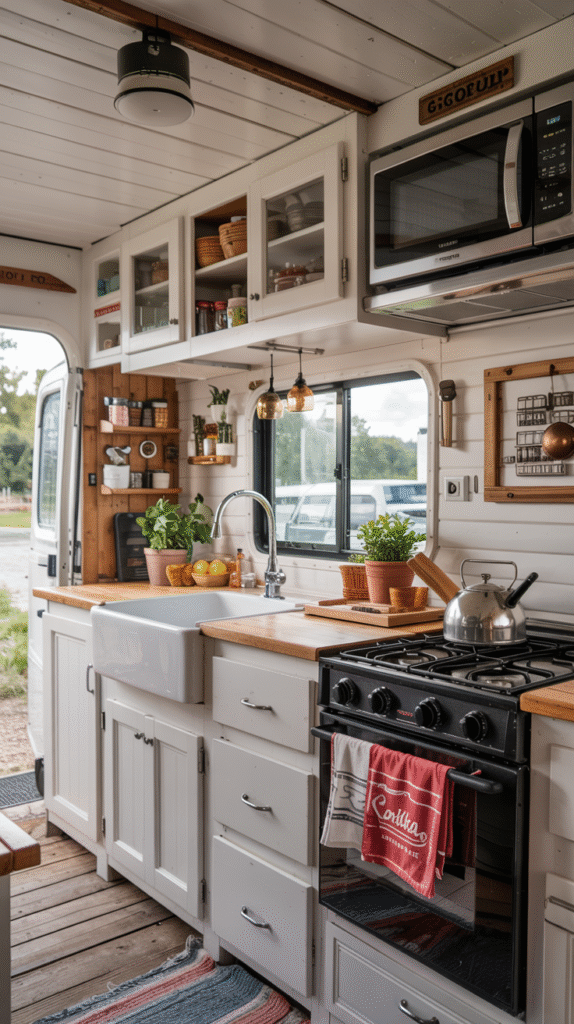
Butcher block countertops, open shelving, and white shiplap walls are a combination that punches well above its weight in small spaces. The shelving does double duty, keeping your most-used gear within reach while giving the kitchen visual breathing room.
A deep apron-front sink and a couple of brass pendant lights pull the whole thing together without fussing over it. Add a few potted herbs on the windowsill, and the space stops feeling like a camper entirely.
Rustic Charm With Foldable Countertops
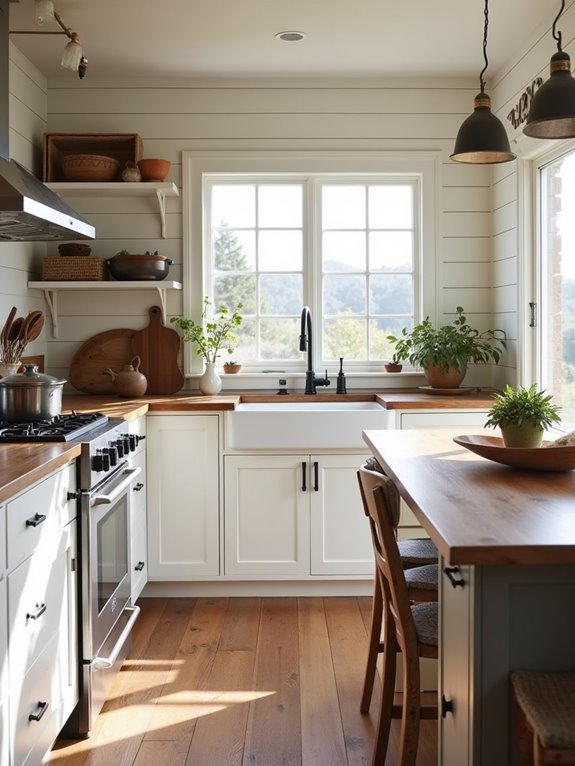
Counter space is the first thing you miss in a camper kitchen, and a fold-down extension is the most practical fix going. A well-mounted panel gives you real prep room when you need it, then tucks away so you can move around without banging your knees.
Most DIY installs take an afternoon and require nothing more than a piano hinge and a few screws into solid wall backing. The wood surface carries the farmhouse aesthetic right through, so it looks intentional rather than improvised.
Efficient Galley Layout With Farmhouse Touches
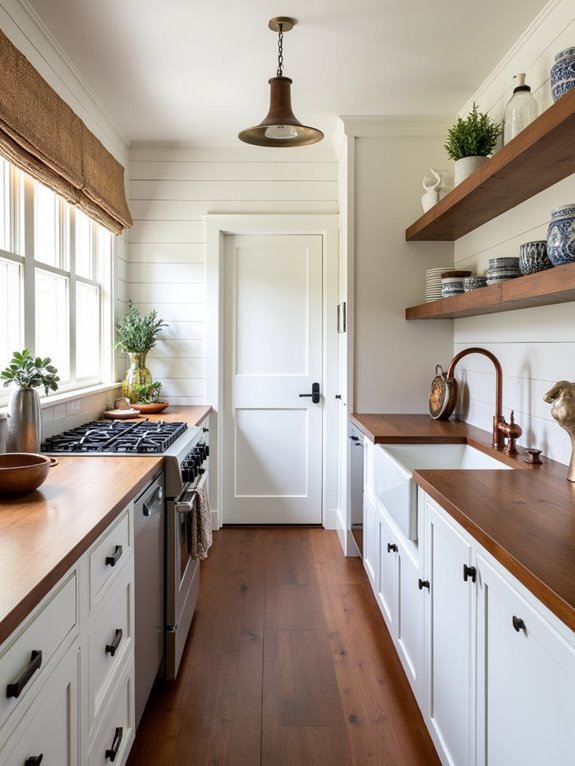
A galley kitchen, with counters running parallel on two walls, is the most efficient layout you can put in a camper. Everything stays within arm’s reach, which matters when you’re managing a full meal in a space the size of a hallway.
White shiplap on the back wall keeps the corridor from feeling like a tunnel, and butcher block counters add warmth that painted surfaces never quite achieve. Upper cabinets with quality latches handle the overflow storage without eating into your elbow room.
Maximizing Space With L-Shape Design
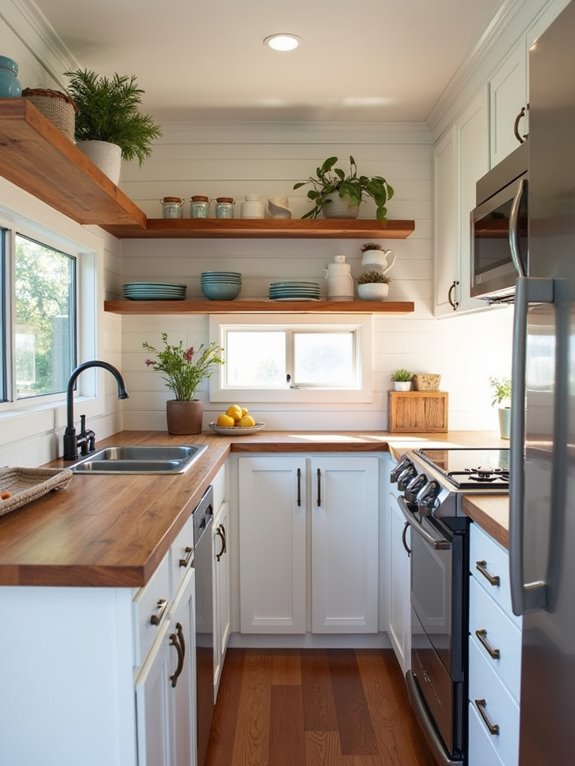
An L-shaped layout trades some of the galley’s linear efficiency for a bit more counter area and easier movement through the center.
By using two adjacent walls, you open up the middle of the kitchen, which makes a genuine difference in a space where two people might be moving around at once.
The corner junction is prime real estate for a lazy Susan or a deep pull-out drawer, neither of which should be left empty. Work zones naturally fall into an L-shape: prep on one leg, cook on the other, and cleanup tucked into the corner.
Sage Green Cabinets With Copper Accents
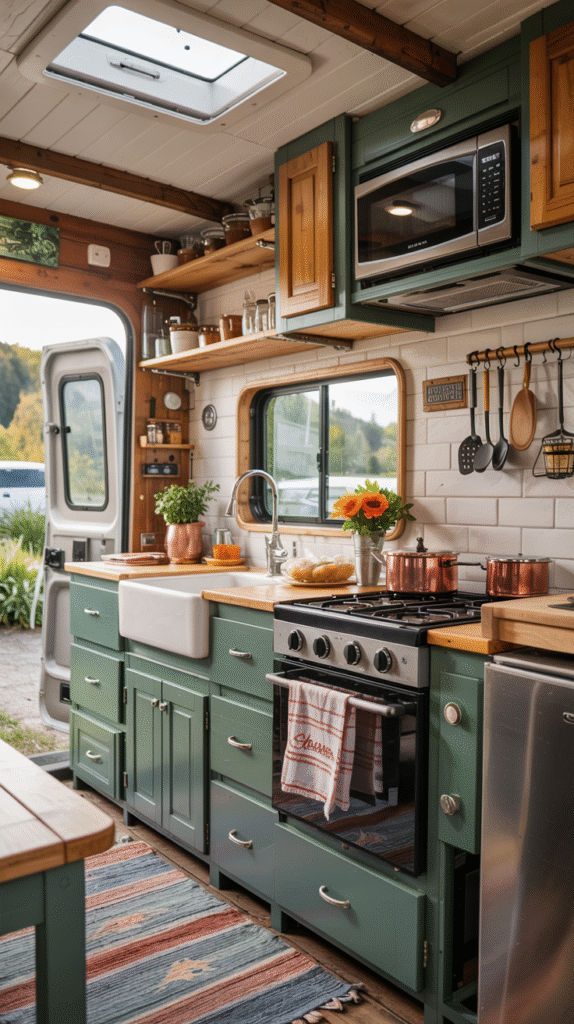
Sage green cabinetry hits differently in a camper kitchen than it does in a magazine. Against white shiplap and natural wood trim, the color feels grounded rather than precious, more garden shed than interior design spread.
Copper fixtures and a farmhouse sink introduce texture without overwhelming the space, and exposed beams overhead keep it from getting too polished. Open shelving fills in the gaps and keeps the whole kitchen feeling open rather than stacked.
Warmth and Durability of Wood Countertops
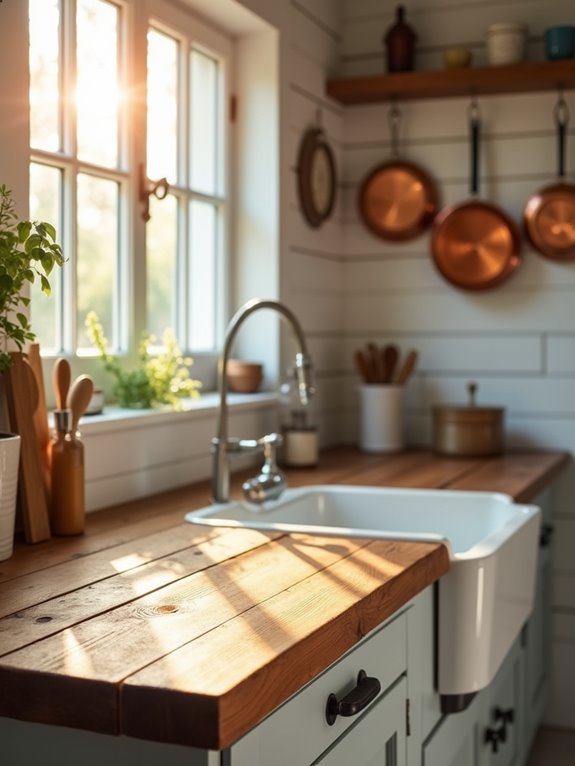
Wood countertops earn their place in a camper kitchen through sheer practicality. The surface is forgiving on your dishware in a way that stone simply isn’t, which matters when you’re driving down rutted dirt roads with everything still out.
Scratches sand out, stains refinish away, and the natural grain hides the wear that would make a laminate top look wrecked. That said, wood needs regular oiling, so treat it as part of your maintenance routine rather than an afterthought.
SEE THIS: 18 Coziest Camper Fireplace Ideas You’ll Want This Fall.
Bright Ambiance With White Shiplap Walls
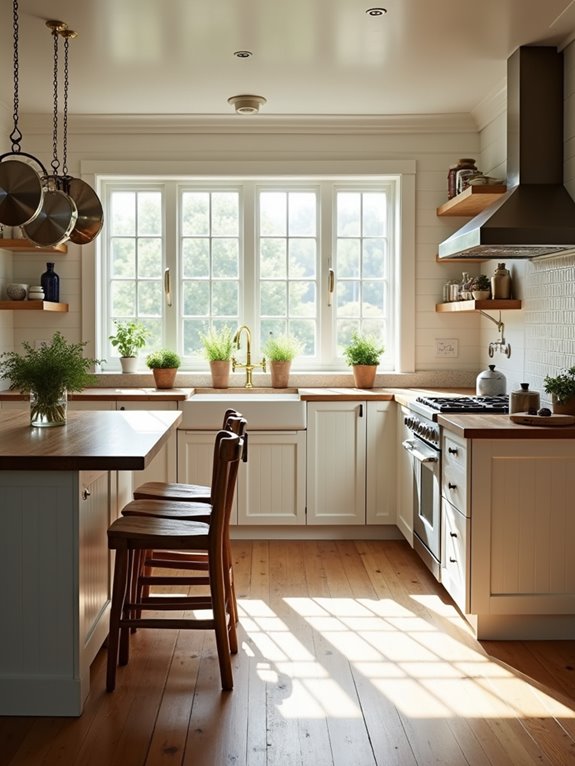
Dark walls in a compact kitchen feel oppressive fast, which is the real reason white shiplap keeps appearing in the best camper builds. The horizontal lines stretch the room visually, and the reflective surface bounces natural light into corners that would otherwise go dim.
There’s also a textural quality to shiplap that plain painted drywall lacks, giving the wall something to say without adding visual clutter. It’s a surface that earns its keep twice over, aesthetically and functionally.
Compact Kitchen Adjacent to Sleeping Area
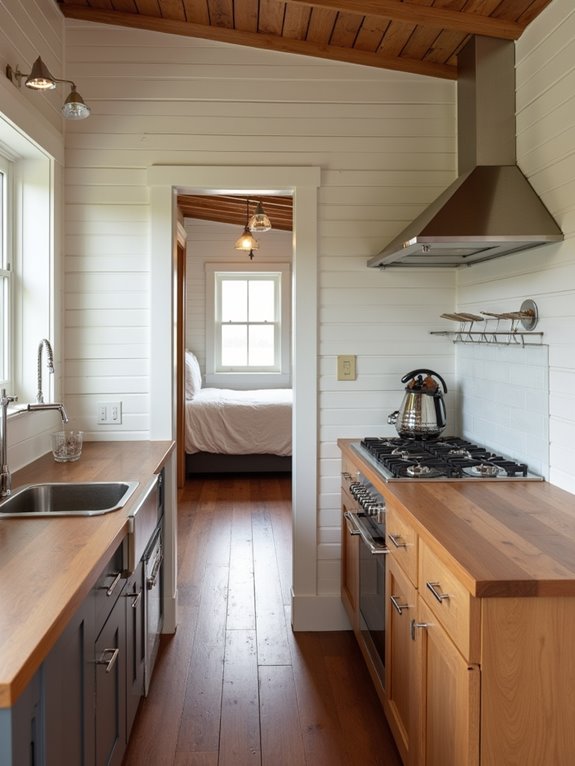
Placing the kitchen next to the sleeping area is a layout decision that demands more thought than most people give it at the planning stage.
Odors travel fast in a small camper, so a range hood that actually exhausts to the outside is non-negotiable when there’s a bed six feet away.
An inline or L-shaped layout keeps the kitchen footprint tight, and a curtain or sliding panel gives you a physical boundary between the two zones when you want it. Storage above the counter needs secure latches, because anything that can rattle will rattle, all night long.
Modular Counter Elements for Multi-functionality
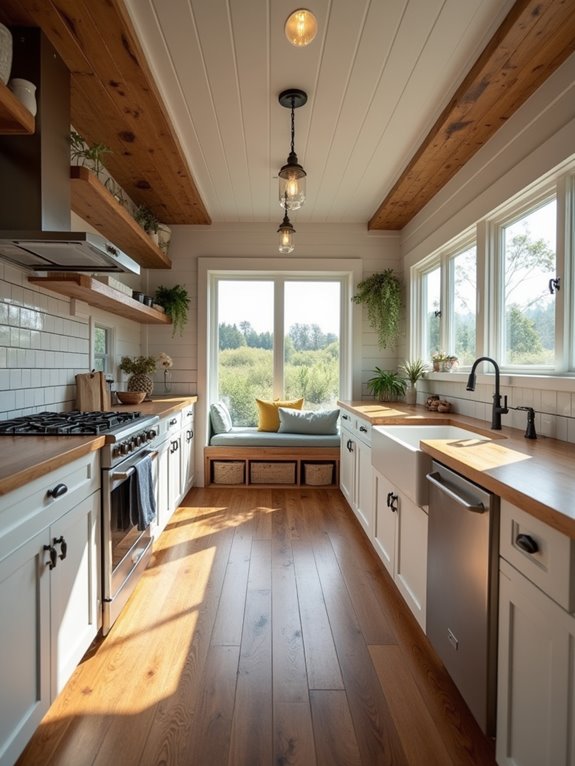
Modular counter components are how you turn a fixed, limited kitchen into something that adapts to what you’re actually cooking.A
A sink module positioned near the door, a stowable stove that folds flat when not in use, and a pull-out pantry column can completely transform how a tight galley functions.
Lightweight plywood with an epoxy finish handles the structural work without adding unnecessary weight to the rig. The key is choosing components that lock solidly in transit but come apart or reconfigure without tools when you’re parked.
Seamless Movement Flow in Camper Kitchens
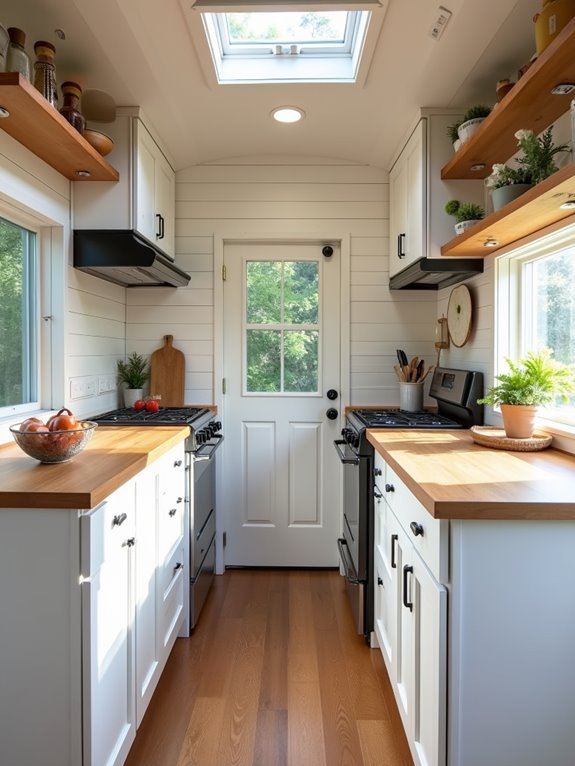
The work triangle, connecting your sink, stove, and fridge, is as relevant in a three-foot-wide camper galley as it is in a full home kitchen. Keeping those three points close together reduces the steps you take during meal prep, which adds up fast when you’re cooking in the shadow of a moving vehicle.
Pathways of at least 36 inches wide prevent the constant sidestep shuffle that makes cooking feel like a chore rather than something you enjoy. Group your tasks into zones and arrange your tools accordingly, so the kitchen works with the way you actually cook.
Extendable Taps for Versatile Dishwashing
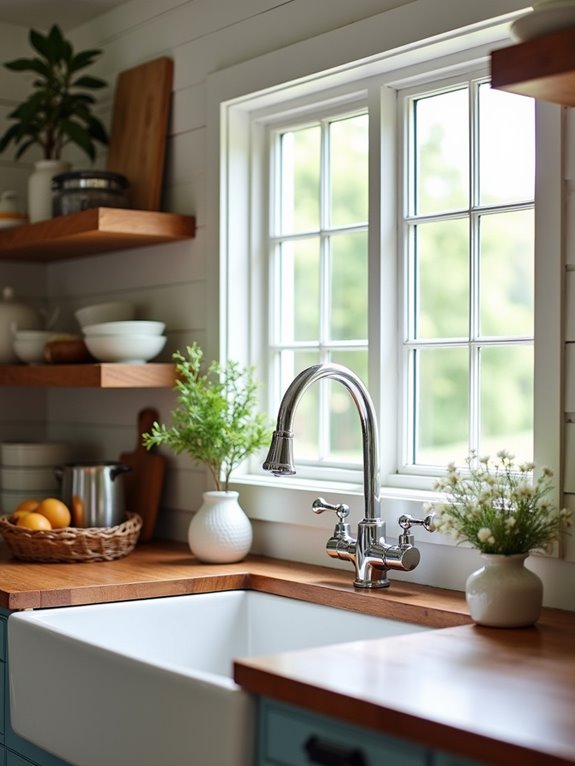
A standard fixed faucet in a camper sink is an exercise in frustration. An extendable tap with a retractable hose changes the whole experience, letting you rinse produce, fill a tall pot, or wash out a cooler without contorting yourself.
The magnetic locking dock keeps the hose from flopping around on the road, and multi-mode spray settings mean you’re not stuck with one weak stream for every task. It’s a small upgrade that you notice every single time you use the sink.
Domestic-Style Cooking With 4-Burner Hobs
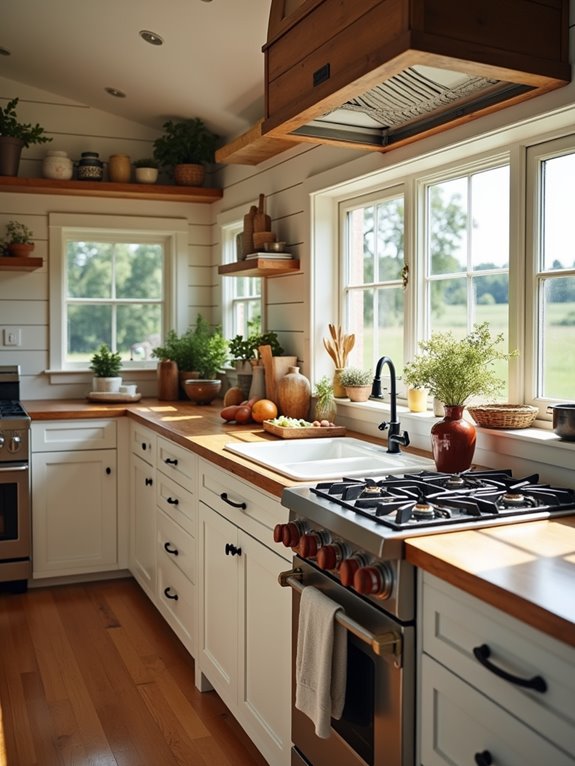
Four burners in a camper kitchen sounds like overkill until the first time you’re managing a protein, a sauce, and two sides at once.
A solid hob putting out around 16,000 BTUs total gives you genuine heat control, not the tepid output of a single-burner camp stove.
Manual ignition and individual flame adjustment let you dial each burner independently, which is how you cook an actual meal rather than just boil water. Porcelain enamel grates clean easily and don’t trap grease the way rougher surfaces do.
Safe and Convenient Gas Appliances
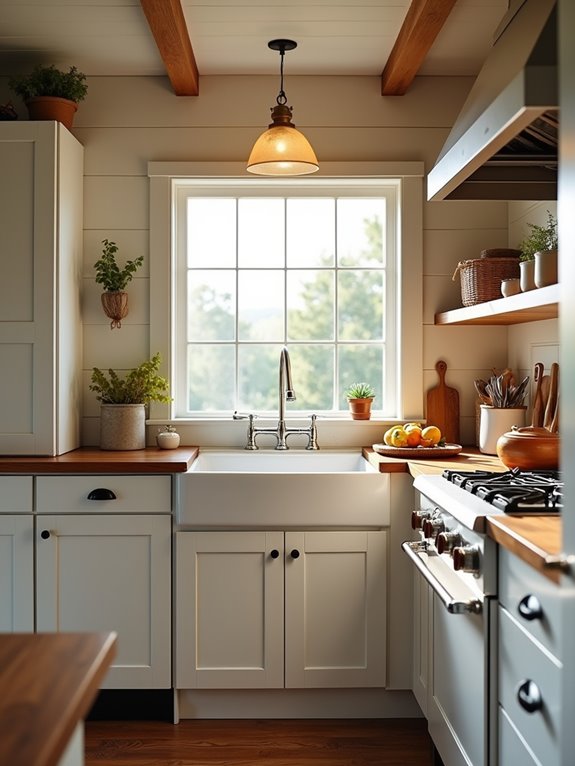
Cooking with gas in an enclosed space is something you need to take seriously, full stop. Carbon monoxide and nitrogen dioxide build up faster in a small camper than most people expect, and proper ventilation is not optional.
A CO detector mounted near the cooking area is cheap insurance that pays off in ways you never want to test firsthand. Get your gas lines inspected regularly and only run certified appliances, because the consequences of cutting corners here are severe.
Full-Extension Drawers for Easy Access
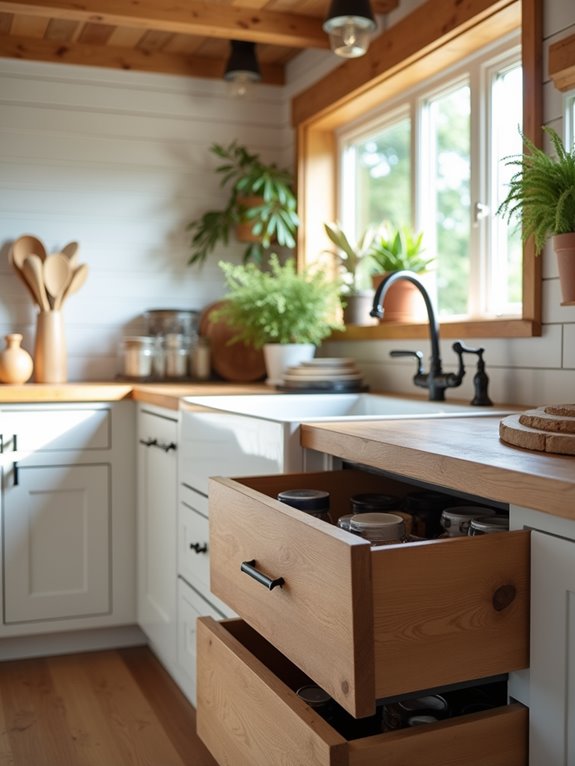
Standard drawers in a camper cabinet give you access to roughly the front third of what’s inside, which means everything else ends up buried. Full-extension drawers pull out completely, putting every utensil, pot lid, and bag of rice in plain sight and within reach.
Heavy-duty drawer slides handle road vibration without loosening over time, which is something cheaper hardware simply cannot claim. Customizing drawer depth to your actual gear, rather than accepting whatever the cabinet came with, makes a larger difference than most people expect.
Overhead Cabinets for Lightweight Storage
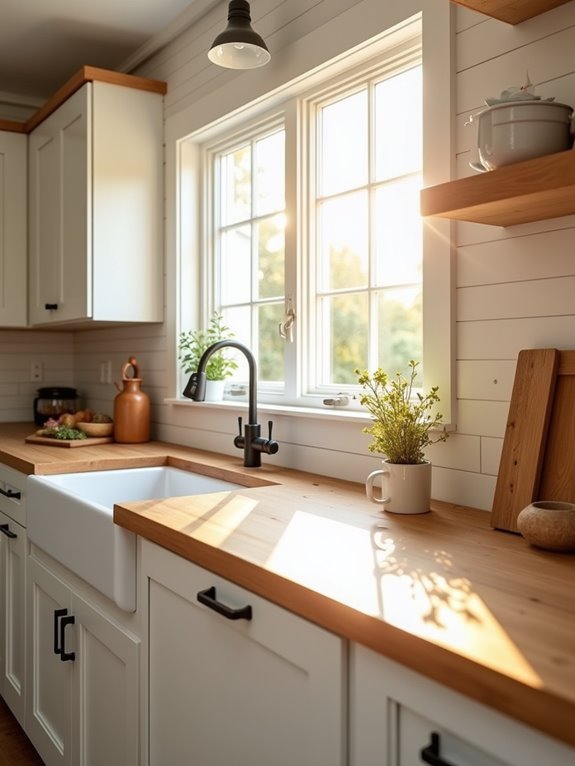
Overhead cabinets are where you store things you reach for occasionally, not constantly. Keep the weight light up there, dry goods, extra linens, cookbooks, anything that won’t create a dangerous projectile if a latch fails mid-corner.
Secure latches rated for road vibration are worth the extra cost, because a cabinet that swings open on a winding mountain road will do it at the worst possible moment. Lightweight cabinet materials also help your fuel economy, which adds up over a long trip.
Modular Shelving for Secure Transit
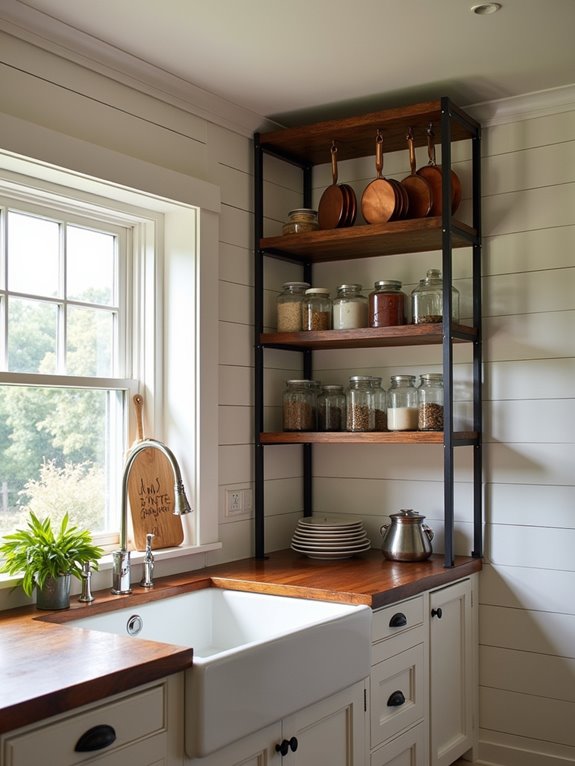
Modular shelving built from powder-coated steel handles the punishment of full-time road use better than wood-based systems that can loosen at the joints over time. Adjustable shelf heights let you reconfigure for different loads, whether you’re stocking up for a two-week backcountry trip or a weekend run.
Locking drawers and compartments keep contents in place when the road gets rough, which is when you most need them to stay put. Most quality modular systems include all mounting hardware and install without custom fabrication, which keeps the project manageable.
Integrated Safety Features for Peace of Mind
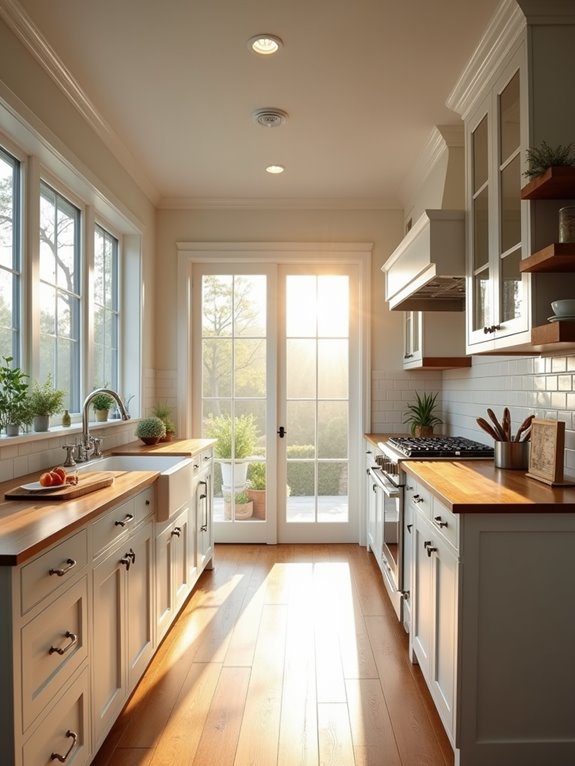
A well-built camper kitchen is only as good as the rig it’s traveling in. Trailer brake systems and safety cables are non-negotiable if you’re towing, and a Tire Pressure Monitoring System gives you real-time feedback before a soft tire becomes a blown one.
Weight distribution matters more than most first-time towers expect, and an unbalanced load creates sway that no amount of careful driving fully corrects. Stay within your tow rating, observe reasonable speed limits, and the whole setup travels reliably mile after mile.
Efficient Greywater Disposal Systems
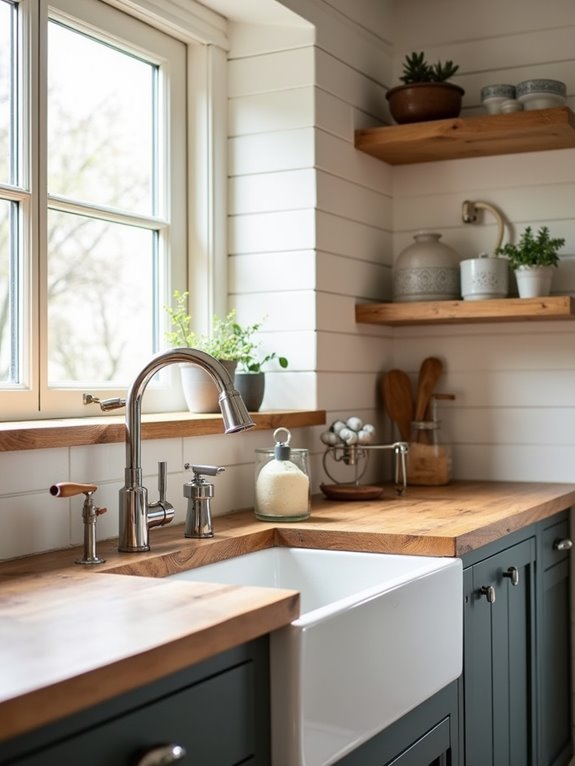
Greywater from your sink needs a proper disposal plan before you ever pull out of the driveway, not after something backs up. A dedicated onboard tank collects wastewater and contains it until you reach a dump station, keeping you legal and your campsite clean.
Portable external tanks are a workable option for shorter trips or rigs without built-in capacity. P-traps under the sink control odor, and a tank level sensor keeps you from running blind until it’s too late.
Ventilation and Heat Shielding Solutions
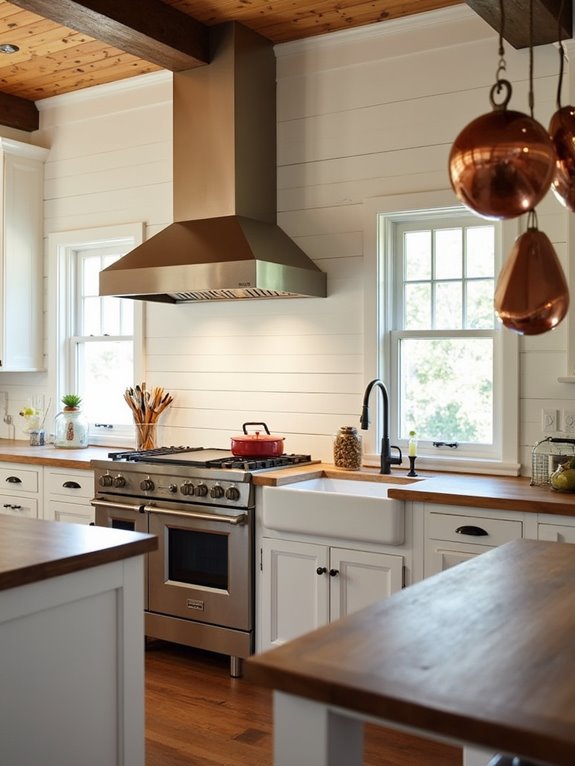
Cooking generates heat, steam, and smoke, and a camper has nowhere for any of it to go without intentional planning. A ducted range hood that exhausts to the outside handles the bulk of it, while passive roof vents keep fresh air circulating without letting rain in.
Heat-resistant materials like stainless steel behind and around the cooktop protect the wall surfaces from repeated high-temperature exposure. Wood near the stove needs a proper heat shield between it and the burners, both for fire safety and to preserve the finish.
Water Resistance Treatments for Wood Surfaces
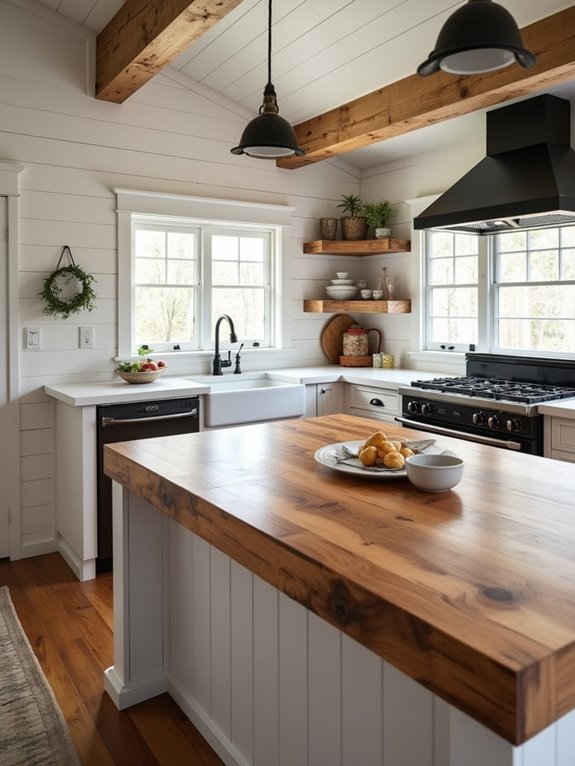
Wood and water coexist fine in a camper kitchen as long as you stay ahead of the moisture. A quality penetrating sealant soaks in and creates a durable barrier without leaving a thick, plastic-looking film on the surface.
Stain-sealers that combine color and protection in one product are worth considering if you want to refresh the look at the same time. Reapply at least once a year and wipe up standing water promptly, because even the best sealant has limits.
Innovative Storage for Unconventional Items
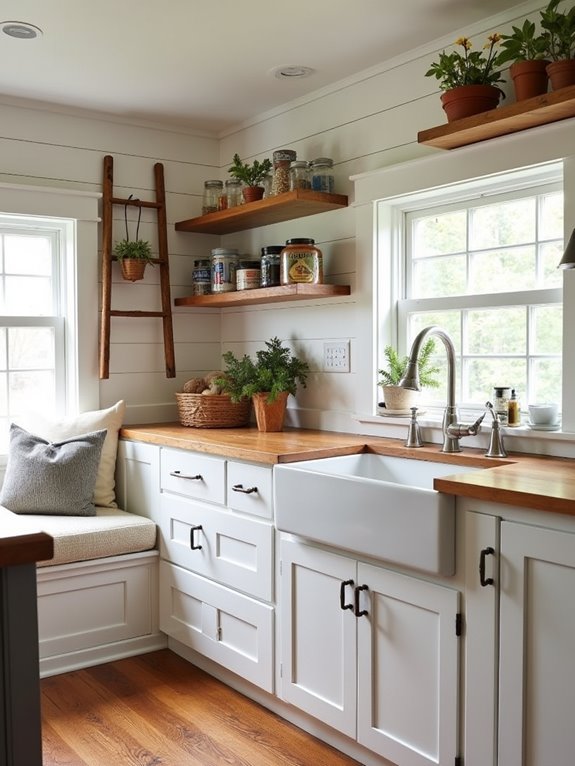
The gear that doesn’t fit neatly into a drawer or cabinet is usually what ends up cluttering your counter. Magnetic racks mounted on the side of the fridge hold spice jars and utensils without burning any shelf space, and vertical plate racks keep dishes from sliding into each other on rough roads.
Organizers mounted inside cabinet doors, the backs of pantry doors, and under the sink turn otherwise dead surfaces into real storage. Clear stackable containers let you see what you have without pulling everything out, which matters more than people realize when you’re cooking in close quarters.