Here’s what nobody tells you about forest hiking: the trails with the most reviews and parking lot traffic usually offer the least rewarding experience. I’ve hiked enough overcrowded paths to know that popularity and quality rarely overlap in the backcountry.
What you actually want are trails where the canopy thickness creates real shade, where elevation shifts give you varied perspectives, and where water features appear when you least expect them.
The difference between a forgettable woodland walk and one that sticks with you for years comes down to factors most hikers never consider. And that’s exactly what this guide is built around.
Contents
- 1 What Makes a Forest Hiking Trail Truly Inspiring
- 2 Best Types of Forest Hiking Trails for Scenic Walks
- 3 10 Forest Hiking Trails to Explore for Inspiration (USA + Europe)
- 4 Redwood National and State Parks – USA
- 5 Great Smoky Mountains National Park – USA
- 6 Hoh Rain Forest – USA
- 7 Shenandoah National Park – USA
- 8 Columbia River Gorge – USA
- 9 Black Forest – Europe
- 10 Triglav National Park – Europe
- 11 Plitvice Lakes National Park – Europe
- 12 Białowieża Forest – Europe
- 13 Scottish Highlands – Europe
- 14 How to Find Scenic Forest Hiking Trails Near You
- 15 How to Choose the Right Forest Trail Based on Your Mood
- 16 What I Always Bring on Scenic Forest Walks
What Makes a Forest Hiking Trail Truly Inspiring
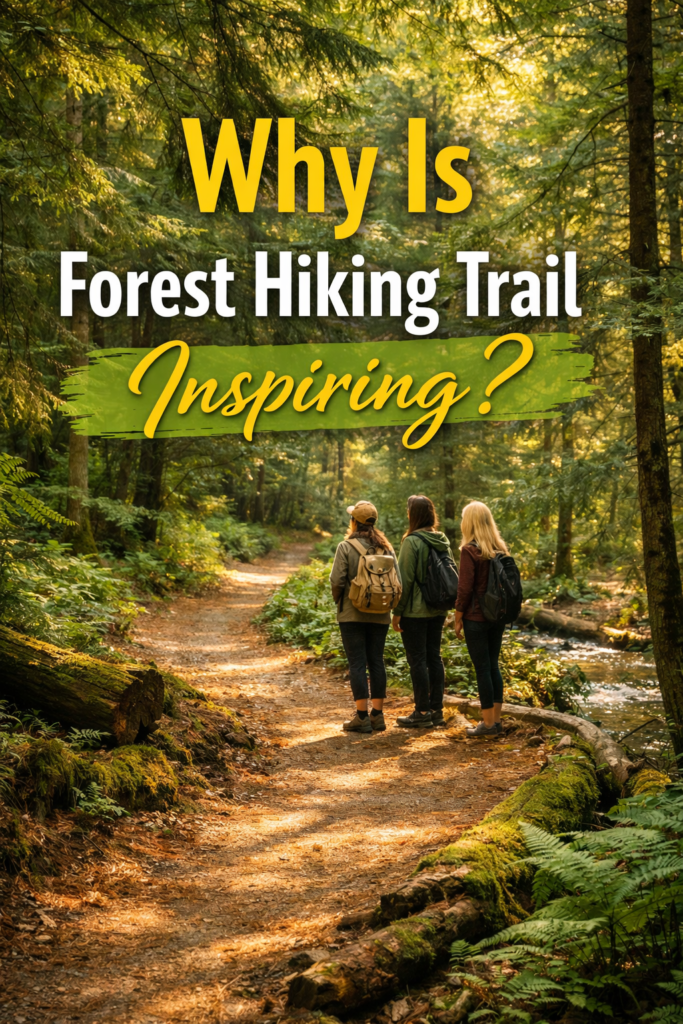
Natural light filtering through trees
The way sunlight breaks through a dense canopy tells you everything about a forest’s character. Good tree cover creates those shifting patterns of light and shadow that make you stop mid-stride to watch dust particles float through a beam.
This isn’t just pretty to look at. The contrast helps you spot details you’d otherwise miss: the texture of bark, mushrooms growing on a nurse log, or how the path curves ahead.
Soft ground, winding paths, and layered scenery
Your first steps onto a proper forest trail should feel different underfoot. Packed dirt and decomposed organic matter create natural cushioning that’s easier on your knees than pavement or rocky terrain. Trails that curve instead of cutting straight through give you something to anticipate around each bend.
When you can see multiple layers of forest at once (undergrowth, mid-story shrubs, and canopy), the whole experience becomes three-dimensional instead of flat.
Sounds that calm instead of overwhelm (leaves, birds, water)
Forest acoustics work differently than you’d expect. Leaves rustling overhead create a kind of natural white noise that helps your brain let go of whatever you were grinding on before the hike.
Birdsong gives you something to focus on without demanding attention. Stream sounds add a baseline that’s consistent enough to fade into the background but varied enough to stay interesting.
Trails that invite wandering instead of rushing
The trails I return to most often don’t optimize for speed or efficiency. They meander around obstacles instead of bulldozing through them, and they split off at junctions that aren’t always marked on maps.
You’ll find spots where the trail widens just enough for two people to walk side by side, or where a fallen log creates a natural bench. These design elements (whether intentional or accidental) make you want to slow down rather than power through to the endpoint.
SEE THIS: The Story Behind Pretty Place: Why This Scenic Hiking Trail Feels So Peaceful!
Best Types of Forest Hiking Trails for Scenic Walks
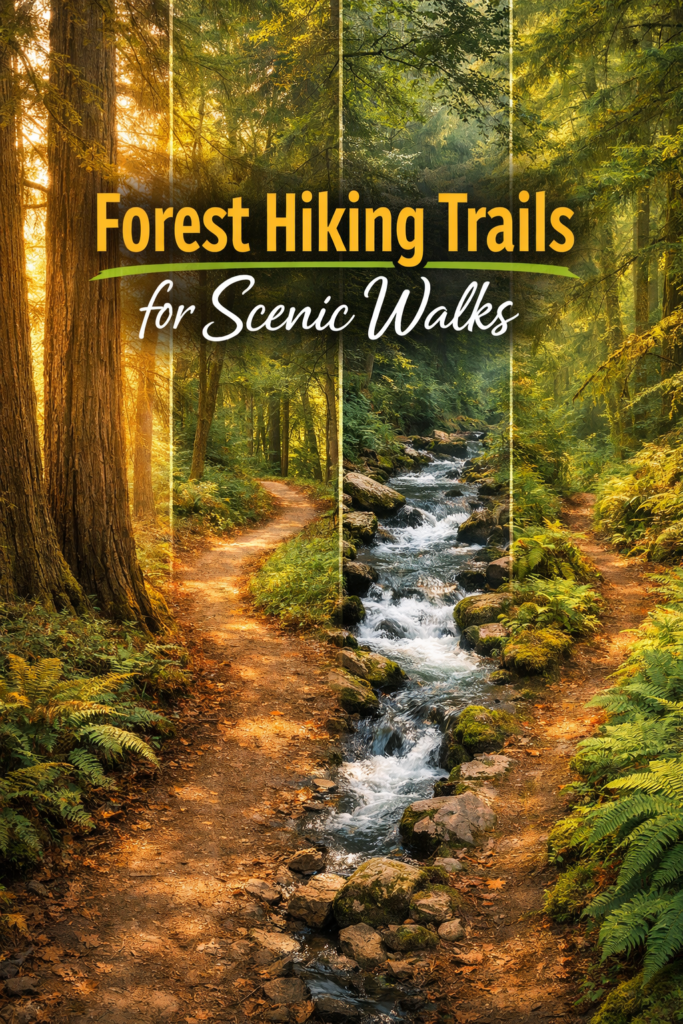
Not all forest trails offer the same experience, and understanding these distinctions helps you pick the right one for what you’re after. Old-growth forests give you that cathedral-like atmosphere with massive trees that have been standing since before your grandparents were born.
Woodland loops work better when you want flexibility without committing to an out-and-back route. The best forest trails often combine multiple features rather than relying on a single selling point.
Old-Growth Forest Trails
Walking through old-growth forest feels fundamentally different than hiking second or third-generation woodland. The trees are massive enough to change how you perceive scale, and the canopy sits so high above you that it creates its own weather system.
You’ll notice the air smells different here because the ecosystem has had centuries to develop complexity. These forests support species that can’t survive in younger woods.
SEE THIS: How To Set Up A Tent In Nature (Complete Beginner-to-Confident Guide)!
Woodland Loop Trails
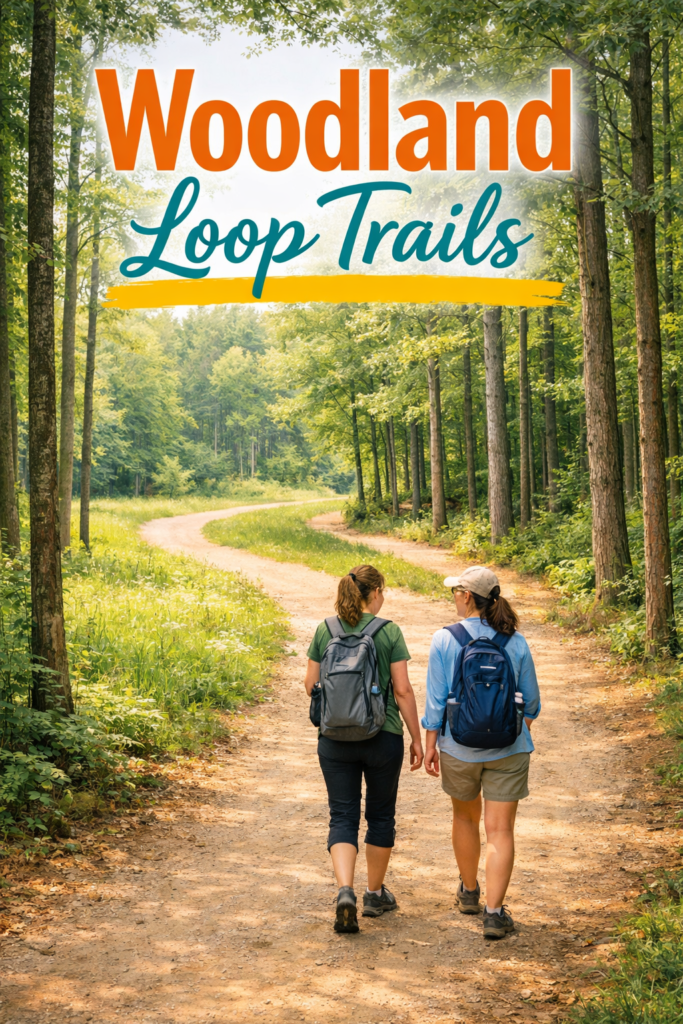
Loop trails solve the biggest problem with out-and-back routes: you never have to retrace your steps or see the same scenery twice. Most good loops run between one and five miles, which gives you enough distance to feel like you’ve actually gone somewhere.
The circular design means you encounter different lighting conditions and terrain features as you progress. I prefer loops when I’m hiking solo because the constantly changing views hold my attention better.
Forest Trails With Streams or Creeks
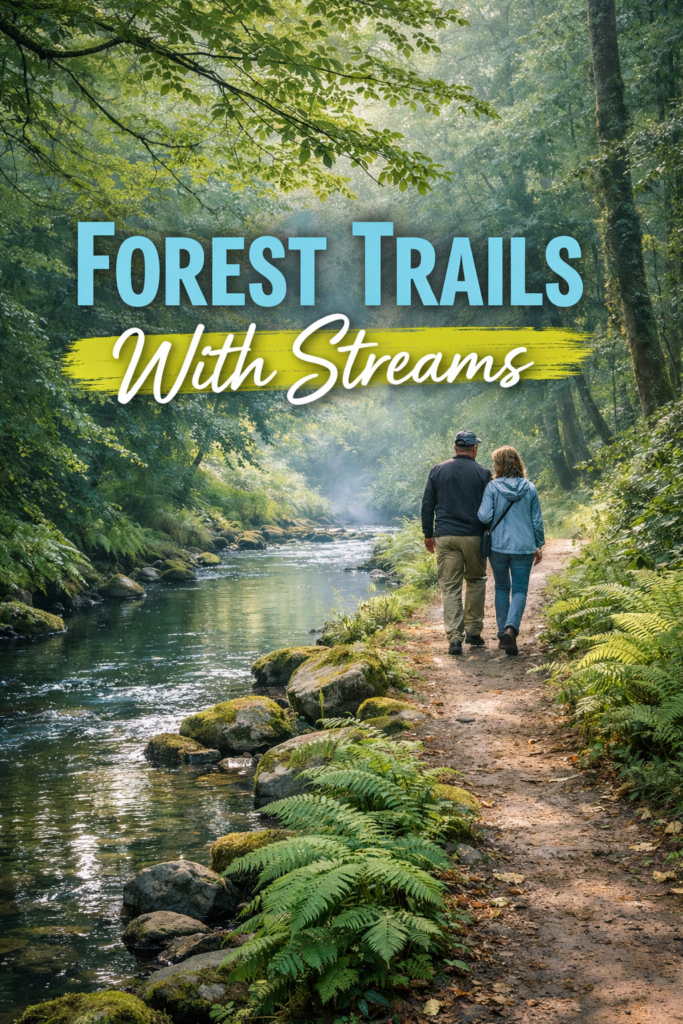
Trails that follow water are noticeably cooler in summer and tend to attract more wildlife. The sound of moving water serves as a navigation aid (you can hear where you’re going before you see it) and provides natural break points for rest stops.
You’ll find more varied vegetation along creek trails because the moisture gradient creates different growing conditions. These paths rarely get as dusty as ridge trails either.
Mossy or Fern-Filled Forest Paths
Heavy moss coverage tells you the forest stays damp enough to support species that can’t handle dry conditions. The ground becomes softer and quieter to walk on because moss absorbs sound and compresses underfoot.
Ferns add vertical texture at eye level that makes the whole trail feel more enclosed and private. These trails photograph well but they’re muddy more often than people expect.
10 Forest Hiking Trails to Explore for Inspiration (USA + Europe)
I’ve picked these specific trails because they represent different forest types and difficulty levels worth experiencing firsthand.
The U.S. options include California’s redwood groves and Vermont’s extended wilderness routes. European selections range from Germany’s managed woodland trails to Scotland’s wilder highland forests.
Redwood National and State Parks – USA
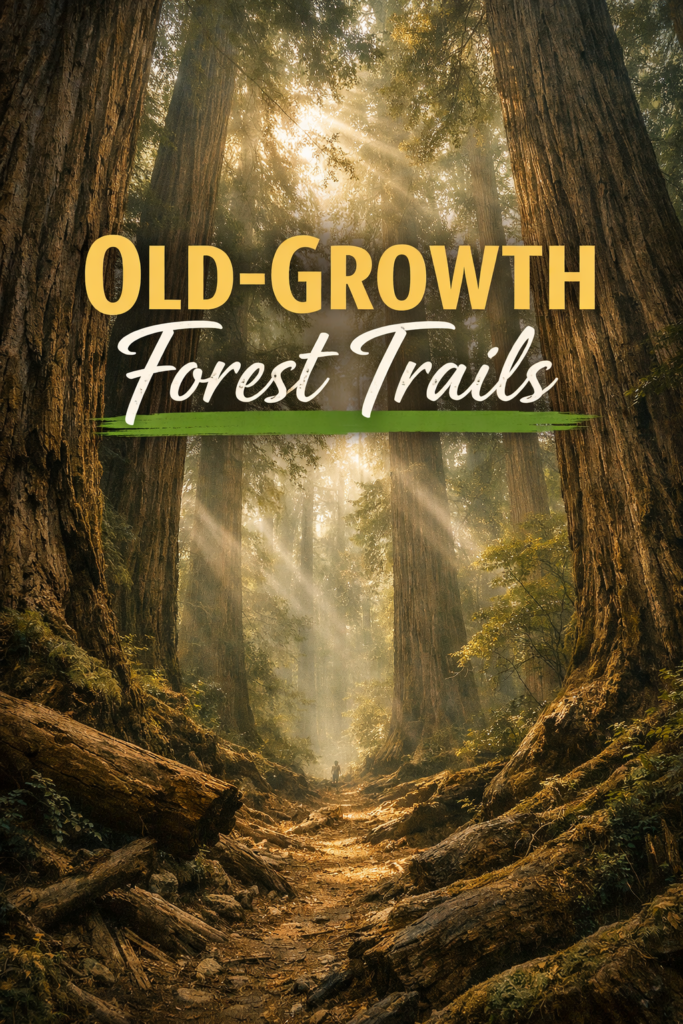
The coast redwoods here are the tallest trees on Earth, and that statistic doesn’t prepare you for how it actually feels to stand underneath them. Lady Bird Johnson Grove gives you the full cathedral effect without requiring serious mileage or elevation gain.
Tall Trees Grove demands more effort but sees fewer hikers because of the permit system. The fog that rolls in off the Pacific creates lighting conditions you can’t replicate anywhere else in North America.
Great Smoky Mountains National Park – USA
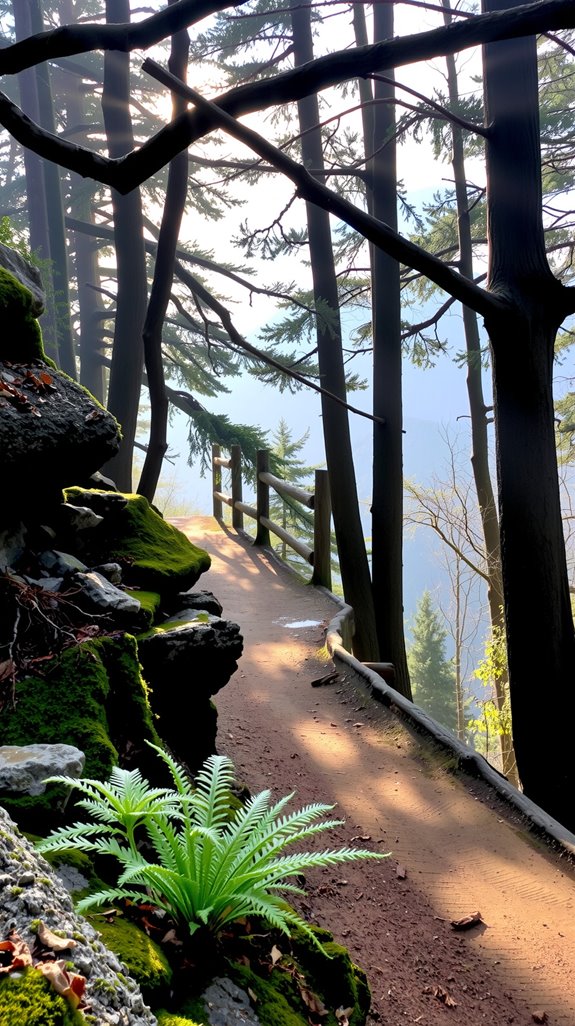
The Smokies earn their name from the perpetual haze that hangs over the ridgelines, which creates moody photography but also limits visibility on some days. With over 800 miles of trail, you can find everything from paved nature walks to multi-day backcountry routes.
The park straddles two states and multiple elevation zones, so the forest composition changes dramatically depending on where you hike. Spring wildflowers here are legitimately worth planning trips around.
Hoh Rain Forest – USA
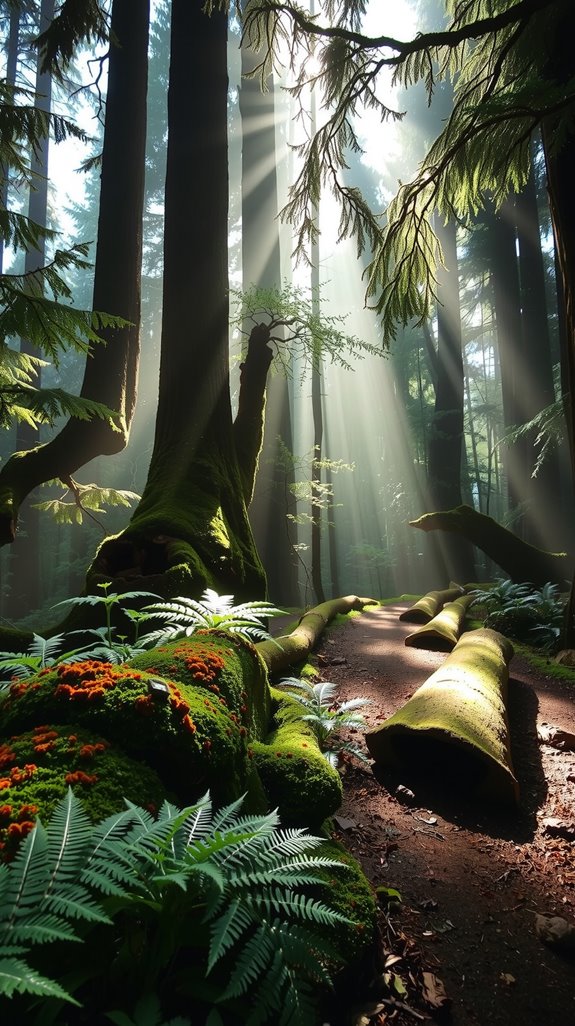
This temperate rainforest in Washington’s Olympic Peninsula gets over 140 inches of rain annually, which explains why everything is covered in moss. The Hall of Mosses Trail is short but concentrates the most photogenic sections into less than a mile.
Longer routes like the Hoh River Trail take you deeper into the same ecosystem with less company. Roosevelt elk wander through here regularly enough that you should expect to see them rather than hoping to get lucky.
Shenandoah National Park – USA

Shenandoah gives you Blue Ridge Mountain forest hiking without the crowds you’ll find in nearby Great Smoky Mountains. Old Rag Circuit combines woodland hiking with scrambling over rock outcrops that require both hands to navigate.
The park’s trail network connects through Skyline Drive, which means you can access different sections without driving all the way around. Fall color here peaks in mid-October, but the exact timing shifts by a week or two each year.
Columbia River Gorge – USA
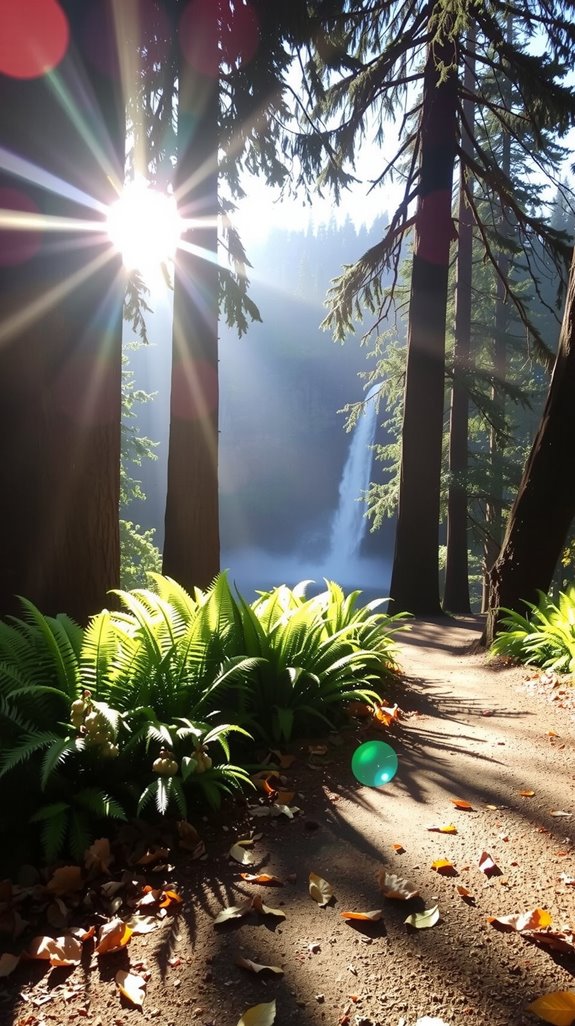
The Gorge concentrates over 90 waterfalls into an 80-mile stretch, which means you’re rarely more than a few miles from falling water. Eagle Creek Trail used to be the marquee hike here until the 2017 wildfire forced closures on some sections.
Multnomah Falls gets overcrowded, but the trails above it thin out considerably once you climb past the main viewing platform. The forest here transitions from temperate rainforest on the western end to drier Douglas fir stands as you move east.
Black Forest – Europe
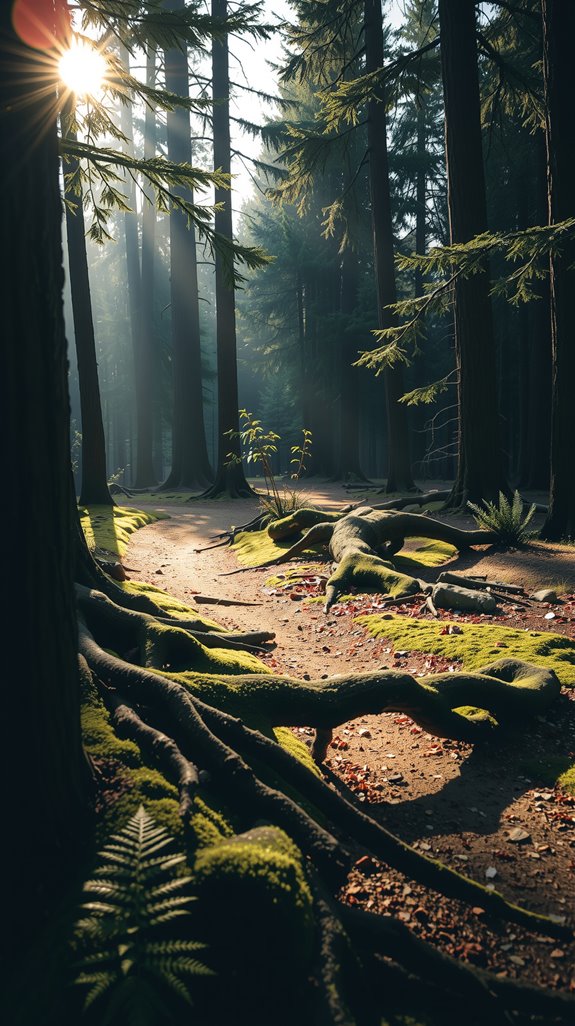
Germany’s Schwarzwald offers well-maintained trails that reflect European trail infrastructure standards (read: better signage and more shelters than you’d find in comparable U.S. forests). The Westweg long-distance trail covers 177 miles if you want to commit to a multi-day trek.
Shorter day hikes give you access to the same dark conifer forests without the logistical complexity. Traditional villages appear frequently enough that you can resupply without leaving the trail corridor.
Triglav National Park – Europe
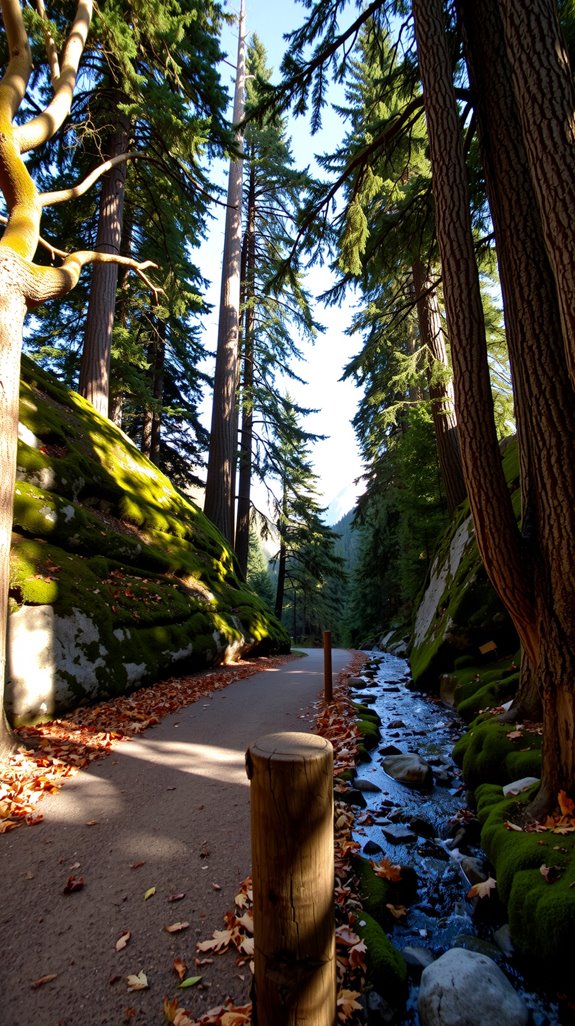
Slovenia’s Julian Alps feature forests that transition into alpine terrain as elevation increases. Vintgar Gorge offers a wooden walkway hiking directly over turquoise water that looks artificial but isn’t.
Lake Bohinj sits at a lower elevation and provides easier access if you’re not ready for alpine exposure. The trails here see less traffic than comparable parks in Switzerland or Austria, despite offering similar scenery.
Plitvice Lakes National Park – Europe
Croatia’s chain of terraced lakes connected by waterfalls has become Instagram-famous, which means summer crowds can be oppressive. The wooden walkways cross directly over the water in sections where you can see fish swimming below you.
Eight different marked routes let you choose your distance and time commitment. Go in shoulder season if you want to actually enjoy the experience instead of queueing for photo spots.
Białowieża Forest – Europe
This primeval forest on the Poland-Belarus border is the last substantial old-growth woodland left in Europe’s lowlands. Some of the oaks and spruces here have been growing for over 500 years without human interference.
European bison roam freely, which adds an element of wildlife viewing you won’t find on most European forest trails. UNESCO World Heritage status has protected this area from the logging that cleared most similar forests centuries ago.
Scottish Highlands – Europe
The Caledonian pine forests in Scotland represent remnants of woodland that once covered most of the British Isles. West Highland Way gives you 96 miles of varied terrain, including forest sections, open moorland, and loch-side walking.
Glen Affric concentrates some of the best-preserved ancient woodland into a more accessible area. Red deer are common enough that you’ll likely see them, and the lack of dense undergrowth makes wildlife spotting easier than in forests with thick brush layers.
How to Find Scenic Forest Hiking Trails Near You
Start with AllTrails or Hiking Project and filter specifically for forest or woodland terrain types. These apps let you sort by user ratings, which helps separate legitimately good trails from ones that just happen to be close to population centers.
Local park district websites often have better information about current conditions than third-party apps. State and national forest websites maintain trail databases that include details about recent maintenance or closures.
How to Choose the Right Forest Trail Based on Your Mood
When You Want Quiet and Solitude
Solitude requires strategy more than luck. Target trails that start more than a mile from the parking area, because most casual hikers won’t push past that threshold. Weekday mornings before 9 AM see dramatically less traffic than weekend afternoons.
Look for trails with few or no intersections, since junction points concentrate hikers. Remote backcountry routes deliver real isolation but they also demand better navigation skills and preparation.
When You Want Visual Beauty Without Distance
Short trails can pack in scenery if they’re designed around specific features like waterfalls or viewpoints. Look for paths under two miles that concentrate their highlights near the trailhead rather than saving the payoff for the turnaround point.
These routes work when you’re short on time or not feeling up to serious mileage. They’re also better for photography since you can scout locations and return to the same spot at different times of day without burning hours on approach.
When You’re Mentally Burned Out
Mental exhaustion responds better to gentle sensory input than physical challenge. Pick trails under two miles with minimal elevation change so you can hike on autopilot without constant navigation decisions.
Forest environments naturally lower stress hormones, but you need to actually be present rather than treating the hike like another task to complete. Trails with water features work particularly well because the sound helps quiet racing thoughts.
What I Always Bring on Scenic Forest Walks
Water and trail snacks are non-negotiable regardless of distance. I carry a basic first aid kit even on short walks because ankle rolls and blisters don’t care about your itinerary. Navigation tools (phone, map, or GPS) prevent a wrong turn from becoming a serious problem.
Weather-appropriate layers matter more than most hikers realize since forest microclimates can be 10-15 degrees cooler than open terrain. Sun protection, a headlamp for unexpected delays, and a whistle for emergencies round out my standard kit.
Conclusion: Let the Forest Be the Reason You Start Walking
Forest trails offer something indoor exercise can’t replicate: scenery that changes with seasons and rewards you for showing up. Each trail presents different challenges and provides mental clarity that transforms hiking from obligation into something you actually look forward to.
Stop waiting for ideal conditions or perfect weather. Pick a trail within driving distance, put on your boots, and find out why forests remain the most compelling reason to get outside and walk.