The red rocks in Sedona glow at sunrise like something ancient and alive, and once you’ve camped out there, you start wanting to carry a piece of that landscape with you everywhere you go.
That pull is exactly what drives so many van and camper conversions toward the Southwest’s earthy palette, handmade textures, and sun-warmed materials. These 18 interior styles channel that feeling into livable, functional spaces that move with you. None of them feel like a showroom, and that’s entirely the point.
Contents
- 1 Desert-Inspired Earth Tone Color Palettes
- 2 Natural Wood Finishes and Red Cedar Accents
- 3 Handwoven Textile Integration
- 4 Multi-Purpose Convertible Furniture Solutions
- 5 Off-Grid Power System Aesthetics
- 6 Red Rock Influenced Design Elements
- 7 Artisanal Storage Solutions
- 8 Outdoor Living Space Extensions
- 9 Southwestern Pattern Applications
- 10 Sustainable Material Selections
- 11 Adventure-Ready Storage Systems
- 12 Cozy Sleep Space Configurations
- 13 Native Plant-Inspired Color Schemes
- 14 Minimalist Bohemian Kitchen Designs
- 15 Rustic Hardware and Accent Pieces
- 16 Nature-Connected Window Treatments
- 17 Organic Texture Layering Techniques
- 18 Local Artisan Crafted Details
Desert-Inspired Earth Tone Color Palettes
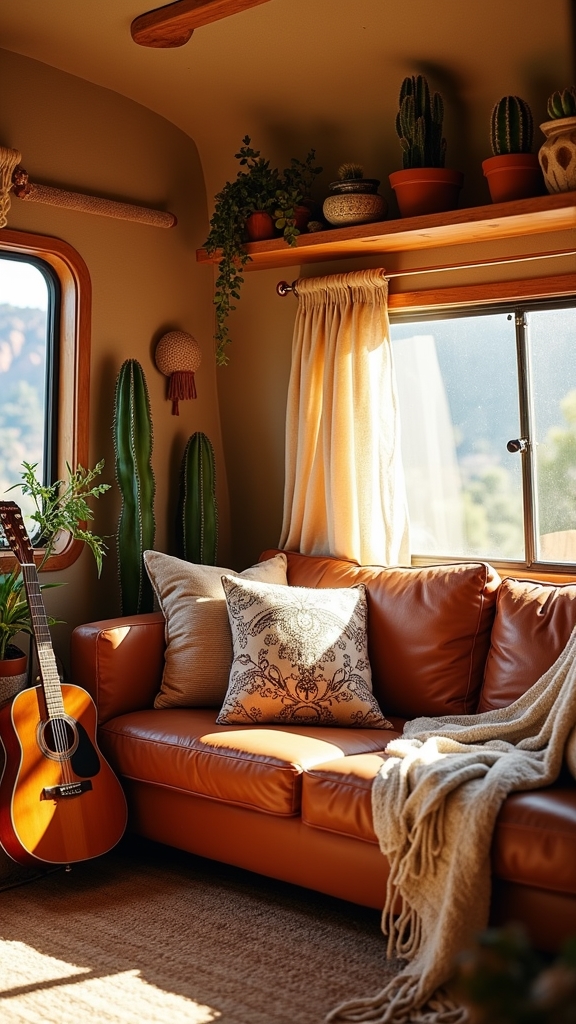
The reds get all the attention, but Sedona’s real design gift is its subtlety. Muted siennas, dusty terracottas, and sun-bleached sandy neutrals are what actually make a camper interior feel grounded rather than garish.
A wall painted deep sienna with sandy trim reads like a canyon at midday without hitting you over the head with it. Start with a neutral base and let the warmer tones come in through textiles and wood, so the palette builds naturally rather than all at once.
SEE THIS: 23 Feminine Boho Camper Interior Renovations From Boulder, Colorado!
Natural Wood Finishes and Red Cedar Accents
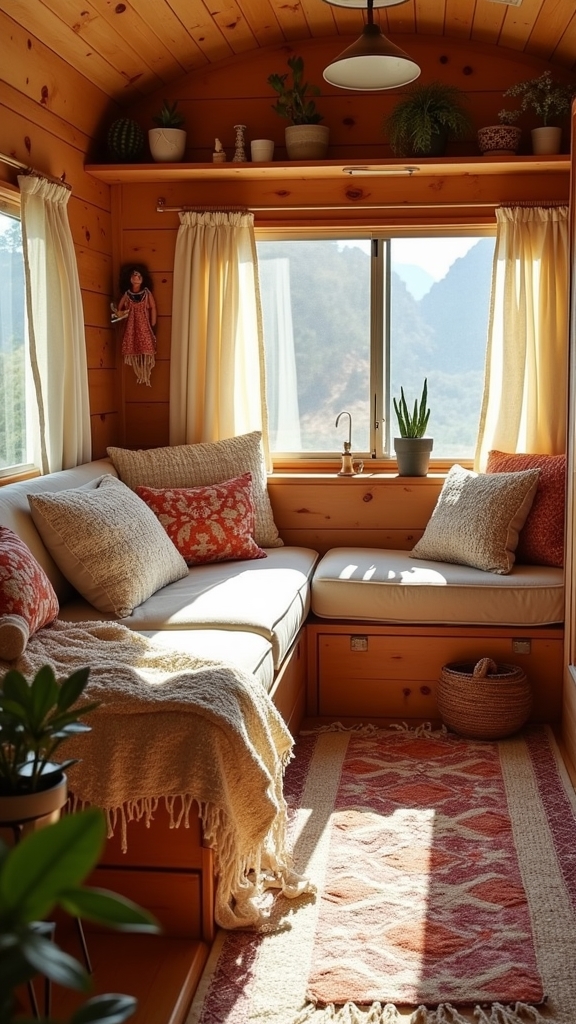
Cedar is the wood that earns its keep on the road. Its natural oils resist moisture better than most alternatives, which matters a lot when you’re camping through weather that doesn’t care about your interior design choices.
Oak works cleanly for modern builds, while walnut runs darker and moodier for anyone who wants the interior to feel like a well-worn study rather than a sun-bleached porch. Thin plywood panels secured properly to wall studs keep things light without sacrificing the warmth that raw wood brings to a small space.
SEE THIS: 18 Ideas to Layer Textures and Patterns for a Boho Camper Interior in Missoula, Montana!
Handwoven Textile Integration
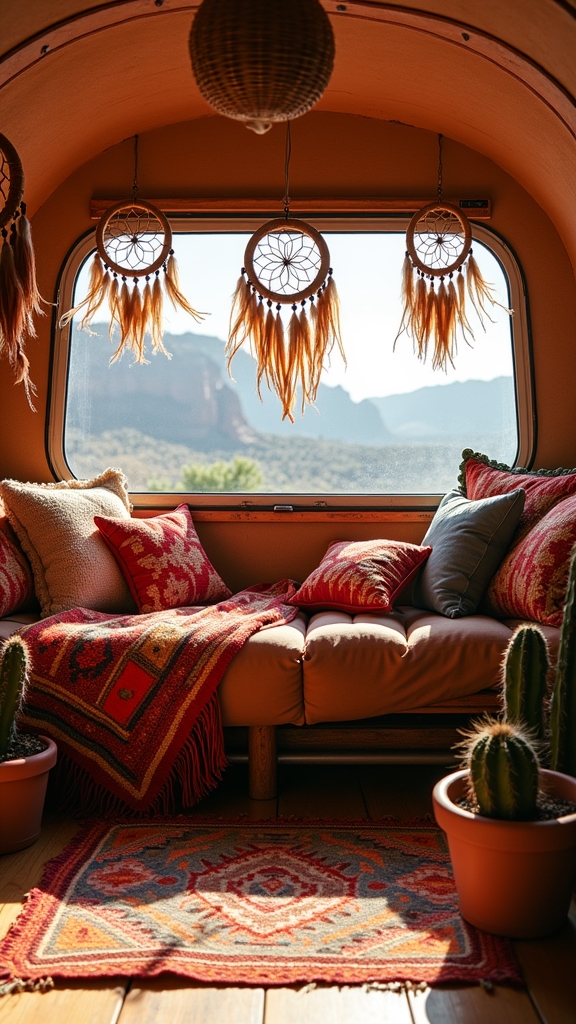
Nothing transforms a camper faster or cheaper than a good handwoven textile. A naturally dyed wool throw draped over a bench seat, a cotton wall hanging above the bed, a traditional rug underfoot: each one adds warmth that paint and wood simply can’t replicate.
The key is buying pieces that were actually made by hand, because machine-woven imitations flatten out and pill within a season of road life. Artisan-made textiles hold their color, their texture, and their shape far longer, and they look better doing it.
SEE THIS: 27 Dreamy Boho Camper Interior Makeovers From Austin, Texas!
Multi-Purpose Convertible Furniture Solutions
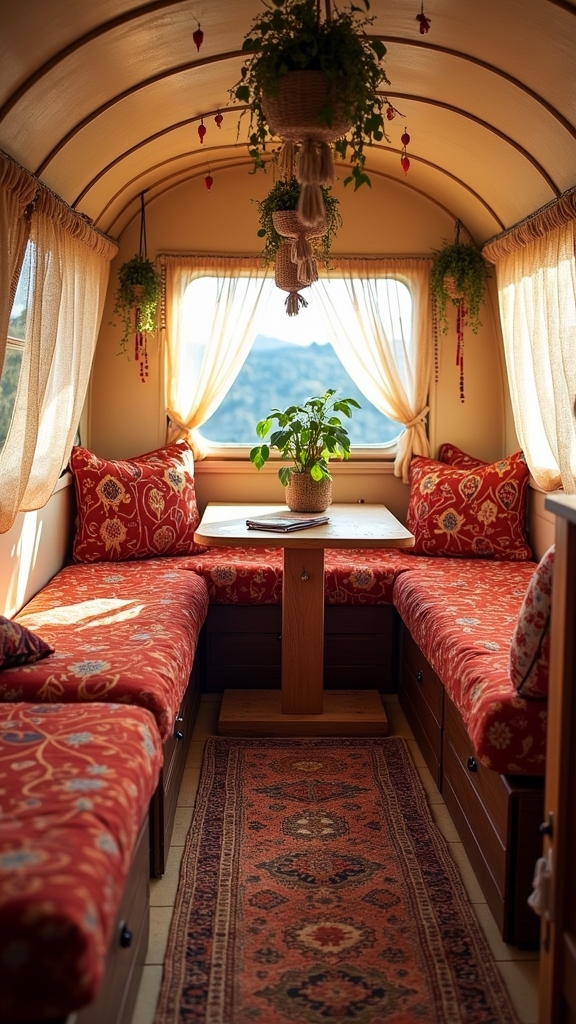
Space is the only resource in a camper that you genuinely cannot make more of. A collapsible table that folds flush against the wall buys you floor space during the day without sacrificing a dining surface at night.
Convertible beds with integrated storage underneath handle sleeping and organization in the same footprint, and fabric-covered ottomans with hidden compartments do double duty without looking like camping gear. The best convertible furniture doesn’t announce its functionality; it just quietly makes the space work.
Off-Grid Power System Aesthetics
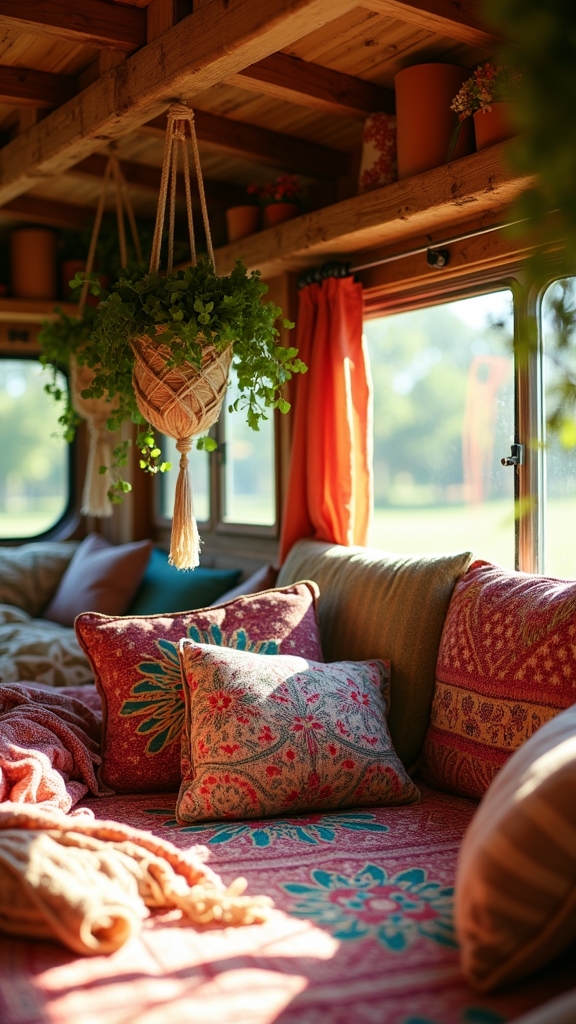
Solar panels and battery banks are non-negotiable for serious off-grid travel, but they don’t have to look like a tech installation. Tuck wiring and power components behind natural-toned panels, and choose battery monitors with clean, low-profile displays that sit flush rather than protruding from the wall.
Modular components in earthy matte finishes disappear into the interior rather than clashing with every handmade element around them. A rig that runs quietly off-grid and looks like it belongs in the space is the goal; anything else is a distraction.
Red Rock Influenced Design Elements
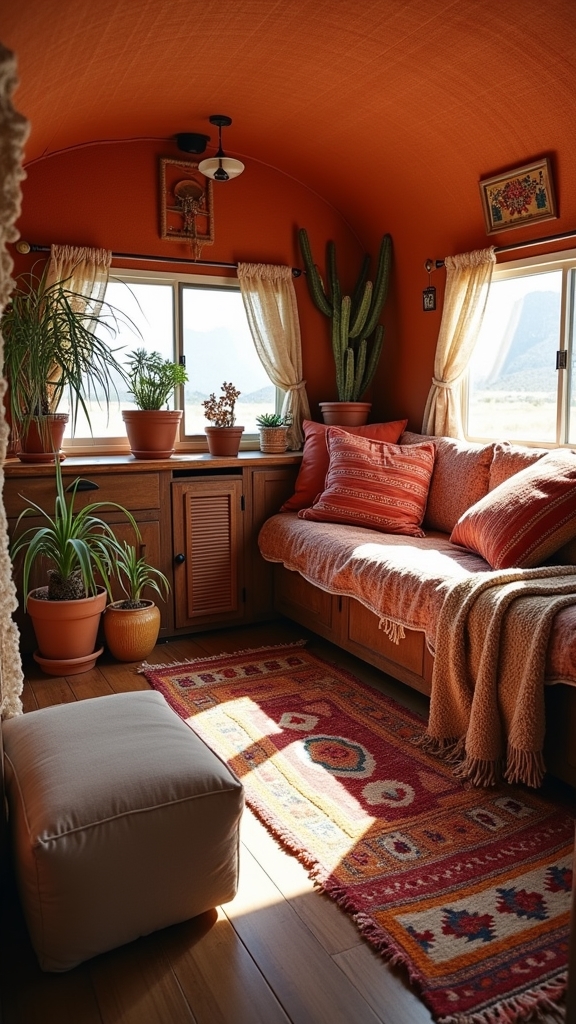
The iron-rich minerals in Sedona’s rock formations have been building that color palette for millions of years, and it translates surprisingly well indoors. Hematite-inspired deep reds and raw sandstone textures in upholstery and wall coverings capture the geological weight of the landscape without requiring a geology degree to pull off.
Terracotta-toned seat cushions and rust-streaked throw pillows bring the canyon walls inside in a way that feels intentional rather than touristy. Pair these with rough-textured surfaces wherever possible, because smooth finishes strip out the visual depth that makes the red rock palette so compelling.
Artisanal Storage Solutions
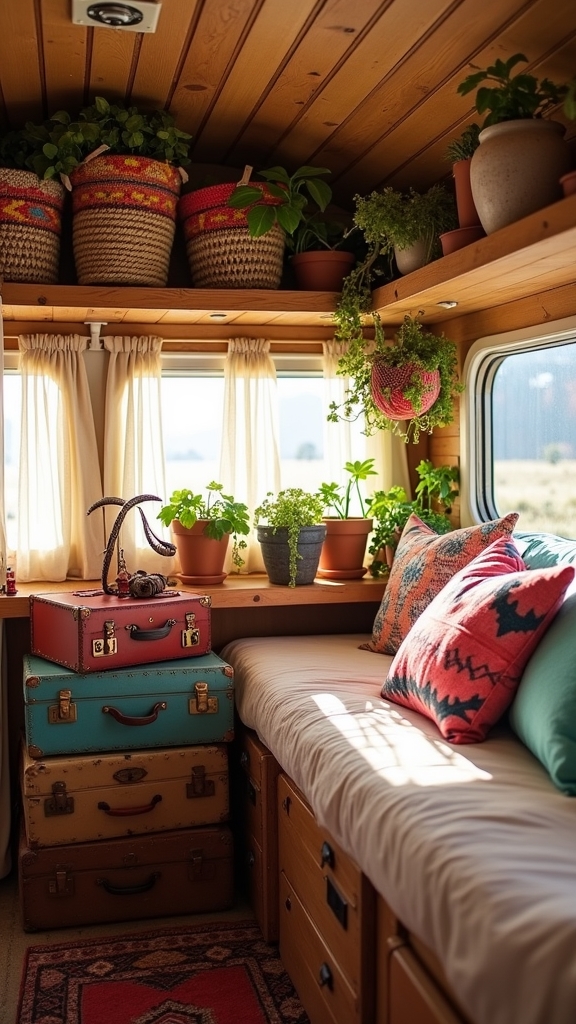
Storage in a boho camper should look like it belongs, not like it was bolted in as an afterthought. Woven baskets on open shelving keep frequently used items accessible while adding texture that no manufactured cabinet can match.
A hand-thrown ceramic jar for utensils, a macramé bag hung near the door for sunscreen and keys: these solutions do the same job as plastic organizers and make the space feel lived-in rather than staged. The best artisanal storage pieces are the ones that you’d keep even if you moved into a house.
Outdoor Living Space Extensions
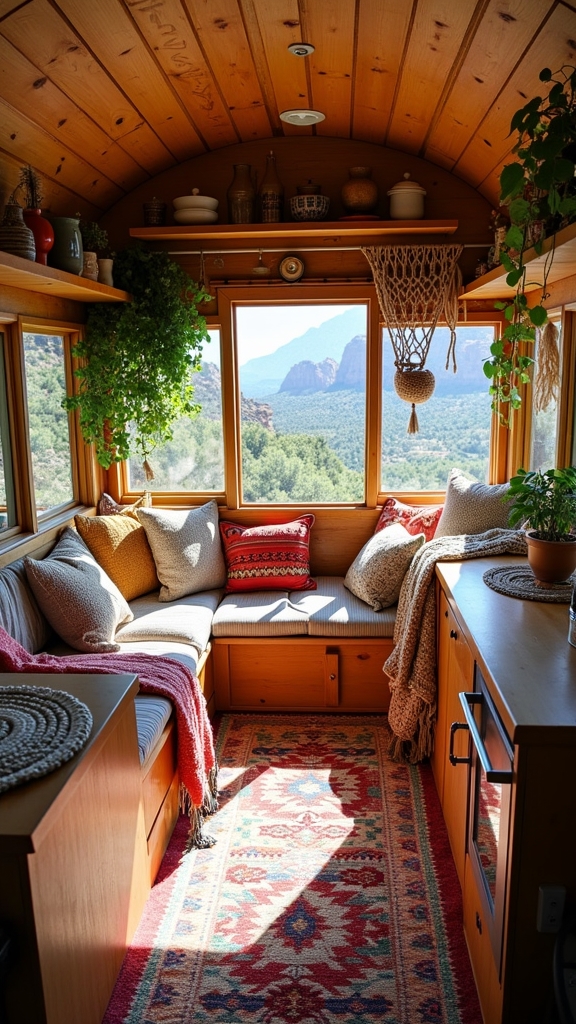
A good camp setup doesn’t stop at the camper door. Foldable chairs, a low weatherproof table, and a shade structure can turn a dirt patch into a proper outdoor room in about ten minutes of setup.
Dual-purpose storage benches placed outside the rig keep gear organized and provide seating without eating into the interior footprint. Solar string lights and warm-toned lanterns extend the usable hours of that space well past dark, which is where the best camp conversations always end up happening anyway.
Southwestern Pattern Applications
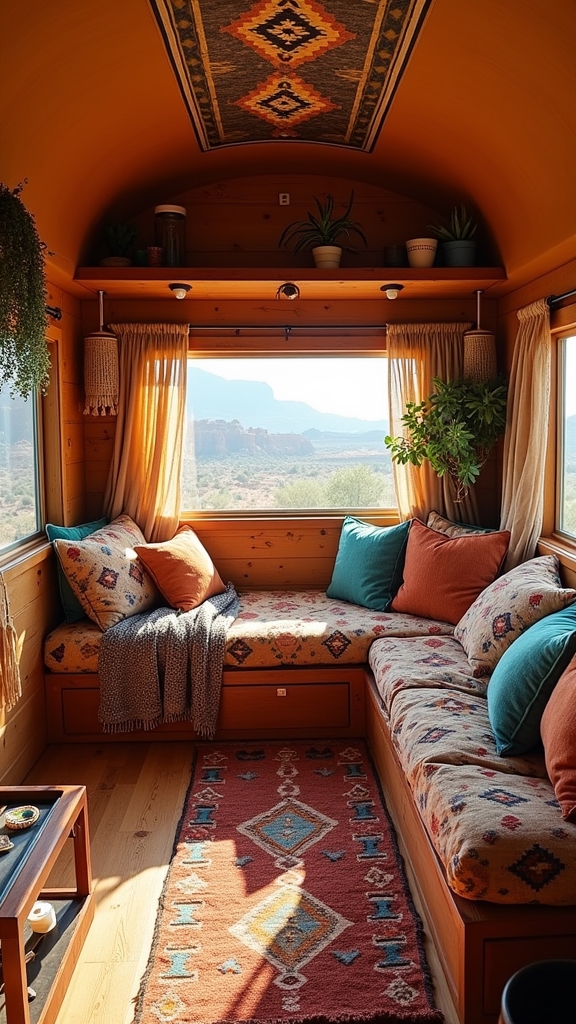
Geometric motifs have been part of Southwestern textile traditions for centuries, and they hold up in a camper interior for the same reason they’ve always worked: they’re bold enough to anchor a space without overwhelming it.
Diamonds, zigzags, and step patterns in terracotta, sand, and faded turquoise bring the desert landscape indoors in a way that’s culturally rooted rather than decorative shorthand. Layer a geometric rug under a more loosely patterned throw, and the two will actually balance each other rather than compete. The scale of the pattern matters as much as the color; larger motifs read better in the low ceilings of a small camper.
Sustainable Material Selections
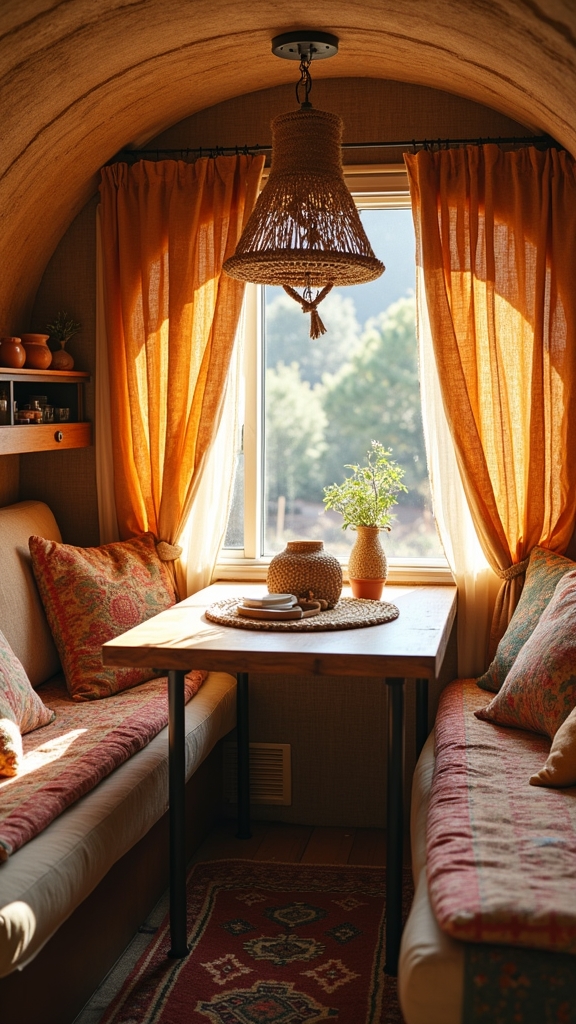
Reclaimed barn wood from the high desert carries a story that new lumber never will. You can see decades of sun and wind in the grain, and that history is exactly what gives a boho interior its texture and authenticity.
Bamboo organizers maximize drawer and shelf space without adding weight, which matters on a long drive through mountain passes. Sisal, seagrass, and jute floor coverings are tough enough for muddy boots and good-looking enough that you won’t want to cover them up with a mat.
Adventure-Ready Storage Systems
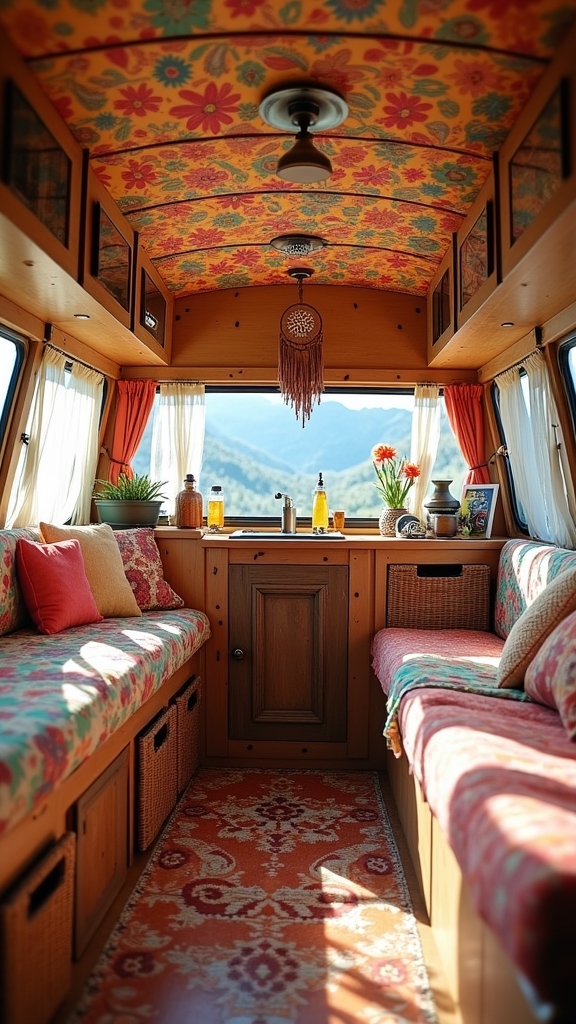
The difference between a comfortable trip and a miserable one often comes down to whether you can find your gear in the dark. Overhead cabinets near the door handle the lightweight daily essentials, headlamps, sunscreen, water filters, so they’re always within reach.
Built-in drawers under the sleeping platform swallow the bulky stuff: sleeping bags, extra layers, camp shoes. Organizing by frequency of use rather than by size is the system that actually holds up after a week on the road.
Cozy Sleep Space Configurations
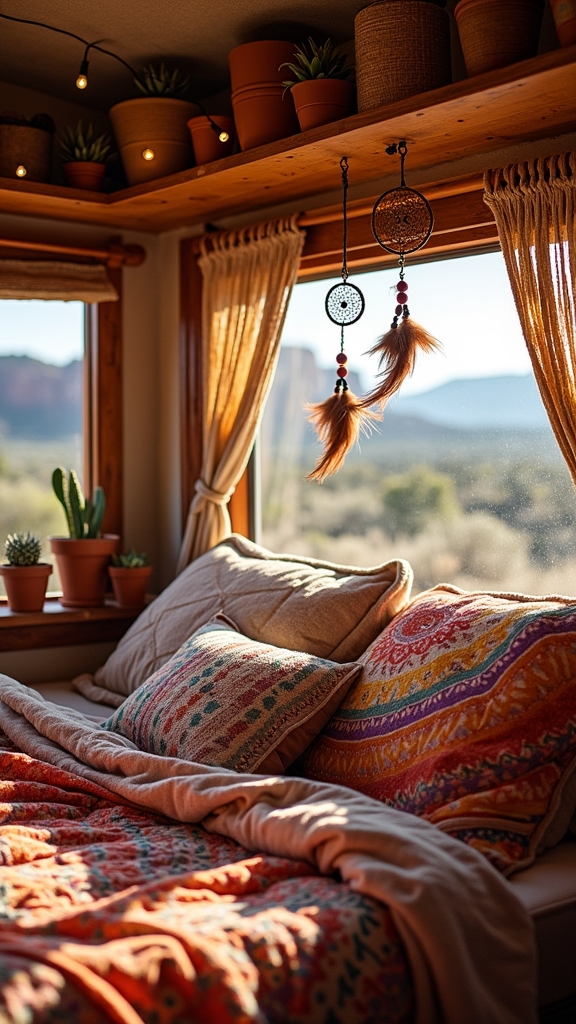
The sleeping area is where a small camper either wins or loses the long game. Crisp white sheets keep the space from feeling heavy, and a chunky knit blanket adds warmth without the bulk of a traditional comforter.
Mixed-pattern pillows in earthy tones layer in the boho aesthetic without requiring anything to match exactly, which is a relief when you’re picking pieces up from different markets over time. Rattan lamps and a strand of warm string lights handle nighttime illumination in a way that actually feels restful rather than institutional.
Native Plant-Inspired Color Schemes
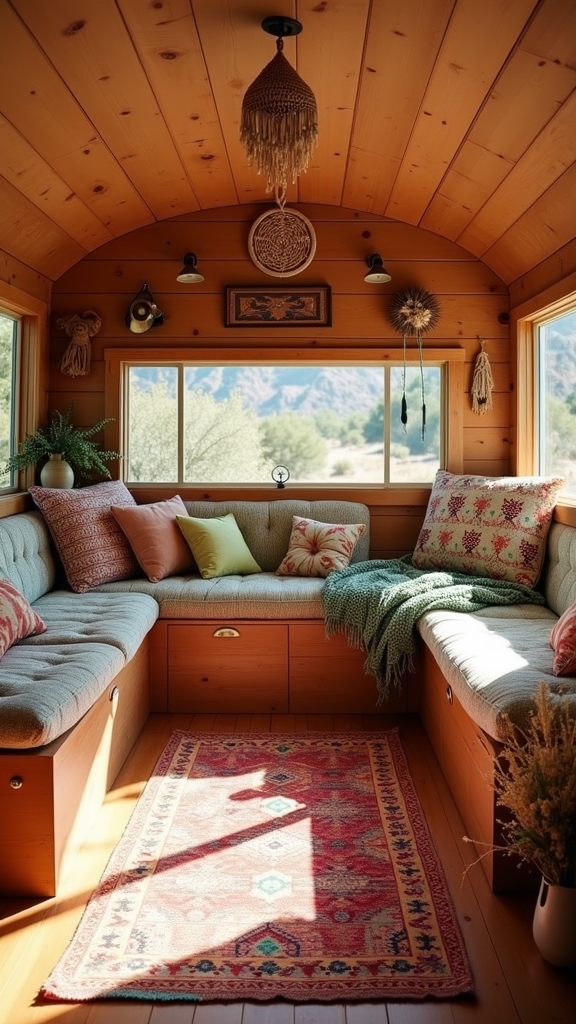
Sedona’s botanical palette is richer than most people realize until they slow down and actually look at it. Warm ochres from desert marigolds, the muted silvery green of sage, and deep juniper tones give you a full color story that goes well beyond red rock and sand.
Calming purples drawn from lupine and desert lavender prevent the palette from reading as too warm or too heavy. Ground the whole scheme with neutral earth tones so the botanical colors feel like accents rather than the whole conversation.
Minimalist Bohemian Kitchen Designs
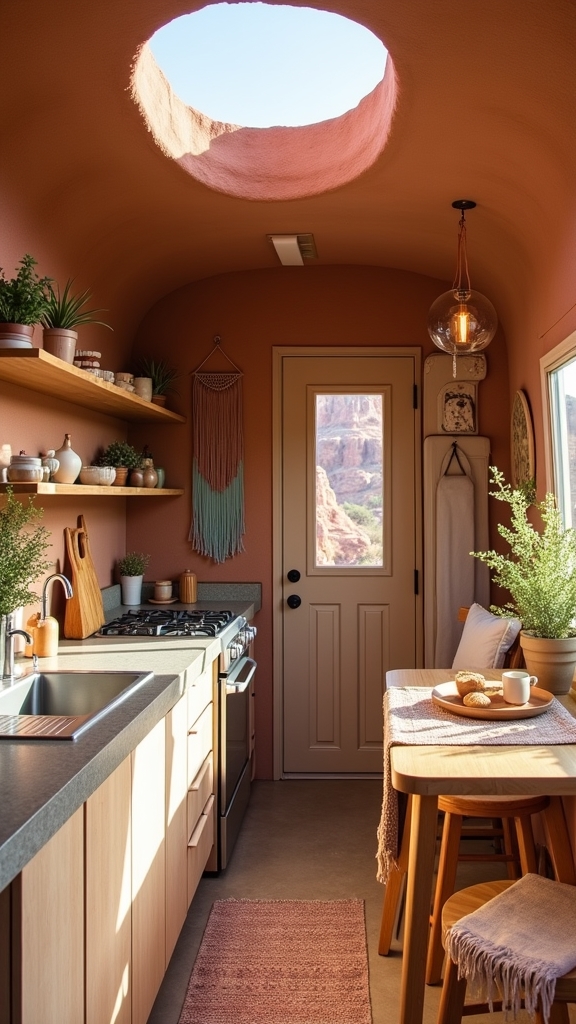
A small camper galley fails fast when it tries to do too much. Open shelving from reclaimed wood keeps things accessible and gives ceramic dishes and handmade mugs somewhere to live where you can actually see and reach them.
A macramé plant holder with a few fresh herbs near the window pulls in something living, which changes the entire feel of a cooking space. Compact appliances and multi-purpose storage keep the footprint tight, and a clean countertop at the end of the day makes the whole kitchen feel twice as large as it is.
Rustic Hardware and Accent Pieces
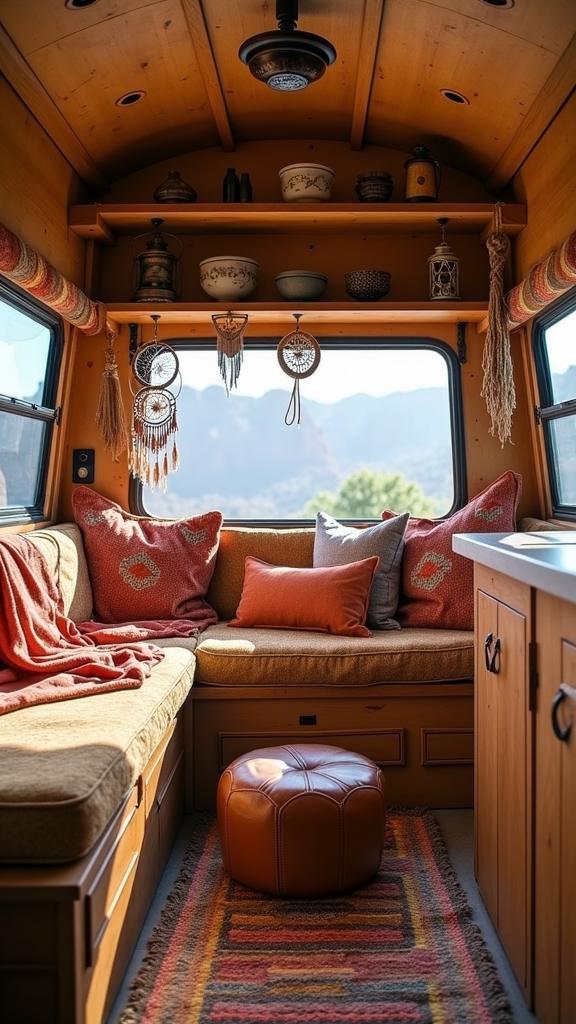
Cabinet pulls and drawer hardware are small decisions that carry disproportionate visual weight. Reclaimed wood handles, vintage-style iron fasteners, and matte earth-toned metal accents do more for a boho interior than any amount of decorative wall art.
A vintage lantern that actually gets used on camp nights, a hand-thrown bowl that holds fruit during the drive: these are the pieces that make a space feel inhabited rather than assembled. Nothing here needs to be precious, and the best accent pieces usually aren’t.
Nature-Connected Window Treatments
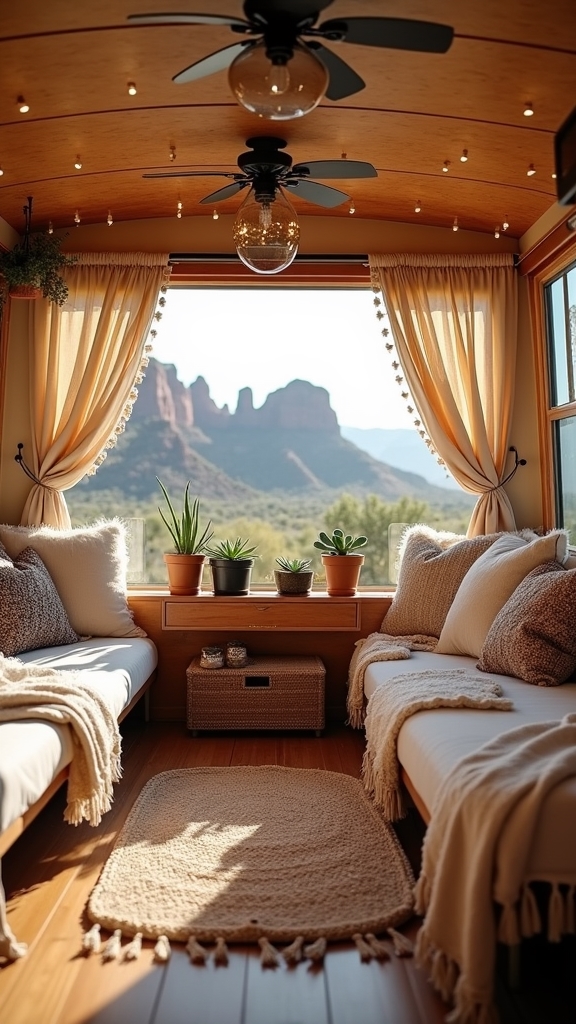
Windows are where a lot of camper builds get lazy, and it shows. Jute and bamboo shades handle light control with the right texture while avoiding the cave effect that heavy blackout curtains create in a small space.
Layering a sheer panel over the shade gives you privacy and light in the same window treatment, which matters when you’re parked close to other campers. Handmade macramé tiebacks finish the look and give you something functional to grab onto when you’re adjusting things one-handed in the morning.
Organic Texture Layering Techniques
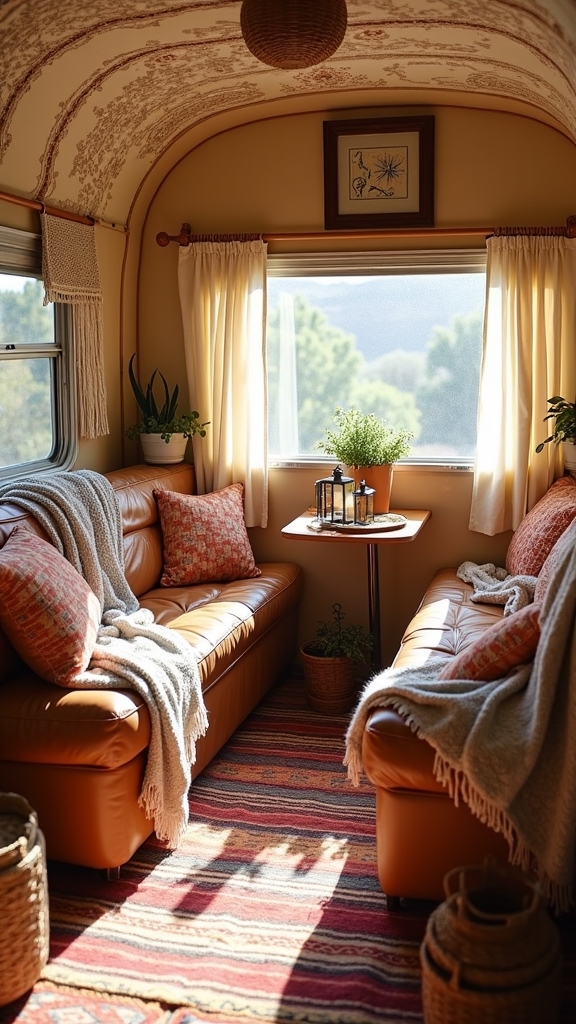
Texture is what separates a flat, lifeless interior from one that actually invites you to sit down and stay awhile. Start with a jute or wool rug as the base layer, then build upward with cotton throws and mismatched pillows until the sleeping and seating areas feel genuinely comfortable.
Raw wood shelving and woven baskets add mid-level texture that catches the eye without demanding attention. Macramé plant holders and handmade dreamcatchers work at the upper register of the space, drawing the eye upward and making low ceilings feel less oppressive.
Local Artisan Crafted Details
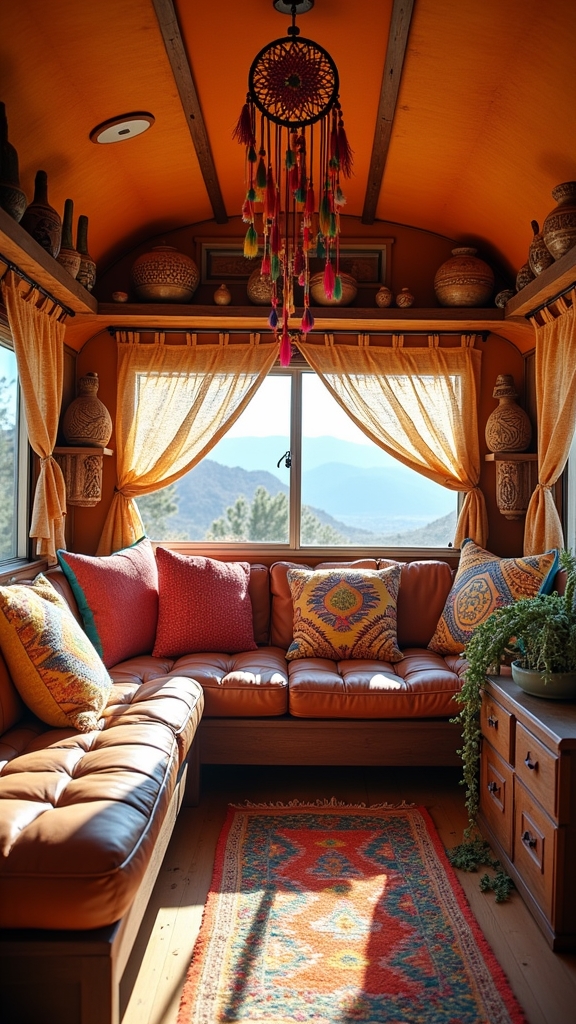
The most interesting camper interiors borrow from the culture of the places they actually travel through. Native American-inspired textiles, hand-carved wooden accents, painted tiles picked up from a local market: these pieces carry weight that manufactured decor simply doesn’t.
A woven rug from an artisan in Sedona tells a better story than anything ordered from a catalog, and it holds up better too, because the person who made it knew what they were doing. Spending money with local craftspeople also keeps resources in the communities whose landscapes and traditions inspire the whole aesthetic in the first place.