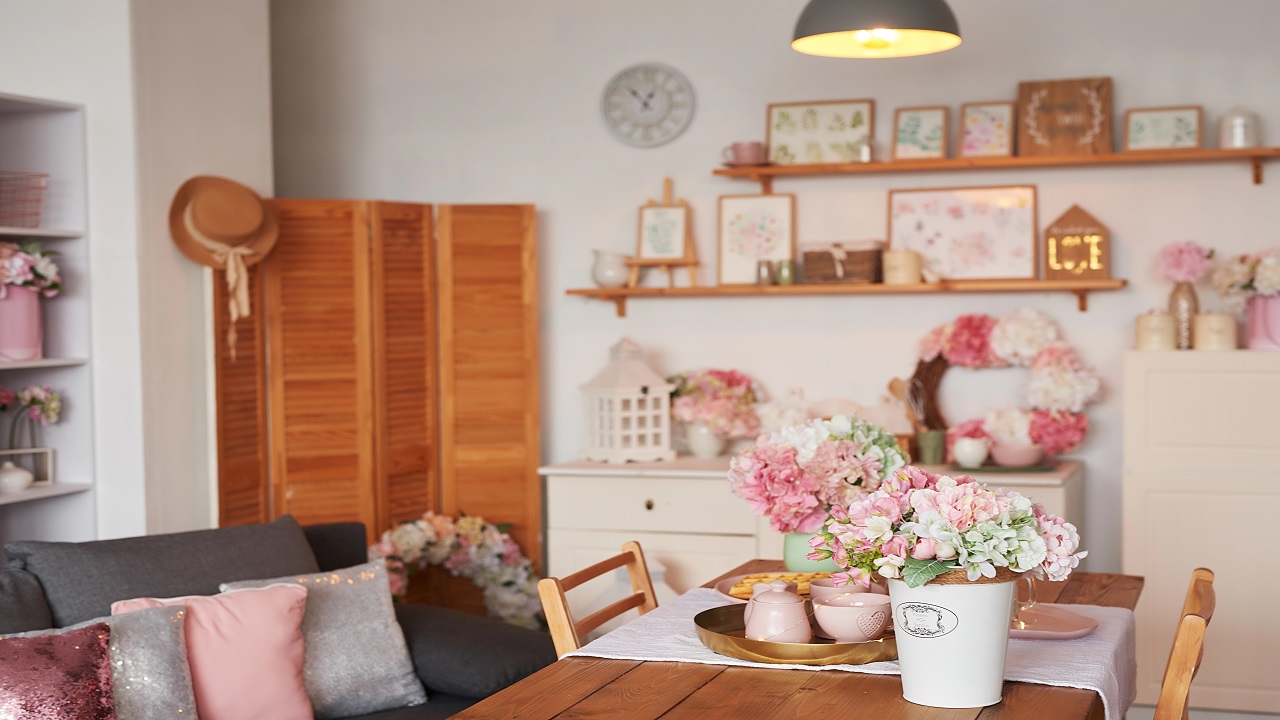
Sixty-eight percent of campervan owners say storage is their biggest headache on the road, and after years of living out of vans myself, I believe it. You pack smart, you cull ruthlessly, and somehow you still can’t find your headlamp.
The problem usually isn’t too much gear; it’s too many dead zones masquerading as usable space.
Once you start seeing your van the way a ship’s carpenter sees a hull, the hidden spots reveal themselves fast. These 15 are the ones most people walk right past.
Contents
- 1 The Secret World Under Your Mattress
- 2 Ceiling Nets: Your Overhead Storage Haven
- 3 Hidden Compartments Above Gas Bottles
- 4 Magnetic Solutions for Vertical Metal Surfaces
- 5 Under-Floor Storage Compartments
- 6 Backdoor Organization Systems
- 7 Convertible Furniture Storage Tricks
- 8 Mason Jar Wall Systems
- 9 Vacuum-Sealed Storage Solutions
- 10 Hidden Storage Behind False Vents
- 11 Multi-Purpose Ottoman Spaces
- 12 External Storage Box Secrets
- 13 Utilizing the Space Above Cabinet Tops
- 14 Clever Under-Sink Organization
- 15 Transform Dead Space Behind Cabinet Panels
The Secret World Under Your Mattress
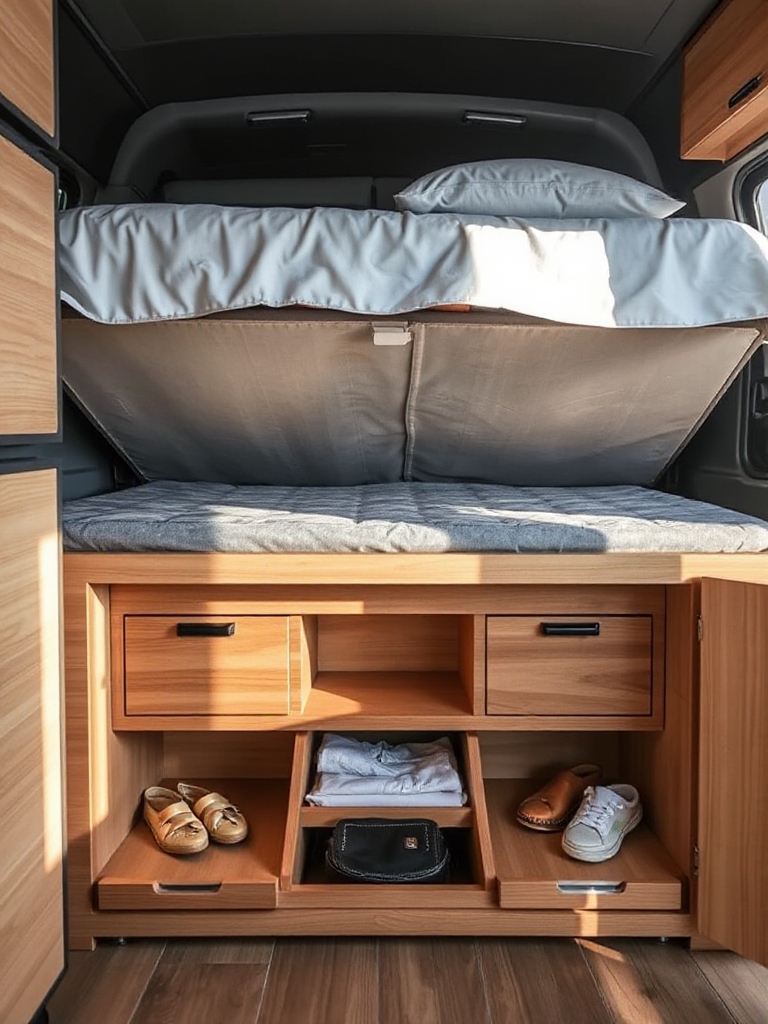
The bed platform is the most underused real estate in any build, and most people never touch it beyond tossing a few stuff sacks underneath.
Custom slide-out drawers change that completely, turning a dark void into something you can actually navigate at 6 a.m.
Add pull-out shelves along the sides if your platform height allows it. Vacuum bags handle bulky items like sleeping bag backups and off-season layers without eating up usable compartments.
SEE THIS: 13 Campervan Storage Ideas That Look Custom-Built!
Ceiling Nets: Your Overhead Storage Haven

A basic cargo net strung between two roof ribs holds more than you’d expect, and it weighs almost nothing. Anchor into actual structural supports, not just the headliner, or you’ll regret it the first time you brake hard on a gravel road.
I keep hats, light rain gear, and a fleece up there on a rotating basis. It’s not glamorous storage, but it’s space you were already paying for.
SEE THIS: 22 RV Storage Ideas That Double as Decor!
Hidden Compartments Above Gas Bottles
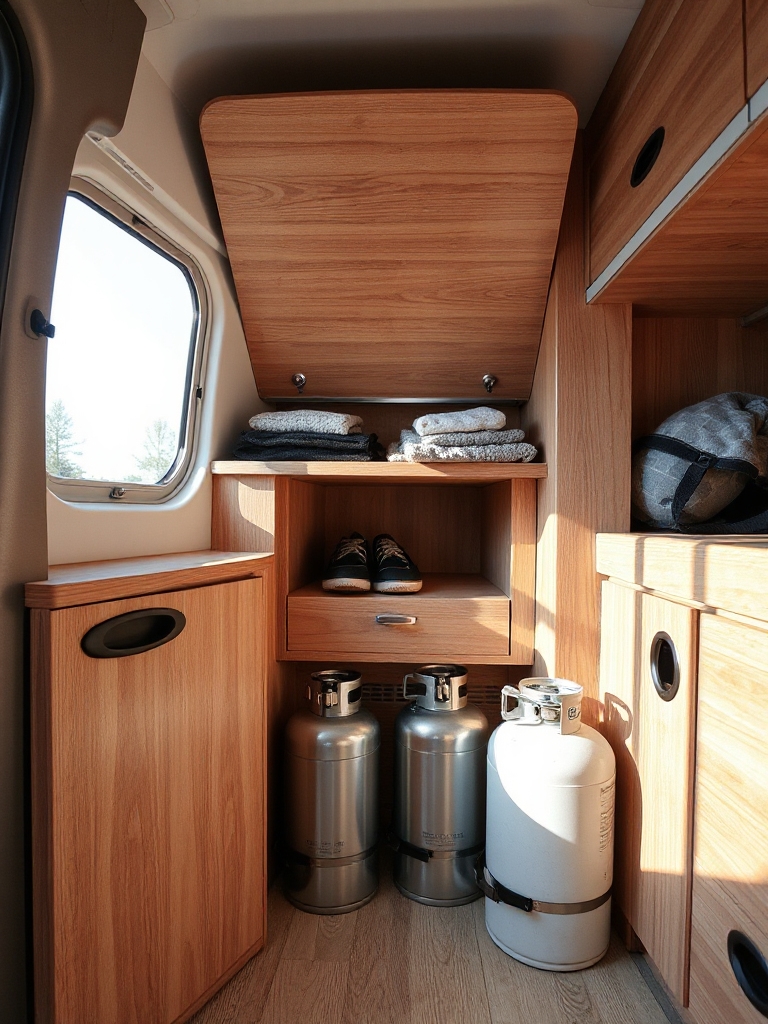
The cavity above the gas bottle locker is often sealed off and forgotten, but with some careful framing and a removable panel, it becomes a legitimate compartment. Use non-combustible materials and keep the ventilation path clear without question, because access for bottle inspections isn’t optional.
Store documents, a small toolkit, or anything flat and infrequently needed. Done right, it’s one of the most discreet storage wins in any build.
SEE THIS: 19 Space-Saving Hacks for Tent Camping Storage!
Magnetic Solutions for Vertical Metal Surfaces
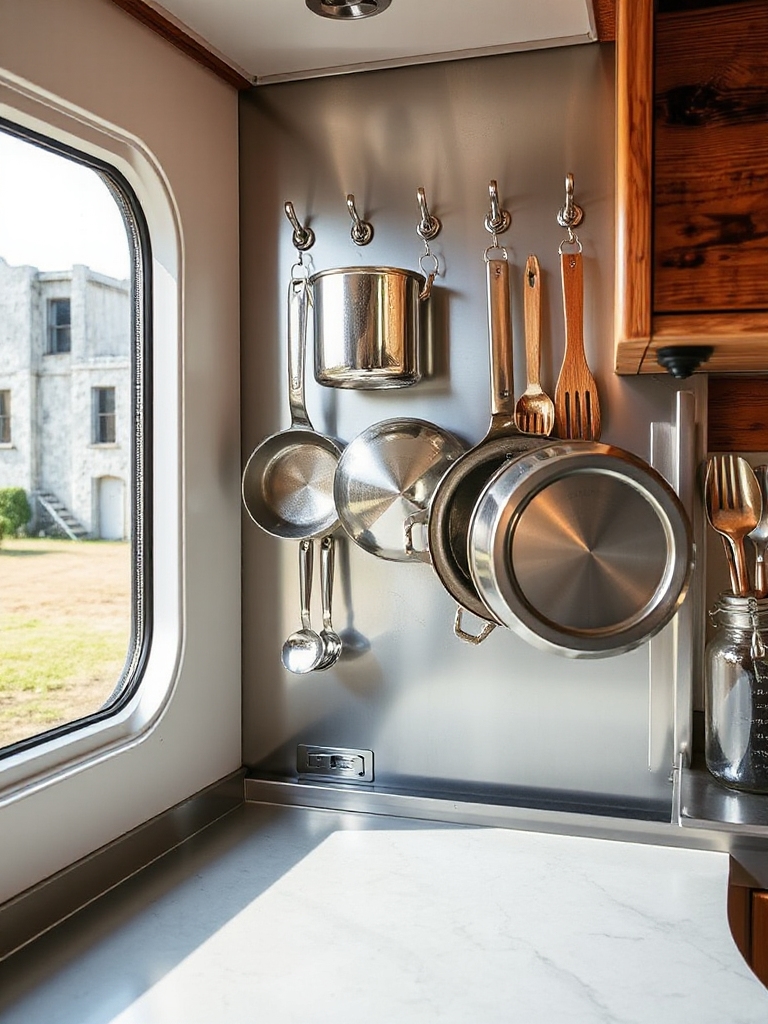
Any exposed steel surface in your van is a storage surface waiting to happen. Heavy-duty magnetic hooks rated for 40-plus pounds handle tools and cooking utensils without drama, while smaller ones keep towels and cords from wandering.
Magnetic spice tins work surprisingly well on a galley wall and free up an entire cabinet shelf. Keep the layout intentional so things don’t migrate every time you hit a bumpy track.
SEE THIS: 17 Clever Car Camping Storage Ideas You Will Love!
Under-Floor Storage Compartments
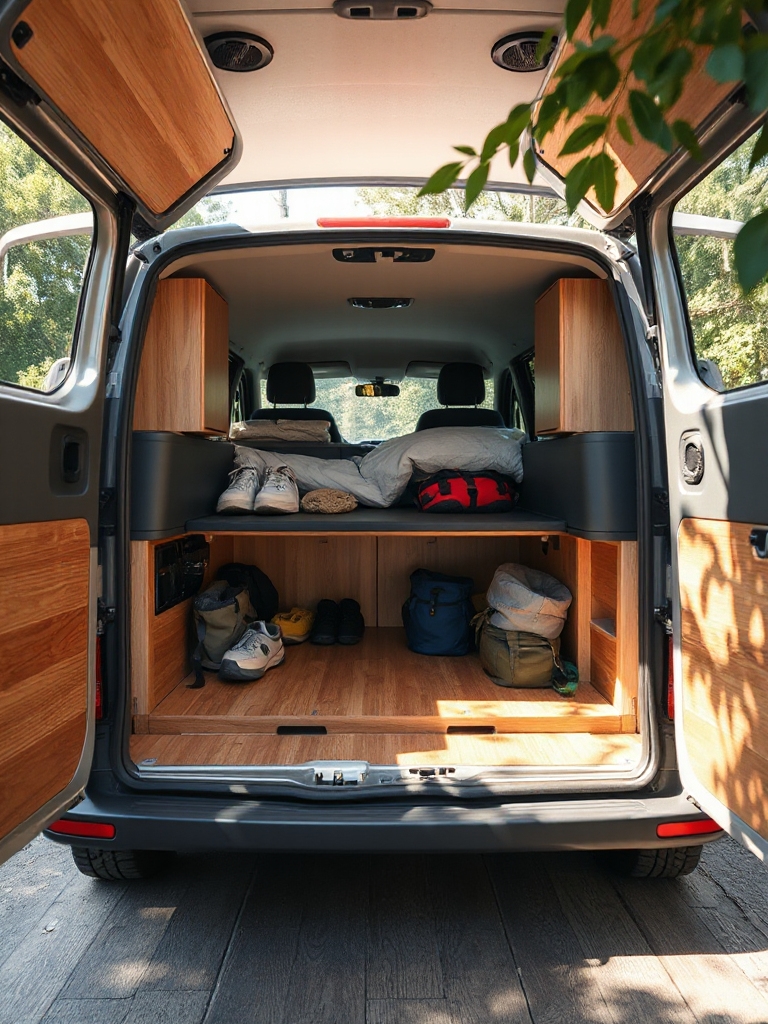
Rear-access floor compartments, the kind you flip open from a hatch in the cargo area, are built for the heavy and the dirty. Modern options run from about 18 to 44 liters, and the good ones use rigid honeycomb board that won’t crack when you throw a wet pair of boots on top.
Mount them properly with brackets so they sit flush and don’t shift under load. This is where recovery gear, tow straps, and the stuff you never want to think about until you desperately need it should live.
Backdoor Organization Systems
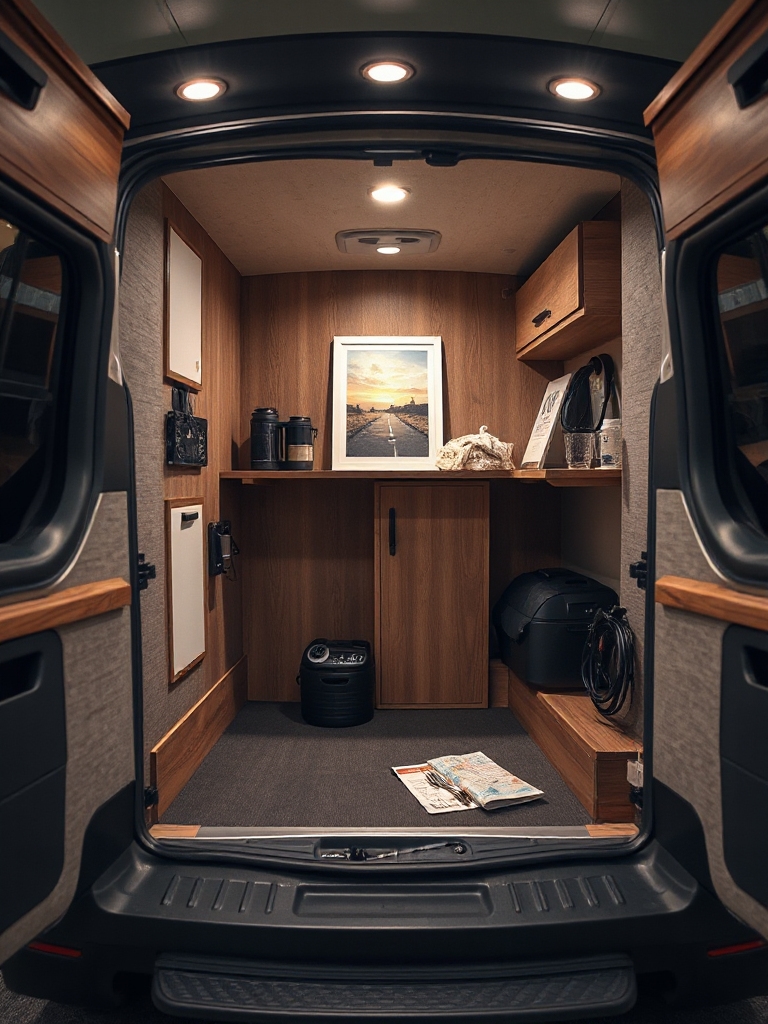
Every square inch of your rear doors is vertical space, and vertical space is gold in a van. Tiered mesh pouches handle cables, small tools, and the random daily-use items that otherwise end up loose on the floor.
A cargo net stretched across the upper portion holds bulkier items without requiring dedicated cabinetry. Treat the back door as its own organized zone and you’ll stop digging through bags every time you need something obvious.
Convertible Furniture Storage Tricks
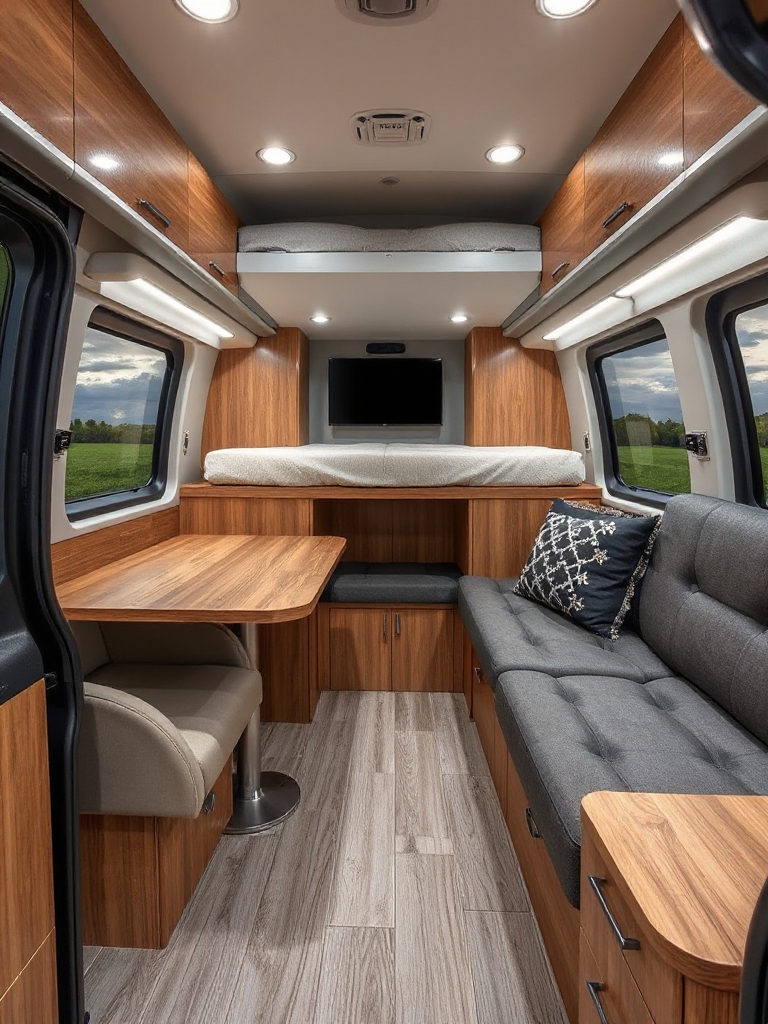
A bench seat with a hinged lid or under-seat drawers pulls double duty, unlike single-purpose furniture. Fold-out tables with built-in trays or cubbies take up no extra floor space but add meaningful surface area when you need it.
Ottomans work especially well in van builds because they shift around the space depending on the configuration you need that day. If a piece of furniture is only doing one thing, it needs to justify its weight.
Mason Jar Wall Systems
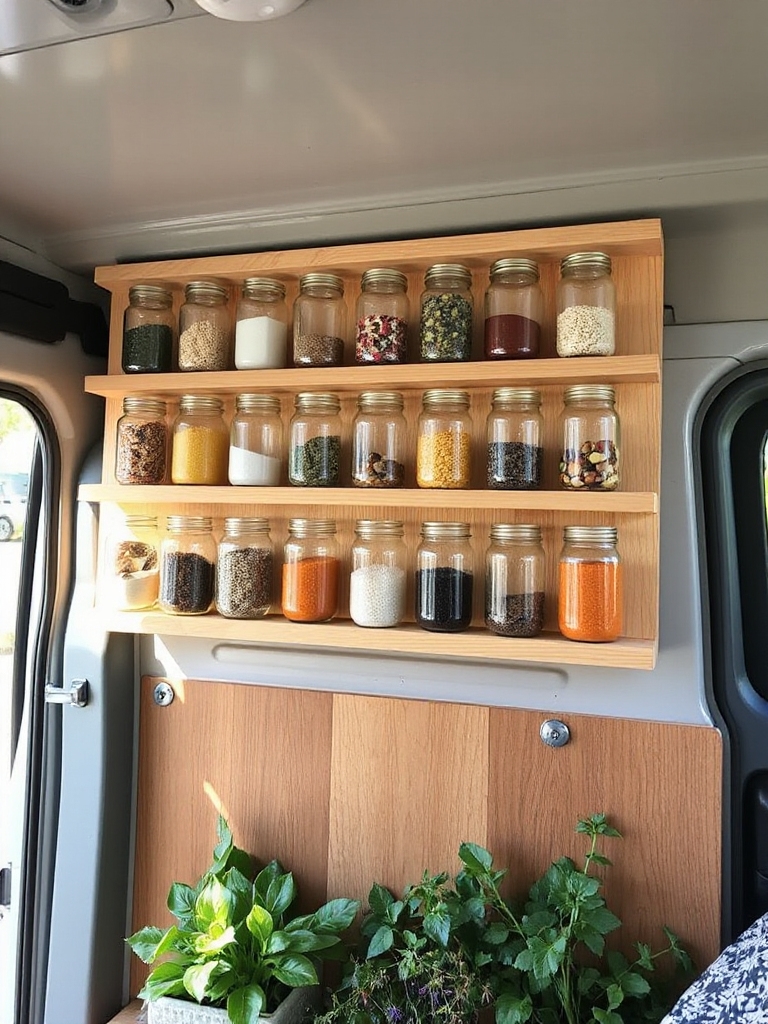
Mounted mason jars look good and actually function, which isn’t always the case with van interior ideas you see online. Dry goods, spices, coffee, and tea all stay visible and airtight behind a single panel of wall space.
Mount the lids to a board first, then screw the jars in, and check the mounts every few weeks because vibration is relentless. It’s a small system, but it eliminates an astonishing amount of cabinet clutter.
Vacuum-Sealed Storage Solutions
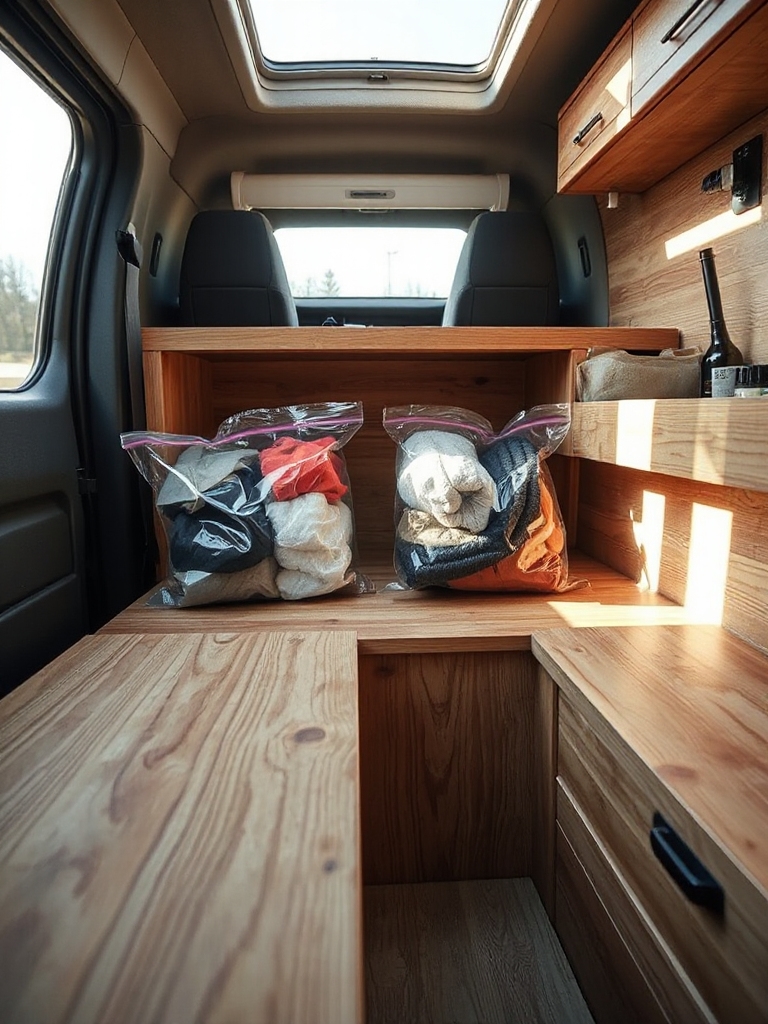
Bulky items like spare bedding, off-season layers, and backup clothing are the first things to steal space you don’t have. Vacuum bags compress all of it into flat, stackable packages that slide neatly under the bed platform or into overhead compartments.
Label each bag clearly because once it’s sealed, everything looks the same from the outside. Rotate them seasonally, and you’ll be surprised how much breathing room opens up in the rest of your storage.
Hidden Storage Behind False Vents
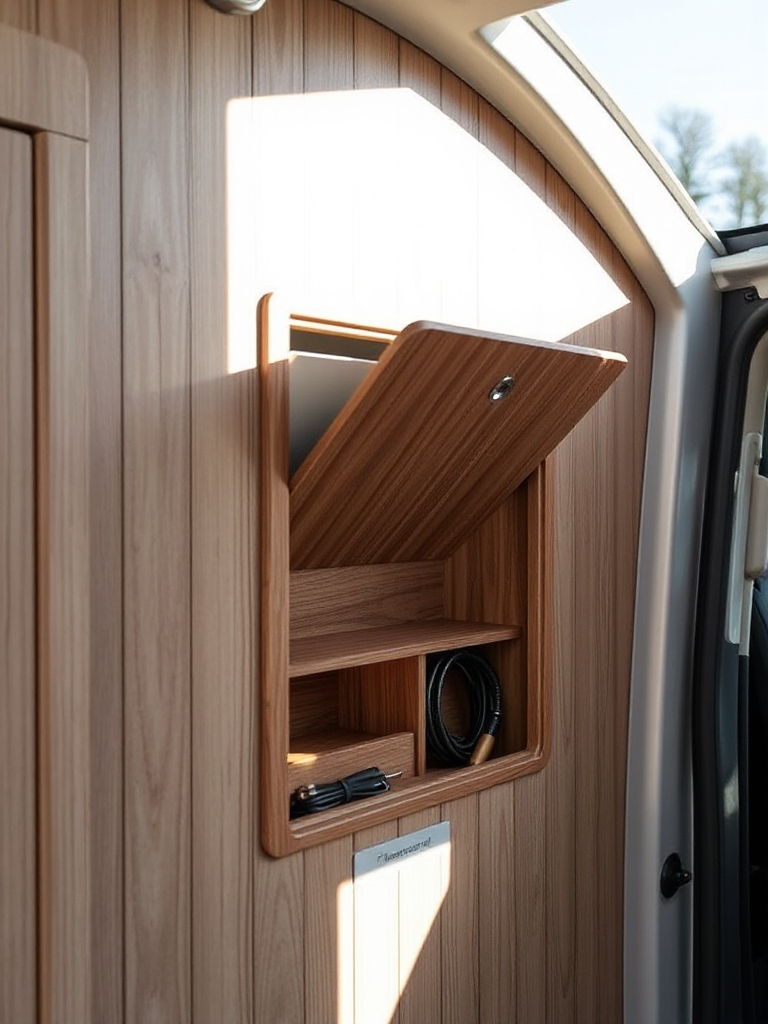
Dead wall cavities behind dashboard panels or rear interior walls can be converted into shallow concealed compartments without major surgery. These aren’t for everyday items; they’re for documents, a spare key, or emergency cash that you want tucked away and genuinely protected.
The trick is building the access panel so it looks deliberate rather than like an afterthought. Done right, most people who ride in your van will never know it’s there.
Multi-Purpose Ottoman Spaces
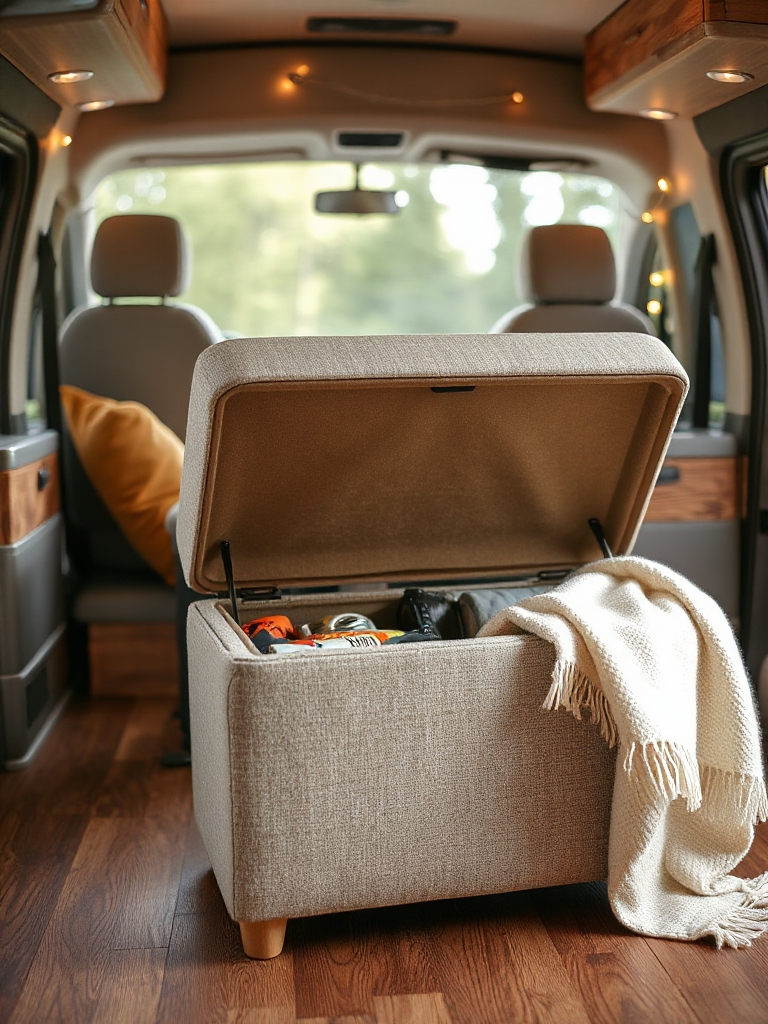
An ottoman earns its floor space in a van the moment it stops being just a footrest. The best ones open up to swallow utensils, small tools, or a first aid kit while still functioning as extra seating when you have company.
Collapsible versions fold flat when you need the floor space, which matters more in a 60-square-foot living area than it ever would in a house. Position one near the rear doors and it doubles as a step and a staging surface when you’re loading gear.
External Storage Box Secrets

Anything wet, muddy, or fuel-adjacent should live outside the van, and a quality roof or rear-mounted box makes that easy. Look for aluminum construction with solid gaskets rather than plastic with rubber strips that crack after a season in the sun.
A well-sealed external box protects gear through serious weather, which matters when you’re parked on a coast in November. It also keeps the inside of your van smelling like a home rather than a gear closet.
Utilizing the Space Above Cabinet Tops
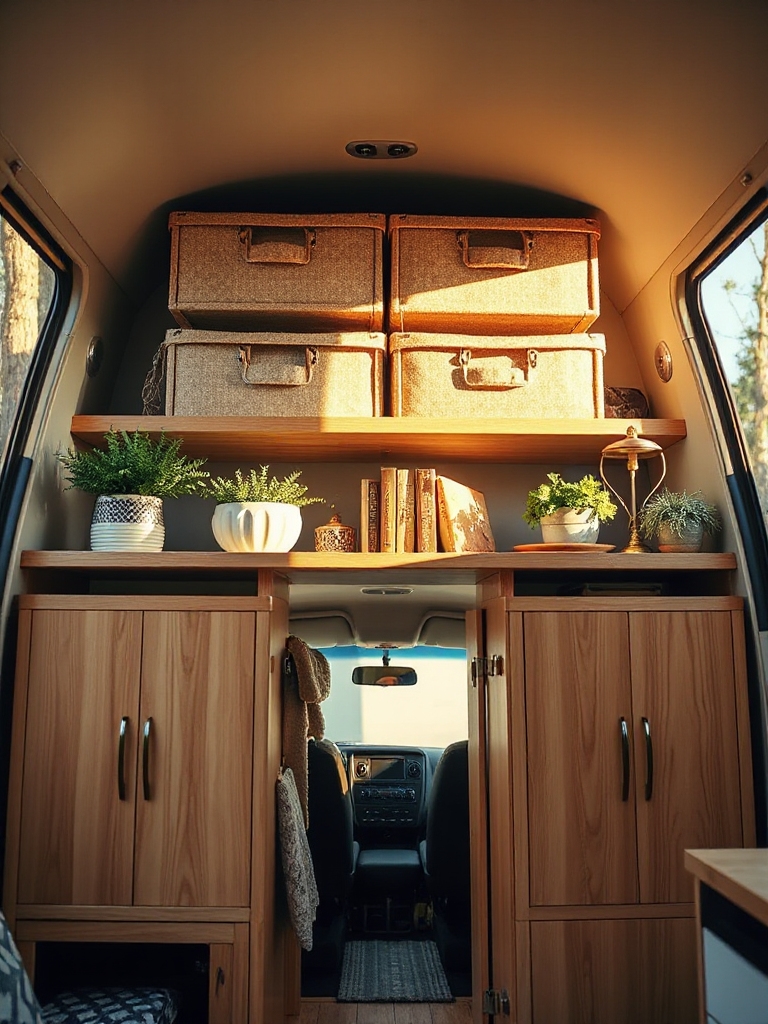
The gap between cabinet tops and the ceiling is dead space in most builds, but overhead lockers or simple fabric bins mounted up high reclaim it fast. Books, rolled maps, light camp gear, anything that you reach for occasionally rather than daily, works well up there.
Install collapsible fabric cabinets if your ceiling curve makes fixed cabinetry awkward, because they compress flat when the space isn’t needed. Folding hooks along the front edge add one more layer of quick-access storage without any real construction.
Clever Under-Sink Organization
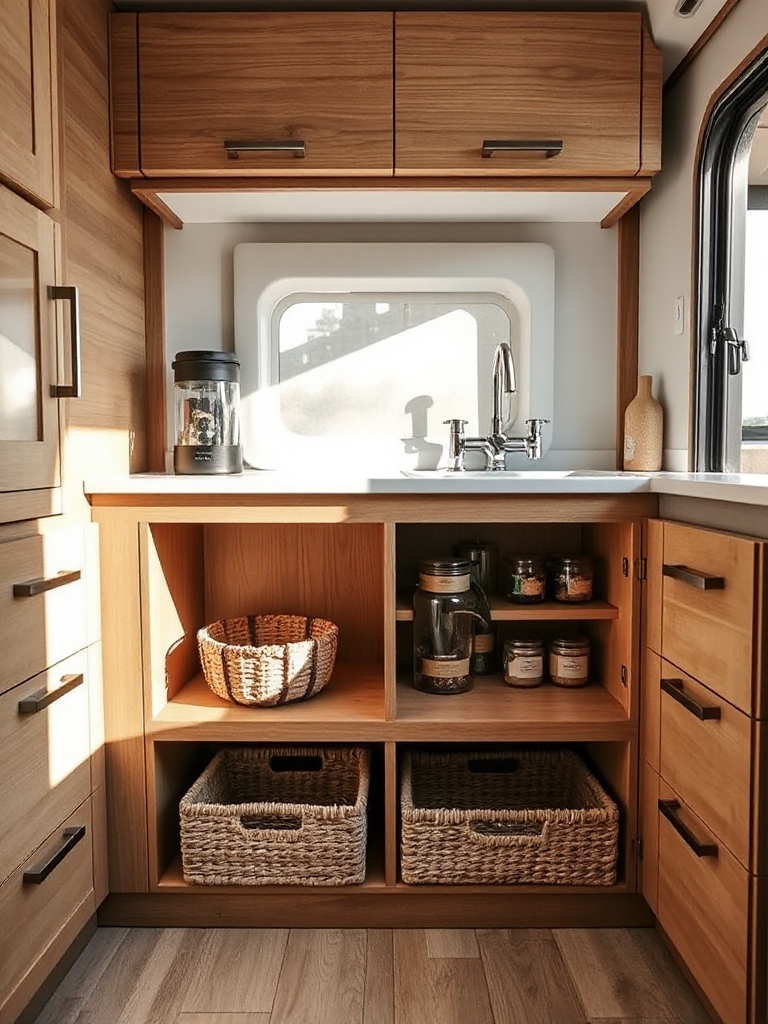
The under-sink cavity fights you for every inch because the plumbing is always in the way, but retractable drawers and over-pipe racks solve most of it. Stackable containers keep cleaning supplies corralled, and vertical dividers stop bottles from tipping into each other every time you round a corner.
Adjustable shelves are worth the extra effort here because your supplies change from trip to trip. A bit of thought under the sink frees up cabinet space elsewhere that you can actually use for something better.
Transform Dead Space Behind Cabinet Panels
The narrow void behind cabinet panels is easy to miss because it looks like a structure rather than storage. Slide-out trays or vertical channels fitted into that gap handle flat items, spare parts, and small tools that don’t belong in your main drawers.
Hook fasteners on a concealed panel let you reconfigure the system without tools, which matters when your needs shift between trips. It’s not the most exciting storage upgrade, but recovering hidden inches in an existing build costs almost nothing.
More tips…
Every one of these solutions came out of a real problem someone solved on the road, or that I solved myself after a frustrating night of digging through a disorganized van.
Start with the spaces you walk past without seeing, the bed platform, the back doors, the wall above the stove, and the rest gets easier from there. A well-organized van isn’t about having less stuff; it’s about knowing exactly where everything is at midnight in a rainstorm.