Your feet take a beating on the trail, so what you put on them matters more than almost any other piece of gear. The debate between hiking boots and trail runners has been going on for years, with passionate advocates on both sides.
Boots offer ankle support and durability, while trail runners promise speed and comfort with less weight. The right choice depends on where you hike, how much weight you carry, and what feels good on your feet after mile five. Here’s how to figure out which one that is.
Contents
- 1 Weight Comparison: Hiking Boots vs. Trail Runners
- 2 Traction and Grip: What to Consider
- 3 Comfort Levels: Which Offers More?
- 4 Durability and Lifespan of Footwear
- 5 Terrain Suitability: Choosing the Right Option
- 6 Design and Materials: Key Differences
- 7 User Needs: Ankle Support and Foot Shape
- 8 Cost Analysis: Long-Term Investment
- 9 Weather Considerations: Which Performs Better?
Weight Comparison: Hiking Boots vs. Trail Runners
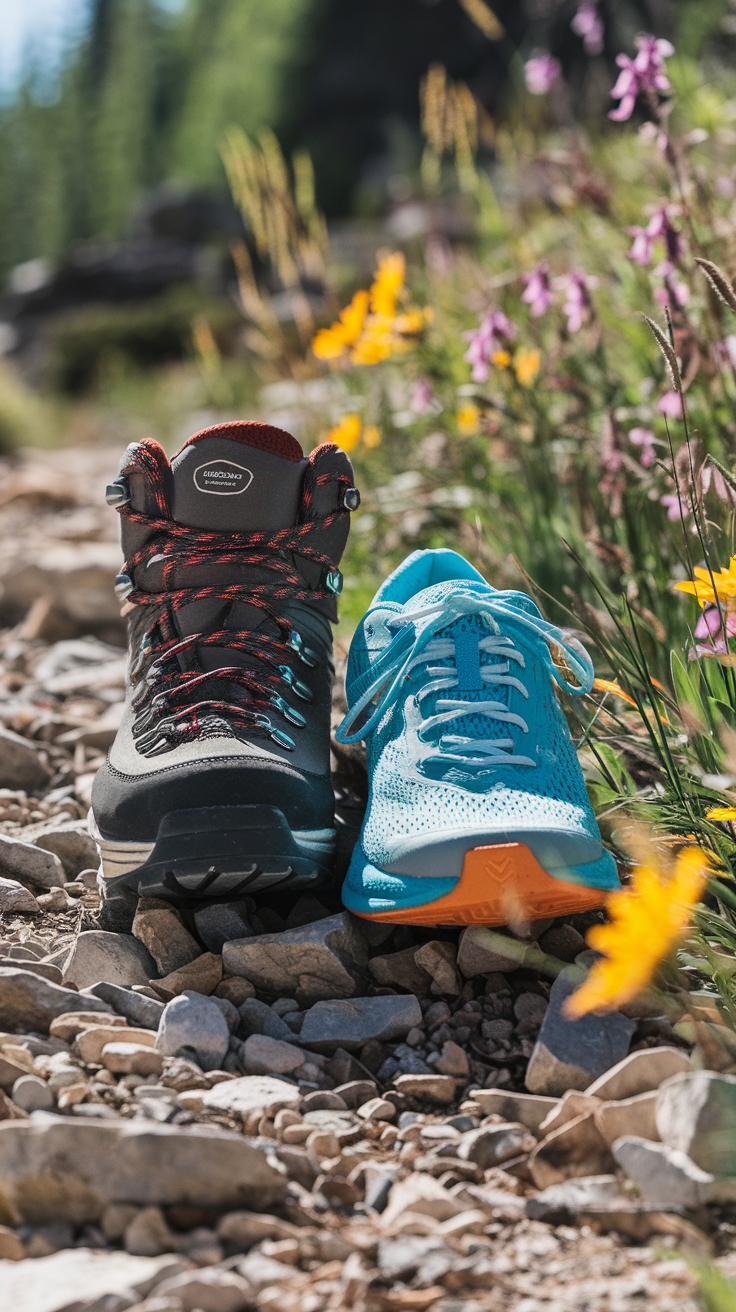
Trail runners typically weigh between 20 and 25 ounces per pair, while hiking boots can hit 40 ounces or more. That difference adds up over the course of a long day, with lighter shoes requiring less energy to lift with each step.
Studies suggest that one pound on your feet equals about five pounds on your back in terms of energy expenditure. Trail runners also dry faster when they get wet, which matters more than you might think for overall comfort.
Traction and Grip: What to Consider
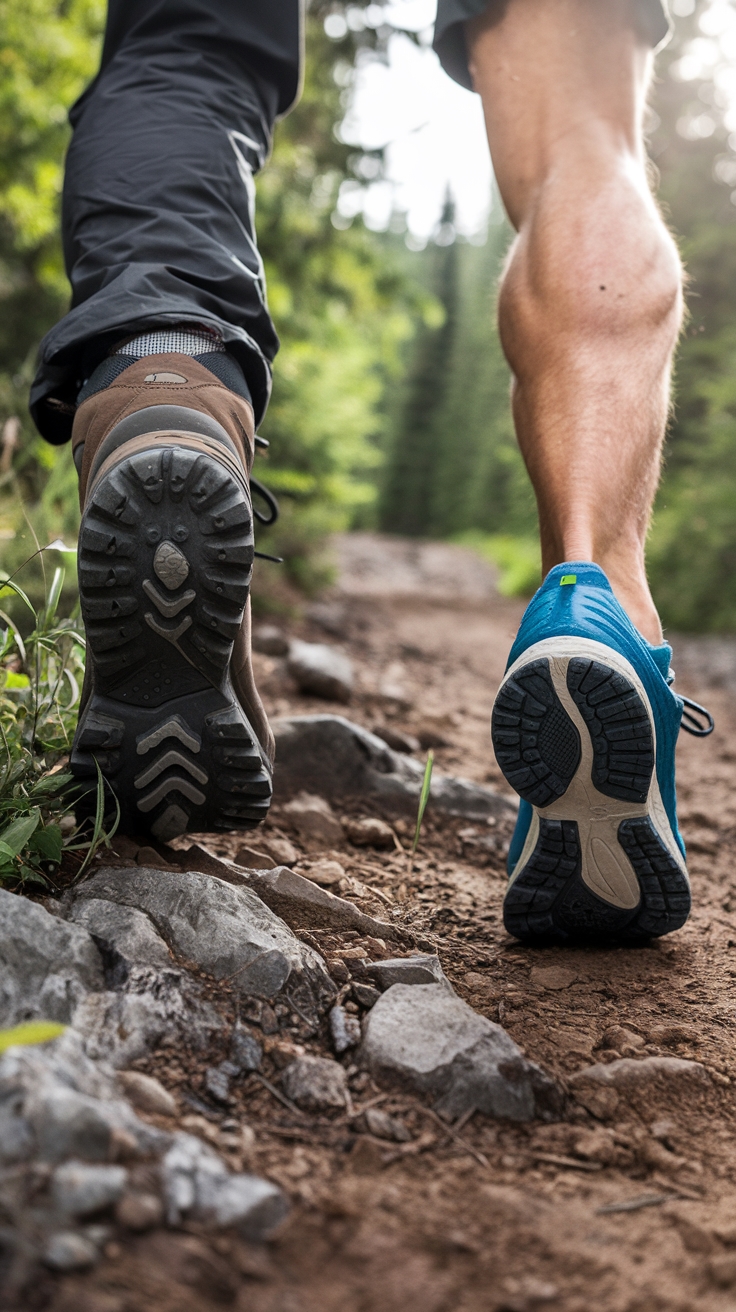
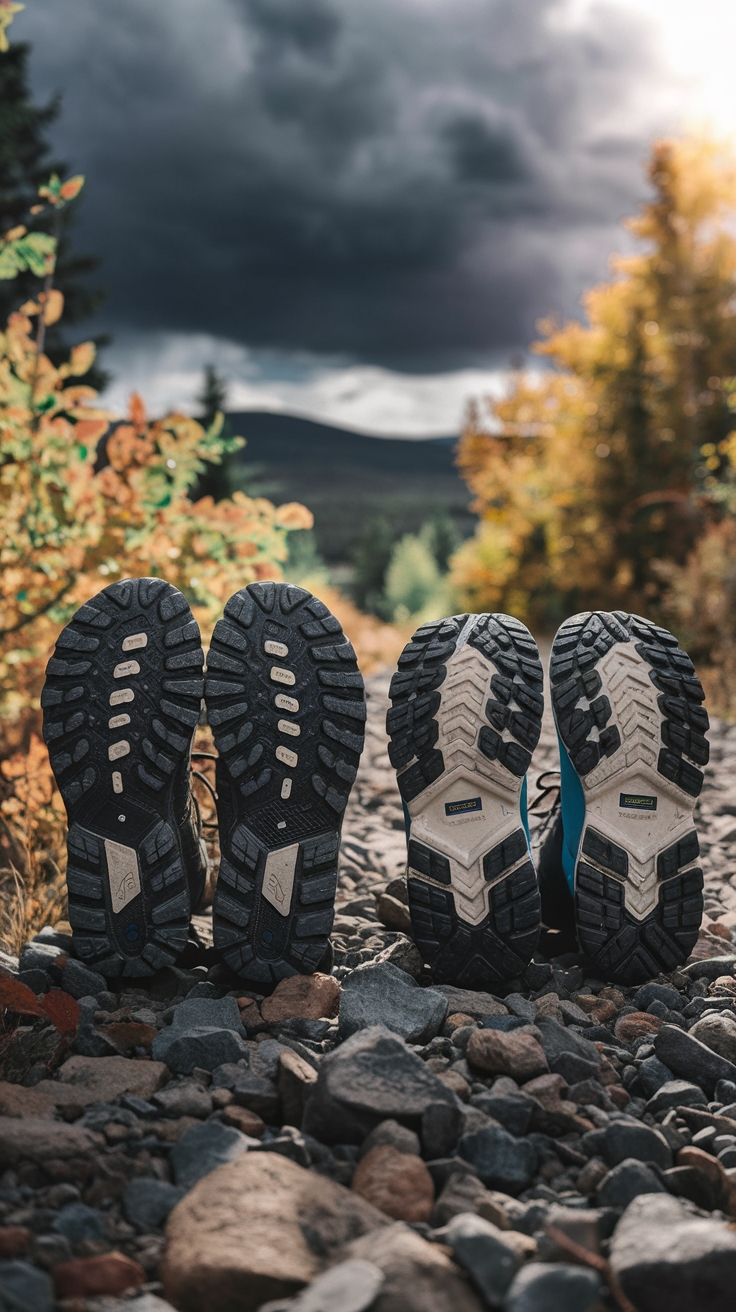
Hiking boots generally feature deeper, more aggressive lugs that bite into loose dirt, mud, and rocky surfaces. Trail runners have shallower tread patterns that work fine on packed trails but can slip on steep or loose terrain.
Some trail runners now use sticky rubber compounds similar to climbing shoes, giving them better grip on wet rocks. The trade-off is that this softer rubber wears down faster, especially if you’re hiking on pavement or hard-packed trails between trailheads.
SEE THIS: 15 Cute & Comfy Summer Hiking Outfits That’ll Make You Want to Hit the Trail ASAP.
Comfort Levels: Which Offers More?
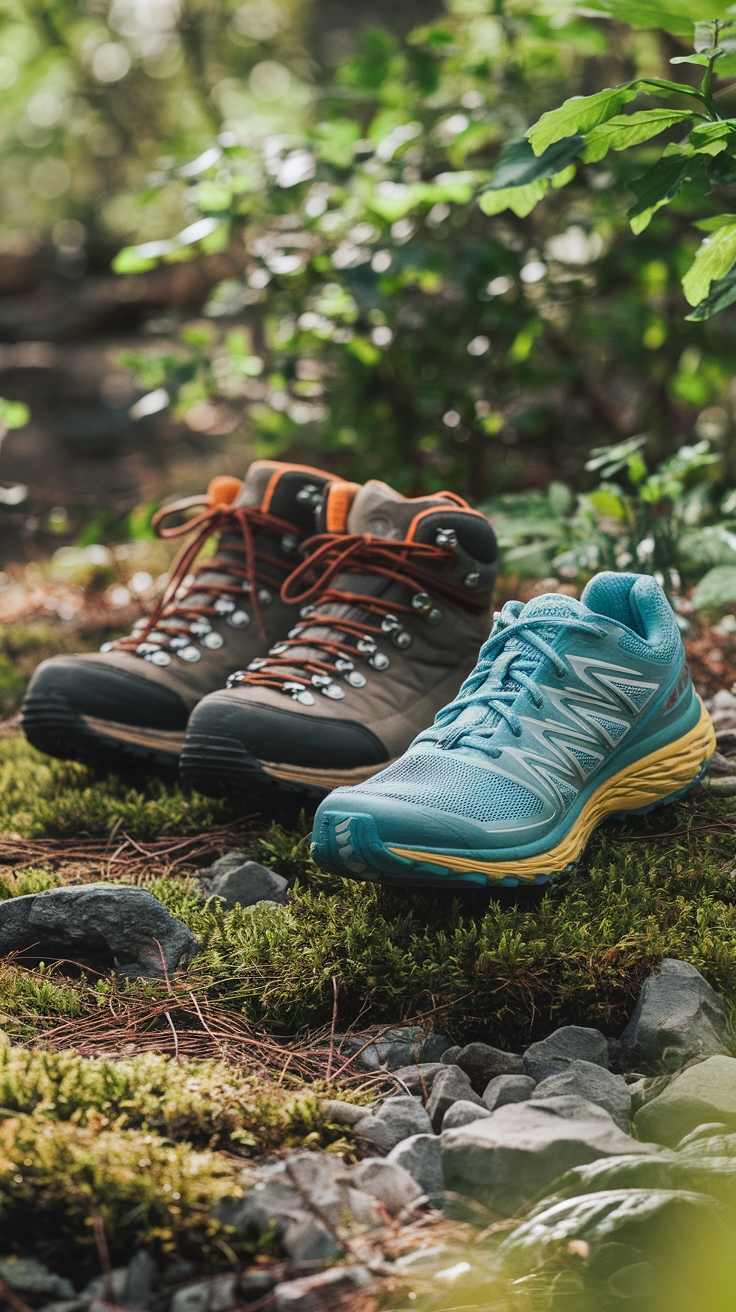
Trail runners feel comfortable right out of the box, requiring little or no break-in period before you can hike in them all day. The EVA foam midsoles compress and cushion your foot with each step, absorbing impact better than the stiffer midsoles in most boots.
Many trail runners have wider toe boxes that let your toes spread naturally, reducing blisters and hot spots. Boots take time to break in and can cause blisters during the first few wears, though once molded to your foot, they provide consistent support.
SEE THIS: Aesthetic Hiking Trails & Destinations Ideas to Try This Season.
Durability and Lifespan of Footwear
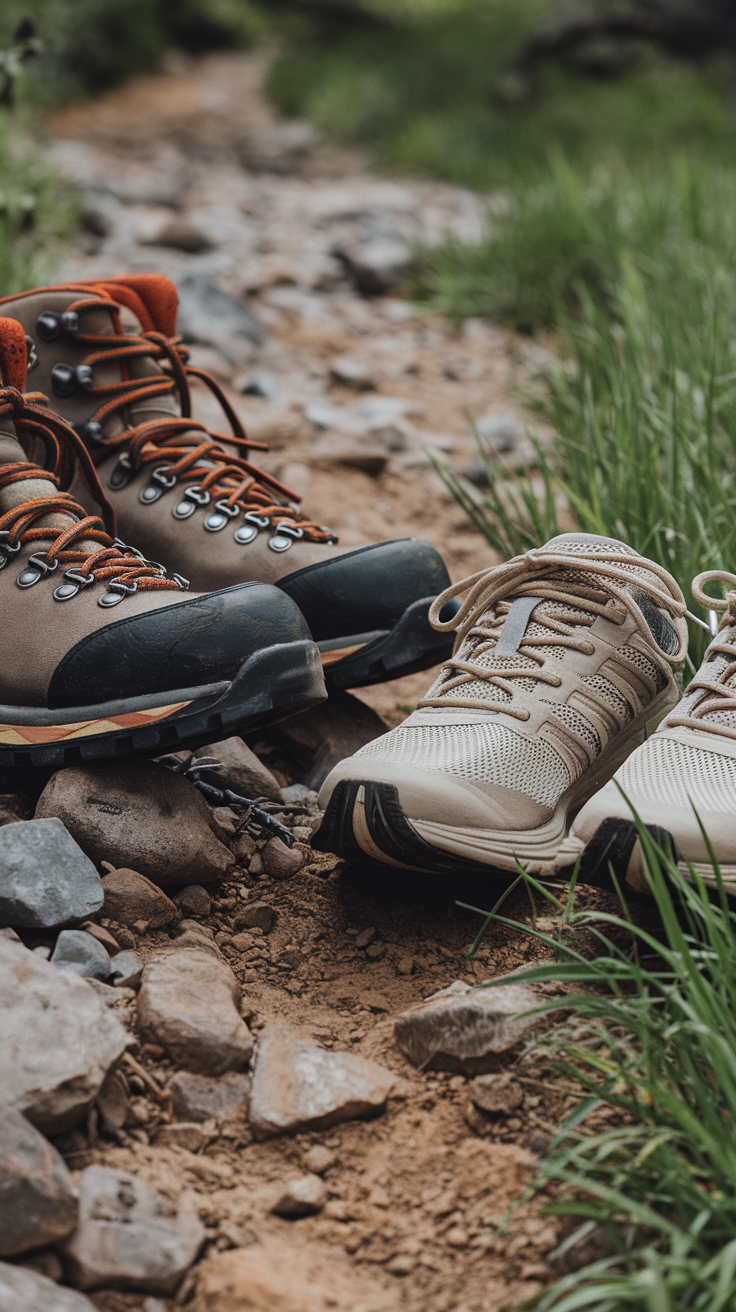
A good pair of hiking boots can last several years and hundreds of miles if you take care of them, especially leather models that can be resoled. Trail runners typically need replacement after 400 to 500 miles as the midsole foam compresses and the outsole lugs wear down.
The lighter materials that make trail runners comfortable also make them less durable over time. If you hike frequently, you might go through two or three pairs of trail runners in the time one pair of boots would last.
SEE THIS: Feminine Survival Guide to Backpacking in the Wild.
Terrain Suitability: Choosing the Right Option
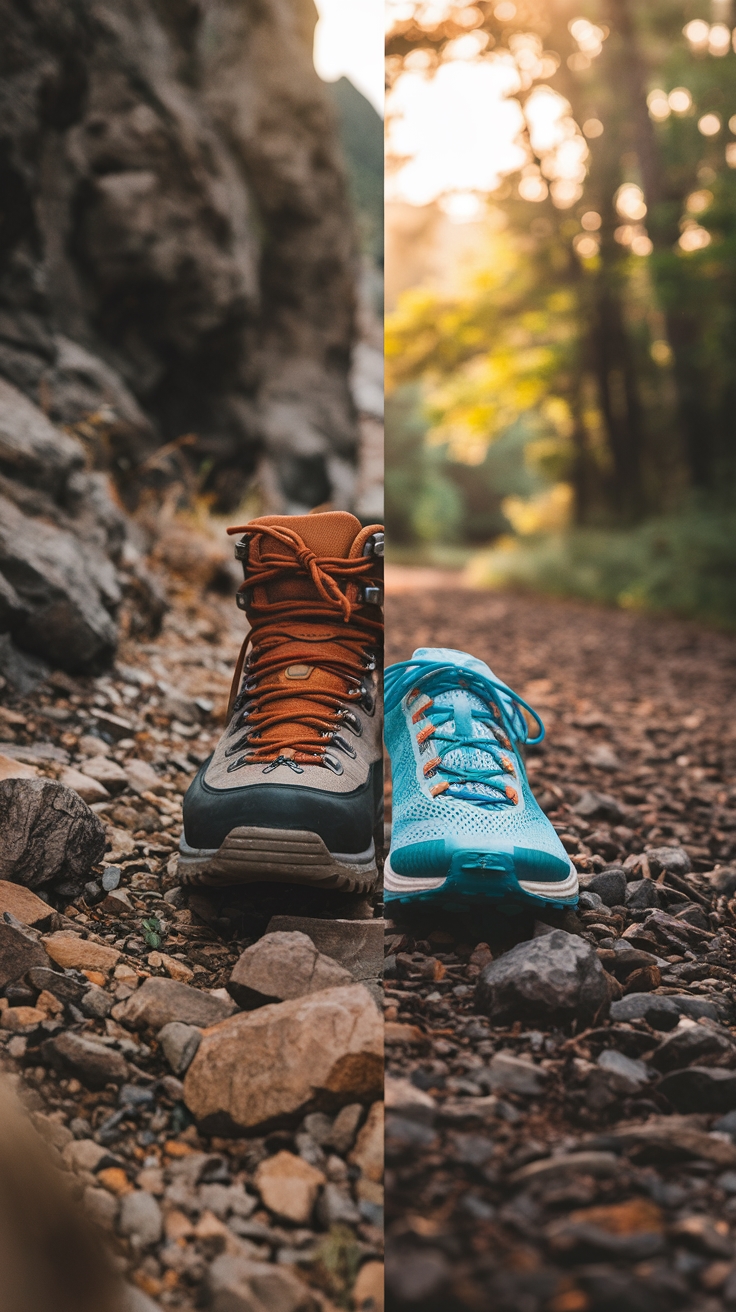
Trail runners excel on well-maintained trails, smooth dirt paths, and anything relatively flat where speed matters. Hiking boots make more sense on rocky terrain, steep descents, or anywhere your ankle might roll without extra support.
If you’re carrying a heavy pack over 30 pounds, boots provide the stability and support that trail runners can’t match. Mixed terrain is where the choice gets harder, and many hikers keep both options and choose based on the specific trail.
Design and Materials: Key Differences
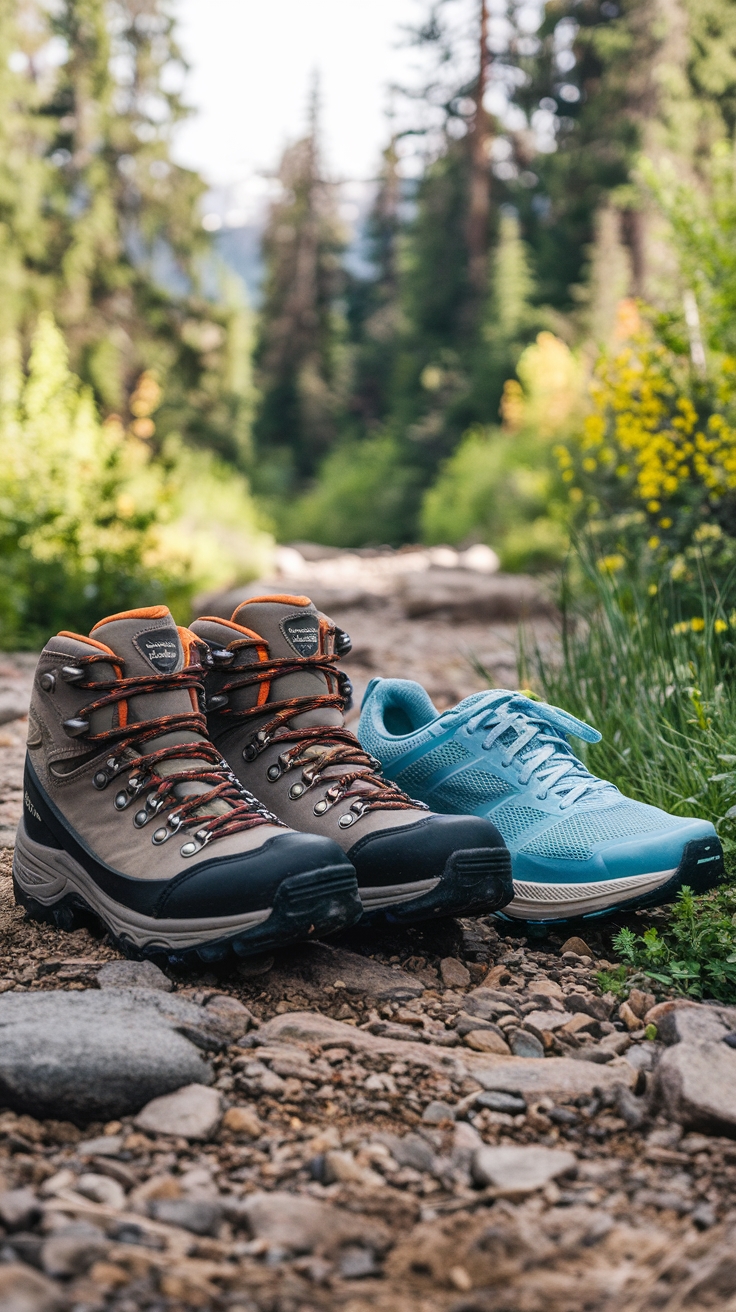
Hiking boots use full-grain leather or thick synthetic materials that resist abrasion and provide structure around your foot and ankle. These materials also allow for waterproof membranes like Gore-Tex, though this comes at the cost of breathability.
Trail runners rely on lightweight mesh uppers that breathe well but offer less protection from rocks, roots, and thorns. The flexibility of trail runners lets your foot move more naturally, while boots restrict movement in exchange for stability.
User Needs: Ankle Support and Foot Shape
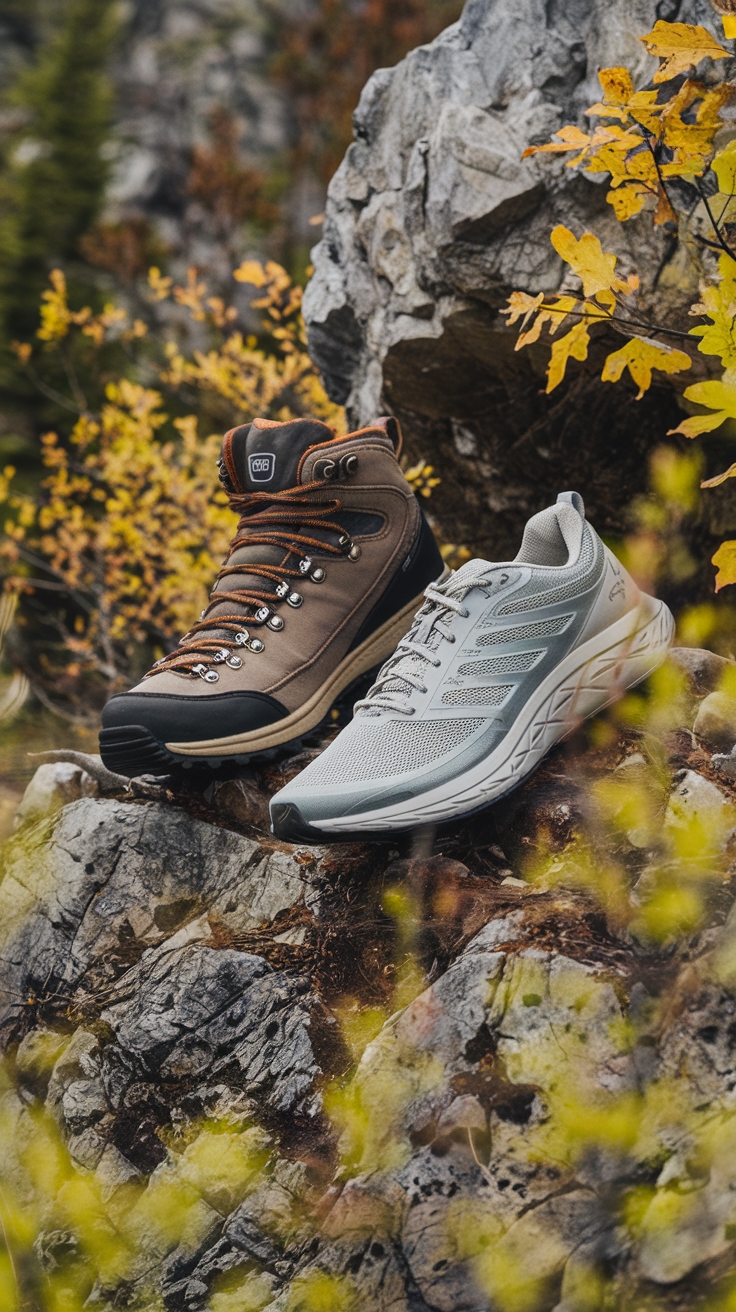
Ankle support matters most if you have a history of ankle injuries, weak ankles, or you’re carrying heavy loads. High-top boots restrict ankle movement and can prevent rolls, though some studies suggest they also weaken ankle muscles over time if worn exclusively.
Your foot shape plays a bigger role than most people realize, with narrow feet needing a snug heel cup and wide feet requiring extra room in the toe box. If you have high arches or flat feet, look for models that accommodate aftermarket insoles since the factory footbeds rarely provide enough support.
Cost Analysis: Long-Term Investment
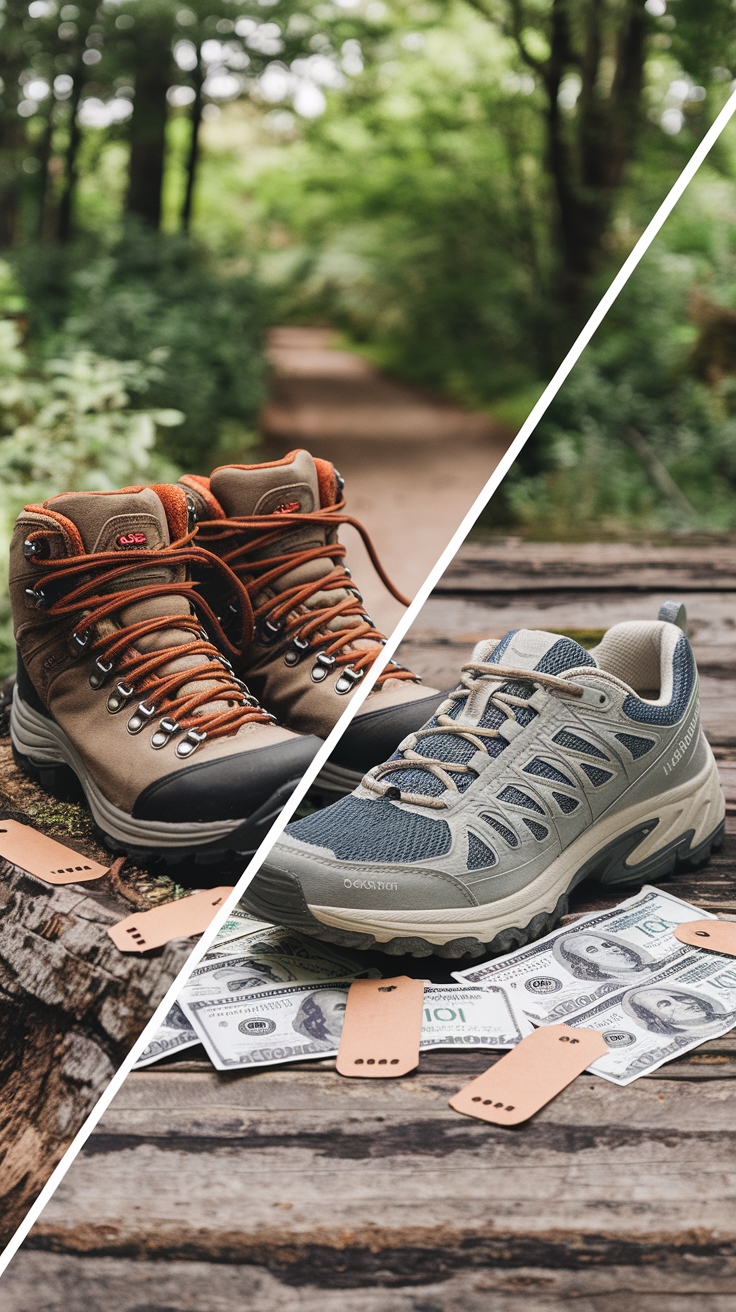
Trail runners typically cost between $100 and $150, while quality hiking boots start around $150 and can exceed $250 for premium models. The cheaper upfront cost of trail runners looks appealing until you factor in replacement frequency.
If you hike regularly and go through two pairs of trail runners per year, you’ll spend more than you would on boots that last three years. Boots also hold their value better for resale, though this only matters if you actually resell your gear instead of keeping it until it falls apart.
Weather Considerations: Which Performs Better?
Waterproof hiking boots keep your feet dry in rain, snow, and stream crossings, though your feet might get sweaty on hot days. Trail runners with waterproof membranes exist but they don’t breathe as well, and once water gets in through the top, they take forever to dry.
In hot, dry conditions, the breathability of regular trail runners keeps your feet cooler and more comfortable. Cold weather hiking requires boots with insulation, since trail runners offer almost no thermal protection, and your toes will freeze on anything below 40 degrees.