There’s a moment around dusk when the lanterns flicker on, and the tree line goes dark at the edges. The whole campsite shifts into something that doesn’t quite belong to this century.
Castlecore camping chases that feeling deliberately, layering medieval aesthetics over a genuine outdoor trip. It’s not cosplay and it’s not just decoration. Done right, it’s one of the most immersive camping experiences you’ll ever put together, and this guide shows you exactly how to build it.

Contents
What Is Castlecore Camping?
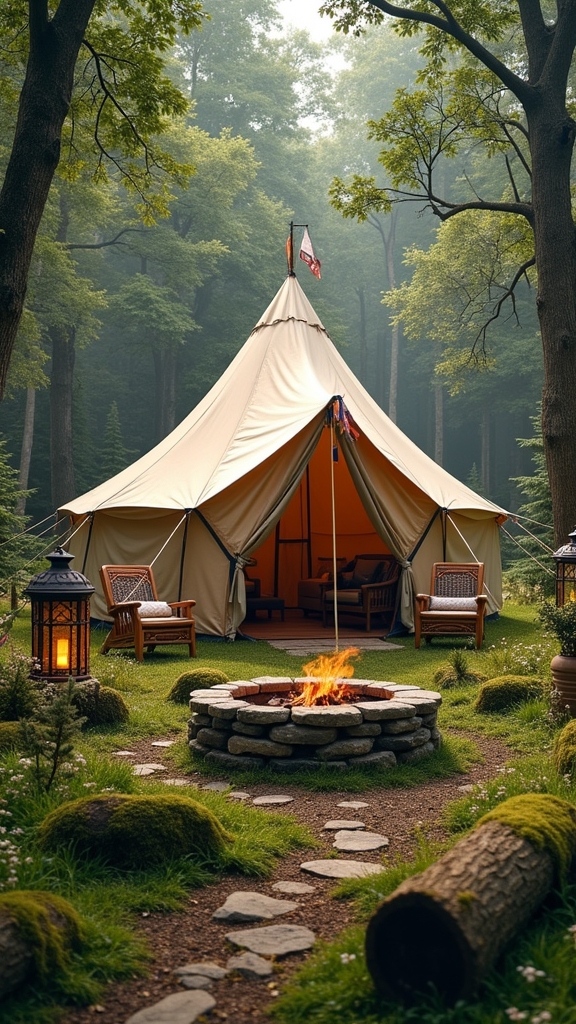
Castlecore camping is the practice of building a site that looks and feels pulled from a medieval world. The aesthetic leans into stone architecture, candlelight, rich textiles, and anything that reads as old and intentional.
Unlike themed events or ren faires, this happens outside in actual nature, which gives it a different kind of weight. The wilderness does the heavy lifting; you just bring the right pieces to meet it.
The Origins of Castlecore
The Castlecore aesthetic grew from a wider movement of people rediscovering the visual romance of medieval Europe. It draws from the imagery of mossy stone walls, ivy-covered towers, candlelit libraries, and overgrown walled gardens.
That world was never quite as glamorous as the aesthetic suggests, but the longing for it is real and deeply human. Castlecore took that longing and gave it a mood board.
Castlecore Meets Outdoor Adventure
Bringing Castlecore into camping works because the natural world already looks the part. Old-growth forest, rocky ground, overcast skies, and firelight all feel authentically medieval without any effort on your part.
What you’re adding is the human layer: the fabrics, the objects, the food, the light. The outdoors stops being a backdrop and becomes a collaborator.
Building the Perfect Castlecore Campsite
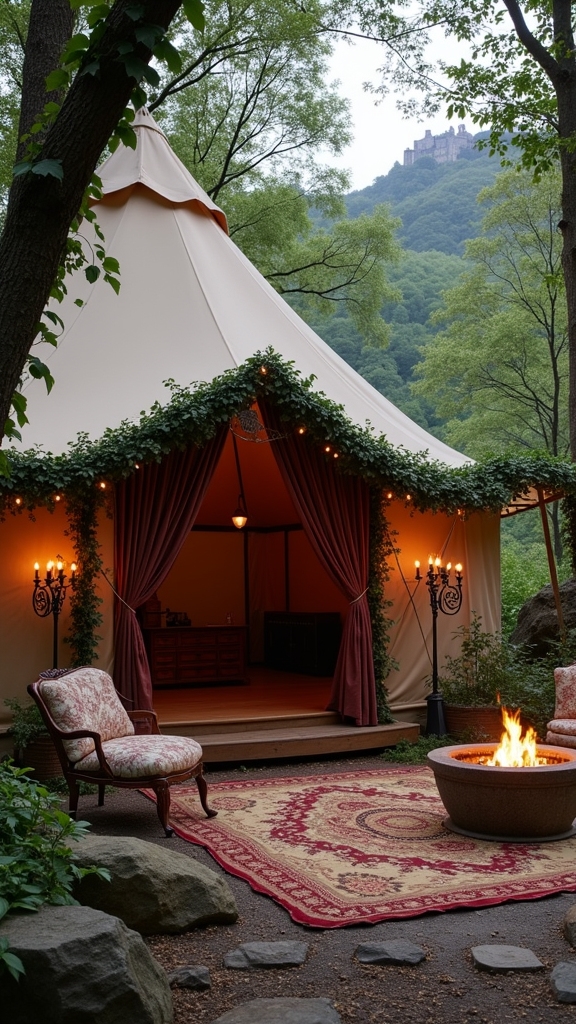
Site selection sets the tone before you unpack anything. Look for spots with mature trees, natural rock features, or a water source nearby, anything that reads as geographically old.
Position your tent against a tree line rather than out in the open to anchor the scene. From there, every layer you add should feel like it belongs to the landscape rather than sitting on top of it.
Creating Layers with Fabrics
Fabric is the fastest way to transform a basic camp into something that feels inhabited and intentional. Start with a linen or cotton ground cover as your base, then drape velvet or brocade over seating to build visual depth.
Wool blankets layered over sleeping areas add warmth and texture that sleeping bags simply can’t offer. The more layers you add, the more the space starts to feel like it has a history.
Lighting That Tells a Story
Overhead lighting kills this aesthetic completely. Lanterns placed at ground level and candles set in clusters do something entirely different: they make the shadows part of the design.
Warm-toned bulbs in battery lanterns mimic firelight without the wind risk, but real candles in protected holders are worth the extra attention. The right lighting makes a campsite feel ancient even if it was set up an hour ago.
Castlecore-Inspired Furniture & Decor
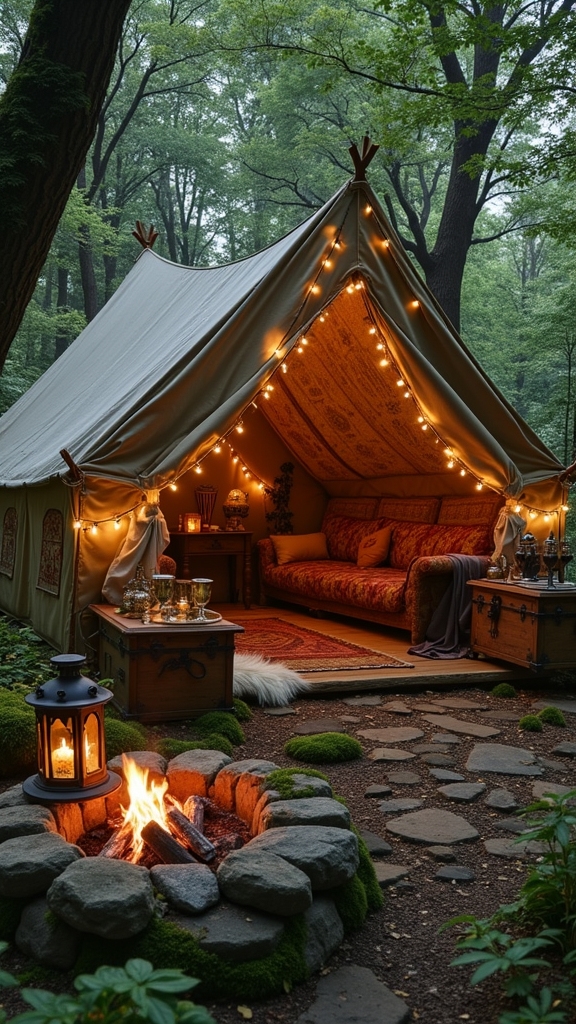
A camping chair with aluminum legs undermines the whole effort, but you don’t need to spend much to do better. Wrought iron chairs, wooden stools, and low crates used as tables all carry the right visual weight.
Add a small side table with carved details and the whole arrangement reads as deliberate rather than improvised. Outdoor furniture doesn’t have to look like outdoor furniture to function like it.
Thrifted Treasures for Outdoor Use
Thrift stores are genuinely the best source for Castlecore gear, and most people overlook them entirely. You’re hunting for wrought iron lanterns, ceramic pieces, wooden crates, and anything with visible handcraft or honest patina.
Check for structural integrity before you buy since outdoor use is harder on furniture than indoor, but don’t pass on something just because it’s worn. Age and imperfection are the point here.
Decorative Details that Elevate the Vibe
The small objects are what people notice first without knowing why. A stack of leather-bound books on a camp table, a carved wooden candleholder, a strip of embroidered fabric tied to a tent stake: these signal that someone thought carefully about this space.
Heraldic symbols on flags or shields add a layer of visual narrative that generic camping gear never achieves. Every detail should feel like it was found rather than purchased.
Fairytale Atmosphere Essentials
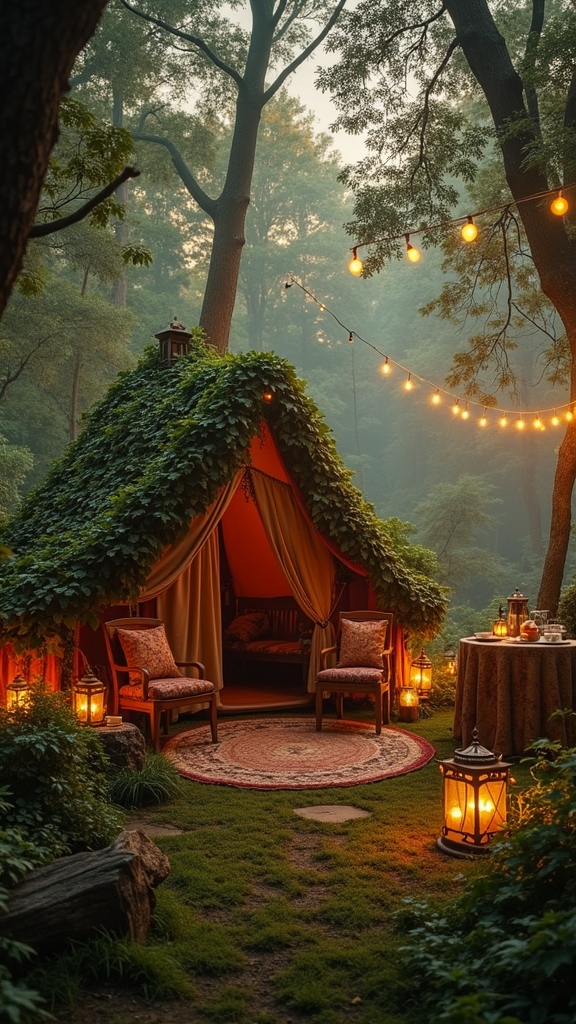
A fairytale atmosphere isn’t built on one strong element; it’s the sum of every sense being gently managed at once. The look, the sound, the smell, and the texture all need to point in the same direction.
Leave one element out and the illusion develops a gap that people feel even if they can’t name it. What you’re building is less a campsite and more a complete sensory environment.
Curated Soundtrack & Ambience
Music choice matters more than most people realize going into this. A quiet playlist of medieval lute, early orchestral, or ambient forest recordings sets the mood without announcing itself.
Run it low enough that birdsong and wind compete with it, because that balance is exactly right. The moment someone notices the music is intentional, the whole atmosphere clicks into place.
Scent & Sensory Touches
Scent is the sense that works on people without their permission. Cedar or sandalwood incense burning near the site entrance shifts people into a different headspace before they’ve even looked around.
Tactile elements matter equally: soft blankets invite touch, rough wooden surfaces suggest age, and smooth ceramic cups make the food and drink feel ceremonial. Layer these carefully and the campsite stops feeling like outside and starts feeling like somewhere.
Campfire Storytelling with a Twist
After dark is when Castlecore camping fully pays off, especially around the fire. Once the lanterns are the brightest light source, pull a story from local folklore or old myths and commit to telling it properly.
A single prop passed around the group, a carved stick, an old key, a small pouch, gives listeners something to hold while the story moves. People lean forward when the fire is the only light, and that lean is everything.
Castlecore Camping Food & Drinks
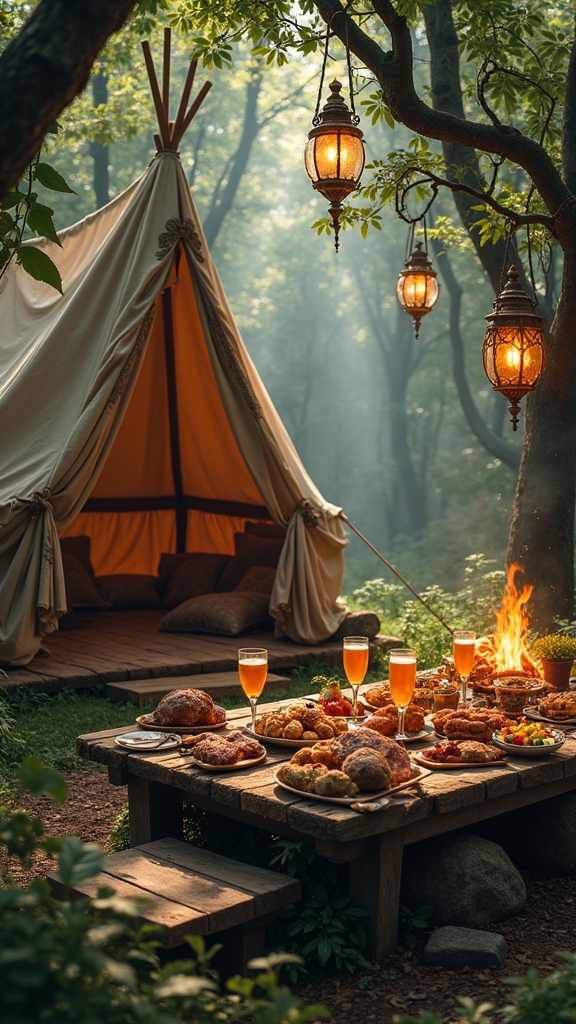
Food is atmosphere too, and most campers underestimate that completely. A cast iron pot over an open flame already looks the part before anything goes into it.
Pair the right dishes with the right vessels and the meal becomes part of the experience rather than a break from it. What you serve and how you serve it shapes the entire texture of the evening.
Rustic Meals that Match the Aesthetic
Hearty, simple, and cooked over fire: that’s the entire brief. Whole roasted meats, thick stews with root vegetables, and foil-wrapped bread set near the coals deliver on both flavor and visual honesty.
Season generously with rosemary, thyme, and garlic to fill the air around camp with something that smells genuinely old world. Serve in wooden bowls or dark ceramic and the presentation takes care of itself.
DIY Castlecore Crafts & Decor
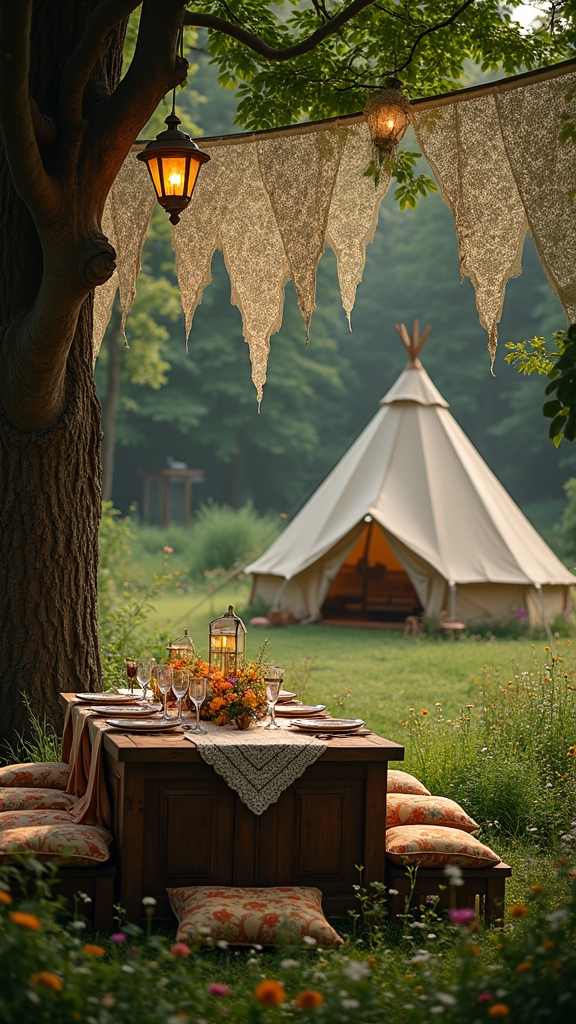
Making your own decor gives the site a handmade quality that bought pieces rarely match. It also means you can customize everything to fit your color palette and personal heraldry.
Simple projects don’t require much skill, just patience and the right materials. A few well-placed handmade pieces anchor the whole aesthetic in a way that feels personal rather than assembled from a store.
Make Your Own Pennant Flags
Pennant flags are the highest-impact, lowest-effort project in the Castlecore toolkit. Cut heavy canvas or outdoor-weight cotton into long triangles and paint or stencil a simple heraldic shape on each one.
Attach them to a length of jute rope and string them between trees at roughly head height. The whole project takes an afternoon and changes the entire feel of your camp perimeter.
Weatherproof Faux Shields and Heraldry
Foam board sealed with exterior paint handles outdoor conditions far better than it has any right to. Cut your shield shapes, paint them in your chosen colors, add a central device or family symbol, and finish everything with a waterproof topcoat.
Mount them on wooden stakes driven into the ground or hang from low branches using jute cord. They look heavy and permanent, which is exactly the illusion you’re after.
Packing List for a Castlecore Camping Experience
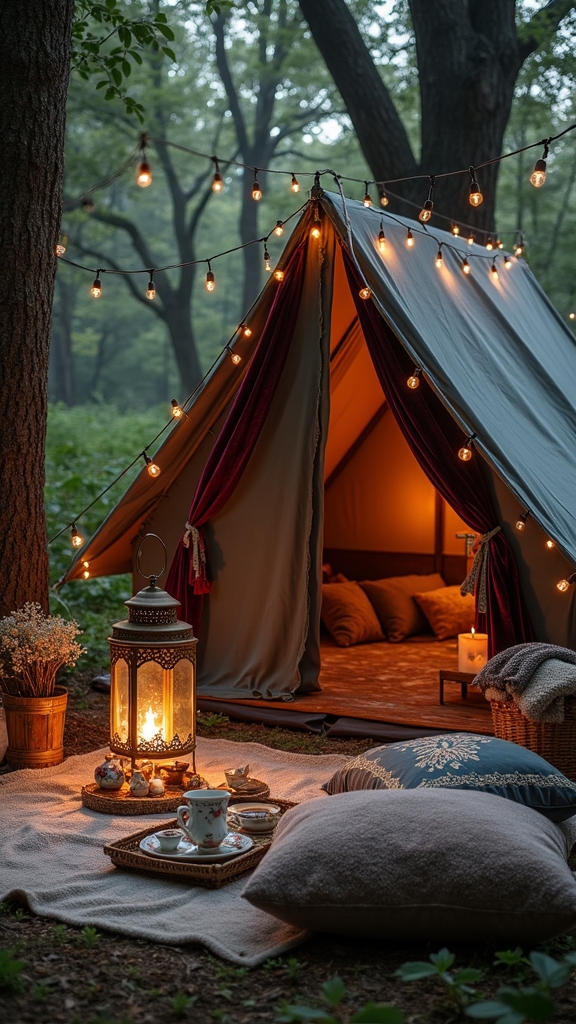
Everything you pack should earn its place aesthetically and practically. A piece that looks beautiful but fails in the field is dead weight, and gear that works perfectly but breaks the visual language of the site undermines the whole effort.
The goal is a pack where every item belongs to the same world. Pack deliberately rather than abundantly.
Aesthetic Essentials
The core aesthetic items are lanterns, textiles, and tableware. Vintage-inspired lanterns with warm bulbs, a wool blanket or two, a hanging tapestry, and a set of ceramic or pewter-toned tableware cover the visual fundamentals.
Add a small wooden crate for a side table and a carved candleholder for the centerpiece. These pieces weigh less than you’d expect and transform a basic camp dramatically.
Practical but Pretty Gear
Function doesn’t have to fight the aesthetic. A canvas wall tent or dark-toned bell tent works better here than any brightly colored modern shelter.
Cast iron cookware does double duty as both a working tool and a visual anchor. Choose gear in muted, natural tones across the board and even the utilitarian stuff reads as intentional.
Castlecore Photography Tips
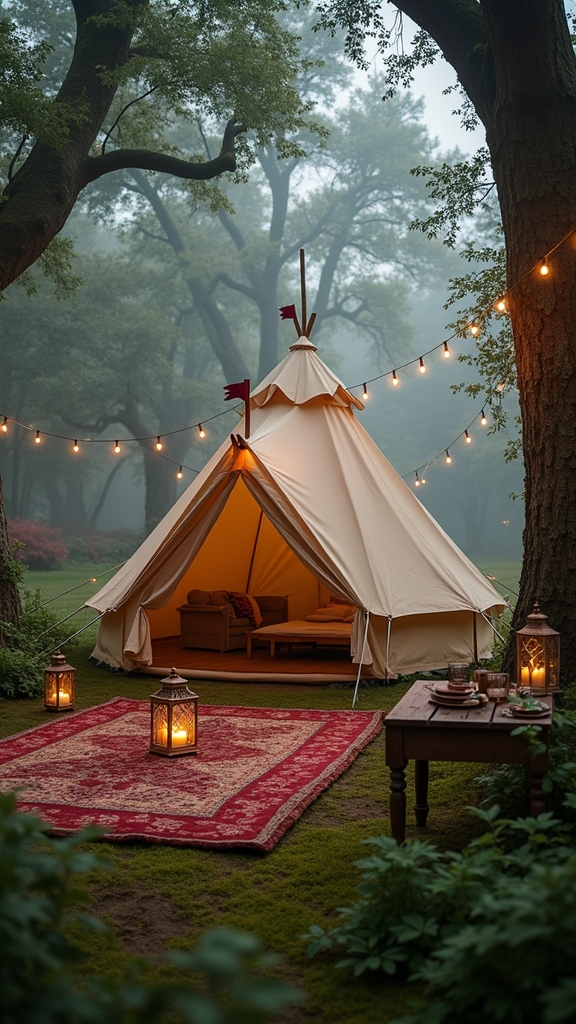
Good Castlecore photography isn’t about perfect composition; it’s about capturing a mood. The scene needs to feel like it existed before you pointed a camera at it, which means resisting the urge to tidy everything up too perfectly.
A little disorder reads as authentically lived-in, and that’s an asset rather than a flaw. Shoot with fire or lanterns as your primary light source whenever possible and the atmosphere carries the image.
Best Time of Day for Enchanting Shots
The hour before sunset is worth more than all the midday light combined. That low, orange, directional light hits fabric and metalwork in a way that makes everything look ancient and warm.
Shoot again in the thirty minutes after the lanterns come on but before the sky goes fully dark, since that overlap of natural and artificial light is uniquely atmospheric. Avoid overhead sun entirely; it flattens everything the aesthetic depends on.
Props & Poses that Scream “Fairytale
The best props are the ones already in camp: lanterns, ceramic mugs, old books, carved wooden objects. Poses work best when they look functional rather than staged, so hold the lantern up as if reading by it, stir something over the fire, lean against a tree with a cup in hand.
Flowing fabric, whether a cloak, a wide skirt, or a draped blanket, adds visual movement that still photos rarely achieve any other way. The goal is to look like you live there, not like you’re visiting.