Parking somewhere new each week sounded romantic until the space started feeling like a storage unit with wheels.
The problem wasn’t the camper. It was that she’d moved in without ever really settling in. Most people make that same mistake, and fixing it costs less than a tank of gas. Here’s where to start.
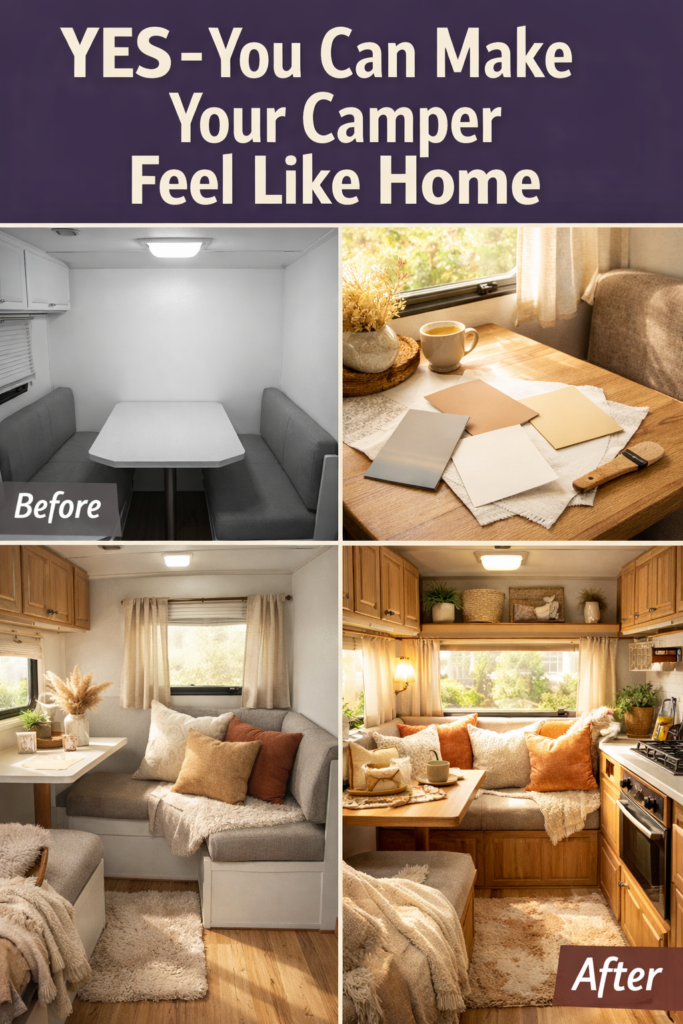
Contents
- 1 Start With a Warm, Livable Color Palette
- 2 Soften the Space With Textiles That Feel Like Home
- 3 Use Lighting to Create a Cozy, Home-Like Glow
- 4 Personalize With Meaningful Decor (Not Clutter)
- 5 Make the Bed Feel Like a Real Bedroom
- 6 Create Storage That Reduces Stress, Not Visual Noise
- 7 Add Natural Elements to Ground the Space
- 8 Make the Kitchen Feel Like a Real Kitchen
- 9 Create Small Zones for Daily Routines
- 10 Control Temperature for Year-Round Comfort
- 11 Use Familiar Scents to Create Emotional Comfort
- 12 Embrace Imperfections and Character
- 13 Treat Outdoor Space as Part of Your Home
- 14 Budget-Friendly Ways to Make a Camper Feel Like Home
- 15 Final Checklist: Does Your Camper Feel Like Home Yet?
Start With a Warm, Livable Color Palette
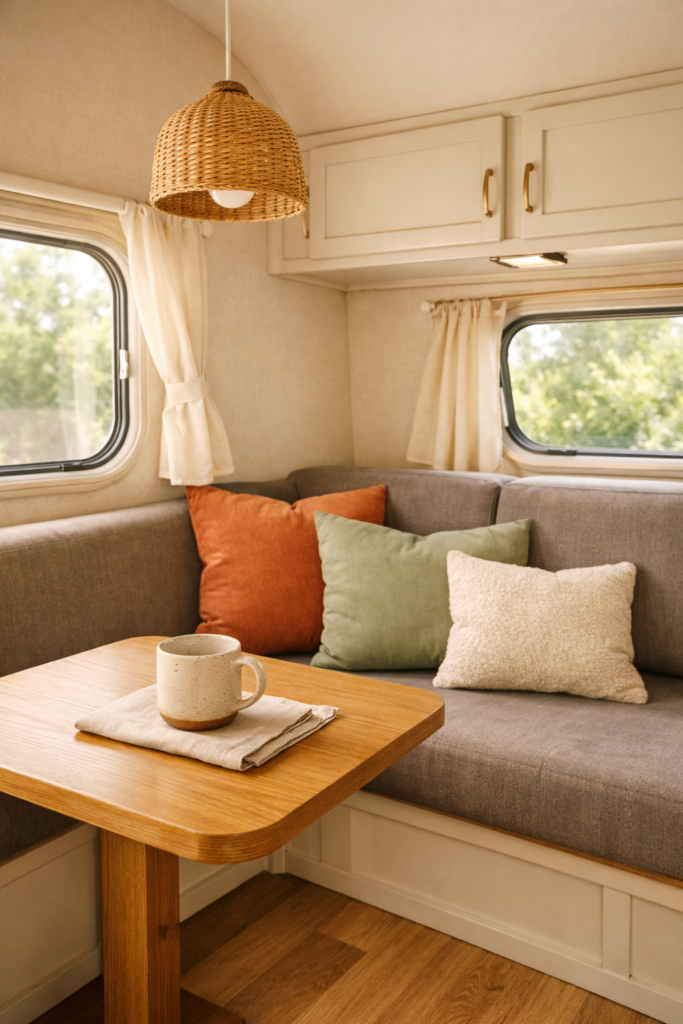
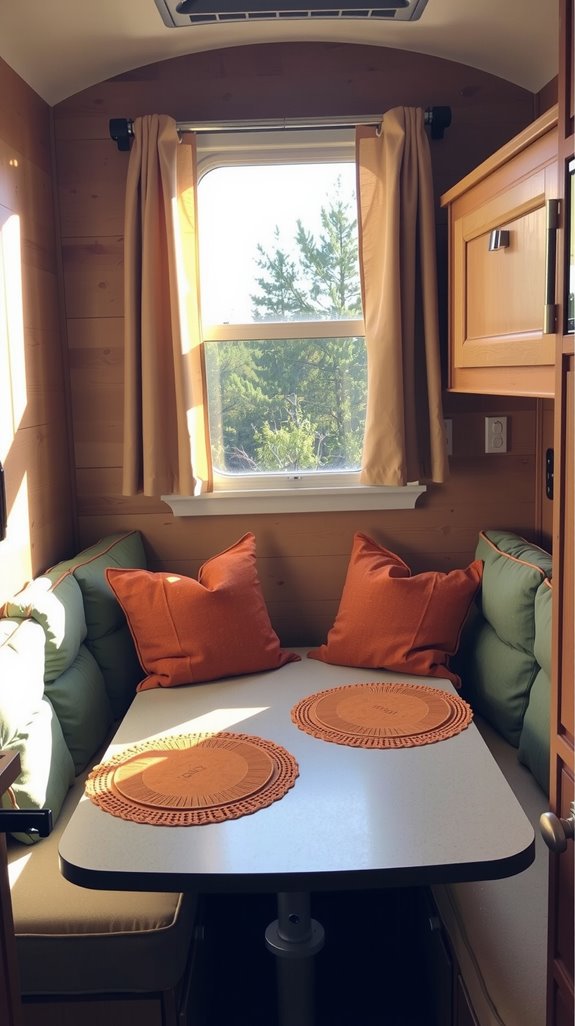
Paint color in a small space isn’t decorating, it’s psychology. Warm neutrals like cream, soft beige, or a muted warm gray make walls recede and light bounce.
That matters a lot when your entire living room is eight feet wide. Save the bold colors for pillows and curtains, things you can swap out when your taste changes.
Soften the Space With Textiles That Feel Like Home
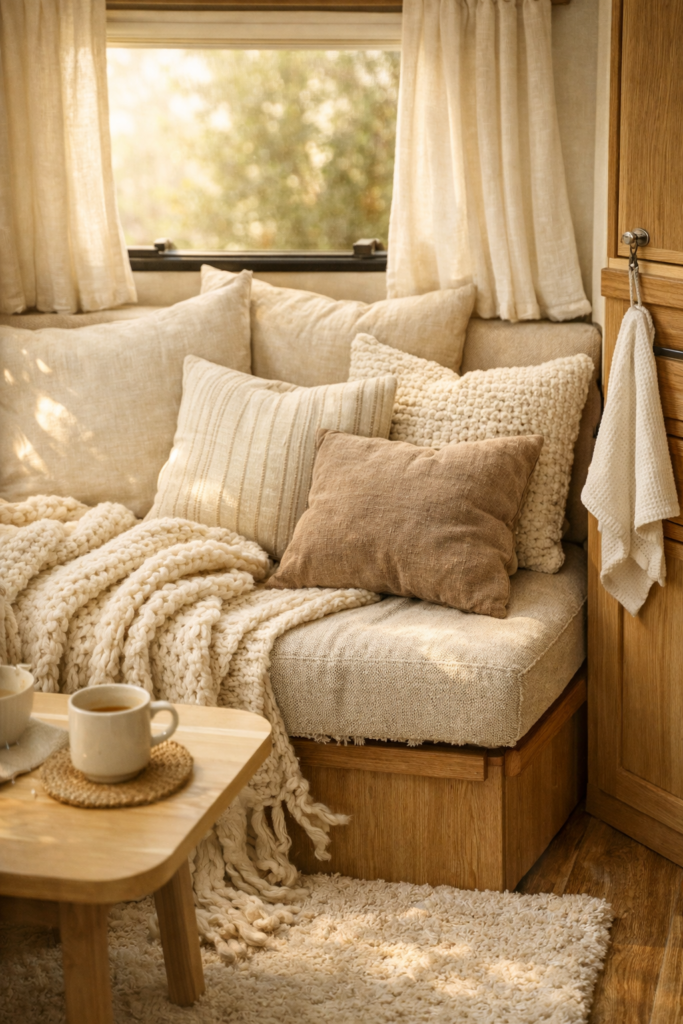
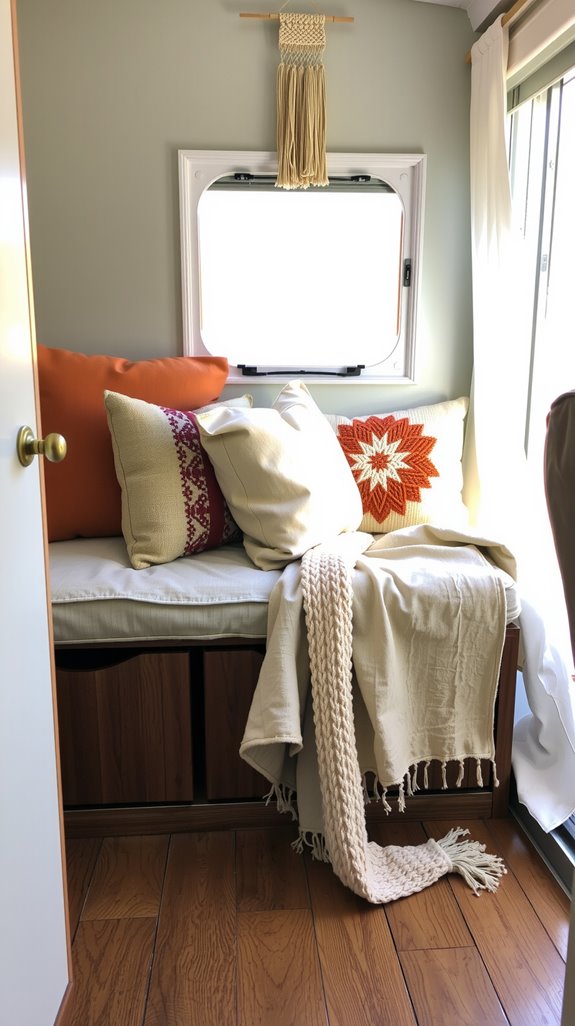
Hard surfaces are everywhere in a camper: aluminum, laminate, vinyl, and they make everything feel cold and temporary. A rug on the floor changes that feeling immediately, even a small one.
Layer a throw blanket over your seating, hang curtains instead of those plastic blinds, and suddenly the space has weight and warmth. Sound absorption is a bonus you don’t notice until you have it.
SEE THIS: 17 Airstream Remodel Styles: Boho, Farmhouse, Minimalist & Coastal Design Ideas!
Use Lighting to Create a Cozy, Home-Like Glow
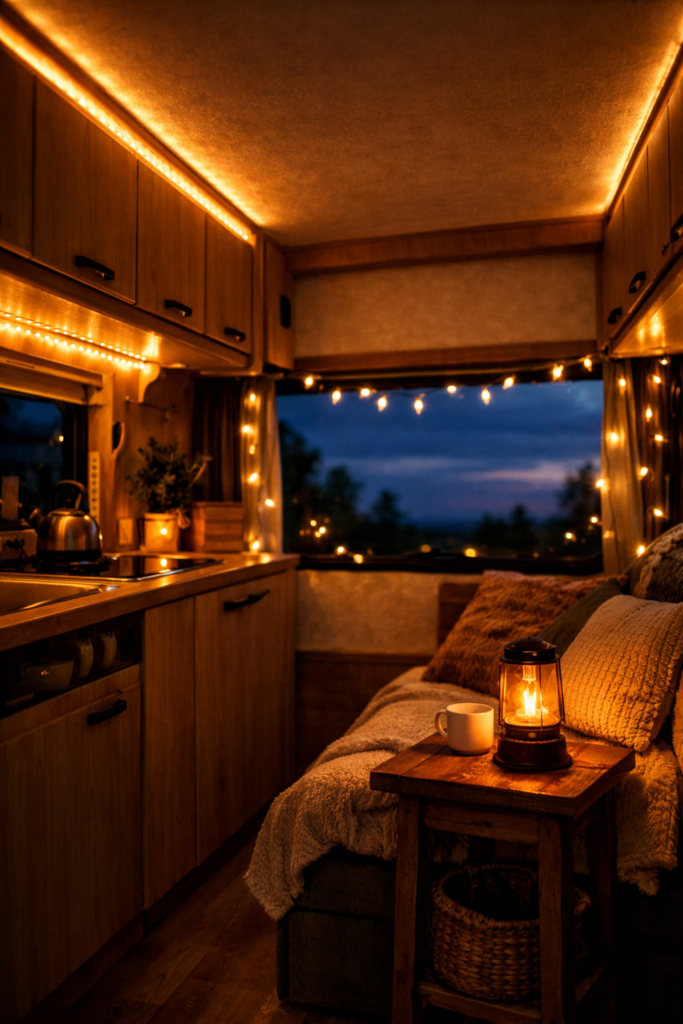
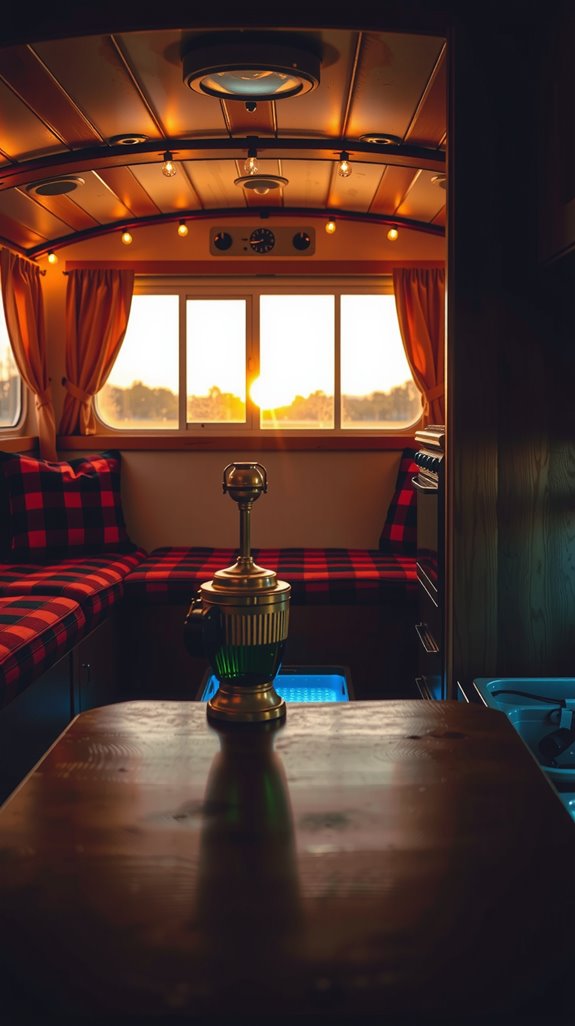
Overhead fluorescent lighting is the enemy of comfort, full stop. Pull those fixtures out or at least add a dimmer, and replace that flat glare with layered light sources at different heights.
Under-cabinet LED strips, a small lamp on the counter, string lights along a window, they work together the way a good campfire does. You’re not just illuminating a room, you’re controlling the mood of your entire evening.
Personalize With Meaningful Decor (Not Clutter)
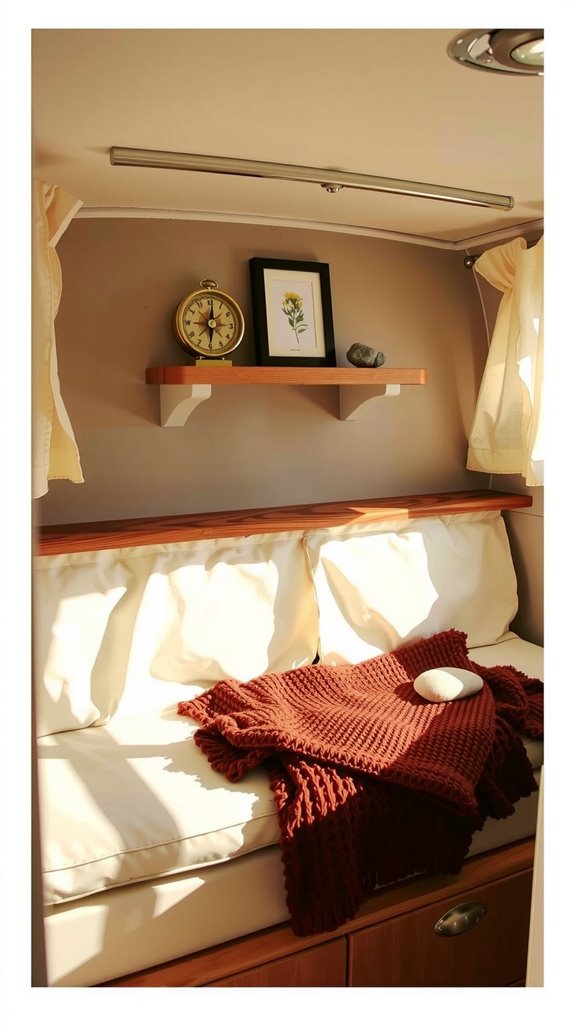
A camper covered in catalog-perfect styling looks good in photos and feels hollow in person.
The things that make a space feel like yours are the ones that wouldn’t make sense to anyone else: a photo from that trip three years ago, a small painting bought at a roadside market, a mug you refuse to leave behind.
Keep it selective because every item competes for the same limited real estate. When you only bring what matters, the space stops looking decorated and starts looking lived in.
Make the Bed Feel Like a Real Bedroom
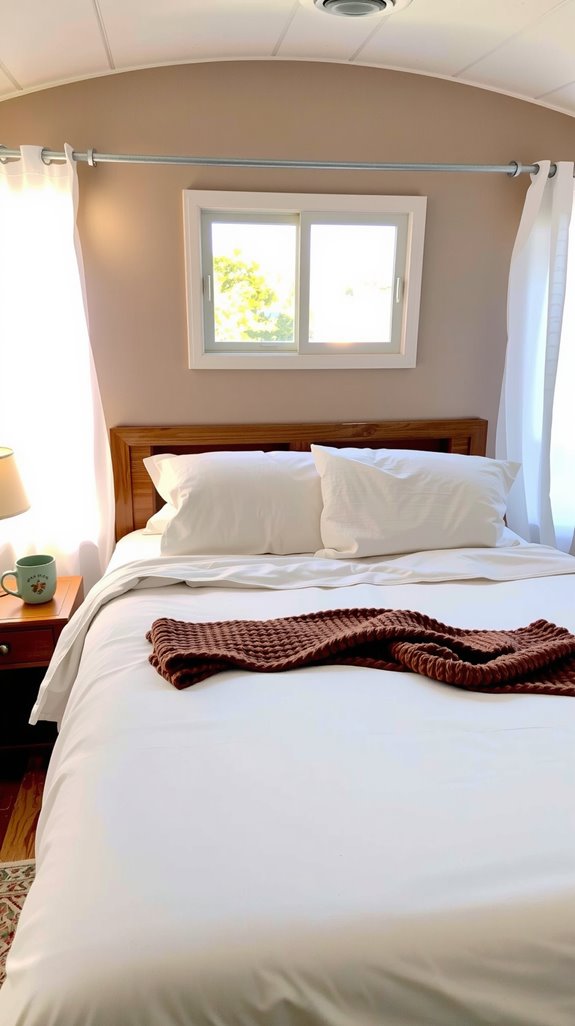
A thin RV mattress is a nightly reminder that you’re roughing it, and that wears on you faster than any mechanical problem will. A memory foam topper or a custom-cut replacement mattress changes everything about how you feel when you wake up.
Add real bedding, quality sheets, a good pillow, blackout curtains if you park near lights, and a small reading lamp on each side. Sleep is the reset button for everything else, and your bed should treat it that way.
Create Storage That Reduces Stress, Not Visual Noise
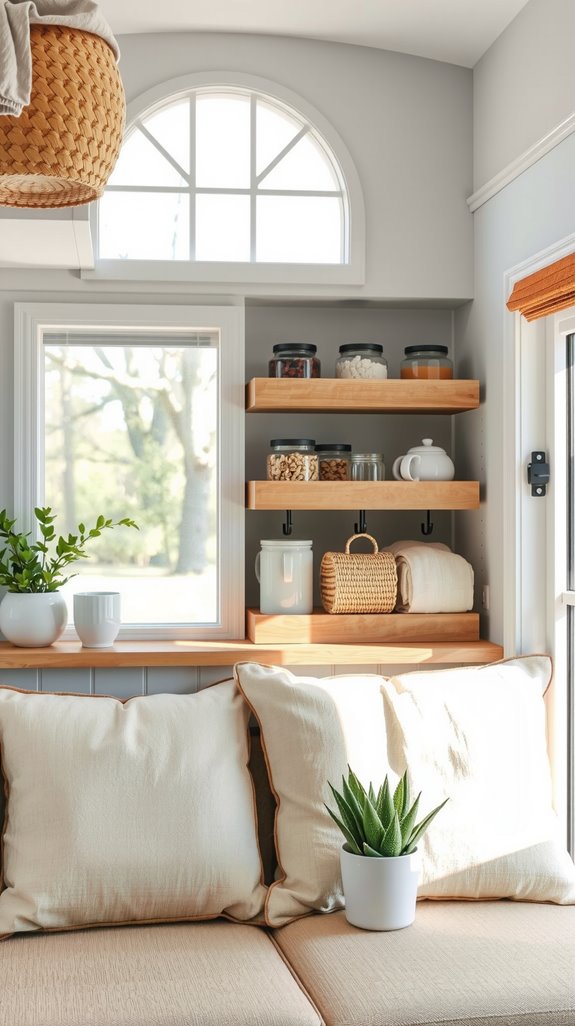
Clutter in a small space doesn’t just look bad; it creates low-grade stress that follows you all day. The goal is smarter storage: hooks by the door, drawer dividers in the kitchen, clear containers on shelves so you stop opening six bins to find one thing.
Vertical space gets wasted in almost every camper, and hanging organizers fix that without any drilling. When everything has a dedicated spot, you stop spending mental energy managing your own stuff.
Add Natural Elements to Ground the Space
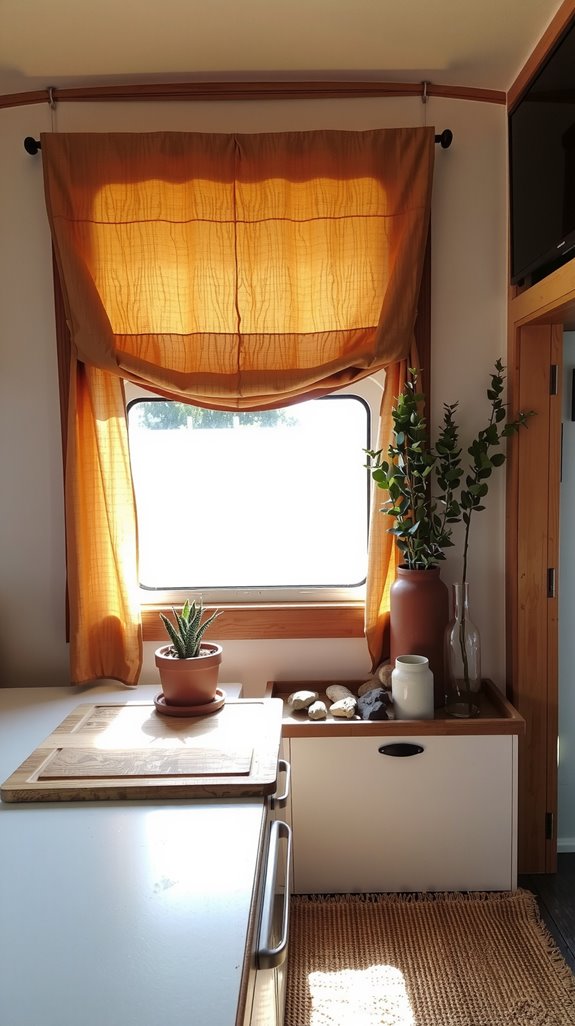
A single succulent on the counter does something no amount of purchased decor can replicate. Plants introduce a living presence that synthetic materials can’t fake.
Wooden cutting boards, bamboo organizers, and stone coasters; these textures ground a space in a way that plastic and laminate never will. Even a small jar of greenery snipped from your campsite pulls the landscape inside and makes the camper feel like it belongs where it’s parked.
Make the Kitchen Feel Like a Real Kitchen
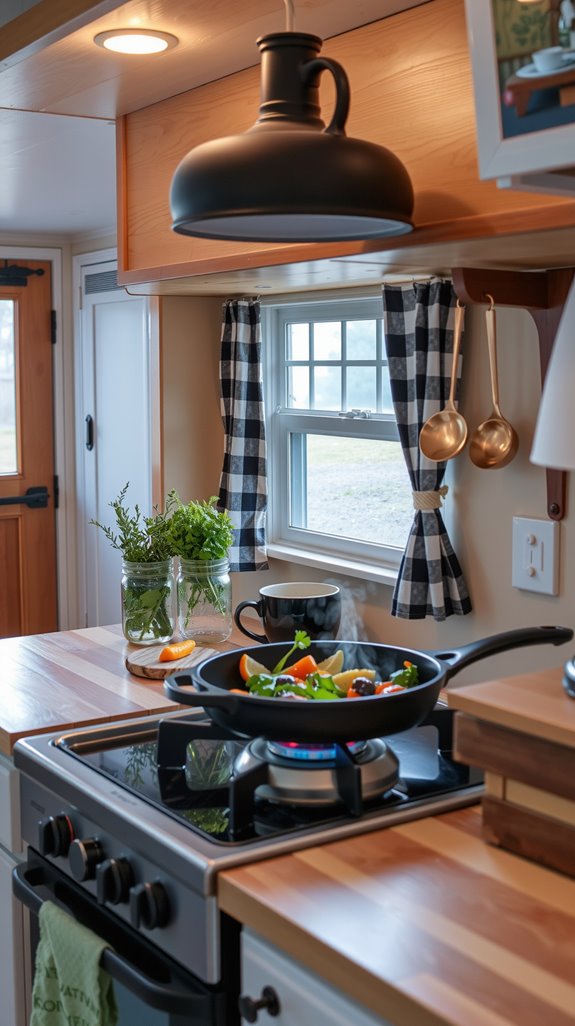
A galley kitchen that fights you every time you cook will sour the whole camper-living experience. A magnetic knife strip frees up counter space instantly, and a cutting board sized to fit over your sink doubles your prep area without any permanent modification.
Stock real cookware, not the flimsy stuff that warps on the first high-heat cook, and use drawer liners to stop everything from sliding into chaos every time you hit a curve. When the kitchen works, cooking stops feeling like a compromise.
Create Small Zones for Daily Routines
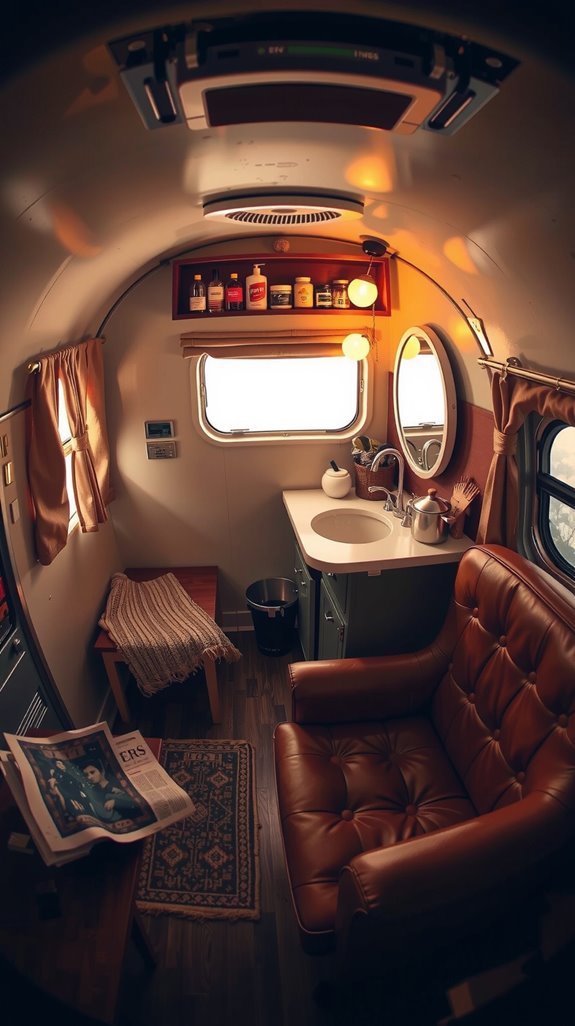
The campers that feel most like home have a logic to them, a place where the coffee lives, a corner that’s clearly a workspace, a spot by the door where keys always land. These micro-zones don’t require extra square footage, just intention.
A small shelf near a window becomes your morning station, and a dinette corner with a good lamp becomes your office. When your routines have a place to happen, the camper starts running itself.
Control Temperature for Year-Round Comfort
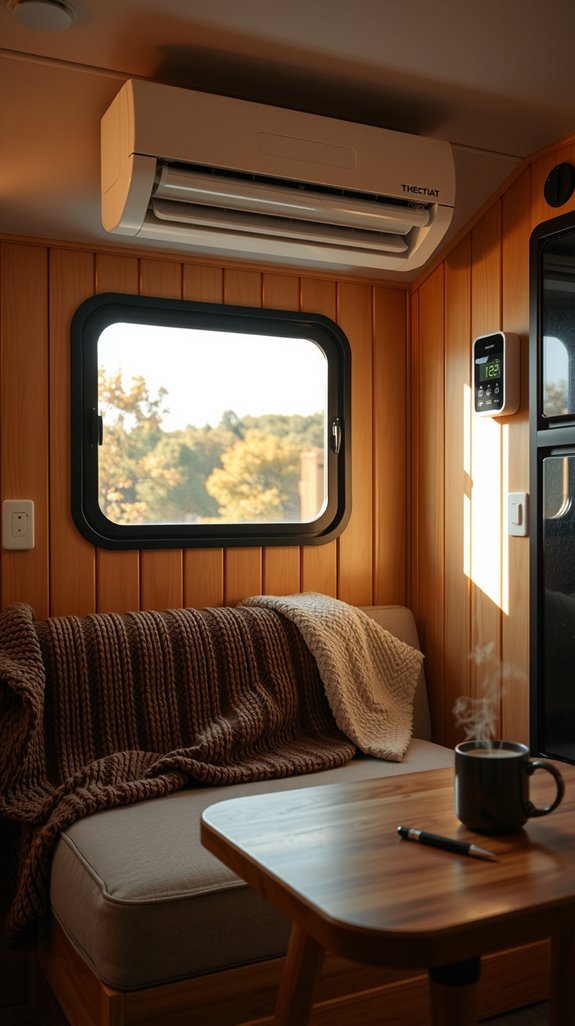
You can have beautiful lighting and perfect textiles and still be miserable if your camper can’t hold a temperature. Thermal window covers and insulated curtains make a measurable difference in both summer and winter, and weatherstripping around doors and vents stops the drafts that no thermostat can fix.
A portable fan or a backup space heater covers the gaps when your main system can’t keep up. That redundancy is what makes a camper livable in real conditions, not just ideal ones.
Use Familiar Scents to Create Emotional Comfort
There’s a reason walking into your parents’ house or an old favorite hotel triggers something immediate and emotional. Scent bypasses everything rational and goes straight to memory.
Bring a candle you burn at home, an essential oil, a coffee blend you love, and use them consistently in the camper. Your brain will start associating that smell with comfort and safety faster than any other design choice you make.
Embrace Imperfections and Character
That dent from the tight campground entrance in Montana isn’t a flaw, it’s evidence that you actually used the thing. Every scratch, scuff, and faded patch of fabric tells a story that a showroom-perfect interior never could.
Obsessing over cosmetic wear in a vehicle you’re living in is exhausting and pointless. The campers that feel most like homes are the ones that look like someone actually lives in them.
Treat Outdoor Space as Part of Your Home
An awning, a rug, two chairs, and a string of lights turns a parking spot into a living room. Morning coffee tastes different when you drink it outside your own front door, even if that door is a camper step.
A small folding table elevates meals from eating in the car to something that actually feels like a choice. Treat the space around your camper as square footage, because on a nice evening, it’s the best room you have.
Budget-Friendly Ways to Make a Camper Feel Like Home
Most of the changes that make the biggest difference cost almost nothing. A thrift store run can turn up picture frames, small rugs, and decorative baskets for a few dollars each.
Items you already own, mason jars, a favorite blanket, a framed photo, travel just as well as anything you’d buy new. String lights run on a USB battery pack and cost less than dinner out, doing more for your camper’s atmosphere than almost any other single purchase.
Final Checklist: Does Your Camper Feel Like Home Yet?
You’ll feel it before you can explain it. You walk in after a long drive and your shoulders drop. Your stuff is where you left it, your routines start automatically, and you’re not thinking about where anything is.
The light is right, the smell is familiar, and you’d rather be here than anywhere else available to you tonight. That’s not a checklist item. That’s home.