The first time I cooked a real meal in my travel trailer, I burned pasta while searching for a colander buried under a pile of pot lids.
Counter space was laughable, every drawer was a mystery box, and I’d packed like I was moving into a studio apartment rather than a rolling kitchen the size of a bathroom vanity.
A few humbling trips later, I figured out what actually works. Here, we share these strategies, and it starts with being brutally honest about your space.
Contents
- 1 Assess Your Kitchen Space
- 2 Prioritize Your Cooking Essentials
- 3 Invest in Multi-Functional Gear
- 4 Use Stackable Storage Containers
- 5 Implement Vertical Storage Solutions
- 6 Hang Utensils and Tools
- 7 Utilize Magnetic Strips
- 8 Organize a Spice Rack
- 9 Create a Cleaning Station
- 10 Optimize the Refrigerator Space
- 11 Use Drawer Dividers
- 12 Keep a Camping Cooking Checklist
- 13 Designate a Meal Prep Area
- 14 Choose Lightweight Cookware
- 15 Consider Collapsible Kitchen Items
- 16 Install Shelving or Racks
- 17 Use Baskets for Grouping Items
- 18 Keep Food and Cooking Supplies Separate
- 19 Maximize Counter Space
- 20 Plan Meals Ahead of Time
- 21 Use Coolers Efficiently
- 22 Store Items by Frequency of Use
- 23 Personalize Your Kitchen Space
Assess Your Kitchen Space
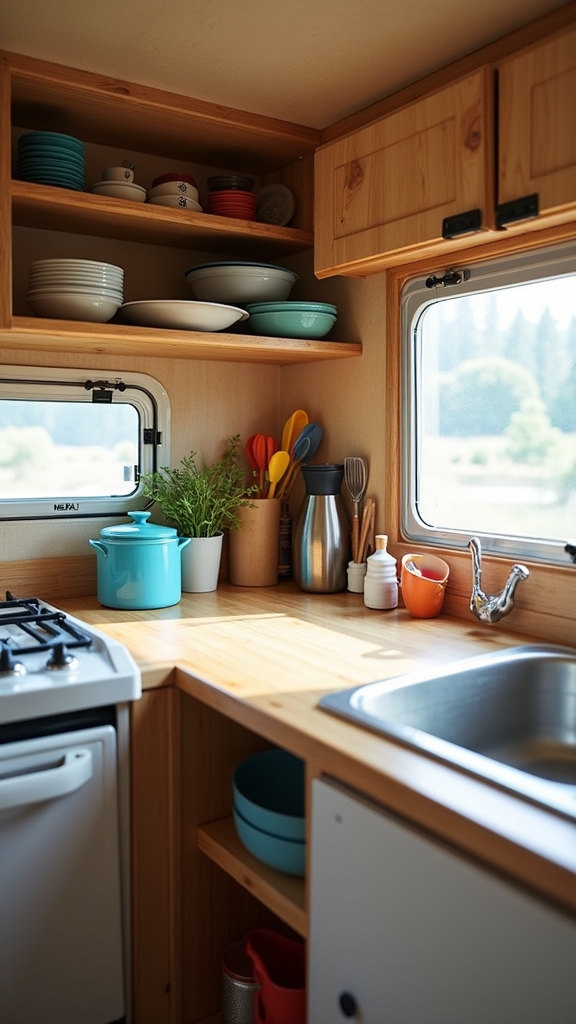
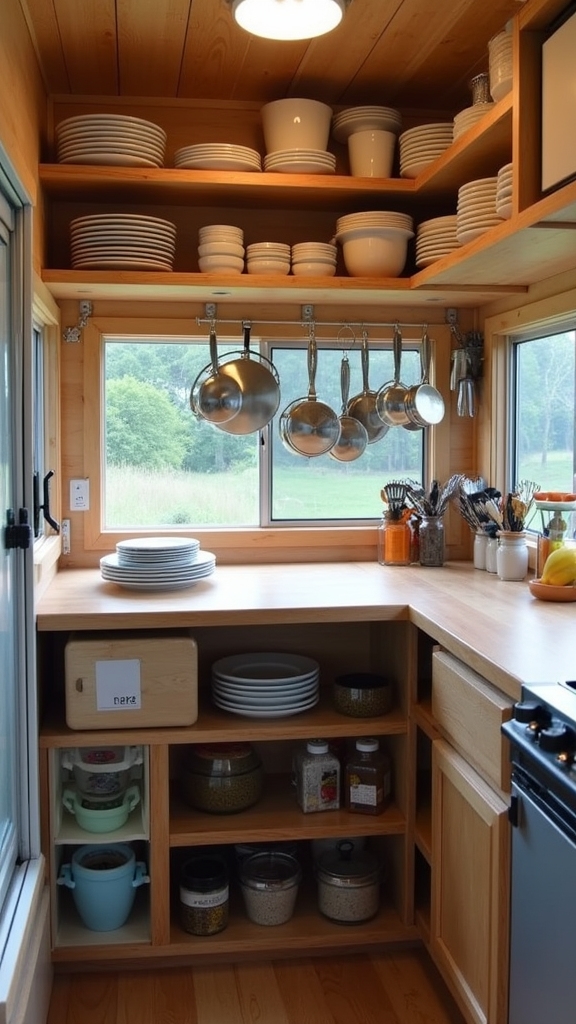
Before you buy a single organizer or rearrange one cabinet, spend ten minutes really looking at your kitchen. Open every drawer, crouch down to check the lower cabinets, and notice where things consistently pile up or spill over.
Most trailer kitchens waste serious space in the corners and above the counters. Once you see the dead zones clearly, fixing them gets a lot easier.
SEE THIS: 20+ Hippie Car Interior Ideas to Embrace Your Free Spirit.
Prioritize Your Cooking Essentials
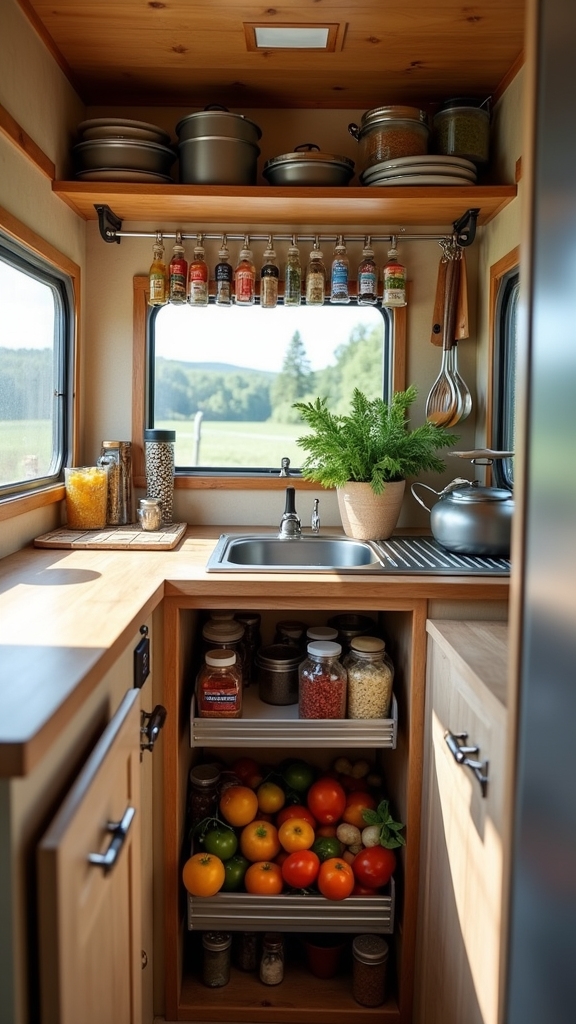
The biggest mistake people make is packing a home kitchen into a trailer kitchen. You don’t need five coffee mugs, a blender, or that mandoline slicer you use twice a year at home.
One sharp knife, one good pan, one solid pot, and a handful of tools that pull double duty will cover 90% of what you cook on the road. Everything else is dead weight that eats counter space and rattles your nerves on washboard roads.
SEE THIS: How to Create a Boho Vibe Inside Your Hippie Car.
Invest in Multi-Functional Gear
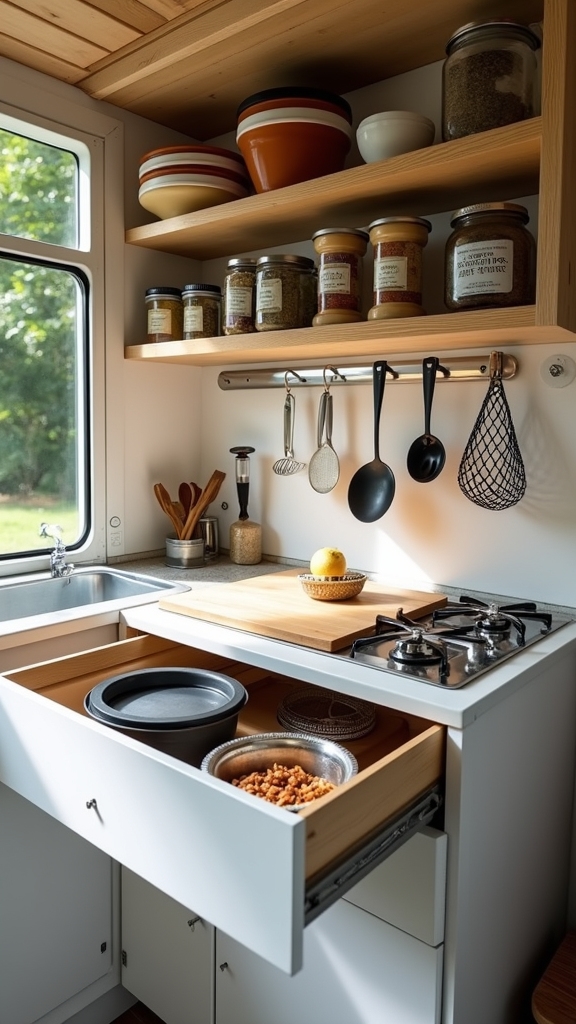
A pot that doubles as a serving bowl, a cutting board with a built-in strainer, collapsible measuring cups that flatten to almost nothing. These aren’t gimmicks; they’re genuinely how you reclaim usable space in a tight kitchen.
I’ve cooked full dinners for four in a trailer with about eight square feet of counter, and multi-use gear made that possible. When you’re tired after a long day on the trail, you want fewer things to wash, not more.
SEE THIS: DIY Macramé and Decor Projects for Your Hippie Camper.
Use Stackable Storage Containers
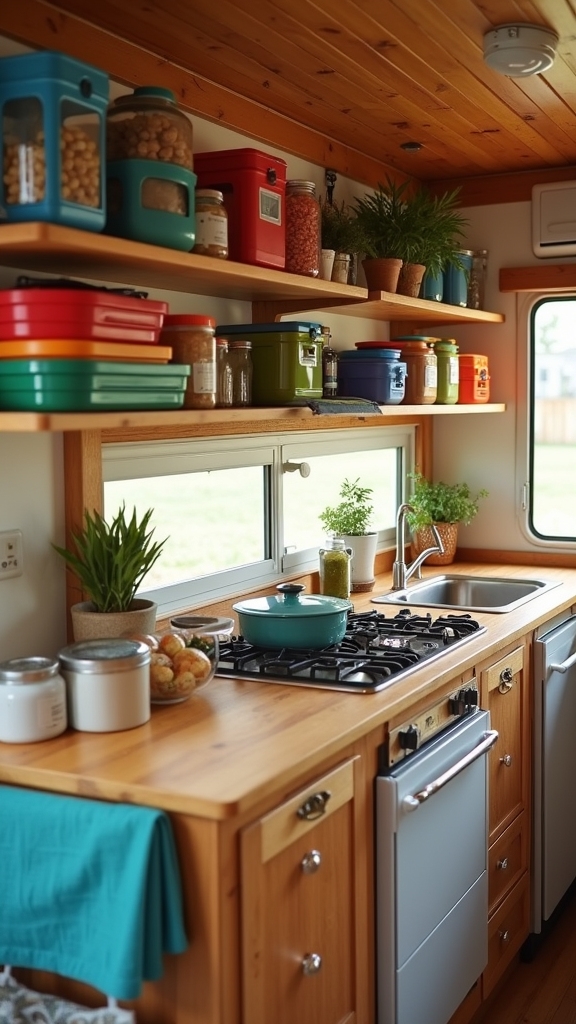
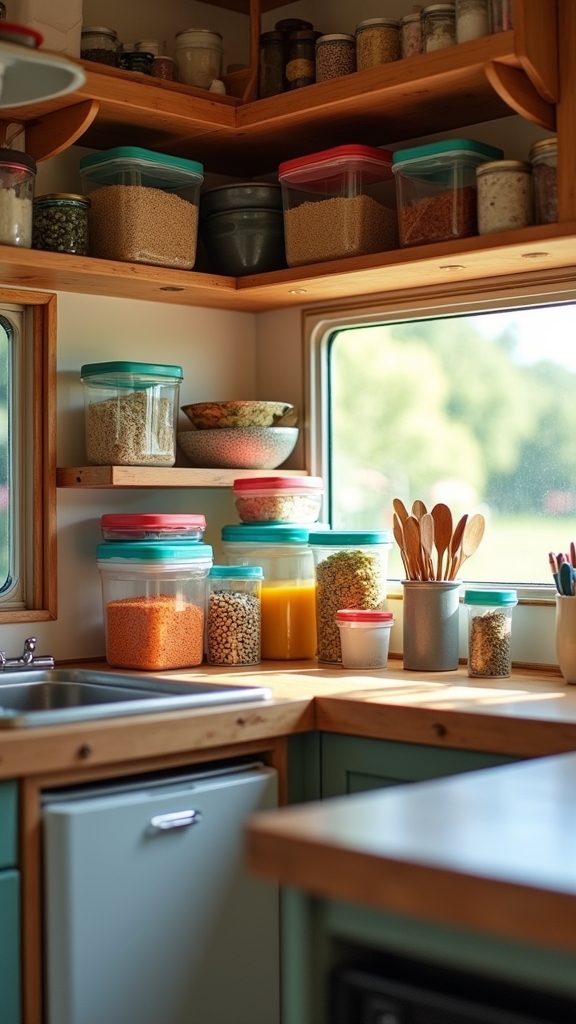
Clear, stackable containers for dry goods like rice, pasta, and oats will change how you use cabinet space entirely. You can see exactly what’s running low without pulling everything out, and tall narrow containers fit in spots that original oddball packaging never would.
Label them once, load them up before you leave, and your pantry situation goes from chaotic to genuinely functional. It’s one of those small changes that makes every meal prep a little less annoying.
Implement Vertical Storage Solutions
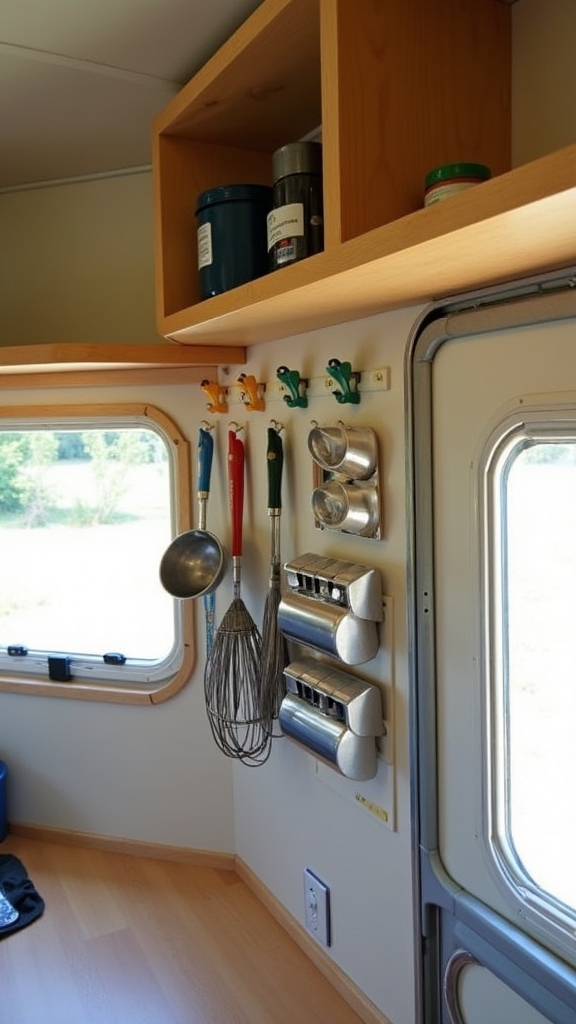
Counter space is the first thing people fight over in a small trailer kitchen, but most people forget they have walls. A vertical rack above the sink or a tension rod under a cabinet can hold spray bottles, dish towels, or small baskets without touching your precious horizontal space.
Hanging produce baskets keep onions and fruit off the counter and out of the way during transit. Once you start thinking vertically, you find storage you didn’t know you had.
Hang Utensils and Tools
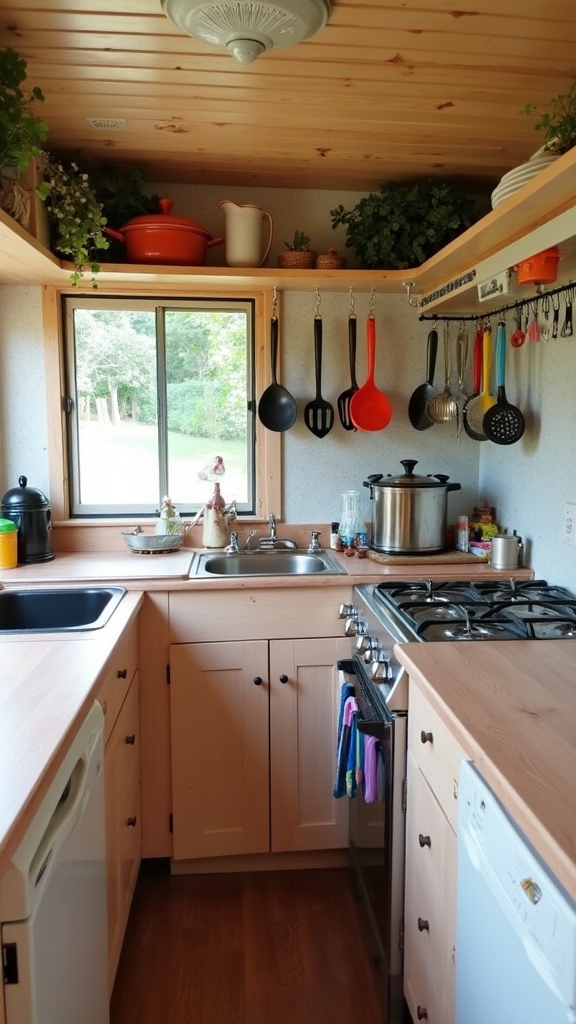
Stuffing spatulas, tongs, and ladles into an already cramped drawer is a daily frustration that’s completely avoidable. A few adhesive hooks on the wall or inside a cabinet door puts your most-used tools within arm’s reach while freeing up drawer space for things that actually need to be flat.
It takes about ten minutes to set up and saves a surprising amount of rummaging during meal prep. Your kitchen also just looks less chaotic, which matters more than you’d expect after a long driving day.
Utilize Magnetic Strips
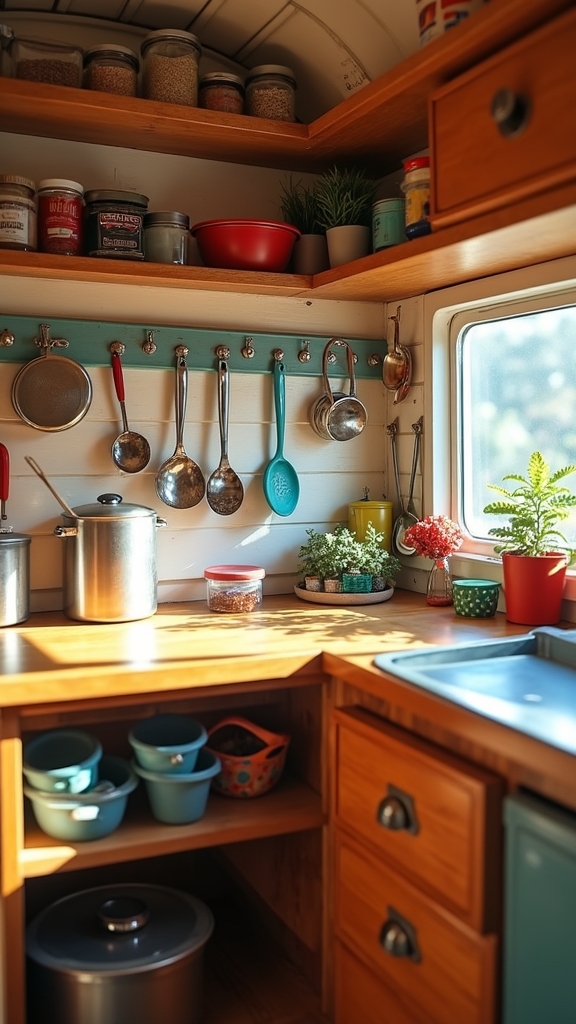
A magnetic knife strip mounted on the wall is one of the smartest five-dollar upgrades you can make to a trailer kitchen. Knives stay safely out of drawers where they dull against other metal, and you stop wasting a full drawer on blades that really need about four inches of wall.
Small scissors, a bottle opener, and even metal spice tins can live there too. It also keeps sharp edges from sliding around in transit, which is a real concern on bumpy roads.
Organize a Spice Rack
Good food on the road starts with not neglecting your spices, but a rattling bag of half-empty jars is nobody’s friend. Small magnetic tins stuck to the wall or a compact spice rack tucked inside a cabinet door keeps things organized without consuming counter space.
Salt, pepper, garlic powder, smoked paprika, cumin, and chili flakes cover most of what you’ll actually cook over a camp stove. Pare it down to what you truly reach for, and don’t bring anything just because it lives in your home kitchen.
Create a Cleaning Station
A dirty trailer kitchen gets out of control fast, especially in a small space where one unwashed pan takes up a third of your counter. Keeping dish soap, a sponge, a small scrubber, and a roll of paper towels together in one basket under the sink means cleanup actually happens instead of getting pushed off.
Tie a small trash bag to a cabinet handle so scraps have somewhere to go during cooking. When the cleanup system is easy, you use it.
Optimize the Refrigerator Space
Fridge space in a small trailer is genuinely precious, and most people squander it by just throwing things in. Clear bins grouped by meal type keep food from getting buried, and anything with a short shelf life goes right up front where you’ll see it before it goes bad.
Stacking by meal type, breakfast items together, dinner proteins together, means you’re not excavating the whole fridge just to find the eggs. A little organization here pays off every single day of the trip.
Use Drawer Dividers
Without dividers, trailer drawers become junk piles within about 48 hours of hitting the road. A few cheap plastic dividers keep cutlery, a can opener, a peeler, and small tools in their own lanes so you can actually find what you need mid-cook.
There’s nothing more aggravating than digging for a fork when your dinner is getting cold. This is a five-dollar fix that makes a genuine difference every single meal.
Keep a Camping Cooking Checklist
A simple checklist before you leave the driveway is the difference between a well-stocked trailer kitchen and one missing cooking oil or the one spice the whole meal depends on.
It also keeps you from repacking things you already have and buying duplicates at overpriced camp stores. Run through your gear, your pantry staples, and your meal plan the night before you leave. It takes fifteen minutes and saves real headaches down the road.
Designate a Meal Prep Area
Even a small clearing on the counter works, but you need one consistent spot where food gets chopped, prepped, and plated. A fold-out cutting board that extends over the sink can effectively double your workspace in a pinch.
When meal prep has a home, the rest of the kitchen stays cleaner by default. It also makes cooking feel like less of a scramble, which matters after a long day outdoors.
Choose Lightweight Cookware
Heavy cast iron has its place, but that place is not a small travel trailer where every pound affects how the rig handles and how tired your arms get unloading it.
Aluminum or hard-anodized cookware heats evenly, cleans easily, and won’t make you regret your choices at elevation. A single lightweight skillet and a medium pot with a lid that fits both pieces covers almost everything you’ll cook on the road. Buy quality once, and you won’t think about it again.
Consider Collapsible Kitchen Items
Collapsible colanders, mixing bowls, measuring cups, and even kettles have gotten genuinely good in the last few years. They flatten down to almost nothing when not in use, which in a trailer kitchen is the difference between having storage space and not having it.
I was skeptical until I actually used a collapsible colander on a three-week trip and never once wished I had a rigid one. If it collapses and still does the job, there’s no reason not to make the swap.
Install Shelving or Racks
Most trailer cabinets are one tall, wasted vertical cavity that stacks things precariously instead of organizing them sensibly. A small tension shelf or a simple screwed-in rack creates two usable levels out of one, doubling your effective storage without adding a single cabinet.
Plates, cups, and dry goods suddenly have actual homes instead of just piling up. It’s an afternoon project that changes how the whole kitchen functions.
Use Baskets for Grouping Items
Loose items rolling around a cabinet during transit is the kind of thing that slowly drives you insane on a long trip. Grouping like items into baskets, breakfast stuff together, baking supplies together, snacks together, keeps cabinets organized even when the road gets rough.
It also speeds up meal prep because you grab one basket instead of hunting through four shelves. A few cheap bins from a dollar store do the job just as well as anything fancy.
Keep Food and Cooking Supplies Separate
Mixing food and cooking gear in the same cabinet sounds harmless until you’re digging past a can of beans to find the lid to your pot.
Keeping them in separate cabinets or clearly divided sections of the same cabinet makes meal prep flow faster and makes it obvious when you’re running low on something before your next grocery stop. It’s a small organizational decision that compounds over a long trip. Once you do it, going back feels genuinely backwards.
Maximize Counter Space
Counter space in a trailer kitchen is so limited that anything sitting on it permanently needs to earn that spot every single day. Keep only the things you use at every meal within reach; everything else lives in a cabinet, a basket, or a hook.
A clear counter also makes the whole kitchen feel bigger and less stressful to cook in, which is easy to underestimate until you’ve worked in both. Protect that space like it costs you money, because in a trailer, it basically does.
Plan Meals Ahead of Time
A meal plan before you hit the road keeps you from overpacking, underpacking, and standing blankly in front of a half-empty fridge at 7 PM after a long driving day. Knowing what you’re cooking each night means you bring exactly what you need, which cuts both weight and clutter.
It also opens the door to pre-chopping vegetables or pre-measuring dry ingredients, so camp cooking feels effortless instead of exhausting. Less time managing food means more time actually enjoying where you parked.
Use Coolers Efficiently
A cooler isn’t just for drinks; it’s an extension of your fridge when trailer refrigerator space runs short. Overflow produce, frozen proteins, and backup dairy all fit in a well-organized cooler without becoming a soggy mess at the bottom.
Layer strategically, frozen items on the bottom, fresh items on top, and use a small drain plug cooler so melted ice actually drains instead of soaking everything. On longer family trips especially, a well-managed cooler can save a grocery run.
Store Items by Frequency of Use
Daily tools and ingredients belong in the easiest spots to access; things you use once a trip belong in the back of the highest cabinet. It sounds obvious, but most people load trailers the way they unpack boxes, randomly, and then reorganize by necessity after a few frustrated searches.
Put your coffee setup, your cooking oil, your most-used pan, and your go-to knife within arm’s reach of where you actually cook. Organize once with intention and the kitchen stays manageable for the whole trip.
Personalize Your Kitchen Space
A trailer kitchen that feels good to work in is one you’ll actually keep organized and cook real food in. A small plant on the windowsill, a dish towel in a color you like, a magnet from the last place you camped: these small touches matter more than you’d expect after a week on the road.
Cooking well in a tight space is a genuine skill, and the more comfortable you feel in that kitchen, the better the food gets. After enough trips, you stop mourning your home kitchen and start appreciating just how much you can do with so little.