I’ve spent enough time in cramped studio apartments and college dorms to know that a loft bed isn’t just furniture. When you lift your sleeping area four or five feet off the ground, you’re not being cute or trendy. You’re reclaiming nearly half your floor space in one move, which matters more than most people realize when you’re working with 200 square feet or less.
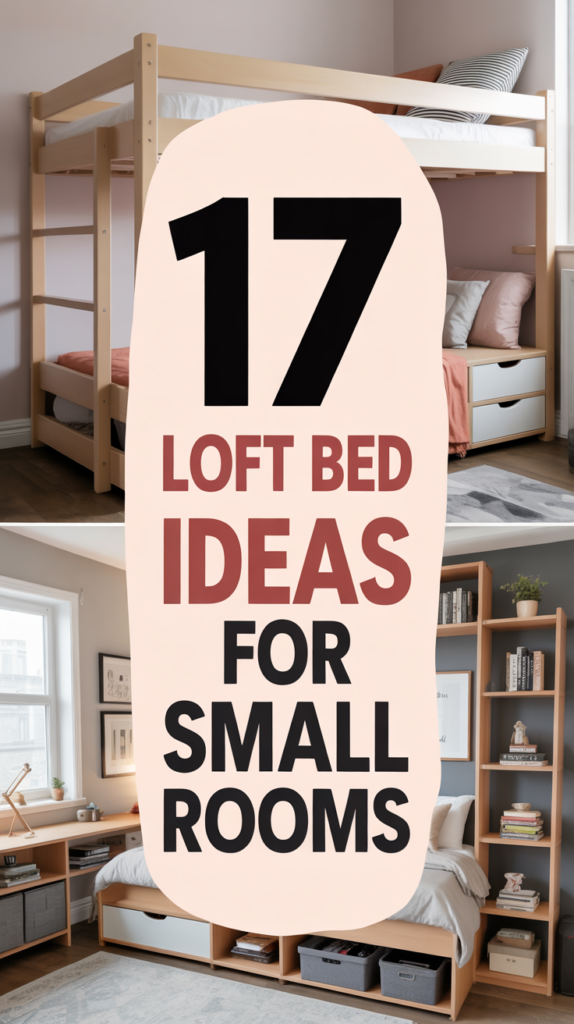
The difference between a room that feels suffocating and one that actually functions comes down to thinking vertically, and that’s exactly what a well-planned loft bed forces you to do. I’ve seen these setups work beautifully in everything from kids’ bedrooms to adult studios, and the seventeen approaches I’m covering here represent the smartest ways I’ve encountered to make every inch count.
Contents
- 1 Staircase Drawers for Organized Vertical Access
- 2 Under-Bed Storage Chests for Bedding and Clothing
- 3 Side Shelving to Keep Floor Space Clear
- 4 Labeled Drawer Systems for Shared Occupants
- 5 Hidden Compartments for Clean Aesthetics
- 6 Built-In Desk Zones Under Elevated Beds
- 7 Compact Shelving for Enhanced Productivity
- 8 VITVAL Loft Frame With Integrated Desktop
- 9 Opposite Loft Configuration With Central Walkway
- 10 Privacy Curtains and Sliding Panels
- 11 Twin Loft Setup for Doubled Sleeping Area
- 12 Futon Lounge Area Underneath Loft
- 13 KURA Reversible Bed in White and Pine
- 14 Low Study Loft With Sturdy Workspace
- 15 Built-In Charging Ports and LED Lighting
- 16 Loft Bed With Slide for Fun and Function
- 17 Accent Wall Focal Points Behind Loft Beds
Staircase Drawers for Organized Vertical Access
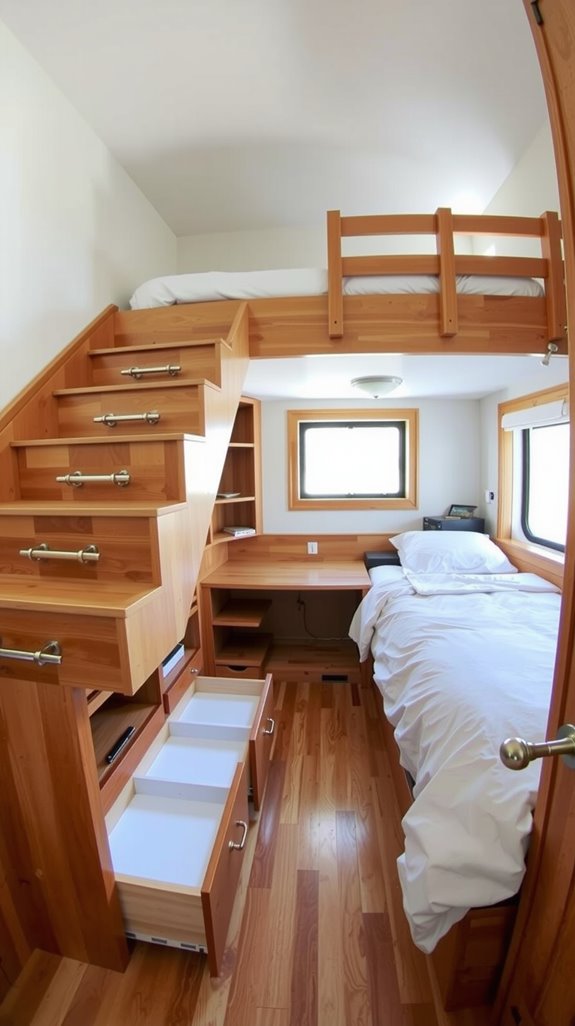
The problem with most loft beds is the ladder, which wastes space and concerns parents of young children. Staircase-style access solves both issues because each step doubles as a deep drawer that can hold as much as your typical dresser.
I’m talking four to five actual storage compartments built right into your path up to bed, perfect for everything from folded clothes to sports gear. The handrail adds stability that makes the whole setup safer than any ladder you’ll find, which is why this design has become my default recommendation for families.
Under-Bed Storage Chests for Bedding and Clothing
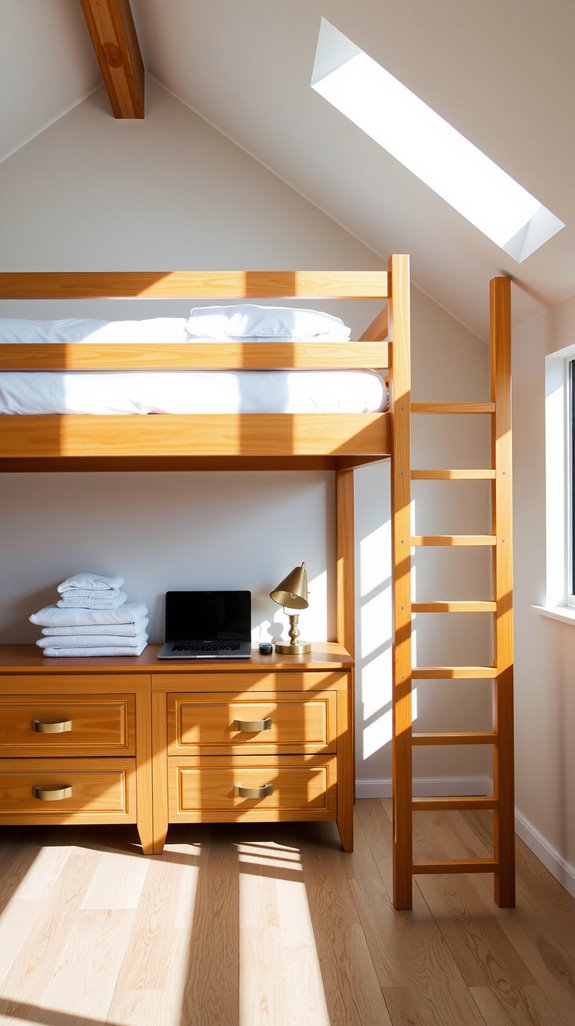
Most people leave the space directly under their loft bed empty or filled with random junk, which is a massive waste. The right storage containers turn that dead zone into the equivalent of a full dresser without taking up any additional floor space.
I typically recommend wheeled plastic bins around six inches tall if you need frequent access, or fabric zippered chests if you’re storing seasonal bedding that you only pull out twice a year. Just measure your clearance height first because nothing’s more frustrating than buying containers that don’t fit.
Side Shelving to Keep Floor Space Clear
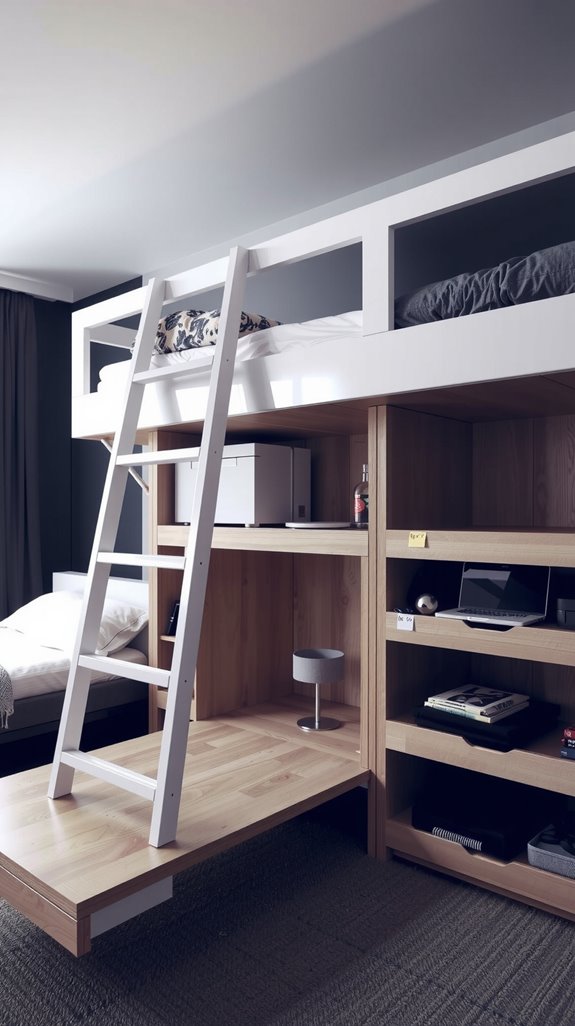
Once you’ve addressed the space below, look at the vertical real estate along the sides of your loft frame. Wall-mounted shelves here give you storage that doesn’t eat into your walking space, which matters tremendously in a tight room.
Foldable designs work brilliantly because they swing up when you don’t need them, eliminating the chance you’ll smack into a shelf corner in the dark. I’ve also had good luck with bamboo trays that hang tool-free on the bed rails and include slots for charging cables, keeping your devices organized without requiring any installation.
Siblings sharing a loft bed setup need clearly defined territories, or you’ll have arguments every single morning. Drawer systems with labeled fronts eliminate the guessing game and give each kid ownership of their own space.
The child-safe closures prevent younger siblings from raiding each other’s storage, which keeps the peace better than any parental intervention. This approach also cuts down on the need for bulky dressers that would otherwise crowd an already tight room.
Hidden Compartments for Clean Aesthetics
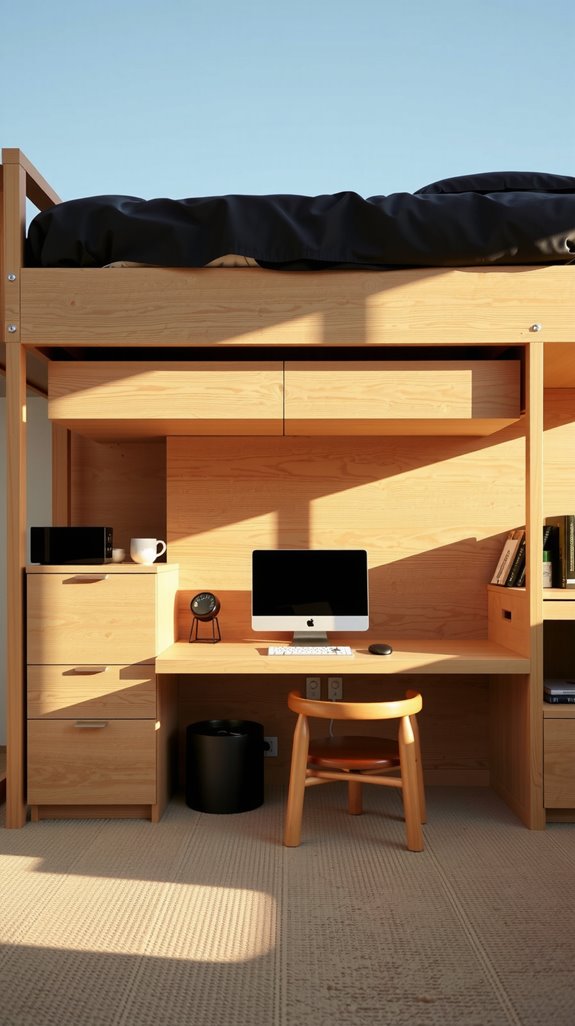
Clean sightlines matter more in small rooms than almost anywhere else because clutter makes tight spaces feel suffocating. Hidden storage compartments built into the loft frame itself let you stash essentials without creating visual chaos.
I prefer sliding panels over open shelving because they keep everything concealed when you’re not actively grabbing something. Curtains work well if you choose a fabric that matches your room’s aesthetic, providing accessible storage without disrupting the clean lines that make a small space feel bigger.
Built-In Desk Zones Under Elevated Beds
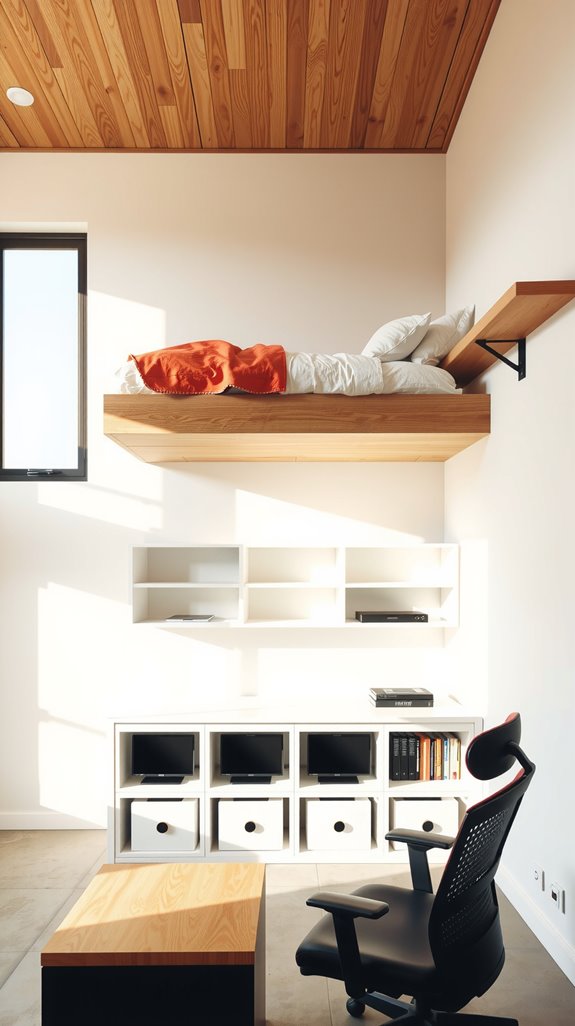
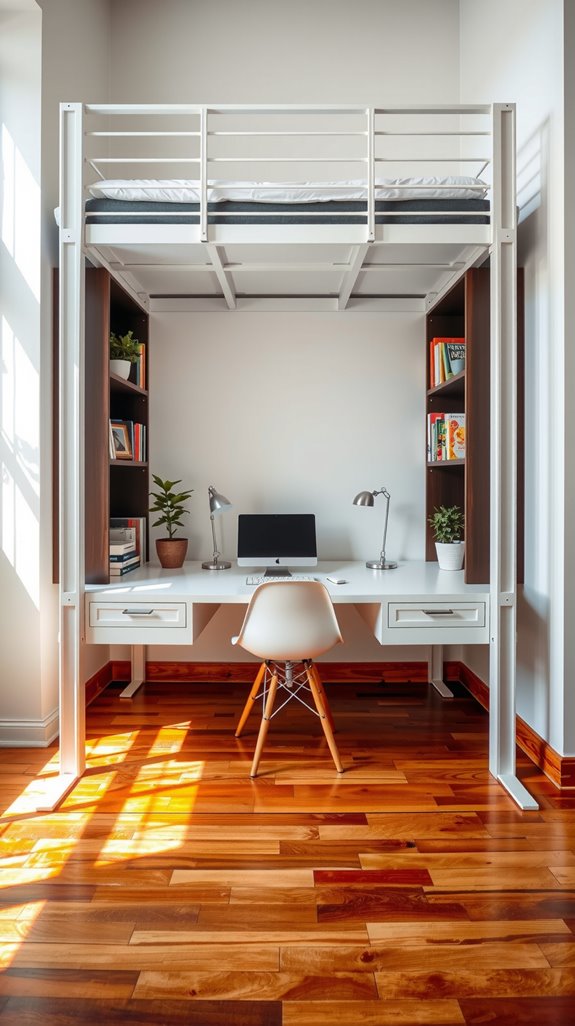
The area beneath a high loft bed is basically a free room within your room if you plan it right. A full-length desk here creates a dedicated workspace without sacrificing a single square foot of your actual floor plan.
Corner configurations give you maximum legroom if you’re taller, while pullout desk options work better for lower lofts where you can’t sit upright underneath. Pairing the desk with storage stairs instead of a ladder gives you even more functionality in the same footprint.
Compact Shelving for Enhanced Productivity
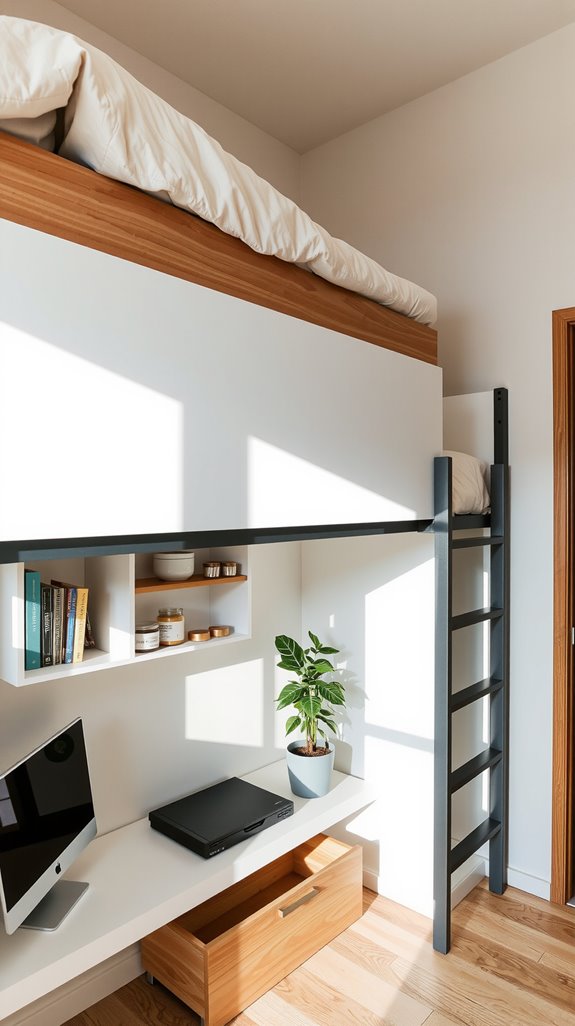
Floating shelves mounted on the wall next to your under-loft desk keep your work essentials within reach without cluttering your desktop. Metal units work great if you’re storing heavier reference books or equipment, while wooden cubed storage fits neatly in the tighter spaces under lower lofts.
I always add task lighting on adjustable brackets because the area under a loft bed tends to be darker than the rest of the room. This combination creates a surprisingly comfortable workspace that adapts as your needs change.
VITVAL Loft Frame With Integrated Desktop
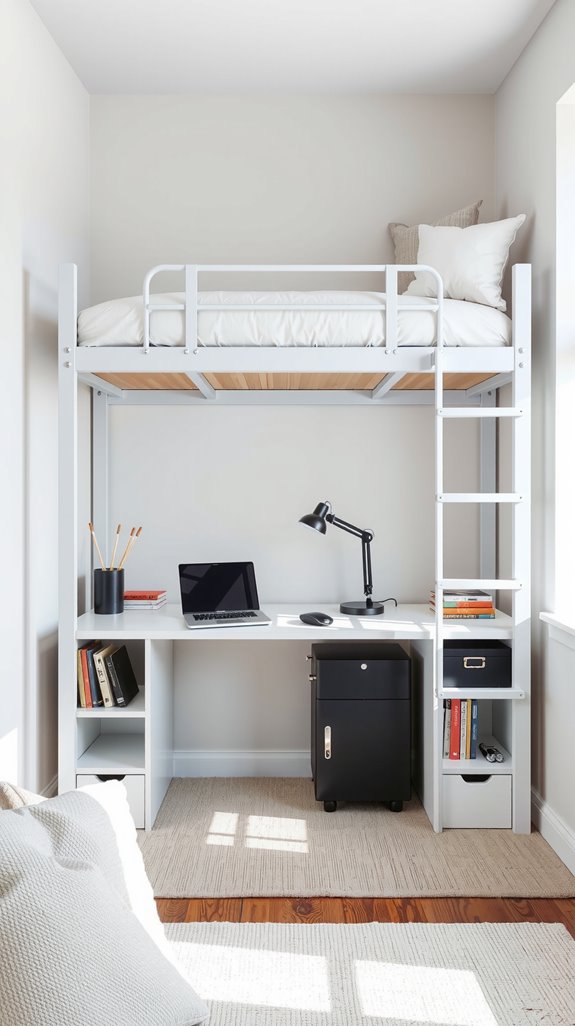
IKEA’s VITVAL gets recommended constantly for good reason. The frame stacks your sleeping area almost five feet up while providing a legitimate desk space underneath that fits a laptop, books, and desk supplies.
Built-in cable management keeps cords organized instead of dangling everywhere, and the magnetic pinboard works with IKEA’s accessory system if you want to add storage pockets or hooks. The fabric guardrail feels safer and more finished than the metal rails you see on cheaper loft beds.
Opposite Loft Configuration With Central Walkway
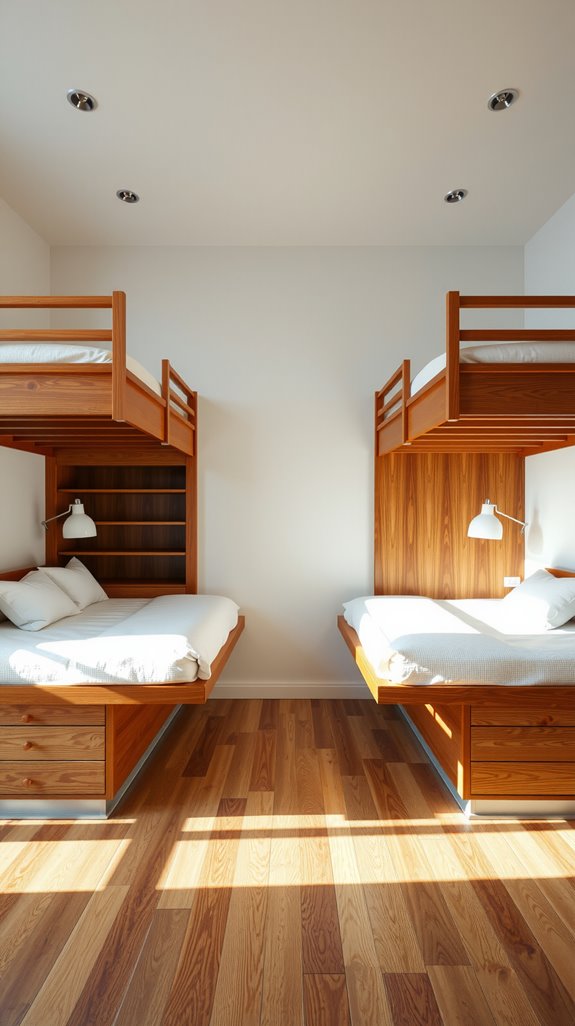
Rooms with high ceilings but limited floor space can handle an ambitious setup where two loft beds face each other across a central walkway. This creates separate sleeping zones for two people while leaving the entire ground level free for living space.
The walkway between them becomes an architectural feature that divides your room into distinct areas without requiring walls or dividers. You need cathedral ceilings or at least ten feet of height to pull this off, but it’s the most dramatic space-saving move I’ve seen work in practice.
Privacy Curtains and Sliding Panels
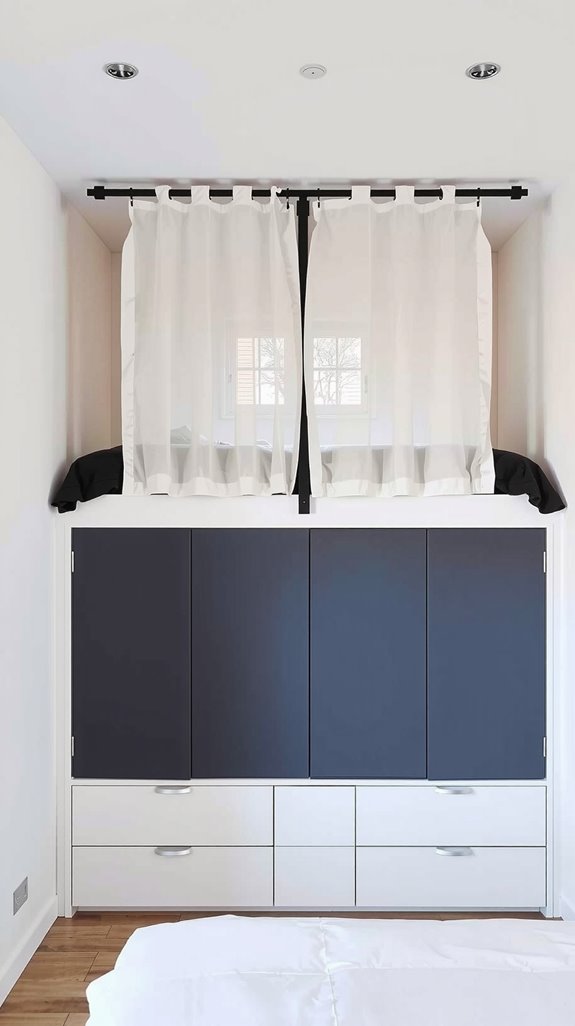
The openness of a loft bed is great until you actually want privacy or need to block light while someone else is awake below. Curtains or sliding panels attached to the bed frame solve this instantly without permanent installation.
Hook-and-loop fasteners make them easy to remove for washing, while rod pockets give you a cleaner look if aesthetics matter to you. Room-darkening panels work best if you’re a light sleeper, but sheer fabrics maintain better airflow in the summer while still providing visual separation.
Twin Loft Setup for Doubled Sleeping Area
Two loft beds in one room essentially give you bunk beds with way more flexibility. Each person gets their own elevated sleeping zone with private storage or workspace underneath instead of being stacked directly on top of each other.
IKEA’s VITVAL works well for this if you’re on a budget, while something like the Oeuf Perch handles heavier weight limits if you’re buying for adults. The configuration works especially well for siblings who want separation but don’t have the luxury of individual rooms.
Futon Lounge Area Underneath Loft
A futon under your loft bed serves triple duty as your daily couch, occasional guest bed, and visual anchor for the lower half of your room. You need at least four feet of clearance depth to make this comfortable when the futon’s in the reclined position.
Quick-convert mechanisms matter more than you’d think because fumbling with a complicated futon frame gets old fast. Washable covers in neutral colors keep the whole setup looking intentional instead of like you just shoved furniture wherever it fit.
KURA Reversible Bed in White and Pine
IKEA’s KURA stands out because it adapts as your needs change instead of locking you into one configuration. The bed flips between a low-profile frame and a full loft setup, which is perfect for kids who might not be ready for a high bed initially.
Solid pine construction feels sturdier than the particleboard you see on budget options, and the 220-pound weight limit means it’ll last through the teenage years. Standard twin mattresses fit without any modifications, which saves you from hunting down specialty bedding.
Low Study Loft With Sturdy Workspace
Not everyone needs or wants a bed that sits five feet off the ground. Lower loft beds give you about three feet of clearance underneath, which is enough for a desk and storage, but won’t work if you’re planning to sit upright down there.
The trade-off is easier access and a less imposing presence in the room, which matters if you’re working with lower ceilings or just prefer something that feels less dramatic. Guard rails and quality wood construction still apply here, with most models supporting around 175 pounds comfortably.
Built-In Charging Ports and LED Lighting
Modern loft beds aimed at students finally acknowledge that we live in a world of devices that need constant charging. Integrated AC outlets and USB ports in the desk surface mean you’re not running extension cords up the side of your bed or fighting for the one outlet across the room.
App-controlled LED lighting might sound excessive until you realize you can adjust the brightness and color temperature based on whether you’re gaming, studying, or trying to wind down for sleep. These tech additions cost more upfront but eliminate the cord clutter that makes small spaces feel messy.
Loft Bed With Slide for Fun and Function
Kids’ loft beds with slides turn bedtime into something fun instead of a chore, which matters more than you’d think for parents dealing with resistant sleepers. The slide also gives you an emergency exit option that beats climbing down a ladder in the dark.
Most designs need about four feet of clearance for the slide landing, and they typically work best for ages six and up when kids have the coordination to use them safely. The floor space under these beds still works for storage or a small desk, so you’re not sacrificing functionality for the entertainment factor.
Accent Wall Focal Points Behind Loft Beds
A bold accent wall behind your loft bed turns what could be an awkward vertical space into an intentional design choice. Navy blue or deep teal draws the eye upward and makes your ceiling feel higher than it actually is.
Geometric wallpaper adds visual interest without requiring artistic skill, while textured materials like shiplap create depth that paint alone can’t achieve. LED strip lighting along the bed frame highlights your accent wall at night and provides ambient lighting that’s more pleasant than harsh overhead fixtures.