Vintage caravans sit in backyards across the country, gathering moss and memories in equal measure. You spot one with those classic curved lines and chrome trim, and something pulls at you.
Maybe it’s the romance of the open road from a simpler era, or maybe you just can’t stomach another cookie-cutter RV that looks like it rolled off an assembly line yesterday.
The question isn’t whether to restore it. The question is how to make it roadworthy without turning it into just another modern box on wheels. That balance is harder than it looks, and this guide walks you through it.
Contents
- 1 Find and Assess a Vintage Caravan Worth Renovating
- 2 Upgrade the Chassis, Axles, and Braking System First
- 3 Repair the Frame and Walls Using Period-Appropriate Methods
- 4 Replace Heavy Parts With Composite Panels and Lithium Batteries
- 5 Redesign the Interior Layout With Lightweight Modern Components
- 6 Prep, Paint, and Seal the Exterior for Long-Term Protection
- 7 Conclusion
Find and Assess a Vintage Caravan Worth Renovating
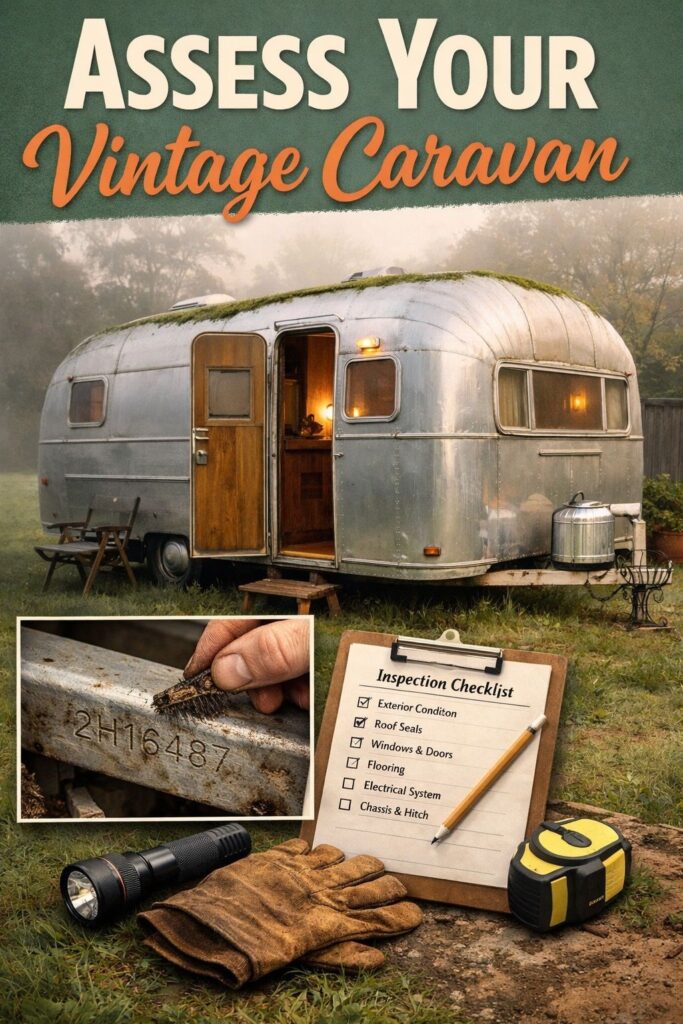
The VIN tells you everything, if you know where to look. You’ll find it stamped on the A-frame, along the chassis rail, or tucked in a window corner.
Run it through CRIS or HPI Equifax to make sure it’s not stolen.
Cross-reference what you find with the weight plate and any paperwork the seller has.
That 10th character in the 17-digit VIN is your build year, which matters more than you think when you’re trying to source parts or prove authenticity down the line.
Upgrade the Chassis, Axles, and Braking System First
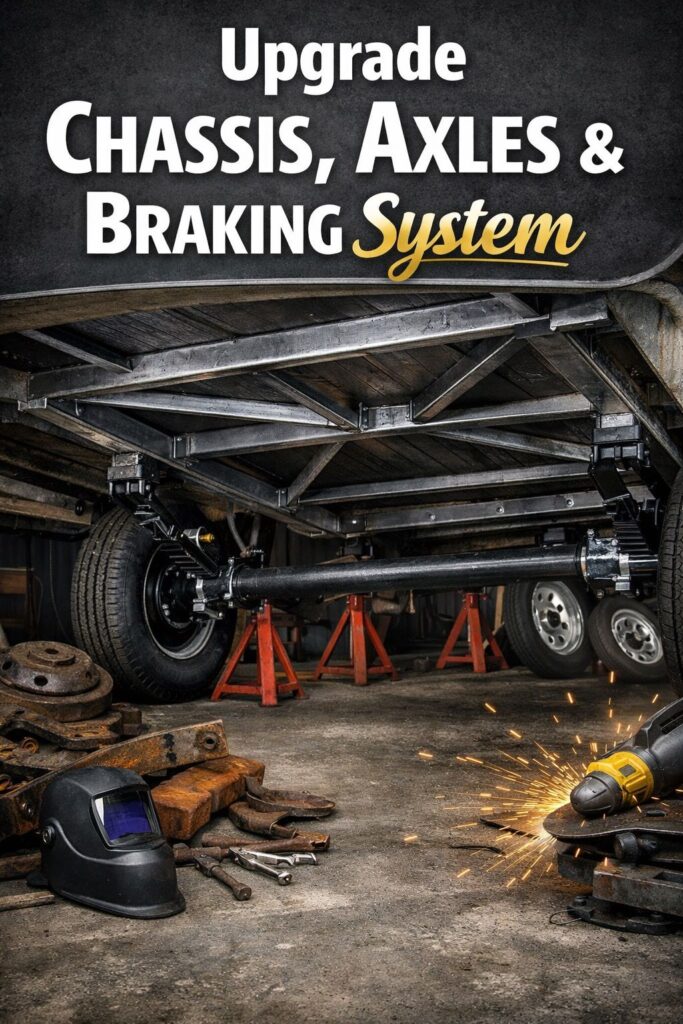
Forget the curtains and upholstery for now. If the chassis is compromised, you’ve got an expensive lawn ornament, not a caravan or travel trailer.
Weld triangulated steel reinforcements to the original frame at 50mm intervals to distribute stress properly.
Flip those sagging leaf springs to get your ride height back, then upgrade to 14-inch rims with modern axles that can actually handle highway speeds.
Coat everything you’ve welded with rust-inhibiting primer before moisture finds its way in. Door frames rot out faster than anything else on these old rigs, so check them twice and reinforce them properly.
Repair the Frame and Walls Using Period-Appropriate Methods
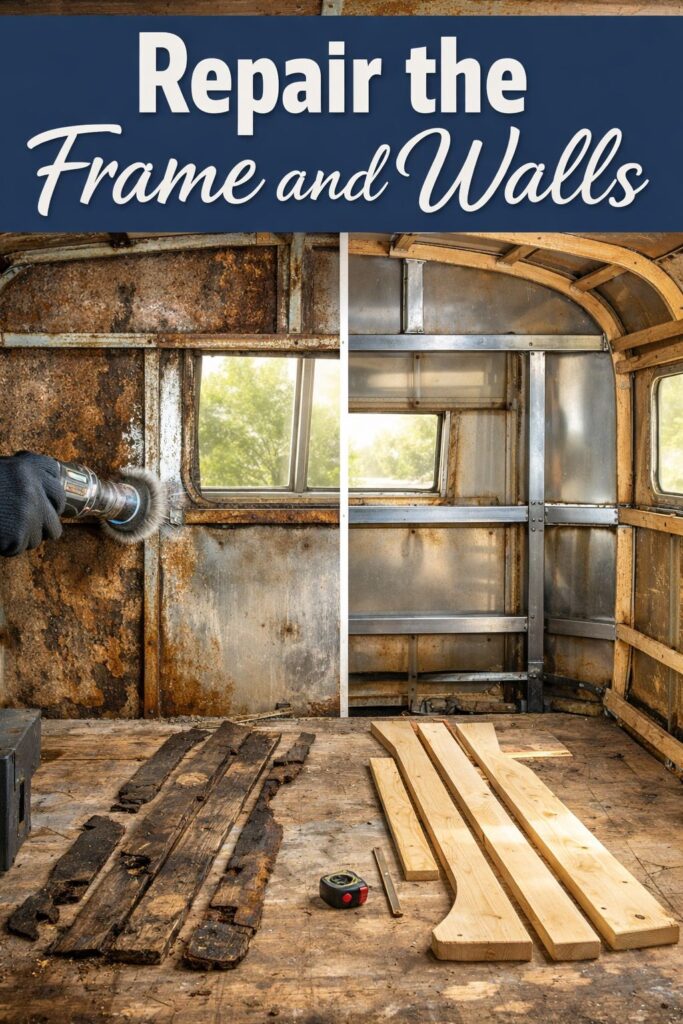
Surface rust comes off with a wire brush, grinding disk, or needle gun if you’ve got one.
Treat what’s left with tannic acid to stop it spreading before you prime. When you find sections that are too far gone, cut them out cleanly and weld in fresh metal that matches the gauge and profile of the original.
Save every piece of rotten timber you pull out. Those warped, crumbling boards are your templates for cutting replacements, and they’ll save you from costly mistakes when nothing is square anymore.
SEE THIS: Static Caravan Makeover Tips for Year-Round Living Comfort!
Replace Heavy Parts With Composite Panels and Lithium Batteries
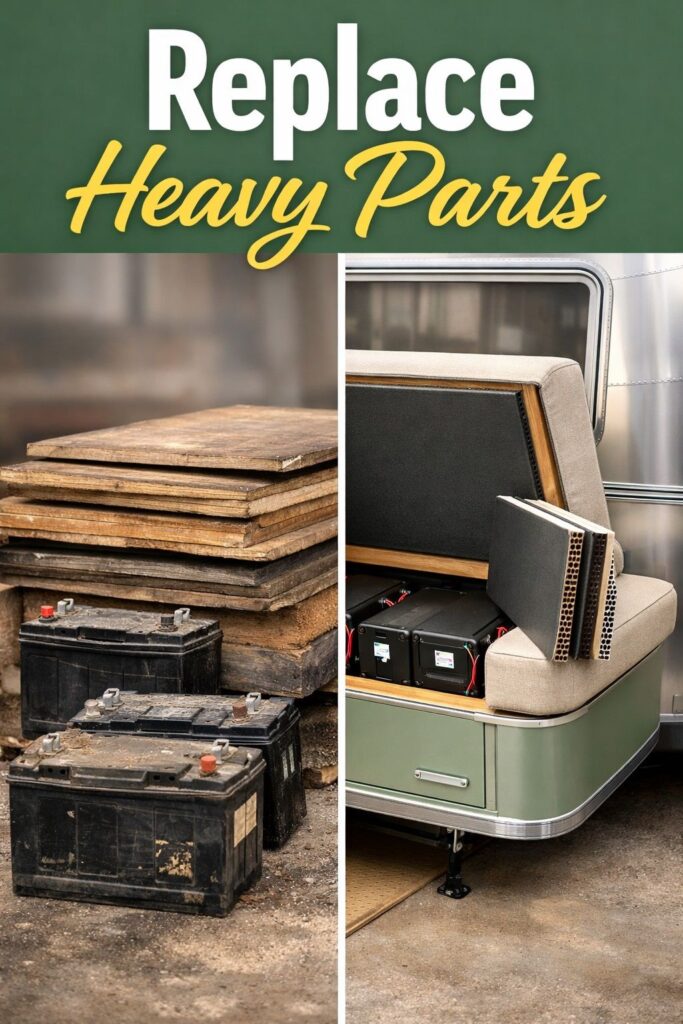
Composite panels weigh 30 to 60 percent less than the marine plywood your caravan left the factory with.
They don’t rot, they don’t absorb water, and they won’t delaminate after a few seasons of temperature swings. Pair them with lithium batteries instead of those boat anchor lead-acids, and you’ll notice the difference the moment you hook up your tow vehicle.
Your fuel economy improves, your payload capacity opens up, and the whole rig tows like it’s half the size. None of this changes what the caravan looks like from the outside, which is exactly the point.
SEE THIS: Caravan Makeover Color Schemes That Instantly Refresh Dated Interiors!
Redesign the Interior Layout With Lightweight Modern Components
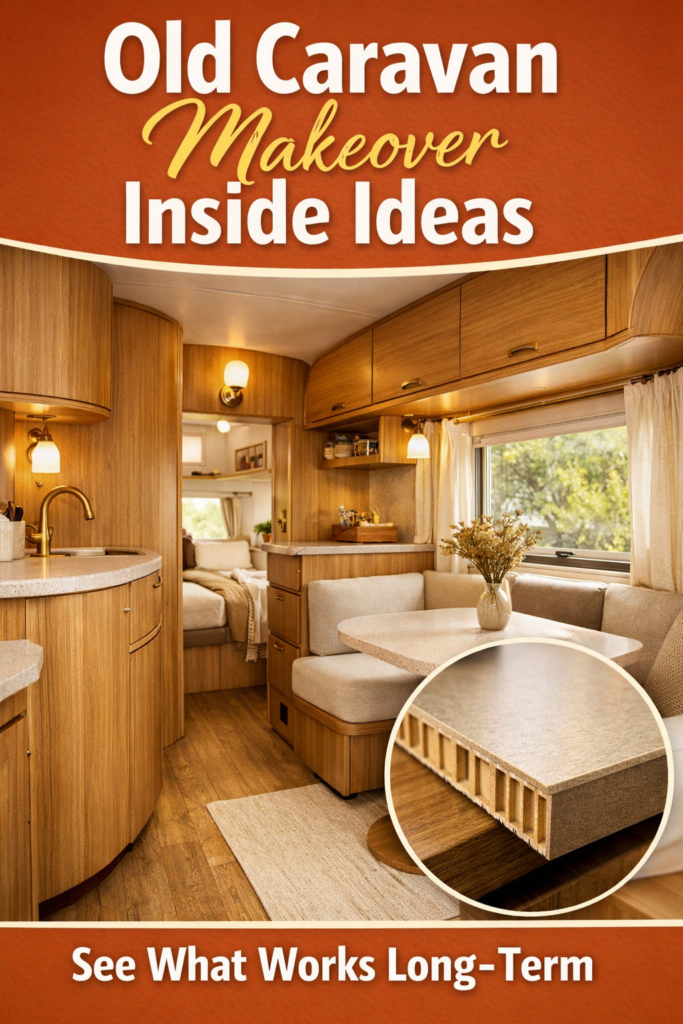
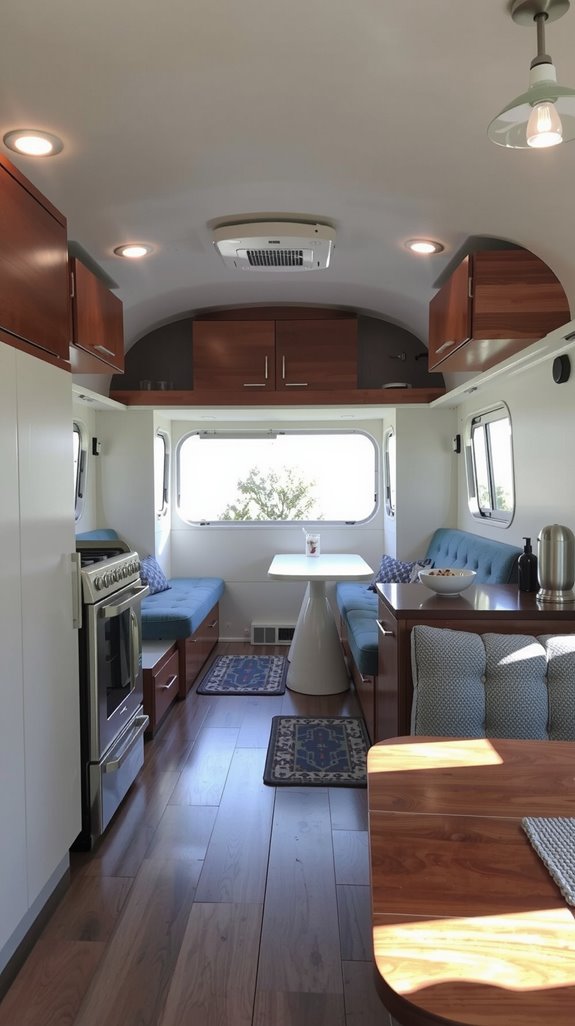
LITEPRO honeycomb panels make excellent kitchen counters and room dividers without the weight penalty.
RENOLIT handles moisture better than anything else, so use it anywhere water might show up. Kerfkore bends around tight curves in cabinetry while resisting humidity and temperature changes.
All three accept laminate finishes in wood grain, stone, or whatever contemporary look you’re after.
You can honor the original layout and aesthetic while using materials that won’t fail you three years down the road.
Prep, Paint, and Seal the Exterior for Long-Term Protection
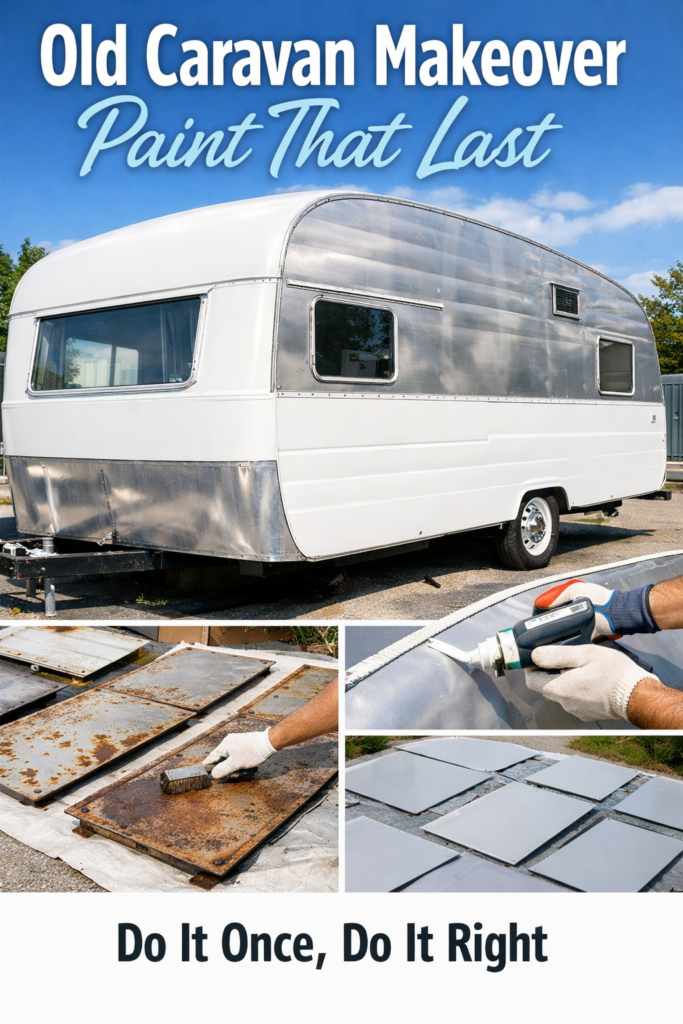
Strip everything off the exterior before you even think about paint. Pull the panels, inspect for water intrusion, then attack old paint and corrosion with a wire brush drill attachment and mineral turpentine. Two coats of water-based undercoat give you a proper foundation.
Finish with an enamel topcoat that can handle UV exposure and road grime. Seal the aluminum frame joints with modern sealant that stays flexible. This step separates restorations that last from those that need redoing in five years.
Conclusion
A properly restored vintage caravan holds its value better than one that’s been patched together with hope and fiberglass.
The numbers say about 80 percent better, which makes this more than a hobby project.
Focus on structural integrity first, cut weight with modern materials second, and preserve the original character throughout.
What you end up with is a travel trailer that actually reflects your taste instead of some designer’s idea of what everyone should want. People will stop you at campgrounds to ask about it, and you’ll have stories worth telling.