Getting organized doesn’t mean spending hundreds on professional systems or fancy storage units. That’s what the Container Store wants you to believe, anyway. The truth is simpler: a little creativity and some dollar store finds will get you nearly the same results.
Your home already contains half the solutions you need, sitting unused in closets or headed for the recycling bin. The other half costs almost nothing. The 16 ideas ahead show you exactly where to look.
Contents
- 1 Key Takeaways
- 2 Repurpose Dollar Store Bins and Baskets for Instant Storage Solutions
- 3 Transform Empty Shoeboxes Into Drawer Dividers
- 4 Use Tension Rods to Maximize Vertical Space in Cabinets
- 5 Create a Command Center With Free Printable Organizers
- 6 Install Pegboards for Customizable Wall Storage
- 7 Organize With Mason Jars and Recycled Containers
- 8 Hang Over-the-Door Organizers in Every Room
- 9 Build Simple Floating Shelves From Reclaimed Wood
- 10 Use Binder Clips and Magazine Holders for Paper Management
- 11 Maximize Under-Bed Storage With Rolling Bins
- 12 Organize Cords and Cables With Toilet Paper Rolls
- 13 Create Drawer Organizers From Cardboard Boxes
- 14 Use Hooks and Command Strips for Vertical Organization
- 15 Repurpose Furniture for Multi-Purpose Storage
- 16 Organize the Garage With PVC Pipe Storage Racks
- 17 Declutter First: The One-In-One-Out Rule for Maintenance
Key Takeaways
- Dollar store bins and lazy Susans create affordable storage without custom installations
- Shoeboxes and cardboard become custom drawer dividers with simple modifications
- Tension rods and pegboards maximize vertical space without permanent changes
- Mason jars and recycled containers store everything from pantry items to tangled cords
- The one-in-one-out rule maintains organization after your initial declutter
Repurpose Dollar Store Bins and Baskets for Instant Storage Solutions
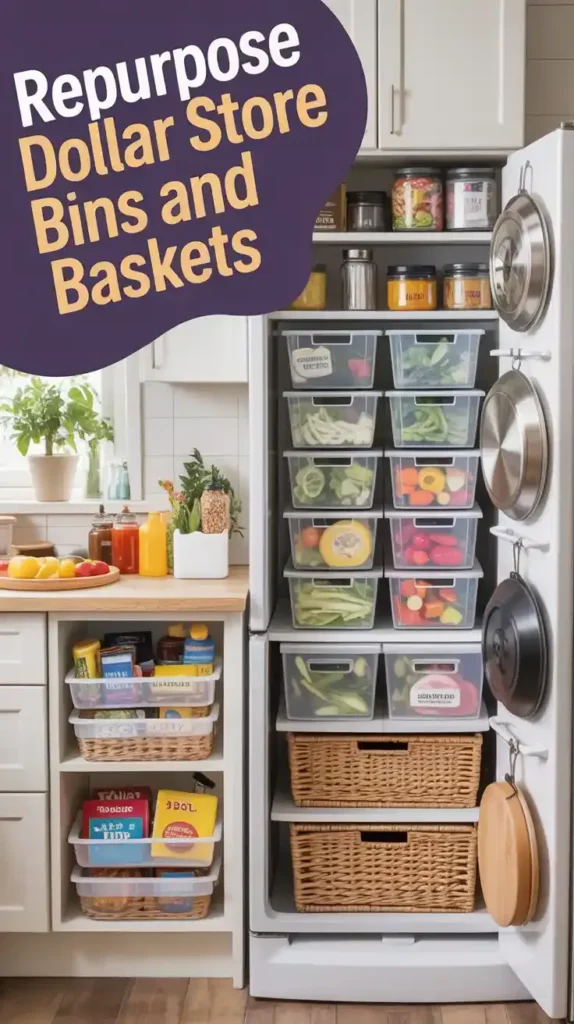
Your local dollar store stocks the same basic bins that high-end retailers sell for ten times the price. Plastic bins work beautifully for creating a refrigerator salad bar where you can grab pre-prepped vegetables throughout the week.
Small clip-on drawers attached to existing shelves suddenly give you dedicated spots for cheese sticks and snack packs that otherwise get lost in the chaos. Lazy Susans stop that maddening hunt for the mustard bottle hiding in the back, and a pair of shower caddies zip-tied together will hold cutting boards and pot lids better than most expensive drawer inserts.
Transform Empty Shoeboxes Into Drawer Dividers
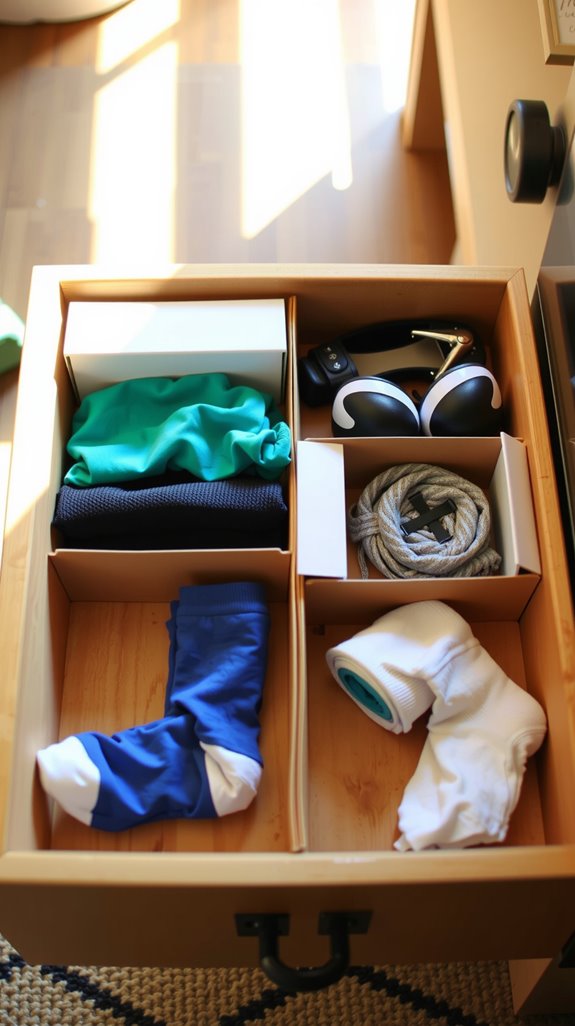
Those shoeboxes you’ve been meaning to recycle are actually perfect drawer organizers. Cut them down to matching heights and slide them into your sock drawer for instant compartments that cost absolutely nothing.
If you want adjustable sections, score some cardboard scraps and slot them together in a grid pattern that you can reconfigure whenever your needs change. A little hot glue on weak corners, some felt lining on the bottom, and fabric wrapped around the outside turns these throwaway boxes into organizers that look surprisingly intentional.
Use Tension Rods to Maximize Vertical Space in Cabinets
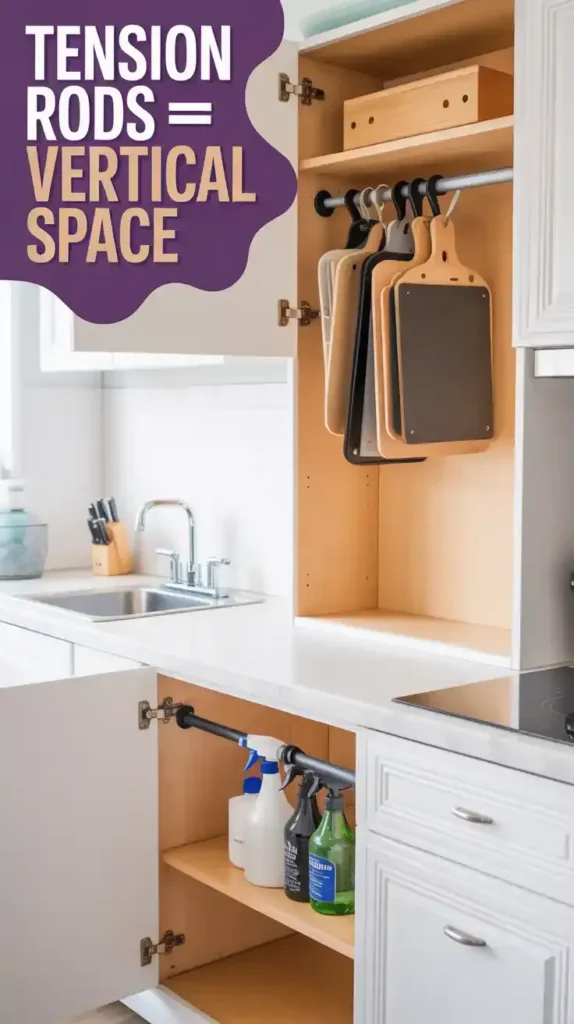
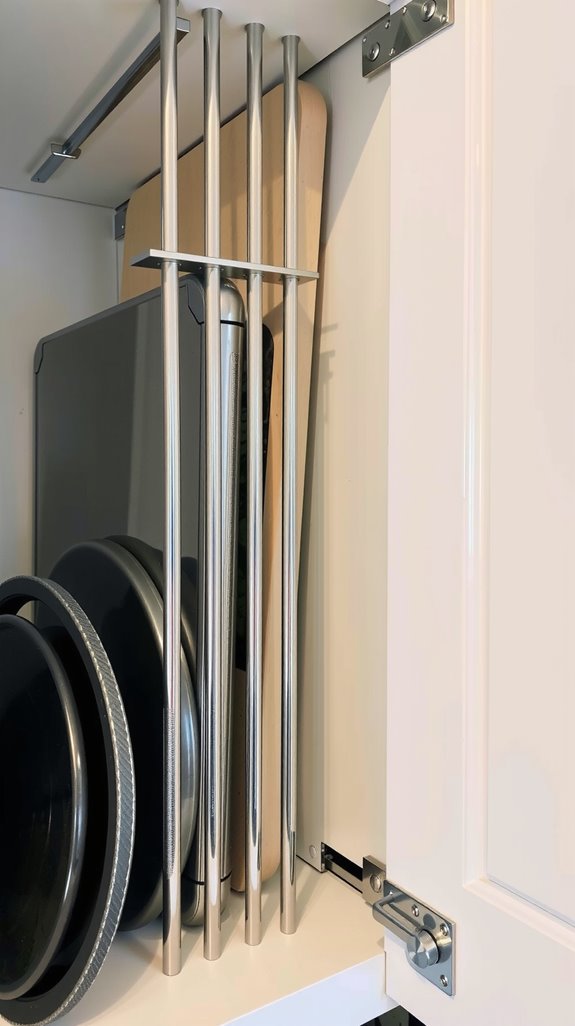
Cabinet space gets wasted because we only think horizontally. A tension rod installed vertically creates perfect slots for baking sheets and cutting boards that otherwise clatter around and fall over.
Under the kitchen sink, a horizontal rod gives you instant hanging storage for spray bottles and dish gloves. The beauty here is zero commitment: you can adjust the spacing, swap them between cabinets, and pull them out in seconds when the plumber needs access to your pipes.
Create a Command Center With Free Printable Organizers
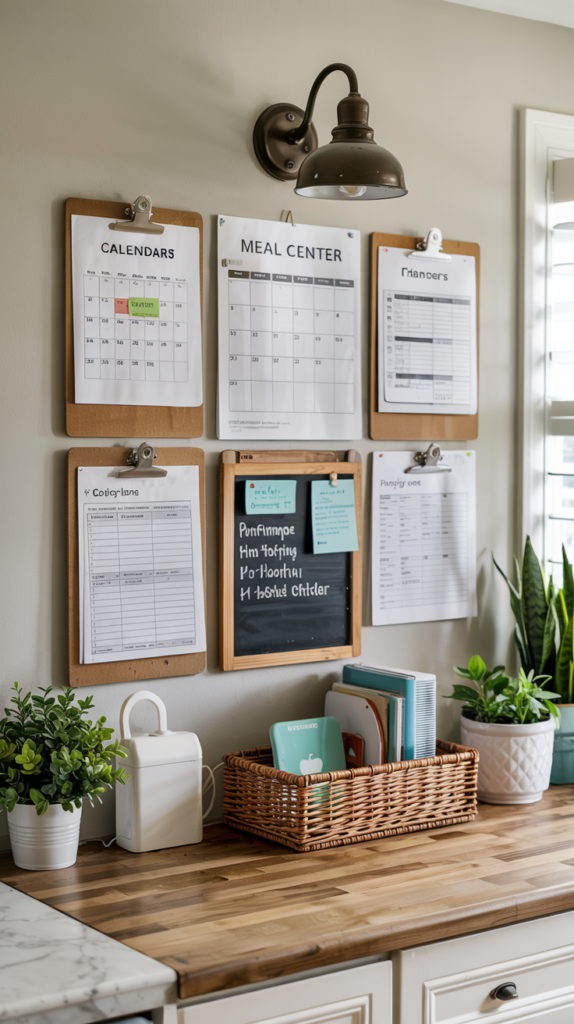
Paper explosion happens to every household, especially when school schedules collide with work calendars and soccer practice. A command center consolidates all that information onto one wall or inside a cabinet door where everyone knows to look.
Free printables give you calendars, meal plans, and chore charts without spending a dime on fancy planners. Clipboards from Dollar Tree hold rotating schedules, a small dry-erase board tracks daily tasks, and suddenly, you’ve created a family hub that actually gets used instead of being ignored.
Install Pegboards for Customizable Wall Storage
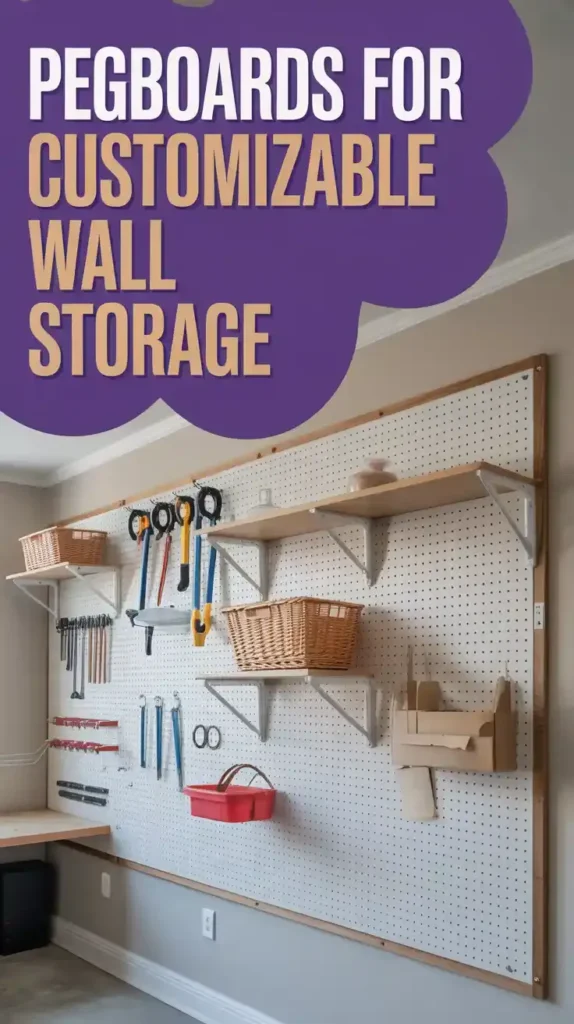
Pegboards give you the flexibility that fixed shelving never will. Measure your wall space, find the studs, and attach some furring strips behind the board so your hooks have clearance to actually hook into something.
Screw the pegboard to the strips every sixteen inches, and you’ve got a system that rearranges whenever your storage needs shift. Heavy items go up top where the attachment is strongest, and you can add little shelves or magnetic strips wherever they make sense for your specific gear.
Organize With Mason Jars and Recycled Containers
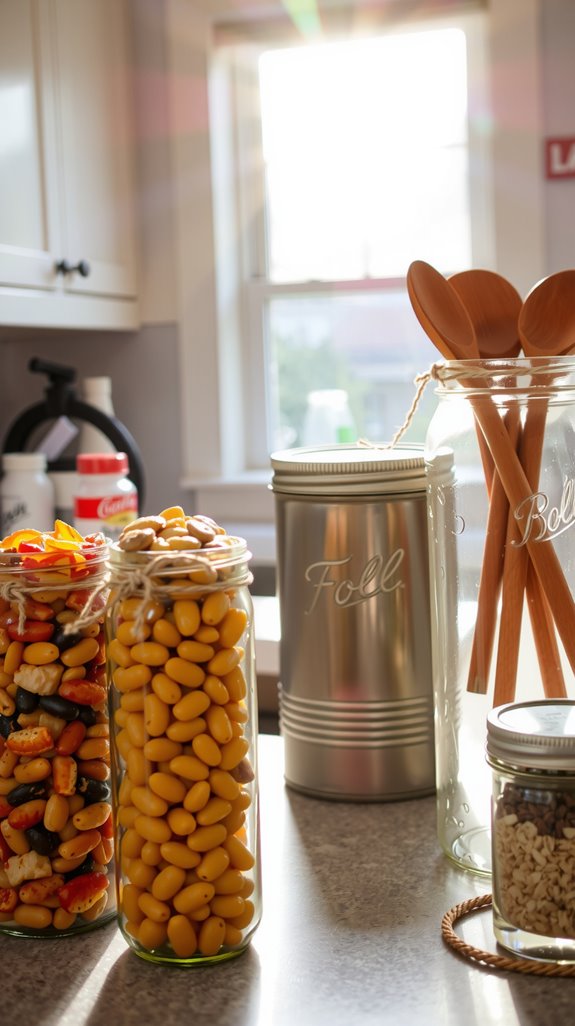
Glass jars solve so many storage problems that it’s almost unfair to other organizing methods. Mason jars cost less than a dollar during canning season and will hold your pantry staples, bathroom cotton balls, loose change, and craft buttons with equal efficiency.
A Sharpie paint pen creates labels that actually stick, unlike those sad masking tape strips that peel off after a week. Switching from plastic bins to glass also means fewer chemicals leaching into your food, which matters more than most people realize.
Hang Over-the-Door Organizers in Every Room
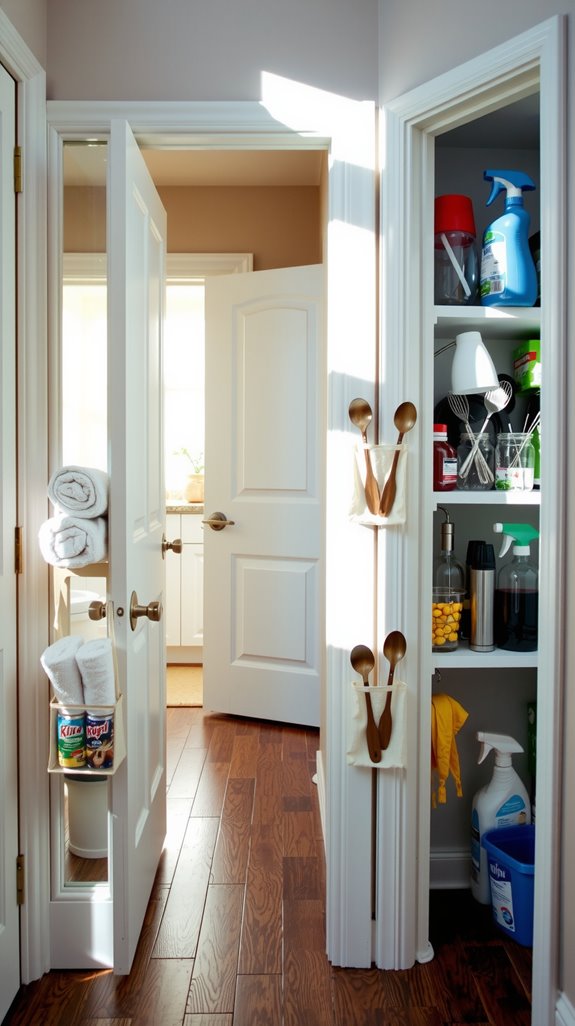
Door backs are the most overlooked real estate in your house. An over-the-door shoe rack in the bedroom, towel hooks in the bathroom, a spice rack in the kitchen, and file pouches in your home office give you functional storage for less than twenty bucks total.
No tools, no drilling, no explaining holes to your landlord when you move out. Metal or hard plastic versions hold up better than fabric, just make sure you distribute weight evenly so you’re not stressing the door hinges.
Build Simple Floating Shelves From Reclaimed Wood
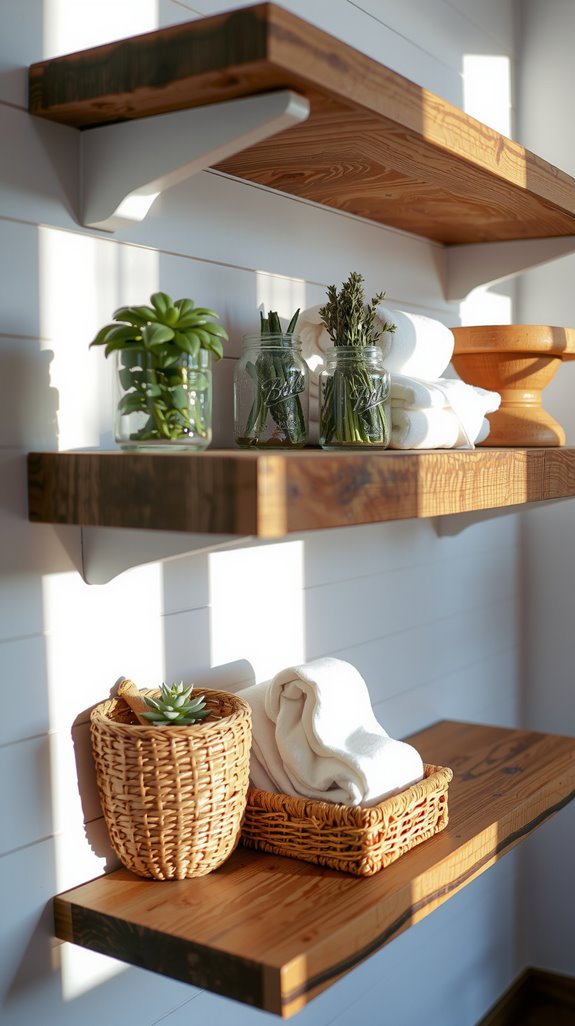
Reclaimed wood carries a character that Ikea will never replicate. Hit up a salvage yard or construction site for weathered boards, then check them for stability and let them adjust to your home’s humidity before cutting.
Hidden brackets anchored into studs give you that floating look without visible hardware, though anything longer than three feet needs internal support, or it’ll sag over time. Pre-finishing the wood before installation saves your walls from accidental stains and scratches.
Use Binder Clips and Magazine Holders for Paper Management
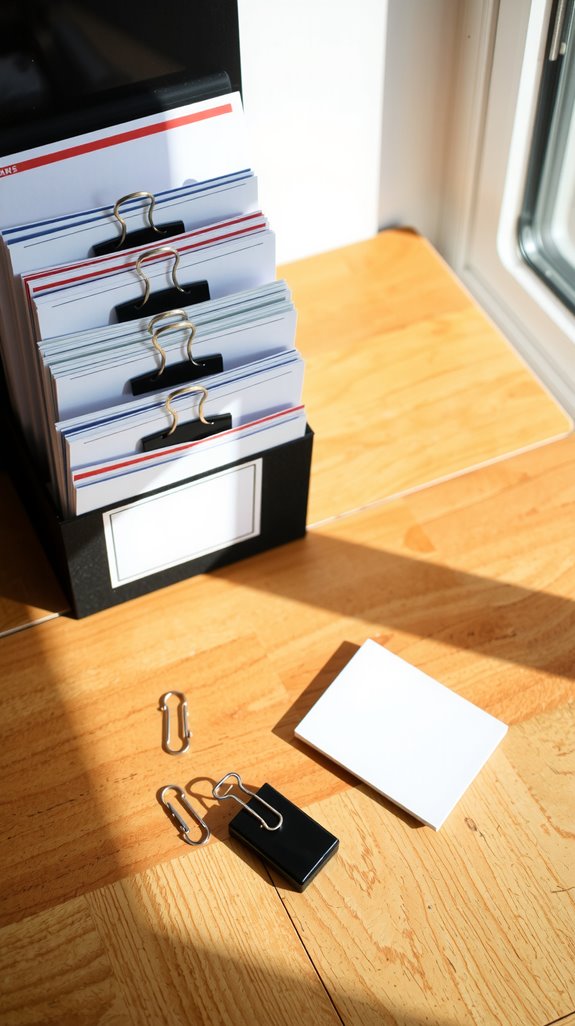
Paper systems fail because they’re too complicated or too expensive to maintain. Large binder clips hanging from small nails create rotating displays for schedules and kids’ artwork without the tape residue that damages walls.
Magazine holders labeled by category (incoming mail, bills to pay, action items) establish a workflow that actually makes sense. Stack your clipped papers inside the vertical holders, and you’ve got space-efficient storage that takes three seconds to retrieve whatever you need.
Maximize Under-Bed Storage With Rolling Bins
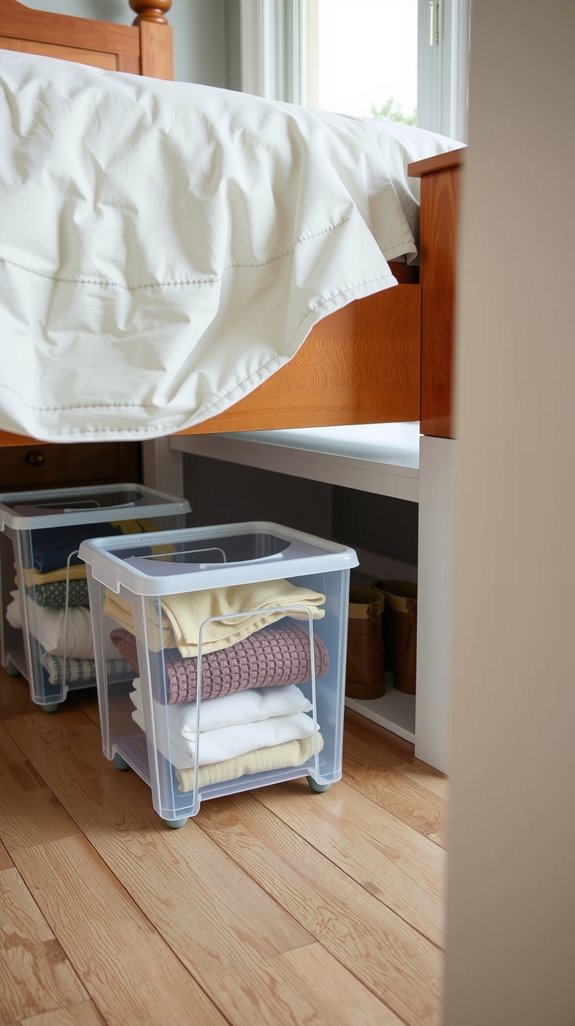
Most beds sit high enough off the floor to hide several square feet of storage. Rolling bins slide in and out without forcing you to move furniture or crawl on your hands and knees. Lidded containers keep dust off your winter bedding and out-of-season clothes, which matters if you have allergies or pets.
Measure your clearance height first because nothing’s more annoying than buying bins that don’t actually fit, then grab some affordable wheeled boxes that match your space.
Organize Cords and Cables With Toilet Paper Rolls
Electronic cords multiply like rabbits and tangle like headphone wires in your pocket. Toilet paper rolls stop that chaos for exactly zero dollars.
Fold each cable in half a few times until it fits snugly inside a roll with the connectors poking out the top for easy identification. Line them up in a shoebox or desk drawer, maybe tape them together if you want extra stability, and enjoy never untangling another charging cable again.
Create Drawer Organizers From Cardboard Boxes
Amazon boxes arrive weekly at most houses, and they’re basically free drawer organizers in disguise. Measure your drawer, cut cardboard pieces about an eighth inch shorter so they fit without jamming, then sketch out compartments based on what you’re actually storing.
Interlocking notches hold everything stable without glue, though doubling up the cardboard and hitting it with hot glue creates organizers sturdy enough to last years instead of months.
Use Hooks and Command Strips for Vertical Organization
Walls and cabinet doors waste space that hooks reclaim instantly. Command Strips stick grocery lists inside pantry doors, hang measuring spoons inside cabinets, and organize keys by the front door without requiring a single drill bit.
Shower walls accommodate hooks for loofahs and razors once you get over the idea that only towel bars belong in bathrooms. Clean the surface thoroughly and wait the recommended time before loading weight onto the adhesive; otherwise, you’ll wake up to everything crashing to the floor.
Repurpose Furniture for Multi-Purpose Storage
Thrift stores overflow with solid furniture that needs nothing more than a fresh purpose. Dresser drawers mounted on walls become floating shelves with built-in compartments. Old entertainment centers transform into shoe cabinets once you remove a shelf or two.
Trunks work as coffee tables that hide files and winter blankets, wine crates stack into bookshelves, and wooden ladders lean against walls as towel racks that add vertical storage without construction.
Organize the Garage With PVC Pipe Storage Racks
PVC pipe costs almost nothing and tolerates the temperature swings that destroy cheaper materials. Two-inch Schedule 40 pipe with T-connectors and elbows creates overhead racks for screwdrivers and paintbrushes that would otherwise roll around in drawers.
Twelve-inch segments with five-inch slots mounted under existing shelves hold cordless drills and power tools. Connect 24-inch pipes between four leg assemblies for portable shelving, or attach 14-inch pipes to wood slabs for garden tool organizers that lean against the wall.
Declutter First: The One-In-One-Out Rule for Maintenance
Organization fails when you’re constantly drowning in new stuff. The one-in-one-out rule stops that cycle: every new item entering your home requires removing one existing item through donation, sale, or trash.
This caps your total possessions after your initial declutter and fundamentally shifts how you think about purchases. You’ll start questioning whether you really need that impulse buy when it means choosing something else to remove, and that hesitation alone prevents most of the clutter that ruins organizational systems.