| What this is: A practical guide to making any rental space feel genuinely autumnal — using only moves that survive move-out day with your deposit intact. Who it’s for: Renters, apartment dwellers, and anyone living somewhere they can’t paint, drill, or alter — who are tired of fall decor guides written for people with actual equity. Why read it: You’ll learn which specific renter-friendly tools do real decorating work, which fall moves transfer to any space you don’t own, and how to build a cozy fall apartment aesthetic without touching a wall. |
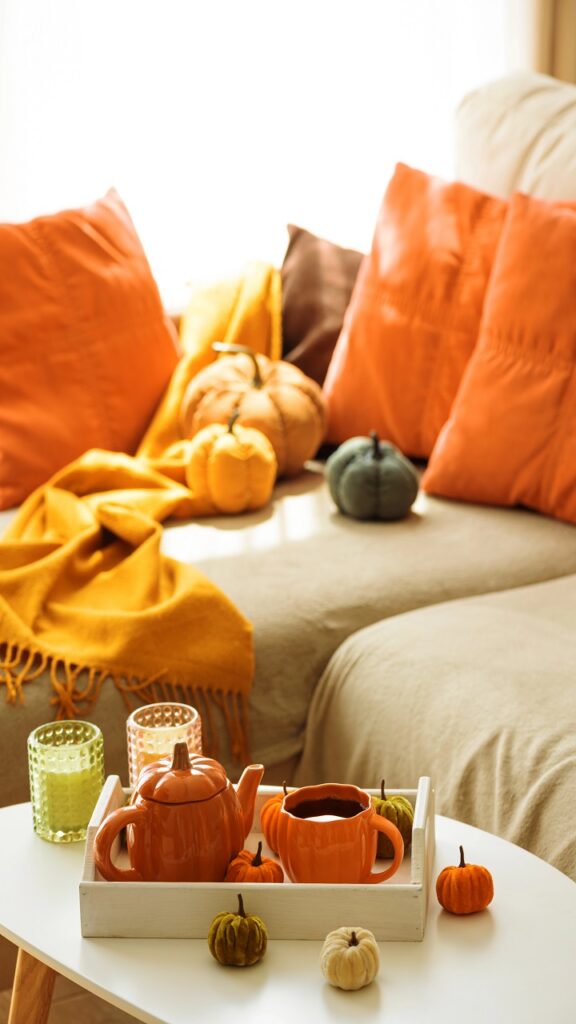
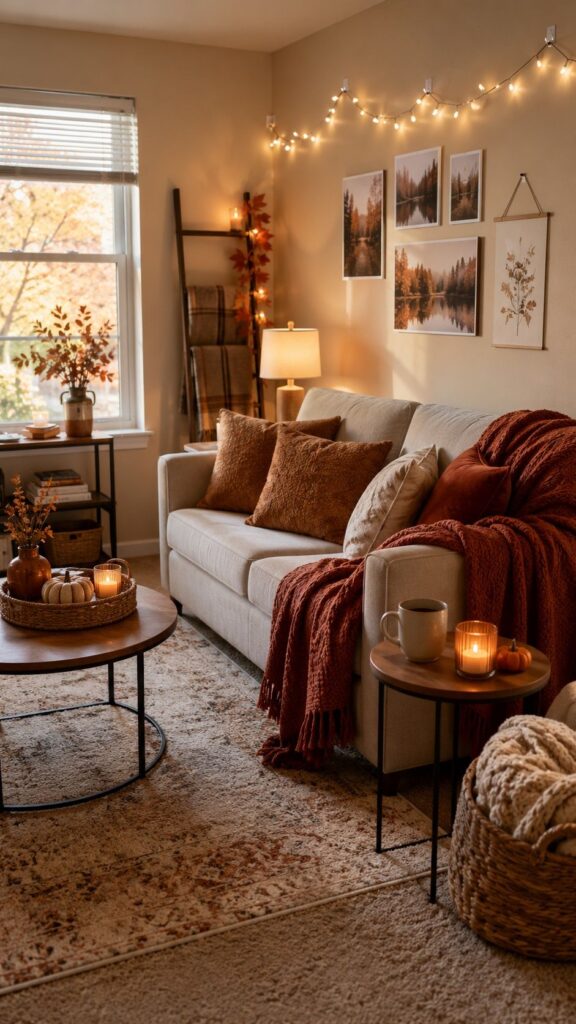
Most fall decor content is quietly written for homeowners. The inspo shots feature original wood floors, custom built-ins, and the kind of neutral paint job a landlord would never approve — because a landlord never had to. If you’re renting, you spend every October scrolling past inspiration that technically isn’t for you.
The truth is, the constraint isn’t the problem. A rented space with beige walls and builder-grade carpet is actually an excellent canvas — it’s a blank slate, not a limitation.
The mistake renters make is reaching for the same tools homeowners use. Nail guns, paint rollers, and permanent wallpaper paste are not your tools. Yours are smarter.
Here’s what actually works.
Your Textile Strategy Does Most of the Heavy Lifting
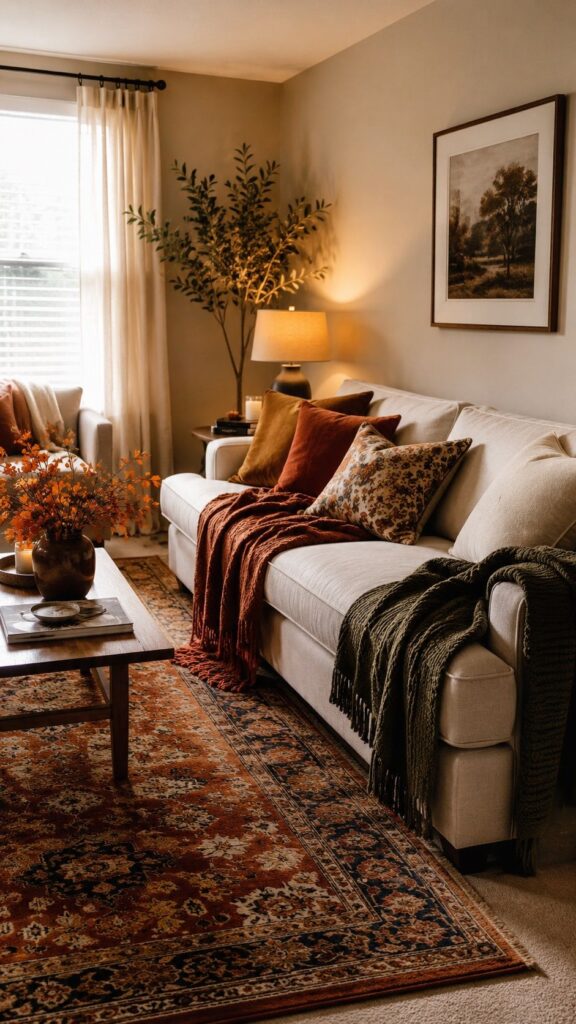
The single most effective renter move is understanding that textiles — rugs, throws, cushions, curtains — are doing ninety percent of what paint and built-ins do in owned homes, and they do it without touching a surface.
Your sofa is probably not yours. The carpet is not yours. But everything draped over, laid on top of, or piled against them is. A warm-toned color scheme built through textiles — rust throw, mustard cushions, a deep olive blanket folded over the armrest — shifts the room’s palette completely without your landlord ever knowing.
The 60-30-10 rule applies here just as it does in owned spaces: let one warm neutral dominate, one deeper autumn tone support it, one accent pop through in pillows or a vase.
The rug is the highest-leverage single purchase. A correctly sized area rug in terracotta, warm brown, or a Persian-style pattern will visually transform a room more than any wall treatment — and it comes with you when you leave.
Tension Rods and Clip Rings Give You Full Curtains Without a Single Hole
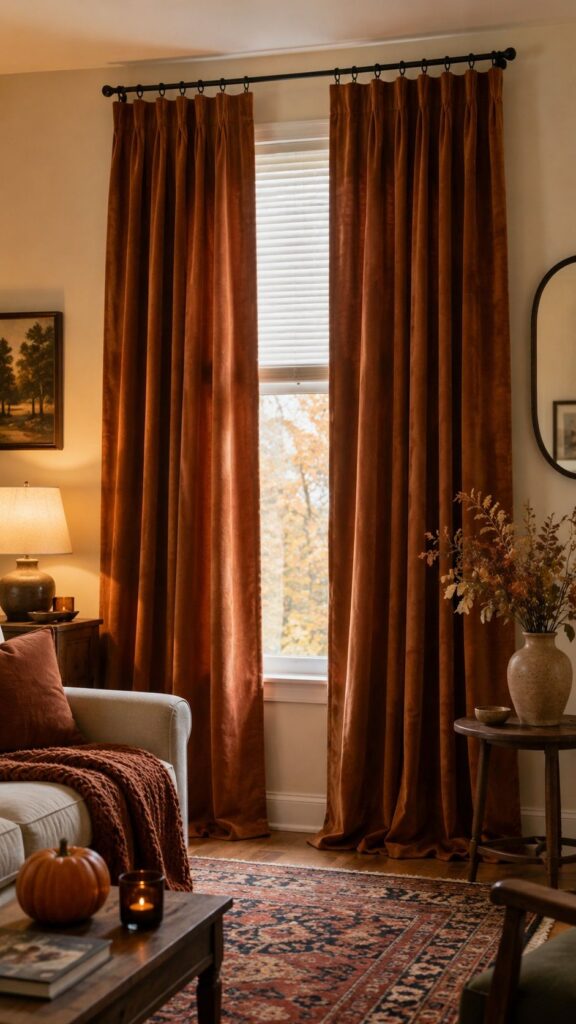
The second thing renters get wrong is windows. Builder blinds are not cozy. They’re functional at best, institutional at worst, and they actively fight the warm, autumnal atmosphere you’re trying to build.
The fix is a tension rod inside the window frame, combined with a pair of floor-length curtains in a warm tone — deep ochre, forest green, off-white linen, or a soft rust. A tension rod costs under fifteen dollars, springs into place between the frame walls, and leaves absolutely nothing behind when you remove it.
Hang the curtains with clip rings so you’re not threading anything. The whole install takes twenty minutes and looks indistinguishable from a drilled rod when you’re done.
The bigger you go, the better this works. A curtain hung close to the ceiling and wider than the window on each side makes the window look twice as large and the room feel twice as tall.
I once transformed a depressing ground-floor apartment window into something that looked deliberately designed just by moving the curtain rod up eight inches — except I was using a tension rod, so “moving it” meant taking it out and putting it back in.
Peel-and-Stick Wallpaper Is the One Wall Treatment That Actually Works
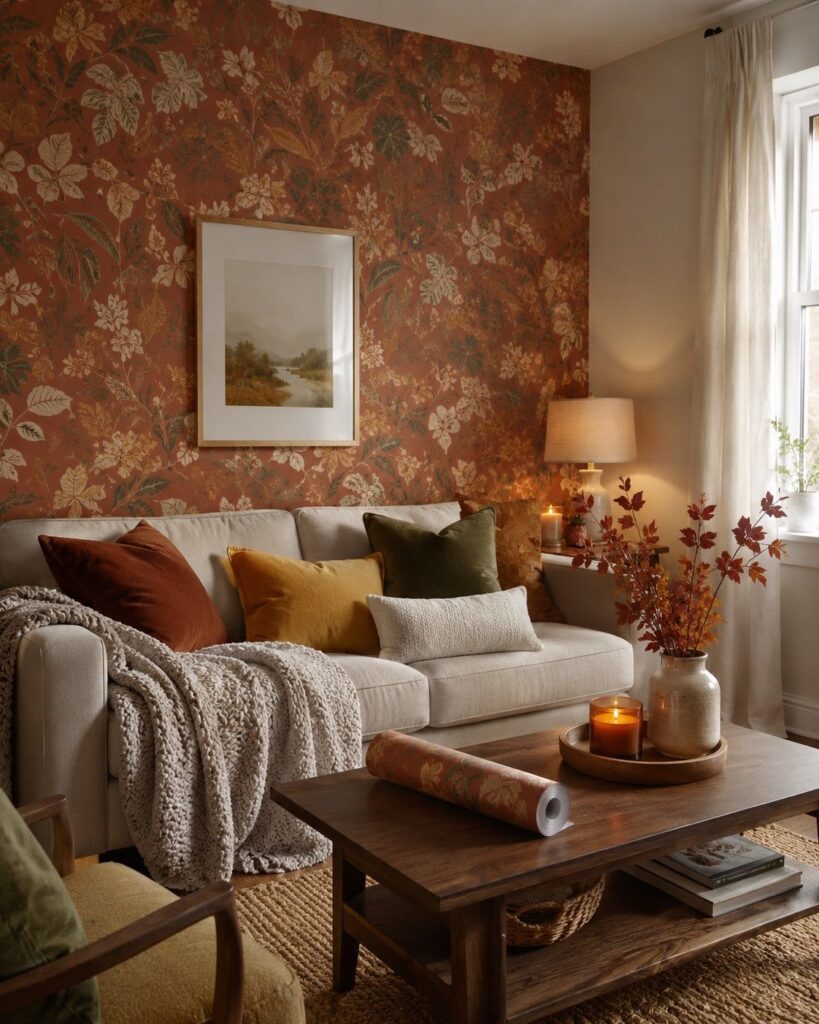
Most renters either skip wall treatments entirely or try something that doesn’t last. Peel-and-stick removable wallpaper is neither of those things. Applied correctly to a smooth, clean wall, it holds for years, peels off in a single sheet when you’re done, and leaves the paint underneath untouched.
The renter-specific move is to use it on one accent wall only — not the whole room. A single wall behind the sofa or bed in a warm botanical print, a deep terracotta textured pattern, or a moody dark autumn tone does more for the room’s atmosphere than anything you can put on a surface. It reads as intentional design, not someone trying to get around their lease.
Just check your walls first. Peel-and-stick needs a smooth, properly painted surface to adhere cleanly. If your landlord used cheap flat paint that hasn’t fully cured, test a small corner before committing. The same applies to fresh paint in a new apartment — give it at least thirty days before applying anything adhesive.
Freestanding Fixtures Solve the Lighting Problem Entirely
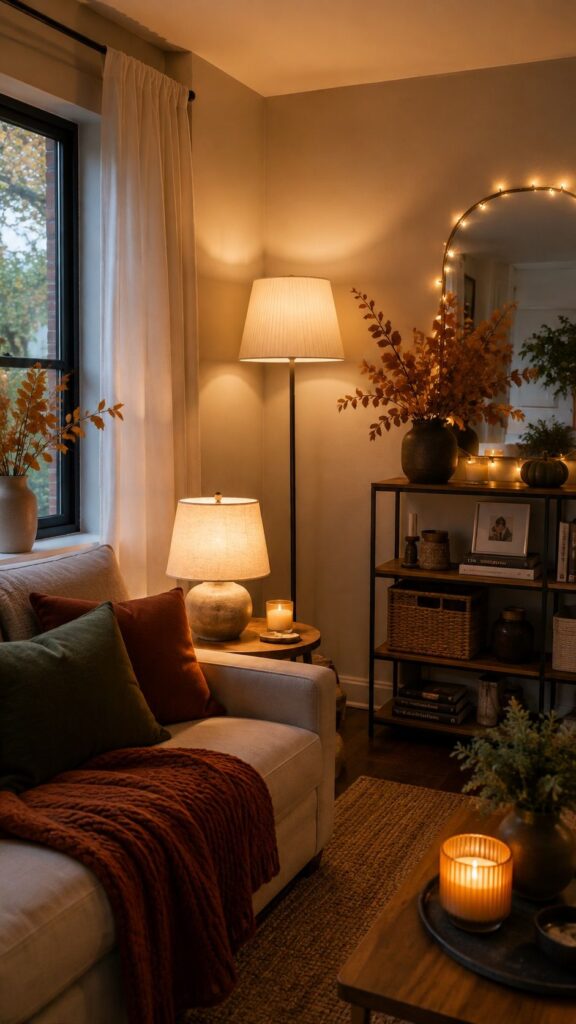
The mistake most renters make with lighting is accepting the overhead fixture as-is. Overhead lighting washes out every warm, layered thing you’ve built in the rest of the room — it’s designed to illuminate, not to set atmosphere. And short of rewiring it (don’t), you can’t change the fixture itself.
What you can change is where you’re getting your light from. A tall floor lamp in the corner, a table lamp on a side table, a battery-operated string of warm lights draped over a shelf or around a mirror — these give you layered light at multiple heights without touching the ceiling or the wall wiring. Turn off the overhead, turn on the layers, and the room changes immediately.
Use 2700K warm white bulbs in every lamp you own. The color temperature difference between warm white and cool white is the difference between a fire-lit pub and a hospital waiting room. It’s the cheapest single upgrade in this guide and the most impactful.
Freestanding Shelves Create Surface Area for Fall Vignettes
One thing renters consistently lack is horizontal surface at eye level — the mantels, built-ins, and windowsill ledges that homeowner inspo photos are full of.
The solution is freestanding open shelving, which is both portable and, as small-space storage solutions go, one of the highest-ROI purchases a renter can make.
A narrow ladder shelf or a two-tier cube unit gives you the vertical staging space to build the kind of autumn vignettes that make a room look considered.
Three gourds at different heights, a cluster of amber glass pieces catching the lamp light, a dried stem arrangement in a warm-toned vessel — the composition that looks effortless in styled photos is actually very achievable once you have the surface to put it on.
The key is editing ruthlessly. A shelf with seven objects looks cluttered; a shelf with three looks designed. Leave space between groupings so each one reads clearly.
Natural Elements and Scent Do the Rest Without Touching Anything
Once your textiles, lighting, and surfaces are sorted, the remaining atmosphere gap is filled by two things that cost almost nothing and leave zero trace: natural elements and scent.
Dried botanicals — eucalyptus branches, wheat stems, preserved leaves, small gourds — require no installation and no permission. A gathered bunch of dried stems in a thrifted vase on your shelf costs a few dollars and lasts the entire season.
For the autumn vignette formula that works every time: odd numbers, varying heights, mixed textures. The same principle that works in owned homes works just as well in a rental — the objects don’t know you’re renting.
For scent, a reed diffuser or wax warmer in a fall fragrance pulls everything together atmospherically in a way that pure visuals can’t. Your landlord can’t smell cedar and clove when they do the annual inspection, and the fall feeling in a room that smells right is genuinely different from one that only looks the part.
The Security Deposit Is Not a Ceiling
Every constraint in renting has a workaround, and the workarounds are almost always better than they sound. Tension rods instead of drilling?
Faster to install, easier to adjust. Peel-and-stick instead of paint? Changeable, seasonal, zero commitment. Freestanding shelves instead of built-ins? They come with you.
The aspirational owned-home fall content isn’t out of reach — it’s just built with different tools. Pick the right ones, and the cozy fall aesthetic you’re after is just as achievable in a rented space as anywhere else. Probably more so, because you’ve had to think harder about it.