RV bedrooms are often treated like an afterthought. People spend hours obsessing over the kitchen layout or the living area, then throw a comforter on the bed and call it done.
That’s a mistake, because you’ll spend a third of every trip in that room. How it looks and feels directly shapes how rested you are for everything else.
A few focused choices can flip that completely, and they’re simpler than most people expect. We cover all of that and more here.
Why the RV Bedroom Deserves Special Attention
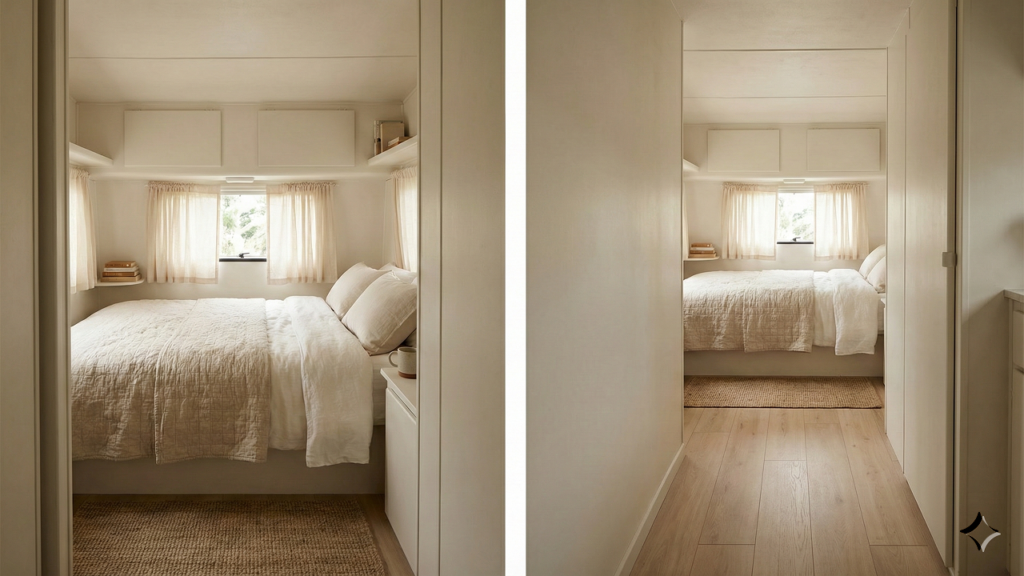
Why the bedroom impacts comfort more than any other RV space
Sleep quality is the whole ballgame when you’re living on the road for any stretch of time. A poorly designed bedroom creates low-grade stress that compounds night after night without you realizing it.
That stress shows up as short tempers at rest stops and poor decisions about where to camp next. Fix the room and you fix the trip.
Common layout challenges in small RV bedrooms
RV bedrooms fight you from the start with fixed walls, low ceilings, and floor plans no furniture manufacturer ever planned for. Slide-outs and plumbing create irregular dimensions that make standard solutions useless.
Narrow walkways restrict movement in ways that feel punishing at the end of a long driving day. Ignore those constraints and the room beats you; work with them and you’ve got something worth sleeping in.
| READ THIS GUIDE: The Ultimate Guide to RV Decorating Ideas (Inside, Outside & Every Style in Between) |
How smart decor choices improve both sleep and storage
Thoughtful decorating turns those layout challenges into an actual design brief. Calming colors, proper lighting, and minimal visual clutter do more for your sleep than any mattress upgrade.
Storage solutions like under-bed drawers and wall-mounted shelves keep your essentials close without crowding the space. When the room is organized, your mind follows suit.
Upgrade the Bedding First (The Fastest Transformation)
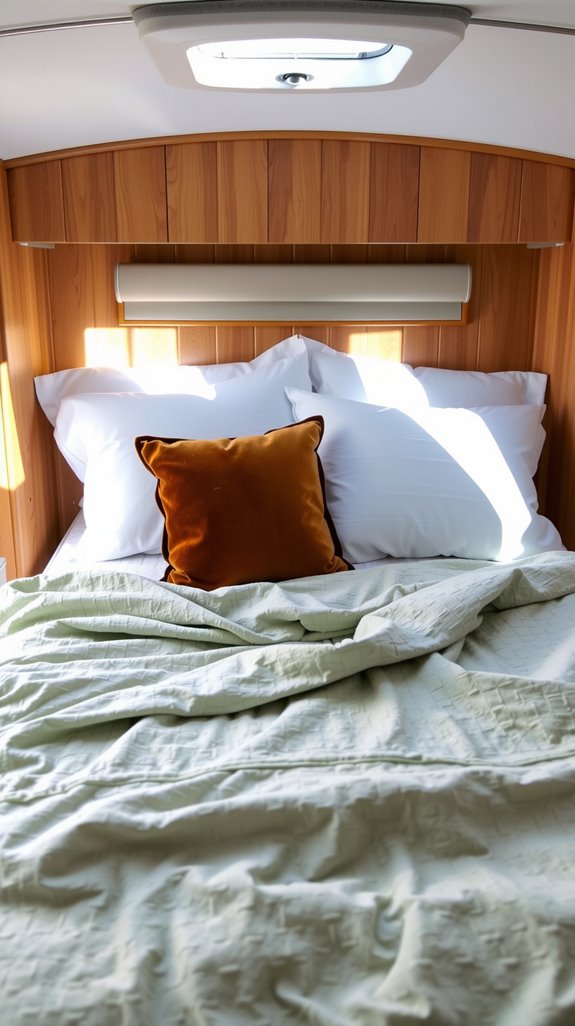
Choosing layered, lightweight bedding that doesn’t overwhelm
Bulky comforters are storage nightmares and they make a small bed look like it’s drowning in fabric. Thin quilts in breathable cotton or linen drape softly and pack down small when you need the space.
Layering a lightweight duvet with a simple throw gives you visual interest without adding real bulk. The bed reads as intentional rather than improvised, and that matters more than you’d think.
Coordinating pillows without overcrowding the bed
Two sleeping pillows per person is the ceiling, not the floor. Add one or two coordinating throw pillows at most, chosen for texture rather than bold competing patterns.
When pillows fight each other visually, the whole bed looks cluttered no matter how well everything else is styled. Pick pieces that share your color palette and let the bedding do the rest.
Using texture instead of bulk for a cozy look
A waffle-weave blanket layered over smooth cotton sheets creates more warmth and depth than a heavy comforter ever could. Add a quilted coverlet on top and you’ve got three distinct textures working together without the weight.
That combination invites you into the bed instead of making it look like a chore to make in the morning. Storage gets easier too, since nothing you own weighs more than it should.
Create a Focal Point With a Faux Headboard
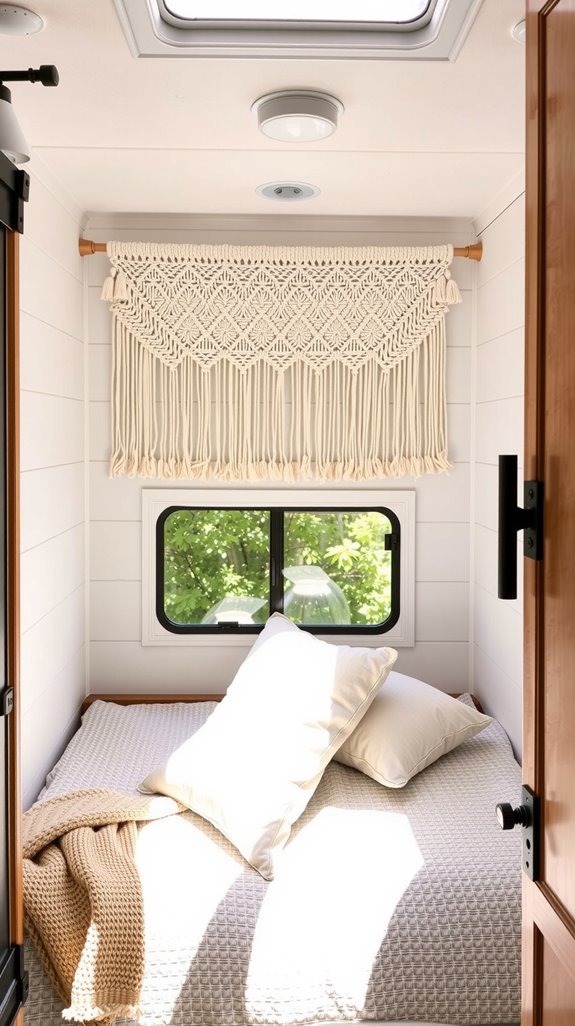
Peel-and-stick wallpaper panels behind the bed
A bare wall behind the bed is the fastest way to make an RV bedroom look unfinished. Peel-and-stick wallpaper panels fix that without a single tool or permanent commitment.
They come in everything from subtle linen textures to bold geometric prints, so you can change the whole mood of the room in an afternoon. Because they’re removable, you’re not locked into anything if your taste changes or the panel gets damaged.
SEE THIS: 17 Cozy Boho RV Bedroom Ideas That Feel Like a Boutique Hotel.
Lightweight wood slats or upholstered panels
For more dimension than wallpaper provides, thin wood slats mounted horizontally behind the bed create warmth and visual rhythm. Foam-backed fabric panels work just as well if you want something softer and quieter.
Either option gives your eye a place to land and the room a sense of purpose. Both weigh a fraction of what a traditional headboard does, which matters when you’re watching every pound.
Choose Space-Saving Nightstand Solutions
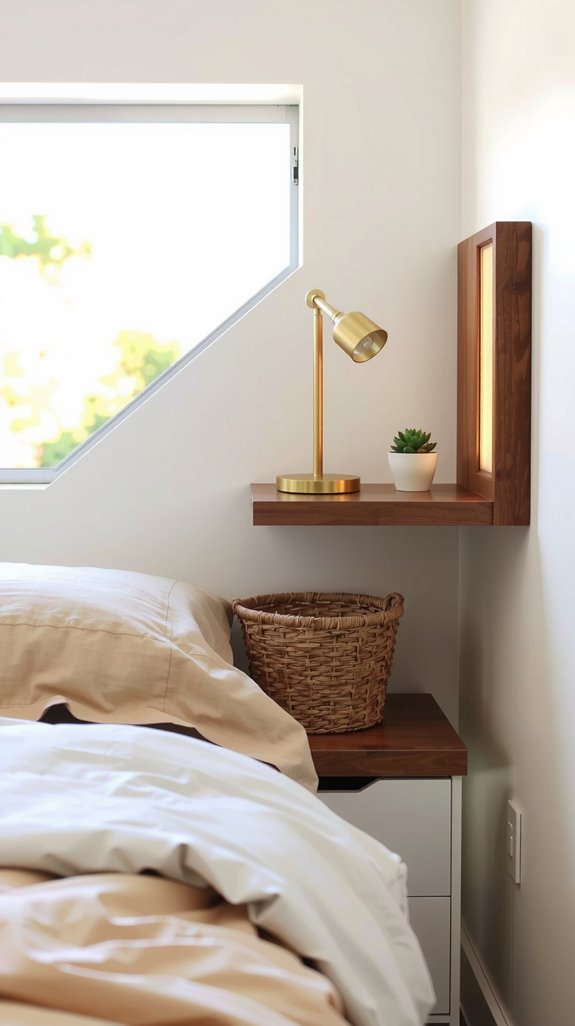
Wall-mounted shelves instead of bulky side tables
Floor space in an RV bedroom is money, and traditional nightstands spend it fast. Wall-mounted shelves at bedside height do the same job without blocking your walkway or eating into the path between the door and the bed.
They hold a book, a phone charger, and a glass of water without any of the footprint. Built-in lip edges keep everything in place when you’re moving down the road.
Slim storage baskets tucked neatly below
The space below your bed or beneath a floating shelf is rarely used well. Slim, low-profile baskets slide into those zones and hold charging cables, books, or anything else you want within arm’s reach at night.
Choose neutral colors that don’t compete with your bedding, and the baskets read as part of the design rather than an afterthought. Kept consistent, they make the whole room feel more organized than it might actually be.
Use Vertical Storage to Reduce Bedroom Clutter
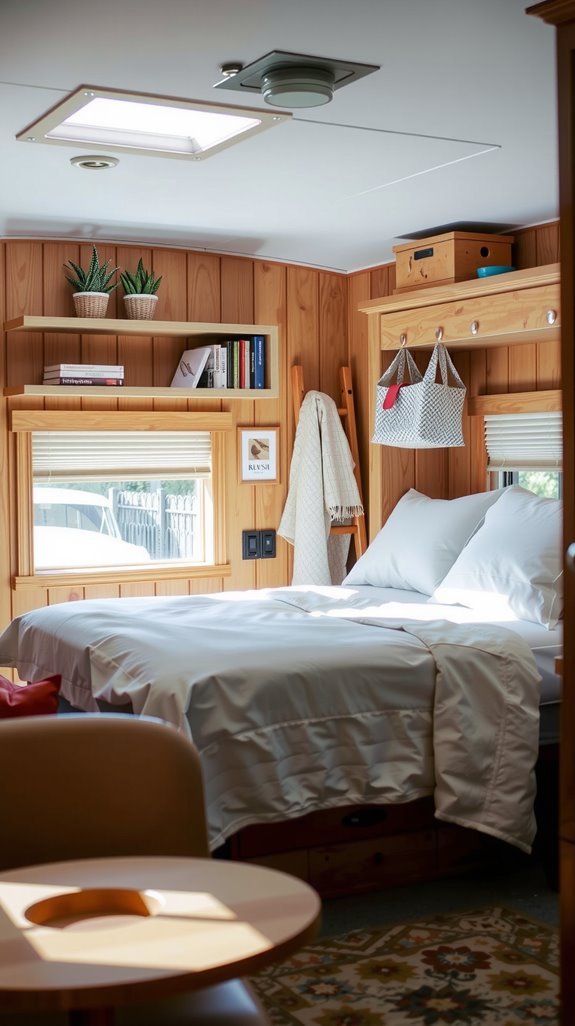
Overhead cabinet styling without visual heaviness
Overhead cabinets are essential in a compact RV bedroom, but they’ll crush the room if you style them wrong. Painting them the same tone as your ceiling makes them recede visually instead of bearing down on you.
Replacing solid doors with frosted glass panels or removing them entirely opens the space up considerably. Store only what you reach for regularly up there, because overhead clutter is the hardest kind to ignore.
Under-bed storage systems that stay organized
The space under your RV bed is almost certainly being wasted right now. Rolling bins on smooth tracks keep gear sorted and prevent contents from shifting while you’re driving.
Label each container and group items by category or season so you’re not digging through everything to find one thing. A system that’s easy to maintain is the only kind that actually gets maintained.
Make a Small RV Bedroom Feel Bigger
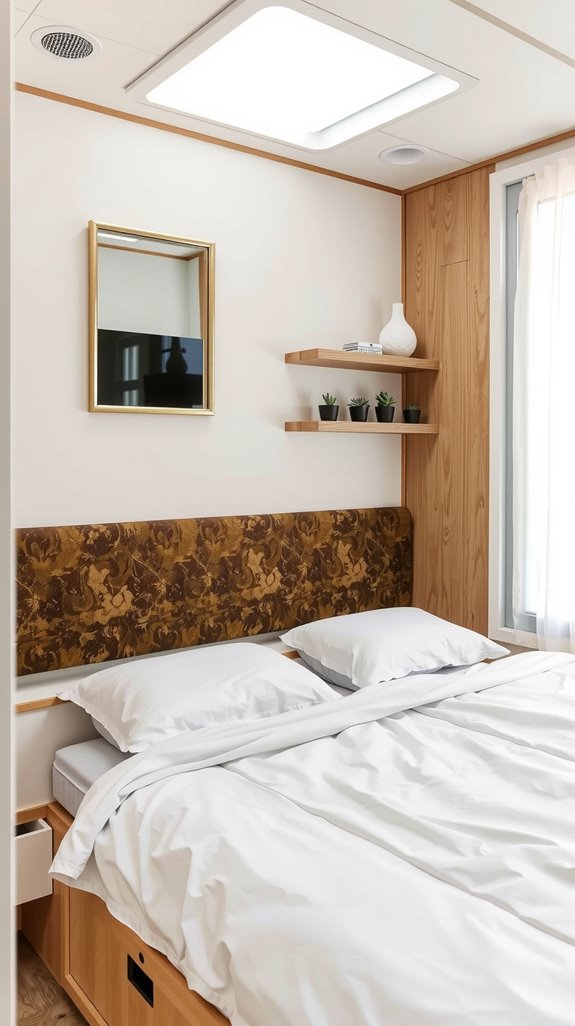
Strategic mirror placement in narrow layouts
A full-length mirror on the longest wall is one of the cheapest visual tricks in a small space. Position it opposite a window and you’re bouncing natural light into corners that would otherwise stay dim and closed-in.
Mirrored closet doors do double duty, giving you a functional surface while visually doubling the perceived depth of the room. In a narrow floor plan, that shift in perception makes a real difference.
Keeping the “walk path” visually open
The corridor between the door and the bed has to stay clear, no exceptions. Gear stacked in that zone will make even a beautifully decorated room feel like a hallway you’re squeezing through.
Wall-mounted storage keeps necessities off the floor and out of the path entirely. A cohesive flooring treatment that runs uninterrupted through that space draws the eye forward and makes the room feel longer than it is.
Add Soft Lighting for a Calmer Atmosphere
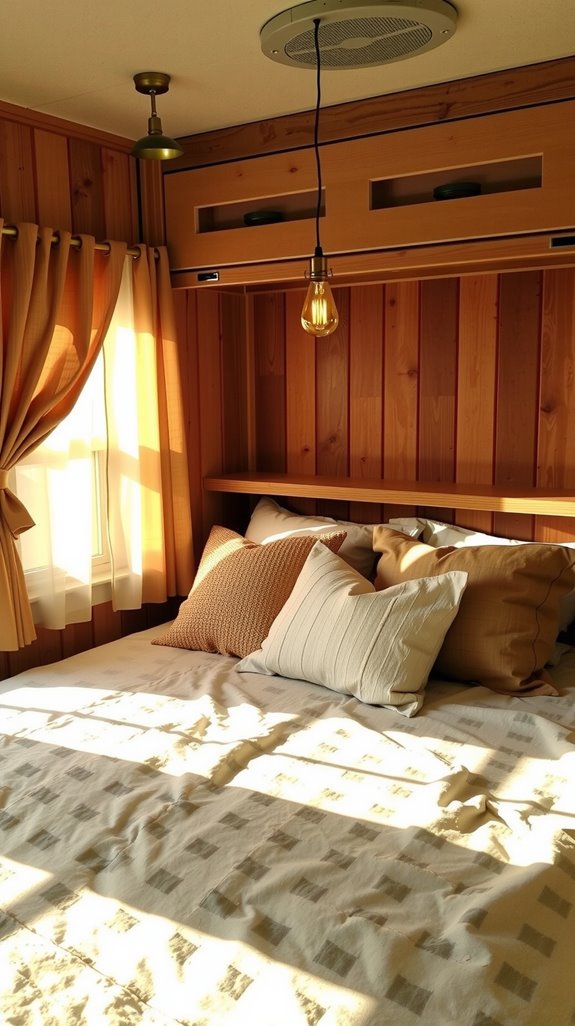
Layering bedside lighting for evening comfort
Harsh overhead lighting is the enemy of a relaxing RV bedroom, and most factory fixtures are exactly that. Clip-on reading lights or battery-powered sconces at each sleeping position give you focused light without running new wiring.
Dimmable options let you ease into sleep instead of killing the lights from across the room. That transition matters more at the end of a long travel day than most people expect.
Battery-powered puck lights for dark corners
Even a well-lit RV bedroom tends to have shadowed corners and recessed spaces that feel uninviting. Battery-powered puck lights solve that without requiring electrical work or sacrificing an outlet.
Tuck them into closet interiors, under cabinets, or behind a faux headboard to create ambient fill light that warms the whole room. They’re inexpensive, easy to install, and the difference they make is immediate.
Coordinate the Bedroom With the Overall RV Interior
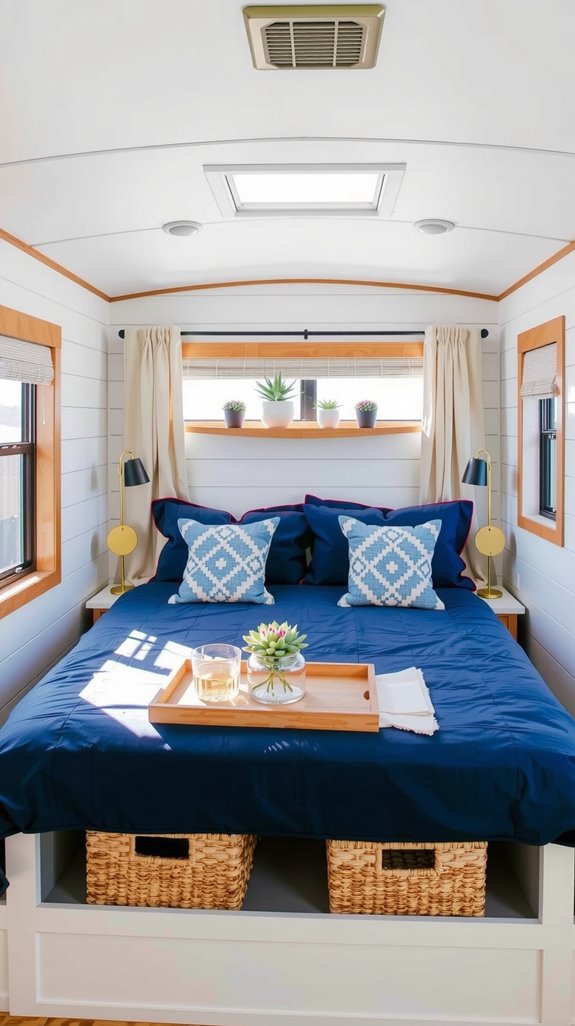
Carrying your main color scheme into the sleeping area
Open floor plans make visual continuity non-negotiable in an RV. When the bedroom’s palette clashes with the living area, the whole rig feels smaller and more chaotic than it actually is.
Pull two or three colors from your main living space into the bedroom through bedding, curtains, or a single piece of art. The visual flow that creates does a lot of heavy lifting without adding a single item to the room.
Matching hardware finishes for cohesion
Hardware finishes work quietly in the background, but inconsistency jumps out immediately to anyone paying attention. Match cabinet pulls, curtain rods, and light fixtures in the bedroom to those in your main living area.
Whether you’re working with brushed nickel, oil-rubbed bronze, or matte black, consistency is what separates a designed space from an assembled one. It’s a small detail that makes everything around it look more intentional..
Keeping decor minimal but meaningful
Every decorative item in an RV bedroom should earn its place or it shouldn’t be there. Choose pieces that reflect your personality while doing real work, like a throw that provides warmth or a photo that brings comfort on a hard travel day.
Decoration for its own sake becomes clutter fast in a space this size. When each item has a reason to be there, the room feels curated rather than crowded.
Smart Decor Ideas for Small RV Bedroom Layouts
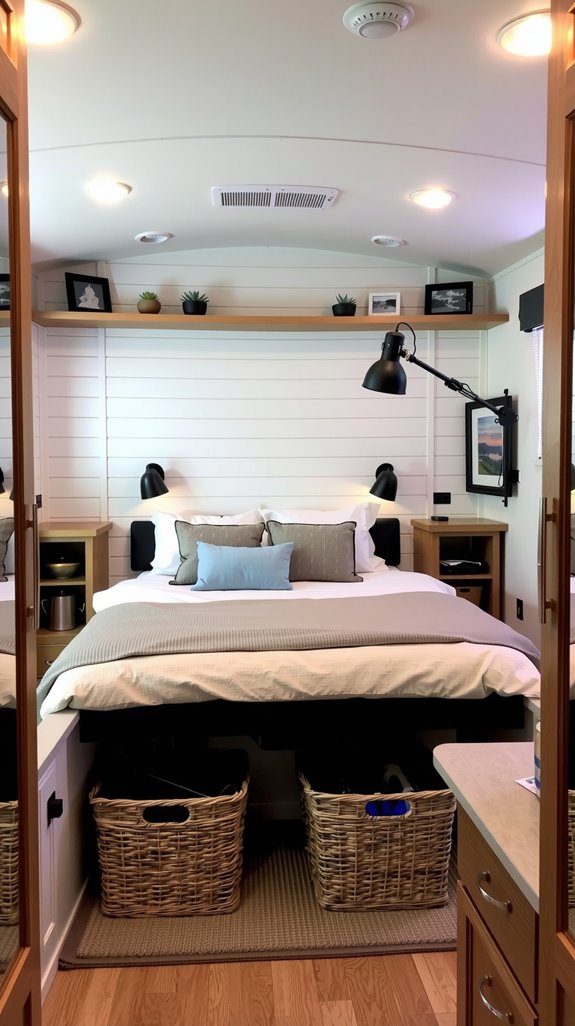
Decorating around slide-outs
Slide-outs require a strategy built around the mechanical reality of moving components. Mount artwork and hooks only on stationary walls, because anything on a slide panel has to come down every time you break camp.
Use removable adhesive hardware throughout so you can adapt quickly without damaging surfaces. Lightweight bedding that stays put during retraction keeps setup and teardown from becoming a chore.
Working with low ceilings without making them feel lower
Low ceilings are one of the most common complaints in RV bedroom design, but they don’t have to define the room. Paint the ceiling white or a very light tone to reflect natural light and push the surface visually upward.
Floor-to-ceiling curtains and narrow vertical artwork pull the eye up instead of across. Those two moves alone can make a ceiling feel several inches higher than it actually is.
Common RV Bedroom Decorating Mistakes to Avoid
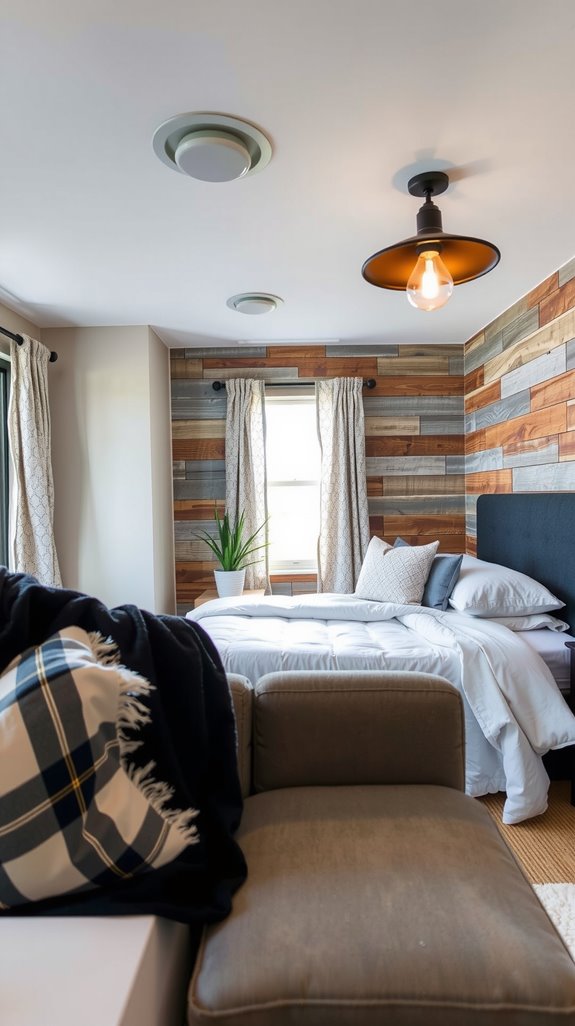
Too many throw pillows in a tight space
Throw pillows seem harmless until you’re relocating them twice a day in a room with no spare surface to put them on. They pile up, create visual noise, and eat into sleeping space that you actually need.
Two decorative pillows is the honest maximum in most RV bedrooms, and dual-purpose options with hidden storage pockets earn their keep twice over. Everything else is just laundry you haven’t done yet.
Heavy headboards that add visual bulk
A heavy headboard is an imposing visual barrier in a room that’s already working against you. It draws attention to spatial constraints rather than distracting from them, and in a low-ceilinged RV bedroom it can feel genuinely oppressive.
Peel-and-stick panels, painted accent walls, or simple floating shelves deliver the same visual grounding at a fraction of the weight. Less mass behind the bed makes the whole room breathe easier.
Ignoring storage when adding decorative pieces
Decorating purely for looks in a small space is a luxury you can’t afford. Every item you bring in should serve a function, tell a story, or ideally do both at once.
Decorative baskets organize accessories; attractive boxes store extra bedding; a framed photo doubles as a conversation starter and a comfort. When decoration and function overlap, the room gets better in two directions at once.
A Simple 4-Step RV Bedroom Decorating Plan
Step 1: Define your color palette
Your color palette is the foundation that either makes the room feel like a retreat or makes it feel like a storage unit with a mattress in it. Two to three complementary colors is enough; more than that and the space starts to feel busy.
Light neutrals like soft whites, warm grays, and sand tones make small spaces read larger. Bring in one deeper accent color for grounding and leave it at that.
Step 2: Upgrade bedding and lighting
Quality bedding and layered lighting are the two upgrades that deliver the most noticeable change for the least effort. High-thread-count sheets, a supportive mattress topper, and a lightweight layered blanket system turn a functional sleeping area into somewhere you actually want to be.
Replace harsh overhead fixtures with dimmable LEDs and add a reading light at each sleeping position. Together those changes make the room feel designed rather than temporary.
Step 3: Add vertical storage
Most RV bedrooms leave their wall space almost entirely unused, which means they’re leaving their best storage real estate on the table. Floating shelves above the bed and beside windows handle books, decor, and daily essentials without touching the floor.
Wall-mounted baskets and over-the-door organizers absorb the overflow that would otherwise pile up on surfaces. When the walls are working, the floor stays clear and the room stays calm.
Step 4: Edit down to essentials
The real transformation happens not when you add things but when you remove what doesn’t belong. Go through everything critically and pull out duplicates, rarely-used items, and anything without a clear daily purpose.
Keep only what you genuinely need for sleeping, dressing, and winding down at the end of the day. A room with less in it almost always feels better than one with more, and in an RV that truth hits harder than anywhere else.