A couple of chairs on the dirt is not bad, exactly, but it’s also not the kind of setup that makes you want to linger outside until the stars come out.
The gap between a parking-lot vibe and a real outdoor living room isn’t money or square footage; it’s intention.
A few well-chosen pieces, placed with some thought, will change how you experience every stop on your route, and the ideas below are a good place to start.
Why RV Outside Decorating Matters
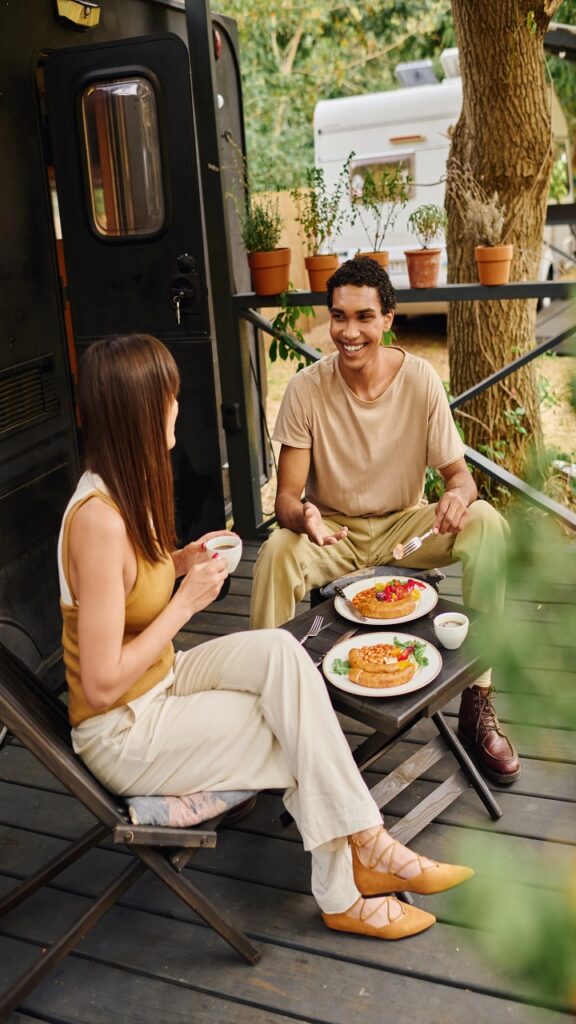
Spend a week at a campground and you’ll notice fast who actually lives outside their rig and who just sleeps in it. The campers who’ve put thought into their outdoor space sit out there after dinner, host neighbors for drinks, and generally seem to be having a better trip.
Your site is where the actual living happens, the cooking, the card games, the slow mornings with coffee. Getting the setup right isn’t vanity; it’s the difference between a good trip and a great one.
How your campsite becomes an extension of your living space
Step outside your RV door and ask yourself honestly whether that space feels like somewhere you want to be. If the answer is a shrug, the problem usually isn’t the campground.
Most rigs have a solid eight to twelve feet of usable space under the awning, plus whatever the site allows on either side. Treat that footprint the way you’d treat a small patio at home, and the whole trip shifts.
Start With an Outdoor Rug to Anchor the Space
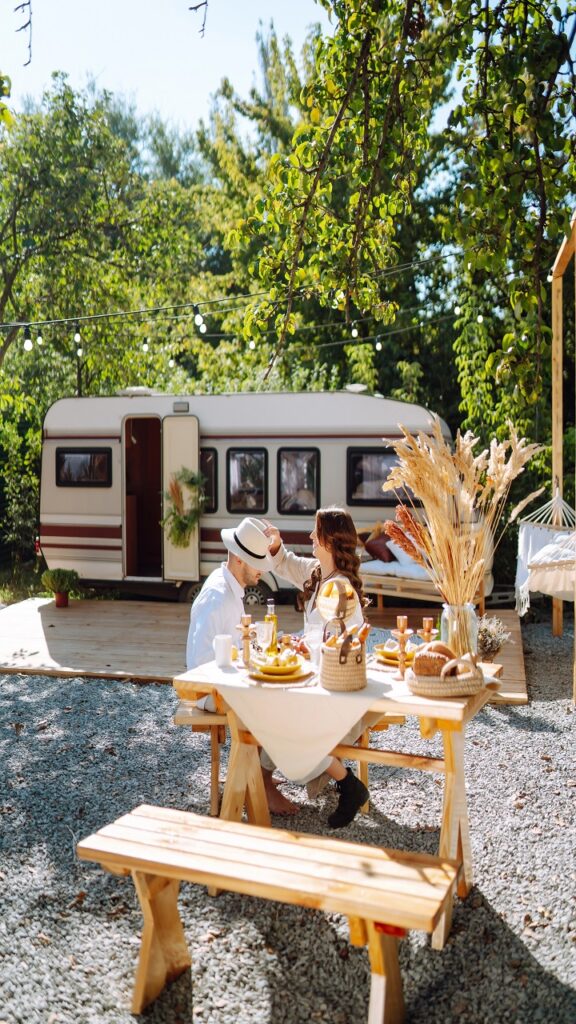
Choosing durable, lightweight rug materials
Not all outdoor rugs are worth hauling in your storage bay. Polypropylene is the standard for good reason: it sheds water fast, resists mold, handles UV without fading, and weighs almost nothing. CHECK some outdoor rugs options on Amazon!
Recycled plastic weaves are another solid choice, especially if you’re camping in genuinely wet climates where a rug might stay damp for days. Either way, avoid anything with a natural fiber backing, because it will mildew before the trip is over.
| READ THIS GUIDE: The Ultimate Guide to RV Decorating Ideas (Inside, Outside & Every Style in Between) |
Using rugs to visually define seating areas
A rug placed randomly beside your rig just looks like a rug. Positioned deliberately under your chairs and table, it draws a boundary that tells people where the sitting area is without anyone having to say a word.
That subtle definition keeps furniture from migrating and guests from hovering awkwardly at the edge of your space. Size matters here: go bigger than you think you need, because a rug that’s too small makes the whole arrangement look tentative.
Layer Lighting for a Cozy Evening Atmosphere
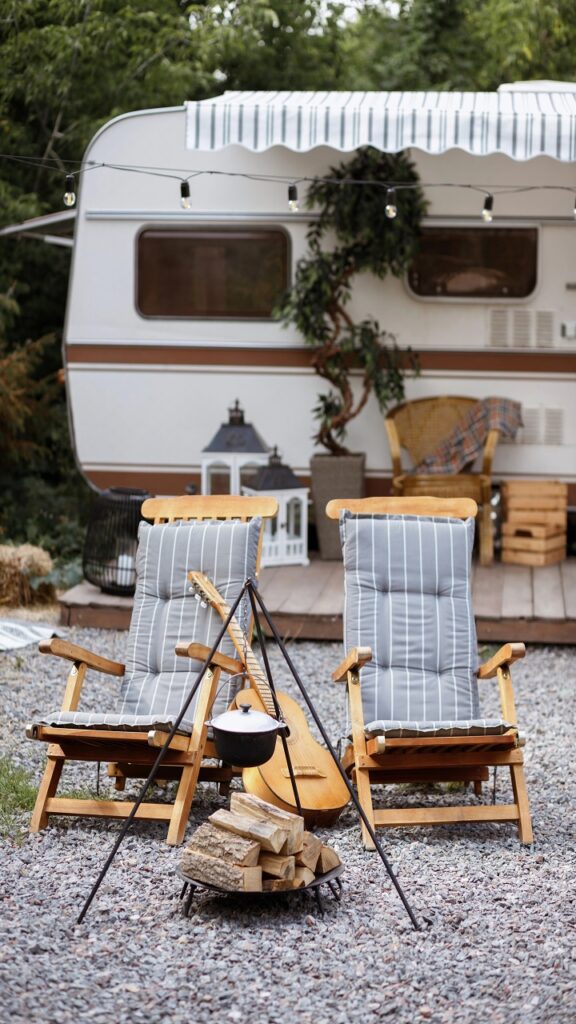
String lights, lanterns, and solar options
String lights along the awning rail are where most people start, and for good reason: they cover the most ground with the least effort. Solar lanterns handle the rest without adding anything to your electrical load, which matters when you’re dry camping and watching every amp.
LED bulbs in both are worth the slight premium because they run cooler, last longer, and pull a fraction of the power. Buy weatherproof versions from the start and you won’t spend a rainy morning picking up the pieces of something that wasn’t built for the outdoors.
SEE THIS: Small RV Decorating Ideas That Make Tight Layouts Feel Bigger.
Creating warm lighting zones under the awning
The awning is your ceiling, and what you do underneath it determines whether the space feels like a refuge or just a shaded parking spot. Hang your string lights first along the awning rail itself to establish that overhead glow.
Then drop a solar lantern or a battery-powered lamp at table height for the task lighting you actually need when you’re eating or playing cards.
Keep the light warm in tone, not cool and blue, because cool light outdoors at night feels clinical rather than relaxing.
Choose Foldable, Coordinated Furniture
Matching chairs and tables for a cohesive look
Start with a two or three color limit and hold to it across every piece of furniture on the site. Shared design elements matter as much as color: all metal frames, or all natural wood, keeps the eye moving smoothly rather than snagging on something jarring.
A folding side table that echoes the finish on your chairs pulls the whole thing together for very little money. Visual harmony in a small space reads as intentional, and intentional reads as comfortable.
Multi-functional pieces that store easily
Storage bay space is the real currency of RV life, and furniture that doesn’t collapse flat is spending it recklessly.
Bistro chairs that fold to a couple of inches, nesting side tables, stackable stools: these are the pieces worth hunting for because they give you a full outdoor room without eating your whole bay. CLICK to view multi-functional furniture options on Amazon!
Built-in carry handles aren’t glamorous, but after your twentieth setup and breakdown you’ll be glad they’re there. Weather-resistant materials are non-negotiable since these pieces live outside and you won’t always get them stowed before a storm rolls in.
SEE THIS: RV Bedroom Decorating Ideas That Feel Cozy, Intentional & Spacious.
Add Personality With Small Decorative Touches
Outdoor pillows, throws, and welcome mats
Swap the bare camping chairs for a set with weather-resistant throw pillows and watch how fast the vibe changes. Choose patterns or colors that repeat something from your interior, and the whole site starts to feel connected rather than cobbled together.
A lightweight throw draped over a chair arm is practical for cool evenings and looks intentional doing double duty. A welcome mat at the door is such a small thing, but it closes the loop and signals that someone actually lives here.
Compact plants and campsite-friendly accents
A small potted succulent or a little herb planter on the table brings something alive into the setup that no cushion or string light can replicate. Succulents are the obvious choice because they handle heat, irregular watering, and the general neglect that comes with being on the road.
Beyond plants, solar-powered lanterns on stakes, a compact wind chime, a camping flag or pennant: these are the details that give a site personality without requiring you to add a dedicated storage bin. Keep the count low, because three well-chosen accents look curated and ten look like a yard sale.
SEE THIS: RV Bathroom Decorating Ideas That Maximize Style & Space.
Create Functional Outdoor Kitchen Zones
Portable prep tables and organized cooking stations
A folding prep table with an adjustable height and a heat-resistant surface is the foundation everything else builds on.
Look for one with a shelf underneath for your most-used pots and tools, because counter space at camp is always the first thing to run out. CHECK these folding prep table options here!
A small collapsible shelving unit alongside it handles spices, oils, and dry goods without piling them on the ground. Position the whole station downwind from your seating area and close enough to your RV’s water source that cleanup doesn’t become its own project.
Keeping supplies tidy with decorative storage bins
Once the cooking station is set up, the loose items accumulate fast: utensils, spice packets, fire starters, dish soap, the lid you set down somewhere. Decorative storage bins in coordinating colors solve the chaos while actually contributing something to the look of the space.
Label each one by category before you leave home, so the cooking setup is organized from the first minute you’re at a new site. Weather-resistant materials matter here too, because these bins will get splashed, rained on, and generally abused.
SEE THIS: Boho, Rustic, Modern & Western RV Decorating Styles.
Decorate for Seasons Without Overpacking
Lightweight seasonal swaps for fall and summer
Summer gets bright colors, fabric bunting, and lightweight cushion covers in patterns that feel like they belong near water. Fall is a pillow cover swap to something in rust or deep green, a couple of small pumpkins on the table, and a heavier throw for the cooler evenings.
Neither season requires buying anything bulky or special: the same solar string lights work year-round, and a couple of interchangeable covers do most of the seasonal heavy lifting. Keep the actual props minimal and the mood shift comes through anyway.
Storing outdoor decor efficiently between trips
Fabric pieces like flags, banners, and extra pillow covers compress down to almost nothing in vacuum-seal bags, which is worth the minor inconvenience of the process. Collapsible bins labeled by category live in overhead compartments or under-bed storage and keep things from getting jumbled during transit.
Wreaths and garlands hang from hooks inside a cabinet rather than getting crushed in a bin. The goal is a system where setup at the next site takes minutes, not a half-hour of untangling.
SEE THIS: RV Interior Color Schemes That Transform Small Spaces.
Keep the Campsite Safe and Uncluttered
Avoiding tripping hazards with smart layout planning
String lights and decorative elements belong above head height wherever possible, because anything strung at face level in the dark is an incident waiting to happen. Non-slip backing on rugs is essential, especially on uneven or gravelly ground where a rug can shift underfoot.
Route any electrical cords along the RV’s perimeter and cover them wherever they cross a walking path, not as an afterthought but as part of the original setup plan. Map your furniture for clear pathways before you start placing anything, because it’s much easier to rearrange chairs than to explain to someone why you didn’t.
Securing decor for windy or uneven conditions
Wind at a campground appears without warning and with a particular interest in anything lightweight you’ve set out. Stake down rugs with heavy-duty clips at the corners, use weighted bases on lanterns and decorative pieces, and run bungee cords through the grommets of flags and banners rather than relying on the lightweight clips they came with.
Uneven terrain is a secondary problem: leveling blocks under table legs and furniture bases keep things from rocking and eventually tipping. A quick walk around the site before you go to bed to check that everything is secured takes two minutes and saves a lot of cleanup in the morning.
Match Exterior Decor With Interior Style
The inside of your rig and the outside of your rig should feel like they were designed by the same person, because they were. When the color palette, the materials, and the general mood shift dramatically the moment you step out the door, the whole setup feels unresolved.
The fix is straightforward: carry two or three of your dominant interior colors into your outdoor cushions, rug, and accessories. That repetition does more for the overall feeling of the space than almost any other single decision.
Creating visual continuity from inside to outside
Color is the starting point, but design style is what really ties the two spaces together. A modern, minimal interior calls for clean-lined outdoor furniture, simple planters, and an uncluttered table surface rather than a collection of knickknacks.
A rustic interior built around warm wood tones and woven textiles wants outdoor furniture in natural materials that echo those same choices. The transition from inside to outside should feel like moving from one room to the next, not like stepping into an entirely different aesthetic.
A Simple 3-Step Plan for Decorating Any Campsite
Step 1: Define your outdoor zone
Before anything comes out of the bay, walk the site and identify where things actually belong. Your awning is the anchor point, and everything else measures outward from there.
Look for natural cooking, dining, and sitting zones based on what the site gives you: shade, level ground, proximity to the hookups. Knowing your layout before you start unloading means you’re not moving the table three times to find the right spot.
Step 2: Add lighting and anchor pieces
Rug first, lights second: these two elements define the space more than anything else you’ll put out. Lay the rug in your seating zone before the chairs go down, string the lights along the awning rail before you’re standing in the dark trying to reach the clips.
A focal point like a small fire pit or a decorative screen gives the eye somewhere to land and helps the arrangement feel complete. Get these foundational pieces right and the rest of the setup fills in naturally around them.
Step 3: Layer personality thoughtfully
The last layer is also the most personal, and the easiest to overdo. Pillows on the chairs, a plant on the table, a welcome mat at the door, a flag or two: choose the items that actually mean something to you and leave the rest at home.
Secure anything lightweight before you turn in, because wind doesn’t care how carefully you arranged things. Less is almost always more here: a site with five well-chosen personal touches looks intentional, and a site with twenty looks like a flea market.