Fog rolling off the water at 5 a.m. changes the way you see everything. The rocks look older, the tide sounds like breathing, and if your campsite is lit right, it genuinely feels like something out of a coastal folk tale.
Sea Witch camping leans all the way into that feeling, pulling from ocean mythology, gothic textures, and Mermaidcore’s dreamy, salt-washed imagery.
It’s not about buying a lot of stuff. It’s about choosing your location, your light, and your details with intention. The ideas ahead show you how to build that atmosphere from the shoreline up.
Contents
- 1 Understanding the Sea Witch Aesthetic
- 2 Finding the Perfect Sea Witch Campsite
- 3 Setting Up Your Sea Witch Campsite
- 4 Sea Witch Gear Checklist
- 5 Sea Witch-Inspired Food & Campfire Rituals
- 6 Sea Witch Wardrobe Ideas
- 7 DIY Crafts for Sea Witch Decor
- 8 Photography Tips to Capture the Aesthetic
- 9 Safety & Environmental Care
- 10 Sea Witch Tent and Shelter Styling
- 11 Sea Witch Tent and Shelter Styling
- 12 Candlelight and Coastal Lighting Ideas
Understanding the Sea Witch Aesthetic
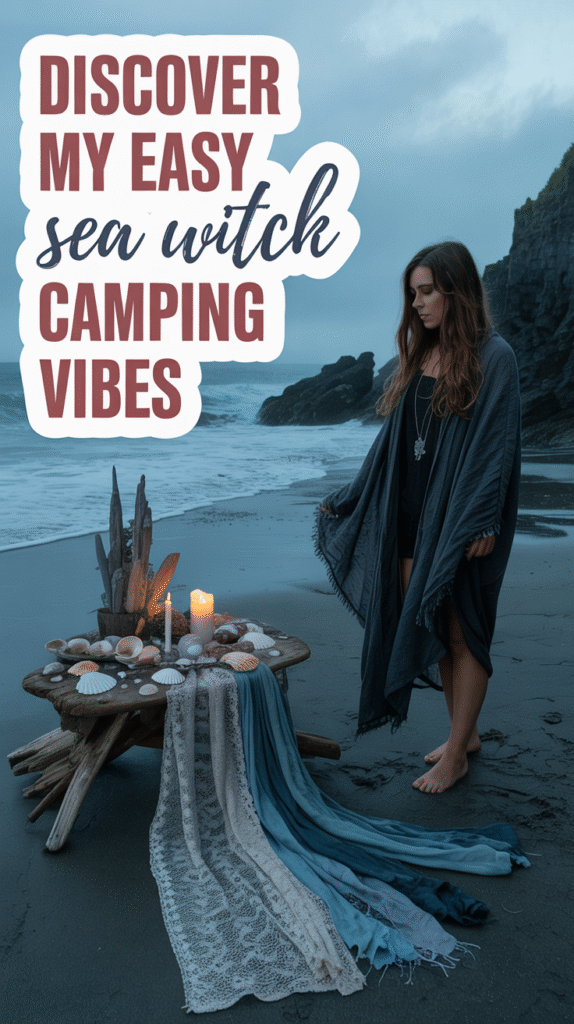
This isn’t beach camping with a black tent. The aesthetic draws from deep-ocean color palettes, tidal mythology, and the textures you’d find washed up after a storm: driftwood, weathered rope, sea glass, and shells with worn edges.
Colors run toward charcoal, deep teal, seafoam, and silver, the kind of tones that exist in the hour before a storm. The atmosphere you’re chasing is moody and a little unknowable, like the coastline itself has a secret.
SEE THIS: 17 Affordable Soothing Coastal Getaways That Still Feel Luxurious and Peaceful.
Finding the Perfect Sea Witch Campsite

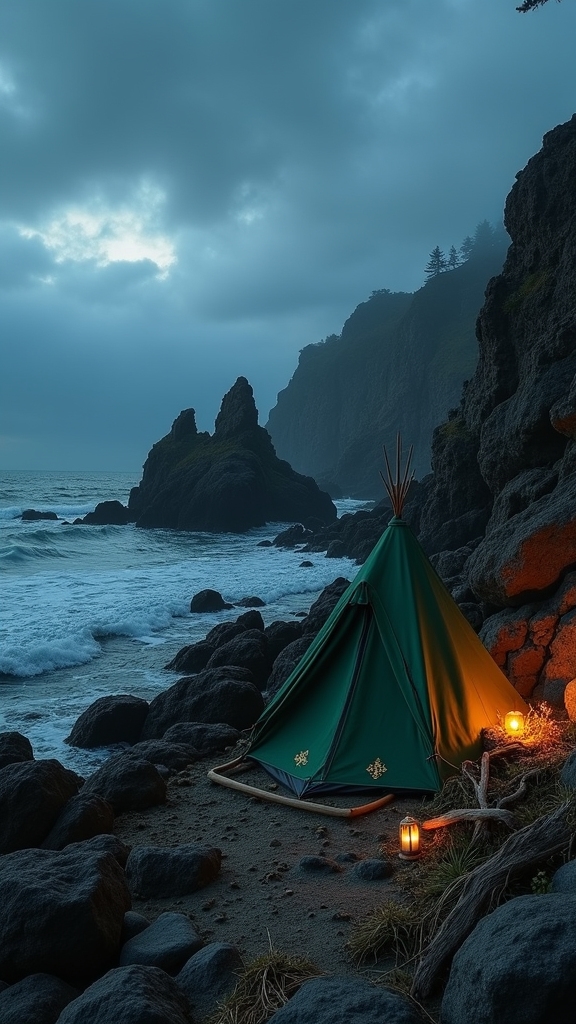
Location does more heavy lifting here than any decor ever could. The right coastline gives you the raw material before you’ve unpacked a single item: cliffs, tidepools, wind-sculpted trees, and that particular gray light that makes everything feel ancient.
Choosing where you camp is the first and most important creative decision you’ll make. Get the setting wrong and no amount of netting or lanterns will save it.
Rugged, Moody Landscapes
Rocky, windswept coastlines are the backbone of this whole aesthetic. Oregon’s Cape Perpetua, Big Sur in California, and Acadia in Maine all deliver that particular brooding quality without requiring much staging on your part.
These aren’t manicured beach towns with smooth sand and volleyball nets. They’re places where the ocean actually feels like it has opinions.
SEE THIS: Best Amazon Beach Essentials for Women in 2025.
Foggy or Isolated Spots
Crowds kill the atmosphere faster than bad weather ever could. Use AllTrails or Google Maps to find bluffside campgrounds or hidden coves that see fewer weekend visitors.
Fog is not a problem here; it’s an asset, so don’t let a gray forecast talk you out of going. The more isolated and weather-worn the spot, the more the setting does the work for you.
Planning Around Tides & Weather
Coastal camping has real stakes that forest camping doesn’t. Always pull tide charts before you pick your site and set up well above the high-tide line, regardless of how picturesque a lower spot looks.
Foggy mornings and incoming weather actually work in your favor aesthetically, but you need a waterproof kit and respect for wind that accelerates fast near water. A tide chart app, a solid rainfly, and extra rope are non-negotiable items in this environment.
Setting Up Your Sea Witch Campsite
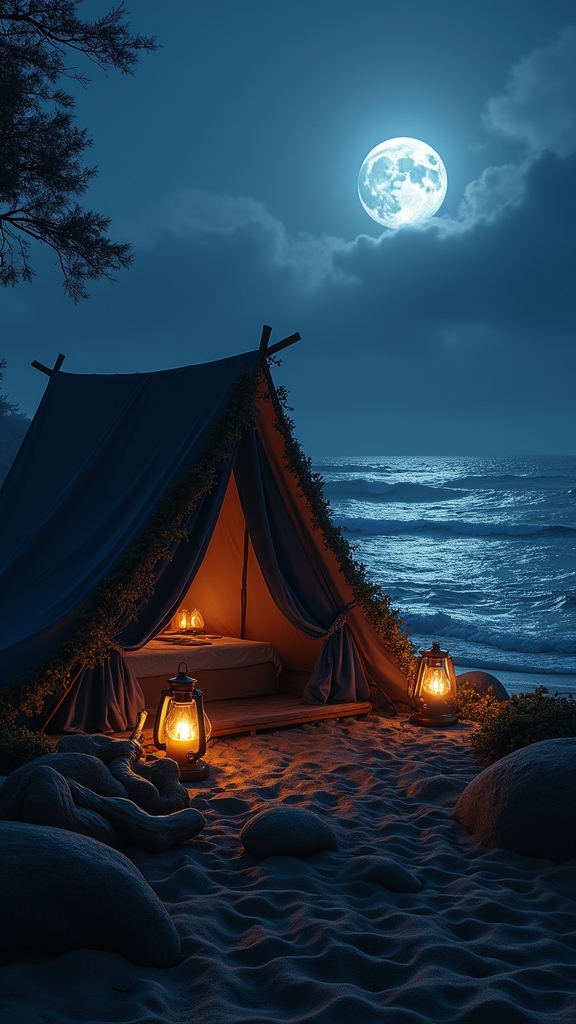
Once you’ve claimed your spot, the setup itself becomes part of the ritual. Every choice, from where you anchor your shelter to how you arrange your light sources, contributes to the atmosphere you’re building.
This doesn’t need to be fussy or expensive, but it does need to be intentional. Think of your campsite as a stage that you’re dressing, not just a patch of ground where you’re sleeping.
Tent & Shelter Styling
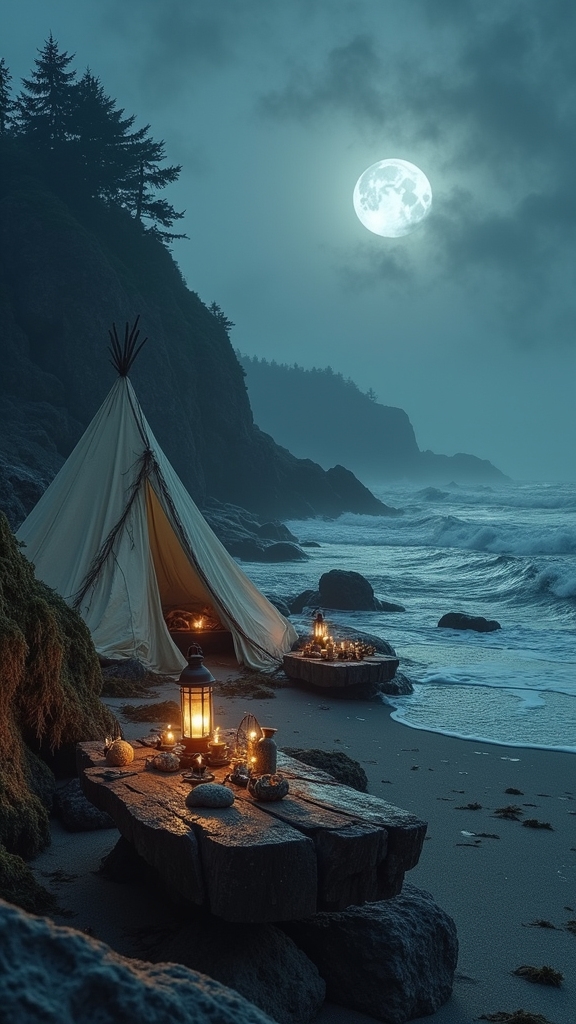
The tent entrance is where atmosphere starts. Drape black netting or sheer gauze across the opening and anchor it with driftwood poles or old oars, and suddenly your shelter reads as something deliberate rather than incidental.
Inside, hang knotted ropes or shell garlands from the ceiling and scatter jars of sand or sea glass near the corners to carry the nautical grounding throughout. Clip all loose fabric securely before you go to sleep, because coastal wind will test everything you’ve hung.
SEE THIS: Essential Outdoor Travel Needs: A Mom’s Family Packing Guide.
Coastal Decor Elements
Your color palette is doing real work here, so use it consistently. Charcoal adds depth, teal carries the ocean’s energy, and silver catches the light the way wet sand does at dusk.
Driftwood frames, fishing netting, and scattered shells give texture without looking like you raided a craft store. When the wind moves your gauze and lace against the canvas, the whole setup comes alive in a way no photograph fully captures.
Lighting Ideas
At night, your campsite either comes alive or falls flat, and lighting is the deciding factor. Windproof lanterns and enclosed candle holders are the workhorses here, since open flames and coastal breezes are a genuinely bad combination.
Flameless LED candles do a surprisingly convincing job inside the tent, and solar string lights draped over driftwood poles add soft glow without any fire risk. Line the path to your site with shells or sea glass and tuck small LED tealights among them for an effect that’s subtle during the day and quietly stunning after dark.
Sea Witch Gear Checklist
Packing for this kind of trip means carrying two lists in your head at once: the practical and the atmospheric. On the practical side, you need a dark-toned tent with a reliable rainfly, a waterproof sleeping bag or heavy blankets, a headlamp, a first aid kit, and a tide chart app on your phone.
For decor, keep it lightweight and weatherproof: LED candles, a handful of shells or crystals, and a string of solar lights. Everything should fit in your pack without drama, because nothing undercuts the mystical vibe faster than struggling under a load you didn’t plan for.
SEE THIS: Make-Ahead Lake Snacks Perfect for a Weekend Getaway.
Sea Witch-Inspired Food & Campfire Rituals
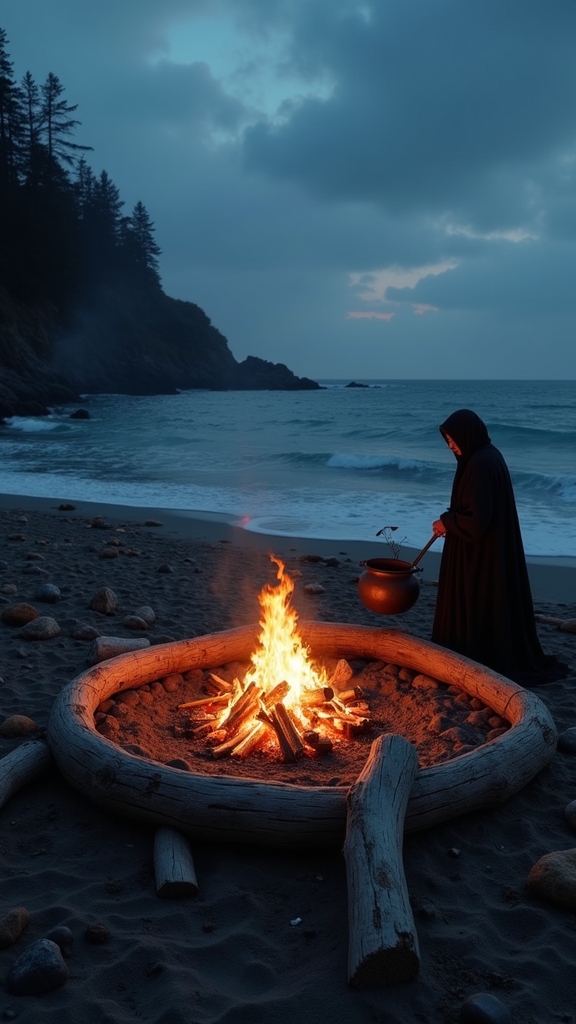
Food around a coastal fire doesn’t need to be elaborate to feel intentional. What you eat and how you eat it contributes to the atmosphere just as much as what’s hanging from your tent poles.
Preparing things ahead of time frees you up to actually be present once you arrive. The fire itself becomes the anchor for whatever rituals you bring to the evening.
Mystical Campfire Snacks
Smoked seafood wraps, seaweed crisps, and a thermos of chamomile or lavender tea fit the aesthetic without requiring a camp kitchen setup. Moon-shaped shortbread or star-topped scones are easy to make at home and bring a theatrical quality to evening snacking that’s hard to explain but very real.
Dark chocolate with sea salt travels well and tastes like it belongs here. Simple food eaten deliberately, by firelight, near moving water, hits differently than the same meal eaten anywhere else.
Campfire Rituals
The fire ritual can be whatever feels natural, not whatever feels performative. Tarot or rune readings by firelight work especially well here, since the sound of the tide fills in the silence between cards.
Storytelling rooted in sea mythology, selkies, sirens, drowned sailors, gives the evening a continuity that carries you from dinner into the late hours. If you know any songs that feel right for the coast, sing them, because the ocean is an indifferent but surprisingly generous audience.
Sea Witch Wardrobe Ideas
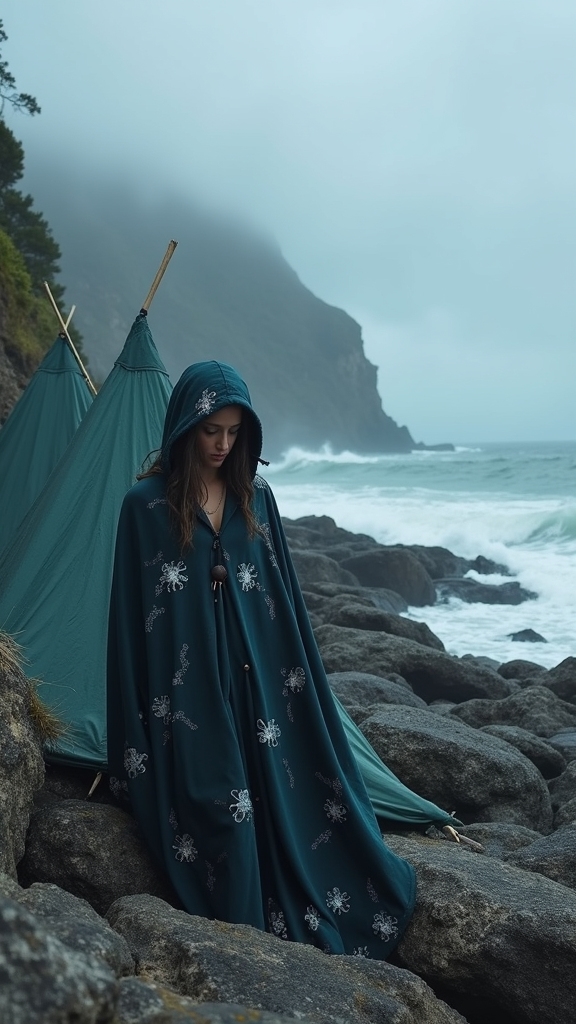
Coastal temperatures drop faster than people expect, especially after sunset. Flowy dark dresses or kimonos layer beautifully over a thermal base, and a heavyweight wool cloak or shawl handles the wind better than most synthetic alternatives.
Shell anklets and seashell jewelry add finishing aesthetic details without weighing you down or snagging on gear. Barefoot sandals work for golden-hour photography, but bring waterproof boots for anything involving tidepools or wet rocks, because the rocks always win.
DIY Crafts for Sea Witch Decor
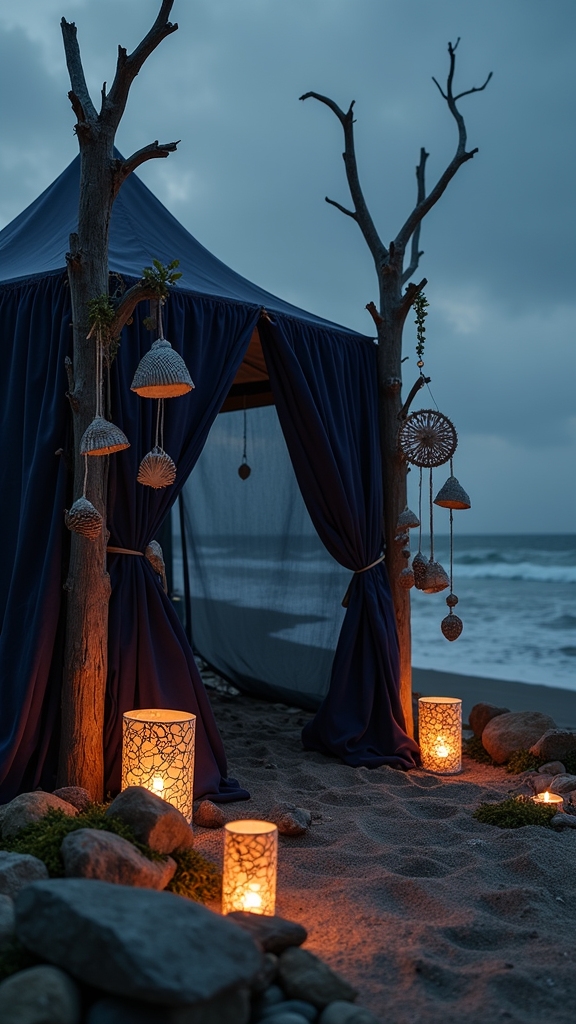
The crafts worth making are the ones built from materials that were already meant for salt air and wind. Store-bought decor tends to look exactly like what it is, but something you’ve assembled from gathered materials has a presence that’s genuinely harder to fake.
Waxed rope, driftwood, sea glass, and shells hold up to coastal conditions in ways that paper, ribbon, and delicate fabric do not. Make things before you go, pack them flat, and set them up when you arrive.
Shell Mobiles & Wind Chimes
Tie shells, feathers, and small pieces of driftwood together using waxed rope and hang them anywhere with airflow. The clinking and swaying in a coastal breeze is better than any wind chime you’d buy in a store, partly because you made it and partly because it’s using sounds the coast already understands.
Keep the knots tight and the materials dry before you pack them. A mobile that falls apart in the wind is a craft project, not a decor element.
Spell Bottles & Salt Jars
Small glass bottles filled with sea salt, dried herbs, and charms are the easiest high-impact decor you can bring. They pack flat, they don’t break if wrapped properly, and they look intentional arranged near the tent entrance or along a driftwood shelf.
Fill them at home with whatever carries meaning for you: lavender for calm, rosemary for clarity, a piece of shell from a place you love. They double as conversation pieces and, depending on your worldview, something more than that.
Painted Driftwood & Mermaid Mirrors
Collect driftwood pieces ahead of time and use acrylic paint to trace wave patterns, ocean sigils, or simple tidal imagery across the surface. The texture of the wood resists the paint in interesting ways, and the results rarely look precious, which is exactly right for this aesthetic.
For mirrors, glue shells and sea glass around the frame before you leave home and let the adhesive fully cure. A mirror framed in tide-worn materials catches lantern light in a way that earns its place in the campsite.
Photography Tips to Capture the Aesthetic
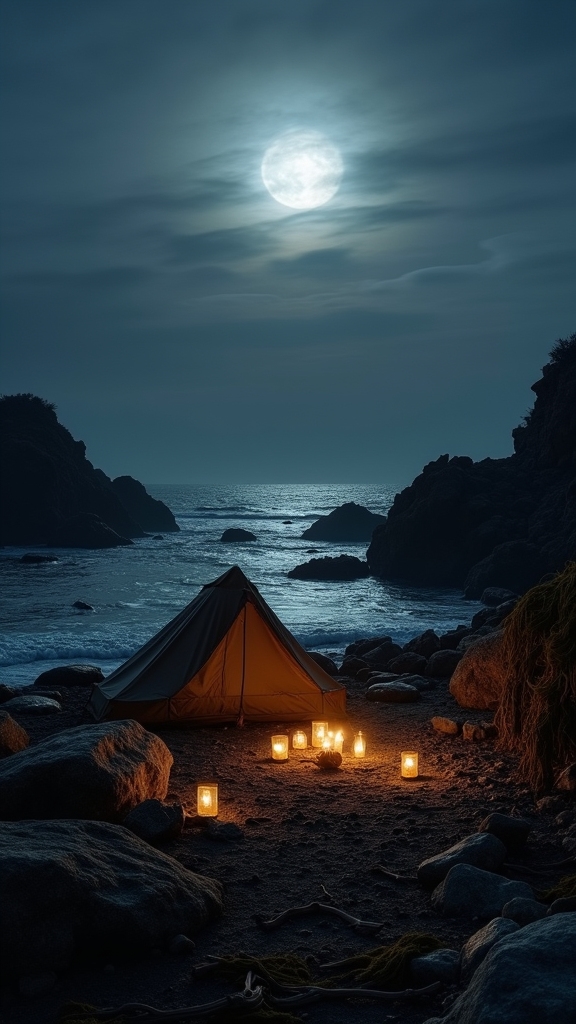
Shoot at dawn, dusk, or in the middle of a fog bank and don’t fight the conditions, because those are your best light. Cool, overcast skies flatten harsh shadows and give your frames a washed-out, ancient quality that’s nearly impossible to replicate in editing.
Bring your cloaks, netting, lanterns, and shells into the frame as intentional props rather than afterthoughts scattered in the background. In post-processing, cool down your white balance, push the blues and greens, and lift the shadows slightly so the darker details still read without losing the moody overall tone.
Safety & Environmental Care
The coastline you’re romanticizing is a working ecosystem, and it’s more fragile than it looks. Pack out every shell, piece of sea glass, and decorative item you brought in, because what looks like harmless staging can disrupt tidepool life and nesting habitat in ways that compound over time.
Avoid building fires anywhere they’re restricted, and stay on established paths when you’re moving through sensitive coastal vegetation. The most atmospheric spots are usually the least disturbed ones, and keeping them that way is the only way they’ll still be there next trip.
Sea Witch Tent and Shelter Styling
Sea Witch Tent and Shelter Styling
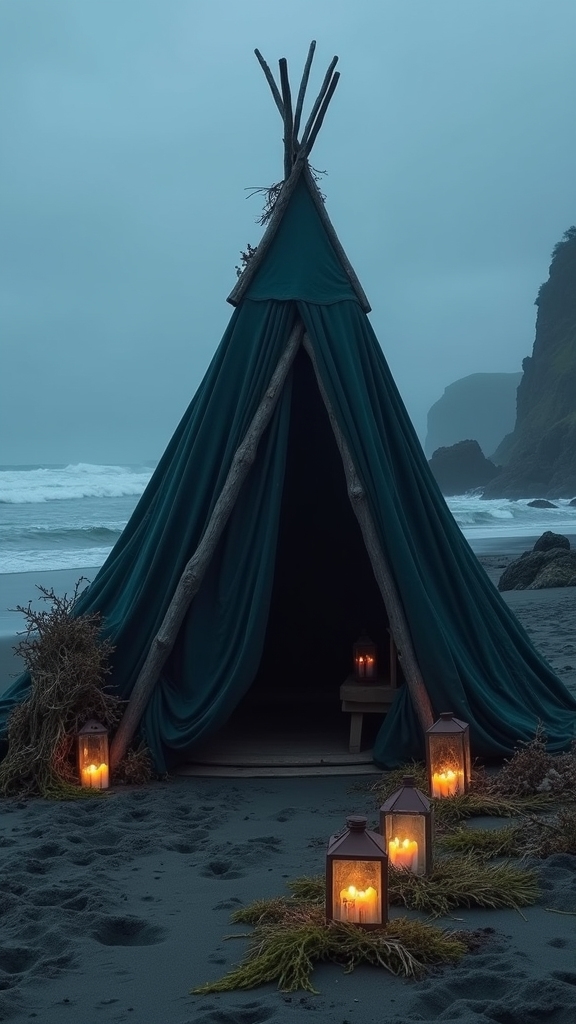
Your tent is the centerpiece of the whole setup, so treat it like one. Start at the entrance: black netting or sheer gauze draped across the opening and anchored with driftwood poles or old oars signals immediately that this is not a standard campsite.
Inside, hang knotted ropes, shell garlands, or faux crystals from the ceiling so lantern light catches them at night, and scatter jars of sand, weathered glass bottles, and coiled rope near the corners to carry the nautical grounding all the way through. Layer gauze and lace over your bedding for texture and visual depth, but clip every loose piece of fabric down tight before the wind picks up, because the coast will absolutely test whatever you’ve left unsecured.
Candlelight and Coastal Lighting Ideas
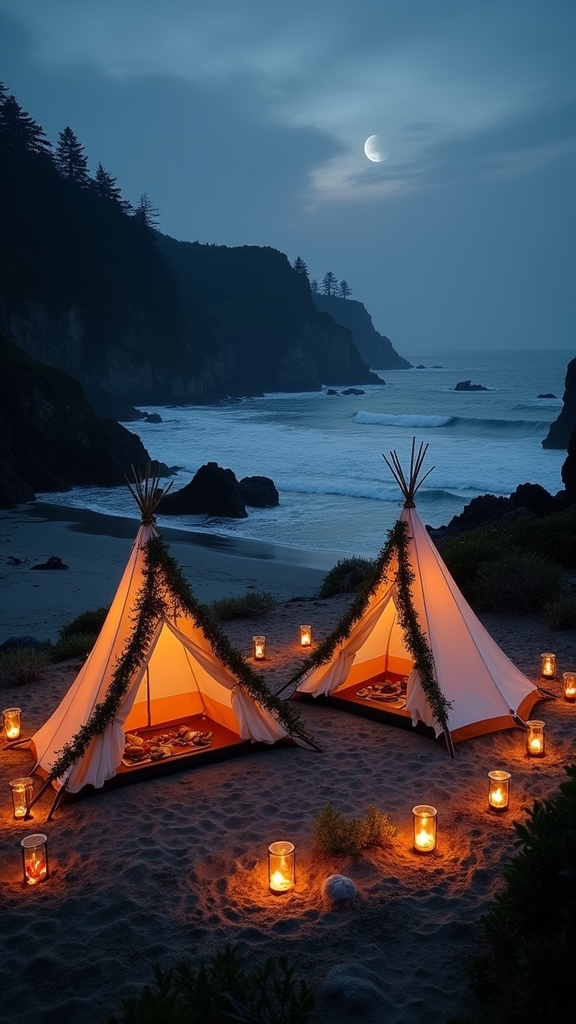
Lighting is the difference between a campsite that looks interesting and one that feels genuinely otherworldly after dark. Windproof lanterns and enclosed candle holders are your workhorses here, since open flames and coastal wind are a combination that ends badly and quickly. For the path leading into your site, line the edges with shells or sea glass and tuck LED tealights among them, the glow is subtle enough to feel organic rather than staged.
Layer in solar string lights draped over driftwood poles or fishing netting, then choose cool-toned blues and silvers as your base and add a few warm amber sources for contrast, because that tension between cold and warm light is what makes the whole setup feel alive rather than decorated.
Final Thoughts: A Mystical Escape by the Sea
Most camping trips are about getting somewhere. This one is about building a world, even temporarily, that makes wherever you are feel like somewhere worth lingering.
You don’t need a big budget or rare gear to pull it off, just the willingness to think carefully about the details and let the coast do the rest of the heavy lifting. The sea has always been mysterious, ancient, and indifferent to human schedules. You’re just finally camping like you believe it.