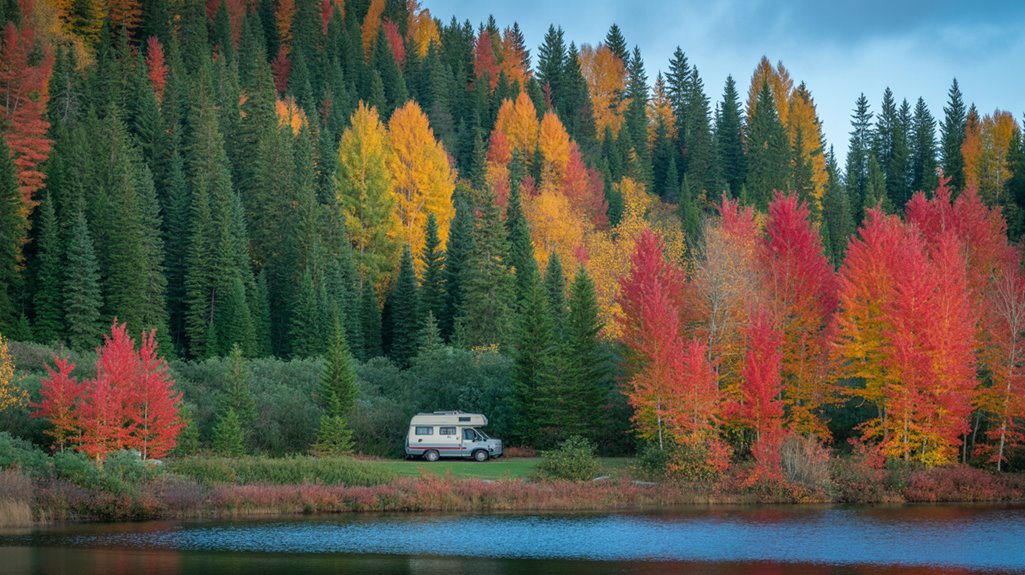
Nature’s color palette shifts dramatically across seasons, and you can chase these vivid transformations from behind the wheel.
The most spectacular displays, desert superblooms carpeting valleys in gold, autumn maples igniting mountainsides in crimson, or winter badlands glowing under soft light, happen on predictable schedules.
By timing your car camping trips around these natural phenomena, you’ll witness landscapes at their most photogenic moments and the planning process is simpler than you’d expect.
Contents
- 1 Key Takeaways
- 2 Desert Superblooms in Anza-Borrego (Late February–March)
- 3 Saguaro Cactus Bloom Camping (March–April)
- 4 Big Bend Wildflowers Along Ross Maxwell Drive (March–April)
- 5 Scenic Byway 12 Red Rock and Cottonwood Color (April–May)
- 6 Carrizo Plain Poppy Fields and Car Camping (April–May)
- 7 Timing Your Trip: Using Bloom and Foliage Maps
- 8 Mt. Zirkel Wilderness Wildflower Camping (Late July)
- 9 Crested Butte Alpine Bloom Car Sites (Mid-July)
- 10 Rogue River–Siskiyou Meadow Camping (Late June–July)
- 11 Mueller State Park Aspen Groves (Late September–Early October)
- 12 Blue Ridge Parkway Fall Color (September–October)
- 13 Kancamagus Highway and Route 100 Foliage (Late September)
- 14 Upper Michigan Maple and Aspen Camping (Early October)
- 15 Joshua Tree Winter Desert Camps (December–February)
- 16 Death Valley Badlands in Comfort Season (December–February)
Key Takeaways
- Desert wildflower blooms peak late February through April in Anza-Borrego, Big Bend, and Carrizo Plain with vibrant magenta, gold, and white displays.
- Saguaro cacti bloom creamy white flowers late May through early June in Sonoran Desert; weekday visits recommended during peak weekends.
- Alpine wildflowers appear mid-July in Colorado’s high elevations at Mount Zirkel Wilderness and Crested Butte with spectacular summer color displays.
- New England foliage drives peak late September on Kancamagus Highway and Route 100, showcasing brilliant reds, oranges, and golds from hardwood forests.
- Winter desert camping at Joshua Tree and Death Valley offers mild 60-70°F days, clear air, and enhanced golden landscapes from December through February.
Desert Superblooms in Anza-Borrego (Late February–March)
The Anza-Borrego Desert transforms into a vibrant canvas of color during late winter and early spring, when seasonal rains trigger one of Southern California’s most spectacular natural phenomena.
You’ll encounter magenta sand verbena carpets, white desert lilies, and golden sunflowers across sandy flats and remote canyons.
Henderson Canyon Road and DiGiorgio Road offer accessible viewing, while early morning visits maximize photography opportunities during this six-week display.
Rain events in November and December set the stage for germination, with nearly an inch of precipitation across the desert signaling favorable conditions for the upcoming bloom season.
Saguaro Cactus Bloom Camping (March–April)
Moving eastward from California’s painted deserts, Arizona’s iconic saguaro cacti stage their own spring spectacle across the Sonoran Desert, though the timing requires some clarification for trip planning.
Despite the March, April label, peak saguaro bloom occurs late May through early June. Buds appear in late March, but mature flowering concentrates in late spring when mature cacti display dozens of creamy white, funnel-shaped flowers clustered like crowns on their arms.
Popular viewing areas may experience high traffic during peak bloom weekends, so consider visiting on weekdays or arriving early to secure camping spots.
Big Bend Wildflowers Along Ross Maxwell Drive (March–April)
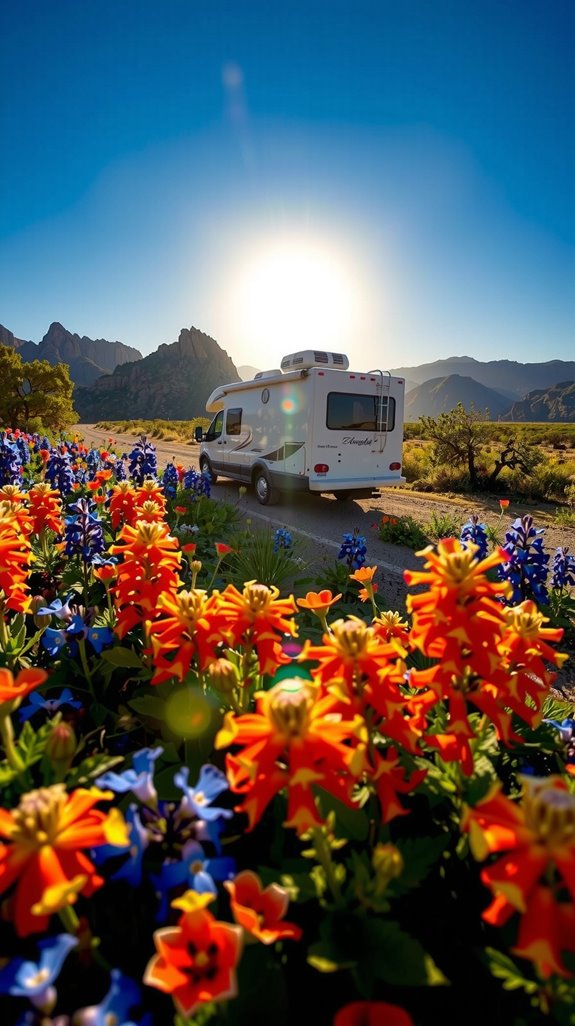
Continuing into Texas, Big Bend National Park’s Ross Maxwell Scenic Drive presents one of the Southwest’s most accessible wildflower viewing experiences, where you’ll find reliable spring blooms even during drier years.
This 30-mile paved route showcases yuccas, ocotillo, bicolor mustard, and bluebonnets against volcanic formations.
Stop at Sotol Vista Overlook and Sam Nail Ranch for ideal viewing, particularly during early morning hours when lighting enhances the deserts colors.
The drive also provides access to Santa Elena Canyon, where the Rio Grande has carved a 1,500-foot vertical limestone chasm creating a dramatic backdrop for wildflower photography.
Scenic Byway 12 Red Rock and Cottonwood Color (April–May)
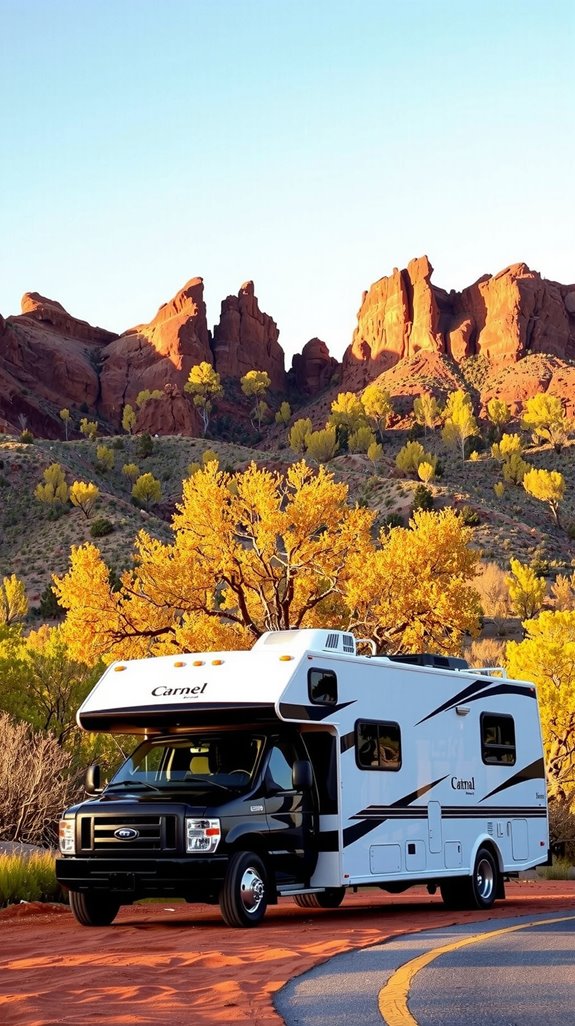
Stretching 124 miles through southern Utah’s most dramatic terrain, Scenic Byway 12 earns its All-American Road designation by threading together red rock hoodoos, slot canyons, alpine forests, and sweeping desert vistas in a single drive.
April and May deliver the corridor’s most vivid color contrasts, fresh cottonwood greens glow against crimson cliffs in lower canyons while higher forests near Boulder Mountain slowly emerge from winter dormancy.
The route connects two national parks, a national monument, and three state parks along its journey through time.
Carrizo Plain Poppy Fields and Car Camping (April–May)
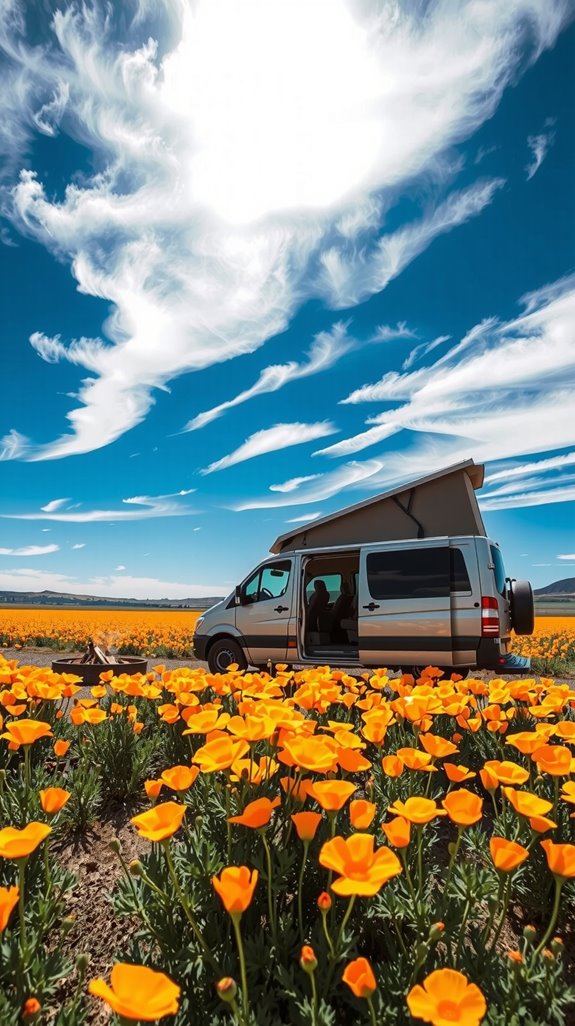
From southern Utah’s red rock escarpments, the seasonal road trip calendar shifts west to California’s interior, where Carrizo Plain National Monument transforms into one of North America’s most dramatic wildflower displays each spring.
Late March through April brings peak blooms of goldfields, tidy tips, and owl’s clover across valley floors, then upslope into the Temblor and Caliente Ranges.
Soda Lake Road and Highway 58 offer accessible viewing corridors, while Selby Campground provides basic front-country facilities for multi-day visits.
Timing Your Trip: Using Bloom and Foliage Maps
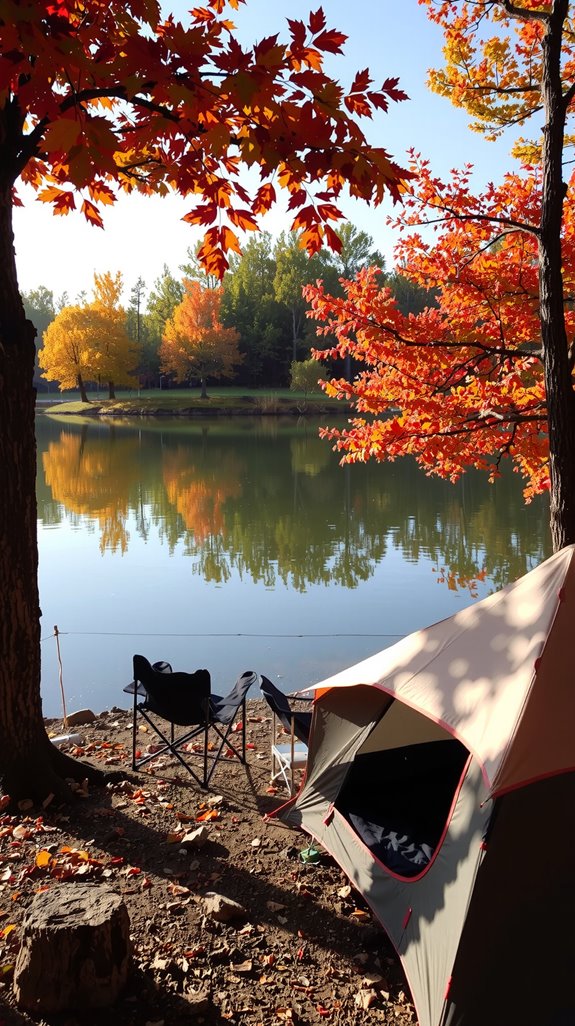
How do you pinpoint the narrow window when California’s superbloom carpets the desert floor or New England’s maples ignite into scarlet and gold?
Consult USA-NPN’s First Bloom Index and status, of, spring maps to track flower-friendly temperatures, then plan visits one to three weeks after local first, leaf dates.
For fall, monitor national foliage maps showing peak, color progression and adjust bookings using real, time anomaly data when warm or cold patterns emerge.
Mt. Zirkel Wilderness Wildflower Camping (Late July)
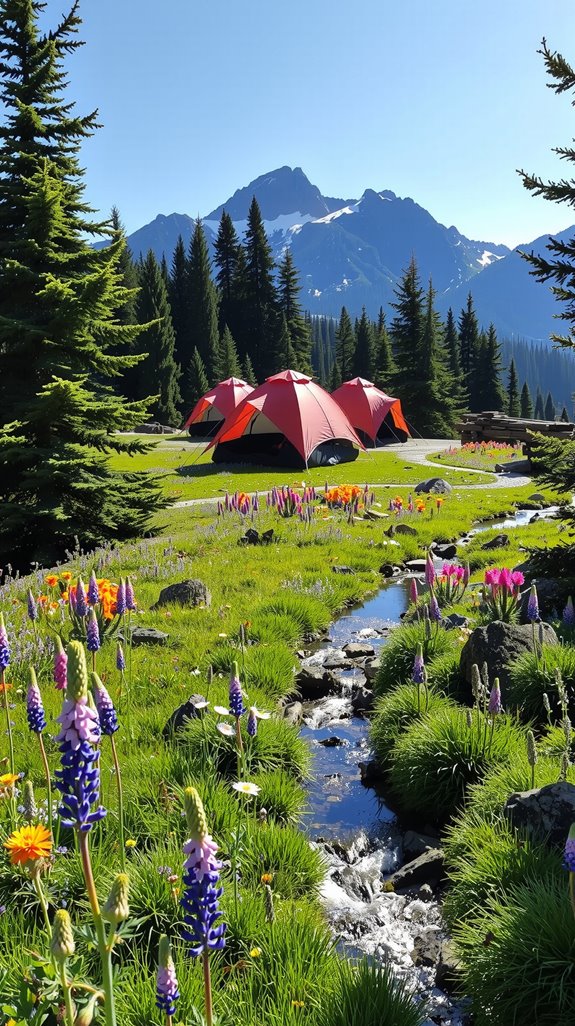
The Mount Zirkel Wilderness in northwest Colorado rewards patient wildflower enthusiasts who wait until late July, when alpine meadows at 10,000-plus feet finally shed their snowpack and explode into vibrant color.
Access the wilderness via Seedhouse Road from Steamboat Springs, then hike to Gold Creek, Gilpin, or Mica Lakes.
You’ll find Colorado columbines, Indian paintbrush, fireweed, and wild daisies blanketing high-elevation trails during this brief peak window.
Crested Butte Alpine Bloom Car Sites (Mid-July)
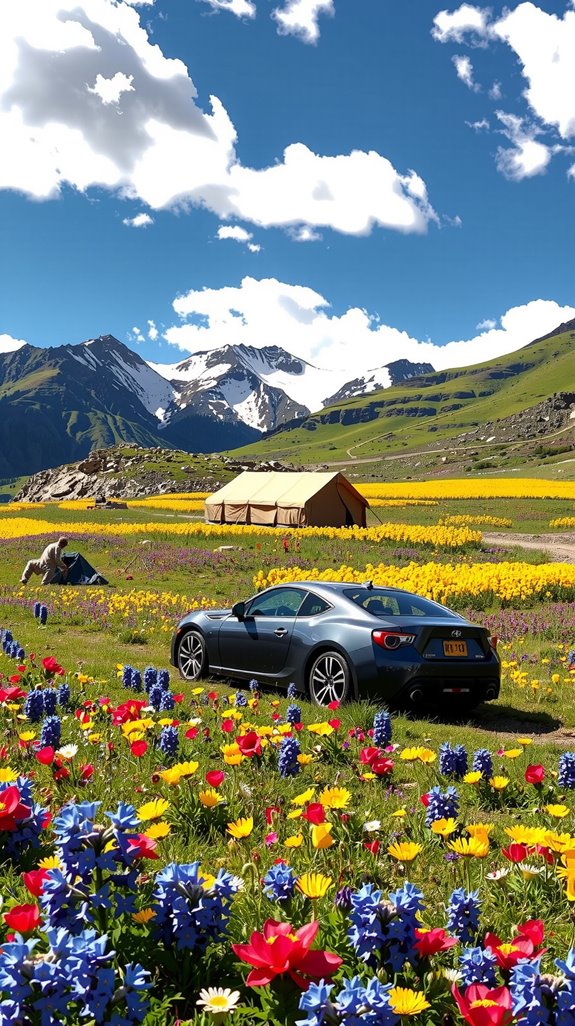
Just 90 miles southwest of Steamboat Springs, Crested Butte transforms into Colorado’s premier wildflower destination each mid-July, when alpine meadows across the Elk Mountains reach peak bloom.
You’ll find blooms everywhere, alongside roads, on trails, and throughout alpine zones.
The annual Wildflower Festival runs July 10-19 in 2026, offering over 150 workshops and guided hikes that lead you to ideal viewing locations daily.
Rogue River–Siskiyou Meadow Camping (Late June–July)
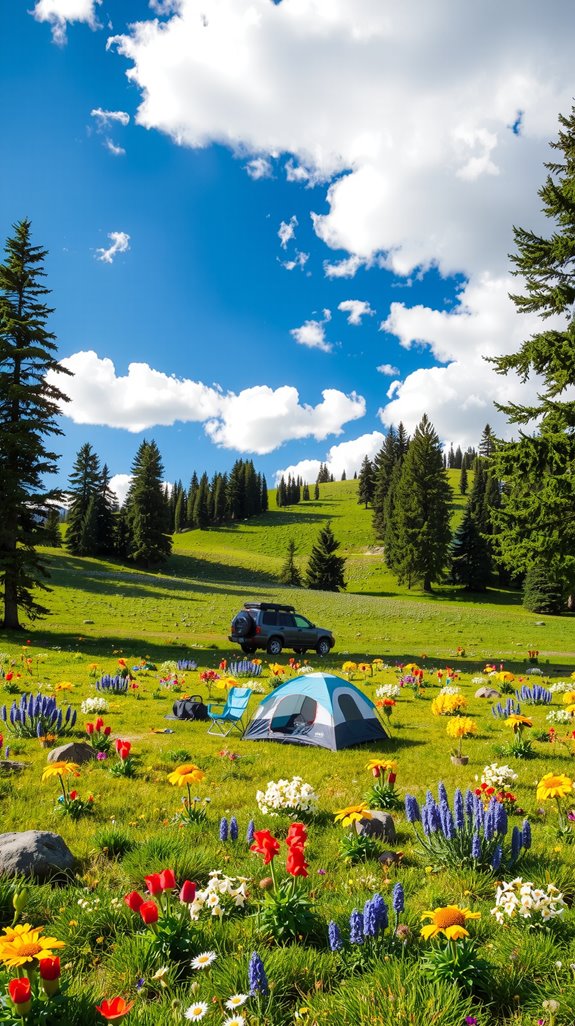
Southwest Oregon’s Rogue River, Siskiyou National Forest offers a distinctive car-camping experience where high-country meadows meet ancient conifer forests, creating natural clearings perfect for vehicle-accessible overnight stays during late June and July.
Wildhorse Meadow and surrounding dispersed sites provide grassy openings framed by Port Orford cedar and Douglas-fir, showcasing vivid wildflower blooms in late June that evolve to golden, dried grasses by mid-July under extended summer daylight.
Mueller State Park Aspen Groves (Late September–Early October)
Perched on the western flank of Pikes Peak at elevations between 9,200 and 9,800 feet, Mueller State Park delivers one of Southern Colorado’s most accessible and visually striking fall-color experiences during late September and early October.
Over 5,000 acres of golden aspen groves contrast sharply with deep green conifers, creating dramatic vistas along 55 miles of trails.
The park’s 132 tent campsites and additional RV sites fill quickly as entire hillsides turn uniformly gold.
Blue Ridge Parkway Fall Color (September–October)
Stretching 469 miles from Shenandoah National Park in Virginia to Great Smoky Mountains National Park in North Carolina, the Blue Ridge Parkway transforms into one of America’s premier fall-foliage destinations each autumn.
This transformation draws millions of visitors who navigate its winding two-lane road through a constantly shifting elevation gradient between 649 and 6,053 feet.
Color begins at the highest elevations in late September, progressing downward through mid-October when most overlooks display peak brilliance from mixed hardwood forests producing vivid reds, oranges and golds.
Kancamagus Highway and Route 100 Foliage (Late September)
When the White Mountains begin their annual transformation in late September, the Kancamagus Highway becomes New England’s most celebrated foliage drive, offering 34.5 miles of uninterrupted color through White Mountain National Forest between Lincoln and Conway, New Hampshire.
You’ll find brilliant reds and oranges from maples mixing with golden birch against evergreen backdrops.
Vermont’s Route 100 offers equally impressive displays, with sugar maple hillsides creating extensive color corridors before peak season crowds arrive.
Upper Michigan Maple and Aspen Camping (Early October)
As the White Mountains settle into their autumn rhythm, Michigan’s Upper Peninsula enters its own spectacular foliage window in early October, when sugar maples blaze red-orange and vast aspen groves turn the rolling terrain gold.
Base yourself at Porcupine Mountains Wilderness or Little Girls Point County Park, where rustic campgrounds provide front-row access to forest drives and Lake Superior overlooks framed by peak hardwood color.
Joshua Tree Winter Desert Camps (December–February)
While autumn draws crowds to New England and the Rockies, Joshua Tree National Park reaches its own peak appeal during the winter months, when mild daytime temperatures and clear desert air transform the high-desert landscape into an ideal car-camping destination.
Reserve sites early at Jumbo Rocks or Indian Cove for dramatic granite formations and iconic yucca stands, and prepare for freezing nights with four-season gear despite pleasant sixty-degree afternoons.
Death Valley Badlands in Comfort Season (December–February)
Joshua Tree’s granite wonderland may capture winter’s magic in the Mojave, but Death Valley’s badlands offer a different kind of spectacle during the same comfort season.
Zabriskie Point’s gold ridges, Artist’s Palette’s volcanic hues, and Golden Canyon’s ochre walls shine under winter’s low-angle light.
Daytime highs in the 60s, 70s °F make hiking comfortable, while campgrounds like Furnace Creek provide reliable bases for exploring America’s largest lower, 48 park.