Living in a small space with kids can feel overwhelming when toys take over and every square foot matters. You love your family and want a living room that works for everyone, but it seems impossible to have both style and function in a tight area.
The good news is that you can create a beautiful, organized small living room that handles the daily chaos of family life while still looking put-together. With the right approach to storage, furniture choices, and design decisions, your compact space can serve as both a relaxing retreat and an active play zone.
This guide walks you through practical ways to arrange your furniture, pick materials that stand up to spills and messes, add smart storage that hides clutter, and make your room feel bigger than it actually is.
You’ll learn how to balance style with child-friendly materials and discover strategies that help your small living room work harder for your whole family.
Contents
- 1 Creating a Kid-Friendly Small Living Room
- 2 Smart Storage Solutions for Toys and Clutter
- 3 Furniture Selection and Arrangement Strategies
- 4 Safe and Stylish Design Choices
- 5 Maximizing Light and Creating Visual Space
- 6 Color, Wall, and Floor Strategies for Small Spaces
- 7 Durable and Family-Friendly Flooring Options
- 8 Designing a Designated Play Area
Creating a Kid-Friendly Small Living Room
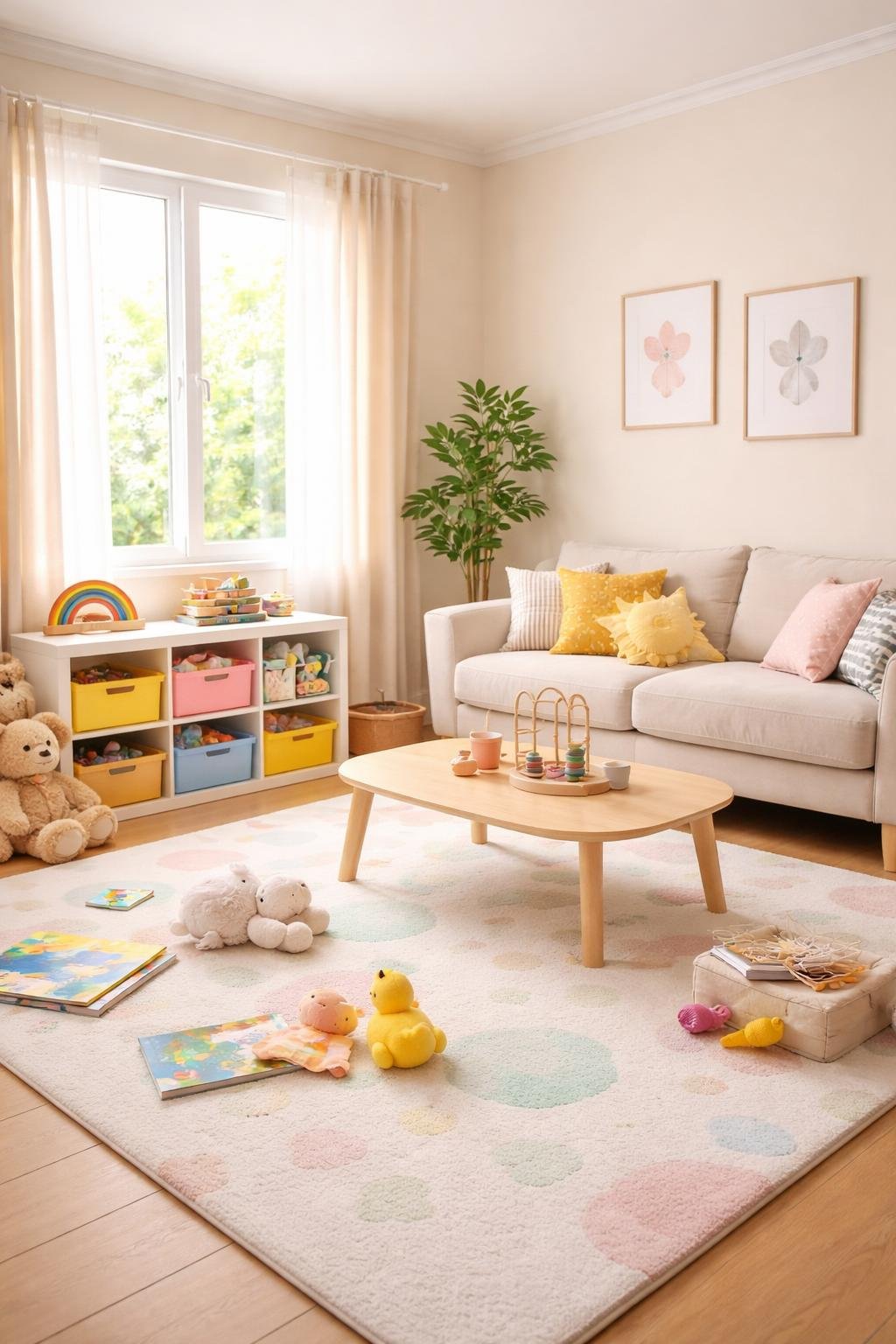
Safety comes first when kids share your living space, but you also need furniture that can handle daily wear while keeping everyone comfortable. The right materials and thoughtful setup let your family enjoy time together without worry.
Essential Childproofing Tips
Corner guards belong on every sharp edge in your small living room. Coffee tables and end tables pose the biggest risk for head injuries when kids are playing or learning to walk.
Secure heavy furniture to the wall using anchor straps or brackets. Bookshelves, TV stands, and tall storage units can tip over if kids climb on them. This step takes only a few minutes but prevents serious accidents.
Cover electrical outlets with safety plugs or sliding outlet covers. Keep cords tucked away behind furniture or use cord covers to prevent tripping hazards. Position power strips out of reach.
Add soft rugs or foam mats under play areas. These cushion falls and make floor time more comfortable for everyone. Creating a stylish yet safe space means thinking about where kids will spend most of their time.
Choosing Durable and Safe Materials
Microfiber and treated cotton fabrics resist stains better than other upholstery options. These materials wipe clean easily when spills happen. Leather sofas also work well because you can clean them quickly with a damp cloth.
Pick darker colors or busy patterns that hide marks and wear. Light-colored furniture shows every stain and makes your space look messy faster.
Washable rugs made from stain-resistant materials go straight into the washing machine after art projects or snack time. This beats trying to spot-clean permanent stains.
Choose rounded furniture edges instead of sharp corners. Look for coffee tables with smooth edges or add bumpers to existing pieces.
Select nontoxic finishes on wooden furniture. Kids touch everything and sometimes put things in their mouths, so safe materials matter. Storage bins made from soft fabric or flexible plastic are safer than hard containers with sharp edges. These also make cleanup easier for kids.
Set up a cozy reading corner with floor cushions where you can read together. This gives kids their own spot while keeping them close to you in the main living area.
Create zones for different activities using furniture placement. A small activity table in one corner keeps crafts contained while the sofa area stays clear for movie nights.
Add open shelving at kid height so children can grab books and toys independently. This builds confidence and teaches them to put things back where they belong.
Keep board games and puzzles in easy-reach baskets. When everything has a home, family game night setup takes minutes instead of causing stress.
Smart Storage Solutions for Toys and Clutter
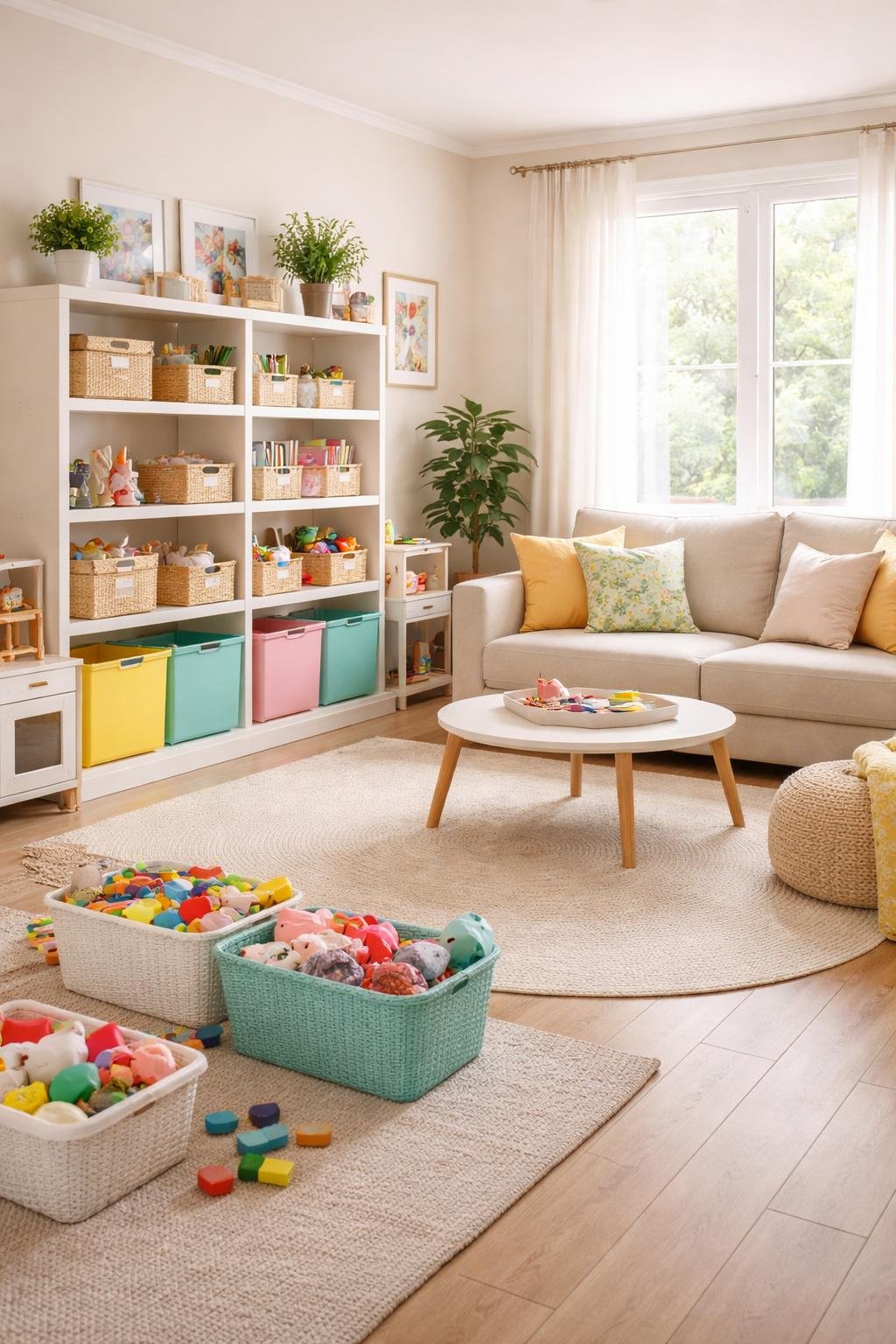
Smart storage keeps your small living room functional while giving kids easy access to their toys. The right storage pieces serve double purposes and blend into your room’s design.
Hidden Storage for a Tidy Look
Built-in cabinets and closed storage units keep toys out of sight when playtime ends. You can add cabinet doors to existing shelves or choose furniture with drawers that hide clutter completely.
Window seats with lift-up lids offer extra seating plus toy storage in your living room. Coffee tables with hidden compartments let you store blocks, cars, and art supplies right where your kids play. Storage benches placed along walls create spots for books and games without taking up floor space.
Wall-mounted cabinets keep items off the ground in small spaces. Under-stair storage works well if your living room connects to a staircase. Baskets with lids on lower shelves give you quick cleanup options that still look neat.
Creative Toy Storage Ideas
Cube storage systems let you mix open bins with closed compartments based on what you need to store. IKEA Kallax units work well for organizing toys because you can add fabric bins in different colors.
Rolling carts move between rooms and tuck into corners when not in use. Hanging wall organizers hold stuffed animals or art supplies without using floor space. Clear bins help kids find what they want quickly and put things back in the right spot.
Label each container with words or pictures so your children know where items belong. Group similar toys together like all the building blocks in one bin and dress-up clothes in another. Rotate toys by keeping some stored away and swapping them out monthly to reduce visible clutter.
Incorporating Storage Ottomans and Benches
Storage ottomans give you a place to sit, rest your feet, and hide toys all in one piece of furniture. You can find them in many sizes to fit tight spaces or larger areas.
Place a storage ottoman near your couch as a coffee table alternative. It provides a soft surface that’s safer for little ones learning to walk. Storage benches work well under windows or against walls where you need extra seating for guests.
Choose ottomans with removable lids for easy access or hinged tops that stay attached. Pick fabrics that wipe clean since spills happen with kids around. Some storage ottomans come with interior dividers to keep different types of toys separated inside.
Furniture Selection and Arrangement Strategies
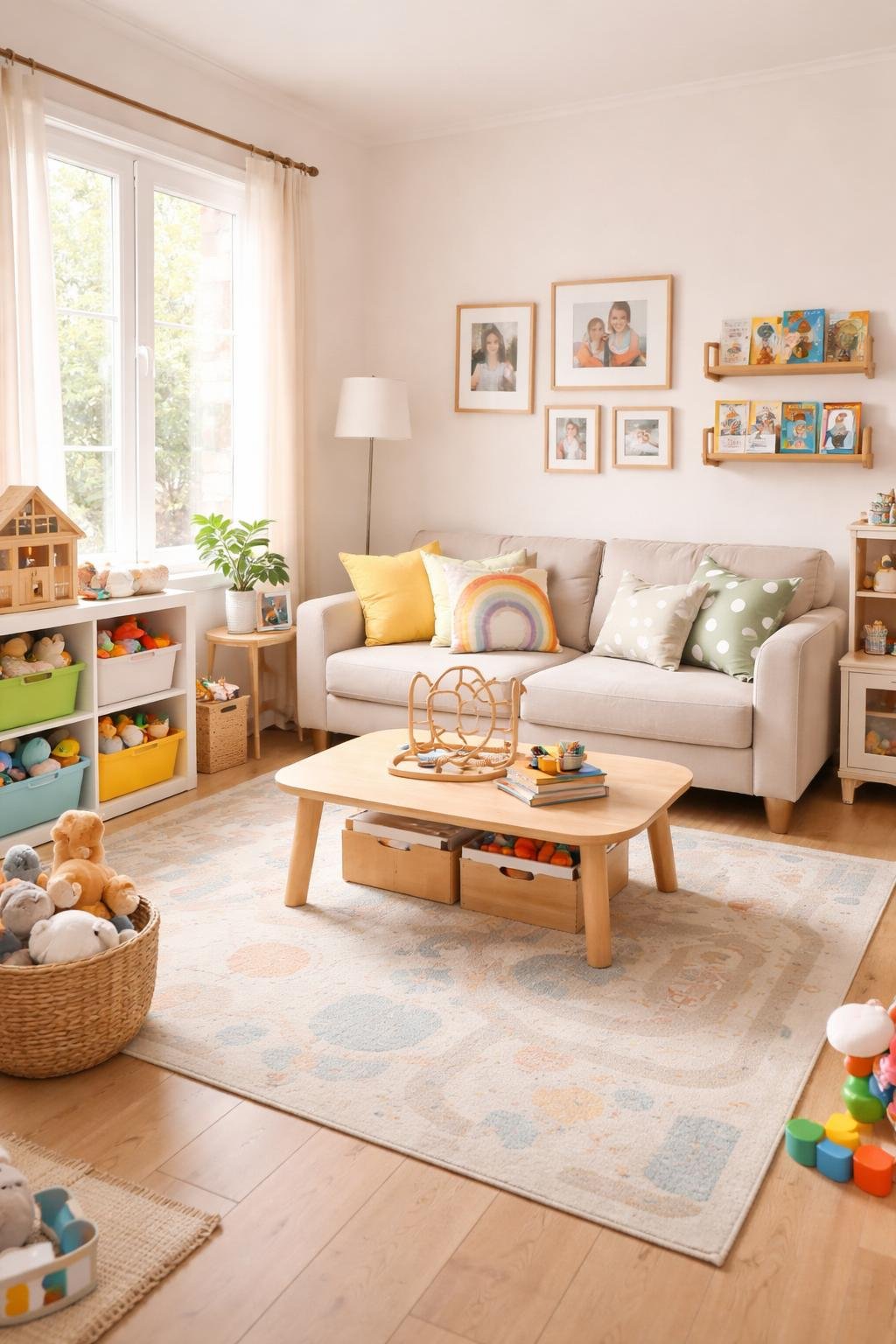
Smart furniture choices help you create a living room that works for both adults and kids. The right pieces do double duty while giving everyone space to relax and play.
Choosing Multipurpose Furniture
Multipurpose furniture solves storage and seating problems at the same time. Storage ottomans give you a place to hide toys while providing extra seats for movie night. When your kids finish playing, they can toss blocks and stuffed animals inside and close the lid.
Sofa beds work well if you need guest sleeping space without a spare bedroom. You can also find coffee tables with lift-up tops that reveal hidden compartments for books, games, and craft supplies.
Look for end tables with drawers or shelves. These keep remotes and charging cables away from curious toddlers while adding surface space for lamps and drinks.
Arranging Modular Sofas for Flexibility
A modular sofa lets you change your layout whenever you need to. You can separate the pieces to create two facing sofas for conversation or push them together into an L-shape for family movie time.
Your modular sofa pieces can move to different spots around the room. Put one section against the wall for story time and another piece near the play area so you can watch the kids.
The separate cushions are easier to clean than one big couch. If your child spills juice on one section, you only need to clean that piece instead of the whole sofa.
Utilizing Floor Cushions and Small Side Tables
Floor cushions give kids their own seating that won’t hurt if they jump or fall. They come in bright colors and patterns that match your style while staying kid-safe.
A small side table behind your sofa keeps drinks out of reach from toddlers who might knock them over. You can set your coffee there and grab the remote without worrying about spills.
Floor cushions stack easily in a closet or basket when you need more floor space. Kids can also drag them to different spots for reading or playing games.
Safe and Stylish Design Choices
Safety features don’t have to look boring or ruin your living room’s appearance. You can protect your kids while keeping your space attractive by choosing furniture with soft edges, picking tables with rounded corners, and making sure heavy items stay in place.
Opting for Rounded and Soft-Edged Furniture
Sharp corners pose a real risk when kids are running around your small living room. Furniture with rounded edges reduces injuries from bumps and falls.
Look for sofas with curved arms instead of hard wooden edges. Choose chairs that have padded corners and gentle slopes. These pieces protect your children while adding a modern, sleek look to your space.
Selecting a Rounded Coffee Table
A rounded coffee table is one of the best investments for a kid-friendly living room. The lack of sharp corners means fewer accidents when your children play nearby.
Round or oval tables work better than square ones in small spaces. They let people move around them more easily. You won’t worry as much about your kids hitting their heads on pointed edges.
Materials matter too.
Choose tables with smooth, finished surfaces that won’t splinter. Wood with rounded edges works well, as does padded ottoman-style coffee tables that double as extra seating.
Leather ottomans are particularly practical because they’re easy to clean and completely soft. Some families skip traditional coffee tables entirely and use large, cushioned ottomans instead. This gives you a completely bump-free surface in the center of your room.
Securing Heavy Decor and Furniture
Tall bookcases and TV stands can tip over when kids climb on them. You need to anchor these pieces to the wall using furniture straps or brackets.
Install anchors into wall studs for the strongest hold. Don’t rely on drywall alone to support heavy furniture. Hardware stores sell inexpensive furniture straps designed specifically for childproofing.
Secure these items immediately:
- Bookcases taller than 3 feet
- Dressers and storage units
- TV stands and entertainment centers
- Tall shelving units
Hide the straps behind furniture so they don’t show. Your living room will look neat while staying safe for your kids to explore and play.
Maximizing Light and Creating Visual Space
Light colors and smart design tricks can make your small living room feel twice its size. Mirrors bounce light around the room while vertical elements pull eyes upward to create height.
Leveraging Natural Light
Natural light opens up cramped spaces and makes them feel welcoming. Keep your windows as clear as possible by using sheer curtains or light-filtering blinds instead of heavy drapes.
Position furniture away from windows so it doesn’t block sunlight from entering the room. A sofa placed perpendicular to windows works better than one sitting directly in front of them.
Light-colored walls and furniture reflect sunlight throughout your space. Paint your walls white, cream, or soft pastels to maximize brightness. Dark colors absorb light and make rooms feel smaller.
Drawing the Eye Upward
Vertical lines make ceilings appear higher and rooms feel more spacious. Hang floor-to-ceiling curtains even if your windows are shorter to create this illusion.
Tall bookshelves and storage units use vertical space efficiently while directing attention upward. These pieces store your kids’ toys and books without eating up valuable floor space.
Paint an accent wall or add vertical striped wallpaper to emphasize height. You can also hang artwork higher than usual to guide eyes toward the ceiling.
Avoid low-hanging light fixtures that cut the room visually in half. Choose flush-mount ceiling lights or tall floor lamps instead.
Color, Wall, and Floor Strategies for Small Spaces
Light colors make rooms feel bigger, while smart wall treatments and durable rugs handle the wear and tear kids bring while adding style to your space.
Painting a Small Living Room
Light colors on walls reflect light and make your living room feel more open. White, pale beige, and soft gray are top choices for small spaces with active kids.
You can use light wall colors with darker floors to create warmth without making the room feel cramped. This contrast adds depth while keeping things bright.
Stick to one main color throughout the room. Using too many different colors breaks up the space and makes it look smaller. If you want to add personality, bring in pops of color through toys, pillows, or artwork instead of painting different walls different shades.
Using Wall Murals and Decals
Wall murals can add fun to your small living room without taking up floor space. Choose designs that create depth, like scenes with paths or landscapes that draw the eye back.
Removable wall decals are perfect for moms with kids. You can change them out as your children grow or when you want a fresh look. They don’t damage walls and come off cleanly when you’re ready for something new.
Keep murals to one accent wall to avoid overwhelming the space. A feature wall behind the sofa or across from the entrance works well. This gives your room personality without making it feel busy.
Selecting Patterned and Easy-Clean Rugs
Choose neutral-colored rugs in light shades to make your floor space look bigger. Cream, light gray, and soft tan hide everyday dirt better than stark white while still opening up the room.
Look for indoor-outdoor rugs made from polypropylene or nylon. These materials resist stains and clean up easily with just soap and water when kids spill juice or drop snacks.
Small patterns work better than large bold designs in compact living rooms. Tiny geometric shapes or subtle textures add visual interest without cutting up your floor space visually.
Durable and Family-Friendly Flooring Options
Choosing the right floor for a small living room means balancing toughness with easy cleanup. Luxury vinyl and washable rugs give you both without breaking your budget.
Luxury Vinyl Plank and Other Resilient Materials
Luxury vinyl plank flooring costs between $2 and $7 per square foot and handles everything your kids throw at it. This durable flooring resists scratches from toys, wipes clean with just soap and water, and stands up to spills without warping.
You get the look of real wood without the worry. The material is 100% waterproof in most products, which means juice spills and wet shoes won’t cause damage.
Key benefits for busy moms:
- No refinishing needed
- Simple installation over existing floors
- Stays looking new for years
- Won’t dent from dropped toys or furniture
Choosing Rugs for Comfort and Cleanliness
Area rugs add softness for playtime while protecting your floors underneath. Pick machine-washable options in darker colors or patterns that hide stains between cleanings.
Low-pile rugs work better than thick, plush ones in living rooms with kids. They’re easier to vacuum, don’t trap as much dirt, and won’t trip little feet running around.
Size matters in small spaces. A rug that’s too small makes your room look cramped. Aim for one large enough that your front furniture legs sit on it.
Best rug features for families:
- Indoor-outdoor materials that resist moisture
- Non-slip backing to prevent sliding
- Stain-resistant treatments
- Neutral bases with busy patterns
Skip expensive wool rugs until your kids are older. Synthetic materials like polypropylene clean up just as well and cost less to replace.
Designing a Designated Play Area
Setting up a specific zone for play helps contain toys and creates a space where your kids can be creative while you maintain some order in your living room. The right approach balances your children’s need for fun with your desire for a tidy, functional space.
Zoning the Room for Play and Relaxation
Pick one section of your living room to become the designated play area. A corner by the window works well, or you can use the space along one wall. This keeps toys from spreading throughout the entire room.
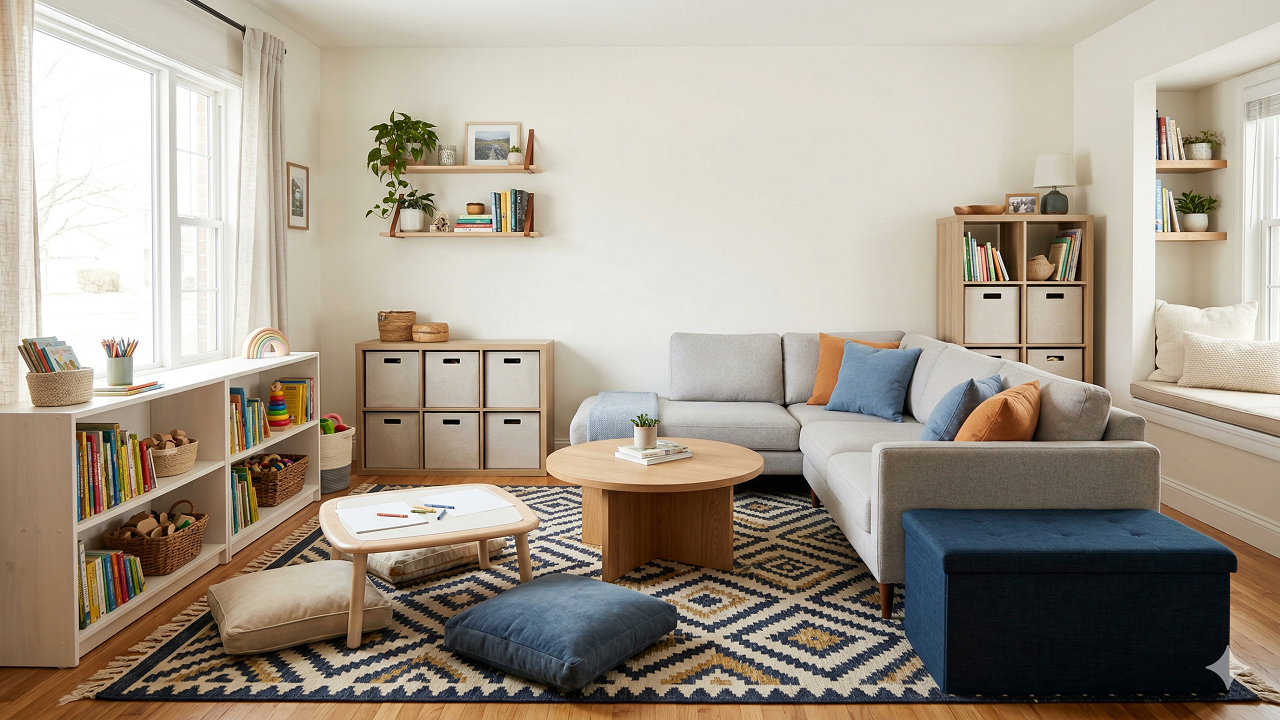
Use furniture to create natural boundaries. A low bookshelf or cube storage unit can separate the play zone from adult seating areas. An area rug also marks the play space clearly and gives kids a comfortable surface for activities.
Think about sight lines when planning your zones. You want to see your children playing while you’re cooking, working, or relaxing on the couch. Position the play area where you can easily supervise without having toys directly in your main traffic path.
Integrating Kids’ Activities Without Clutter
Choose toys that match your existing décor colors. Wooden blocks, neutral-toned stuffed animals, and natural fiber baskets blend into adult spaces better than bright plastic items.
Store toys in your TV stand or media console if it has open shelving. Use cube organizers with fabric bins to hide smaller toys while keeping them accessible. Label each bin so kids can put things away independently.
Set up a toy rotation system to limit what’s out at once. Keep half the toys in a closet and swap them every few weeks. This cuts down on visual clutter and makes old toys feel new again.
A rolling cart stores art supplies that you can wheel out during creative time and tuck away when done. Keep it in a nearby closet or behind furniture when not in use. Everything stays organized and your living room doesn’t turn into a permanent craft station.